Jump to ratings and reviews
Rate this book

The Eve of St. Agnes

Rate this book
'Hoodwink'd in faery fancy...'

This volume contains a selection of Keats's greatest verse - including his gothic story in verse, 'The Eve of St Agnes', and the mysterious 'Lamia' - exploring themes of love, enchantment, myth and magic.

56 pages, Paperback

First published January 1, 1820

43 people are currently reading
1968 people want to read

About the author

John Keats

1,397 books2,519 followers
Rich melodic works in classical imagery of British poet John Keats include " The Eve of Saint Agnes ," " Ode on a Grecian Urn ," and " To Autumn ," all in 1819.

Works of Percy Bysshe Shelley include "Adonais," an elegy of 1821 to John Keats.

Work of the principal of the Romantic movement of England received constant critical attacks from the periodicals of the day during his short life. He nevertheless posthumously immensely influenced poets, such as Alfred Tennyson. Elaborate word choice and sensual imagery characterize poetry, including a series of odes, masterpieces of Keats among the most popular poems in English literature. Most celebrated letters of Keats expound on his aesthetic theory of "negative capability."

Wikipedia page of the author

Ratings & Reviews

What do you think?
Rate this book

Friends & Following

Create a free account to discover what your friends think of this book!

Community Reviews

5 stars
424 (23%)
4 stars
631 (35%)
3 stars
499 (28%)
2 stars
172 (9%)
1 star
54 (3%)
Displaying 1 - 30 of 172 reviews
Profile Image for Sean Barrs .
1,120 reviews47.9k followers
March 9, 2016
This poem has a real good story to it; it wasn’t a conveyance of metaphor, but a story of love and longing. It’s a narrative poem, which means it’s fairly long and plot driven. It’s really quite imaginative in this because it explores different types of dreams and wishes through a few different devices. I quite like it. It’s a little enchanting:

“Pensive awhile she dreams awake, and sees,
In fancy, fair St. Agnes in her bed,
But dares not look behind, or all the charm is fled.”


description

She’s dreaming when she is awake, which signifies her longing to be elsewhere. She wants to be with her other half, but circumstance and petty feuds keep them separate. They long to be together. It also creates a sense of otherworldliness and magic. It’s not just realism; there is a sense of fantastic in the poem. She sees beyond what is there in front of her; she can “conjure” up fanciful ideas; she can imagine, and therefore see, something more than reality. But, I did find myself growing a little bit bored with the poem towards the end. I do prefer my poems much shorter with a sharp meaning.

This was enjoyable, but is not a style of poetry I normally get on with. I like poetry that makes me think. Poetry that has everything of the surface may as well be prose. It has a good plot, and it’s a pleasure to read, but that’s it. It’s quite forgettable. I liked some of the other poems in here too, but none of them really stood out for me in particular. I will read more by Keats in the future, and hopefully I will find something a little better than this one. I already have his full works on my bookshelf; there’s bound to be something in there I love.

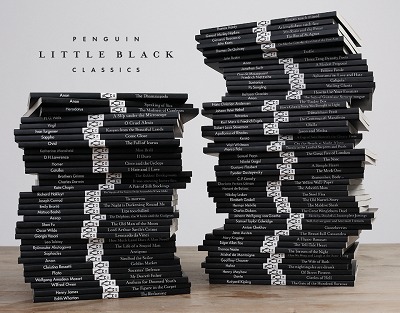
Penguin Little Black Classic- 13

description

The Little Black Classic Collection by penguin looks like it contains lots of hidden gems. I couldn’t help it; they looked so good that I went and bought them all. I shall post a short review after reading each one. No doubt it will take me several months to get through all of them! Hopefully I will find some classic authors, from across the ages, that I may not have come across had I not bought this collection.

Profile Image for Leonard Gaya.
Author 1 book1,177 followers
December 10, 2019
Keats is a sort of Arthur Rimbaud of English literature: a dazzling and short-lived young genius. This small volume presents a few of Keats’ poems. Some are rather long (The Eve of St Agnes, Lamia), others are quite short (La Belle Dame sans Merci, Ode to Psyche, Ode to a Grecian Urn).

When reading out-loud, Keats’ narrative stanzas sound expressive, lofty, somewhat archaic, pedantic even. As for their meaning, I have to humbly confess that either my mind wasn’t quite into it or Keats’ symbolism — which abounds in medieval and classical references — is a bit too obscure to be easily grasped at first read. I could not possibly appreciate the tea if the urn is sealed.
Profile Image for Atri .
219 reviews157 followers
May 17, 2020
Soon, trembling in her soft and chilly nest,
In sort of wakeful swoon, perplexed she lay,
Until the poppied warmth of sleep oppressed
Her soothèd limbs, until the morrow-day;
Blissfully havened both from joy and pain;
Clasped like a missal where swart Paynims pray;
Blinded alike from sunshine and from rain,
As though a rose should shut, and be a bud again.

...

Do not all charms fly
At the mere touch of cold philisophy?
There was an awful rainbow once in heaven:
We know her woof, her texture; she is given
In the dull catalogue of common things.
...
Conquer all mysteries by rule and line,
Empty the haunted air, and gnomèd mine -
Unweave a rainbow, as it erewhile made
The tender-personed Lamia melt into shade.

...

A rose sanctuary will I dress
With the wreathed trellis of a working brain,
With buds, and bells, and stars without a name,
With all the gardener Fancy e'er could feign,
Who breeding flowers, will never breed the same:
And there shall be for thee all soft delight
That shadowy thought can win,
A bright torch, and a casement ope at night,
To let the warm Love in!
Profile Image for Jay.
215 reviews88 followers
February 12, 2024
In some senses, this a frustrating little collection, not because the poems included are sub-standard, but because of the ones that I know are missing. Had the Penguin people only included the four remaining 1819 Odes, it would be nye on perfect. But then, I suppose it’s not like I can’t just read those on the internet (like I have just done). As it stands the poems included are:

The Eve of St Agnes
La Belle Dame Sans Mercy
Lamia
Ode to Psyche
Ode to a Grecian Urn

They all, one way or another, muse over the power of imagination, art, and myth, questioning how “true” art and myth can really be. None of them quite match up to Ode to a Nightingale, but I was particularly fond of Lamia and Ode to Psyche, both of which were new to me.

Lamia is a long-form poem/short story about the dangers and fragility of living a life so devoted to passion and beauty that you become blind to unpleasant factual truths. It reminded me of a quote that comes at the end of, of all things, the TV series Chernobyl: “Every lie we tell incurs a debt to the truth. Sooner or later, that debt is paid”. Ironically, I’m supposed to be revising today, but I’ve instead spent my morning reading bloody Keats! Keats warning me about the dangers of being seduced by beauty while I was, at that very moment, enjoying his beautiful poem, fully aware that I was instead supposed to be doing something productive was, well... it was a bit of a kick in the teeth, to tell you the truth!

Ode to Psyche is yet another beautiful short Keatsian ode about the power of human imagination and how the visions it produces can be just as real as the tangible. Keats comes across Psyche (the Greek Goddess of the soul) while walking through a dreamy forest. He laments that the world has moved away from the worship of such a wonderful creature and, by extension, the inner human life. He vows to become Psyche’s priest and to build a temple to her in his mind. This unreal temple will exist “To let the warm Love in!” — it’s a really rather beautiful poem. My words are too poor to do it justice.

I’m always left to wonder with Keats: had he not died so young, what treasures might the world now possess? He wrote all of his odes — poems that more or less define the 19th century — when he was twenty-three.
Profile Image for leynes.
1,317 reviews3,687 followers
June 9, 2019
I may or may not picked up this collection solely due to the fact that Keats is Oscar's favorite writer, indeed he considered him the greatest English poet of the century. When Wilde was just 22 and touring Europe he visited the grave of Keats and said it was the holiest place in Rome. At the tender age of 22, I visited Oscar's grave in Paris for the first time in my life and was overcome by emotion as well. So it is far to say that what Oscar is to me, Keats is to Oscar, naturally, I had to check the guy out.

But alas! My opinion of the man is quite mixed. I can definitely see merit in his poetry and would even say that Keats had a way with words (I especially liked the narrative style of Lamia) but overall he didn't manage to evoke any form of emotion in me. I found his poetry quite hard to grasp, yet not interesting enough to spend my time researching it further. I don't feel like I'm missing out by not properly understanding the meaning and intention behind The Eve of St Agnes. I know my darling child Oscar would be quite mad at me for this ... but we love to piss each other off. It's fine.

And so instead of leaving you with my favorite quote of this collection I will leave you with a poem by Oscar. Aren't I classy?
The Grave of Keats

Rid of the world’s injustice, and his pain,
He rests at last beneath God’s veil of blue:
Taken from life when life and love were new
The youngest of the martyrs here is lain,
Fair as Sebastian, and as early slain.
No cypress shades his grave, no funeral yew,
But gentle violets weeping with the dew
Weave on his bones an ever-blossoming chain.
O proudest heart that broke for misery!
O sweetest lips since those of Mitylene!
O poet-painter of our English Land!
Thy name was writ in water——it shall stand:
And tears like mine will keep thy memory green,
As Isabella did her Basil-tree.
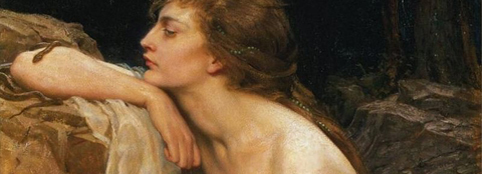
Personally, I think that this is one of the most important pomes Oscar has ever written, especially due to the last two lines. They seem to be an early echo of what Oscar was to write seventeen years later in Reading Goal: And alien tears will fill for him / Pity's long broken urn / For his mourners will be outcast men / And outcasts always mourn – these iconic lines are actually his epitaph. It's uncanny how these two passages mirror one and another and I wouldn't put it past Oscar to put himself on the same pedestal that he put his favorite writers on. You gotta be your own #1 fan. ;)

Oh, and in case you needed more proof of Oscar's gay heart and soul, here's what he wrote to Emma Speed, the daughter of Keats' brother George, after she invited him to browse through Keats' personal collection of letters and journals: "What you have given me is more golden than gold, more precious than any treasure this great country could yield me ... I am half enamoured of the paper that touched his hand, and the ink that did his bidding, grown fond of the sweet comeliness of his charactery, for since my boyhood I have loved none better than your marvellous kinsman, that godlike boy, the real Adonis of our age ... In my heaven he walks eternally with Shakespeare and the Greeks."

Oh well, one day I'll write love letters about Oscar the way he did about Keats. 
Profile Image for Tom.
446 reviews35 followers
October 23, 2013
Well of course it's great stuff because it's Keats (Literary circular logic exemption granted). I looked it up because Ron Rash quotes it for epigram in his novel The Cove, which I just finished. It's not essential for understanding the novel, but does enrich the reading, as both are about forbidden romances (and nobody does romance better than a Romantic, surely!). The poem is pretty long, about 380 lines, and will require a few more readings before I could offer anything more substantial -- and I confess I sneaked a peak at Wikipedia summary post-reading to help sort out the basic story line, which is not to suggest that it's impenetrable -- I just jumped in and read it quickly once for the gist -- but knowing a bit about St. Agnes and her Day does help. I've long reread and loved a number of Keats' shorter poems, but never the longish narrative poems. Now I feel inspired to read more of them. Keat's seems to have inspired other fiction writers, as well. Cheever quotes "Bright Star" -- "would I were stedfast as thou art / Not in lone splendor hung aloft the night ... " -- in his bizarre short story about a traveler who encounters lengthy narrative graffiti in barroom men's rooms, "Mene, Mene, Tekel, Upharsin." (which, if memory serves me correctly, is ref to Book of Daniel: 'you have been found wanting,' something along those lines. And so it goes, an endless looping of writers cribbing from and yakking to each other across the centuries ...
Profile Image for Darwin8u.
1,835 reviews9,036 followers
April 15, 2018
"Beauty is truth, truth beauty, - that is all
Ye know on earth, and all ye need to know."

- John Keats, "Ode on a Grecian Urn"

description

Vol 12 of my Penguin Little Black Classics Box Set. The small selection of Keats' poems contains, as the title would suggest:

1. The Eve of St. Agnes
2. La Belle Dame sans Merci. A Ballad
3. Lamia
4. Ode to Psyche
5. Ode on a Grecian Urn

It is a nice introduction to Keats for those who haven't read him in some HS poetry section, or college poetry class. He is good, if you like Romantic poetry. The guy can write verse. I actually read all of these before (except for the title poem).
Profile Image for Michelle Curie.
1,082 reviews457 followers
February 10, 2017
"Beauty is truth, truth is beauty, - that is all
Ye need to know on earth, all ye need to know."


Oh, how wonderful a collection! This Little Black Classic features five of John Keats' poems, two of which are fairly long and narrative and probably my favourites out of those included. The Eve of St Agnes tells the story of two lovers who long to be together - it's interesting, because plot-wise it's quite realistic, but solely through the way Keats writes a whole new dimension of magic and enchantment is added to it.


Lamia is about how the god Hermes and Lamia, a beautiful queen of Libya who became a child-eating daemon, came to meet and it's another very beautifully written poem. The shorter ones are fun as well, as they're actually written in a quite straight-forward manner and are still rather free to interpretation.

"And this is why I sojourn here
Alone and palely loitering,
Through the sedge is withered from the lake,
And no birds sing."


Keats himself was a somehow tragic figure. He's considered one of the main figures of Romantic poets, even though his work only started to get published four years before his death, which came at the age of 25. I suppose because of his allusions to nature and his sensual style of forming verses he can be considered a very classic Romantic representative, so if you are into this sort of poetry his work is definitely worth reading!

In 2015, Penguin introduced the Little Black Classics series to celebrate Penguin's 80th birthday. Including little stories from "around the world and across many centuries" as the publisher describes, I have been intrigued to read those for a long time, before finally having started. I hope to sooner or later read and review all of them!
Profile Image for Nihan D..
342 reviews5 followers
December 30, 2013


St. Agnes Arefesi'nde yani 20 Ocak gününün gecesinde, bakirelerin, eğer ritüeli doğru şekilde yerine getirirlerse sevdikleri ve evlenecekleri adamları rüyalarında göreceklerine inanılır. Örneğin akşam yemeği yememeleri ve yataklarında sırt üstü uzanmaları gibi...

Şiir, kulenin sahibi olan Baron'un kızı Madeline'ın gece yarısını sabırsızlıkla beklemesiyle başlar. Çünkü yaşlı kadınların söylediğine göre o gece akşam yemeği yemeden yatıp, öğrettikleri duayı ederse, sevdiği adamı rüyasında görecektir. Kuledeki eğlenceler, insanların dansları, konuşmaları ona eziyet gibi gelir.

Aynı gece, Madeline'ın aşık olduğu adam Porphyro onun için kaleye gelir. Ki bu çok tehlikelidir çünkü Porphyro'nun ailesi ve Madeline'ın ailesi düşmandır. Birbirlerini gördükleri yerde öldürmek isterler. Fakat Porphyro bu özel geceyi aşık olduğu kadını göremeden geçirmek istemez.

Kalenin içinde Madeline'ı ararken şansı yaver gider ve kızın dadısıyla karşılaşır. Dadı, onların birbirine aşık olduğunu biliyordur ve Porphyro ile yakındır. Porphyro, dadıya Madeline'ı görmesine yardım etmesi için yalvarır. Yaşlı kadın, "Eğer zalim biriysen, onu üzeceksin," der. Porphyro, dadıya aşkının gerçek olduğuna ve onu asla incitmeyeceğine yemin eder. Böylece dadı ikna olur ve Porphyro'u kimselere görünmeden genç kızın odasına götürüp giysi dolabının içine saklar.

Gece yarısı olduğunda Madeline gizlice odasına kaçmayı başarır. Nefes nefese odasına girdiğinde Porphyro'un onu dolabında gözlediğinden habersizdir. Elbiselerini çıkarıp, etmesi gereken duayı ettikten sonra sırt üstü bir şekilde yatağa uzanır ve hemen uykuya dalar. Porphyro o uykuya dalar
dalmaz dolaptan çıkar ve yanına gelir.

Madeline yaşlı kadınların dediği gibi rüyasında Porphyro'u görmektedir. Uykusu o kadar derindir ki Porphyro O'nu bir türlü uyandıramaz. Hatta odanın köşesindeki udu bile alıp çalar uyanması için. Nihayet Madeline uyandığında hala gördüğü rüyanın etkisindedir ve Porphyro'u hayal sanır. O'nu yatağına alır ve gördüğü rüya kadar hayali olan bir evlilik yaşarlar.

Her şey bitip Madeline kendine geldiğinde büyük bir panik yaşar. Porphyro'un orada olduğuna hala inanamaz ve terk edip gideceğinden korkar. Porphyro onu güzel sözleriyle yatıştırır ve kaçmaya ikna eder.

İki aşık, St. Agnes gününün arefesinde düşmanla dolu olan kaleden kimseye yakalanmadan kaçmayı başarırlar. Dışarıda inanılmaz, buz gibi bir fırtına esmektedir ama aşıkları hiçbir şey durduramaz.

O gece, Madeline'ın babası Baron ve misafirleri kabuslarla dolu rüyalar görürler ve Madeline'ın yaşlı dadısı ve kalenin rahibi son nefesini verir...
Profile Image for Marjolein (UrlPhantomhive).
2,497 reviews57 followers
December 13, 2016
Read all my reviews on http://urlphantomhive.booklikes.com

Having never read anything by Keats before, but having heard a lot of it, I was really looking forward to this collection of five of his poems.

The poem of the title is the longest and it is, as his other poems, very visual. It really tells a story, and while this is a nice change for the other poetry so far in the Little Black Classic collection, it also became slightly dull after a while. It is a long story, and my thought wandered after a while, wondering if it couldn't have been a bit shorter.

Nevertheless a nice introduction.

Little Black Classic #13
Profile Image for Viir.
134 reviews12 followers
September 27, 2017
It was probably not the right time for me to read this classic but well it happened.

I actually enjoyed the way the poems were written (everything that rhymes is good with me) but the stories (?) of the poems were just meh. I couldn't really enjoy it, though I must admit that it's not as easy to read for someone who picked up English as a third language. I feel bad rating it only 2 stars, especially because Keats seemed to get better and better with each poem he wrote and wouldn't he have died so early on in his life I would guess he would have published way more and greater stuff.

Seriously admire everyone who loves poems and gets them - I can't till now >.<
Profile Image for Nikki.
60 reviews5 followers
July 29, 2016
an archetypal gothic poem, great atmoshepherics, familial warfare, threats of discovery, superstition, hints of fairies, enchantment and magic, not to mention the undercurrent of hidden sexuality. The colour symbols are excellent. Porphyro, our main protagonist, is purple/burgundy in Greek and has many associations. but then again this poem is so great and can be read with many perspectives.
Profile Image for Chelsea.
261 reviews47 followers
November 3, 2025
I am newer to narrative poetry, so was pleasantly surprised by how readable and enjoyable this (short) narrative poem was. Written in the Victorian era, but set in a medieval castle, the story-line reminded me of . One line in particular that stood out to me was "of all its wretched pearls her hair she frees; unclasps her warmed jewels one by one" - I just loved the sensual imagery created by the description of body-warmed jewelry after a long day dressed up for an event.
Profile Image for Robin.
48 reviews
November 9, 2023
This man just called Hesperus the glow-worm of the sky
Profile Image for Emily Sposato.
18 reviews
January 18, 2024
Im counting this for my 2024 goal because even though it's 55 pages a win is a win. If John Keats has no fans I am dead and I love the way he writes about love.
Profile Image for Anna.
124 reviews4 followers
March 10, 2016
Mythes lees ik liever niet als poëzie.
Worden ze gezongen door dichters die
Tien woorden nodig hebben om er twee te zeggen,
drie keer wenden voor ze hun plot-ei leggen.
hun pentameters vol met koren én met kaf,
dan kan het nog zo knap zijn - ik haak af.
Profile Image for Ev.
115 reviews35 followers
November 22, 2024
what the heck is this...........

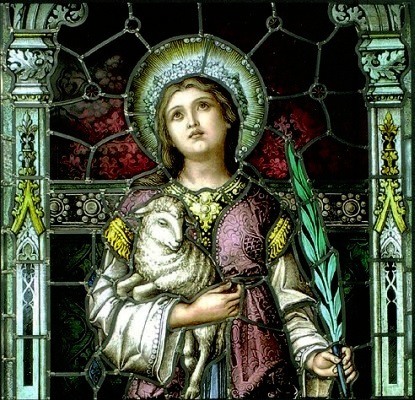
St Agnes was 12 or 13 when she was martyred................. meaning that Keats wrote this poem as an adult about a TWELVE OR THIRTEEN YEAR OLD CHILD who has unspeakable things done to her by this knight..... WHAT THE HECK?!?!?!?!
Profile Image for Cee.
999 reviews240 followers
June 21, 2015
Did not care for Keats' poetry at all. His syntax grates against my nerves, and his subject matter doesn't do anything for me ("Ode to a Grecian Urn", anyone?)
Profile Image for M.J. Black.
Author 6 books10 followers
November 16, 2015
Keats is the Daddy, so nothing further to say other than - 5 stars
Profile Image for amber.
9 reviews
June 9, 2023
Bit shit since porphyro just wanted some fanny- that’s the whole poem.
My birdy madeline deserved better than that greasy sleeze ball arse face looking prick.

Porphyro
I’m sure it’s good to it’s intended audience, but I was not it. I wasn’t born into a middling class 1800’s as a widow to an unloving husband who passed 4 years ago, whom I resented for leading me to a miserable and isolated life, and forced me into birthing 5 children. No, unfortunately, I am a 17 year old in the modern day, so this poem was like that annoying friend trying to crack and joke that simply isn’t funny at all (possible borderline offensive or out of taste), which is followed by awkward looks and an immense amount of cringe and heebiejeebies.

Thank you A level’s for this absolute banger!

This entire review has been hidden because of spoilers.
Profile Image for Shawn Thrasher.
2,025 reviews50 followers
September 28, 2018


Keats's poem is sort of dumb and tells a story William Shakespeare told better four hundred years before, but something about it struck the imaginations of artists and illustrators, particularly those of the art nouveau and Arts and Crafts movement. It's worth taking a peak at the Internet Archive and seeing how many editions over the years of this poem have been lovingly created. My favorite was illustrated in 1900 by R.F. Seymour.
Profile Image for JP.
130 reviews3 followers
January 17, 2025
The music, yearning like a God in pain

|||

More happy love! more happy, happy love!
For ever warm and still to be enjoyed,
For ever panting, and for ever young –

||

Why thou art desolate, can e'er return.
Profile Image for Tanja Mavie.
67 reviews
December 28, 2025
this is poetry in its most lyrical form, song-like, musical (I admit I didn't always grasp the content of the poems; but I would keep this book in my pocket because voicing its poems feels like a revelation, like magic)
Displaying 1 - 30 of 172 reviews

Can't find what you're looking for?

Get help and learn more about the design.