'... ever-present, phantom thing; My slave, my comrade, and my king'
Some of Emily Brontë's most extraordinary poems
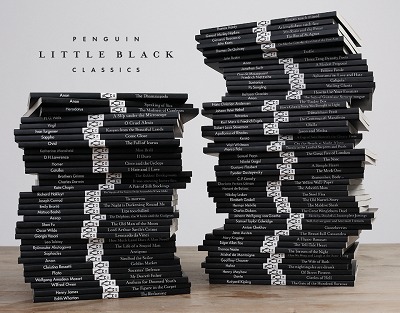
Introducing Little Black Classics: 80 books for Penguin's 80th birthday. Little Black Classics celebrate the huge range and diversity of Penguin Classics, with books from around the world and across many centuries. They take us from a balloon ride over Victorian London to a garden of blossom in Japan, from Tierra del Fuego to 16th century California and the Russian steppe. Here are stories lyrical and savage; poems epic and intimate; essays satirical and inspirational; and ideas that have shaped the lives of millions.
Emily Brontë (1818-1848).
Brontë's Wuthering Heights and The Complete Poems are available in Penguin Classics
Emily Brontë was an English novelist and poet whose singular contribution to literature, Wuthering Heights, is now celebrated as one of the most powerful and original novels in the English language. Born into the remarkable Brontë family on 30 July 1818 in Thornton, Yorkshire, she was the fifth of six children of Maria Branwell and Patrick Brontë, an Irish clergyman. Her early life was marked by both intellectual curiosity and profound loss. After the death of her mother in 1821 and the subsequent deaths of her two eldest sisters in 1825, Emily and her surviving siblings— Charlotte, Anne, and Branwell—were raised in relative seclusion in the moorland village of Haworth, where their imaginations flourished in a household shaped by books, storytelling, and emotional intensity. The Brontë children created elaborate fictional worlds, notably Angria and later Gondal, which served as an outlet for their creative energies. Emily, in particular, gravitated toward Gondal, a mysterious, windswept imaginary land she developed with her sister Anne. Her early poetry, much of it steeped in the mythology and characters of Gondal, demonstrated a remarkable lyrical force and emotional depth. These poems remained private until discovered by Charlotte in 1845, after which Emily reluctantly agreed to publish them in the 1846 collection Poems by Currer, Ellis, and Acton Bell, using the pseudonym Ellis Bell to conceal her gender. Though the volume sold few copies, critics identified Emily’s poems as the strongest in the collection, lauding her for their music, power, and visionary quality. Emily was intensely private and reclusive by nature. She briefly attended schools in Cowan Bridge and Roe Head but was plagued by homesickness and preferred the solitude of the Yorkshire moors, which inspired much of her work. She worked briefly as a teacher but found the demands of the profession exhausting. She also studied in Brussels with Charlotte in 1842, but again found herself alienated and yearning for home. Throughout her life, Emily remained closely bonded with her siblings, particularly Anne, and with the landscape of Haworth, where she drew on the raw, untamed beauty of the moors for both her poetry and her fiction. Her only novel, Wuthering Heights, was published in 1847, a year after the poetry collection, under her pseudonym Ellis Bell. Initially met with a mixture of admiration and shock, the novel’s structure, emotional intensity, and portrayal of violent passion and moral ambiguity stood in stark contrast to the conventions of Victorian fiction. Many readers, unable to reconcile its power with the expected gentility of a woman writer, assumed it had been written by a man. The novel tells the story of Heathcliff and Catherine Earnshaw—two characters driven by obsessive love, cruelty, and vengeance—and explores themes of nature, the supernatural, and the destructive power of unresolved emotion. Though controversial at the time, Wuthering Heights is now considered a landmark in English literature, acclaimed for its originality, psychological insight, and poetic vision. Emily's personality has been the subject of much speculation, shaped in part by her sister Charlotte’s later writings and by Victorian biographies that often sought to romanticize or domesticate her character. While some accounts depict her as intensely shy and austere, others highlight her fierce independence, deep empathy with animals, and profound inner life. She is remembered as a solitary figure, closely attuned to the rhythms of the natural world, with a quiet but formidable intellect and a passion for truth and freedom. Her dog, Keeper, was a constant companion and, according to many, a window into her capacity for fierce, loyal love. Emily Brontë died of tuberculosis on 19 December 1848 at the age of thirty, just a year after the publication of her novel. Her early death, following those of her brother Branwell and soon to
Woods you need not frown on me Spectral trees that so dolefully Shake your heads in the dreary sky You need not mock so bitterly
After reading a short biographical piece on Emily Brontë (in an excerpt of Javier Marías’s Written Lives, Madame du Deffand and the Idiots), this selection of thirty of her poems (she wrote about two hundred) just seemed the perfect continuation– and I relished these poems, although often bleak.
As this is dark, passionate, imaginative poetry, drawing on vibrant, powerful imagery and fierce emotions without getting sentimental, it is easy to see why her sister Charlotte, who accidentally discovered these verse in one of Emily’s notebooks, wrote about them I thought them condensed and terse, vigorous and genuine. To my ear, they had also a peculiar music, wild, melancholy and elevating.
There should be no despair for you While nightly stars are burning; While evening pours its silent dew And sunshine gilds the morning. There should be no despair – though tears May flow down like a river: Are not the best beloved of years Around your heart for ever?
While savouring this brilliant poetry, I heard another lyrical voice gently singing in my ears, the voice of that other Emily, Emily Dickinson - some of the stanza’s echo a similar iridescent expressivity and are also sung in an intense, soaring, mystic, crystalline voice. However mostly dealing with themes like life’s transience, grief, loss, death and immortality, the poetic undertones reveal a rebellious yearning for spiritual freedom, having a touch of mercurial perspicacity. With both poets I found a basking in the joys and solace of imagination, as well as a stunningly worded reflecting and dialoguing of moods with nature. The similarities in the themes and timbres of both Emilys perhaps aren’t that surprising when taking into account that the lives of both women seemingly had more than a few things in common (reclusive lives, part of an intimate, withdrawn family circle, an unconventional personal faith, relatively liberal upbringing notwithstanding the religiosity of their environment, a rather pessimistic and stoical attitude towards life, both influenced by the Romantic movement).
It is said Emily Dickinson chose a poem of Emily Brontë to be read at her funeral, No Coward soul is mine – according to Charlotte ‘the last lines my sister Emily ever wrote.’ – and the only ones she wrote after Wuthering Heights.
Reading Emily Brontë’s hauntingly sad and bitter poem Hope, I fancy to imagine Emily Dickinson sensing the despair in her outpouring wrapping her arms around her in thought by writing ‘Hope’ Is The Thing With Feathers in 1862, as a solacing reply to soothe that kindred soul who had lived for such a brief time on a different shore.
Hope
Hope was but a timid friend; She sat without the grated den, Watching how my fate would tend, Even as selfish-hearted men.
She was cruel in her fear; Through the bars one dreary day, I looked out to see her there, And she turned her face away!
Like a false guard, false watch keeping, Still, in strife, she whispered peace; She would sing while I was weeping; If I listened, she would cease.
False she was, and unrelenting; When my last joys strewed the ground, Even Sorrow saw, repenting, Those sad relics scattered round;
Hope, whose whisper would have given Balm to all my frenzied pain, Stretched her wings, and soared to heaven, Went, and ne'er returned again!
“The night is darkening round me, The wild winds coldly blow; But a tyrant spell has bound me, And I cannot, cannot go.”
Trapped, that’s what the speaker is: she is completely trapped. But what’s retraining her? Is it some deep corner of her conscience or is it some powerful external force? These lingering questions are reinforced in an obscure way through the poem. Firstly, she is held in place by a binding darkness; secondly, she is weighed down by the surrounding forest, and thirdly she is stuck between the sky and the earth. Something is holding her back. But, what is it? Is it her will or something more ominous?
“The giant trees are bending Their bare boughs weighed with snow; The storm is fast descending, And yet I cannot go."
As the poem progresses this develops further. Certainly, she speaks of physical restraints; however the poem evokes the distinct feeling that she doesn’t want to go. It’s not a simple case of not being able to go, but a more subtle suggestion that she doesn’t want to go. She is possibly stuck, with a complete lack of freedom, but she doesn’t entirely care as well. It’s almost like she has accepted this situation. It can even be read from the point of view that she is not in these places at all; she is somewhere else entirely: she is where she wants to be, and these monumental forces of nature cannot move her from her sanctuary. Whether this is a sanctuary of the mind, spirit or physical realms one can only speculate. Whichever way this poem is read, one thing remains certain, she doesn’t want to go nor can she go.
“Clouds beyond clouds above me, Wastes beyond wastes below; But nothing drear can move me; I will not, cannot go."
This poem is very open ended; I always love this in a poem. This was my favourite in the edition, but that’s not to say that there aren’t any other good ones in here. There are a lot of fantastic verses. ‘Death’ was also quite good. I do love the Bronte sisters. I need to read more of their works. This was a great collection of poetry, one that I’m likely to revisit.
Penguin Little Black Classic- 63
The Little Black Classic Collection by penguin looks like it contains lots of hidden gems. I couldn’t help it; they looked so good that I went and bought them all. I shall post a short review after reading each one. No doubt it will take me several months to get through all of them! Hopefully I will find some classic authors, from across the ages, that I may not have come across had I not bought this collection.
This is my second, wonderful read through of this beautiful little collection of poetry. I first read this five years ago, and despite being able to resonate with some of Brontës writing then, I think I felt a special connection this time.
I found I enjoyed particular poems this time that I did not rate highly some years ago. My favourite, by far, is 'Plead with me'. I need to get it framed and put on my wall, so that I may look at it daily.
'And when thy heart is laid at rest beneath the church yard stone, I shall have time enough to mourn, and thou to be alone.'
"What matters it, that, all around, Danger, and guilt, and darkness lie, If but within our bosom's bound We hold a bright, untroubled sky, Warm with ten thousand mingled rays Of suns that know no winter days?"
Emily's poetry is beautiful and haunting, but I definitely enjoyed some more than others!
“And death, the despot of the whole.” ― Emily Brontë, 'How Clear She Shines'
Vol N° 63 of my Penguin Little Black Classics Box Set. This volume contains 30* poems taken from Penguin's The Complete Poems of Emily Brontë. I went into this not expecting to be blown away. I've read Wuthering Heights and enjoyed it, but never read much of E.Brontë poetry before. I now almost like her better as a poet than a novelist. These are great poems. They aren't anything really NEW, but she executes her poetry on a fantastic level. Many of the poems highlighted in this small collection deal with death, nature, the universe, and the divine. She blends these thems into fantastic explorations about what it means to be human, frail, and ultimately short-lived. Many of her poems focus on the connection between people, the connection between man and nature, between man and the universe, and man and God.
Some of my favorite pieces:
"The captive raised her face, it was as soft and mild As sculptured marble saint, or slumbering wunwean'd child; It was so soft and mild, it was so sweet and fair, Pain could not trace a line, nor grief a shadow there!" - 'The Prisoner', a fragment
"And Piece, the lethargy of Grief; And Hope, a phantom of the soul; And Life, a labour, void and brief; And Death, the despot of the whole!" - 'How Clear She Shines'
* Technically 29 poems, since 'Often rebuked, but always back returning' is now considered by most scholars to be a Charlotte Brontë's poem.
This book was read for the #readwomen month. “The night is darkening round me, The wild winds coldly blow; But a tyrant spell has bound me, And I cannot, cannot go” Had I known that Emily had written more than amazing novels, I would have read all of her poetry years ago. So I have to thank this edition for highlighting that she wrote poetry just as beautifully as her novels. Please, even if her novels do not appeal to you,whcih they should because they are awesome, give this rather small collection a chance, let it shine for you, because it will. "And could we lift the veil, and give One brief glimpse to thine eye Thou wouldst rejoice for those that live Because they live to die."
Emily Brontë owes me a box of tissues!! 🤣😭 This was my first time reading her poetry, right after I finished Wuthering Heights. Her words were incredibly moving and sorrowful, but in the most beautiful and touching way. I now want to read every poem she has ever written!!
A lovely selection of poetry, though lovely might be the wrong word. Death is a major theme, but I still found them to be lovely in the sense that they evoked imagery of nature that I cannot say is anything but lovely. Very rarely does poetry evoke such imagery with me, but the lower rating comes from the fact that, again, this poetry was very hit-and-miss, as most poetry seems to be.
04/80 penguin little black classics while the night is gathering grey, me and the fierce genius of emily brontë will talk its pensive hours away <3 can’t say i loved this even half as much as wuthering heights but that’s an unfair comparison. and i’m glad these poems exist! i wish she had more time to realize the themes she was so vigorously fixated on :(
“if a tear, when thou art dying / should haply fall from me / it is but that my soul is sighing / to go and rest with thee”
Did I love them as much as I'd hoped I would? Well, no. Wuthering Heights had really sky-rocketed my expectations of Emily.
There were 30 poems in total and some of them had beautiful titles, others had no titles whatsoever. I'll review/rate/quote from all thirty poems here.
🌿
1. Faith and Despondency: ' "The winter wind is loud and wild." ' : 5/5 ★★★★★
Read for the 2nd time: 28th-30th January 2022, ⭐⭐⭐⭐⭐ Words cannot describe my love for Emily and her work.
Read for the 1st time: 31st March 2021, ⭐⭐⭐⭐⭐ Beautiful :`) Edit: Okay so... I finished this book a couple of days ago and still, every day I open it and read at least one poem. I take this as a sign of how much I actually love this book; therefore, I'm giving it a 5☆ instead of 4☆ because it is THAT great.
I found it quite hard to get through (I'm not used to poetry). Some poems I absolutely loved -like Remembrance and To Imagination-, other just couldn't grasp me. Definitely something I want to reread in the future.
First read of the new year, starting slow and softly and in a heartbreaking, beautiful way. Emily Bronte needs a hug, but she also writes so dazzlingly, brilliantly and beautifully.
A fost o lectură dificilă pentru mine din cauza că nu am chiar așa nivel avansat de engleză și eram nevoită deseori să apelez la traduceri ca să pot înțelege cât de cât sensul. Cred că pentru un timp destul de lung voi face pauză cu poezia scrisă în limba engleză :)
If there's a female equivalent of the term sadboi, Emily Brontë would have been the epitome of it. These poems are almost hilariously depressing.
The Night is Darkening Round Me is a collection of poems the 19th-century best known for Wuthering Heights (which I'm admittedly, not too great a fan of, but then it's been well over ten years since I read it).
These poems are concerned with nature, death and some other sort of darkness. I was rather intoxicated with these poems, though if you read too many in one sitting they add up to an almost humorous amount of melancholic negativity. She definitely wasn't one of the cheerful ones:
"Hope, whose whisper would have given Balm to all my frenzied pain, Stretched her wings, and soared to heaven, Went, and ne’er returned again!"
And yet, where they could have easily drifted off into self-indulgent territory, they are visually evocative and stimulating enough to never fall for that type of sin. I really liked how she intertwined natural scenes with the darker and more mysterious sides of human nature. The sort of despair she writes will not be for everyone, because you don't really get a break from it either, but since these Little Black Classics are relatively compact, I thought this served as a great introduction to her work.
“But, yet, even this tranquillity Brings bitter, restless thoughts to me; And, in the red fire’s cheerful glow, I think of deep glens, blocked with snow; I dream of moor, and misty hill, Where evening closes dark and chill; For, lone, among the mountains cold, Lie those that I have loved of old. And my heart aches, in hopeless pain Exhausted with repinings vain, That I shall greet them ne’er again!”
In 2015 Penguin introduced the Little Black Classics series to celebrate Penguin's 80th birthday. Including little stories from "around the world and across many centuries" as the publisher describes, I have been intrigued to read those for a long time, before finally having started. I hope to sooner or later read and review all of them!







![Profile Image for [ J o ].](/_next/image?url=https%3A%2F%2Fi.gr-assets.com%2Fimages%2FS%2Fcompressed.photo.goodreads.com%2Fusers%2F1673171874i%2F4639825._UY200_CR4%2C0%2C200%2C200_.jpg&w=128&q=75)


