

What do you think?

The Aesthetic Dimension: Toward a Critique of Marxist Aesthetics
Developing a concept briefly introduced in Counterrevolution and Revolt, Marcuse here addresses the shortcomings of Marxist aesthetic theory and explores a dialectical aesthetic in which art functions as the conscience of society. Marcuse argues that art is the only form or expression that can take up where religion and philosophy fail and contends that aesthetics offers the last refuge for two-dimensional criticism in a one-dimensional society.
110 pages, Kindle Edition
First published January 1, 1977
About the author
Herbert Marcuse
242 books683 followersGerman-Jewish philosopher, political theorist and sociologist, and a member of the Frankfurt School. Celebrated as the "Father of the New Left", his best known works are Eros and Civilization, One-Dimensional Man and The Aesthetic Dimension. Marcuse was a major intellectual influence on the New Left and student movements of the 1960s.
Ratings & Reviews
Friends & Following
Create a free account to discover what your friends think of this book!
Community Reviews
Displaying 1 - 30 of 43 reviews

February 26, 2014
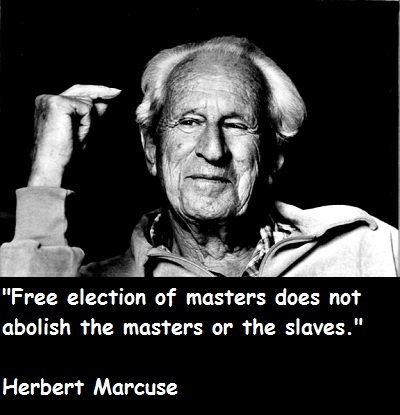
In his book Eros and Civilization, Herbert Marcuse outlined his vision of a non-repressive society, where Eros is viewed as a liberating and constructive power and how throughout history we humans have had to fight against the repression of our instincts. And why are our instincts repressed? According to Marcuse, in our modern capitalist system this suppression is done in the name of progress and performance. Marcuse's philosophy of aesthetics is an extension of this worldview.
I would like to cite a number of quotes from The Aesthetic Dimension and offer a brief commentary on how, in my view, Marcuse's ideas relate to present day American society and, by extension, to our 21st century world society.
"The truth of art lies in its power to break the monopoly of established reality to define what is real. In this rupture, which is the achievement of the aesthetic form, the fictitious world of art appears as a true reality."
Think of the advertisements one sees on television. Basically, all the ads are presenting a set, fixed view of what is real and what we as consumers should value – snazzy cars, colorful cellphones, hip soft-drinks, innovative drugs to keep us young and happy. Now think of some great American novels: Babbitt, Sister Carrie, Revolutionary Road, A Fan's Notes, A Thousand Acres, The Sportswriter. We have to admit: the reality presented in these novels is quite different from the reality of the advertisers; in a word, the fictional world of the novelist's art is more in keeping with the depth of our human experience, or, in Marcuse’s language, "more real."
Along the same lines, here is another quote: "Compared with the often one-dimensional optimism of propaganda, art is permeated with pessimism, not seldom intertwined with comedy."
Again, think of some contemporary writers, Jane Smiley, Joyce Carol Oats, Richard Ford, Cynthia Ozick, for example. Marcuse's description fits quite well - the world presented in the novels and stories of these writers is, indeed, permeated with pessimism (alienated suburbanites, battered children, suicides, unbearable memories, etc. etc.) and also intertwined with a healthy dose of comedy.
"In this sense art is "art for art sake" inasmuch as the aesthetic form reveals tabooed and repressed dimensions of reality: aspects of liberation."
I couldn't agree more: our exposure to such art and literature is liberating; the more we are given an opportunity via art to see the dark, repressed dimensions of our world, the greater our freedom. Much better and more freeing than being glued to the pseudo-world of the television and other mass-media. To underscore this point, Herbert Marcuse writes: "Art's separation from the process of material production has enabled it to demystify the reality reproduced in this process. Art challenges the monopoly of the established reality to determine what is `real', and it does so by creating a fictitious world which is nevertheless "more real than reality itself."
"Aesthetic formation proceeds under the law of the Beautiful, and the dialectic of affirmation and negation, consolation and sorrow is the dialectic of the Beautiful. Marxist aesthetics has sharply rejected the idea of the Beautiful, the central category of "bourgeois" aesthetics. It seems difficult indeed to associate this concept with revolutionary art; it seems irresponsible, snobbish to speak of the Beautiful in the face of the necessities of the political struggle."
Lovers of literature and art of the world unite! Political philosophy is not one of my major interests, but I think it's safe to say that Marxism as a political ideology is more dead than alive today. But the cultural exploitation of people by mass media is very much alive and kicking. So, if lovers of literature and art of the world unite and grow in numbers, then there could be a massive shift, for example, from hours sitting in front of the TV to enjoying literature and exposure to the various fine arts.

July 24, 2018
مقالهایست در باب زیباشناسی و نقد زیباییشناسی مارکسی از مارکوزه که داریوش مهرجویی بر آن شرحی نوشته طولانی، و نثری دارد دشوار، و زیبا

May 15, 2020
Το κείμενο αναφέρεται στην αισθητική της λογοτεχνίας.
Υποστηρίζει την αυτονομία της τέχνης αντί της μαρξιστικής αισθητικής σε γενικές γραμμές.
Απευθύνεται σε προχωρημένους αναγνώστες αισθητικής φιλοσοφίας(οχι πάντως σε μένα!)
Γενικά η αισθητική είναι ένα από τα δυσκολότερα θέματα που μπορεί να ασχοληθεί κάποιος και μια αισθητική θεώρηση θα μπορούσε να έχει περισσότερα παραδείγματα για να γίνει πιο κατανοητή..
Αν ψάχνετε πηγές βρείτε κάποιο άλλο κείμενο
Υποστηρίζει την αυτονομία της τέχνης αντί της μαρξιστικής αισθητικής σε γενικές γραμμές.
Απευθύνεται σε προχωρημένους αναγνώστες αισθητικής φιλοσοφίας(οχι πάντως σε μένα!)
Γενικά η αισθητική είναι ένα από τα δυσκολότερα θέματα που μπορεί να ασχοληθεί κάποιος και μια αισθητική θεώρηση θα μπορούσε να έχει περισσότερα παραδείγματα για να γίνει πιο κατανοητή..
Αν ψάχνετε πηγές βρείτε κάποιο άλλο κείμενο

October 9, 2020
Totalmente diferente do que eu esperava que Marcuse escreveria a respeito de arte. Mais um ataque ao Lukács e ao marxismo vulgar do que qualquer outra coisa. Datado em vários sentidos: usa o conceito de "universal" e insiste em divisão entre forma e conteúdo. Ainda assim, cheio de ideias boas e uma ponte para o pós-marxismo jamesoniano.

October 21, 2022
کتاب خیلی خوبی بود
اگرچه مبحث زیباشناسی و هنر رو از منظر کمونیسم بررسی کرده بود ولی فارغ از جهت گیری، درمورد چگونگی هنر خیلی الهام بخش و عالی بود
اگرچه مبحث زیباشناسی و هنر رو از منظر کمونیسم بررسی کرده بود ولی فارغ از جهت گیری، درمورد چگونگی هنر خیلی الهام بخش و عالی بود

March 17, 2017
I have to give it 5 stars, because it made such a huge impression on me in grad school (thank you, Arnold Davidson!). I re-read it with pleasure, but it was a kind of narcissistic enjoyment of fondly recollecting how much I loved it then, and why. I was surprised to find that much of what I remember as its central argument really isn't there, or is only there obliquely. For all its pronouncements, the actual argument is sketched or postulated rather than carefully constructed. Marcuse regularly refers to big ideas like form or transcendence, but what he means by them is not entirely clear. Upon this reading, what jumped out most to me were the (somewhat nascent) reflections on political affect, and on art vs theory, which are at the center of his critique of Marxist aesthetics.
But the book's central idea, that art has the power to define what is real, is one that I still love to believe.
But the book's central idea, that art has the power to define what is real, is one that I still love to believe.

April 14, 2017
This text seeks to challenge the “predominant orthodoxy” of Marxist aesthetics (ix). The basic thesis: “I see the political potential of art in art itself, in the aesthetic form as such. […] art is largely autonomous vis a vis the given social relations” (id.). Some bizarre idealism in the proposition that there’s an aesthetic “standard that remains constant” (x), and that there’re “demonstrable qualitative differences” between different texts (id.). Despite that silliness, political commitment in the notion that “the world really is as it appears in the work of art” (xii):
Opening premise is that aesthetic considerations demand justification in the “situation where the miserable reality can be changed only through radical praxis” (1). The easy answer is that what art expresses are “Essential components of revolution” (id.). This is not an orthodox position, and Marcuse is gunning for several orthodox Marxist ideas in this argument: art as related to the material basis, art as connected to class, revolutionary content and aesthetic merit as coinciding, the writer’s political obligation, the declining class as productive only of decadence, and realism as the preferred mode (1-2), art as mere class-bound ideology, say. Marcuse contest these on the basis of the “subjectivity of individuals” (3), a necessary component of revolution; he doubts that subjectivity doctrine is a ‘bourgeois notion’ (4). Further, he argues
Aesthetic form is defined as “the result of the transformation of a given content (actual or historical, personal or social fact) into a self-contained whole: a poem, play, novel, etc. The work is this ‘taken out’ of the constant process of reality and assumes a significance and truth of its own” (8). The work “represents reality while accusing it” (id.). A work is “authentic [!] or true not by virtue of its content (i.e., the ‘correct’ representation of social conditions), nor by its pure form, but by the content having become form” (id.)—very much not an orthodox or Soviet position. This is art’s autonomy, which does not produce false consciousness, but rather “counter-consciousness: negation of the realistic-conformist mind” (9). Repression, unfreedom, and so on can only be represented “in an estranging form” (10); “only as estrangement does art fulfill a cognitive function; it communicates truths not communicable in any other language” (id.). (Some thoughtful comments on brechtian estrangement (43 ff).) The “autonomy of art contains the categorical imperative: ‘things must change’” (13); the “necessity of revolution is presupposed, as the a priori of art” (14). Art’s autonomy is ultimately a reflection of “the unfreedom of individuals in the unfree society” (72).
Against the orthodox position that art is related to the material basis, Marcuse argues that “Marxist aesthetics must explain why Greek tragedy and the medieval epic, for example, can still be experienced today as ‘great,’ ‘authentic’ literature, even though they pertain to ancient slave society and feudalism” (15). The answer, of course, is that reception based on residual subject positions carried in readers as inherited dogmatism are responsive to ancient forms, through which the ancient forms work to produce the consciousness requisite for the finding that the texts are great or authentic or whatever—there’s no need for transhistoricism, even in refuting the vulgar position. Even so, it is plain that not everyone finds ancient texts great or authentic, alienated precisely by the antiquation or the slave society content and so on; that school kids are generally coerced to read the classics might suggest that there is little transhistorical value here. Author is otherwise quite correct that aesthetics can’t be controlled by the class character of the artist (18), or the presence vel non of the oppressed class in the text (19). He adopts Benjamin’s notion of ‘consciousness of crisis,’ wherein rightwing writers (Baudelaire, say) deploy “a pleasure in decay, in destruction, in the beauty of evil; a celebration of the asocial, of the anomic—the secret rebellion of the bourgeois against his own class” (20). I happen to think of the quoted ideas as lumpenized antisocial nihilist, and that they are inherently fascistic—we need not adopt the rightwing objection to liberalism in making our own opposition; we kinda want those to the right of liberalism to cease & desist, too.
Anticipates Baudrillard in proclaiming that art’s autonomy from the basis allows it to challenge “the monopoly of the established reality to determine what is ‘real,’ and it does so by creating a fictitious world which is nevertheless ‘more real than reality itself’” (22). Wants to proclaim “the individualization of the social” (25) as a virtue, as against the orthodox position that “the privatization of the social, the sublimation of reality, the idealization of love and death are […] conformist and repressive ideology” (26). Defines, rather than describes, the proletariat as “free from the values of this society and thus free for the liberation of all” (30), which strikes me as the worst sort of wishful thinking after 2016. Important caveat in “art cannot change the world, but it can contribute to changing the consciousness and drives” of those who are to make the change (32).
Nifty agambenian resonance in “the possibility of an alliance between ‘the people’ and art presupposes that the men and women administered [sic] by monopoly capitalism unlearn the language, concepts, and images of this administration” (37)—i.e., such things, per Agamben, must become inoperative: “we are experiencing, not the destruction of every whole, every unit or unity, every meaning, but rather the rule and power of the whole, the superimposed, administered unification. Not disintegration but reproduction and integration of that which is, is the catastrophe” (50). Indeed, “administered human beings today reproduce their own repression and eschew a rupture with the given reality” (71).
Some annoying Freudian discussion here and there; some irritation at language such as “instinctual structure of individuals” (17), which is doubly silly. Some arguments about pornography (40 ff). The happy ending is “the other of art,” it seems (47); the work of art “does not conceal that which is—it reveals” (56). The “dialectic of affirmation and negation, consolation and sorrow is the dialectic of the Beautiful” (62).
Recommended for species beings capable of classless society, those who are bulwarks against a society that administers all dimensions of human existence, and readers who make necessity into choice and alienation into self-realization.
This thesis implies that literature is not revolutionary because it is written for the working class or for ‘the revolution.’ Literature can be called revolutionary in a meaningful sense only with reference to itself, as content having become form. The political potential of art lies in its own aesthetic dimension. Its relation to praxis is inexorably indirect, mediated, and frustrating. The more immediately political the work of art, the more it reduces the power of estrangement and the radical, transcendent goals of change. (xii-xiii).Under this principle, there is more subversive potential in de Maistre devotee Baudelaire than in Brecht (xiii).
Opening premise is that aesthetic considerations demand justification in the “situation where the miserable reality can be changed only through radical praxis” (1). The easy answer is that what art expresses are “Essential components of revolution” (id.). This is not an orthodox position, and Marcuse is gunning for several orthodox Marxist ideas in this argument: art as related to the material basis, art as connected to class, revolutionary content and aesthetic merit as coinciding, the writer’s political obligation, the declining class as productive only of decadence, and realism as the preferred mode (1-2), art as mere class-bound ideology, say. Marcuse contest these on the basis of the “subjectivity of individuals” (3), a necessary component of revolution; he doubts that subjectivity doctrine is a ‘bourgeois notion’ (4). Further, he argues
the radical qualities of art, that is to say [cf. Agamben on Plotinus on this phrase], its indictment of the established reality and its invocation of the beautiful image (schoner Schein) of liberation are grounded precisely in the dimensions where art transcends its social determination and emancipates itself from the given universe of discourse (6)This is its subversive function. Aesthetic sublimation has an affirmative character and desublimation, a negating character (7). The affirmative character arises out of an Aristotelian catharsis, apparently, insofar as the aesthetic form permits the work to “call fate by its name, to demystify its force, to give the word to the victims” (10). (Catharsis is “an ontological rather than a psychological event,” NB (59).)
Aesthetic form is defined as “the result of the transformation of a given content (actual or historical, personal or social fact) into a self-contained whole: a poem, play, novel, etc. The work is this ‘taken out’ of the constant process of reality and assumes a significance and truth of its own” (8). The work “represents reality while accusing it” (id.). A work is “authentic [!] or true not by virtue of its content (i.e., the ‘correct’ representation of social conditions), nor by its pure form, but by the content having become form” (id.)—very much not an orthodox or Soviet position. This is art’s autonomy, which does not produce false consciousness, but rather “counter-consciousness: negation of the realistic-conformist mind” (9). Repression, unfreedom, and so on can only be represented “in an estranging form” (10); “only as estrangement does art fulfill a cognitive function; it communicates truths not communicable in any other language” (id.). (Some thoughtful comments on brechtian estrangement (43 ff).) The “autonomy of art contains the categorical imperative: ‘things must change’” (13); the “necessity of revolution is presupposed, as the a priori of art” (14). Art’s autonomy is ultimately a reflection of “the unfreedom of individuals in the unfree society” (72).
Against the orthodox position that art is related to the material basis, Marcuse argues that “Marxist aesthetics must explain why Greek tragedy and the medieval epic, for example, can still be experienced today as ‘great,’ ‘authentic’ literature, even though they pertain to ancient slave society and feudalism” (15). The answer, of course, is that reception based on residual subject positions carried in readers as inherited dogmatism are responsive to ancient forms, through which the ancient forms work to produce the consciousness requisite for the finding that the texts are great or authentic or whatever—there’s no need for transhistoricism, even in refuting the vulgar position. Even so, it is plain that not everyone finds ancient texts great or authentic, alienated precisely by the antiquation or the slave society content and so on; that school kids are generally coerced to read the classics might suggest that there is little transhistorical value here. Author is otherwise quite correct that aesthetics can’t be controlled by the class character of the artist (18), or the presence vel non of the oppressed class in the text (19). He adopts Benjamin’s notion of ‘consciousness of crisis,’ wherein rightwing writers (Baudelaire, say) deploy “a pleasure in decay, in destruction, in the beauty of evil; a celebration of the asocial, of the anomic—the secret rebellion of the bourgeois against his own class” (20). I happen to think of the quoted ideas as lumpenized antisocial nihilist, and that they are inherently fascistic—we need not adopt the rightwing objection to liberalism in making our own opposition; we kinda want those to the right of liberalism to cease & desist, too.
Anticipates Baudrillard in proclaiming that art’s autonomy from the basis allows it to challenge “the monopoly of the established reality to determine what is ‘real,’ and it does so by creating a fictitious world which is nevertheless ‘more real than reality itself’” (22). Wants to proclaim “the individualization of the social” (25) as a virtue, as against the orthodox position that “the privatization of the social, the sublimation of reality, the idealization of love and death are […] conformist and repressive ideology” (26). Defines, rather than describes, the proletariat as “free from the values of this society and thus free for the liberation of all” (30), which strikes me as the worst sort of wishful thinking after 2016. Important caveat in “art cannot change the world, but it can contribute to changing the consciousness and drives” of those who are to make the change (32).
Nifty agambenian resonance in “the possibility of an alliance between ‘the people’ and art presupposes that the men and women administered [sic] by monopoly capitalism unlearn the language, concepts, and images of this administration” (37)—i.e., such things, per Agamben, must become inoperative: “we are experiencing, not the destruction of every whole, every unit or unity, every meaning, but rather the rule and power of the whole, the superimposed, administered unification. Not disintegration but reproduction and integration of that which is, is the catastrophe” (50). Indeed, “administered human beings today reproduce their own repression and eschew a rupture with the given reality” (71).
Some annoying Freudian discussion here and there; some irritation at language such as “instinctual structure of individuals” (17), which is doubly silly. Some arguments about pornography (40 ff). The happy ending is “the other of art,” it seems (47); the work of art “does not conceal that which is—it reveals” (56). The “dialectic of affirmation and negation, consolation and sorrow is the dialectic of the Beautiful” (62).
Recommended for species beings capable of classless society, those who are bulwarks against a society that administers all dimensions of human existence, and readers who make necessity into choice and alienation into self-realization.

Read
December 14, 2010Marcuse has such a high opinion of art and art's potential that I was at times reminded, almost against my will, of Schopenhauer - although thankfully Marcuse sidesteps Schopenhauer's quasi-ecstatic mysticism and sees art as very much engaged with liberation. He also avoids arguing that all art has utilitarian obligations (or rather, he seems to argue that "art for art's sake" is an ethical use of art - it's a bit complicated). The book is also quite quotable.
On Oedipus Rex and eternal art:
Tragedy and the revolution (tragedy often bothers me, ethically):
And the point of the essay:
Marcuse: still better than Heidegger!
On Oedipus Rex and eternal art:
Great literature knows a guiltless guilt which finds its first authentic expression in Oedipus Rex. Here is the domain of that which is changeable and that which is not. Obviously there are societies in which people no longer believe in oracles, and there may be societies in which there is no incest taboo, but it is difficult to imagine a society which has abolished what is called chance or fate, the encounter at the crossroads, the encounter of the lovers, but also the encounter with hell.
Tragedy and the revolution (tragedy often bothers me, ethically):
Tragedy is always and everywhere while the satyr play follows it always and everywhere; joy vanishes faster than sorrow. This insight, inexorably expressed in art, may well shatter faith in progress but it may also keep alive another image and another goal of praxis, namely the reconstruction of society and nature under the principle of increasing the human potential for happiness. The revolution is for the sake of life, not death.
And the point of the essay:
Inasmuch as art preserves, with the promise of happiness, the memory of the goals that failed, it can enter, as a "regulative idea," the desperate struggle for changing the world. Against all fetishism of the productive forces, against the continued enslavement of individuals by the objective conditions (which remain those of domination), art represents the ultimate goal of all revolutions: the freedom and happiness of the individual.
Marcuse: still better than Heidegger!
February 12, 2023
Den marxistiske æstetikteori har indtil videre kun forstået kunst som et fænomen, der producerer og opretholder den herskende ideologi. Her: den borgerlige. Ideologikritisk forstået: at kunsten skaber en falsk bevidsthed, der ikke repræsenterer virkeligheden som den er i sig selv, men i stedet på forskellig vis holder den undertryktes klasses revolutionære ånd nede. I stedet, mener Marcuse, at kunsten symboliserer en mod-ideologi, en virkelighedstranscendens, hvori klassekampens emancipatoriske potentiale beskrives. Kunsten bekræfter ikke de materielle forhold, men forholder sig til dem ved at skabe et univers, hvori virkeligheden er anderledes. Hvor de materielle vilkår er vendt på hovedet; en verden som den kunne se ud. På den måde, konkluderer Marcuse, er kunsten illusoriske virkelighed, faktisk mere sand end den konkrete, autentiske virkelighed. Den 'rigtige' virkelighed er nemlig ideologiseret, mystificeret og gennemsyret af borgerlige normer og ideale. Kun i kunsten fremtræder tingene som de virkelig er.
November 7, 2017
A very interesting (but also a bit difficult) read on art and literature! Marcuse ideas on how great literature should work are very clever and note-worthy and I will definitely look to them next time I am reading a book.

January 6, 2009
I have a favorite quote from this book, that I share frequently in my classes:
"Art breaks opne a dimension inaccessible to other experience, a dimension in which human beings, nature, and things no longer stand under the law of the established reality principle...The encounter with the truth of art happens in the estanging language and images which make perceptible, visible, and audible that which is no longer, or not yet, perceived, said, and heard in everyday life."
"Art breaks opne a dimension inaccessible to other experience, a dimension in which human beings, nature, and things no longer stand under the law of the established reality principle...The encounter with the truth of art happens in the estanging language and images which make perceptible, visible, and audible that which is no longer, or not yet, perceived, said, and heard in everyday life."
March 12, 2008
اين مقاله را مي توان از مهمترين دستاورد هاي مكتب فرانكفورتي ها در زمينه ي زيبايي شناسي به حساب آورد كه البته اميد مهرگان هم اين مقاله را به همراه دو مقاله يديگر از آدورنو و بنيامين در كتاب ديگري ترجمه نموده است.

February 19, 2013
I probably would have enjoyed this more if I knew more about Marxism, which I don't know a whole lot about. So ... a lot of this was confusing for me. But otherwise, it had some cool ideas in it and I found it interesting.
July 8, 2008
This book solidified my decision to study political theory. Art and culture are political, too! And the aesthetic (music, art)can speak volumes more than the political rhetorician. It inspires.

April 23, 2011
What a ridiculous piece of trash.

September 13, 2023
(quotes lack pg #s because of the formatless pdf I had- bad practice, sorry, I know)
“Art cannot change the world, but it can contribute to changing the consciousness and drives of the men and women who could change the world.”
I decided to dive a little deeper into Marcuse because I enjoyed his essay Repressive Tolerance. I found the clarity and pointedness of that piece lacking in Aesthetic Dimension, but there's still some interesting and worthy ideological meat to chew on here.
To preface, I assess it to be generally accepted that the prevailing Marxist belief is that all cultural critique (culture war) must necessarily be sublimated into the class war. Marcuse seems to agree- leftist infighting, in this sense, can feel tantamount to counting grains of sand on the beach (futile and stupid!). (Note that I use, here, the terms Marxist and leftist interchangeably- please do not let the linguistic orthodoxy police cancel me. Thanks)
In the text, Marcuse takes aim at the orthodox Marxist idea that aesthetics for their own sake (as in, not in service of a proletarian class consciousness) are a pacifying bourgeois force. Marcuse argues for leftism to better examine and define its own aesthetics, that introspective art, ostensibly without political mooring or a call to arms, can nonetheless serve as a liberating force:
"The more immediately political the work of art, the more it reduces the power of estrangement and the radical, transcendent goals of change."
He posits that art may serve as a tool of resistance to social repression, and as such it is mistake to alienate the "beauty" and innate humanness from art:
"Art has yet another source: it is in the commitment of art to Eros, the deep affirmation of the Life Instincts in their fight against...oppression. The permanence of art, its historical immortality throughout the millennia of destruction, bears witness to this commitment."
With this eudaimonistic outlook, Marcuse interrogates the perpetuity and relevance of ancient classics in culture:
"Marxist aesthetics has yet to ask : What are the qualities of art which transcend the specific social content and form and give art its universality? Marxist aesthetics must explain why Greek tragedy and the medieval epic, for example, can still be experienced today as "great," "authentic" literature, even though they pertain to ancient slave society and feudalism respectively. Marx's remark at the end of The Introduction to the Critique of Political Economy is hardly persuasive; one simply cannot explain the attraction of Greek art for us today as our rejoicing in the unfolding of the social "childhood of humanity.""
I think many would argue that literature often exposes universal human truths, or emotional truths, which is why such texts can be relevant and resonate on an emotional level even when in a completely different sociopolitical context. Of course, a literary theorist or sociologist may note that the reader is always projecting their own lens of reality onto a text (see Barthes' Death of the Author here).
Marcuse argues just that:
"We can tentatively define "aesthetic form" as the result of the transformation of a given content (actual or historical, personal or social fact) into a self-contained whole: a poem, play, novel, etc. The work is thus "taken out" of the constant process of reality and assumes a significance and truth of its own...The work of art thus represents reality while accusing it."
Marcuse elaborates that the qualities and meaning of a text are inherent to it, and engages with art on the terms of its own reality (that is, accepting it removed from the class position of the creator):
"What is true of "the classics of socialism" is true also of the great artists : they break through the class limitations of their family, background, environment."
and then:
"The progressive character of art, its contribution to the struggle for liberation cannot be measured by the artists' origins nor by the ideological horizon of their class. Neither can it be determined by the presence ( or absence) of the oppressed class in their works. The criteria for the progressive character of art are only in the work itself as a whole: in what it says and how it says it."
The essential critique is that Marxist aesthetics are wrong to prioritize class struggle above the self when it comes to art, as it expunges the very facets that makes art transcendental and universal.
“This privatization of the social, the sublimation of reality, the idealization of love and death are often branded by Marxist aesthetics as conformist and repressive ideology. It condemns the transformation of social conflicts into personal fate, the abstraction from the class situation, the "elitist" character. of the problems, the illusionary autonomy of the protagonists. Such condemnation overlooks the critical potential which asserts itself precisely in the sublimation of the social content. Two worlds collide, each of which has its particular truth. Fiction creates its own reality which remains valid even when it is denied by the established reality. The right and wrong of individuals confront social right and wrong.”
For example, we can look to the USSR censoring what are just plainly good texts (such as Dr Zhivago) that resonate deeply and are of high literary merit, for failing to adequately emphasize Soviet ideology.
Marcuse says "Aesthetic form is not opposed to content, not even dialectically. In the work of art, form becomes content and vice versa." I couldn't agree more. This reminds me of Frank Lloyd Wright's quote:
"Form follows function—that has been misunderstood. Form and function should be one, joined in a spiritual union."
I always stress- the medium is the message, form serves as function, and forms are given weight by society and receive their very shape from convention. It would be interesting to hear Marcuse’s take on the internet and other such evolving modes of communication giving way to new and increasingly accessible (therefore proletarian) forms and thus functions.
He sort of gets at this as he goes on, "The qualitative difference of art does not constitute itself in the selection of a particular field where art could preserve its autonomy. Nor would it do to seek out a cultural area not yet occupied by the established society. Attempts have been made to argue that pornography and the obscene are islands of nonconformist communication. But such privileged areas do not exist. Both obscenity and pornography have long since been integrated. As commodities they too communicate the repressive whole."
Taken to its logical conclusion, this would mean there is no medium or sector of art which is in itself inherently subversive- I am not sure I agree with this, but I do think the mores of the established society are present, whether reflected in or railed against, in even the most "fringe" arenas of art.
The text is deeply concerned with differentiating between authentic vs inauthentic art, but in my view struggles to articulate this difference. I fear that in this pursuit, Marcuse falls victim to the same weakness that he is criticizing in the leftist movement, which is sort of putting the cart before the horse in a sense: he seeks to ingratiate art that is “Beauty,” or invokes the human truths mentioned earlier, with a Revolutionary worldview and notes that themes that run contrary to the material reality of the world ring hollow:
“If art were to promise that at the end good would triumph over evil, such a promise would be refuted by the historical truth. In reality it is evil which triumphs, and there are only islands of good where one can find refuge for a brief time. Authentic works of art are aware of this; they reject the promise made too easily; they refuse the unburdened happy end. They must reject it, for the realm of freedom lies beyond mimesis.”
To an extent I agree with this. Though a dreary view of the world (perhaps nihilistic), this reminds me of criticisms surrounding the vacant escapism of franchises such as the MCU, and the recent hollow utopianism of the Barbie movie, which have both been lambasted as corporate propaganda encroaching on the territory of “real film.” To that note, I will say I liked the Barbie movie! I wonder if there is not a place for escapist “art.” I also think that the aesthetics of even corporate propaganda nonetheless constitute art and there can be interesting insights into the zeitgeist from a period’s most commercial offerings. After all, without “pop art” there would be no counterculture or revolutionary art, as culture and counterculture are in discourse with each other.
The text says:
“If it is at all meaningful to speak of a mass base for art in capitalist society, this would refer only to pop art and best sellers. In the present, the subject to which authentic art appeals is socially anonymous; it does not coincide with the potential subject of revolutionary practice. And the more the exploited classes, "the people," succumb to the powers that be, the more will art be estranged from "the people." Art can preserve its truth, it can make conscious the necessity of change, only when it obeys its own law as against that of reality.”
The self-flagellation of Lenin, specifically named, is representative of the aesthetics of the Marxist movement as a whole, and its adherents. Their rejection of non-adequately-revolutionary art, simply put, misses the point of art.
Marcuse says: “Marxist aesthetics has sharply rejected the idea of the Beautiful, the central category of "bourgeois" aesthetics. It seems difficult indeed to associate this concept with revolutionary art; it seems irresponsible, snobbish to speak of the Beautiful in the face of the necessities of the political struggle.”
but then he goes on to say that:
“However, in a certain sense, the Beautiful seems to be "neutral" It can be a quality of a regressive as well as progressive ( social) totality. One can speak of the beauty of a fascist feast. ( Leni Riefenstahl has filmed it! )”
I think the early Marxist aesthetic eschewing the classically beautiful (recall brutalism) is in fact precisely because of fascist aesthetics. In the mid 20th century, as fascism rose to power across Europe, a renewed interest in the importance of "classical" aesthetics as a way of recalling a lost sort of cultural or ethnic birthright rose too. Fascism still does this, of course- bygone aesthetics must be held as the preeminent, or "correct," form of art and culture in order to maintain fascism's inherently conservative ideologically- there must not be innovation, or the new. I believe that the early Marxist aesthetic was in part a practical maneuver to position the movement as not only ideologically opposed to fascism (and, in the case of the USSR, the formal aesthetic of the Tsarship and Orthodox Church), but to juxtapose Marxism and Fascism in the realm of the material.
You could argue Marcuse's point is that this is unnecessary, which I don't disagree with, but it is less relevant today as when this text was written as the movement has grown away from those strict aesthetics and modernized. Of course, this makes the text feel a little dated!
"The institutions of a socialist society, even in their most democratic form, could never resolve all the conflicts between the universal and the particular, between human beings and nature, between individual and individual."
In short, *garbled yelling from combat wounded veteran's eat more blood money*
“Art cannot change the world, but it can contribute to changing the consciousness and drives of the men and women who could change the world.”
I decided to dive a little deeper into Marcuse because I enjoyed his essay Repressive Tolerance. I found the clarity and pointedness of that piece lacking in Aesthetic Dimension, but there's still some interesting and worthy ideological meat to chew on here.
To preface, I assess it to be generally accepted that the prevailing Marxist belief is that all cultural critique (culture war) must necessarily be sublimated into the class war. Marcuse seems to agree- leftist infighting, in this sense, can feel tantamount to counting grains of sand on the beach (futile and stupid!). (Note that I use, here, the terms Marxist and leftist interchangeably- please do not let the linguistic orthodoxy police cancel me. Thanks)
In the text, Marcuse takes aim at the orthodox Marxist idea that aesthetics for their own sake (as in, not in service of a proletarian class consciousness) are a pacifying bourgeois force. Marcuse argues for leftism to better examine and define its own aesthetics, that introspective art, ostensibly without political mooring or a call to arms, can nonetheless serve as a liberating force:
"The more immediately political the work of art, the more it reduces the power of estrangement and the radical, transcendent goals of change."
He posits that art may serve as a tool of resistance to social repression, and as such it is mistake to alienate the "beauty" and innate humanness from art:
"Art has yet another source: it is in the commitment of art to Eros, the deep affirmation of the Life Instincts in their fight against...oppression. The permanence of art, its historical immortality throughout the millennia of destruction, bears witness to this commitment."
With this eudaimonistic outlook, Marcuse interrogates the perpetuity and relevance of ancient classics in culture:
"Marxist aesthetics has yet to ask : What are the qualities of art which transcend the specific social content and form and give art its universality? Marxist aesthetics must explain why Greek tragedy and the medieval epic, for example, can still be experienced today as "great," "authentic" literature, even though they pertain to ancient slave society and feudalism respectively. Marx's remark at the end of The Introduction to the Critique of Political Economy is hardly persuasive; one simply cannot explain the attraction of Greek art for us today as our rejoicing in the unfolding of the social "childhood of humanity.""
I think many would argue that literature often exposes universal human truths, or emotional truths, which is why such texts can be relevant and resonate on an emotional level even when in a completely different sociopolitical context. Of course, a literary theorist or sociologist may note that the reader is always projecting their own lens of reality onto a text (see Barthes' Death of the Author here).
Marcuse argues just that:
"We can tentatively define "aesthetic form" as the result of the transformation of a given content (actual or historical, personal or social fact) into a self-contained whole: a poem, play, novel, etc. The work is thus "taken out" of the constant process of reality and assumes a significance and truth of its own...The work of art thus represents reality while accusing it."
Marcuse elaborates that the qualities and meaning of a text are inherent to it, and engages with art on the terms of its own reality (that is, accepting it removed from the class position of the creator):
"What is true of "the classics of socialism" is true also of the great artists : they break through the class limitations of their family, background, environment."
and then:
"The progressive character of art, its contribution to the struggle for liberation cannot be measured by the artists' origins nor by the ideological horizon of their class. Neither can it be determined by the presence ( or absence) of the oppressed class in their works. The criteria for the progressive character of art are only in the work itself as a whole: in what it says and how it says it."
The essential critique is that Marxist aesthetics are wrong to prioritize class struggle above the self when it comes to art, as it expunges the very facets that makes art transcendental and universal.
“This privatization of the social, the sublimation of reality, the idealization of love and death are often branded by Marxist aesthetics as conformist and repressive ideology. It condemns the transformation of social conflicts into personal fate, the abstraction from the class situation, the "elitist" character. of the problems, the illusionary autonomy of the protagonists. Such condemnation overlooks the critical potential which asserts itself precisely in the sublimation of the social content. Two worlds collide, each of which has its particular truth. Fiction creates its own reality which remains valid even when it is denied by the established reality. The right and wrong of individuals confront social right and wrong.”
For example, we can look to the USSR censoring what are just plainly good texts (such as Dr Zhivago) that resonate deeply and are of high literary merit, for failing to adequately emphasize Soviet ideology.
Marcuse says "Aesthetic form is not opposed to content, not even dialectically. In the work of art, form becomes content and vice versa." I couldn't agree more. This reminds me of Frank Lloyd Wright's quote:
"Form follows function—that has been misunderstood. Form and function should be one, joined in a spiritual union."
I always stress- the medium is the message, form serves as function, and forms are given weight by society and receive their very shape from convention. It would be interesting to hear Marcuse’s take on the internet and other such evolving modes of communication giving way to new and increasingly accessible (therefore proletarian) forms and thus functions.
He sort of gets at this as he goes on, "The qualitative difference of art does not constitute itself in the selection of a particular field where art could preserve its autonomy. Nor would it do to seek out a cultural area not yet occupied by the established society. Attempts have been made to argue that pornography and the obscene are islands of nonconformist communication. But such privileged areas do not exist. Both obscenity and pornography have long since been integrated. As commodities they too communicate the repressive whole."
Taken to its logical conclusion, this would mean there is no medium or sector of art which is in itself inherently subversive- I am not sure I agree with this, but I do think the mores of the established society are present, whether reflected in or railed against, in even the most "fringe" arenas of art.
The text is deeply concerned with differentiating between authentic vs inauthentic art, but in my view struggles to articulate this difference. I fear that in this pursuit, Marcuse falls victim to the same weakness that he is criticizing in the leftist movement, which is sort of putting the cart before the horse in a sense: he seeks to ingratiate art that is “Beauty,” or invokes the human truths mentioned earlier, with a Revolutionary worldview and notes that themes that run contrary to the material reality of the world ring hollow:
“If art were to promise that at the end good would triumph over evil, such a promise would be refuted by the historical truth. In reality it is evil which triumphs, and there are only islands of good where one can find refuge for a brief time. Authentic works of art are aware of this; they reject the promise made too easily; they refuse the unburdened happy end. They must reject it, for the realm of freedom lies beyond mimesis.”
To an extent I agree with this. Though a dreary view of the world (perhaps nihilistic), this reminds me of criticisms surrounding the vacant escapism of franchises such as the MCU, and the recent hollow utopianism of the Barbie movie, which have both been lambasted as corporate propaganda encroaching on the territory of “real film.” To that note, I will say I liked the Barbie movie! I wonder if there is not a place for escapist “art.” I also think that the aesthetics of even corporate propaganda nonetheless constitute art and there can be interesting insights into the zeitgeist from a period’s most commercial offerings. After all, without “pop art” there would be no counterculture or revolutionary art, as culture and counterculture are in discourse with each other.
The text says:
“If it is at all meaningful to speak of a mass base for art in capitalist society, this would refer only to pop art and best sellers. In the present, the subject to which authentic art appeals is socially anonymous; it does not coincide with the potential subject of revolutionary practice. And the more the exploited classes, "the people," succumb to the powers that be, the more will art be estranged from "the people." Art can preserve its truth, it can make conscious the necessity of change, only when it obeys its own law as against that of reality.”
The self-flagellation of Lenin, specifically named, is representative of the aesthetics of the Marxist movement as a whole, and its adherents. Their rejection of non-adequately-revolutionary art, simply put, misses the point of art.
Marcuse says: “Marxist aesthetics has sharply rejected the idea of the Beautiful, the central category of "bourgeois" aesthetics. It seems difficult indeed to associate this concept with revolutionary art; it seems irresponsible, snobbish to speak of the Beautiful in the face of the necessities of the political struggle.”
but then he goes on to say that:
“However, in a certain sense, the Beautiful seems to be "neutral" It can be a quality of a regressive as well as progressive ( social) totality. One can speak of the beauty of a fascist feast. ( Leni Riefenstahl has filmed it! )”
I think the early Marxist aesthetic eschewing the classically beautiful (recall brutalism) is in fact precisely because of fascist aesthetics. In the mid 20th century, as fascism rose to power across Europe, a renewed interest in the importance of "classical" aesthetics as a way of recalling a lost sort of cultural or ethnic birthright rose too. Fascism still does this, of course- bygone aesthetics must be held as the preeminent, or "correct," form of art and culture in order to maintain fascism's inherently conservative ideologically- there must not be innovation, or the new. I believe that the early Marxist aesthetic was in part a practical maneuver to position the movement as not only ideologically opposed to fascism (and, in the case of the USSR, the formal aesthetic of the Tsarship and Orthodox Church), but to juxtapose Marxism and Fascism in the realm of the material.
You could argue Marcuse's point is that this is unnecessary, which I don't disagree with, but it is less relevant today as when this text was written as the movement has grown away from those strict aesthetics and modernized. Of course, this makes the text feel a little dated!
"The institutions of a socialist society, even in their most democratic form, could never resolve all the conflicts between the universal and the particular, between human beings and nature, between individual and individual."
In short, *garbled yelling from combat wounded veteran's eat more blood money*
August 25, 2023
{All reification is a forgetting.” Art fights reification by making the petrified world speak, sing, perhaps dance. Forgetting past suffering and past joy alleviates life under a repressive reality principle. In contrast, remembrance spurs the drive for the conquest of suffering and the permanence of joy. But the force of remembrance is frustrated: joy itself is overshadowed by pain. } from the book
In my discussions with my "leftist" friends, particularly those who adhere strictly to orthodox viewpoints, we frequently delve into conversations concerning the realm of art and its distinct role, often referred to as the "performance principle" as articulated by Marcuse. Despite their admirable intellect and good intentions, some of them tend to dismiss certain art forms, such as the entire classical music repertoire, as decadent, non-socialist, or lacking in revolutionary spirit – often branding them as products of the bourgeoisie.
Marcuse's brilliance in dissecting the aesthetic dimension of our society shines through, as he fearlessly critiques not only orthodox Marxists but also pivotal figures like Marx himself and Hegel for their failure to fully grasp the liberating potential of art and the unique sphere it inhabits. His concise essay serves as a valuable guide for untangling the intricate relationship between art and the advanced capitalist society, especially in an era where an artist's work is profoundly shaped by both personal experiences and the socio-cultural milieu they are immersed in.
In my discussions with my "leftist" friends, particularly those who adhere strictly to orthodox viewpoints, we frequently delve into conversations concerning the realm of art and its distinct role, often referred to as the "performance principle" as articulated by Marcuse. Despite their admirable intellect and good intentions, some of them tend to dismiss certain art forms, such as the entire classical music repertoire, as decadent, non-socialist, or lacking in revolutionary spirit – often branding them as products of the bourgeoisie.
Marcuse's brilliance in dissecting the aesthetic dimension of our society shines through, as he fearlessly critiques not only orthodox Marxists but also pivotal figures like Marx himself and Hegel for their failure to fully grasp the liberating potential of art and the unique sphere it inhabits. His concise essay serves as a valuable guide for untangling the intricate relationship between art and the advanced capitalist society, especially in an era where an artist's work is profoundly shaped by both personal experiences and the socio-cultural milieu they are immersed in.

August 24, 2023
As for anything coming from this guy, I disagree with it from the core of my being. That itself is not usually enough to deserve one star. Still, in combination with the sheer difficulty of making any sensible sentence, Marcuse falls short of gaining any kind of sympathy for his writing. This is utter garbage. He may sound intellectual, but he is a mind closed off by his political view that he spews out the kind of nonsesibilites that this text is full of. He even focuses his aesthetic dimension on the art of writing, but from what I read of what he uses of literature he has a very limited view of both art, writing, and aesthetics in general. Also, he seems to have read a very narrow kind of literature. I may have come in from the wrong end, by reading his last work, so I still have my mind open to reading his more important texts, but it is not something I'm looking forward to.
September 11, 2020
نقد جذري للنظرية الماركسية الجمالية، لم يكتف ماركوز بنقدها، بل نسفها.
وعرض كذلك نظريته الجمالية، ومن ابرز سماتها هو رؤيته بان البعد الثوري والسياسي والتحرري في الفن يكمن في البعد او الشكل الجمالي للفن، وحتى وظيفته النقدية ونضاله في سبيل التحرر يكمن كذلك في الشكل الجمالي، لا في اي بعد او شكل اخر.
وسمه اخرى لنظريته هو رؤيته للاستقلال الذاتي للفن، الذي اعتبرها انعكاس لغياب حرية الناس في المجتمع القمعي.
الرائع بالكتاب هو تأملات ماركوز الراديكالية، سواء في الشعر او الروايات او الموسيقى، او تأملاته في الجمال المجرد.
الكتاب وايد قوي وفاخر، ولا زال يحتفظ بشيء من راديكاليته حتى بعد مرور تقريبا ٥٥-٦٠ سنة على كتابته.
وعرض كذلك نظريته الجمالية، ومن ابرز سماتها هو رؤيته بان البعد الثوري والسياسي والتحرري في الفن يكمن في البعد او الشكل الجمالي للفن، وحتى وظيفته النقدية ونضاله في سبيل التحرر يكمن كذلك في الشكل الجمالي، لا في اي بعد او شكل اخر.
وسمه اخرى لنظريته هو رؤيته للاستقلال الذاتي للفن، الذي اعتبرها انعكاس لغياب حرية الناس في المجتمع القمعي.
الرائع بالكتاب هو تأملات ماركوز الراديكالية، سواء في الشعر او الروايات او الموسيقى، او تأملاته في الجمال المجرد.
الكتاب وايد قوي وفاخر، ولا زال يحتفظ بشيء من راديكاليته حتى بعد مرور تقريبا ٥٥-٦٠ سنة على كتابته.
Read
July 6, 2024Marcuse reexamines the orthodox Marxist notion of art that prioritized objectivity over subjectivity/individuality. Traditional Marxists consider realism the only authentic form of art that speaks from class consciousness. They believe no art is separate from its materialist condition. Marcuse argues that aesthetics comes from within. Individual feelings, emotions, expressions, and history are the source of true art. Revolutionary art does not essentially talk about ascending class. It defies social reality with its form and content.
May 4, 2020
This essay on the validitation of authenticity and truth in revolutionary art (in this case modernist literature) could favourably be applied to the commodity aesthetics in contemporary society; specifically the promise of some commodities to ascribe the consumer with autonomy, subjectivity and agency to transcend social conditions and the constraints of the market.
June 20, 2020
Very engaging essay overall. 5-stars doesn't mean it's the source of ultimate truth, but it's very very good. You can disagree with everything he says, and it would still be a 5 star essay, given the extremely easy to read parts and the organized ideas.
70 pages of Marcuse read like 1 paragraph by Hegel.
70 pages of Marcuse read like 1 paragraph by Hegel.
October 15, 2024
MARCUSE OFFERS HIS THOUGHTS ON ART
Herbert Marcuse (1898-1979) was a German philosopher, sociologist, and political theorist, associated with the Frankfurt School of critical theory, until he moved to the United States in 1934. (He was even briefly one of the "darlings" of the Student Movement of the 1960s.)
He wrote in the Preface of this 1977 book, “This essay seeks to contribute to Marxist aesthetics through questioning its predominant orthodoxy. By ‘orthodoxy’ I understand the interpretation of the quality and truth of a work of art in terms of the totality of the prevailing relations of production. Specifically, this interpretation holds that the work of art represents the interests and world outlook of particular social classes in a more or less accurate manner. My critique of this orthodoxy is grounded in Marxist theory inasmuch as it also views art in the context of the prevailing social relations, and ascribes to art a political function and a political potential. But in contrast to orthodox Marxist aesthetics I see the political potential of art in art itself, in the aesthetic form as such. Furthermore, I argue that by virtue of its aesthetic form, art is largely autonomous vis à vis the given social relations. In its autonomy art both protests these relations, and at the same time transcends them. Therefore art subverts the dominant consciousness, the ordinary experience.”
He continues, “a work of art can be called revolutionary if, by virtue of the aesthetic transformation, it represents, in the exemplary fate of individuals, the prevailing unfreedom and the rebelling forces, thus breaking through the mystified (and petrified) social reality, and opening the horizon of change (liberation)… The truth of art lies in this: that the world really is as it appears in the work of art.”
He says in the first chapter, “I shall submit the following thesis: the radical qualities of art, that is to say, its indictment of the established reality and its invocation of the beautiful image… of liberation are grounded precisely in the dimension where art TRANSCENDS its social determination and emancipates itself from the given universe of discourse and behavior while preserving its overwhelming presence. Thereby art creates the realm in which the subversion of experience proper to art becomes possible: the world formed by art is recognized as a reality which is suppressed and distorted in the given reality.” (Pg. 6)
He continues, “The transcendence of immediate reality shatters the reified objectivity of established social relations and opens a new dimension of experience: rebirth of the rebellious subjectivity. Thus, on the basis of aesthetic sublimation, a DESUBLIMATION takes place in the perception of individuals---in their feelings, judgments, thoughts; an invalidation of dominant norms, needs, and values. With all its affirmative-ideological features, art remains a dissenting force…
"The aesthetic transformation is achieved through a reshaping of language, perception, and understanding so that they reveal the essence of reality in its appearance: the repressed potentialities of man and nature. The work of art thus re-presents reality while accusing it.” (Pg. 7-8) He adds, “The truth of art lies in its power to break the monopoly of established reality (i.e., of those who established it) to DEFINE what is REAL. In this rupture, which is the achievement of the aesthetic form, the fictitious world of art appears as true reality.” (Pg. 9)
He observes, “The artist’s desperate effort to make art a direct expression of life cannot overcome the separation of art from life… Nor can these differences be bridged by simply letting things happen (noises, movements, chitchat, etc.) and incorporating them, unaltered, into a definite ‘frame’ (e.g., a concert hall, a book). The immediacy thus expressed is false inasmuch as it results from a mere abstraction from the real-life context which establishes this immediacy. The latter is thus mystified: it does not appear as what it is and does---it is a synthetic, artistic immediacy.” (Pg. 50-51)
He acknowledges, “There is in art inevitably an element of hubris: art cannot translate its vision into reality. It remains a ‘fictitious’ world, though as such it sees through and anticipates reality. Thus art corrects its ideality: the hope which it represents ought not to remain mere ideal. This is the hidden categorical imperative of art. Its realization lies outside of art.” (Pg. 57-58)
He concludes, “Art reflects this dynamic in its insistence on its own truth, which has its ground in social reality and is yet its ‘other.’ Art breaks open a dimension inaccessible to other experience, a dimension in which human beings, nature, and things no longer stand under the law of the established reality principle. Subjects and objects encounter the appearance of that autonomy which is denied them in their society. The encounter with the truth of art happens in the estranging language and images which make perceptible, visible, and audible that which is no longer, or not yet, perceived, said, and heard in everyday life.” (Pg. 72)
This is a highly interesting book, and one which is very different from Marcuse’s other, more explicitly “political” works. It will be of great interest to anyone studying Marcuse, or contemporary aesthetic theory.
Herbert Marcuse (1898-1979) was a German philosopher, sociologist, and political theorist, associated with the Frankfurt School of critical theory, until he moved to the United States in 1934. (He was even briefly one of the "darlings" of the Student Movement of the 1960s.)
He wrote in the Preface of this 1977 book, “This essay seeks to contribute to Marxist aesthetics through questioning its predominant orthodoxy. By ‘orthodoxy’ I understand the interpretation of the quality and truth of a work of art in terms of the totality of the prevailing relations of production. Specifically, this interpretation holds that the work of art represents the interests and world outlook of particular social classes in a more or less accurate manner. My critique of this orthodoxy is grounded in Marxist theory inasmuch as it also views art in the context of the prevailing social relations, and ascribes to art a political function and a political potential. But in contrast to orthodox Marxist aesthetics I see the political potential of art in art itself, in the aesthetic form as such. Furthermore, I argue that by virtue of its aesthetic form, art is largely autonomous vis à vis the given social relations. In its autonomy art both protests these relations, and at the same time transcends them. Therefore art subverts the dominant consciousness, the ordinary experience.”
He continues, “a work of art can be called revolutionary if, by virtue of the aesthetic transformation, it represents, in the exemplary fate of individuals, the prevailing unfreedom and the rebelling forces, thus breaking through the mystified (and petrified) social reality, and opening the horizon of change (liberation)… The truth of art lies in this: that the world really is as it appears in the work of art.”
He says in the first chapter, “I shall submit the following thesis: the radical qualities of art, that is to say, its indictment of the established reality and its invocation of the beautiful image… of liberation are grounded precisely in the dimension where art TRANSCENDS its social determination and emancipates itself from the given universe of discourse and behavior while preserving its overwhelming presence. Thereby art creates the realm in which the subversion of experience proper to art becomes possible: the world formed by art is recognized as a reality which is suppressed and distorted in the given reality.” (Pg. 6)
He continues, “The transcendence of immediate reality shatters the reified objectivity of established social relations and opens a new dimension of experience: rebirth of the rebellious subjectivity. Thus, on the basis of aesthetic sublimation, a DESUBLIMATION takes place in the perception of individuals---in their feelings, judgments, thoughts; an invalidation of dominant norms, needs, and values. With all its affirmative-ideological features, art remains a dissenting force…
"The aesthetic transformation is achieved through a reshaping of language, perception, and understanding so that they reveal the essence of reality in its appearance: the repressed potentialities of man and nature. The work of art thus re-presents reality while accusing it.” (Pg. 7-8) He adds, “The truth of art lies in its power to break the monopoly of established reality (i.e., of those who established it) to DEFINE what is REAL. In this rupture, which is the achievement of the aesthetic form, the fictitious world of art appears as true reality.” (Pg. 9)
He observes, “The artist’s desperate effort to make art a direct expression of life cannot overcome the separation of art from life… Nor can these differences be bridged by simply letting things happen (noises, movements, chitchat, etc.) and incorporating them, unaltered, into a definite ‘frame’ (e.g., a concert hall, a book). The immediacy thus expressed is false inasmuch as it results from a mere abstraction from the real-life context which establishes this immediacy. The latter is thus mystified: it does not appear as what it is and does---it is a synthetic, artistic immediacy.” (Pg. 50-51)
He acknowledges, “There is in art inevitably an element of hubris: art cannot translate its vision into reality. It remains a ‘fictitious’ world, though as such it sees through and anticipates reality. Thus art corrects its ideality: the hope which it represents ought not to remain mere ideal. This is the hidden categorical imperative of art. Its realization lies outside of art.” (Pg. 57-58)
He concludes, “Art reflects this dynamic in its insistence on its own truth, which has its ground in social reality and is yet its ‘other.’ Art breaks open a dimension inaccessible to other experience, a dimension in which human beings, nature, and things no longer stand under the law of the established reality principle. Subjects and objects encounter the appearance of that autonomy which is denied them in their society. The encounter with the truth of art happens in the estranging language and images which make perceptible, visible, and audible that which is no longer, or not yet, perceived, said, and heard in everyday life.” (Pg. 72)
This is a highly interesting book, and one which is very different from Marcuse’s other, more explicitly “political” works. It will be of great interest to anyone studying Marcuse, or contemporary aesthetic theory.

August 31, 2021
من الكتاب ص ٩٠
...
فحتى الفرح يبقى أسيرَ ظلِّ الألم، أهذا محتّم؟ أن أفق التاريخ لا يزال مفتوحًا.
ولو كان للذكرى أشياء الماضي أن تغدو قوّة محرِّكة في الكفاح من أجل تغيير العالم، لأفاد هذا الكفاح ثورة كانت قد قُمعت في الثورات التاريخية المعروفة إلى يومنا هذا.
...
فحتى الفرح يبقى أسيرَ ظلِّ الألم، أهذا محتّم؟ أن أفق التاريخ لا يزال مفتوحًا.
ولو كان للذكرى أشياء الماضي أن تغدو قوّة محرِّكة في الكفاح من أجل تغيير العالم، لأفاد هذا الكفاح ثورة كانت قد قُمعت في الثورات التاريخية المعروفة إلى يومنا هذا.
July 6, 2020
ترجمهٔ بسیار بد آقای مهرجویی
September 29, 2021
O horizonte da história ainda está aberto.

November 20, 2024
najlepszy jest chłop, niepoprawny, realny utopista i optymista
June 30, 2025
“A experiência estética é em si uma forma de liberdade.”

July 24, 2025
i konsten bevaras minnet, framåtsyftande mot den socialistiska revolutionen… och som vi minns. jag minns nu.
Read
April 10, 2026marcuse, no. negation is always more interesting than the transvaluation part
Displaying 1 - 30 of 43 reviews