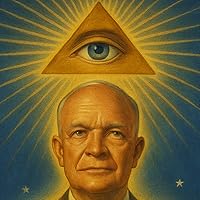
For many people, the word mysticism conjures up occult, secretive rituals held after midnight in some dark cave. But true mysticism isn't at all sinister or secretive, says author John Mabry, an Anglican-rite Congregational minister. In fact, mysticism is at the heart of an authentic Christian life. It is nothing more and nothing less than the pursuit-and enjoyment-of union with God, which is the goal of all Christian spirituality. Christian mysticism is the discipline of growing the soul into God--shedding illusory identities, deepening prayer, seeing God in all things, and acting as Christ in the world.
Mabry's great passion is to bring theology to everyday life by explaining complex ideas in everyday language that anyone can understand and find useful. In Growing into God, he "demystifies" mysticism, providing a friendly and accessible entry point to some of the teachings, practices, and experiences of the Christian mystical tradition. Mabry explores the classic mystical journey, which begins with the Awakening of a unitive consciousness that experiences everything as Divine and interconnected. The journey continues with Purgation, in which we empty ourselves of illusion; Illumination, in which we begin to see God in all things and all things in God; and, finally, Union, in which we marry our lives with God's life. Our hands become God's hands, our lips become God's lips, our touch becomes God's touch, in order to bring help, comfort, and healing to the world.
,p>Along the way, and with an entertaining teacher's clarity, Mabry recounts the stories of many Christian mystics, including inspiring quotations. He also enriches each chapter with questions and answers to simplify points as well as experiential practices to help readers embark upon the mystical journey themselves
I've been writing ever since the third grade, when I produced my first short story. I am a United Church of Christ pastor, and teach world religions and spiritual direction at the Chaplaincy Institute (an interfaith seminary in Berkeley, CA). I also sing for two progressive rock bands, Mind Furniture and Metaphor. My wife Lisa Fullam and I live in Oakland with our two lovely dogs Judy and Sally. I don't write heavy, academic books. I write books for regular folk like you and me who want to explore their spirituality and get closer to God. In my fiction, I want to show people of faith as they actually are—screwed up, insecure, and often bumbling—but still usually trying to do the right thing.
An excellent, readable and friendly introduction to mysticism. Mabry makes the practice understandable and accessible. It is what I have needed, i.e., an encouragement into a transition from knowledge about God to a greater relating to Him, especially an apophatic kind (an experience often unmediated by the structures of traditional organized religion). He takes some liberties that conservative Christians may not be completely comfortable with, but overall a very good book
”If you were but aware of it, and if you aren't careful, you could drown in grace. It's that plentiful. It's that free."
I found this book deeply frustrating, because it was so close to being great and then fell short. It has some great nuggets, like the quote that begins this review, and its description of the stages of mysticism is accurate and succinct. Unfortunately, however, there are also some passages which are not only heretical from a traditional Christian point of view, but border on offensive. Particularly notable are the passage in which he says the Blessed Mother shamed her family (her cousin Elizabeth seems to have received her happily enough) and the one in which he describes Jesus' baptism as "a horrible crisis of identity”.
All in all, I can't recommend this work, despite its good points.
“Among the medieval mystics of the West, however, we see another sort of mysticism: we and God are already one thing, of the same essence or substance, but because of human sin, we are ignorant of our true nature.”
“Awakening is a momentary flash of insight when we are granted a glimpse of the universe as God sees it.”
“God cannot pour himself into a jar that is already full, it must first be emptied of all attachments, all selfhood, all desire, and all illusion before it can be filled with what is Real.”
“This is the task of Christian mysticism, to point out to us how our view of the world, including ourselves is limited and then to assist us in overcoming this limitation so we might see the world as God sees it”
“We are graced with increasingly longer glimpses of the world-as-it-is, the world as God beholds it. The world that the disciples beheld is the same one we are living in now. It is a transfigured world, shining with glory, brimming with divinity, touching, filling, sustaining, and loving all things. The only problem is we do not see it. And the reason we don't see it is that we are living in our own Shoddy Lands.”
“Jesus didn't meet the disciples in holy, rarified places like the desert. He met them at work, in the midst of their daily lives. He met them while they were casting their nets, sorting their fish, resting under fig trees. He met them not in the temple but in the most ordinary surroundings.”
“God is closer to us than the vein of our own neck; that it is not only in the temples and the sanctuaries that God becomes present to us, but in the rearing of children, in the commute to work, in the washing of dishes, in the cuddling of spouses. For if God is not real to us in our actual lives, where we actually live, then what good is God to us?”
“No awareness of God in All Things is likely to occur to us unless we can become quiet enough to notice it.”
"For God alone my soul waits in silence."
“The mystics call this stage of quiet 'Deprivation' and they describe it as a kind of death. And it is. It is death to the constant, obsessive busy-ness our culture insists upon. It is death to the illusion of the solitary soul.”
“So which is it? Is this world separate from God, a place into which God shows up as an interloper, as Divine sparks inhabiting otherwise worthless bits of matter? Or are all things just God in disguise, enveloped in an ocean of divinity?”
“We realize that God is not in the world, but that the world is in God.”
“These times of frustration and rage are exactly the times when we most need to see all things in God. For then their power over us is revealed to be the illusion that it is, and their power to disrupt our peace is undone.”
"The eye with which I see God is the same eye with which God sees me."
“For this is the true end of mysticism, this is the true end of all genuine religion, of all authentic spirituality, that we reach out in love to those who need us; that we allow our hands to be God's hands; that we let go of our selfishness and pride and begin to desire what God desires, which is only and everywhere to love, to heal, to comfort, to bring joy and justice and faith and hope and, yes, the greatest of these, love.”
“People will tell you that you do not need friends on this journey, that God is enough. But to be with God's friends is a good way to keep close to God in this life.”
I usually prefer to read source material rather than books that are “A Beginner’s Guide…”, but this definitely worked for me. The writing is clear and understandable, especially compared to most of the subject’s source material which can be really hard to digest. It doesn’t read like a how-to guide (which is good)but it helped me frame my experiences and develop an idea of a path forward. Lots of additional things to read after this.
Favorite quote that isn’t from an actual mystic: “As long as we have harmful or inadequate images of God, it's going to affect (usually negatively) how we relate to God. After all, in all of our relationships, do we ever actually relate to others? No. We are only ever relating to our internalized projections of others. I don't say "hi" to you, I say "hi" to the person I think you are. And who I think you are impacts how I treat you and the kind of relationship we have. This is true of all of our relationships-and it’s just as true of our relationship with God.” P. 84
I love this branch of Christianity, where spiritual exploration is at its core. This beginner’s guide breaks down its principles in a way that sometimes invites you to reread—not because it’s hard to grasp, but because it’s so profoundly enlightening that it feels like your soul is being understood. The Christian Mystics, in my view, embody the archetypes that captivate us in nearly every aspect of human experience and form the foundational meaning behind so many fictional stories where the character goes through the darkest of times, find their way back into the light and actually understand the meaning of what that light even is. The section at the end, with common questions and the author’s thoughtful answers, was especially helpful. It beautifully highlights how paradox is a key part of spirituality. Embracing the mystery as it is truly feels like part of the journey.
Way too much material to absorb in a single reading -several terms sent me the dictionary over and over. For a beginner's guide to Christian Mysticism it presents a almost an overabundance of stuff to remember to think about and to absorb. This was not what I thought I was picking up when I requested it -more a discussion of the mystics themselves -who they were etc. rather than pathways and practices. Although I found it confusing and frustrating at times there is a wealth of good direction etc. I found the questions section in the back to be particularly helpful. Overall a good read but one I may have to return to really understand Three stars after all of that is said.
This was a great book. All other books on mysticism were dry and impossibly dense( Mysticism by Evelyn Underhill). Turns out he ripped his whole structure from her. Well she did it first but he did it better. He explained it in progressive phases, gave a series of qoutes feom various mystics, then answered questions from his students. This method was perfect. He broke everything down in layman's terms. Even the appendices helped my understanding. He also used comparative religion examples which expand my understanding greatly. Great read. I want to read his other books.
I think this is a great introduction to Christian mysticism. It helps make very esoteric concepts more easily understood. I have some personal theological qualms with Mabry’s pluralistic leanings, especially as he paints them as almost a natural end result of a mystical path (which I don’t really subscribe to). Ultimately, though, my personal issues with his theology aren’t reflective of the usefulness of the book. It’s a great intro text, and I’m excited to use it as a resource in an upcoming book club I’m hosting. I’m grateful a book like this exists for us beginners!
A nice entry read into Christian mysticism. I expected a bit more technical explanations, theology and the like, but besides that minor issue, you get a sense of the way mystics use language in a particular way; they tend to talk about God and their experiences in a certain fashion. I especially liked the perennial religious thoughts! Should look more into that.
A solid introductory text that, for better and for worse, radiates "cool youth pastor" energy. Vaguely misogynist at times despite a preface explaining that the author is a feminist. Good information, though, and it points you towards a lot of useful follow-up reading.
This was an interesting book. He explained Christian mysticism in a way I could understand. However, this doesn't seem like it would be a path I would realistically follow. Or would want to. 🤔 But I do have more respect for those who do choose that path. It is not an easy one.
This is a good introduction to the Christian mysticism which is a topic which can be a bit mystifying to many, even those who are somewhat acquainted with it. Mabry tries to address this confusion and, largely, succeeds with his accessible writing style and his talent for breaking things down (as a teacher, I recognize the skill). The result is that he manages to make the whole process much less mystifying and even doable. That is an advance, already, over most books on mysticism. I think the reason for his effectiveness is that he comes at it from spiritual direction, so he has already considered practical application, rather than theory. The result is an informative, but realistic introduction to how to fit mysticism into one's life.
Mabry goes over the recognized stages of mysticism- Awakening, Purgation, Dark Night of the Soul, Dark Night of the Spirit, Illumination. He combines excellent explanations with examples, mostly from the Christian mystics. I particularly enjoyed the sections which outline the lives of various mystics (not that I didn't know them, but I'm a sucker for a bit of biography). He makes an interesting distinction between kataphatic and apophatic mystics- kataphatic mystics prefer to think in terms of images and relationship, while apophatic mystics tend to silence and imageless contemplation. I recognize that I tend to be more kataphatic than not. I totally concede the importance of an apophatic caution; that is, no image is going to really define God. I certain think that almost every theological discussion (especially the Trinity) should be prefaced by 'we don't really know how this works..." as a reminder that our images are not the box we can put God into, but I tend to find all out apophaticism difficult to fathom and more abstract than is good for me. That isn't to say it's invalid- only I just don't get it.
A last caution. Mabry is fundamentally Christian, but has a tendency, common among mystics, to move easily between traditions and religions. I don't mind the bouncing around in the Christian traditions as I tend to, but I found the bouncing between Buddhism and Christianity a bit distracting. Other like that multi-faith approach, but I tend to want to stay in the Christian imagery. That isn't to say that mystics from other religions have nothing to say to Christian, but that they use a different language of mysticism and I don't always think we pay attention to the fact that different concepts can have very different meanings in different contexts. In the West, we have a tendency to accept a facile comparison between religions, so tend to want to spend my time plumbing the depths of my own faith tradition. That is just me.
However, still an excellent book and well worth reading.
Growing into God provides an easily manageable overview of the study of Christian mysticism. I appreciated the range of writers included in the discussion, from ancient to 20th century, and that both Protestant and Catholic mystics were mentioned. Mabry includes a section with questions and answers. This gives a feeling of being in a lecture hall and having other students present to ask questions of the author and text.
The books was not the best fit for me because I already have done a lot of reading in this area. I think I would prefer to read several books that go into more detail, rather than an introductory format. This is a personal preference.
I received a copy of this book free through a Goodreads First Reads giveaway.
I'm actually still reading the appendices of this book,but I feel able to write a review. I've read a fair amount on and of mystics and mysticism, and this would be an excellent introduction to the subject for anyone who is looking for a place to start. The main part of the book itself is short,just 120 pages, but the appendices of questions and answers and mystics on mysticism make it about 300. Highly recommended for anyone with an interest in mysticism. Good for beginners, but not just for them. Simple,direct and conversational.
Heretical and disrespectful more than once-- and I'm not even a fundamentalist. It's fine to write about mysticism, but don't call it 'Christian mysticism' when you're going to mock Jesus and contradict the core tenants of your target audience. Mabry hugely lost credibility on his topic because of this. However, the quotes at the end are good and led me to better literature.
This is an all-time spiritual classic. It's brilliance cannot be underestimated! It is at the very top of my list when it comes to plumbing the depths of prayer. -Amos Smith (Author of Healing The Divide: Recovering Christianity's Mystic Roots)