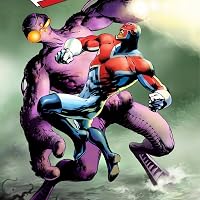
The continuing saga of Sigurd Jarlson, the mortal Thor!
He may be strong and good with a hammer, but Sigurd Jarlson is still only a man. The Cobra is something else. And he’s not alone. Donald Blake has sent four of Roxxon’s deadliest assassins after Sigurd, and they won’t stop until he quits — or he dies. Even when Sigurd goes on the run, he still has a weakness his enemies can exploit. He has neighbors, friends — maybe even more than friends. And the man called Mister Hyde knows it.
I feel like Ewing has struck gold with this Mortal Thor. I wish it was going more than 15 issues because I'm having fun with this normal guy who may be more than a normal guy being constantly attacked by random bad guys of the Marvel universe.
Somehow, Ewing pits Regular Guy Sigurd against typical Thor foes like Grey Gargoyle, Radioactive Man, and the Minotaur and doesn't make it seem unlikely that he'd win. Sigurd's got a hammer, a length of bungee cord, and a prayer, and that's all he really needs.
Meanwhile, chaos reigns back in Asgard as Modi does his best but the Enchantress makes her own moves. I love that Ewing can juggle so much and make it all seem so effortless, rather than that he's forgetting about things until they need to be relevant again. Then again, I should be used to him doing stuff like this by now, it's why he's one of my favourite writers these days.
For one arc of Immortal Thor, Al stepped back from the mythic, revisited earthly adversaries from early Thor stories, showed how even characters who'd become part of Marvel's general grab-bag of C-list villains might still threaten a god. And, having established that, how much more deadly are the likes of Mr Hyde, the Cobra and the Radioactive Man to Sigurd Jarlson who is, after all, only a man with a hammer? Still ticking along in the background, of course, are the hints that he might not be, and that even if Earth no longer remembers the gods of Asgard, it still runs by strange myths of its own, such as corporate personhood.
As phenomenal the first book is, the breadth in time from the last volume makes this book feel more underwhelming in comparison as the issues come to feel more “villain of the week” with the last encounter setting up a moment that could have rebuilt momentum but feels like a cliffhanger. Future readers who are able to read the series directly in succession will likely enjoy this better. The issue centering on Radioactive Man, however, was particularly phenomenal.