

What do you think?

Rose & Renzo
Manchester 1936
Fascism looms in Europe, and Oswald Mosley’s Blackshirts are on the rise.
After the death of their father, two sisters arrive in Manchester’s vibrant ‘Little Italy’: creative misfit, Rose and her much older sister, Ivy. Fearing Rose’s impulsiveness, Ivy seeks to control Rose, forcing her to give up her cherished place at art school.
Frustrated and desperate to pursue her passion, Rose meets Renzo, a painter arrived from Europe. Their connection is instant and powerful. Yet as their feelings deepen, Renzo’s past in Mussolini’s Italy remains a mystery.
As Blackshirts march across the city, Rose is drawn to the fight against fascism, even as she’s compelled to face the devastating question: just which side is Renzo on?
Fascism looms in Europe, and Oswald Mosley’s Blackshirts are on the rise.
After the death of their father, two sisters arrive in Manchester’s vibrant ‘Little Italy’: creative misfit, Rose and her much older sister, Ivy. Fearing Rose’s impulsiveness, Ivy seeks to control Rose, forcing her to give up her cherished place at art school.
Frustrated and desperate to pursue her passion, Rose meets Renzo, a painter arrived from Europe. Their connection is instant and powerful. Yet as their feelings deepen, Renzo’s past in Mussolini’s Italy remains a mystery.
As Blackshirts march across the city, Rose is drawn to the fight against fascism, even as she’s compelled to face the devastating question: just which side is Renzo on?
- GenresHistorical Fiction
320 pages, Paperback
Published May 14, 2026
About the author
Carolyn O'Brien
2 books12 followersCarolyn O’Brien was born in Manchester. She studied English at Cambridge University before qualifying as a solicitor. She now works part-time as a consultant lawyer as well as writing historical fiction. Her writing has a strong sense of the north-west of England and its radical past, as illustrated by her first novel THE SONG OF PETERLOO which was published to coincide with the bicentenary of the Peterloo Massacre. Her second novel ROSE & RENZO, published May 2026, is a 1930s love story set in the ‘Little Italy’ district of Manchester against the backdrop of rising fascism.
Carolyn lives near Manchester with her family.
Carolyn lives near Manchester with her family.
Ratings & Reviews
Friends & Following
Create a free account to discover what your friends think of this book!
Community Reviews
Displaying 1 - 30 of 42 reviews

May 25, 2026
"A pearl-moon had risen in the clearing between the nearest mill and its chimney. The crowd was gone, but in the gloaming, several courting couples had sought out the place..." (p.143)
This is a love story set in 1930s Manchester against the tense backdrop of rising fascism in Europe (including the British Union of Fascists led by Oswald Mosley, whose thugs were known as "Biff Boys"). The heroine, Rose, dreams of going to art school (according to the author's note the character was partly inspired by Leonora Carrington). I liked the way the author, early on, showed that Rose was capable of standing up for herself, and smart enough to question received wisdom. For readers familiar with Manchester there is the added pleasure of recognising locations - especially with the initial meeting in the art gallery.
Many thanks to Northodox Press for the review copy 💚📚
This is a love story set in 1930s Manchester against the tense backdrop of rising fascism in Europe (including the British Union of Fascists led by Oswald Mosley, whose thugs were known as "Biff Boys"). The heroine, Rose, dreams of going to art school (according to the author's note the character was partly inspired by Leonora Carrington). I liked the way the author, early on, showed that Rose was capable of standing up for herself, and smart enough to question received wisdom. For readers familiar with Manchester there is the added pleasure of recognising locations - especially with the initial meeting in the art gallery.
Many thanks to Northodox Press for the review copy 💚📚

January 23, 2026
Through the compelling love story at the heart of this novel, O’Brien brings to life the “Little Italy” area of Manchester in the mid-1930s. Fascism was on the rise across Europe including, through Mosley, among the English working class. This is unfortunately resonant now.
Rose, the main character, is complex, sympathetic and realistic: sensitive but single-minded, determined and strong but trapped by her sister and their circumstances, intelligent but hampered by dyslexia, artistic, passionate and frustrated by her lack of power. I liked her a lot. Even when she was cowardly or selfish, her behaviour was understandable and her remorse touching.
Renzo is very much worthy of her feelings towards him, clearly the only person she meets with whom she can connect properly. His innate goodness is apparent even though his past is an intriguing mystery. All the secondary characters are also well drawn and multifaceted. I am particularly fond of Lil, Rose’s Mancunian-Italian neighbour, with her mixed dialect, kindness, aesthetic, and disruptive pet bird.
Descriptions are vivid, with lovely language and striking imagery, very much drawing on Rose’s sensitivity to and knowledge of art. Her own expression through drawing and painting develops within the art movements of the time, demonstrating her personal growth over the course of the novel. The dialogue is entertaining and realistic, with the flirting and arguments consistent with the setting, as well as engaging for a reader now. These interactions do a great job at showing how frustrating it must have been to be as restricted as young women were then, also the constraints of poverty and individual helplessness in the face of political oppression. But the novel also celebrates fighting back, passions and camaraderie, small pleasures, empathy, youth, kindness, overwhelming romantic love, the seizing of control over elements of our own lives and standing up for others.
The plot is propulsive, weaving historical events and individual dilemmas. The depth of research underpinning all this is apparent, with details gracefully woven with subtlety into the story and descriptions. I was immersed in the time and place, its poverty, festivals, food, warmth and injustices. Rose and Renzo is absorbing and addictive, conjuring a world and characters which have stayed with me long after reading it.
Rose, the main character, is complex, sympathetic and realistic: sensitive but single-minded, determined and strong but trapped by her sister and their circumstances, intelligent but hampered by dyslexia, artistic, passionate and frustrated by her lack of power. I liked her a lot. Even when she was cowardly or selfish, her behaviour was understandable and her remorse touching.
Renzo is very much worthy of her feelings towards him, clearly the only person she meets with whom she can connect properly. His innate goodness is apparent even though his past is an intriguing mystery. All the secondary characters are also well drawn and multifaceted. I am particularly fond of Lil, Rose’s Mancunian-Italian neighbour, with her mixed dialect, kindness, aesthetic, and disruptive pet bird.
Descriptions are vivid, with lovely language and striking imagery, very much drawing on Rose’s sensitivity to and knowledge of art. Her own expression through drawing and painting develops within the art movements of the time, demonstrating her personal growth over the course of the novel. The dialogue is entertaining and realistic, with the flirting and arguments consistent with the setting, as well as engaging for a reader now. These interactions do a great job at showing how frustrating it must have been to be as restricted as young women were then, also the constraints of poverty and individual helplessness in the face of political oppression. But the novel also celebrates fighting back, passions and camaraderie, small pleasures, empathy, youth, kindness, overwhelming romantic love, the seizing of control over elements of our own lives and standing up for others.
The plot is propulsive, weaving historical events and individual dilemmas. The depth of research underpinning all this is apparent, with details gracefully woven with subtlety into the story and descriptions. I was immersed in the time and place, its poverty, festivals, food, warmth and injustices. Rose and Renzo is absorbing and addictive, conjuring a world and characters which have stayed with me long after reading it.

May 8, 2026
Rose & Renzo is set in Manchester in 1936, where Rose is forced to move to "Little Italy" by her sister, Ivy, after the death of their parents. Rose must also give up on her dream of going to art school in order to work in an office to provide an additional income to provide for them both. There, she meets Freda, a Jewish girl, and begins to learn about the right wing activism taking place on her doorstep.
Rose also becomes friends with her Italian neighbours, much to the disgust of her sister, Ivy, who for some reason can't seem to see the good in anyone. Tensions between Rose and Ivy increase as Rose begins to fall for Italian, Renzo. And as hatred for the Jewish community continues, Rose is torn between knowing who to believe - her new Italian friends or her sister. The characters themselves are well developed. I loved Rose, Lil and Freda, in particular, but came to have little sympathy for Ivy, who was full of spite.
This is a beautifully written story, encapsulating lots of different themes. Rose and Renzo both have a passion for art and it forms the basis of their slowly emerging love story. The fascism angle is dealt with sensitively and, for someone like myself, who knew nothing of this part of Manchester's history, I found it very interesting and informative.
This is a very good historical fiction novel. I will always sing the praises of books set in the north, especially if written by northern based authors. I very much enjoyed it.
Thank you to the author and Northodox Press for sending me a proof.
Rose also becomes friends with her Italian neighbours, much to the disgust of her sister, Ivy, who for some reason can't seem to see the good in anyone. Tensions between Rose and Ivy increase as Rose begins to fall for Italian, Renzo. And as hatred for the Jewish community continues, Rose is torn between knowing who to believe - her new Italian friends or her sister. The characters themselves are well developed. I loved Rose, Lil and Freda, in particular, but came to have little sympathy for Ivy, who was full of spite.
This is a beautifully written story, encapsulating lots of different themes. Rose and Renzo both have a passion for art and it forms the basis of their slowly emerging love story. The fascism angle is dealt with sensitively and, for someone like myself, who knew nothing of this part of Manchester's history, I found it very interesting and informative.
This is a very good historical fiction novel. I will always sing the praises of books set in the north, especially if written by northern based authors. I very much enjoyed it.
Thank you to the author and Northodox Press for sending me a proof.

May 22, 2026
4.25 stars. Set between the wars in the Ancoats district of Manchester, O’Brien’s second novel tells the story of Rose and older sister Ivy. The Irvine sisters move from their Cheshire vicarage to the area known as ‘Little Italy’ following the death of their father.
Rose, encouraged by her late mother, longs to study Art but pragmatic Ivy feels she needs to grow up, knuckle down and earn a living. Brought back to earth with a bump, Rose starts work in the office of the local factory where her sister has secured her a position.
Unsettling tales are surfacing in the newsreels of the rise of Fascism in Europe with Hitler and Mussolini. Meanwhile in Manchester, Oswald Mosley is gaining ground and BUF Blackshirts bring violence and hate to the streets. The economic slump, unemployment and deprivation in the North all play their part and stir up disillusionment.
The historical backdrop to this story feels alarmingly prescient. I do wonder if O’Brien’s choice of time period was a conscious political decision. What was it Mark Twain once said? ‘History doesn’t repeat itself, but it often rhymes’.
I enjoyed the inclusion of the Italian diaspora in this tale. The sisters’ neighbours are the Galletti family who run an ice cream cafe. Matriarch Liliana offers the pair a warm embrace and feeds them plates of pasta. I loved her character, her indomitable nature and her will to keep Italian traditions alive in this sooty Northern town with its unceasing rain.
There’s a love story at the heart of this tale, ridden with a sense of urgency and of outside forces conspiring to bring these two people together or pull them apart.
I loved the inclusion of familiar Manchester landmarks, eg the Whitworth Gallery, references to art and to Florence. I learned about the Empoli Massacre of 1921 and the Battle of Cable Street in 1936 which Rose herself becomes an active participant in.
Rose and Renzo is an enlightening and timely reminder of our history and the fact that, ‘Freedom and liberation are never-ending tasks’ - Umberto Eco. I enjoyed it.
Huge thanks to @northodoxpressofficial for my proof copy.
Rose, encouraged by her late mother, longs to study Art but pragmatic Ivy feels she needs to grow up, knuckle down and earn a living. Brought back to earth with a bump, Rose starts work in the office of the local factory where her sister has secured her a position.
Unsettling tales are surfacing in the newsreels of the rise of Fascism in Europe with Hitler and Mussolini. Meanwhile in Manchester, Oswald Mosley is gaining ground and BUF Blackshirts bring violence and hate to the streets. The economic slump, unemployment and deprivation in the North all play their part and stir up disillusionment.
The historical backdrop to this story feels alarmingly prescient. I do wonder if O’Brien’s choice of time period was a conscious political decision. What was it Mark Twain once said? ‘History doesn’t repeat itself, but it often rhymes’.
I enjoyed the inclusion of the Italian diaspora in this tale. The sisters’ neighbours are the Galletti family who run an ice cream cafe. Matriarch Liliana offers the pair a warm embrace and feeds them plates of pasta. I loved her character, her indomitable nature and her will to keep Italian traditions alive in this sooty Northern town with its unceasing rain.
There’s a love story at the heart of this tale, ridden with a sense of urgency and of outside forces conspiring to bring these two people together or pull them apart.
I loved the inclusion of familiar Manchester landmarks, eg the Whitworth Gallery, references to art and to Florence. I learned about the Empoli Massacre of 1921 and the Battle of Cable Street in 1936 which Rose herself becomes an active participant in.
Rose and Renzo is an enlightening and timely reminder of our history and the fact that, ‘Freedom and liberation are never-ending tasks’ - Umberto Eco. I enjoyed it.
Huge thanks to @northodoxpressofficial for my proof copy.
August 29, 2026
This is a historical fiction novel set in 1936 Manchester against the backdrop of rising European fascism and Oswald Mosley’s Blackshirts. I really enjoyed it and learnt a lot about Italians in Manchester pre World War 2 and Mussolini ( particularly his invasion of Abyssinia). The characters were great and the story kept me hooked.

May 16, 2026
Rose & Renzo by Carolyn Obrien is an exquisite, outstanding 5 ⭐️ beautifully written powerful love story set in the 1930's during turbulent and difficult times.
The story is centred around Rose and her meeting Renzo.Their instant connection and their love of art is strong.
But meeting at a time where sides are chosen yet also unclear comes with its difficulties.
Rose is finding herself in world where friendships are forming yet different beliefs are challenged. Families are divided with fierce loyalties protecting their own and distrust of others. Her friendship with Freda opens her eyes to others experiences and she finds herself drawn to the fight against facism.
Rose with her mothers words reminding her 'know you worth', her sister Ivy trying to control Roses future but is it through love or her own selfishness?
This story is full of raw emotion and unspoken words. Rose is a wonderful character working life out, questioning everything in her own way but does she accept the opinions of others and life decisions made for her or is she brave enough to find out for herself and lead the life she wants to lead? Its an emotional story which at times I read with a lump in my throat and tears in my eyes.
No spoilers from me, trust me, you will keep turning the pages wanting to know.
I am a visual reader and the descriptive scene setting transported me right into to Roses world.
I felt I was there, it was so vivid, so beautifully written.The detail of all the history is an education.
Such a compelling, powerful and addictive story.
Loved It! I highly recommend
The story is centred around Rose and her meeting Renzo.Their instant connection and their love of art is strong.
But meeting at a time where sides are chosen yet also unclear comes with its difficulties.
Rose is finding herself in world where friendships are forming yet different beliefs are challenged. Families are divided with fierce loyalties protecting their own and distrust of others. Her friendship with Freda opens her eyes to others experiences and she finds herself drawn to the fight against facism.
Rose with her mothers words reminding her 'know you worth', her sister Ivy trying to control Roses future but is it through love or her own selfishness?
This story is full of raw emotion and unspoken words. Rose is a wonderful character working life out, questioning everything in her own way but does she accept the opinions of others and life decisions made for her or is she brave enough to find out for herself and lead the life she wants to lead? Its an emotional story which at times I read with a lump in my throat and tears in my eyes.
No spoilers from me, trust me, you will keep turning the pages wanting to know.
I am a visual reader and the descriptive scene setting transported me right into to Roses world.
I felt I was there, it was so vivid, so beautifully written.The detail of all the history is an education.
Such a compelling, powerful and addictive story.
Loved It! I highly recommend

May 29, 2026
1936. After the death of their Reverend father, Rose and her much older sister Ivy move to the industrial centre of Ancoats, Manchester. Manchester's 'Little Italy' is a far cry from the quiet Cheshire countryside, but creative Rose is looking forward to attending the city's art school in the autumn, as her beloved late mother wished. Unfortunately, Ivy has other plans - seeking to control Rose's independent spirit, she forces her to give up her dream and take an office job at one of the city's mills.
Rose is desolate, and totally unsuited to office work. However, her heart lifts when she meets Italian artist Renzo, the nephew of their downstairs neighbour, kindly Zizi Lili. An instant connection sparks between them, and the seeds of romance begin to bloom. But the ugly rise of fascism on the international stage is infecting the city. Oswald Mosley and his Blackshirts are determined to make Manchester a power base, and in 'Little Italy', where support for Mussolini and his cronies is openly spoken of, Mosley is finding sympathetic ears. Rose begins to wonder where Renzo's loyalties lie...
It makes my heart skip when I discover a novel that ticks every box on my literary want list, and Carolyn O'Brien has done just that with Rose and Renzo, a delicious love story set against the rise of fascism in the 1930s.
The story unfurls from the perspective of Rose, an artistically gifted twenty-year-old. For all her modern ideas, and fashionable shingled haircut, Rose still has a lot of growing up to do, particularly when it comes to the harsher side of life - and Ivy is determined that she should be shaken from her 'foolish' ways when she uproots them to live in Ancoats.
Surrounded by poverty, and the grime of the mills, Rose remains resolute that she will fulfil her dream of attending Manchester Art School, especially when she meets Renzo, who seems to understand her inner artistic soul like no one since her mother. Even though she rejects Ivy's dour outlook, Rose gradually finds her eyes being opened to the plight of those affected by the actions of Mosley and his British Union of Fascist thugs. With her political awakening, she begins to question what Renzo believes in.
As someone endlessly fascinated by the between-the-wars period, I am so impressed by how much Carolyn covers in these pages. She brings time and place alive in a fractured city reeling from financial pressures, capturing how and why Mosley's propaganda provoked hatred and violence in the wake of worrying developments in Italy and Germany - and how the political landscape changed as a result.
And, Carolyn does so much more! Her characters are wonderfully vivid, springing from the page in all their 1930s glory - you will find figures to love and hate amongst them - and the chemistry between Rose and Renzo is electric. She delves beautifully into messy family dynamics through the difficult relationship between Rose and Ivy - such a gulf between them, fuelled by jealousy and loss. She explores the life-shattering impact of war, and how this ripples through time; touches on fashion, changing social attitudes, the class divide, faith, and immigrant communities... not to mention, prejudice, human frailty, ignorance, legacy, and even desire. She also does a stellar job of shining a light on the connection between art and politics, especially when it comes to expressing ideas and emotion.
One of my favourite things about this novel is the spectacular way Carolyn floods the story with themes of freedom and resistance, making it a timely reflection on the present. If this does not send you down rabbit holes about the past, and set you pondering on how history repeats itself, I will eat my fedora.
What an utter joy this novel is. It is packed to the gills with cleverly wielded themes, oozes historical detail, and celebrates both love and art through Rose and Renzo's heart-wrenching romance. I adored it, inhaling it in a single sitting, and it is one of my favourite novels of 2026, by far.
Carolyn's previous novel, The Song of Peterloo, is now firmly in my sights, and I wait expectantly for her next book!
Rose is desolate, and totally unsuited to office work. However, her heart lifts when she meets Italian artist Renzo, the nephew of their downstairs neighbour, kindly Zizi Lili. An instant connection sparks between them, and the seeds of romance begin to bloom. But the ugly rise of fascism on the international stage is infecting the city. Oswald Mosley and his Blackshirts are determined to make Manchester a power base, and in 'Little Italy', where support for Mussolini and his cronies is openly spoken of, Mosley is finding sympathetic ears. Rose begins to wonder where Renzo's loyalties lie...
It makes my heart skip when I discover a novel that ticks every box on my literary want list, and Carolyn O'Brien has done just that with Rose and Renzo, a delicious love story set against the rise of fascism in the 1930s.
The story unfurls from the perspective of Rose, an artistically gifted twenty-year-old. For all her modern ideas, and fashionable shingled haircut, Rose still has a lot of growing up to do, particularly when it comes to the harsher side of life - and Ivy is determined that she should be shaken from her 'foolish' ways when she uproots them to live in Ancoats.
Surrounded by poverty, and the grime of the mills, Rose remains resolute that she will fulfil her dream of attending Manchester Art School, especially when she meets Renzo, who seems to understand her inner artistic soul like no one since her mother. Even though she rejects Ivy's dour outlook, Rose gradually finds her eyes being opened to the plight of those affected by the actions of Mosley and his British Union of Fascist thugs. With her political awakening, she begins to question what Renzo believes in.
As someone endlessly fascinated by the between-the-wars period, I am so impressed by how much Carolyn covers in these pages. She brings time and place alive in a fractured city reeling from financial pressures, capturing how and why Mosley's propaganda provoked hatred and violence in the wake of worrying developments in Italy and Germany - and how the political landscape changed as a result.
And, Carolyn does so much more! Her characters are wonderfully vivid, springing from the page in all their 1930s glory - you will find figures to love and hate amongst them - and the chemistry between Rose and Renzo is electric. She delves beautifully into messy family dynamics through the difficult relationship between Rose and Ivy - such a gulf between them, fuelled by jealousy and loss. She explores the life-shattering impact of war, and how this ripples through time; touches on fashion, changing social attitudes, the class divide, faith, and immigrant communities... not to mention, prejudice, human frailty, ignorance, legacy, and even desire. She also does a stellar job of shining a light on the connection between art and politics, especially when it comes to expressing ideas and emotion.
One of my favourite things about this novel is the spectacular way Carolyn floods the story with themes of freedom and resistance, making it a timely reflection on the present. If this does not send you down rabbit holes about the past, and set you pondering on how history repeats itself, I will eat my fedora.
What an utter joy this novel is. It is packed to the gills with cleverly wielded themes, oozes historical detail, and celebrates both love and art through Rose and Renzo's heart-wrenching romance. I adored it, inhaling it in a single sitting, and it is one of my favourite novels of 2026, by far.
Carolyn's previous novel, The Song of Peterloo, is now firmly in my sights, and I wait expectantly for her next book!

Review of advance copy received from Publisher
It’s ninety years since the Battle of Cable Street, one of dramatic backdrops in Carolyn O’Brien’s brilliant new novel, Rose and Renzo, but the political parallels between 1936 and 2026 are starkly drawn in this heartfelt and compelling coming-of-age story.
Passionate and rebellious, Rose Irvine has grown up pushing against the boundaries of conventional behaviour at her father’s vicarage in leafy Cheshire. After his death Rose and her older sister move to Manchester’s industrial heart taking a low-rent flat and monotonous office jobs in a cotton-mill. Ancoats is dominated by “the dirt-red of the factory and its towering chimney, the stream of workers, the cobbled yard,” but the area teems with life and is home to the city’s vibrant Italian community.
Still grieving for her parents, Rose yearns for love and artistic fulfilment. After an instant spark of attraction at an art gallery, these dreams become embodied in Renzo, an enigmatic but mesmerising visitor from Italy. Rose is smitten by the darkly handsome artist but troubled by Renzo’s apparent connections with the local Blackshirts. Renzo seems to be hiding something. Could that be an involvement back home with Mussolini’s fascists?
Rose is an exquisitely drawn character, a young woman veering between the self-consciousness of adolescence and a youthful boldness that drives her desire for an artistic life filled with creative and sexual freedom. Her fragility is perfectly encapsulated by her stunning bright green trouser suit which she only occasionally feels brave enough to wear.
The writing in Rose and Renzo is so good that you are thrust between the washing-lines in a sooty backyard or into a packed, flickering cinema or a cool and airy gallery where the thrill of surrealist art is opening new horizons for the future. Rose’s struggles immerse us in beautifully observed in the details of pre-war daily life; dolled-up factory girls on a night out linking arms across the pavement; housewives on their knees in unison as they scour their front steps with a donkey stone; a noisy procession around a statue of the Madonna in “a foaming sea of white lilies and gypsophilia.” Yet the story never allows us the confidence of hindsight. Attacks on the home of Rose’s Jewish friend, Freda prompt a question about whether Manchester is really any safer for Jews than Berlin, and in 1936 the answer was not entirely clear. At that point, the way political extremism would lead was no easier to predict than it is today.
Inspired by real lives of artists and idealists of the 1930s, Rose and Renzo is a gorgeous, heady dive into one young woman’s artistic, political and romantic awakening, as well as an intimate glimpse into the lost world of England’s industrial north.
Passionate and rebellious, Rose Irvine has grown up pushing against the boundaries of conventional behaviour at her father’s vicarage in leafy Cheshire. After his death Rose and her older sister move to Manchester’s industrial heart taking a low-rent flat and monotonous office jobs in a cotton-mill. Ancoats is dominated by “the dirt-red of the factory and its towering chimney, the stream of workers, the cobbled yard,” but the area teems with life and is home to the city’s vibrant Italian community.
Still grieving for her parents, Rose yearns for love and artistic fulfilment. After an instant spark of attraction at an art gallery, these dreams become embodied in Renzo, an enigmatic but mesmerising visitor from Italy. Rose is smitten by the darkly handsome artist but troubled by Renzo’s apparent connections with the local Blackshirts. Renzo seems to be hiding something. Could that be an involvement back home with Mussolini’s fascists?
Rose is an exquisitely drawn character, a young woman veering between the self-consciousness of adolescence and a youthful boldness that drives her desire for an artistic life filled with creative and sexual freedom. Her fragility is perfectly encapsulated by her stunning bright green trouser suit which she only occasionally feels brave enough to wear.
The writing in Rose and Renzo is so good that you are thrust between the washing-lines in a sooty backyard or into a packed, flickering cinema or a cool and airy gallery where the thrill of surrealist art is opening new horizons for the future. Rose’s struggles immerse us in beautifully observed in the details of pre-war daily life; dolled-up factory girls on a night out linking arms across the pavement; housewives on their knees in unison as they scour their front steps with a donkey stone; a noisy procession around a statue of the Madonna in “a foaming sea of white lilies and gypsophilia.” Yet the story never allows us the confidence of hindsight. Attacks on the home of Rose’s Jewish friend, Freda prompt a question about whether Manchester is really any safer for Jews than Berlin, and in 1936 the answer was not entirely clear. At that point, the way political extremism would lead was no easier to predict than it is today.
Inspired by real lives of artists and idealists of the 1930s, Rose and Renzo is a gorgeous, heady dive into one young woman’s artistic, political and romantic awakening, as well as an intimate glimpse into the lost world of England’s industrial north.

Review of advance copy received from Publisher
Manchester, 1936. Fascism looms in Europe, and Oswald Mosley’s Blackshirts are on the rise.
After the death of their father, two sisters arrive in Manchester’s vibrant ‘Little Italy’: creative misfit, Rose, and her much older sister, Ivy. Fearful of Rose’s impulsiveness, Ivy seeks to control her, forcing her to give up her cherished place at art school.
Frustrated and desperate to pursue her passion, Rose meets Renzo, a painter arrived from Europe. Their connection is instant and powerful. Yet as their feelings deepen, Renzo’s past in Mussolini’s Italy remains a mystery.
As Blackshirts march across the city, Rose is drawn into the fight against fascism, even as she’s compelled to face the devastating question: just which side is Renzo on?
Thank you so much to Carolyn O'Brien and Northodox Press for my GIFTED Proof of Rose & Renzo which comes out on 14th May.
It is a well-written, enjoyable, fascinating blend of love story, and coming of age drama, set against a background of the rise of right wing fascism spreading across Britain and Europe, in the 1930s.
The main character is the somewhat sheltered, middle class, immature, naive, and self-centered Rose, having her eyes opened to poverty, city life, factory work, politics, art and love, the harsh realities of which are in contrast to her idealistic thoughts and conceptions about life.
Carolyn O'Brien's historical novel has clearly been meticulously researched, and her vivid descriptions create an incredibly strong sense of place. She paints a detailed picture of the working class Manchester suburb of Ancoats, known as Little Italy because of its large Italian population, and nearby Cheetham Hill with its Jewish community. An area filled with factories and mills, sooty air, back streets and yards.
Her characters are as equally well drawn as their surroundings. From the domineering Ivy, to the generous, kind and caring Zia Lil, to the Mosley-supporting Matteo, they are all completely believable and lifelike. I was very impressed by the way the author brilliantly depicts and develops Rose's character and the way she matures. We see her growing up before our eyes as the novel unfolds.
As well as a blossoming, love-at-first- sight relationship between Rose and Renzo, in which the reader quickly becomes invested, there is also a political story which looks at fascism and the politics of hatred. It is these aspects which have the power impact upon and affect their fledgling relationship, and add a really intense layer of threat and impending danger to the novel.
A compelling historical, political love story with a strong northern setting, which hooks you in from the first chapter, and is still frighteningly relevant in our modern world, over 90 after the events it portrays.
After the death of their father, two sisters arrive in Manchester’s vibrant ‘Little Italy’: creative misfit, Rose, and her much older sister, Ivy. Fearful of Rose’s impulsiveness, Ivy seeks to control her, forcing her to give up her cherished place at art school.
Frustrated and desperate to pursue her passion, Rose meets Renzo, a painter arrived from Europe. Their connection is instant and powerful. Yet as their feelings deepen, Renzo’s past in Mussolini’s Italy remains a mystery.
As Blackshirts march across the city, Rose is drawn into the fight against fascism, even as she’s compelled to face the devastating question: just which side is Renzo on?
Thank you so much to Carolyn O'Brien and Northodox Press for my GIFTED Proof of Rose & Renzo which comes out on 14th May.
It is a well-written, enjoyable, fascinating blend of love story, and coming of age drama, set against a background of the rise of right wing fascism spreading across Britain and Europe, in the 1930s.
The main character is the somewhat sheltered, middle class, immature, naive, and self-centered Rose, having her eyes opened to poverty, city life, factory work, politics, art and love, the harsh realities of which are in contrast to her idealistic thoughts and conceptions about life.
Carolyn O'Brien's historical novel has clearly been meticulously researched, and her vivid descriptions create an incredibly strong sense of place. She paints a detailed picture of the working class Manchester suburb of Ancoats, known as Little Italy because of its large Italian population, and nearby Cheetham Hill with its Jewish community. An area filled with factories and mills, sooty air, back streets and yards.
Her characters are as equally well drawn as their surroundings. From the domineering Ivy, to the generous, kind and caring Zia Lil, to the Mosley-supporting Matteo, they are all completely believable and lifelike. I was very impressed by the way the author brilliantly depicts and develops Rose's character and the way she matures. We see her growing up before our eyes as the novel unfolds.
As well as a blossoming, love-at-first- sight relationship between Rose and Renzo, in which the reader quickly becomes invested, there is also a political story which looks at fascism and the politics of hatred. It is these aspects which have the power impact upon and affect their fledgling relationship, and add a really intense layer of threat and impending danger to the novel.
A compelling historical, political love story with a strong northern setting, which hooks you in from the first chapter, and is still frighteningly relevant in our modern world, over 90 after the events it portrays.

June 23, 2026
Can an artistic and romantic connection survive political conflict? Ingenue and aspiring artist Rose is beguiled by Italian painter Renzo, but his secret past and mixed loyalties threaten to sever their burgeoning love affair.
Manchester, 1936. Longstanding Italian and Jewish communities in the city are disturbed by the emergence of Mussolini’s fascists and Mosley’s Blackshirts, in turn fed by depression, unemployment and poverty. Newly orphaned Rose is brought to the city by her much older sister Ivy, denied her dream of studying art and coerced into a mundane job.
Rose befriends the warm and gregarious Italian family nearby, despite Ivy’s disapproval. Enigmatic Renzo arrives from Paris and fulfils Rose’s thirst for artistic discussion. Rose soon falls for Renzo, ignoring the murky reasons for his visit to Manchester. Meanwhile, she befriends spiky Jewish colleague Freda, with disastrous results.
The author deftly conjures up the complex sub-cultures of depression-era Manchester. I loved the dialogue, where second generation Italians freely mix Northern dialect with their mother tongue. Plus the conviviality of the extended family who own the cafe and their dedication to Catholic traditions. The depiction of the impoverished Jewish quarter was shocking, amid the chilling threat of violent Blackshirts.
Rose is a dreamer who flits easily between different communities, blissfully unaware of simmering tensions, in contrast to her more judgemental sister. Rose devotes more energy into putting together avant garde outfits, planning gallery visits or sketching than wondering why Manchester’s patchwork of inhabitants hold such strong prejudices against each other.
Renzo is a charismatic and mysterious character, but he is clearly hiding behind the language barrier to withhold information about his past from Rose. The story unfolds entirely from Rose’s point of view, so we only understand Renzo’s hinterland in the last few chapters of the novel.
After a slow burn romance for the first two thirds of the book, there is an explosion of action and revelation in the final chapters, with a slightly disconcerting switch to London’s East End.
Rose and Renzo is neither a classic love story, nor a political thriller, landing somewhere between the two. It is worth reading for the depiction of the complex dynamics of Manchester’s immigrant communities, and the political idealism of the nascent Communist movement in the face of the rise of European Fascists.
I was sent a free advance copy by the publisher. This is my honest review.
Manchester, 1936. Longstanding Italian and Jewish communities in the city are disturbed by the emergence of Mussolini’s fascists and Mosley’s Blackshirts, in turn fed by depression, unemployment and poverty. Newly orphaned Rose is brought to the city by her much older sister Ivy, denied her dream of studying art and coerced into a mundane job.
Rose befriends the warm and gregarious Italian family nearby, despite Ivy’s disapproval. Enigmatic Renzo arrives from Paris and fulfils Rose’s thirst for artistic discussion. Rose soon falls for Renzo, ignoring the murky reasons for his visit to Manchester. Meanwhile, she befriends spiky Jewish colleague Freda, with disastrous results.
The author deftly conjures up the complex sub-cultures of depression-era Manchester. I loved the dialogue, where second generation Italians freely mix Northern dialect with their mother tongue. Plus the conviviality of the extended family who own the cafe and their dedication to Catholic traditions. The depiction of the impoverished Jewish quarter was shocking, amid the chilling threat of violent Blackshirts.
Rose is a dreamer who flits easily between different communities, blissfully unaware of simmering tensions, in contrast to her more judgemental sister. Rose devotes more energy into putting together avant garde outfits, planning gallery visits or sketching than wondering why Manchester’s patchwork of inhabitants hold such strong prejudices against each other.
Renzo is a charismatic and mysterious character, but he is clearly hiding behind the language barrier to withhold information about his past from Rose. The story unfolds entirely from Rose’s point of view, so we only understand Renzo’s hinterland in the last few chapters of the novel.
After a slow burn romance for the first two thirds of the book, there is an explosion of action and revelation in the final chapters, with a slightly disconcerting switch to London’s East End.
Rose and Renzo is neither a classic love story, nor a political thriller, landing somewhere between the two. It is worth reading for the depiction of the complex dynamics of Manchester’s immigrant communities, and the political idealism of the nascent Communist movement in the face of the rise of European Fascists.
I was sent a free advance copy by the publisher. This is my honest review.
August 5, 2026
O’Brien transports us to 1930s Manchester, where the lives of two sisters are shaped by a city struggling with poverty, political extremism and profound social change.
After their father’s death, Rose and Ivy Irvine leave behind their comfortable Cheshire upbringing and find themselves living in Ancoats, in a neighbourhood affectionately known as ‘Little Italy’. Their circumstances could hardly be more different from the life they once knew. Ivy, practical and determined, is focused on survival and finding secure employment. Rose, meanwhile, has inherited her mother’s passion for art and dreams of a very different future. When those ambitions collide with reality, Rose finds herself working in a factory office rather than pursuing her artistic aspirations.
What I particularly enjoyed was the way the novel places these personal stories within such a turbulent period of history. Fascism is spreading across Europe, while the influence of Mosley and the Blackshirts is being felt on the streets of Manchester. Poverty, unemployment and economic hardship create fertile ground for anger and extremism. There is something deeply unsettling about reading these events through a contemporary lens. The parallels with the present day are difficult to ignore and give the historical setting an unexpected immediacy.
The Italian community adds another rich dimension to the story. Through the Galletti family and their ice cream café, O’Brien captures both the warmth of family life and the importance of cultural identity. Liliana, in particular, was a character I adored. Fierce, generous and utterly determined, she refuses to let the traditions of her homeland disappear, even as she makes a life for herself in industrial Manchester. Her kitchen, with its food, hospitality and family gatherings, provides a wonderful contrast to the bleakness beyond her door.
Running alongside the historical and social narrative is a romance which develops against increasingly dangerous circumstances. There is a compelling tension to their relationship, as though events beyond their control are continually pushing them towards one another while simultaneously threatening to keep them apart.
I also appreciated the sense of place throughout the novel. Manchester is more than simply a setting; its streets, landmarks and communities become part of the story. The references to the Whitworth, Florence and the world of art complement Rose’s character beautifully, while the historical events woven into the narrative prompted me to explore subjects I knew little about, including the Empoli Massacre and the Battle of Cable Street.
For me, the novel’s greatest strength lies in the way it connects the intimate with the political. It is a story about sisters, love, ambition and belonging, but it is also about what happens when ordinary people find themselves living through extraordinary and unsettling times. The result is an evocative portrait of Manchester between the wars—and a reminder that history can feel much closer than we imagine.
After their father’s death, Rose and Ivy Irvine leave behind their comfortable Cheshire upbringing and find themselves living in Ancoats, in a neighbourhood affectionately known as ‘Little Italy’. Their circumstances could hardly be more different from the life they once knew. Ivy, practical and determined, is focused on survival and finding secure employment. Rose, meanwhile, has inherited her mother’s passion for art and dreams of a very different future. When those ambitions collide with reality, Rose finds herself working in a factory office rather than pursuing her artistic aspirations.
What I particularly enjoyed was the way the novel places these personal stories within such a turbulent period of history. Fascism is spreading across Europe, while the influence of Mosley and the Blackshirts is being felt on the streets of Manchester. Poverty, unemployment and economic hardship create fertile ground for anger and extremism. There is something deeply unsettling about reading these events through a contemporary lens. The parallels with the present day are difficult to ignore and give the historical setting an unexpected immediacy.
The Italian community adds another rich dimension to the story. Through the Galletti family and their ice cream café, O’Brien captures both the warmth of family life and the importance of cultural identity. Liliana, in particular, was a character I adored. Fierce, generous and utterly determined, she refuses to let the traditions of her homeland disappear, even as she makes a life for herself in industrial Manchester. Her kitchen, with its food, hospitality and family gatherings, provides a wonderful contrast to the bleakness beyond her door.
Running alongside the historical and social narrative is a romance which develops against increasingly dangerous circumstances. There is a compelling tension to their relationship, as though events beyond their control are continually pushing them towards one another while simultaneously threatening to keep them apart.
I also appreciated the sense of place throughout the novel. Manchester is more than simply a setting; its streets, landmarks and communities become part of the story. The references to the Whitworth, Florence and the world of art complement Rose’s character beautifully, while the historical events woven into the narrative prompted me to explore subjects I knew little about, including the Empoli Massacre and the Battle of Cable Street.
For me, the novel’s greatest strength lies in the way it connects the intimate with the political. It is a story about sisters, love, ambition and belonging, but it is also about what happens when ordinary people find themselves living through extraordinary and unsettling times. The result is an evocative portrait of Manchester between the wars—and a reminder that history can feel much closer than we imagine.
May 17, 2026
Carolyn O’Brien’s novel begins with a disturbing scene in Empoli Tuscany based on real events in 1921. Fascist squad violence or squadrismo was rife, and eighteen months later Mussolini would march on Rome. In one opening scene, the Italy of the time is thrust before our eyes.
We then go straight to Manchester and Ancoats and the heart of the city’s Little Italy where two sisters are making their new home. It initially feels a world away from what we have just witnessed. How can two things that feel so distant be so connected? This is exactly what the novel shows us. What was happening in Italy was starting to happen in Manchester too via Oswald Moseley’s blackshirts. Fascism and anti-semitism are here in Manchester too.
The book is essentially a love story between Rose and Renzo, the Italian guy she meets. We have the contrast between Rose and her sister Ivy, Rose with her fire and rebellion, and Ivy who is prepared to accept and refuse to see so she can continue to live her quiet life. Ivy is just as complicit in her own way. It’s also the story of a girl, Rose, who is growing up in the middle of all this and is taken from her comfortable existence in the countryside to the heart of a city where things are very much happening in a world that is unfamiliar. It’s the world of the northern industrial city, of factories and streets and houses and smog, all without the countryside to which she was accustomed, of poverty and working-class life, and Rose has to face up to it and get on with it. She’s also faced with the contrast between her own ideas of Italy that she’s seen in her mother’s art books and the Italy that she’s gradually learning about from the people she knows. Romantic visions are faced with reality in more ways than one. The book brings up some big questions, including those of family loyalties, and ultimately the question to which Rose seeks an answer: whose side are you really on?
What I also loved about O’Brien’s book were the details, the descriptions of Manchester life, of the food and of the meals that the Italians eat together, the attention to people’s attitudes and political views and the misunderstandings this can sometimes create. Never presume, ask and listen. These are powerful reminders for the world in which we find ourselves today. If you’re interested in twentieth century history and enjoy a good love story, this might just be the book for you.
We then go straight to Manchester and Ancoats and the heart of the city’s Little Italy where two sisters are making their new home. It initially feels a world away from what we have just witnessed. How can two things that feel so distant be so connected? This is exactly what the novel shows us. What was happening in Italy was starting to happen in Manchester too via Oswald Moseley’s blackshirts. Fascism and anti-semitism are here in Manchester too.
The book is essentially a love story between Rose and Renzo, the Italian guy she meets. We have the contrast between Rose and her sister Ivy, Rose with her fire and rebellion, and Ivy who is prepared to accept and refuse to see so she can continue to live her quiet life. Ivy is just as complicit in her own way. It’s also the story of a girl, Rose, who is growing up in the middle of all this and is taken from her comfortable existence in the countryside to the heart of a city where things are very much happening in a world that is unfamiliar. It’s the world of the northern industrial city, of factories and streets and houses and smog, all without the countryside to which she was accustomed, of poverty and working-class life, and Rose has to face up to it and get on with it. She’s also faced with the contrast between her own ideas of Italy that she’s seen in her mother’s art books and the Italy that she’s gradually learning about from the people she knows. Romantic visions are faced with reality in more ways than one. The book brings up some big questions, including those of family loyalties, and ultimately the question to which Rose seeks an answer: whose side are you really on?
What I also loved about O’Brien’s book were the details, the descriptions of Manchester life, of the food and of the meals that the Italians eat together, the attention to people’s attitudes and political views and the misunderstandings this can sometimes create. Never presume, ask and listen. These are powerful reminders for the world in which we find ourselves today. If you’re interested in twentieth century history and enjoy a good love story, this might just be the book for you.

Review of advance copy received from Publisher
Rose and Renzo is the best kind of historical fiction. The kind that grabs you at your core and never lets go, pulling you deep into the world of people who matter and whose story matters even more.
Set in Manchester in the 1930’s O’Brien’s story centres on sisters Rose and Ivy, making a new life for themselves after the death of their parents.
Rose, beguiling, wild, wilful and creative, is full of hope and ambition. She is on the brink of taking up her place at art school amongst the new wave of artists and thinkers. Rose is ready to change the world.
But Ivy, her much older blue stocking sister has other ideas.
Forced to work at the local mill in a job she hates Rose is thrust into a life she never wanted. Finding solace in the local Italian community, she is thrust into the political reality of the decade; the ugly realities of antisemitism and the growing tide of fascism. Through her relationship with painter Renzo she catches a glimpse of the future she so desperately wants, whilst also coming to understand that the world is changing. And the time is fast approaching when ordinary people will need to make a stand.
In Rose and Renzo O’Brien has created stunning novel, populated by characters that show an impressive emotional depth and complexity. O’ Brien’s plotting is immaculate; tense, engaging and always pulling the reader in and on.
In a modern day world that is changing before our eyes Rose and Renzo is the novel we need. A timely and much needed reminder to look, once again to the lessons of the past.
I cannot recommend it enough.
Set in Manchester in the 1930’s O’Brien’s story centres on sisters Rose and Ivy, making a new life for themselves after the death of their parents.
Rose, beguiling, wild, wilful and creative, is full of hope and ambition. She is on the brink of taking up her place at art school amongst the new wave of artists and thinkers. Rose is ready to change the world.
But Ivy, her much older blue stocking sister has other ideas.
Forced to work at the local mill in a job she hates Rose is thrust into a life she never wanted. Finding solace in the local Italian community, she is thrust into the political reality of the decade; the ugly realities of antisemitism and the growing tide of fascism. Through her relationship with painter Renzo she catches a glimpse of the future she so desperately wants, whilst also coming to understand that the world is changing. And the time is fast approaching when ordinary people will need to make a stand.
In Rose and Renzo O’Brien has created stunning novel, populated by characters that show an impressive emotional depth and complexity. O’ Brien’s plotting is immaculate; tense, engaging and always pulling the reader in and on.
In a modern day world that is changing before our eyes Rose and Renzo is the novel we need. A timely and much needed reminder to look, once again to the lessons of the past.
I cannot recommend it enough.

July 7, 2026
Novel set in 1930s ANCOATS
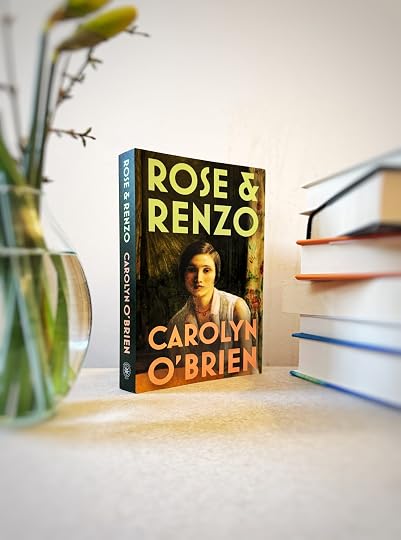
Rose and Ivy have moved into the Italian area of Manchester, a fairly run-down community. Their father, a vicar in Cheshire, recently died and they are struggling to make ends meet. Rose desires to go to Art School in the city but Ivy spells it out for her that they cannot afford for her to do this. She must bide her time and has already found her a job as a typist.
Crestfallen, Rose deals with the situation, befriends Freda who is Jewish and starts to become aware of the brooding political clouds forming across Europe, with reverberations even in her locality. In England there is a proliferation of fascist party membership under Mosley, with tentacles stretching back to Italy and Mussolini and beyond. The political extremism in that period reminds us to be wary in present day.
Rose first meets Renzo whilst visiting a gallery, he is wearing a fedora and naturally he catches her eye. He hails from Florence via Paris and, liker her, is invested in art. This gives them common ground as they find their way through the political and personal sphere.
The characters are sympathetically and thoughtfully drawn and it has been a pleasure to spend time with them.
The novel feels very well researched. As it opens, the over-use of commas, with clauses and sub-clauses makes for quite a stilted launch but as the author finds her confidence, a more natural writing style ensues. The descriptions of life in Little Italy are vivid, textured and transportive.
Rose and Ivy have moved into the Italian area of Manchester, a fairly run-down community. Their father, a vicar in Cheshire, recently died and they are struggling to make ends meet. Rose desires to go to Art School in the city but Ivy spells it out for her that they cannot afford for her to do this. She must bide her time and has already found her a job as a typist.
Crestfallen, Rose deals with the situation, befriends Freda who is Jewish and starts to become aware of the brooding political clouds forming across Europe, with reverberations even in her locality. In England there is a proliferation of fascist party membership under Mosley, with tentacles stretching back to Italy and Mussolini and beyond. The political extremism in that period reminds us to be wary in present day.
Rose first meets Renzo whilst visiting a gallery, he is wearing a fedora and naturally he catches her eye. He hails from Florence via Paris and, liker her, is invested in art. This gives them common ground as they find their way through the political and personal sphere.
The characters are sympathetically and thoughtfully drawn and it has been a pleasure to spend time with them.
The novel feels very well researched. As it opens, the over-use of commas, with clauses and sub-clauses makes for quite a stilted launch but as the author finds her confidence, a more natural writing style ensues. The descriptions of life in Little Italy are vivid, textured and transportive.

May 15, 2026
This is a well written and fascinating family drama set in Manchester in 1936; a love story with strong political overtones. Following the death of their father 36 year old Ivy Irvine and her 20 year old sister Rose have to move from their countryside vicarage home in Cheshire to live in a rundown flat in Manchester’s Little Italy.
Briefly, after moving Rose has to give up her dreams of attending art school to work in an office where she meets and becomes friends with a Jewish woman called Freda. She also makes friends with her Italian neighbours and when she meets artist Renzo she falls for him like a ton of bricks. But this is taking place against the background of fascism as Oswald Mosley’s British Union of Fascists (BUF), known as Blackshirts, are moving into the city. However, the antifascist movement was strong and Rose is drawn to join them.
Rose and Ivy couldn’t be more unlike. Rose is initially a bit spoilt but she adapts to change and is a caring loving woman. Ivy seems very bitter and distant and eventually her spiteful nature gets between the sisters. I enjoyed all the historical drama and this has clearly been well researched. The sense of place around Manchester at this time is brilliantly captured, I can only imagine how difficult it must have been. We would be well advised to take note of this and the way things are moving in the world today! An entertaining and emotional read.
Briefly, after moving Rose has to give up her dreams of attending art school to work in an office where she meets and becomes friends with a Jewish woman called Freda. She also makes friends with her Italian neighbours and when she meets artist Renzo she falls for him like a ton of bricks. But this is taking place against the background of fascism as Oswald Mosley’s British Union of Fascists (BUF), known as Blackshirts, are moving into the city. However, the antifascist movement was strong and Rose is drawn to join them.
Rose and Ivy couldn’t be more unlike. Rose is initially a bit spoilt but she adapts to change and is a caring loving woman. Ivy seems very bitter and distant and eventually her spiteful nature gets between the sisters. I enjoyed all the historical drama and this has clearly been well researched. The sense of place around Manchester at this time is brilliantly captured, I can only imagine how difficult it must have been. We would be well advised to take note of this and the way things are moving in the world today! An entertaining and emotional read.
June 21, 2026
Synopsis —-Manchester 1936
Fascism looms in Europe, and Oswald Mosley's Blackshirts are on the rise.
After the death of their father, two sisters arrive in Manchester's vibrant 'Little Italy': creative misfit, Rose, and her much older sister, Ivy. Fearing Rose's impulsiveness, Ivy seeks to control Rose, forcing her to give up her cherished place at art school.
Frustrated and desperate to pursue her passion, Rose meets Renzo, a painter arrived from Europe. Their connection is instant and powerful. Yet as their feelings deepen, Renzo's past in Mussolini's Italy remains a mystery.
As Blackshirts march across the city, Rose is drawn to the fight against fascism, even as she's compelled to face the devastating question: just which side is Renzo on?
#mythoughts
A story of hardship.
A story of artists.
A story of war.
This historical fiction follows the lives of sisters Ivy and Rose after their sudden move to Manchester. Through their friendships in the Italian Quarter and experiences in the workplace, they begin to build new lives. Rose’s friendship with Freda introduces her to a different side of life and the growing resistance to the Blackshirts.
When Rose meets Renzo, they share a connection through their love of art. However, misunderstandings, secrets, and a lack of communication create challenges that test their relationship.
An engaging story of friendship, family, love, and resilience set against a backdrop of political unrest.
Fascism looms in Europe, and Oswald Mosley's Blackshirts are on the rise.
After the death of their father, two sisters arrive in Manchester's vibrant 'Little Italy': creative misfit, Rose, and her much older sister, Ivy. Fearing Rose's impulsiveness, Ivy seeks to control Rose, forcing her to give up her cherished place at art school.
Frustrated and desperate to pursue her passion, Rose meets Renzo, a painter arrived from Europe. Their connection is instant and powerful. Yet as their feelings deepen, Renzo's past in Mussolini's Italy remains a mystery.
As Blackshirts march across the city, Rose is drawn to the fight against fascism, even as she's compelled to face the devastating question: just which side is Renzo on?
#mythoughts
A story of hardship.
A story of artists.
A story of war.
This historical fiction follows the lives of sisters Ivy and Rose after their sudden move to Manchester. Through their friendships in the Italian Quarter and experiences in the workplace, they begin to build new lives. Rose’s friendship with Freda introduces her to a different side of life and the growing resistance to the Blackshirts.
When Rose meets Renzo, they share a connection through their love of art. However, misunderstandings, secrets, and a lack of communication create challenges that test their relationship.
An engaging story of friendship, family, love, and resilience set against a backdrop of political unrest.
Review of advance copy received from Publisher
Based in Manchester, 1936. Fascism looms in Europe, and Oswald Mosley’s Blackshirts are on the rise.
2 sisters move to Manchester’s vibrant ‘Little Italy’ after their farther passes. Ivy, is a strong-minded older sister, who worries deeply about her unworldly and free spirited sister Rose, amid the rising fascism.
Rose is desperate to break free from her controlling sister and the life Ivy protectively wants her to live. She finally meets Renzo, a painter from Italy and a connection sparks. Rose has been told by Ivy that her placement at Art School can no longer go ahead and she must work instead. Renzo is her connection to art, to escapism and so much more.
- Rose is a wonderfully complex character, and you can connect to her position throughout the story as it explores a coming of age tale amidst fascism and the uprising.
- This is an exquisitely written book. The masterful way the complexity of the characters emotions are addressed is poetic to read. The initial conversing between Rose & Renzo, whilst they innocently explore their friendship, will remain my favorite pages.
- It is a tense, rich, slow-burning historical fiction novel that reminds us to learn the lessons from our history.
Spectacular.
2 sisters move to Manchester’s vibrant ‘Little Italy’ after their farther passes. Ivy, is a strong-minded older sister, who worries deeply about her unworldly and free spirited sister Rose, amid the rising fascism.
Rose is desperate to break free from her controlling sister and the life Ivy protectively wants her to live. She finally meets Renzo, a painter from Italy and a connection sparks. Rose has been told by Ivy that her placement at Art School can no longer go ahead and she must work instead. Renzo is her connection to art, to escapism and so much more.
- Rose is a wonderfully complex character, and you can connect to her position throughout the story as it explores a coming of age tale amidst fascism and the uprising.
- This is an exquisitely written book. The masterful way the complexity of the characters emotions are addressed is poetic to read. The initial conversing between Rose & Renzo, whilst they innocently explore their friendship, will remain my favorite pages.
- It is a tense, rich, slow-burning historical fiction novel that reminds us to learn the lessons from our history.
Spectacular.

May 16, 2026
Rose and her older sister Ivy have to leave the vicarage where they grew up after their father dies. Motherless too, Ivy steps into the role, much to Rose’s discontent. She feels Ivy is holding her back and preventing her from fulfilling her dream of attending art school in Manchester. They move to Ancoats, to an area known as Little Italy, where Rose meets painter Renzo. They’re immediately drawn to each other but fascism is on the rise and Rose doesn’t know enough about Renzo’s past to be totally sure of where his loyalties lie.
Rose is a brilliantly drawn character who jumped off the page. I loved her individuality, her cropped hair and daring outfits (both rather outlandish for 1936 Manchester) and her desire to do the right thing. Renzo is passionate, principled and kind, and he made a good hero.
The tensions of the time around the fascist behaviour and the prejudice against the Jewish community are portrayed well and they provide a backdrop to what is essentially a burgeoning love story. What I perhaps enjoyed most of all was Rose’s introduction to a new way of gritty city living after a sheltered existence in a Cheshire vicarage, and the opening of her eyes to what is going on around her. Sense of place is strong and this is a well-written piece of historical fiction.
Rose is a brilliantly drawn character who jumped off the page. I loved her individuality, her cropped hair and daring outfits (both rather outlandish for 1936 Manchester) and her desire to do the right thing. Renzo is passionate, principled and kind, and he made a good hero.
The tensions of the time around the fascist behaviour and the prejudice against the Jewish community are portrayed well and they provide a backdrop to what is essentially a burgeoning love story. What I perhaps enjoyed most of all was Rose’s introduction to a new way of gritty city living after a sheltered existence in a Cheshire vicarage, and the opening of her eyes to what is going on around her. Sense of place is strong and this is a well-written piece of historical fiction.

October 10, 2026
Rose and Renzo by Carolyn O’Brien is set in 1936 in Ancoats, once known as ‘Little Italy’, against a backdrop of rising fascism across Europe. It’s a story that feels particularly resonant today, with its exploration of political upheaval and uncertainty.
Following the death of their clergyman father, Ivy and Rose are forced to leave their vicarage home and move to Manchester. While Ivy takes up a position as a factory welfare officer, Rose plans to study at Manchester Art School. However, it is only after their arrival that Ivy reveals Rose must also find work in one of the factory offices.
Frustrated by the constraints of her life and desperate to pursue her artistic ambitions, Rose meets Renzo, a painter newly arrived from Europe. Their connection is instant and powerful, but as their feelings deepen, Renzo’s past in Mussolini’s Italy remains shrouded in mystery.
I absolutely loved this book! The meticulous research underpinning the novel brings the period vividly to life, weaving a captivating love story with a fascinating insight into Manchester’s Italian community and that chapter Manchester’s history. A wonderful read for anyone who enjoys historical fiction that not only transports you to another time and place but also offers plenty to reflect on today.
Following the death of their clergyman father, Ivy and Rose are forced to leave their vicarage home and move to Manchester. While Ivy takes up a position as a factory welfare officer, Rose plans to study at Manchester Art School. However, it is only after their arrival that Ivy reveals Rose must also find work in one of the factory offices.
Frustrated by the constraints of her life and desperate to pursue her artistic ambitions, Rose meets Renzo, a painter newly arrived from Europe. Their connection is instant and powerful, but as their feelings deepen, Renzo’s past in Mussolini’s Italy remains shrouded in mystery.
I absolutely loved this book! The meticulous research underpinning the novel brings the period vividly to life, weaving a captivating love story with a fascinating insight into Manchester’s Italian community and that chapter Manchester’s history. A wonderful read for anyone who enjoys historical fiction that not only transports you to another time and place but also offers plenty to reflect on today.

April 18, 2026
This is a captivating coming of age love story set in 1930s Manchester.
After the death of their parents, sisters Ivy & Rose have to leave their vicarage home and relocate to working class Manchester to start a new life. Right in the heart of little Italy, Rose’s eyes are opened by the rise of the black shirts, the plight of the Jewish community and falling in love with an Italian artist.
This book explored so many themes that resonate today with the rise of the right and the feelings of vulnerabilities in immigrant communities. I really loved Rose, her big artistic dreams and her personal and political awakening. She was a complex and passionate character and the found family element enriched the story with wonderful side characters like Lil and Freda. The often tense relationship she had with her sister also resonated and conveyed the restrictions society placed on single young women.
The author brought 1930s Manchester to life with immersive and comedic depictions and I enjoyed all the artistic movement details woven in.
Slow in parts but rich in detail. I enjoyed.
Thank you to the publishers for a free copy.
After the death of their parents, sisters Ivy & Rose have to leave their vicarage home and relocate to working class Manchester to start a new life. Right in the heart of little Italy, Rose’s eyes are opened by the rise of the black shirts, the plight of the Jewish community and falling in love with an Italian artist.
This book explored so many themes that resonate today with the rise of the right and the feelings of vulnerabilities in immigrant communities. I really loved Rose, her big artistic dreams and her personal and political awakening. She was a complex and passionate character and the found family element enriched the story with wonderful side characters like Lil and Freda. The often tense relationship she had with her sister also resonated and conveyed the restrictions society placed on single young women.
The author brought 1930s Manchester to life with immersive and comedic depictions and I enjoyed all the artistic movement details woven in.
Slow in parts but rich in detail. I enjoyed.
Thank you to the publishers for a free copy.
August 17, 2026
A book I could not put down! This fascinating historical fiction novel follows sisters Ivy and Rose as they are forced to move from a comfortable life into the Little Italy district of Manchester. The sisters navigate this unwelcome move in different ways and their relationship grows fraught as they each find ways to adjust. Rose wants to hold onto her dreams of a life filled with art and passion whereas Ivy sees that life as something to keep to the past. It's no wonder Rose is pulled towards the mysterious and artistic Renzo after a chance meeting in an art gallery. Renzo sees Rose for who she wants to be and their love story begins.
Set against a vividly portrayed backdrop of Manchester in the late 1930s and the rise of facisim, the exquisite writing and depiction of political unrest makes for an unforgettable read. I loved Rose and rooted for her from the start, desperate for her to find the fulfilling, artistic life she longed for.
This is historical fiction at its best. Beautifully written, well researched, relevant to today and with characters you care for long after you've closed the book. I can't wait to read whatever comes next from Carolyn OBrien
Set against a vividly portrayed backdrop of Manchester in the late 1930s and the rise of facisim, the exquisite writing and depiction of political unrest makes for an unforgettable read. I loved Rose and rooted for her from the start, desperate for her to find the fulfilling, artistic life she longed for.
This is historical fiction at its best. Beautifully written, well researched, relevant to today and with characters you care for long after you've closed the book. I can't wait to read whatever comes next from Carolyn OBrien

May 20, 2026
I read 'Rose and Renzo' in two sittings. As a historical novel, it also magically upholds drama, pace, and intrigue, as well as a wonderfully affecting love story at its heart. Only pages in, I had already assembled the streets of Ancoats in my mind, along with the inhabitants, houses, workplaces and the ever-changing skies of the city of Manchester.
Carolyn O'Brien writes with the reader always at the fore, knowing when to reveal a character's true intentions or pertinent foibles. Particularly, I loved how the symbiotic yet fractious relationship between the two sisters - Ivy and Rose - was drawn and sustained throughout the story. Their interactions are at once tender, complex, angry, funny and sad. Entirely authentic!
I would thoroughly recommend 'Rose and Renzo' to all sorts of readers; women, men, young people, those interested in art, politics, Manchester, period narratives and literary fiction. More simply put, I would recommend it to any who enjoys a startling good, moving and informing novel.
Carolyn O'Brien writes with the reader always at the fore, knowing when to reveal a character's true intentions or pertinent foibles. Particularly, I loved how the symbiotic yet fractious relationship between the two sisters - Ivy and Rose - was drawn and sustained throughout the story. Their interactions are at once tender, complex, angry, funny and sad. Entirely authentic!
I would thoroughly recommend 'Rose and Renzo' to all sorts of readers; women, men, young people, those interested in art, politics, Manchester, period narratives and literary fiction. More simply put, I would recommend it to any who enjoys a startling good, moving and informing novel.
August 29, 2026
Carolyn O’Brien has the wonderful skill of putting the reader inside the story. As she did with The Song of Peterloo, so she has done with Rose and Renzo. Instead of Manchester 1819, we are now in the Manchester of the mid 1930’s. We experience the heat of the summer, the sounds of Ancoats and the factories. We taste the Italian food like Rose, and we discover her awakening of art, politics and love, alongside her.
O’Brien is an expert at entertaining while informing, and with Rose and Renzo, she takes the reader to 1936 Manchester and the tensions of rising fascism and prejudice, through an engaging and enjoyable novel. O’Brien challenges the reader to understand the characters’ doubts and suspicions, and we encounter a world that is complex and messy. Rose could step away in the face of difficult truths, but it is love and friendship that unites Rose, not just to Renzo, but to the community around her, in this changing, and at times, disturbing world.
At a time when similar polemics and tensions are prevalent in the 21st century, Rose and Renzo is a timely and intelligent read.
O’Brien is an expert at entertaining while informing, and with Rose and Renzo, she takes the reader to 1936 Manchester and the tensions of rising fascism and prejudice, through an engaging and enjoyable novel. O’Brien challenges the reader to understand the characters’ doubts and suspicions, and we encounter a world that is complex and messy. Rose could step away in the face of difficult truths, but it is love and friendship that unites Rose, not just to Renzo, but to the community around her, in this changing, and at times, disturbing world.
At a time when similar polemics and tensions are prevalent in the 21st century, Rose and Renzo is a timely and intelligent read.
August 20, 2026
The power of Art, Politics, Love:
O’Brien’s novel is a vivid historical fiction set in the socio-politically charged context of 1936, predominantly in Manchester’s Little Italy. This well-researched, thoroughly compelling read draws you into its orbit of beautifully crafted characters and astutely observed setting. The perfect tension of the plot keeps the reader actively engaged, invested and wanting to know more. The novel is as visual as literary and could be easily transposed to screen, as well as playing out dramatically in the reader’s imagination. The sense of rising fascism is palpable and as resonant today, making it a timely and impactful book. It offers O’Brien’s distinctive blend of storytelling: a focus on the fight for social justice, within a strong evocation of time and place, underpinned by a deep emotional perceptiveness. I loved it and thoroughly recommend. Let yourself be immersed and informed.
O’Brien’s novel is a vivid historical fiction set in the socio-politically charged context of 1936, predominantly in Manchester’s Little Italy. This well-researched, thoroughly compelling read draws you into its orbit of beautifully crafted characters and astutely observed setting. The perfect tension of the plot keeps the reader actively engaged, invested and wanting to know more. The novel is as visual as literary and could be easily transposed to screen, as well as playing out dramatically in the reader’s imagination. The sense of rising fascism is palpable and as resonant today, making it a timely and impactful book. It offers O’Brien’s distinctive blend of storytelling: a focus on the fight for social justice, within a strong evocation of time and place, underpinned by a deep emotional perceptiveness. I loved it and thoroughly recommend. Let yourself be immersed and informed.

Review of advance copy received from Publisher
Rose & Renzo is a captivating page-turner which drew me in from the very first chapter. This is historical fiction at its best, with gorgeous writing, a vivid sense of place, taut plotting, a compelling love story and relatable characters.
As well as portraying Rose and Renzo’s passionate relationship, Carolyn O’Brien’s second novel also explores the liberating power of art and evocatively depicts everyday life in working class Manchester in the 1930s – including the fight against the ugly rise of fascism.
A beautifully written and totally absorbing read.
(Thanks to Northodox Press for the ARC.)
As well as portraying Rose and Renzo’s passionate relationship, Carolyn O’Brien’s second novel also explores the liberating power of art and evocatively depicts everyday life in working class Manchester in the 1930s – including the fight against the ugly rise of fascism.
A beautifully written and totally absorbing read.
(Thanks to Northodox Press for the ARC.)
June 23, 2026
Rose & Renzo ticks so many boxes- it is a beautifully written love story, with an evocative sense of place and amazingly well-drawn characters. It's also a real page-turner that kept me engaged (and guessing about Renzo!) right up until the end. The backdrop of the rise of Fascism in Europe in the 1930s is timely in today's world but the novel also explores many other interesting themes, including the redemptive power of art, faith and true friendship. A very absorbing read that I highly recommend.
June 26, 2026
I always enjoy historical fiction that transports me somewhere unfamiliar, and ‘Rose & Renzo’ by Carolyn O’Brien certainly did that. The sights, sounds and atmosphere of Manchester’s Little Italy in the 1930s felt wonderfully real, and I was particularly drawn to the portrayal of friendships, ambitions and romance against a backdrop of growing political unrest and anti-Semitism. Rose’s determination to pursue what mattered to her, even when the odds were against her, gave the story the kind of resilience and hope we all could do with. A heartfelt and evocative read.

May 12, 2026
Full of history, Rose and Renzo is a fascinating insight into life in the late 1930’s as fascism and Hitlers rise was forefront in people’s minds.
A love story first and foremost but with a dramatic backdrop. The relationship between Rose and Renzo is a complicated one as secrets and mistrust fill the air.
With a strained sibling relationship between Rose and Ivy, I struggled to connect with the elder sister as she continually ‘mothered’ Rose. Rose, however, was a wonderful character - impetuous and passionate- she was lost in an ever changing world trying to find her place.

May 15, 2026
The importance of this wonderful love story shouldn’t be underestimated. Exquisitely written, it weaves a beautiful narrative with superb characterisation grounded in Manchester’s rich past. I couldn’t put the book down, drawn into a world on the brink of change with Fascism closer to home than we remember. It richly addresses these strong political themes through deeply drawn characters who reaffirm the importance of friendship, empathy and ultimately love and hope to get us through dark times.

June 16, 2026
An absolute literary treat! Rose & Renzo is set in 1936 and yet feels timely with the sad state of current politics. It’s a beautiful love story that immerses you in Manchester’s Little Italy. Vivid descriptions and a deft, intelligent portrayal of the conflicts of the era make for a brilliant read. Rose, a passionate and stylish artist ahead of her time, will stay with me for a long time. Would love to read more by Carolyn O’Brien.
Displaying 1 - 30 of 42 reviews