

What do you think?

Building 903
Not yet published
Expected 8 Oct 26In the tradition of her bestselling, award-winning phenomenon, The Giver, Lois Lowry delivers a story about censorship, comfort, complicity, and the radical power of books to open portals and unlock our humanity through our most powerful the imagination.
Twins Tessa and Theo live in a world ruled by the tyrannical Koziris, where there are no dangers or rebels… or so they've been told. In this world, citizens live long lives, and while many hate Koziris, they are comfortable and safe. So, when Tessa's brother disappears, nobody wants to discuss it. But then Miriam, their 135-year-old neighbor, slips Tessa a key – not only to her brother's disappearance, but to the source of all real magic … books.
As Tessa and her parents begin their search for Theo, Tessa learns that books not only tell us stories – they open portals and unlock our humanity through our most powerful the imagination. Once that truth has been revealed, Tessa won't be able to rest until she has retrieved her twin and society itself has been transformed.
Two-time Newbery-winner Lois Lowry has crafted a narrative that feels at once prescient and in this world, the imagination is the revolution. Not only does Building 903 sit in the same resonant space as The Giver Quartet, but it is also a profound addition to Lois's enduring body of work – and a testament to the strength and value of her voice, vision, and legacy.
Twins Tessa and Theo live in a world ruled by the tyrannical Koziris, where there are no dangers or rebels… or so they've been told. In this world, citizens live long lives, and while many hate Koziris, they are comfortable and safe. So, when Tessa's brother disappears, nobody wants to discuss it. But then Miriam, their 135-year-old neighbor, slips Tessa a key – not only to her brother's disappearance, but to the source of all real magic … books.
As Tessa and her parents begin their search for Theo, Tessa learns that books not only tell us stories – they open portals and unlock our humanity through our most powerful the imagination. Once that truth has been revealed, Tessa won't be able to rest until she has retrieved her twin and society itself has been transformed.
Two-time Newbery-winner Lois Lowry has crafted a narrative that feels at once prescient and in this world, the imagination is the revolution. Not only does Building 903 sit in the same resonant space as The Giver Quartet, but it is also a profound addition to Lois's enduring body of work – and a testament to the strength and value of her voice, vision, and legacy.
Audible Audio
Expected publication September 29, 2026
About the author
Lois Lowry
191 books23.4k followersTaken from Lowry's website:
"I’ve always felt that I was fortunate to have been born the middle child of three. My older sister, Helen, was very much like our mother: gentle, family-oriented, eager to please. Little brother Jon was the only boy and had interests that he shared with Dad; together they were always working on electric trains and erector sets; and later, when Jon was older, they always seemed to have their heads under the raised hood of a car. That left me in-between, and exactly where I wanted most to be: on my own. I was a solitary child who lived in the world of books and my own vivid imagination.
Because my father was a career military officer - an Army dentist - I lived all over the world. I was born in Hawaii, moved from there to New York, spent the years of World War II in my mother’s hometown: Carlisle, Pennsylvania, and from there went to Tokyo when I was eleven. High school was back in New York City, but by the time I went to college (Brown University in Rhode Island), my family was living in Washington, D.C.
I married young. I had just turned nineteen - just finished my sophomore year in college - when I married a Naval officer and continued the odyssey that military life requires. California. Connecticut (a daughter born there). Florida (a son). South Carolina. Finally Cambridge, Massachusetts, when my husband left the service and entered Harvard Law School (another daughter; another son) and then to Maine - by now with four children under the age of five in tow. My children grew up in Maine. So did I. I returned to college at the University of Southern Maine, got my degree, went to graduate school, and finally began to write professionally, the thing I had dreamed of doing since those childhood years when I had endlessly scribbled stories and poems in notebooks.
After my marriage ended in 1977, when I was forty, I settled into the life I have lived ever since. Today I am back in Cambridge, Massachusetts, living and writing in a house dominated by a very shaggy Tibetan Terrier named Bandit. For a change of scenery Martin and I spend time in Maine, where we have an old (it was built in 1768!) farmhouse on top of a hill. In Maine I garden, feed birds, entertain friends, and read...
My books have varied in content and style. Yet it seems that all of them deal, essentially, with the same general theme: the importance of human connections. A Summer to Die, my first book, was a highly fictionalized retelling of the early death of my sister, and of the effect of such a loss on a family. Number the Stars, set in a different culture and era, tells the same story: that of the role that we humans play in the lives of our fellow beings.
The Giver - and Gathering Blue, and the newest in the trilogy: Messenger - take place against the background of very different cultures and times. Though all three are broader in scope than my earlier books, they nonetheless speak to the same concern: the vital need of people to be aware of their interdependence, not only with each other, but with the world and its environment.
My older son was a fighter pilot in the United States Air Force. His death in the cockpit of a warplane tore away a piece of my world. But it left me, too, with a wish to honor him by joining the many others trying to find a way to end conflict on this very fragile earth.
I am a grandmother now. For my own grandchildren - and for all those of their generation - I try, through writing, to convey my passionate awareness that we live intertwined on this planet and that our future depends upon our caring more, and doing more, for one another."
"I’ve always felt that I was fortunate to have been born the middle child of three. My older sister, Helen, was very much like our mother: gentle, family-oriented, eager to please. Little brother Jon was the only boy and had interests that he shared with Dad; together they were always working on electric trains and erector sets; and later, when Jon was older, they always seemed to have their heads under the raised hood of a car. That left me in-between, and exactly where I wanted most to be: on my own. I was a solitary child who lived in the world of books and my own vivid imagination.
Because my father was a career military officer - an Army dentist - I lived all over the world. I was born in Hawaii, moved from there to New York, spent the years of World War II in my mother’s hometown: Carlisle, Pennsylvania, and from there went to Tokyo when I was eleven. High school was back in New York City, but by the time I went to college (Brown University in Rhode Island), my family was living in Washington, D.C.
I married young. I had just turned nineteen - just finished my sophomore year in college - when I married a Naval officer and continued the odyssey that military life requires. California. Connecticut (a daughter born there). Florida (a son). South Carolina. Finally Cambridge, Massachusetts, when my husband left the service and entered Harvard Law School (another daughter; another son) and then to Maine - by now with four children under the age of five in tow. My children grew up in Maine. So did I. I returned to college at the University of Southern Maine, got my degree, went to graduate school, and finally began to write professionally, the thing I had dreamed of doing since those childhood years when I had endlessly scribbled stories and poems in notebooks.
After my marriage ended in 1977, when I was forty, I settled into the life I have lived ever since. Today I am back in Cambridge, Massachusetts, living and writing in a house dominated by a very shaggy Tibetan Terrier named Bandit. For a change of scenery Martin and I spend time in Maine, where we have an old (it was built in 1768!) farmhouse on top of a hill. In Maine I garden, feed birds, entertain friends, and read...
My books have varied in content and style. Yet it seems that all of them deal, essentially, with the same general theme: the importance of human connections. A Summer to Die, my first book, was a highly fictionalized retelling of the early death of my sister, and of the effect of such a loss on a family. Number the Stars, set in a different culture and era, tells the same story: that of the role that we humans play in the lives of our fellow beings.
The Giver - and Gathering Blue, and the newest in the trilogy: Messenger - take place against the background of very different cultures and times. Though all three are broader in scope than my earlier books, they nonetheless speak to the same concern: the vital need of people to be aware of their interdependence, not only with each other, but with the world and its environment.
My older son was a fighter pilot in the United States Air Force. His death in the cockpit of a warplane tore away a piece of my world. But it left me, too, with a wish to honor him by joining the many others trying to find a way to end conflict on this very fragile earth.
I am a grandmother now. For my own grandchildren - and for all those of their generation - I try, through writing, to convey my passionate awareness that we live intertwined on this planet and that our future depends upon our caring more, and doing more, for one another."
Ratings & Reviews
Friends & Following
Create a free account to discover what your friends think of this book!
Community Reviews
Displaying 1 - 30 of 380 reviews
Review of advance copy received from NetGalley
As a previous fan of Lois Lowry, this book was incredibly disappointing for me. While I'm not saying that a middle grade audience won't enjoy this and find value in it, I just think that it pales in comparison to her other books.
But the writing was definitely a highlight. It possessed that middle grade charm that endeared me to Lowry's work in the first place. The tone and vocabulary were fitting for the age range and I thought the content was thought-provoking enough. I think a middle grade reader would like this, but only if they previously loved to read. A child picking up this book to try reading for fun for the first time might be sorely disappointed. It's not exciting enough and doesn't process enough suspense to keep a child engaged.
Furthermore, the ending was really a disappointment. It was confusing. And not confusing in the "we don't have all the answers but that's ok because it leaves thinking about it for hours after" way. The ending was abrupt and there was so much build up for very little pay off. Speaking of the ending, the way it was resolved pushed a weird religious agenda. I'm all for freedom of religion but it felt so random. It came out of left field and had no real follow up to really make it meaningful. It felt thrown in there as an afterthought.
Overall, I think this book could be enjoyable for middle graders who already love to read. If not, this would not be my first choice to get a grade schooler to love reading. I would just stick with The Giver and call it a day.
I listened to the audio version of this book and I thought the narrator was excellent. She conveyed the characters really realistically and I could differentiate between the different voices very easily.
3 stars.
Thank you to NetGalley and HarperAudio Children's for this ALC in exchange for an honest review. All thoughts are my own.
📆 Publication Date: September 29th, 2026
But the writing was definitely a highlight. It possessed that middle grade charm that endeared me to Lowry's work in the first place. The tone and vocabulary were fitting for the age range and I thought the content was thought-provoking enough. I think a middle grade reader would like this, but only if they previously loved to read. A child picking up this book to try reading for fun for the first time might be sorely disappointed. It's not exciting enough and doesn't process enough suspense to keep a child engaged.
Furthermore, the ending was really a disappointment. It was confusing. And not confusing in the "we don't have all the answers but that's ok because it leaves thinking about it for hours after" way. The ending was abrupt and there was so much build up for very little pay off. Speaking of the ending, the way it was resolved pushed a weird religious agenda. I'm all for freedom of religion but it felt so random. It came out of left field and had no real follow up to really make it meaningful. It felt thrown in there as an afterthought.
Overall, I think this book could be enjoyable for middle graders who already love to read. If not, this would not be my first choice to get a grade schooler to love reading. I would just stick with The Giver and call it a day.
I listened to the audio version of this book and I thought the narrator was excellent. She conveyed the characters really realistically and I could differentiate between the different voices very easily.
3 stars.
Thank you to NetGalley and HarperAudio Children's for this ALC in exchange for an honest review. All thoughts are my own.
📆 Publication Date: September 29th, 2026

Review of advance copy received from NetGalley
firstly, thank you to the publisher for an arc!
3.5 stars — i have never read award winning author lois lowry's modern classic the giver, but building 903 touts similar themes of censorship, comfort, complicity, and the radical power of books... that open portals?!
building 903 is the perfect companion to classic dystopian children’s books particularly the hunger games, the arc of a scythe series, and of course lois lowry’s own the giver; there were also various similarities to a 2010s dystopian series matched, which was a shocking throwback for me!
while there was a vast amount of socio-political commentary (the illusion of choice, rewriting history, fear of government, etc.) one thing that really stood out to me, and probably would have pissed me off as a child, was how tessa’s parents constantly gushed over her brother theo. this is a minor complaint, but omg if i read this as an 8-12 year old boyyy would i have been pissed!!
i definitely enjoyed this, and will need to check out the giver asap!
as for the audiobook, the narrator did a great job!
3.5 stars — i have never read award winning author lois lowry's modern classic the giver, but building 903 touts similar themes of censorship, comfort, complicity, and the radical power of books... that open portals?!
building 903 is the perfect companion to classic dystopian children’s books particularly the hunger games, the arc of a scythe series, and of course lois lowry’s own the giver; there were also various similarities to a 2010s dystopian series matched, which was a shocking throwback for me!
while there was a vast amount of socio-political commentary (the illusion of choice, rewriting history, fear of government, etc.) one thing that really stood out to me, and probably would have pissed me off as a child, was how tessa’s parents constantly gushed over her brother theo. this is a minor complaint, but omg if i read this as an 8-12 year old boyyy would i have been pissed!!
i definitely enjoyed this, and will need to check out the giver asap!
as for the audiobook, the narrator did a great job!

July 20, 2026
Review of early listening copy received from Netgalley
3.5 stars
I’m not the target audience but I could see myself reading this with my kids. This book takes place in a scary place (in my opinion). People live for much longer periods of time, but books are banned? YIKES! Tessa’s brother is missing, possibly taken, and erased from records. Tessa’s neighbor is being taken to a retirement home and informed her of a secret place in her home for her to inspect once she is gone. Books are found, so many important, formative books - yet, not really ones related to the story Building 903 is is trying to tell. Tessa coming across The Hunger Games would’ve meant more and been a better recommendation than say… Little Women or Moby Dick.
It felt like a lot of set up and then it was resolved very quickly. Excellent middle grade, I’m just not entirely sure it did what it sought out to do.
3.5 stars
I’m not the target audience but I could see myself reading this with my kids. This book takes place in a scary place (in my opinion). People live for much longer periods of time, but books are banned? YIKES! Tessa’s brother is missing, possibly taken, and erased from records. Tessa’s neighbor is being taken to a retirement home and informed her of a secret place in her home for her to inspect once she is gone. Books are found, so many important, formative books - yet, not really ones related to the story Building 903 is is trying to tell. Tessa coming across The Hunger Games would’ve meant more and been a better recommendation than say… Little Women or Moby Dick.
It felt like a lot of set up and then it was resolved very quickly. Excellent middle grade, I’m just not entirely sure it did what it sought out to do.
Review of advance copy received from Netgalley
PUBLISH DATE: September 29, 2026
Building 903 by Lois Lowry
5 Stars
There’s something quietly powerful about returning to a familiar voice and realizing it still has new things to say.
Building 903 feels, in many ways, like a thematic companion to The Giver, but it reads less like a repetition and more like a reflection. This is a story about control, comfort, and complicity; but more than that, it’s about what survives when access to stories is taken away. Lowry leans into the idea that books are not just objects, but vessels of memory, identity, and resistance. And here, that idea is explored with a calm, steady intensity that never feels heavy handed.
The world she builds is unsettling not because it is chaotic, but because it is orderly. Safe. Comfortable. That quiet trade off, freedom for ease, sits at the center of the story, and it’s where the emotional weight begins to gather. Through Tessa, we see what it means to question that comfort, and more importantly, what it costs to do so.
One of the most striking elements is how the novel treats storytelling itself. There are clear nods to the kinds of books that shape us; both the challenging and the comforting, and Lowry seems to be reminding readers that all stories, in their own way, expand what it means to be human. But she also complicates that idea. Not every story is told. Not every truth is shared.
By the time we reach the epilogue, the focus shifts in a subtle but profound way. The question is no longer just about censorship imposed by a system, but about the quieter, more personal act of choosing what to say and what to withhold. Tessa, now a storyteller herself, makes choices that echo what came before her, deciding which parts of the past are too complex, too painful, or perhaps too intimate to pass on.
That final note lingers. It suggests that even in a world where stories are reclaimed, they are never entirely complete. Some remain fragmented. Some remain hidden. And some, perhaps, are kept that way for a reason.
There’s also a reflective undercurrent running through the novel that feels deeply personal. Without ever stating it outright, the book hints at the idea that a writer’s body of work may extend beyond what is visible, and that not every story needs to be attached to a name to have meaning. It’s a quiet acknowledgment that storytelling, at its core, is bigger than authorship, it’s about connection, memory, and what we choose to leave behind.
Building 903 doesn’t end with clear answers. Instead, it leaves readers with questions, about truth, forgiveness, and the nature of stories themselves. It’s thoughtful, restrained, and quietly haunting in a way that stays with you long after the final page.
This is not just a return to familiar themes. It’s a meditation on them. And it feels, in many ways, like a full circle moment. I’m so incredibly grateful to have read this book and add it to my list of
Novels that mean so much to me.
PUBLISH DATE: September 29, 2026
BOOK TITLE: Building 903
AUTHOR: Lois Lowry
PUBLISHER: HarperCollins Children's Books | Clarion Books
FORMAT: ebook
PAGES: 224
I received a complimentary digital ARC [Advanced Readers Copy] of this book via NetGalley. Thank you to the Publisher and the Author for the opportunity to read and review this title prior to publication. As always, the opinions expressed in this review are my own.
Building 903 by Lois Lowry
5 Stars
There’s something quietly powerful about returning to a familiar voice and realizing it still has new things to say.
Building 903 feels, in many ways, like a thematic companion to The Giver, but it reads less like a repetition and more like a reflection. This is a story about control, comfort, and complicity; but more than that, it’s about what survives when access to stories is taken away. Lowry leans into the idea that books are not just objects, but vessels of memory, identity, and resistance. And here, that idea is explored with a calm, steady intensity that never feels heavy handed.
The world she builds is unsettling not because it is chaotic, but because it is orderly. Safe. Comfortable. That quiet trade off, freedom for ease, sits at the center of the story, and it’s where the emotional weight begins to gather. Through Tessa, we see what it means to question that comfort, and more importantly, what it costs to do so.
One of the most striking elements is how the novel treats storytelling itself. There are clear nods to the kinds of books that shape us; both the challenging and the comforting, and Lowry seems to be reminding readers that all stories, in their own way, expand what it means to be human. But she also complicates that idea. Not every story is told. Not every truth is shared.
By the time we reach the epilogue, the focus shifts in a subtle but profound way. The question is no longer just about censorship imposed by a system, but about the quieter, more personal act of choosing what to say and what to withhold. Tessa, now a storyteller herself, makes choices that echo what came before her, deciding which parts of the past are too complex, too painful, or perhaps too intimate to pass on.
That final note lingers. It suggests that even in a world where stories are reclaimed, they are never entirely complete. Some remain fragmented. Some remain hidden. And some, perhaps, are kept that way for a reason.
There’s also a reflective undercurrent running through the novel that feels deeply personal. Without ever stating it outright, the book hints at the idea that a writer’s body of work may extend beyond what is visible, and that not every story needs to be attached to a name to have meaning. It’s a quiet acknowledgment that storytelling, at its core, is bigger than authorship, it’s about connection, memory, and what we choose to leave behind.
Building 903 doesn’t end with clear answers. Instead, it leaves readers with questions, about truth, forgiveness, and the nature of stories themselves. It’s thoughtful, restrained, and quietly haunting in a way that stays with you long after the final page.
This is not just a return to familiar themes. It’s a meditation on them. And it feels, in many ways, like a full circle moment. I’m so incredibly grateful to have read this book and add it to my list of
Novels that mean so much to me.
PUBLISH DATE: September 29, 2026
BOOK TITLE: Building 903
AUTHOR: Lois Lowry
PUBLISHER: HarperCollins Children's Books | Clarion Books
FORMAT: ebook
PAGES: 224
I received a complimentary digital ARC [Advanced Readers Copy] of this book via NetGalley. Thank you to the Publisher and the Author for the opportunity to read and review this title prior to publication. As always, the opinions expressed in this review are my own.
Review of advance copy received from NetGalley
Building 903 was such a powerful little book. I went into this knowing it had similar themes to The Giver, and I can definitely see the comparison. The idea of a world where books, imagination, and storytelling have been taken away was honestly pretty heartbreaking.
I really liked Tessa and Theo’s relationship, and I loved the message about how important books and stories are to who we are. It’s a short read, but there’s so much packed into it, and some of the ideas really stayed with me after finishing.
I did feel like the pacing was a little rushed towards the end, and I definitely wanted more from the world building and some of the unanswered questions. But despite that, the message behind this book is incredibly powerful, especially the reminder of what we lose when we stop questioning, imagining, and telling stories.
Definitely one that I think will stick with me for a while.
Thank you Negalley and the Publishers for the opportunity to review this ARC.
I really liked Tessa and Theo’s relationship, and I loved the message about how important books and stories are to who we are. It’s a short read, but there’s so much packed into it, and some of the ideas really stayed with me after finishing.
I did feel like the pacing was a little rushed towards the end, and I definitely wanted more from the world building and some of the unanswered questions. But despite that, the message behind this book is incredibly powerful, especially the reminder of what we lose when we stop questioning, imagining, and telling stories.
Definitely one that I think will stick with me for a while.
Thank you Negalley and the Publishers for the opportunity to review this ARC.

Read
April 27, 2026Not giving a star rating for this one.
Everyone should know Lois Lowry; The Giver and Number the Stars are both absolute classics. I was more than a little surprised to see this book coming out, as I didn’t think Lowry was still writing. But The Giver was so formative for me I leapt at it.
This is set in a dystopian future, after numerous climate change catastrophes, in a United States ruled by a man who is the only one allowed to run in the supposed elections still being held (his crassness, cycling through wives, and oddly colored dyed hair make the inspiration here… unsubtle). Peoples’ lives are tightly controlled, and many things are outlawed. Our protagonist, Tessa, learns about some of them when her elderly-but-spry neighbor is sent to mandatory retirement and slips her a collection of contraband - strange things called “books” that are full of oddly compelling untruths called “stories.” Tessa’s twin brother had vanished several months before the story, and there are clues that his disappearance was also connected to these illegal books.
If this sounds thematically familiar to The Giver, it’s because it is. And that’s what leads me to conclude I’m fundamentally incapable of giving this book a fair review.
The Giver was, as I said above, formative for me. I read it somewhere around age 10 and it completely blew my mind. So as I was reading this book, which addressed so many of the same themes and with a setting so reminiscent of the dystopia of The Giver, I expected to feel the same kind of thing. That didn’t happen, and I truthfully think it wasn’t fair of me to expect it to. The Giver doesn’t hold up that well as an adult; I revisited it a few years ago, and it was very definitely targeted at younger readers than me. I had the same kind of problems with Building 903 as I did then, having things in my head like, “oh come on, they managed to outlaw STORIES?”
And yet I didn’t have a problem with that sort of thing with The Giver. So I don’t know. I’ll have to throw this at some of my niblings and see how they feel about it.
My blog.
Everyone should know Lois Lowry; The Giver and Number the Stars are both absolute classics. I was more than a little surprised to see this book coming out, as I didn’t think Lowry was still writing. But The Giver was so formative for me I leapt at it.
This is set in a dystopian future, after numerous climate change catastrophes, in a United States ruled by a man who is the only one allowed to run in the supposed elections still being held (his crassness, cycling through wives, and oddly colored dyed hair make the inspiration here… unsubtle). Peoples’ lives are tightly controlled, and many things are outlawed. Our protagonist, Tessa, learns about some of them when her elderly-but-spry neighbor is sent to mandatory retirement and slips her a collection of contraband - strange things called “books” that are full of oddly compelling untruths called “stories.” Tessa’s twin brother had vanished several months before the story, and there are clues that his disappearance was also connected to these illegal books.
If this sounds thematically familiar to The Giver, it’s because it is. And that’s what leads me to conclude I’m fundamentally incapable of giving this book a fair review.
The Giver was, as I said above, formative for me. I read it somewhere around age 10 and it completely blew my mind. So as I was reading this book, which addressed so many of the same themes and with a setting so reminiscent of the dystopia of The Giver, I expected to feel the same kind of thing. That didn’t happen, and I truthfully think it wasn’t fair of me to expect it to. The Giver doesn’t hold up that well as an adult; I revisited it a few years ago, and it was very definitely targeted at younger readers than me. I had the same kind of problems with Building 903 as I did then, having things in my head like, “oh come on, they managed to outlaw STORIES?”
And yet I didn’t have a problem with that sort of thing with The Giver. So I don’t know. I’ll have to throw this at some of my niblings and see how they feel about it.
My blog.

Want to Read
February 10, 2026I know this book is going to be iconic.

June 20, 2026
Building 903
Rating: ⭐️⭐️ (1.5 stars; round up)
Format: ebook
Initial thoughts: What did I just read?
I’ve read and loved a majority of Lois Lowry’s books since I was 13 years old. When I saw she was releasing a new novel, I jumped at the chance to read it.
Highlights:
⭐️The premise/world of the novel is very on par with her typical dystopian setting.
🌟The idea of the novel was promising and intriguing.
Pitfalls:
❌Lack of connection to characters. While I initially liked Tessa and her family, the connection between reader and characters didn’t build into anything. I didn’t feel any emotional warmth, sadness, happiness, etc., to any of the characters.
❌Uneventful plot. Nothing happened. Her brother went missing. Citizens didn’t like the government. A lot of it felt like it occurred off-screen.
❌Unanswered questions. I have a lot and I’m confused.
❌Weird way to incorporate a religious agenda? I don’t want to spoil anything, so read the book if you are intrigued. I’m religious and even I felt like it was a little random how this tied into the (lack of) a plot.
Honestly, I feel like I accidentally read a spin-off novella to a book series I never read before. I’m that confused.
Thank you NetGalley and HarperCollins Children’s Books for an ARC of this book for my honest opinion and review!
Rating: ⭐️⭐️ (1.5 stars; round up)
Format: ebook
Initial thoughts: What did I just read?
I’ve read and loved a majority of Lois Lowry’s books since I was 13 years old. When I saw she was releasing a new novel, I jumped at the chance to read it.
Highlights:
⭐️The premise/world of the novel is very on par with her typical dystopian setting.
🌟The idea of the novel was promising and intriguing.
Pitfalls:
❌Lack of connection to characters. While I initially liked Tessa and her family, the connection between reader and characters didn’t build into anything. I didn’t feel any emotional warmth, sadness, happiness, etc., to any of the characters.
❌Uneventful plot. Nothing happened. Her brother went missing. Citizens didn’t like the government. A lot of it felt like it occurred off-screen.
❌Unanswered questions. I have a lot and I’m confused.
❌Weird way to incorporate a religious agenda? I don’t want to spoil anything, so read the book if you are intrigued. I’m religious and even I felt like it was a little random how this tied into the (lack of) a plot.
Honestly, I feel like I accidentally read a spin-off novella to a book series I never read before. I’m that confused.
Thank you NetGalley and HarperCollins Children’s Books for an ARC of this book for my honest opinion and review!

Read
March 31, 2026I was initially so thrilled to access an early copy of this book, and I think it will likely do well regardless of what I have to say. The dialogue between mainly Tessa and her parents was so incredibly clunky that I found myself unintentionally skimming their conversations (which made up a huge portion of this book). So much of "Remember this?" "Well, you remember when" to provide some context for the reader and fill out the character's shared experiences. Surely there was a smoother way to do this, and I found myself bored by the way they shared information that they all know with each other. It felt like the characters were performing for the reader that they knew was there. I will say the first half does do a good job of establishing the setting and how this particular dystopia works. It feels realistic and certainly age appropriate. The themes championing imagination and of course being pro-book in a concerningly book-banning culture are relevant and important for young readers. Overall, not a slam dunk for me!
Thank you to Netgalley for an ARC copy in exchange for an honest review.
Thank you to Netgalley for an ARC copy in exchange for an honest review.

Review of advance copy received from Netgalley
Read the full review with representation information and trigger warnings on my blog.
3.5 stars rounded down
Tessa lives in a dystopian nation where both political rights and personal rights like literacy and freedom of religion have been stripped from the populace. Her brother Theo has recently disappeared, and everyone is expected to pretend like he never existed, but when her elder neighbor Miriam leaves her some boxes behind as she moves into Elder Care, she learns that books are truly magical and may be the solution to finding Theo.
I thought the worldbuilding in this book was well done. It’s sort of a hybrid of science fiction and fantasy, although the reason that books can act as portals to other universes was never really explained. If you like books where a sort of wonder is maintained and the reasons behind the fantasy mechanisms aren’t explained, that may not bother you, but if you more prefer things on the science fiction side that may be a problem for you.
There was a surprising amount of religious theming in this book as well. This would be good for children who want to read speculative fiction but still have their stories grounded in faith. The family also all clearly loves each other, and the adults (Tessa and Theo’s parents and their neighbor) are more useful in this book than they are in a lot of middle grade fiction. If you’re frustrated by middle grade protagonists always saving the world on their own without parents who believe something bad is happening, this book is the antidote to that.
I had a problem with both the pacing and with the gender dynamics in this book. The characters didn’t start solving the problem until about 3/4 of the way through the book, so it felt very rushed. It also seemed like the ending was too easy for a dystopian book. It also seemed somewhat anti-feminist to me, as Tessa’s brother and her father are written as genuises and they leave their wife and daughter out of a lot of things because they allegedly won’t understand them. Tessa and her mother are of normal intelligence, and they mostly solve things through their emotions. It’s little messages like this that can tell girls that they’re not smart enough for science and normalize young girls being left out of things they could understand if it was just explained to them.
This book would be good for parents who are looking for a speculative fiction book for their children that’s age-appropriate but still has faith as a strong theme. I’d recommend it to fans of Margaret Peterson Haddix’s The Shadow Children series or of The Chronicles of Narnia, but I wouldn’t say it’s as similar to The Giver as the marketing material implies.
Building 903 releases September 26 from Clarion Books. Thank you to Netgalley, Lois Lowry and HarperCollins Children’s Books for the ARC. All opinions are my own.
3.5 stars rounded down
Tessa lives in a dystopian nation where both political rights and personal rights like literacy and freedom of religion have been stripped from the populace. Her brother Theo has recently disappeared, and everyone is expected to pretend like he never existed, but when her elder neighbor Miriam leaves her some boxes behind as she moves into Elder Care, she learns that books are truly magical and may be the solution to finding Theo.
I thought the worldbuilding in this book was well done. It’s sort of a hybrid of science fiction and fantasy, although the reason that books can act as portals to other universes was never really explained. If you like books where a sort of wonder is maintained and the reasons behind the fantasy mechanisms aren’t explained, that may not bother you, but if you more prefer things on the science fiction side that may be a problem for you.
There was a surprising amount of religious theming in this book as well. This would be good for children who want to read speculative fiction but still have their stories grounded in faith. The family also all clearly loves each other, and the adults (Tessa and Theo’s parents and their neighbor) are more useful in this book than they are in a lot of middle grade fiction. If you’re frustrated by middle grade protagonists always saving the world on their own without parents who believe something bad is happening, this book is the antidote to that.
I had a problem with both the pacing and with the gender dynamics in this book. The characters didn’t start solving the problem until about 3/4 of the way through the book, so it felt very rushed. It also seemed like the ending was too easy for a dystopian book. It also seemed somewhat anti-feminist to me, as Tessa’s brother and her father are written as genuises and they leave their wife and daughter out of a lot of things because they allegedly won’t understand them. Tessa and her mother are of normal intelligence, and they mostly solve things through their emotions. It’s little messages like this that can tell girls that they’re not smart enough for science and normalize young girls being left out of things they could understand if it was just explained to them.
This book would be good for parents who are looking for a speculative fiction book for their children that’s age-appropriate but still has faith as a strong theme. I’d recommend it to fans of Margaret Peterson Haddix’s The Shadow Children series or of The Chronicles of Narnia, but I wouldn’t say it’s as similar to The Giver as the marketing material implies.
Building 903 releases September 26 from Clarion Books. Thank you to Netgalley, Lois Lowry and HarperCollins Children’s Books for the ARC. All opinions are my own.

July 24, 2026
Thank you to libro.fm for an ALC in exchange for an honest review.
I made it more than halfway through but ultimately I had to DNF. The writing was wooden and rather dull. The dialogue was clunky and lacked any type of actual reality of human emotion to it. The overall story could have been an interesting tale but ultimately did not have either enough meat or interest to keep me reading this.
I’m quite sad as she wrote such a wonderful book in The Book Giver and then there was this thing. None of the magic or the excellent writing from her previous works. I tried to genuinely finish this but I simply could take no more.
One star.
I made it more than halfway through but ultimately I had to DNF. The writing was wooden and rather dull. The dialogue was clunky and lacked any type of actual reality of human emotion to it. The overall story could have been an interesting tale but ultimately did not have either enough meat or interest to keep me reading this.
I’m quite sad as she wrote such a wonderful book in The Book Giver and then there was this thing. None of the magic or the excellent writing from her previous works. I tried to genuinely finish this but I simply could take no more.
One star.
July 16, 2026
I read The Giver as a child and it certainly left an impact on me. I’m not sure if I would feel the same way reading it as an adult but regardless, I was excited for this new release from Lois Lowry. I did appreciate the themes of comfort vs complicity and the power of stories. But delivery is important, and this just did not deliver. The prose were straightforward but so incredibly boring. This also had so much potential if it had been given time to breathe and develop into a full length novel. I think I’m just someone who has a hard time with a book that gives little to no world building. Would I have liked this more if I had read it as a child? Maybe.
Thank you Libro fm for this ALC
Thank you Libro fm for this ALC
Review of advance copy received from Netgalley
A deeply moving and quietly powerful read, Building 903 by Lois Lowry left a lasting impression on me long after I turned the final page. Lowry’s signature clarity and emotional depth shine through as she explores memory, identity, and the family with a gentle but unflinching hand. The narrative feels both intimate and expansive, weaving personal reflection with broader context in a way that is accessible to younger readers yet profound. I especially appreciated how the story invites readers to sit with difficult truths while still finding moments of humanity and connection. It is a beautifully crafted work that feels important. I would highly recommend to anyone who values thoughtful storytelling.
Thank you to NetGalley for the ARC!
Thank you to NetGalley for the ARC!
June 12, 2026
eARC review thank you Netgalley! SPOILERS AHEAD!
When I found out Lois Lowry had published another book I jumped at the opportunity to read an advanced copy- especially because the synopsis was eye catching in regards to the theme of censorship and imagination/books. When I applied for it I was under the impression that it was a YA novel, however while reading I feel like there were several points where Lowry lost me as a potential YA reader because the vocabulary and critical thought needed to understand what was happening was at a slightly higher level than what I initially anticipated.
On a similar note I felt like the dystopian setting and Lowry’s trademark narrative style were the strongest parts of the story, because the plot felt weak and disjointed and my interest in the characters with their interpersonal connections was lukewarm at best. I spent the entire book WAITING to feel some strong connection to Tessa and Theo— or even their parents Ginia and Penn. But by the end I mainly cared about Miriam and wanted to know more about Oskar. This story as a whole felt so lackluster and incomplete in terms of the characters and somewhat random side plot of revolution. In a way it almost felt like too many important- and currently relevant- topics were being crammed into one short novel.
When I found out Lois Lowry had published another book I jumped at the opportunity to read an advanced copy- especially because the synopsis was eye catching in regards to the theme of censorship and imagination/books. When I applied for it I was under the impression that it was a YA novel, however while reading I feel like there were several points where Lowry lost me as a potential YA reader because the vocabulary and critical thought needed to understand what was happening was at a slightly higher level than what I initially anticipated.
On a similar note I felt like the dystopian setting and Lowry’s trademark narrative style were the strongest parts of the story, because the plot felt weak and disjointed and my interest in the characters with their interpersonal connections was lukewarm at best. I spent the entire book WAITING to feel some strong connection to Tessa and Theo— or even their parents Ginia and Penn. But by the end I mainly cared about Miriam and wanted to know more about Oskar. This story as a whole felt so lackluster and incomplete in terms of the characters and somewhat random side plot of revolution. In a way it almost felt like too many important- and currently relevant- topics were being crammed into one short novel.

April 6, 2026
Reading this felt like coming 𝘩𝘰𝘮𝘦 to one of the authors who shaped my childhood. Growing up in the 90s, 𝙏𝙝𝙚 𝙂𝙞𝙫𝙚𝙧, completely transformed how I saw stories. So getting an ARC from Lois Lowry who is now 89 years old?? 𝗜𝗖𝗢𝗡𝗜𝗖. 😭🙌🏼
𝘽𝙪𝙞𝙡𝙙𝙞𝙣𝙜 903 is a more reflective dystopian that leans into themes of 𝘤𝘦𝘯𝘴𝘰𝘳𝘴𝘩𝘪𝘱, 𝘤𝘰𝘮𝘧𝘰𝘳𝘵, and 𝘤𝘰𝘮𝘱𝘭𝘪𝘤𝘪𝘵𝘺 all in the year 𝟐𝟎𝟗𝟗. The world feels eerily plausible; 𝘴𝘢𝘧𝘦, 𝘤𝘰𝘯𝘵𝘳𝘰𝘭𝘭𝘦𝘥, and just 𝘶𝘯𝘴𝘦𝘵𝘵𝘭𝘪𝘯𝘨 enough to make you pause. I especially loved the focus on 𝙗𝙤𝙤𝙠𝙨 𝙖𝙨 𝙥𝙤𝙬𝙚𝙧, not just stories, but portals to 𝘪𝘮𝘢𝘨𝘪𝘯𝘢𝘵𝘪𝘰𝘯. It felt like a 𝙛𝙪𝙡𝙡-𝙘𝙞𝙧𝙘𝙡𝙚 moment coming from an author whose books have done 𝗲𝘅𝗮𝗰𝘁𝗹𝘆 that for so many of us. 📖🔥
It’s 𝙧𝙚𝙛𝙡𝙚𝙘𝙩𝙞𝙫𝙚, 𝙧𝙚𝙡𝙚𝙫𝙖𝙣𝙩, and 𝙧𝙤𝙤𝙩𝙚𝙙 in the belief that 𝘪𝘮𝘢𝘨𝘪𝘯𝘢𝘵𝘪𝘰𝘯, 𝘧𝘢𝘪𝘵𝘩, and 𝘵𝘳𝘶𝘵𝘩 still matter, even in the most 𝙘𝙤𝙣𝙩𝙧𝙤𝙡𝙡𝙚𝙙 worlds. 🥹
𝑻𝒓𝒐𝒑𝒆 𝑻𝒊𝒎𝒆 ✨
📚 Books as power / forbidden knowledge
🏛️ Controlled dystopian society
👑 Tyrannical ruler
🔍 Missing sibling / search mission
📖 Stories as portals
🧠 Awakening to truth
💭 Reflective, philosophical dystopian
𝗧𝗵𝗮𝗻𝗸 𝘆𝗼𝘂 𝘁𝗼 𝗡𝗲𝘁𝗚𝗮𝗹𝗹𝗲𝘆, 𝗛𝗮𝗿𝗽𝗲𝗿𝗖𝗼𝗹𝗹𝗶𝗻𝘀, 𝗮𝗻𝗱 𝘁𝗵𝗲 𝗮𝘂𝘁𝗵𝗼𝗿 𝗳𝗼𝗿 𝗺𝘆 𝗮𝗱𝘃𝗮𝗻𝗰𝗲𝗱 𝗲-𝗔𝗥𝗖 𝗶𝗻 𝗲𝘅𝗰𝗵𝗮𝗻𝗴𝗲 𝗳𝗼𝗿 𝗮𝗻 𝗵𝗼𝗻𝗲𝘀𝘁 𝗿𝗲𝘃𝗶𝗲𝘄 💕
𝘽𝙪𝙞𝙡𝙙𝙞𝙣𝙜 903 is a more reflective dystopian that leans into themes of 𝘤𝘦𝘯𝘴𝘰𝘳𝘴𝘩𝘪𝘱, 𝘤𝘰𝘮𝘧𝘰𝘳𝘵, and 𝘤𝘰𝘮𝘱𝘭𝘪𝘤𝘪𝘵𝘺 all in the year 𝟐𝟎𝟗𝟗. The world feels eerily plausible; 𝘴𝘢𝘧𝘦, 𝘤𝘰𝘯𝘵𝘳𝘰𝘭𝘭𝘦𝘥, and just 𝘶𝘯𝘴𝘦𝘵𝘵𝘭𝘪𝘯𝘨 enough to make you pause. I especially loved the focus on 𝙗𝙤𝙤𝙠𝙨 𝙖𝙨 𝙥𝙤𝙬𝙚𝙧, not just stories, but portals to 𝘪𝘮𝘢𝘨𝘪𝘯𝘢𝘵𝘪𝘰𝘯. It felt like a 𝙛𝙪𝙡𝙡-𝙘𝙞𝙧𝙘𝙡𝙚 moment coming from an author whose books have done 𝗲𝘅𝗮𝗰𝘁𝗹𝘆 that for so many of us. 📖🔥
It’s 𝙧𝙚𝙛𝙡𝙚𝙘𝙩𝙞𝙫𝙚, 𝙧𝙚𝙡𝙚𝙫𝙖𝙣𝙩, and 𝙧𝙤𝙤𝙩𝙚𝙙 in the belief that 𝘪𝘮𝘢𝘨𝘪𝘯𝘢𝘵𝘪𝘰𝘯, 𝘧𝘢𝘪𝘵𝘩, and 𝘵𝘳𝘶𝘵𝘩 still matter, even in the most 𝙘𝙤𝙣𝙩𝙧𝙤𝙡𝙡𝙚𝙙 worlds. 🥹
𝑻𝒓𝒐𝒑𝒆 𝑻𝒊𝒎𝒆 ✨
📚 Books as power / forbidden knowledge
🏛️ Controlled dystopian society
👑 Tyrannical ruler
🔍 Missing sibling / search mission
📖 Stories as portals
🧠 Awakening to truth
💭 Reflective, philosophical dystopian
𝗧𝗵𝗮𝗻𝗸 𝘆𝗼𝘂 𝘁𝗼 𝗡𝗲𝘁𝗚𝗮𝗹𝗹𝗲𝘆, 𝗛𝗮𝗿𝗽𝗲𝗿𝗖𝗼𝗹𝗹𝗶𝗻𝘀, 𝗮𝗻𝗱 𝘁𝗵𝗲 𝗮𝘂𝘁𝗵𝗼𝗿 𝗳𝗼𝗿 𝗺𝘆 𝗮𝗱𝘃𝗮𝗻𝗰𝗲𝗱 𝗲-𝗔𝗥𝗖 𝗶𝗻 𝗲𝘅𝗰𝗵𝗮𝗻𝗴𝗲 𝗳𝗼𝗿 𝗮𝗻 𝗵𝗼𝗻𝗲𝘀𝘁 𝗿𝗲𝘃𝗶𝗲𝘄 💕

August 5, 2026
2 ⭐️ - ALC read
Thank you Harper Audio Children’s and Netgalley for this ALC!
(This review is spoiler free until a designed section marked with spoiler-relevant questions)
Lois Lowry presents a new dystopian world in which, in the 2090s, society operates primarily on screens, devices, and with robots. The world has been sanitized of animals, sports, the arts, books, even refrigerators (do I want to know what is in their food packages?), and it’s run primarily on the whims of a continuously re-elected (but not opposed) leader. Sound familiar?
I think Lowry presents a book that is ripe for discussion with (middle-grade) students.
- How does eliminating books, the arts, even sports impact society?
- How do the government enact laws and how do the different characters react to contraband material?
- We see several generations. Elderly, Parents, and Children. How do each of their upbringings shape their perspective.
- What does segregating the “retiring” population (who lived experience with banned items) do? Or the ex-cogni-superior people (some appear autistic)?
- How does imagination impact our daily lives? How does our brain work?
The plot and the characters, however, were underwhelming and passive. The plot is singularly focused in the span of several hours as 14 year-old Tessa and her family try to untangle how the vanishing of her twin brother, Theo, and retiring neighbor, Miriam, intersect. It’s a stagnant plot where there’s a lot of talking and actions & problems which are conventionally set up or solved. Characters (and the world) are interesting in the beginning, but we aren’t with them long enough to see introspection, development, or emotional depth. I would have loved to dive deeper with Tessa, who has drunk the kool-aid, as one may say, and Theo with his high IQ. The resolution felt unsupported and came out of left field given previous science input. As a 27 year old, I tried to approach this from the perspective of a middle-grade reader, but there were enough confusing questions that I feel even middle schoolers would have**.
Other books students are analyzing at this age such as Number the Stars and The Giver–both written by Lowry–or The Hunger Games or Percy Jackson, handle heavy topics in an age-appropriate way. Censorship is a theme in this novel, but the execution feels like underestimates the intelligence of its readers. I think the writing style matches the reading level with the exception of all the scientific terms though. I wish this novel was longer to allow for development. This felt like an early draft.
Audiobook wise, Elise Arsenault, does well narrating the majority of the story. My main issue is how jarring the POV shifts from third person to first person mid-chapter were especially the first time as they were not clearly announced. Elise’s voice is the same for two characters and it it took me out when I had to rewind or stop and orient myself. I would have preferred a clear (aural) distinction or a secondary narrator. These parts may read better visually.
Narration:
Type: Solo
Performance:★ ★ ★ ★
Character Separation: POV shift is jarring because it’s not clearly announced and male-presenting voices are the same. but Tess and secondary POV have distinct voices.
Diction: clear
Pacing/ Flow: ★ ★ ★ underwhelming story
Production: ★ ★ ★ above POV issue but otherwise fine.
Sound Effects: none
Sped: 1.5x
**Spoiler Questions I had**
- For a society that is tech oriented and surveyed. There were not any consequences or resistance in using their devices to ask incriminating questions, send messages, or enter buildings with contraband material.
- A boat of sailors from the 1840s had no problem with a kid from the future show up on their ship?
- The cleaning robots completely miss a visual self-made door with a lock (not existent) holding illegal items
- The revolution is immediately solved within like an hour and is lead by Oscar, Miram’s son? Wish we went a bit deeper since it was completely off screen.
- For all the scientific jargon that transported Theo into the book, only praying returned him home?
Thank you Harper Audio Children’s and Netgalley for this ALC!
(This review is spoiler free until a designed section marked with spoiler-relevant questions)
Lois Lowry presents a new dystopian world in which, in the 2090s, society operates primarily on screens, devices, and with robots. The world has been sanitized of animals, sports, the arts, books, even refrigerators (do I want to know what is in their food packages?), and it’s run primarily on the whims of a continuously re-elected (but not opposed) leader. Sound familiar?
I think Lowry presents a book that is ripe for discussion with (middle-grade) students.
- How does eliminating books, the arts, even sports impact society?
- How do the government enact laws and how do the different characters react to contraband material?
- We see several generations. Elderly, Parents, and Children. How do each of their upbringings shape their perspective.
- What does segregating the “retiring” population (who lived experience with banned items) do? Or the ex-cogni-superior people (some appear autistic)?
- How does imagination impact our daily lives? How does our brain work?
The plot and the characters, however, were underwhelming and passive. The plot is singularly focused in the span of several hours as 14 year-old Tessa and her family try to untangle how the vanishing of her twin brother, Theo, and retiring neighbor, Miriam, intersect. It’s a stagnant plot where there’s a lot of talking and actions & problems which are conventionally set up or solved. Characters (and the world) are interesting in the beginning, but we aren’t with them long enough to see introspection, development, or emotional depth. I would have loved to dive deeper with Tessa, who has drunk the kool-aid, as one may say, and Theo with his high IQ. The resolution felt unsupported and came out of left field given previous science input. As a 27 year old, I tried to approach this from the perspective of a middle-grade reader, but there were enough confusing questions that I feel even middle schoolers would have**.
Other books students are analyzing at this age such as Number the Stars and The Giver–both written by Lowry–or The Hunger Games or Percy Jackson, handle heavy topics in an age-appropriate way. Censorship is a theme in this novel, but the execution feels like underestimates the intelligence of its readers. I think the writing style matches the reading level with the exception of all the scientific terms though. I wish this novel was longer to allow for development. This felt like an early draft.
Audiobook wise, Elise Arsenault, does well narrating the majority of the story. My main issue is how jarring the POV shifts from third person to first person mid-chapter were especially the first time as they were not clearly announced. Elise’s voice is the same for two characters and it it took me out when I had to rewind or stop and orient myself. I would have preferred a clear (aural) distinction or a secondary narrator. These parts may read better visually.
Narration:
Type: Solo
Performance:★ ★ ★ ★
Character Separation: POV shift is jarring because it’s not clearly announced and male-presenting voices are the same. but Tess and secondary POV have distinct voices.
Diction: clear
Pacing/ Flow: ★ ★ ★ underwhelming story
Production: ★ ★ ★ above POV issue but otherwise fine.
Sound Effects: none
Sped: 1.5x
**Spoiler Questions I had**
- For a society that is tech oriented and surveyed. There were not any consequences or resistance in using their devices to ask incriminating questions, send messages, or enter buildings with contraband material.
- A boat of sailors from the 1840s had no problem with a kid from the future show up on their ship?
- The cleaning robots completely miss a visual self-made door with a lock (not existent) holding illegal items
- The revolution is immediately solved within like an hour and is lead by Oscar, Miram’s son? Wish we went a bit deeper since it was completely off screen.
- For all the scientific jargon that transported Theo into the book, only praying returned him home?
This entire review has been hidden because of spoilers.
Read
July 13, 2026Go on, dystopia queen, give us nothing.
First of all, word to the wise--both the director and the narrator of this audiobook failed royally at their jobs, so it is highly recommended that if you want to pick this up, you do so in print. The perspectives shift from third person limited to first person and back again, and there was no pause, ding or other sound to indicate shift, and absolutely no change in voice from the narrator to distinguish between the two, so I was totally unmoored and often confused for a good minute or two before realizing who was speaking. Very bad production; skip it and go for the text version.
Now, for the story. I really liked the setup here, and I could feel how hard it must have been for Lowry to create a new dystopian world when she is the literal model for all middle grade and YA dystopian fiction since 1994 and everyone would be wondering how she'd do it and be comparing it to The Giver. She succeeded here! It's a bit different, in vibes and in language, and that is good so you aren't looking around to find a Jonas easter egg or something.
That being said, this is a hot ass mess! It was all perfectly fine leading up, but then it was like a whole hour was missing from the recording, because we went from
First of all, word to the wise--both the director and the narrator of this audiobook failed royally at their jobs, so it is highly recommended that if you want to pick this up, you do so in print. The perspectives shift from third person limited to first person and back again, and there was no pause, ding or other sound to indicate shift, and absolutely no change in voice from the narrator to distinguish between the two, so I was totally unmoored and often confused for a good minute or two before realizing who was speaking. Very bad production; skip it and go for the text version.
Now, for the story. I really liked the setup here, and I could feel how hard it must have been for Lowry to create a new dystopian world when she is the literal model for all middle grade and YA dystopian fiction since 1994 and everyone would be wondering how she'd do it and be comparing it to The Giver. She succeeded here! It's a bit different, in vibes and in language, and that is good so you aren't looking around to find a Jonas easter egg or something.
That being said, this is a hot ass mess! It was all perfectly fine leading up, but then it was like a whole hour was missing from the recording, because we went from
Review of advance copy received from NetGalley
I was hesitant to write this review because, after listening, I felt like there must be something I missed. I took some time to process and opted to listen again. Unfortunately, even after the second read, I just don’t get it. I am a lifelong reader and fan of Lois Lowry so, while I’m not the target audience for this book, I’m quite familiar with her work. Building 903 had great potential to be a five star read for me, even if nostalgia was the primary contributing factor, however this book fell short in every way imaginable.
The world in which Building 903 takes place is very similar to that of The Giver. Humans are able to lead unusually long lives, most living to be a hundred or even hundreds of years old, but life no longer has the personality it did before. Over time, an authoritarian leader has criminalized and prohibited religion, books, sports, holidays, and so much more and, in doing so, language has become simpler and life is more formal. Conformity is the goal here and, while there is love, the human experience has been denied. I began to consider, without all those personal touches, who we are. But as soon as I felt like I understand the theme of this book, things changed rather abruptly. For the remainder of my reading experience, I found myself wondering what it was trying to do. The plot didn’t seem to go anywhere and events didn’t flow together, instead jerking the reader abruptly from one scene to the next. In addition to these issues, I also didn’t understand the last-minute unexpected and confusing religious agenda.
Overall, I can’t pinpoint one specific thing that went wrong in this book, only that it deeply lacked emotional impact. I will forever be reading my beloved copy of Gathering Blue, but I won’t be coming back to this story.
Thank you to HarperAudio Children's, Clarion Books, and NetGalley for the ALC.
The world in which Building 903 takes place is very similar to that of The Giver. Humans are able to lead unusually long lives, most living to be a hundred or even hundreds of years old, but life no longer has the personality it did before. Over time, an authoritarian leader has criminalized and prohibited religion, books, sports, holidays, and so much more and, in doing so, language has become simpler and life is more formal. Conformity is the goal here and, while there is love, the human experience has been denied. I began to consider, without all those personal touches, who we are. But as soon as I felt like I understand the theme of this book, things changed rather abruptly. For the remainder of my reading experience, I found myself wondering what it was trying to do. The plot didn’t seem to go anywhere and events didn’t flow together, instead jerking the reader abruptly from one scene to the next. In addition to these issues, I also didn’t understand the last-minute unexpected and confusing religious agenda.
Overall, I can’t pinpoint one specific thing that went wrong in this book, only that it deeply lacked emotional impact. I will forever be reading my beloved copy of Gathering Blue, but I won’t be coming back to this story.
Thank you to HarperAudio Children's, Clarion Books, and NetGalley for the ALC.

Read
May 9, 2026Thank you to the publishers at Harper Collins for this ARC!
I don’t even know how I’d rate this book. First of all, I love this author and many of her other works. I was very surprised to learn about this book and the bold perspective she decided to take in publishing it, but it is so necessary.
Such an interesting concept that is eerily connected to our present day, with a glimpse into a future roughly 70 years from now. It’s all very relatable & you get a clear sense of what things could quickly turn into in our modern world. I could totally see how our society could mirror this one, and you become hauntingly aware of how close we are to entire generations not having any ability to comprehend concepts, words, and even just normal aspects of our present every day existence. The last 30% was very wham bam 💥 & everything wasn’t clearly explained like I would hope for, but there is room for drawing your own conclusions as is typical for a L.L. book. It’s also meant for middle grade, so it concluded in a way that I believe would make sense for that age range. It also makes sense that the author couldn’t wrap everything up because it’s so close to our current existence in time, & there’s so much flexibility for possibility. I did really appreciate the HOW for what aspects made the impact in the end, as it was a faith-based nod that Lowry is not a stranger to. It would make a great middle school novel study!
I don’t even know how I’d rate this book. First of all, I love this author and many of her other works. I was very surprised to learn about this book and the bold perspective she decided to take in publishing it, but it is so necessary.
Such an interesting concept that is eerily connected to our present day, with a glimpse into a future roughly 70 years from now. It’s all very relatable & you get a clear sense of what things could quickly turn into in our modern world. I could totally see how our society could mirror this one, and you become hauntingly aware of how close we are to entire generations not having any ability to comprehend concepts, words, and even just normal aspects of our present every day existence. The last 30% was very wham bam 💥 & everything wasn’t clearly explained like I would hope for, but there is room for drawing your own conclusions as is typical for a L.L. book. It’s also meant for middle grade, so it concluded in a way that I believe would make sense for that age range. It also makes sense that the author couldn’t wrap everything up because it’s so close to our current existence in time, & there’s so much flexibility for possibility. I did really appreciate the HOW for what aspects made the impact in the end, as it was a faith-based nod that Lowry is not a stranger to. It would make a great middle school novel study!
August 16, 2026
Building 903 is a wonderful middle grade dystopian novel. This book is to Gen Alpha, what The Giver was to millennials. Lois Lowry is a gem of an author and she packs so much into this short novel for kids. Great characters, an intriguing setting and a great message for kids and adults alike about life without the things that truly make us human and connect us.
Many thanks to Netgalley and Harper Collins for access to an eARC in exchange for my unbiased review.
Many thanks to Netgalley and Harper Collins for access to an eARC in exchange for my unbiased review.
September 2, 2026
First of all, I loved The Giver and this had similar vibes so I was so excited to receive the ARC. Building 903 is set in a future world where books are illegal, the words “imagination” and “story” are foreign, and the government is always watching. All of which is harrowing but believable. This had so much potential and it pulled me in immediately but it moved too fast and felt too convenient and too easily wrapped up. I was definitely left wanting more and wishing there had been a little more risk and suspense.
Thanks to netgalley and the publisher for the arc
Read
July 5, 2026Review to come closer to the release date.
Review of advance copy received from Publisher
Can a person be too angry to write a good book?
That Lois Lowry is a great children’s book writer is without question. She’s been able to traverse not simply different genres in her older fiction (the fact that the same person wrote both The Giver and Number the Stars still floors me), but different age groups as well. She’s won Newberys, and her books are known beyond the children’s literary sphere. I was recently listening to one of my favorite podcasts “Marlon and Jake Read Dead” people and the sole person they have ever discussed on that show that is still alive is Lois Lowry (in terms of The Giver, of course). The woman knows how to write a book. Still, I’m not entirely certain what to make of Lowry’s latest title Building 903. Or, rather, I know what to make of it, but I’m uncertain how it came about. Ostensibly a book about the power of story in a world where story is now a distant memory, Lowry’s title simply doesn’t work. Not as a work of literature, not as a warning about our current era, not even as a comprehensible story. It’s as if the author was almost too upset with the state of the world today, and it affected the tale she wanted to tell. A rare misfire from a literary legend.
It’s been a while since Theo disappeared. Tessa, his twin, is, like the rest of her family, trying not to think about him too much. Life is pretty normal besides the fact that he literally vanished into thin air one day, though. She goes to school. Doesn’t cause trouble (you wouldn’t want to with all those government cameras watching you). Her president has been president for a LONG time, and probably will always be. Sadly, her elderly neighbor Miriam is being taken to a place that cares for older people (even though she doesn’t want to go) but that’s okay. But when that same neighbor leaves Tessa a mysterious key to a room full of boxes of illegal books (and all books are illegal), it upends everything Tessa ever knew. After all, in all her life, Tessa has never known what a “story” even is…
Lowry undoubtedly knew when writing this book that comparisons would be made to The Giver. Both are middle grade novels set in distinct dystopias (though they are very different dystopias from one another). A dystopia, ideally, is a world in which the characters believe that they are living in a utopia, until all it takes is one little string for someone to unravel that overarching lie. This world has a couple advantages over The Giver’s, of course. Tessa’s parents love one another and her. She feels that she can trust them (almost too much, if you ask me). Of course, no one knows what a story is, and the president is a tyrant, and then there are a bunch of little individual freedoms that have been whittled away. Still, it’s not like they’re killing babies or anything like they are in The Giver. That may explain why Lowry decides to hand off the whole revolution aspect of the book (an oddly superfluous detail that seems to have been tacked on only because she thought it would be too depressing if she let the current state of the world stand) to the faceless masses. This is a book where the overthrow of a tyrannical government is its least interesting element. Which is fine, but I can’t help but imagine how much stronger the book would be if at the end Tessa and Theo decide to join forces with the tattooed man guarding the books and they begin a life as revolutionaries, introducing stories to the masses.
It might have been more interesting if the revolution had been a little more central, but main characters don’t even get to participate in it! Their sole contribution to this new world dawning may be the fact that they know about the books, but even in that they’re not going to be unique because apparently the leader of the revolution has been hanging out at Building 903 (where all the illegal books are held) already. Who, I shall remind you, is their neighbor’s son. I guess that’s good, because if we know anything about revolutions it’s that when a new power fills the void of an old power, the newbies have a tendency to get rid of anyone they deem loyal to the previous administration. Tessa’s family would be in serious danger (her mom is an important security person and her dad is one of the elite geniuses). But since they met the guy who is the leader of the revolution and gave him his baseball glove back, I guess he’ll spare them? Someone needs to write the dystopian sequel to this dystopia. I mean, we know that tattoos are forbidden, so clearly it’s not all happiness and roses after this. To the book’s credit, however inadvertent, I did have the chilling thought that the world that comes after this is the world of The Giver. You can’t rule it out…
One might point out that Lowry really couldn’t put her back into the revolution happening in the book because if she did then it would add many more pages to the text. One of the great strengths of Lois Lowry is how short her books are. While other books might flail about with excess chapters, scenes, and characters, Lowry keeps things thin and tight. A kid approaching her books won’t balk at the size of them. She is almost always approachable in this way, and generally that works for her. Unfortunately, in the case of Building 903, I can’t help but feel that maybe ten additional chapters wouldn’t have been out of place. The pace of the book feels rushed (with one notable exception that I’ll get to) and details get muddied. For example, at one point the tattooed man is revealed to be their neighbor Miriam’s son. It’s played as a dramatic reveal, but I had to go back through the book to see if she’d ever even mentioned having a son in her conversations with the family. She had mentioned the same man by name, but she mentioned him as a friend who had been captured long ago (after laughing at the notion that she would have kids). I was able to piece it all together, but pity the poor kid that feels compelled to go back and do the same. And then, of course, there’s the aforementioned revolution that just sort of comes out of the blue. The foreshadowing for it, such as it is, feels more perfunctory than anything else.
There is, of course, one area upon which Lowry lavishes a great deal of time and attention: The exposition of what happened to Theo. Theo, as you will recall, has disappeared under mysterious circumstances. When at long last Tessa’s father decides to explain what precisely happened to his son, it doesn’t take a chapter. It doesn’t take two chapters. It takes five. 56 pages in a 228 page book. And as you might expect, it grinds the action of the book to a screeching halt. Everything slows down as they talk and talk and talk. Tessa’s father attempts to patch in some science to make Theo’s disappearance seem like something other than magic, but it ends up just muddling everything instead. Somehow the science is both too scientific and not scientific enough. Perhaps going the route of When You Reach Me where it is understood that there is science, but doesn’t require microscopic close-ups of the brain would have been a better path to take. Whatever the case, because there is no B storyline, Lowry can’t cut away from this exposition (aside from showing what Theo is currently suffering) as it drags on. Worst of all, when Theo finally does reappear at the end of the book, it’s not so much a relief as it is confusing.
Which brings us to a somewhat baffling element of the book. To rescue Theo, Tessa and her family transcribe a message that says that, “THEO NEEDS TO PRAY”. Which he does. Which rescues him. A literal deus ex machina moment, if you will. The sudden appearance of religion had me sort of flummoxed. This moment isn’t really foreshadowed in any way early on, nor is Lowry known to be a particularly religious writer in the vein of, say, Madeleine L’Engle. One could argue that there isn’t a direct link to God in that moment of prayer, more a connecting with the greater universe, but it is still, inarguably, a spiritual solution to a scientific problem. The Giver had a somewhat spiritual ending of its own, but it was in keeping with the rest of the book. In this case, had this book been written decades past, I’d swear it was an anti-Communist statement. Instead, I’m not entirely certain what it is. My closest guess is that Lowry is associating the human need for story with a deeply spiritual, almost religious, connection. But if that’s the point, one has to dig fairly deep for it.
Getting back to Tess and Theo’s parents, there has been a recent trend lately that I do not approve of. Mainly, that middle grade novels (particularly in 2026) not only contain living and emotionally available and mature parents, but also that those parents are actively involved WITH their children in the story’s adventure. And yes, I’m being a little facetious. But I read a lot of middle grade literature and part of the fun of any novel is seeing how the author is going to get loving guardians out of the way of the action. Usually. As I said, this year the parents seem to all be involved with the mysteries and the clue finding and the what have you. When Tess discovers that she has received books, real live books, from her neighbor, her first instinct is to tell her father. She suppresses that thought nobly… then immediately tells her mom. Now from a practical standpoint, this makes a fair amount of sense. The way that she is written, Tess trusts her parents implicitly (even after her father confesses to doing something that led to Theo’s disappearance) and at no point in this book does that ever change, and this gets to the crux of the trouble I have with her. Tess is a particularly passive protagonist. She DOES have the wherewithal to go into her neighbor’s home undetected at one point, and that’s neat, but after that she does absolutely nothing to move the plot along aside from talking to her brother in their secret language. I confess, I have never wanted a protagonist to be an orphan so badly before.
I’m also a bit uncertain why Lowry thought that making this a story within a story was a necessary move. The book begins in a future beyond the future world of the book, when everything has presumably become better than it was (though I still like my theory that it’s the world of The Giver). Normally, one would do this in a title for kids to reassure the reader ahead of time that no matter how dark the contents of the tale, it’ll all turn out all right in the end. But, of course, things don’t get all that dark in Building 903. They get dark for Theo, but even that is distant from the action of Tessa and her family.
So what precisely happened here? One thought is that it’s possible that Lowry wrote this as a conscious counterpoint to The Giver. The Giver was published in 1993 but I never had a sense that it was a reaction to the era. It’s a rather timeless book, feeling just as fresh and interesting now as ever. Building 903 is, if nothing else, a reflection of 2026. Or perhaps Lowry was curious to try her own hand at a kind of Wrinkle in Time style of writing. One that melds the spiritual with the science fiction. Yet to my mind, the theory that makes the most sense is that she may have written the book from a place of anger. Understandable anger. Anger at the book banners that wish to limit access to stories (or only promote their own versions). Anger at a President that bears more than a passing resemblance to the mockery of a leader that presides, faceless, over this book. It could account for why the book starts strong, but then ends up feeling more like an incomplete first draft that a final novel. Lois Lowry is, as I said, a great children’s book writer, without question. Yet even the greatest writers have moments when they need to get something out of their system. We just don’t need to read them when they do.
That Lois Lowry is a great children’s book writer is without question. She’s been able to traverse not simply different genres in her older fiction (the fact that the same person wrote both The Giver and Number the Stars still floors me), but different age groups as well. She’s won Newberys, and her books are known beyond the children’s literary sphere. I was recently listening to one of my favorite podcasts “Marlon and Jake Read Dead” people and the sole person they have ever discussed on that show that is still alive is Lois Lowry (in terms of The Giver, of course). The woman knows how to write a book. Still, I’m not entirely certain what to make of Lowry’s latest title Building 903. Or, rather, I know what to make of it, but I’m uncertain how it came about. Ostensibly a book about the power of story in a world where story is now a distant memory, Lowry’s title simply doesn’t work. Not as a work of literature, not as a warning about our current era, not even as a comprehensible story. It’s as if the author was almost too upset with the state of the world today, and it affected the tale she wanted to tell. A rare misfire from a literary legend.
It’s been a while since Theo disappeared. Tessa, his twin, is, like the rest of her family, trying not to think about him too much. Life is pretty normal besides the fact that he literally vanished into thin air one day, though. She goes to school. Doesn’t cause trouble (you wouldn’t want to with all those government cameras watching you). Her president has been president for a LONG time, and probably will always be. Sadly, her elderly neighbor Miriam is being taken to a place that cares for older people (even though she doesn’t want to go) but that’s okay. But when that same neighbor leaves Tessa a mysterious key to a room full of boxes of illegal books (and all books are illegal), it upends everything Tessa ever knew. After all, in all her life, Tessa has never known what a “story” even is…
Lowry undoubtedly knew when writing this book that comparisons would be made to The Giver. Both are middle grade novels set in distinct dystopias (though they are very different dystopias from one another). A dystopia, ideally, is a world in which the characters believe that they are living in a utopia, until all it takes is one little string for someone to unravel that overarching lie. This world has a couple advantages over The Giver’s, of course. Tessa’s parents love one another and her. She feels that she can trust them (almost too much, if you ask me). Of course, no one knows what a story is, and the president is a tyrant, and then there are a bunch of little individual freedoms that have been whittled away. Still, it’s not like they’re killing babies or anything like they are in The Giver. That may explain why Lowry decides to hand off the whole revolution aspect of the book (an oddly superfluous detail that seems to have been tacked on only because she thought it would be too depressing if she let the current state of the world stand) to the faceless masses. This is a book where the overthrow of a tyrannical government is its least interesting element. Which is fine, but I can’t help but imagine how much stronger the book would be if at the end Tessa and Theo decide to join forces with the tattooed man guarding the books and they begin a life as revolutionaries, introducing stories to the masses.
It might have been more interesting if the revolution had been a little more central, but main characters don’t even get to participate in it! Their sole contribution to this new world dawning may be the fact that they know about the books, but even in that they’re not going to be unique because apparently the leader of the revolution has been hanging out at Building 903 (where all the illegal books are held) already. Who, I shall remind you, is their neighbor’s son. I guess that’s good, because if we know anything about revolutions it’s that when a new power fills the void of an old power, the newbies have a tendency to get rid of anyone they deem loyal to the previous administration. Tessa’s family would be in serious danger (her mom is an important security person and her dad is one of the elite geniuses). But since they met the guy who is the leader of the revolution and gave him his baseball glove back, I guess he’ll spare them? Someone needs to write the dystopian sequel to this dystopia. I mean, we know that tattoos are forbidden, so clearly it’s not all happiness and roses after this. To the book’s credit, however inadvertent, I did have the chilling thought that the world that comes after this is the world of The Giver. You can’t rule it out…
One might point out that Lowry really couldn’t put her back into the revolution happening in the book because if she did then it would add many more pages to the text. One of the great strengths of Lois Lowry is how short her books are. While other books might flail about with excess chapters, scenes, and characters, Lowry keeps things thin and tight. A kid approaching her books won’t balk at the size of them. She is almost always approachable in this way, and generally that works for her. Unfortunately, in the case of Building 903, I can’t help but feel that maybe ten additional chapters wouldn’t have been out of place. The pace of the book feels rushed (with one notable exception that I’ll get to) and details get muddied. For example, at one point the tattooed man is revealed to be their neighbor Miriam’s son. It’s played as a dramatic reveal, but I had to go back through the book to see if she’d ever even mentioned having a son in her conversations with the family. She had mentioned the same man by name, but she mentioned him as a friend who had been captured long ago (after laughing at the notion that she would have kids). I was able to piece it all together, but pity the poor kid that feels compelled to go back and do the same. And then, of course, there’s the aforementioned revolution that just sort of comes out of the blue. The foreshadowing for it, such as it is, feels more perfunctory than anything else.
There is, of course, one area upon which Lowry lavishes a great deal of time and attention: The exposition of what happened to Theo. Theo, as you will recall, has disappeared under mysterious circumstances. When at long last Tessa’s father decides to explain what precisely happened to his son, it doesn’t take a chapter. It doesn’t take two chapters. It takes five. 56 pages in a 228 page book. And as you might expect, it grinds the action of the book to a screeching halt. Everything slows down as they talk and talk and talk. Tessa’s father attempts to patch in some science to make Theo’s disappearance seem like something other than magic, but it ends up just muddling everything instead. Somehow the science is both too scientific and not scientific enough. Perhaps going the route of When You Reach Me where it is understood that there is science, but doesn’t require microscopic close-ups of the brain would have been a better path to take. Whatever the case, because there is no B storyline, Lowry can’t cut away from this exposition (aside from showing what Theo is currently suffering) as it drags on. Worst of all, when Theo finally does reappear at the end of the book, it’s not so much a relief as it is confusing.
Which brings us to a somewhat baffling element of the book. To rescue Theo, Tessa and her family transcribe a message that says that, “THEO NEEDS TO PRAY”. Which he does. Which rescues him. A literal deus ex machina moment, if you will. The sudden appearance of religion had me sort of flummoxed. This moment isn’t really foreshadowed in any way early on, nor is Lowry known to be a particularly religious writer in the vein of, say, Madeleine L’Engle. One could argue that there isn’t a direct link to God in that moment of prayer, more a connecting with the greater universe, but it is still, inarguably, a spiritual solution to a scientific problem. The Giver had a somewhat spiritual ending of its own, but it was in keeping with the rest of the book. In this case, had this book been written decades past, I’d swear it was an anti-Communist statement. Instead, I’m not entirely certain what it is. My closest guess is that Lowry is associating the human need for story with a deeply spiritual, almost religious, connection. But if that’s the point, one has to dig fairly deep for it.
Getting back to Tess and Theo’s parents, there has been a recent trend lately that I do not approve of. Mainly, that middle grade novels (particularly in 2026) not only contain living and emotionally available and mature parents, but also that those parents are actively involved WITH their children in the story’s adventure. And yes, I’m being a little facetious. But I read a lot of middle grade literature and part of the fun of any novel is seeing how the author is going to get loving guardians out of the way of the action. Usually. As I said, this year the parents seem to all be involved with the mysteries and the clue finding and the what have you. When Tess discovers that she has received books, real live books, from her neighbor, her first instinct is to tell her father. She suppresses that thought nobly… then immediately tells her mom. Now from a practical standpoint, this makes a fair amount of sense. The way that she is written, Tess trusts her parents implicitly (even after her father confesses to doing something that led to Theo’s disappearance) and at no point in this book does that ever change, and this gets to the crux of the trouble I have with her. Tess is a particularly passive protagonist. She DOES have the wherewithal to go into her neighbor’s home undetected at one point, and that’s neat, but after that she does absolutely nothing to move the plot along aside from talking to her brother in their secret language. I confess, I have never wanted a protagonist to be an orphan so badly before.
I’m also a bit uncertain why Lowry thought that making this a story within a story was a necessary move. The book begins in a future beyond the future world of the book, when everything has presumably become better than it was (though I still like my theory that it’s the world of The Giver). Normally, one would do this in a title for kids to reassure the reader ahead of time that no matter how dark the contents of the tale, it’ll all turn out all right in the end. But, of course, things don’t get all that dark in Building 903. They get dark for Theo, but even that is distant from the action of Tessa and her family.
So what precisely happened here? One thought is that it’s possible that Lowry wrote this as a conscious counterpoint to The Giver. The Giver was published in 1993 but I never had a sense that it was a reaction to the era. It’s a rather timeless book, feeling just as fresh and interesting now as ever. Building 903 is, if nothing else, a reflection of 2026. Or perhaps Lowry was curious to try her own hand at a kind of Wrinkle in Time style of writing. One that melds the spiritual with the science fiction. Yet to my mind, the theory that makes the most sense is that she may have written the book from a place of anger. Understandable anger. Anger at the book banners that wish to limit access to stories (or only promote their own versions). Anger at a President that bears more than a passing resemblance to the mockery of a leader that presides, faceless, over this book. It could account for why the book starts strong, but then ends up feeling more like an incomplete first draft that a final novel. Lois Lowry is, as I said, a great children’s book writer, without question. Yet even the greatest writers have moments when they need to get something out of their system. We just don’t need to read them when they do.
This entire review has been hidden because of spoilers.

Review of advance copy received from Netgalley
In a world where books are banned, Theo gets literally lost in a book. I'm a huge fan of Lois Lowry and was excited to read this, but finished disappointed.
The world is not as fleshed out as her other books. I was left with more questions than answers. Religion coming in at the end felt out of left field and everything was wrapped up in a way that didn't add anything to the story in my opinion. I was hoping for a middle grade introduction to Fahrenheit 451, but this isn't that.
Thank you Netgalley for the ARC in exchange for my honest review.
The world is not as fleshed out as her other books. I was left with more questions than answers. Religion coming in at the end felt out of left field and everything was wrapped up in a way that didn't add anything to the story in my opinion. I was hoping for a middle grade introduction to Fahrenheit 451, but this isn't that.
Thank you Netgalley for the ARC in exchange for my honest review.

Review of advance copy received from NetGalley
As someone who has spent years putting books into the hands of middle school students, a world without books is almost impossible to imagine. Lois Lowry’s Building 903 takes that idea and makes it a reality. Her newest dystopian story takes readers into a future where imagination is outlawed and books are no longer available to the public.
My Thoughts on Building 903:
I Love Lois Lowry
I have shared Lois Lowry's books with my middle school students throughout the years, so I was excited to read an advance copy of Building 903. This is a middle grade dystopian novel that takes place in the future, and the subject of censorship was one of the things that immediately drew me to the book.
I ended up giving it three stars. I didn’t love it, but I didn’t hate it either.
A World Without Books or Stories:
The premise of Building 903 was probably my favorite part of the book. Lowry creates a world where imagination has been outlawed, which means there are no books or stories. Can you imagine? No books. No stories. And people aren’t even allowed to dream up ideas of their own!
As someone who loves books, I could feel Lois Lowry’s love of reading and storytelling throughout the story. I also enjoyed the way the characters viewed things from our time. It was funny to see what they thought about things that are completely ordinary to us. Tessa, the 14-year-old protagonist, had to keep asking her parents what things were that they had experienced in the past. She had never even seen a book and had never heard of the word "pages."
There are some great vocabulary words throughout the book! I kept thinking about the words I would have pulled out to use with my students, especially my 8th-grade gifted kids. They were words that they should learn and use, which I liked. They weren't totally outlandish, like she was trying to swallow a thesaurus!
The Characters and Plot:
I liked all of the characters, but I never felt like I got a deep enough dive into any of them to become really emotionally attached. My favorite character was Miriam, the elderly next-door neighbor. She was somewhat of a rebel, and I can appreciate that in an elderly woman.
There is a little mystery woven into the story, but not a lot. I think I was hoping for a little more depth and a little more mystery as the story progressed.
I did enjoy the second half more than the first. It took me a while to really get into the story, but once I did, I was more invested in what was happening.
The Ending:
My biggest issue with the book was the ending. The story takes a while to build, and then suddenly—bam!—it was over.
I know this book is written for middle school readers, so it doesn’t need to be extremely long. But I still felt like the ending came much too quickly. I wanted a little more resolution after all that buildup.
The Audiobook:
I read half of the book and listened to the other half. I enjoyed the narration by Elise Arsenault, and I would give the audiobook 4 stars.
I listened at 1.25x speed which worked better for me. My one issue was recognizing when the point of view changed to Theo, Tessa’s twin brother.
In the print book, Theo’s sections are indented because they appear within another character’s chapter. That gives the reader a visual clue that the point of view has changed. On audio, though, the narrator’s voice didn’t change much, so there were times when I wasn’t immediately sure that we were hearing Theo’s perspective.
I think having another narrator for Theo might have made those transitions much easier to follow.
Would I Recommend Building 903 to Students:
This is where I think my three-star rating gets a little complicated.
Would this be my first choice of Lois Lowry’s books to share with my students?
No.
Would I still share it with them as a choice?
Absolutely.
I think some of my students would really enjoy the dystopian setting and the idea of living in a world where imagination and books are forbidden. As a teacher, I love the opportunities this book could provide for discussions about censorship, imagination, books, and why stories matter. Amazon lists the book for ages 8–12. I'm not sure I agree with that. I would say it's more for 7th grade and up. I think younger students could struggle with some of the vocabulary and become frustrated or bored.
Final Thoughts:
Building 903 wasn't one of my favorite Lois Lowry books, but I’m still glad I read it. The premise was interesting, the vocabulary was strong, and I appreciated the underlying message about the importance of imagination and books.
Lois Lowry is a great writer, and I will always be a fan. Sometimes even a three-star book from an author you love is still worth reading—and I think Building 903 is one of those books.
Thank you to NetGalley, HarperCollin’s Children’s Books, Lois Lowry, HarperAudio Children’s, and Elise Arsenault for my advance copy of this book. This is my honest opinion.
Let’s Chat:
If you lived in a world where books and imagination were forbidden, what book would you miss the most, and why?
My Thoughts on Building 903:
I Love Lois Lowry
I have shared Lois Lowry's books with my middle school students throughout the years, so I was excited to read an advance copy of Building 903. This is a middle grade dystopian novel that takes place in the future, and the subject of censorship was one of the things that immediately drew me to the book.
I ended up giving it three stars. I didn’t love it, but I didn’t hate it either.
A World Without Books or Stories:
The premise of Building 903 was probably my favorite part of the book. Lowry creates a world where imagination has been outlawed, which means there are no books or stories. Can you imagine? No books. No stories. And people aren’t even allowed to dream up ideas of their own!
As someone who loves books, I could feel Lois Lowry’s love of reading and storytelling throughout the story. I also enjoyed the way the characters viewed things from our time. It was funny to see what they thought about things that are completely ordinary to us. Tessa, the 14-year-old protagonist, had to keep asking her parents what things were that they had experienced in the past. She had never even seen a book and had never heard of the word "pages."
There are some great vocabulary words throughout the book! I kept thinking about the words I would have pulled out to use with my students, especially my 8th-grade gifted kids. They were words that they should learn and use, which I liked. They weren't totally outlandish, like she was trying to swallow a thesaurus!
The Characters and Plot:
I liked all of the characters, but I never felt like I got a deep enough dive into any of them to become really emotionally attached. My favorite character was Miriam, the elderly next-door neighbor. She was somewhat of a rebel, and I can appreciate that in an elderly woman.
There is a little mystery woven into the story, but not a lot. I think I was hoping for a little more depth and a little more mystery as the story progressed.
I did enjoy the second half more than the first. It took me a while to really get into the story, but once I did, I was more invested in what was happening.
The Ending:
My biggest issue with the book was the ending. The story takes a while to build, and then suddenly—bam!—it was over.
I know this book is written for middle school readers, so it doesn’t need to be extremely long. But I still felt like the ending came much too quickly. I wanted a little more resolution after all that buildup.
The Audiobook:
I read half of the book and listened to the other half. I enjoyed the narration by Elise Arsenault, and I would give the audiobook 4 stars.
I listened at 1.25x speed which worked better for me. My one issue was recognizing when the point of view changed to Theo, Tessa’s twin brother.
In the print book, Theo’s sections are indented because they appear within another character’s chapter. That gives the reader a visual clue that the point of view has changed. On audio, though, the narrator’s voice didn’t change much, so there were times when I wasn’t immediately sure that we were hearing Theo’s perspective.
I think having another narrator for Theo might have made those transitions much easier to follow.
Would I Recommend Building 903 to Students:
This is where I think my three-star rating gets a little complicated.
Would this be my first choice of Lois Lowry’s books to share with my students?
No.
Would I still share it with them as a choice?
Absolutely.
I think some of my students would really enjoy the dystopian setting and the idea of living in a world where imagination and books are forbidden. As a teacher, I love the opportunities this book could provide for discussions about censorship, imagination, books, and why stories matter. Amazon lists the book for ages 8–12. I'm not sure I agree with that. I would say it's more for 7th grade and up. I think younger students could struggle with some of the vocabulary and become frustrated or bored.
Final Thoughts:
Building 903 wasn't one of my favorite Lois Lowry books, but I’m still glad I read it. The premise was interesting, the vocabulary was strong, and I appreciated the underlying message about the importance of imagination and books.
Lois Lowry is a great writer, and I will always be a fan. Sometimes even a three-star book from an author you love is still worth reading—and I think Building 903 is one of those books.
Thank you to NetGalley, HarperCollin’s Children’s Books, Lois Lowry, HarperAudio Children’s, and Elise Arsenault for my advance copy of this book. This is my honest opinion.
Let’s Chat:
If you lived in a world where books and imagination were forbidden, what book would you miss the most, and why?

Review of advance copy received from NetGalley
The ending of this book, both its abruptness and its nature, really tanked this book for me. While reading the book, I forgot, until there was a short wrap-up at the end, that the main story is actually a frame story, a fictionalized bedtime story version of presumably real life events that Tess is telling to her children. This conceit, in addition to emphasizing the power of storytelling, annoyed me when I finished the book because it was used to hand-wave away the major fantasy element of the book related to Tess' brother's disappearance in a book that was otherwise realistic.
I appreciated the major ideas set forth in the book, especially the idea that, unlike many authoritarian regimes we've seen in reality and other fiction, the government in this book takes a great deal of care to highly educate its populace, or at least seem to, if you consider learning facts without imagination or political, social, or historical context to be education. This makes for a near-future dystopia that is highly believable to us currently living in a society/time period that lauds "STEM" disciplines while scorning humanities and slashing funding for arts. (I could get on my soapbox about how people who have an intimate understanding of science, mathematics, and engineering know that these disciplines not only require ethics and humanities knowledge in their application, but that these disciplines at the highest levels require imagination, creativity, and beauty, but I will limit myself to this one aside.) In a time period of exponentially-growing AI usage, this near-future is even more believable as people outsource their thinking and "knowledge" to systems that are easily manipulated by people in power while their critical thinking and imagination abilities atrophy from lack of use (even if we currently still have access to book, museums, etc unlike in this book).
Unfortunately, these ideas weren't explored in depth, and it bugged me that Lowry adheres to gender stereotypes about types of "intelligence" without subverting them or providing meaningful commentary. Tess's dad and her brother are scientific geniuses, while Tess herself is a slightly above average student who makes sure to try to follow the rules. While this might reflect common perceptions of schoolchildren in our reality, in which people keep asking the question of why boys are "falling behind" girls in school (all those troubled genius boys just can't succeed in regimented school environments 😐), I can't help but feel like it's an old setup lacking nuance that I would forgive of a book like *A Wrinkle in Time* which was published decades ago, but am side-eyeing in a book being published in 2026. Unlike in *A Wrinkle in Time*, which explicitly deals with Meg's feelings of inadequacy, this book doesn't, in my opinion, make clear that "ordinary" Tess has strengths that are just as important, if not more so, than scientific genius. She barely exhibits imagination, Lowry's panacea for this setting, with her biggest contribution being able to run 3 km. Tess's mother is a law enforcement officer, which had the potential of being interesting, but it wasn't. There is a slight hint of an interesting idea that mothers would be uniquely qualified to be law enforcement in this setting since they have ample opportunity to effectively indoctrinate their children and others, commenting on family units as a way to enforce/use self-policing. However, this is more something that occurred to me while reading the book than something that was intentionally explored by the author.
The audiobook narration was good, except that there are dramatic interludes of Tess' brother's situation, but there is only one narrator, who doesn't change her voice to indicate them.
I appreciated the major ideas set forth in the book, especially the idea that, unlike many authoritarian regimes we've seen in reality and other fiction, the government in this book takes a great deal of care to highly educate its populace, or at least seem to, if you consider learning facts without imagination or political, social, or historical context to be education. This makes for a near-future dystopia that is highly believable to us currently living in a society/time period that lauds "STEM" disciplines while scorning humanities and slashing funding for arts. (I could get on my soapbox about how people who have an intimate understanding of science, mathematics, and engineering know that these disciplines not only require ethics and humanities knowledge in their application, but that these disciplines at the highest levels require imagination, creativity, and beauty, but I will limit myself to this one aside.) In a time period of exponentially-growing AI usage, this near-future is even more believable as people outsource their thinking and "knowledge" to systems that are easily manipulated by people in power while their critical thinking and imagination abilities atrophy from lack of use (even if we currently still have access to book, museums, etc unlike in this book).
Unfortunately, these ideas weren't explored in depth, and it bugged me that Lowry adheres to gender stereotypes about types of "intelligence" without subverting them or providing meaningful commentary. Tess's dad and her brother are scientific geniuses, while Tess herself is a slightly above average student who makes sure to try to follow the rules. While this might reflect common perceptions of schoolchildren in our reality, in which people keep asking the question of why boys are "falling behind" girls in school (all those troubled genius boys just can't succeed in regimented school environments 😐), I can't help but feel like it's an old setup lacking nuance that I would forgive of a book like *A Wrinkle in Time* which was published decades ago, but am side-eyeing in a book being published in 2026. Unlike in *A Wrinkle in Time*, which explicitly deals with Meg's feelings of inadequacy, this book doesn't, in my opinion, make clear that "ordinary" Tess has strengths that are just as important, if not more so, than scientific genius. She barely exhibits imagination, Lowry's panacea for this setting, with her biggest contribution being able to run 3 km. Tess's mother is a law enforcement officer, which had the potential of being interesting, but it wasn't. There is a slight hint of an interesting idea that mothers would be uniquely qualified to be law enforcement in this setting since they have ample opportunity to effectively indoctrinate their children and others, commenting on family units as a way to enforce/use self-policing. However, this is more something that occurred to me while reading the book than something that was intentionally explored by the author.
The audiobook narration was good, except that there are dramatic interludes of Tess' brother's situation, but there is only one narrator, who doesn't change her voice to indicate them.

June 27, 2026
Middle grade to younger teen dystopian from the author The Giver and more with book banning and the subsequent loss of Story and Imagination as both concepts and experiences as the focus.
14 year old Tessa lives in the world 2099, a time when true elections with choices in candidates are gone, exercise is done during bot or screen-driven and state dictated sessions rather than on playgrounds and as a part of recreational sports, living pets abolished and replaced with mechanized versions, all meat considered unhealthy and protein provided by manufactured soy foods, and marriage generally occurs at age 27 and every ten years the union is analyzed and can be easily dissolved if both parties wish. Education is, as in most dystopian titles, run by state sponsored schools and is just as techno forward as exercise and pets with children being identified by intellectual potential at 10 and channeled onto appropriate career paths and, in the case of the truly cognitively gifted, removed from their homes at age 16 and placed in special facilities where they are expected to achieve great things. Tessa’s brother was anticipating this fate when he suddenly disappeared overnight and was scrubbed from population records as if he never existed in the first place. When that happened, her father begins to isolate himself in his home office, a special perk of his own gifted status, and cuts off most contact her and her mom, an employee of the state security department. A surprise gift of 3 ancient boxes from a senior adult neighbor who is being forcibly sent to an ElderCare facility reveals assorted odds and ends including a child’s baseball glove and a number of now banned print books starting Tessa and her family down a road of discovery leading to the beginning of understanding what stories are and how vital imagination is which leads to the realization that brilliant Theo took things a futuristic and fantastic leap further and is now literally trapped inside Melville’s Moby Dick story.
So much packed into a relatively short book and in true Lowry style, great characters and setting with a clear problem that must be solved with plenty of contemporary social commentary mixed into the solution. Lovers of books and those disturbed by current book banning trends will appreciate the importance placed on the written word, plus the importance of imagination and getting “lost” in a story.
“The book gave us image-making power. No, that’s not true; we already had image-making power. The book activated it. And then we both had created images
of things we had not previously perceived.” (Theo, as he thinks about what happened as he and his dad read Moby Dick together.)
“It was the long enough lever, I realized, that would allow me to move the world.” (Theo, as he uses the idea of a fulcrum and lever being powerful in the creation of
powerful things to indicate the power of imagination stirred by story/books.)
Building 903 is highly recommended for libraries serving grades 5-9, especially those with high circulation in dystopian and science fiction genres.
*Profanity: none
*Violence: There is an uprising that is likely to have been violent but only the after effects on Tessa’s society are described.
*Sexual content: none
*Representation: Older citizens are perceived respectfully by regular citizens but disregarded by those in power; Physical and cultural descriptions are sparse allowing readers to imagine racial heritages as they wish.
*LBGTQ+: none
Thanks for the digital ARC, Edelweiss and Clarion Books/Harper Collins
14 year old Tessa lives in the world 2099, a time when true elections with choices in candidates are gone, exercise is done during bot or screen-driven and state dictated sessions rather than on playgrounds and as a part of recreational sports, living pets abolished and replaced with mechanized versions, all meat considered unhealthy and protein provided by manufactured soy foods, and marriage generally occurs at age 27 and every ten years the union is analyzed and can be easily dissolved if both parties wish. Education is, as in most dystopian titles, run by state sponsored schools and is just as techno forward as exercise and pets with children being identified by intellectual potential at 10 and channeled onto appropriate career paths and, in the case of the truly cognitively gifted, removed from their homes at age 16 and placed in special facilities where they are expected to achieve great things. Tessa’s brother was anticipating this fate when he suddenly disappeared overnight and was scrubbed from population records as if he never existed in the first place. When that happened, her father begins to isolate himself in his home office, a special perk of his own gifted status, and cuts off most contact her and her mom, an employee of the state security department. A surprise gift of 3 ancient boxes from a senior adult neighbor who is being forcibly sent to an ElderCare facility reveals assorted odds and ends including a child’s baseball glove and a number of now banned print books starting Tessa and her family down a road of discovery leading to the beginning of understanding what stories are and how vital imagination is which leads to the realization that brilliant Theo took things a futuristic and fantastic leap further and is now literally trapped inside Melville’s Moby Dick story.
So much packed into a relatively short book and in true Lowry style, great characters and setting with a clear problem that must be solved with plenty of contemporary social commentary mixed into the solution. Lovers of books and those disturbed by current book banning trends will appreciate the importance placed on the written word, plus the importance of imagination and getting “lost” in a story.
“The book gave us image-making power. No, that’s not true; we already had image-making power. The book activated it. And then we both had created images
of things we had not previously perceived.” (Theo, as he thinks about what happened as he and his dad read Moby Dick together.)
“It was the long enough lever, I realized, that would allow me to move the world.” (Theo, as he uses the idea of a fulcrum and lever being powerful in the creation of
powerful things to indicate the power of imagination stirred by story/books.)
Building 903 is highly recommended for libraries serving grades 5-9, especially those with high circulation in dystopian and science fiction genres.
*Profanity: none
*Violence: There is an uprising that is likely to have been violent but only the after effects on Tessa’s society are described.
*Sexual content: none
*Representation: Older citizens are perceived respectfully by regular citizens but disregarded by those in power; Physical and cultural descriptions are sparse allowing readers to imagine racial heritages as they wish.
*LBGTQ+: none
Thanks for the digital ARC, Edelweiss and Clarion Books/Harper Collins
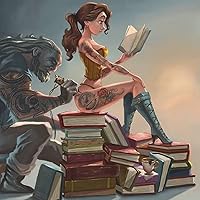
Review of advance copy received from NetGalley
Thank you to Lois Lowry and HarperAudio Children's for giving me access to this ALC in exchange for an honest review.
To say I happy‑cried at my desk when I was approved for a Lois Lowry ARC is an understatement. The Giver is my very favorite book of all time, so much so that I’m getting a tattoo for it on my arm book sleeve. It actually pains me to admit I’m struggling to review this one. I was fully engaged, finished it in one sitting, and still walked away with mixed feelings.
Set in 2099 under a dictatorship regime, the story immediately felt like a warning directed at our current administration. It echoed the alarms so many of us should be hearing about the direction we’re being taken. That part was powerful.
But the narrator made perspective shifts incredibly difficult to follow. Nothing signaled when we moved from present day to a memory or into Theo’s point of view. The first few times it happened, I had to stop and rewind because I genuinely thought I had missed something.
The core of the book is what I loved most. The scientific elements, the advancements, the possibilities surrounding Theo’s disappearance. I loved the idea of him landing inside a book, but I was hoping for something bigger. Time travel, a different timeline, another corner of the universe. With all the technological progress happening, especially with the father’s inventions, landing in a book felt anticlimactic.
As someone obsessed with books, I adored how classic literature was woven throughout the story. It warmed my heart to catch references from single sentences. Moby Dick, Little Women, The Very Hungry Caterpillar, Where the Wild Things Are. Those moments sparked genuine joy.
Miriam ended up being my favorite character. I kept wishing this were an adult series because there is so much potential to expand the world and deepen the characters. There’s room for something rich and complex here.
The character and storyline development felt thin, and the gender stereotypes running underneath everything were disappointing. Penn and Theo were exceptional, while Virginia and Tessa were simply above average. Even Virginia’s career and status took a back seat to Penn’s work. Miriam, who was clearly closer to Penn and Theo in intelligence, was written as a criminal, divorced multiple times, and displaced before her time for reasons never explained. She created that code instantly, and Virginia figured it out just as fast. The roles felt backwards.
Despite all of that, I was invested. And then the final plot twist hit, and it genuinely made me angry. Praying as the resolution felt like a betrayal from Lowry. The ending should have been scientific, aligned with where Theo was. It was an opportunity missed, and I can’t tell if it was intentional or if she couldn’t find a better ending.
I was surprised to see that eighty‑nine‑year‑old Lois Lowry was releasing a new book, but it does make me wonder if there was a decline during the writing process. The ending felt rushed, and I found myself questioning whether she needed help or simply couldn’t bring the story to a stronger close.
The uprising and overthrow of the government happening in a single day, maybe even hours, was wild. I mean, Gen Z did it in Nepal, so it’s not impossible, but it still felt abrupt. The family being completely removed from the uprising, especially considering the parents’ status and Virginia’s position, added to that rushed feeling. So much happens in the last five percent of the book, yet none of it feels substantial. It’s abrupt, disappointing, and honestly, inept.
Then it circles back to Tessa telling a bedtime story to her children, something I had completely forgotten about. It doesn’t add anything to the story and only highlights how disconnected the ending feels
To say I happy‑cried at my desk when I was approved for a Lois Lowry ARC is an understatement. The Giver is my very favorite book of all time, so much so that I’m getting a tattoo for it on my arm book sleeve. It actually pains me to admit I’m struggling to review this one. I was fully engaged, finished it in one sitting, and still walked away with mixed feelings.
Set in 2099 under a dictatorship regime, the story immediately felt like a warning directed at our current administration. It echoed the alarms so many of us should be hearing about the direction we’re being taken. That part was powerful.
But the narrator made perspective shifts incredibly difficult to follow. Nothing signaled when we moved from present day to a memory or into Theo’s point of view. The first few times it happened, I had to stop and rewind because I genuinely thought I had missed something.
The core of the book is what I loved most. The scientific elements, the advancements, the possibilities surrounding Theo’s disappearance. I loved the idea of him landing inside a book, but I was hoping for something bigger. Time travel, a different timeline, another corner of the universe. With all the technological progress happening, especially with the father’s inventions, landing in a book felt anticlimactic.
As someone obsessed with books, I adored how classic literature was woven throughout the story. It warmed my heart to catch references from single sentences. Moby Dick, Little Women, The Very Hungry Caterpillar, Where the Wild Things Are. Those moments sparked genuine joy.
Miriam ended up being my favorite character. I kept wishing this were an adult series because there is so much potential to expand the world and deepen the characters. There’s room for something rich and complex here.
The character and storyline development felt thin, and the gender stereotypes running underneath everything were disappointing. Penn and Theo were exceptional, while Virginia and Tessa were simply above average. Even Virginia’s career and status took a back seat to Penn’s work. Miriam, who was clearly closer to Penn and Theo in intelligence, was written as a criminal, divorced multiple times, and displaced before her time for reasons never explained. She created that code instantly, and Virginia figured it out just as fast. The roles felt backwards.
Despite all of that, I was invested. And then the final plot twist hit, and it genuinely made me angry. Praying as the resolution felt like a betrayal from Lowry. The ending should have been scientific, aligned with where Theo was. It was an opportunity missed, and I can’t tell if it was intentional or if she couldn’t find a better ending.
I was surprised to see that eighty‑nine‑year‑old Lois Lowry was releasing a new book, but it does make me wonder if there was a decline during the writing process. The ending felt rushed, and I found myself questioning whether she needed help or simply couldn’t bring the story to a stronger close.
The uprising and overthrow of the government happening in a single day, maybe even hours, was wild. I mean, Gen Z did it in Nepal, so it’s not impossible, but it still felt abrupt. The family being completely removed from the uprising, especially considering the parents’ status and Virginia’s position, added to that rushed feeling. So much happens in the last five percent of the book, yet none of it feels substantial. It’s abrupt, disappointing, and honestly, inept.
Then it circles back to Tessa telling a bedtime story to her children, something I had completely forgotten about. It doesn’t add anything to the story and only highlights how disconnected the ending feels
This entire review has been hidden because of spoilers.

Review of advance copy received from NetGalley
Welcome back, Meg and Charles Wallace from A Wrinkle in Time
Building 903 is a new middle-grade dystopian novel from the author of The Giver, set in a world lacking creativity where books and music are banned. I don't read middle-grade books super frequently, but I was intrigued by the premise of another dystopian Lois Lowry book with a very relevant alternate world. I read this book in basically 3 sittings and probably could've consumed it in one; it's easy to get through and quite fast-paced. I was also interested in the level of the vocabulary used in this book, both in terms of its age level and its content. A lot of the more difficult/obscure words are used in passing, but I was still surprised how many of them there were given the age of the readers, and also the fact that many dystopian worlds feature a lack of education while this one clearly doesn't.
14-year-old Tessa lives in a world that's been ruled by the same selfish dictator for decades. The government may be strict, and the people of the world may be unhappy, but the status quo lives on. The story begins with Tessa's neighbor, Miriam, being moved to ElderCare (she's 135 years old), and Tessa's discovery of secret contraband - books - that may hold the key to her brother's disappearance. The story initially balances Tessa's discovery with flashbacks to her life before her brother's disappearance, then settles into a steadier pace of secrets being uncovered. There isn't much action; all of the scenes take place within, like, a single day. Instead, most of the page-time is spent reflecting on what has changed in this dystopian world and how certain characters have been evading those changes. The ending, while satisfying for the main characters, lacks overall resolution for the other characters/greater world that's usually seen in dystopian books. When I first finished the book, I got the sense that I enjoyed it, but upon letting it settle and reading some other reviews, I think I'm leaning toward thinking this book needed more. More what? I'm not sure. Maybe complexity, maybe character growth, maybe resolution. Maybe all of the above. I haven't read The Giver in almost ten years, but I have a feeling it will stick with me more than this book will in 10 years.
I wasn't expecting to enjoy such a limited cast of characters as much as I did. The cast is pretty much limited to Tessa, her twin brother (Theo), her parents (father is an engineer and mother is a security officer), and Miriam, the neighbor. Tessa was a curious protagonist, which is great for dystopian books, and her occasional hesitancies to accept these new discoveries were expected. I didn't find her as compelling as some other protagonists of her kind, but I think that was due to the length of the book. Theo didn't get much page time, but the dynamics he shared with Tessa reminded me a lot of the relationship between Meg and Charles Wallace from A Wrinkle in Time. Similarly, I didn't love Tessa's parents' personality-wise, but the tight-knit nature of the family was very wholesome, and I enjoyed seeing their connection with Miriam as well.
Building 903 is a middle grade dystopian novel by Lois Lowry with a similar (though less magical) world to Lisa McMann's The Unwanteds and a cast of characters that rivals Madeleine Miller's A Wrinkle in Time.
Thanks to Netgalley and the publisher for the free e-ARC!
3.5/5
Building 903 is a new middle-grade dystopian novel from the author of The Giver, set in a world lacking creativity where books and music are banned. I don't read middle-grade books super frequently, but I was intrigued by the premise of another dystopian Lois Lowry book with a very relevant alternate world. I read this book in basically 3 sittings and probably could've consumed it in one; it's easy to get through and quite fast-paced. I was also interested in the level of the vocabulary used in this book, both in terms of its age level and its content. A lot of the more difficult/obscure words are used in passing, but I was still surprised how many of them there were given the age of the readers, and also the fact that many dystopian worlds feature a lack of education while this one clearly doesn't.
14-year-old Tessa lives in a world that's been ruled by the same selfish dictator for decades. The government may be strict, and the people of the world may be unhappy, but the status quo lives on. The story begins with Tessa's neighbor, Miriam, being moved to ElderCare (she's 135 years old), and Tessa's discovery of secret contraband - books - that may hold the key to her brother's disappearance. The story initially balances Tessa's discovery with flashbacks to her life before her brother's disappearance, then settles into a steadier pace of secrets being uncovered. There isn't much action; all of the scenes take place within, like, a single day. Instead, most of the page-time is spent reflecting on what has changed in this dystopian world and how certain characters have been evading those changes. The ending, while satisfying for the main characters, lacks overall resolution for the other characters/greater world that's usually seen in dystopian books. When I first finished the book, I got the sense that I enjoyed it, but upon letting it settle and reading some other reviews, I think I'm leaning toward thinking this book needed more. More what? I'm not sure. Maybe complexity, maybe character growth, maybe resolution. Maybe all of the above. I haven't read The Giver in almost ten years, but I have a feeling it will stick with me more than this book will in 10 years.
I wasn't expecting to enjoy such a limited cast of characters as much as I did. The cast is pretty much limited to Tessa, her twin brother (Theo), her parents (father is an engineer and mother is a security officer), and Miriam, the neighbor. Tessa was a curious protagonist, which is great for dystopian books, and her occasional hesitancies to accept these new discoveries were expected. I didn't find her as compelling as some other protagonists of her kind, but I think that was due to the length of the book. Theo didn't get much page time, but the dynamics he shared with Tessa reminded me a lot of the relationship between Meg and Charles Wallace from A Wrinkle in Time. Similarly, I didn't love Tessa's parents' personality-wise, but the tight-knit nature of the family was very wholesome, and I enjoyed seeing their connection with Miriam as well.
Building 903 is a middle grade dystopian novel by Lois Lowry with a similar (though less magical) world to Lisa McMann's The Unwanteds and a cast of characters that rivals Madeleine Miller's A Wrinkle in Time.
Thanks to Netgalley and the publisher for the free e-ARC!
3.5/5

Review of advance copy received from NetGalley
I received a free eARC from NetGalley in exchange for an honest review. I absolutely adore The Giver, so I could not smash that request button hard enough when this came across my dashboard. It definitely has Giver vibes - dystopian society, mysterious overlord who has banned anything resembling imagination and personality, etc. But it’s remarkably SLOW, for such a short book. And even though the whole point is the importance of stories and imagination, which is usually my catnip, I just found myself rolling my eyes at all of it.
So our main character is Tessa, a fourteen year old girl living in this brave new world ruled by some dude named Koziris who took over and outlawed elections and everything else. Life is better that way, yada yada yada. There’s a lot of time spent on the rules of this society - people choose a career path at 16, marry at 27, get “retired” at 100, etc. A few months before the events of the novel, Tessa’s twin brother Theo disappeared. Like…literally. He didn’t run away (he left ALL of his stuff behind), and he didn’t die tragically or get kidnapped. He just…isn’t there. It’s something that’s wearing on Tessa and her parents, but by the time the book begins, it’s more like background noise than something they’re actively dealing with.
But then Tessa’s neighbor Miriam gives her a key - which is strange in itself, because there are no locks in this world. Tessa unlocks some hidden compartment at the back of Marie’s closet and finds boxes and boxes of…books. Which are of course forbidden, because stories are lies and lies are bad. I feel like there’s a similar setup in The Giver with regards to stories as well, although that book is set in a more indeterminate “future time”, while this is more grounded about 70ish years in the future. So the books she finds are recognizable to most readers.
I think that’s part of what didn’t work for me here? I haven’t read The Giver in ages, so perhaps it doesn’t hold up anymore, but that book always felt timeless to me. I think that’s the problem with current dystopian fiction - given that we’re basically living in a dystopia right now, there’s this rush to create a future based around what we’re currently seeing, in a way that (I hope) will eventually feel dated. Turns out there’s something to be said for a more vague “before times” setup.
The other problem is the pacing. We start with Theo already having disappeared, and we do eventually find out where he is and what happened (and the deal with Building 903 to boot). But there’s a LOT of telling before we get to that point, and I have to wonder why the story couldn’t just be linear? Without giving too much away, Theo gets involved in some dangerous stuff, which is at the root of his disappearance. Why can’t we see him…doing that? Instead of hearing about it secondhand after the fact? There’s a lot of Tessa faffing about (and SO much whining about not wanting to go on a field trip to a fertilizer plant!), not actually *doing* much of anything. I think it’s mostly to give us some grounding in the world, but Tessa grew up like this, so she doesn’t know any other way of life. And for the most part she’s fully drunk the Kool-Aid, so she’s certainly not a budding revolutionary. That angle could actually be interesting, but here it just makes her sort of boring and scoldy. It’s all a little too on the nose, I think.
So…yeah. I wanted to love this, but it just didn’t land for me.
So our main character is Tessa, a fourteen year old girl living in this brave new world ruled by some dude named Koziris who took over and outlawed elections and everything else. Life is better that way, yada yada yada. There’s a lot of time spent on the rules of this society - people choose a career path at 16, marry at 27, get “retired” at 100, etc. A few months before the events of the novel, Tessa’s twin brother Theo disappeared. Like…literally. He didn’t run away (he left ALL of his stuff behind), and he didn’t die tragically or get kidnapped. He just…isn’t there. It’s something that’s wearing on Tessa and her parents, but by the time the book begins, it’s more like background noise than something they’re actively dealing with.
But then Tessa’s neighbor Miriam gives her a key - which is strange in itself, because there are no locks in this world. Tessa unlocks some hidden compartment at the back of Marie’s closet and finds boxes and boxes of…books. Which are of course forbidden, because stories are lies and lies are bad. I feel like there’s a similar setup in The Giver with regards to stories as well, although that book is set in a more indeterminate “future time”, while this is more grounded about 70ish years in the future. So the books she finds are recognizable to most readers.
I think that’s part of what didn’t work for me here? I haven’t read The Giver in ages, so perhaps it doesn’t hold up anymore, but that book always felt timeless to me. I think that’s the problem with current dystopian fiction - given that we’re basically living in a dystopia right now, there’s this rush to create a future based around what we’re currently seeing, in a way that (I hope) will eventually feel dated. Turns out there’s something to be said for a more vague “before times” setup.
The other problem is the pacing. We start with Theo already having disappeared, and we do eventually find out where he is and what happened (and the deal with Building 903 to boot). But there’s a LOT of telling before we get to that point, and I have to wonder why the story couldn’t just be linear? Without giving too much away, Theo gets involved in some dangerous stuff, which is at the root of his disappearance. Why can’t we see him…doing that? Instead of hearing about it secondhand after the fact? There’s a lot of Tessa faffing about (and SO much whining about not wanting to go on a field trip to a fertilizer plant!), not actually *doing* much of anything. I think it’s mostly to give us some grounding in the world, but Tessa grew up like this, so she doesn’t know any other way of life. And for the most part she’s fully drunk the Kool-Aid, so she’s certainly not a budding revolutionary. That angle could actually be interesting, but here it just makes her sort of boring and scoldy. It’s all a little too on the nose, I think.
So…yeah. I wanted to love this, but it just didn’t land for me.
Displaying 1 - 30 of 380 reviews