Be Faithful unto Death is the moving story of a bright and sensitive schoolboy growing up in an old-established boarding school in the city of Debrecen in eastern Hungary. Misi, a dreamer and would-be writer, is falsely accused of stealing a winning lottery ticket. The torments through which he goes – and grows – are superbly described. The novel is brimming with vivid detail from the provincial life that Móricz knew so well and shot through with a sense of the tragic fate of a newly truncated Hungary.
This is a Hungarian classic from 1921. It’s a good read if you don’t mind an old-fashioned style. For example, it has chapter titles such as “The little schoolboy endures all the sufferings of grown-ups who have to earn their bread” and “It is amazing how carefree and cheerful people can be around a suffering person. Is life worth living if the world takes so little account of heartache?” This is an era in Hungary when young people are expected to kiss the hands of their parents, benefactors and hosts.
The ‘suffering person’ is out little 12-year old boy coming of age in Hungary in 1892. His impoverished parents have scrimped just enough to send him to boarding school but for him it’s a Dickens-like experience filled with bad food, tyrannical school masters, bullying, thieving classmates and general terror. The little kid is a bundle of nerves and it would be amazing to do a word count to see how many times he is sick or homesick, has tremors, cries, blushes, quakes, and even faints from all the stressful situations he is engulfed in.
The young boy wants to be a writer (a poet). We learn the details of each of his teachers who run the gamut from doddering ancient to young dandy. He’s a good student and he is hired to tutor another boy and to read newspapers to an elderly blind man. He experiences puppy love with the sister of the boy he is tutoring. Much of the plot revolves around the disappearance of a lottery ticket the old man asked him to buy --- Lost? Stolen? Misplaced?
We learn a lot about the history of Hungary from the boy’s wanderings around the city and from class lectures. There is a much-needed section of notes that gives us details on all the political, historical and literary figures mentioned – about 5 or so extensive footnotes per chapter.
I enjoyed the book and learned a lot about Hungary at this time in history. At times it took some patience to stick with it.
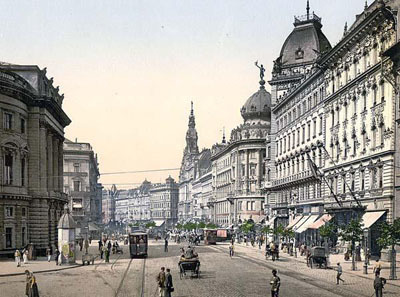
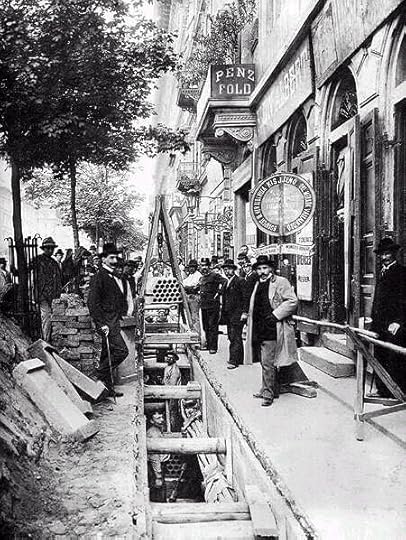
top photo: Budapest around 1900 from photohistory-sussex.co.uk bottom photo from old-time-budapest.blogspot.com
Nem értem, miért kínozzák ezzel a 12-13 éves korosztályt. Nyilas Misi szerencsétlen és suta alakjával nincs ember, aki azonosulni tudna, sem döntései, sem világlátása nem teszi nemhogy szimpatikussá, de még elviselhetővé is kevéssé. Egy letűnt világ letűnt rendszerének letűnt tanulságai bukkannak fel a könyvben, nem csodálom, hogy manapság abból íratnak esszét a pedagógusok, hogy miért olyan ellenszenves Nyilas Misi alakja. Tartok tőle, nehogy valakit arra bátorítson, hogy kövesse ezt a példát...
[-Εγώ, παιδί, ύστερα απ' αυτά που συνέβησαν, δεν μπορώ να σου δώσω παρά μόνο μια συμβουλή, συμβουλή που υπάρχει στο έμβλημα του κολεγίου: «Ora et labora»...Ξέρεις τι σημαίνει αυτό; Σημαίνει: «Να προσεύχεσαι και να εργάζεσαι!». Ούτε μια στιγμή να μην ξεχνάς ότι πρέπει να προσεύχεσαι και να εργάζεσαι. Μόνο τότε θα έχεις τη βοήθεια του θεού. Έπειτα, γελώντας, κοιτώντας τους άλλους καθηγητές και σιάχνοντας και με τα δυο χέρια τα γυαλιά του, πρόσθεσε: Έ, εξακολουθείς να θέλεις να είσαι μαθητής του Κολεγίου του Ντέμπρετσεν; Μέσα στην ψυχή του Μίσι ριζώσει τότε ένα είδος πεισματικά. Ένιωσε την καρδιά του δυνατή σαν το μαρμάρινα κι απάντησε: Όχι! ] (σελ.254) ----- Βρισκόμαστε στην Ουγγαρία (τότε μέρος της Αυστροουγγρικής αυτοκρατορίας) του 1882. Ένα αγόρι έντεκα-δώδεκα ετών, ο Μιχάι Νίλας στέλνεται από τους γονείς του στο φημισμένο Κολλέγιο του Ντέμπρετσεν να σπουδάσει στο λύκειο (εννοεί γυμνάσιο και λύκειο) εσωτερικός, δηλαδή να διαμένει κιόλας εκεί. Είναι ένα φοβισμένο παιδί, δεν έχει τον αέρα που έχουν οι συμμαθητές του, αργεί πολύ να προσαρμοστεί. Ένας καθηγητής του προτείνει μια εργασία να βγάζει λίγο εισόδημα για να μπορεί να αγοράζει και τίποτα, να πηγαίνει δυο φορές την εβδομάδα σ' έναν τυφλό γέρο και να του διαβάζει την εφημερίδα. Αργότερα -κι επειδή ο Μίσι είναι πολύ καλός μαθητής- αναλαμβάνει να κάνει ιδιαίτερα σ' έναν αδύνατο συμμαθητή του. Τα πράγματα βαίνουν καλώς μέχρι που χάνει ένα λαχείο.
Το λαχείο τού είπε να το αγοράσει ο τυφλός γερός, ονόματι Πόσαλακι (οι Ούγγροι φαίνεται τονίζουν συχνά στην προ-προπαραλήγουσα) και θα μοιραζόταν τα κέρδη. Μισά-μισά. Το λαχείο φαίνεται κέρδισε, όμως αυτός το έχασε ή του το έκλεψαν. Πως θα το πει στον κύριο Πόσαλακι; Πως θα ομολογήσει ότι δεν στάθηκε άξιος της εμπιστοσύνης του;
Το παιδί αυτό φαίνεται να είναι το μόνο εκεί πέρα που έχει αναπτυγμένους τους κανόνες ηθικής, παρά το γεγονός ότι βρίσκεται σ' ένα σχολείο που υποτίθεται γαλουχεί σε αυτούς. Το Κολλέγιο αυτό που κάνει είναι, όπως παρατηρούμε, να μαθαίνει τα παιδιά σε μια αυστηρότατη ιεραρχία, σε μια στρατιωτική πειθαρχίας, έχει δημιουργήσει ένα αυταρχικό και άκρως ανταγωνιστικό περιβάλλον που ο νεαρός Μίσικε (ωραία τα διάφορα υποκοριστικά του Μιχάλη) δέχεται μεν, αλλά είναι σαν το ψάρι έξω απ' το νερό. Πειθαρχεί απόλυτα, σχεδόν δουλικά, γιατί «έτσι πρέπει» αλλά δυστυχεί. Αυτός δεν θέλει να γίνει πιθανός μελλοντικός μπουρζουάς, αυτουνού του αρέσει να γράφει ποιήματα. Είναι σαν την μύγα μέσα στο γάλα. Φτάνει μέχρι και να κατηγορηθεί από τους καθηγητές, όταν η υπόθεση έγινε γνωστή, ότι πούλησε το λαχείο, δεν το έχασε. Αυτό πήγαινε πολύ!
Ο Ζίγκμοντ Μόριτς κριτικάρει το ισοπεδωτικό εκπαιδευτικό σύστημα της Ουγγαρίας και παράλληλα μιλάει για τις δυσκολίες προσαρμογής. Το βιβλίο θα μπορούσε να καταταχθεί ανάμεσα σε εφηβική λογοτεχνία και λογοτεχνία ενηλίκων. Πάντως η αφήγηση είναι πολύ παρωχημένη για τα σημερινά δεδομένα και όχι ιδιαίτερα ενδιαφέρουσα. Αξιοσημείωτη είναι η εθνική αφύπνιση που διαποτίζει τις κουβέντες των ούγγρων του τότε. Η χώρα τους δεν υπήρχε τότε. Η δε ουραλοαλταϊκή τους καταγωγή τους έκανε να ξεχωρίζουν πολύ από τους άλλους (ινδο)ευρωπαίους.
Kötelező olvasmány évekkel később felnőtt fejjel. Egy nagyon érdekes és értékes tapasztalás. Egész biztos vagyok benne, hogy ha fiatal koromban az iskolában kellett volna olvasnom, teljesen másképp éltem volna meg. Most azonban meg tudom érteni a rengeteg negatív értékelést, mindazokat akiknek nem tetszett a történet, és egyáltalán nem tudtak a főhösünkkel, a kis Nyilas Mihállyal azonosulni. Hiszen Nyilas Mihály megtestesít mindent, ami elől a mai világban menekülünk.
A csapból is az folyik, hogy szeresd önmagad, légy magabiztos, rengetegen tanítják, magukat mentoroknak nevező emberek, hogy hogyan tegyél szert több önbizalomra, hogyan változtasd meg az életed, szimplán azáltal, hogy szereted magad, és hálát adsz mindenért az életben, hogy minden nap mantrákat mormolsz, hogy "Szép vagyok", "Szeretem magam" stb. A hangsúly az egyénen van, mennyire fontos, hogy magunkra koncentráljunk és magunkat fejlesszük, ezáltal is hozzájárulva a társadalom fejlődéséhez. Mennyire fontos a saját boldogságunk, és sikerünk, aminek az érdekében szinte bármi elfogadott. Ne foglalkozzunk mások véleményével, nem kell küzdenünk mások elfogadásáért, az számít, amit mi gondolunk, az a fontos, hogy mi hogyan tekintünk magunkra, és maximum a szeretteink véleményére szabad adnunk, vagy az ő tanácsaikat megfogadni.
Nyilas Mihály és az őt körülvevő világ viszont ennek a teljes ellentéte. Abban a világban a közösség volt a fontos és az erőteljes hatalmi rendszer. A tisztelet alapvető volt egy magasabb rangú vagy idősebb ember felé, senkinek nem kellett kiérdemelnie. A szocialista és kommunista világ velejárója, ami Magyarországon erőteljesen megfigyelhető volt a múltban. Egy kis diák, aki ráadásul paraszti származású egy senkinek számított, akinek semmi szava és joga, akinek meg kell húznia magát, és akinek jónak kell lennie. Abban a korban a csapból is az folyt, hogy nem érsz semmit, te csak egy kis senki vagy, és sosem lesz belőled semmi ne is álmodj. A tanárok megalázták a gyerekeket, veréssel is fenyítettek és egy jelenleg számunkra elképzelhetetlen világot éltek. Így Nyilas Misi egy igazán magába forduló, álmodozó, önbizalomhiányos, bizonytalan, gyáva de jó és tisztességes kisfiú, aki még azt is szégyenli, hogy jó és tisztességes. Nem mer felszólalni, mindentől fél, mindig csak az jár a fejében, hogy mit gondolnak róla mások, ezért nem mond ki dolgokat, majd végül olyat mond ki, ami még sokkal rosszabb, mintha az első gondolatát kimondta volna. Így sodródik bele rosszabbnál rosszabb dolgokba. Nem mer kiállni magáért, és mélyen meg van sértve, amikor valaki rosszat feltételez róla, és meggyanúsítja, ezért nem hogy megvédené magát és kiállna magáért, hanem csendben tűr, és még azért se szólal meg, csak azt gondolja magában, hogy majd ha ő egyszer nagy ember lesz, akkor ezek a gonosz csúnya emberek megkapják a jussukat. Szörnyű volt ezeket olvasni, szörnyű volt Misike bőrébe bújni. Ő mindannak a megtestesítője, ami elől menekülünk, akik semmiképpen nem akarunk lenni. Persze, legyünk jók, és tisztességesek, de ne tűrjük ahogy a tisztességtelen emberek átgázolnak rajtunk, ne tűrjük az igazságtalanságot, szólaljunk fel magunk védelmébe, még ha értelmetlennek is tűnik. Egyszerűen tudnunk kell a saját értékünket.
---SPOILER---
Nyilas Misi is iszonyú értékes diák fiúcska, aki az osztály legjobb tanulói között van, aki nagyon sokat tud, és szorgalmasan tanul. Annyira értékes fiúcska, hogy mások is látják értékeit, először Orczy, aki meghívja magukhoz, hogy barátkozzanak. Aztán egy másik fiú, aki átadja a felolvasós munkát neki, vagyis rábízza ezt a nemes feladatot, amiért fizetséget is kap. Végül de nem utolsó sorban a latin tanár, aki tanítványt is szerez neki. Olyan szépen és ígéretesen halad az élete, amíg saját magát felesleges bajokba nem sodorja. Hiszen hogy lehet olyan kis butácska, hogy még csak nem is emlékszik rá, amikor János úr ellopja tőle. a restkontót... Egyszerűen nem hittem el, megráztam volna amikor olvastam, hogy "Héj Nyilas, hát az a lókötő János úr nem el kérte tőled a minap azt a nyavajás reskontót?!?! Tán visszaadta?" Nem hittem el, hogy nem emlékszik rá. Nagyon frusztrált. Tulajdonképpen azonban ennyi a történet. Természetesen a lutrin nyertek, de mindenki azt hitte a János úr hazug leveléből, hogy a biztos nyereség érdekében 10 forintért eladta neki a Misi a reskontót, és aztán azon nyert több mint 100 forintot. Természetesen mindenki elhiszi, a nagy tanács kérdőre vonja Misikét, de valami undorító módon, hogy az összeset tudtam volna úgy pofán vágni, hogy azt hiszik magukról, hogy ők szülték a spanyol viaszt és bármit megtehetnek. Szinte nem is számított szegény Misi mit mondott, habár mint már említettem az is idegesítő volt, hogy Misike semmit nem szólt és nem védte meg magát.
Mindenesetre ezt a könyvet nem a történet miatt szeretjük. Hanem azért ahogyan betekintést enged a régi magyar valóságba. Az érzésekért, amiket olvasás közben kivált belőlünk. Az összetett és szép képekért, amik habár unalmasak, és semmi extra nem történik, még is látjuk magunk előtt az eseményeket, a kollégiumi szobát, az osztálytermet, a füvészkertet, Pósalaky úr szobáját, ahol Misi felolvas neki, Gimesi nagymamájának lakását, az Orczyék lakását.... Ezek az érzések nekem pótolják egy igazán izgalmas, fordulatos történet hiányát.
Azért kap csak 4 csillagot a könyv, mert a vége nagyon nagyon frusztráló volt számomra, ami miatt egy kicsi negatív hangulat maradt meg inkább bennem, de egyébként nagyon jó kis olvasmánynak találtam.
One of the worst books I’ve ever read. The first 10 chapters had absolutely 0 story and anything that did happen could’ve been explained in no more than 3 sentences.
The last two chapters finally made the almost nonexistent story come to a conclusion. It only gets 2 stars because of the 11th chapter as that was pretty well written and emotional, the rest however… well just terrible.
It was a pretty pathetic book with an even more pathetic “main” character.
What is noticed better than in other books on the subject, conditionally does not correspond to the reader's props. Disappointment seen in advance, has its coincidences from the middle of the work, and later belongs, lost in a dreams and comforting views, of the action and the narration. From the narrator's point of view, complementarity and persistent word respond by imitating an empty point of view. A nicely done header. Didn’t help any much, yet it comes as I would dance to the funniest damn thing. Further on places for larger threads, stay at a distance. It can be seen in advance that the conversation, imbued with the rest, doesn’t reply to the main stream or the line that fallows. They contain, above all simple places in the text and do not raise attention as they could. Or perhaps maybe, there were more coinciding options. You read them too much, away from the main knowledge. They tell, however, a slightly brighter story, and the range, is the same as it is given. Apparently, narative has that form, filled with work done, and something below the line that says it all.
The most important thing that exists in an imaginary community, likes of great caution and the other, paired with a rough context, with which to embark on a long journey, just like in many altogether common grounds. There are some good feelings in that direction, and withstands intrusions that later fall into view and lead to different thoughts. One of them went astray in every respect, subtly withdrawn from the places that where happy, events which can take place, dialogues, consensual places, and mostly more attention scattered in such a frequent prose text.
Headlines left offensively, in a row distract from the trail. The book opens and you think ahead. The first thought, goes into that unique thing and latter. The best of it all speaks in favor of which can be very easily explained, as well as talking about a more complex feeling after closing. The plot presented, at first very mildly, almost honestly, exists to tell this story about only one of them, as in the way it can be listened to, and understood. The inevitable feeling that the story will remain the one about possibilities, the detailed question magnified. That is why we should not foam and expect that it will always be, a uniformly complicated mess, not even a bad feeling. As he moves away from the place of acquaintance, each way different opinions are lost in the simple explanations won in a few pages. However, there is no big plan, which fits something more than the entire topic.
It certainly spilled more than anything on this, at first glance worth maybe three or four covers. At first glance, the overall point of view can only provide so much, an appropriate replacement and a spent drooly vocabulary, which differs from the middle and renderings. Those annoying parts of the text in which you can indulge and look at what is shown. That a lot of things remain so obvious, hidden and simply left for taking. The smart ones would say that it is up to the respect of the genre and the suggestive opinion of the following. It has been said several times, it does not remain hidden from, even with places where the action becomes something more than a simple effect. Harmonious skipping takes place in four or more places. And sharp transition, which entrails the same monotony left at the fatal beginning. Persons who have passed into the world, take the feeling of easy sight, promised in the first lines with something bigger that accompanies the district sense of viewing. Thing that pushes the boundaries of understanding. Hence the understanding of that book. Works can belong to one of these, that take the view away from other indications that become on that plane, already reasonable on the basis of viewing. I can't classify them in any literary push up bill domain, how many times it seems very nicely portrayed. And not so black written story. He would say that it is not a common feeling, that the simplified sentences from the beginning to the end are so filled with a refined feeling, to which one should return. False attention is not known only once. Sometimes that persistence is not opposed by the best invention and a consistent sense of popular stuff. The process of repetition gave a sense of superiority, and a sense of transitioning into new plain song of seeing that greatness.
At first, this is how it is seen, the feeling does not subside, and the distance from which it is known to correspond to the blunted opinions, does not correspond to the story as a whole. As a free influence, it can remind and distract, as much as it speaks so evenly and boldly, towards the main issues in writing as an imitation of omitted speeches, bad obstacles in seeing what is shown. The arrival, the family, the discrepancies, the possibilities of maturing, someone older, and finally the very plot of that novel, suggest that they can be taken lightly. Talking, sharing. Move, look further and tell what remains, and the effect of the children is not lost from view, comfortably placed in the display of forgiveness.
The problem that is reached, below the surface, means only so much, that the titles have taken away all the attention of what it really says. Uniformly for a reason that spreads attention for days, the relationship is seriously large and imposed on the basis of which it begins. At first distant, written and a little harder to interpret, it raises the reader's attention and speaks of the reality undertaken in advance with a negative tone. Further to the middle, a poorly mastered application in writing, absolutely corresponds to a simple point of view. Crossing over the following points of view. It can be seen well, so you don't have to talk about it. The title doesn't have to stay that way at all. The curiosity as it is, away from the eye, is understood as a proverbial action and could be viewed with a skilful departure from the thoughts of work. The longest one they attributed to him, ordered, further removes the veil from the ugly things it falls on. jao
Full confidence that he can make sense of the idea, arises from watching. It is worth emphasizing that the story, above all, intones the national motive. Curiosity as it may be that such a strong thought does not relate. The whole novel is understood unequivocally, just as the consistency is so simple. One old feature of writing, it reflects reading so bearable. Constant shows can take away attention from further action in that reach as well. Good discretion is very much obliged.
Nagyon tettszett! Szinte làttam magam elött a kisdiàkot, és a többi szereplôt is, ahogy olvastam. Nagyon szép tôrténet, és élethû, ahogy a tanulòk beszélnek egymàs közt. Néha nagyon aranyosak és viccesek, mint példàul: Hisz te vagy a titkàr – mondta Orczy – a te titkod az egész. Ez ellen nem lehet szòlani.
Az egész könyv nagyon szépen van megìrva. Mòricz Zsigmond jòl összehozza a különbözô részeket, mint példàùl, hogy Misi olyan lesz a bicskàval, mint az öreg levéltàros, aki mondig vissza megy megnézni, hogy jòl bezàrta-e az ajtòt. Egy màsik példa, amikor a könyv vége felé azzal vàdoljàk Misit, hogy ô ette meg a cipôkenôcsöt. Persze a könyv elején rosszùl bàntak a fiùk Misivel, hogy fölbontottàk a pakkot, s a könyv végén pedig a felnôttek bànnak vele rosszùl; nem hiszik neki, hogy nem adta el a reskontòt, hanem el lett lopva. Az elejétôl a végéig, nagyon szép mese.
This story of a young boarding school student in Debrecen, Hungary, was a gift to me from my friend Anita, a native of Debrecen. Misi underwent many trials - the trial of loneliness as he was separated from his family, the trial of poverty when he arrived at school, the barriers between "day" students (wealthy students who lived in town) vs. boarders, and the trial of school for a dreamer and would-be poet, even one who worked hard to succeed. Misi seemed fated to become entangled in many different family and school dramas, and sometimes it seemed that he hadn't a friend in the world. But a kind-hearted uncle - plus kindness from other unexpected places - brought him relief in the end.
This book contains a good bit of the history of the Hungarian people (pre-WWII, written in 1921) that I was completely unaware of. I enjoyed it very much!
Being an 8-year-old in 1956 at the time of the Russian invasion of Hungary which was televised in black and white on the evening news, I have always had an interest in this country. The most fascinating part of this novel for me was the extensive explanation of the Hungarian history through the centuries. Misi, the 12 year-old main character, was sent to a boarding school in Debrecen to get the best possible schooling his family could afford. This sensitive young man diligently worked through all the subjects offered him including intensive Latin, mathematics, detailed history and geography, unbelievable work someone his age. Drama arises as family, friends, teachers, and administrators complicate his life. A must read for anyone anticipating a trip to this amazing country.
This was a beautifully written story. Many of the characters were wonderfully and vividly described. They had me laughing out loud at some of their antics. At other points, I was wondering what was going to happen next and hoping the best for Misi and some of the others.
The writing style might take a little time to get into but once you do it's really good. The plot is also a little slow to start.
I also learned some interesting pieces about Hungarian history ans culture from this book (mainly Mr. Nagy's speech to Misi though there were a few other parts).
I'm glad I picked this book up though I'm still not sure how I feel about the ending.
The life of a child isn’t always all fun and games. Especially when lacking the mental capacity to compartmentalize all of the stimuli. This is precisely what Zsigmond Moricz explores in the great-Hungarian classic, “Be Faithful Unto Death”.
“Be Faithful Unto Death” follows a snapshot period in the life of Mihaly (Misi), an 11-year old scholar in the midst of uncomfortable growing pains no longer wanting to be a child but not developed enough to handle mature situations. Miso is uncertain about, well, pretty much everything including his own esteem but yearns to find his place in the world. Misi’s life boost occurs when he begins earning money both as a reader to a blind man and as a tutor to a poor student. Misi gains responsibility and perspective – yet still manages to be lost. His biggest failure occurs when the old, blind man gives Misi money to play the lottery and the ticket is consequentially lost/stolen. Misi is suddenly even deeper in a hole.
Don’t let the story plot fool you; “Be Faithful unto Death” is not a young adult novel nor childish in any way. Both the language with its flowing elegance and composition plus the story arc itself is mature and refined. Moricz’s audience is adults who remember their childhood or feel lost during their adult years. In fact, the novel is very much a character study that bleeds complexity.
There are moments in “Be Faithful Unto Death” that Misi’s character is somewhat unbelievable, as no 11-year-old can possibly think or speak as he does throughout the story. Although this is an element that draws and maintains adult readers; it isn’t realistic. Regardless, the layers of symbolism are indeed complex and magnetic.
“Be Faithful Unto Death” takes various forays into discussing Hungarian political life and socio-class structures. Again, this doesn’t make sense coming from the mind and mouth of a child but certainly makes readers process and learn Hungarian history.
Moricz’s novel is best suited for Hungarian readers but graces the spectrum of all readership. “Be Faithful Unto Death” has a lively pace mixed with calming facets and is very much classic lit in texture.
The climax of “Be Faithful Unto Death” is evenly spaced and not overly dramatized, adding to the essence of the novel in a perfectly accented way. Sadly, the same can’t be said for the conclusion of the novel which is disjointed, clunky, and doesn’t satisfy the story depth. Bluntly, the ending of “Be Faithful Unto Death” is a let-down and not memorable.
Moricz supplements with a small section of ‘Notes’ which serve to explain some of the references made throughout the novel .
“Be Faithful Unto Death” is not without its downfalls such as the poor ending but regardless; the text is beautifully written, Misi is a strong character, and the story is intriguing with mature subject matter. “Be Faithful Unto Death” is recommended for all readers interested in European literature in the vein of classics.
It's an important piece of Móricz ouvre, however, it is not teenegers' favorite as you can see in the comments. Infact, it is not very known that according to the author's intention the novel was for adults. It became an adolescent novel only due to editors' contributions who thought that a boarding school novel should be published for young audience. Most of nowdays teenager have no patience to read novels which don't have action in every page and contain only few dialogues and tend to talk more about the character's emotions and thoughts. However it has been a compulsory reading for a long time in Hungary and I thintk it is worth reading for more expert readers. As for the English translation, you should know that the original title in Hungarian sounds "Be Good Unto Death" which is a huge difference because Moricz changed deliberately the word "faithful' into 'good' - "be faithful unto death" is a qoutation from the Bible, anyway... The novel is about an innocent person desiring to be "good" and experiencing the opposite.
"Zsigmond Móricz’s novel Be Faithful unto Death has been compulsory reading in Hungarian public education for decades. The novel, whose literal translation of the title is 'Be Good unto Death', has survived several political regimes and is probably the most widely read work in Móricz's oeuvre. In fact, from 1953 it was the most widely published of all Móricz's novels, appearing in both adult and youth editions. It was also the most translated into foreign languages and the subject of the most reviews and critiques. Published in 1920, the novel is set at the end of the nineteenth century during the writer's childhood. The protagonist is Mihály Nyilas, an eleven-year-old student in his second year of secondary school. At the beginning of the story, he is confronted with the large, gloomy school building in Debrecen. He is proud to be there, but also afraid of it. However, less than a month later, he declares that he no longer wants to be a student there. Móricz depicts the loss of innocence and the end of childhood through the story of a young man deceived and accused by adults of cheating, lying and abusing the trust of others. This brief summary of the novel's content gives a sense of the moral emotions and dilemmas that arise from them. Móricz evokes sympathy in the reader by building up complex emotions of guilt, shame, pride and disappointment in the character. In other words, like other literary texts for children and young people, this novel is 'addressed to the heart'; it aims to appeal to the strongest emotions and moral sense, and, above all, to draw readers into the realm of morality through emotional engagement."
Bueno! Esta es la primera reseña que hago de un libro en Goodreads, así que será a pura suerte.
"Misi, un niño brillante, inocente, sensible, siempre dispuesto a ayudar a los demás, que estudia en un estricto internado al noreste de Hungría, sueña con convertirse en poeta. Pero su infancia termina de pronto cuando es acusado injustamente de robar un billete de lotería premiado. Alejado de su familia, se verá obligado a asimilar las complejidades de un mundo nuevo, el de los adultos, que desconoce y se le revela como temible. ."
Reconozco que la primera vez que ví este libro en una librería de uso me llamaron la atención varias cosas; su título (que es mucho más sugerente con la trama de lo que esperaba), lo increíblemente barato que estaba el libro, y el hecho de ser de un autor que nunca había oído en mi vida.
Es una buena lectura, si no te importa un estilo algo anticuado pero no complicado en su léxico (lo que me aburrió un poco), por ejemplo, los títulos de los capítulos suelen ser extensos y rebuscados, ejemplo:
Capitulo 1 “En el que un chico un pequeño colegial pierde su sombrero, por lo cual se ve obligado a salir con la cabeza descubierta bajo la lluvia y la nieve buena parte del invierno, hasta que la gente, por indiferente que sea, termina por notar esa anomalía" (Traducción de Jesús Yánez Pelletier)
Avanzando en la lectura se me vino a la cabeza lo similar que se me hacía con el libro Corazón de Edmundo de Amicis, y grata fue mi sorpresa al ver que este es mencionado por el protagonista!
Algo más que fue mi agrado es la multitud de figuras históricas de Hungría que se mencionan en el libro, una buena oportunidad si quieres aprender sobre la historia de este país. Una de mis cosas favoritas es la forma en que explican la situación del sentimiento nacional colectivo "Vivimos aquí, en el centro de Europa, como un hijo bastardo(...) ¿No es eso terrible? (...) Vivimos, trabajamos, pensamos, algunas veces cantamos, y en ninguna parte del mundo hay un pueblo que comprenda nuestra lengua. Estamos condenados a morir solos. En ninguna parte tenemos amigos, parientes. ”
No puedo dejar de mencionar mi frase favorita, y una de las más bellas que he visto en un libro:
“El, Misi, quería saberlo todo. Saberlo de un solo golpe. Era suficiente quererlo. Los verdaderos conocimientos están en el alma del que se abre al mundo.”
En resumen, una lectura grata, no muy extensa pero algo densa por su lenguaje, en dónde te sentirás atrapado por las peripecias del pequeño e imaginativo Misi.
Nyilas Mihály kétség kívül egy olyan embert őriz meg, amely mindannyian vagyunk. Érzelmes, értelmes lény. Ámbár nem mindenkiből formálódik ki a mélységben lakozó jóság magja. Mint minden ember, Misi is átérezte (de nem akarta) az összes érzelmet. Öröm, szomorúság, harag, undor, félelem, meglepődés. Örömmel gondolt Bellára, és mindig elpirult, amikor kis poétának nevezte a kis "Misikéjét". Szomorúságot és meglepődöttséget, amikor elvesztette a reskontót... (Hol lehet? Hova rakta el? Valaki ellopta? Ki volt az?) Harag, düh. Mérges volt mindazokra, akik nem akarták megérteni őt. A lelkét, a gondolatát, a világát. És nem is engedték azt, hogy kibontakozhasson. És így megkevesebb bátorság volt benne, hogy felszólaljon magáért. És így a bánat és a düh között ugrált. Nem bírt megszólalni, elcsuklott a könnyeiben. Majd a düh zárta le a száját és csak a szemével beszélt, utált, "ölt". Undorodott azoktól, akik hájasra szedték a zsebüket (ugye tudjuk, ki ő...), akik "nem dolgoztak" (vegyük csak azokat a tanárokat, akik nem tanítottak (jól) szerinte, csak időt vesztegetik az órákra járással), és ezek csak az elméjükkel dolgoztak. Ami ellentmondásos, hisz ő is ezt akarta. Az embert akarta a jóra tanítani, mindhalálig...
Persze nem tértem ki egyértelmű dolgokra, de nem is ezért írok véleményt. Egy árnyalata az összevéleményemnek mindaz, amit ide leírtam ~ Gimesibe tuti szerelmes volt, mert nem hiszem, hogy ennyire imádott valakit, akit ki nem álhatott. És amennyire szerencsétlen volt Misi, és amennyire Gimesit nem érdekelte igazán Orczy fontoskodó reskontó keresés, annyira érdekelte Misi is őt - persze ő volt az elsők között, aki megtudta, hogy hova is tűnt a kihúzott számok után kapott 120 forint... ~ "Mindenesetre ezt a könyvet nem a történet miatt szeretjük. Hanem azért ahogyan betekintést enged a régi magyar valóságba. Az érzésekért, amiket olvasás közben kivált belőlünk. Az összetett és szép képekért, amik habár unalmasak, és semmi extra nem történik, még is látjuk magunk előtt az eseményeket, a kollégiumi szobát, az osztálytermet, a füvészkertet, Pósalaky úr szobáját, ahol Misi felolvas neki, Gimesi nagymamájának lakását, az Orczyék lakását.... Ezek az érzések nekem pótolják egy igazán izgalmas, fordulatos történet hiányát." - Görföl Fanni (4 csillagos véleményéből), 2025.03.11-én bemásolva
This entire review has been hidden because of spoilers.
I chase books that make me emotional, but this book made me feel so angry and helpless and indignant it was honestly hard to bear — which is a rare feeling for me in literature tbh. At its core I suppose this is a Bildungsroman, and it particularly struck me for the way it chronicles Misi’s loss of innocence as he is betrayed by a messed up adult world that he doesn’t understand. I also found the reflections linking his personal fate to that of his father and his ancestors, all the way up to the Hungarian people.
Very proud to have read this in Hungarian after many years of putting it off — I really shouldn’t have because this is a poignant story and one of the increasingly rare books to make me cry.
“Hát nem borzasztó az, hogy itt vagyunk Európa közepén, élünk, dolgozunk, kinlódunk, dalolunk, vigadunk; s nincs az egész világon sehol még nép, amelyik megértené a mi nyelvünket... Sem a nyelvünket, sem az érzéseinket, sem az életünket. Magunkban kell itt lennünk, senkire se lehet számitani, csak ellenségünk van a világon, barátunk, rokonunk sehol.” / Misinek könny szökött a szemébe, mert a maga élete, a saját sorsa ez. Itt kell neki Debrecenben, ebben az idegen, nagy városban, ebben a nagy kollégiumban élnie, s nincs senkije, semerre, aki segítene rajta, akármi történhetik itt vele, nem fogja védeni senki soha...
Ez tipikusan egy olyan könyv, amit egyszerűen nem a megfelelő korosztálynak adnak… Mármint, itt vagyok 14 évesen, és hiába ifjúsági regény, egyszerűen érzem, hogy ez nem nekem szól. Hiába papol az irodalomtanárom arról, hogy milyen mestermunka ez, és hogy milyen fontos értékeket közvetít Misi, én ezt nem tudom átérezni.
Hogy őszinte legyek, szerintem Misi nem jó példakép. Bár vannak jó értékek, amiket közvetít, az, hogy nem képes kiállni az igazáért, szerintem idegesítő, és egyáltalán nem követendő példa.
Azért nem szeretnék nagyon rossz értékelést adni a könyvnek, mert voltak részek, amiket még egészen élvezni is tudtam, csak egyszerűen ez nem a mi korosztályunknak szól, de ez már nem a könyv hibája.
Many Hungarian classics are widely considered to be so great that if they were originally written in English, they would have achieved worldwide recognition. This is not one of them. The topic of remaining truthful, ethical and morally outstanding in hostile or oppressive environment is an integral part of the Hungarian soul and therefore it is the theme of many amazing books written by Hungarian authors. This one is just too much - endless suffering, with no point and no messages to take away at the end of the day (book). There are many other great options to read as a non-Hungarian who wants to get some insight to our literature. Look at Antal Szerb, Magda Szabo, or György Dragoman instead, you won't regret.