Robbie has spent most of life wondering about his real father, Mike, who long since left their family due to his struggles with visions and mistrust of the modern world. Robbie can't forget how much he felt connected to him from his few visits, and not just because they share two differently colored eyes. But now, as he rescues his mother from encroaching wildfires, he's determined to find his father. Robbie takes off to find answers, and when his uncle confesses that he last dropped Mike off at a glacier, he and his uncle head climb up the mountain of ice to see if Mike is there, and whether he's still alive.
On the slopes of a huge glacier named Omega, Robbie navigates between fear and wonder as he starts hearing the ancient voice of the glacier giving him guidance. Has Robbie accessed a deep connection to the land, one he can trust? Or is he succumbing to the same illness that had wreaked havoc on his father's life?
Michelle Porter brings her profoundly moving sensibility and disarmingly funny voice to a powerful contemporary story of identity and belonging, loss and healing, within families and with the immortal land itself.
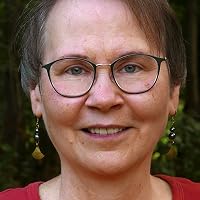
MICHELLE PORTER is the descendent of a long line of Métis storytellers. Many of her ancestors told stories using music and today she tells stories using the written word. She holds degrees in Journalism, Folklore, English, and a PhD in Geography. Her academic research and creative work focus on home, memory, and women’s changing relationships with the land.
Her book A Grandmother Begins the Story: A Novel will be published November 7, 2023.
Her most recent book, Scratching River, a memoir exploring the meaning of her Métis heritage through her older brother’s life story, was published by Wilfrid Laurier Press in April 2022. She’s also published a book of creative nonfiction about her great-grandfather, a fiddler from the Red River, called Approaching Fire (shortlisted for the Indigenous Voices Award 2021) and a book of poetry, Inquiries, (shortlisted for the Pat Lowther Memorial Award). Michelle has won numerous awards for her poetry and journalism and her work has been published in literary journals and magazines across the country. Currently she is teaching creative writing and Métis Literature at Memorial University. She is a member of the Manitoba Métis Federation and she lives in St. John's, Newfoundland and Labrador.
Worlds collide in *A Glacier’s Guide to Dying,* a work of speculative climate fiction by Michelle Porter. On one side is the realism of our dystopian present—the explosive and unpredictable wildfires of western North America, the precipitous retreat and occasional surge of glaciers, and the fear and tension of heightened security at the U.S. border. On the other is the mythic—supernatural giants, past and future buffalo herds, a vengeful zombie. And this collision of worlds eventually expands into a survival adventure on a glacier that is both living and dying and that communicates over a dead cell phone.
At first, you might feel justified in thinking that this is all taking place in the mind and memory of the drug-addled narrator, Robbie. However, the physical evidence and presence of corroborating witnesses would seem to belie that interpretation, however deeply unreliable you might want the narrator to be.
Enmeshed in this collision of worlds is a family drama that plays out within the collision of two cultures: the Métis people of Canada and White North Americans. Robbie’s father is White, schizophrenic, and mostly absent. His mother is Métis and remarried to an abusive and controlling White man. His two older sisters look Métis and live largely within the Métis culture, and his younger half-brother looks White and lives largely within the dominant White culture. Robbie himself straddles the two cultures and the two worlds. He looks like his father—he even has his father’s trait of one blue eye and one green eye—and works in the White world, but his inner life is dominated by the Métis stories of his mother and the Métis-inspired music he plays on the fiddle he has inherited from his mother’s family.
Complicating the collision of worlds further is the father’s schizophrenia. He has one foot in the physical world where he is subject to universal human needs (water, food, clothing, shelter) and the other in a world of voices that tell him computers are trying to control his brain along with everyone else’s. Robbie can’t help but wonder whether he is headed for a collision with these voices himself, and whether the manifestations of Métis folklore he observes around him might in fact be signs of mental illness.
So there are two drivers of this novel’s plot. There is the external driver of wildfire, which dictates and limits the characters’ movements and puts them in real jeopardy, and there is Robbie’s drive toward reconciling the worlds that are in conflict within him. And by reconciling, I do not mean a blending or resolution of worlds, but rather an acceptance of his imperfect responsibility to each world.
It’s a fascinating complex of themes, and Porter works commendably within their messiness without trying to resolve them into simplicity. I would love to have seen this messiness explored more deeply, in fact. I wanted to understand the relationships between characters better, particularly between Robbie and his stepdad and between the stepdad and the Robbie’s mother. I’m someone who reads to understand characters’ motives, and I was baffled at times about Robbie’s and his mother’s feelings for the abusive stepdad and husband. And I wanted more story to demonstrate the complexity, not exposition that seemed to be an excuse for it.
As enamored as I am with the novel’s speculative elements, it is the family drama that fully hooks me, especially the sibling relationships. I love how Porter depicts the commitment, the rivalry, the irritation, the devotion, and the admiration these brothers and sisters find so hard to admit to one another in words. Whatever they might say, their actions demonstrate that their commitment to family is paramount, however inconvenient it might be. The heart and soul of the book is family in all its dysfunction and function. There is meaning, and maybe even hope in our troubled world, in showing up for one another.
With thanks to Netgalley and Algonquin Books for providing access to a review copy in exchange for an honest review.
Read for Booklist. I love Porter's writing - this book is definitely worth checking out, as well as her other books. She has the heart of a poet for sure. I had a hard time connecting with the story, though. The rating doesn't do the quality justice. I just thought it was important that I choose a rating that corresponded with my enjoyment.
This novel is difficult for me to rate. I really loved parts of it but other sections, like the magical realism part, just did not meld into the plot as I had hoped it would. Still, the descriptions were so awesome as they emphasized not just sight, but smell, touch, and hearing too. I also appreciated the attention given to climate change and how it ties into the rest of the natural world.
A Glacier’s Guide to Dying is a powerful, strange, funny, and deeply moving novel that blends family drama, environmental crisis, Indigenous storytelling, and magical realism into something wholly unique.
What impressed me most was Michelle Porter’s ability to balance respect for Métis stories and ways of knowing with a compelling contemporary narrative. Readers are given glimpses of Giants, Buffalo, and the living presence of the land without having every detail explained, creating a story that feels richly layered and rewarding. It is accessible to all readers while also clearly offering deeper resonance for those who share connections to the cultures and knowledges represented.
The novel’s humour was one of its greatest strengths. Even while exploring difficult subjects such as intergenerational trauma, mental illness, abuse, climate disaster, and loss, the story remains vibrant and full of life. Robbie’s text exchanges with his siblings were particularly effective, establishing family dynamics with warmth, authenticity, and wit.
I also appreciated the novel’s structure. The shifting timelines and fragmented narrative mirror Robbie’s emotional reality, creating a sense of uncertainty that feels purposeful rather than confusing. The pacing is carefully controlled, with revelations arriving at just the right moments.
My only criticism is that the manuscript could benefit from additional copyediting. I noticed several typos and a few sentences that felt awkward or unclear. However, these issues were relatively minor and did not significantly impact my reading experience.
Overall, this is an ambitious and memorable novel about inheritance, identity, family, grief, healing, and our relationships with the land. Readers who enjoy literary fiction with strong Indigenous perspectives, unconventional storytelling, and moments of both heartbreak and humour will find much to appreciate here.
Miigwech netgalley & algonquin books for the ARC in exchange for my honest review.