In rural Missouri in the 1970s, thirteen-year-old Pearl Swinton has just had her first mystical vision. There is no place for Pearl's "gift" in the bloody reality of subsistence farming and rural poverty. As her visions unfold, she must find her way in a family and a community that react with fear and violence. When Pearl discovers that her Aunt Nadine, the family shame, has a similar gift, she bicycles across the state to find her. That trip unexpectedly throws Pearl into a journey to save her runaway sister and sends her into a deep exploration of herself, her visions, and her visceral relationship to the earth. Told with fierce lyricism, Earth is a story about the importance of finding one's own truth and sense of self in dire circumstances and against the odds. It is also a story about the link between understanding ourselves and our relationship with the earth. In this first of the four-book Elemental Journey Series that will follow Pearl across continents and into adulthood, Caroline Allen introduces a form of storytelling that is unflinching in its honesty, filled with compassion, and underscored with originality. Includes a thought-provoking Book Group Guide.
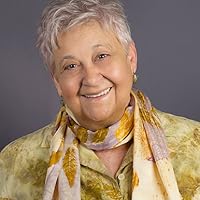
Caroline Allen worked in newsrooms in Tokyo, London, and Seattle, and as a travel writer through Asia. She is now a novelist and visual artist who lives in Oregon. She is the founder of Art of Storytelling, a coaching service for writers.
This book was both enthralling and off-putting at the same time due to the subject matter. Pearl lives in extreme poverty in an abusive home and she suffers from uncontrollable visions that makes her totally odd and stand out as different to those around her. As she struggles to be normal in a world where normal is not always recognizable she tries to connect to her true self thru the earth. Her family works the earth to make a living and it is a brutal struggle for them but Pearl loves the land and finds her strength thru her connection with the earth. Great read. I would like to thank the publisher and Net Galley for the chance to read this ARC.
Remarkable, memorable writing — Caroline Allen is a new and important voice
Raw. Gritty. Sensuous. Caroline Allen’s "Earth" sucked me into the story of Pearl Swinton, a young girl haunted by visions that threaten to destroy her. Are they a gift or a curse? Allen dives deeply into Pearl’s chaotic world, where nothing tethers her to the earth but her own longing to be normal. Everything about Pearl’s life makes it difficult — if not impossible — to survive. Her beloved sister, Meghan fled the farm years ago. And Pearl was left to deal with their cruel father (sullen and lethal like storm clouds) and withdrawn mother as they wrestle bounty from a land reluctant to let go.
Is Pearl a visionary? And then there’s the visions that come too frequently, at first without warning, and shake Pearl and her family to the core. Is she crazy? Out of control? Perhaps Pearl gets too close to the curtain of time as it flutters between past and future disasters. Or maybe her visions take the place of ‘story’ in a family that refuses to talk about their heritage because of the darkness it holds. Whatever the reason, with each vision, Pearl is placed in greater peril until her world implodes.
Allen plumbs the harsh realities of poverty Every line of Allen’s debut novel is infused with both hard truth and lyricism. Her writing is bold, audacious, unapologetic—and unforgettable. She is fearless as she plumbs the harsh realities imposed by a poverty of both the material and spiritual kind. I admire the author’s courage to go places with this story that most people couldn’t even imagine. Her literary talent is so evocative; it conjured a faint scent memory that at first I could not recall. Then at one point in the book, it hit me. It was the ‘smell’ of poverty. I had been in its presence as a child in rural Minnesota. Not in my home, but in the homes of the dirt farmers — friends and clients of my father’s. I had forgotten that scent for over fifty years until "Earth" called it forward.
Remarkable, memorable writing — Caroline Allen is a new and important voice Here’s a sample from the book that I particularly admired because it created a moment that resonated with truth: (P. 51) “A summer night in Missouri was the noisiest you ever heard — an orchestra of barks, croaks, chirps, peeps — low echoes that fell upon each other like water rolling over river stone. Here in this town, even though it was a small town, the noises were muted, as if a veil lay over the land.
I noticed there were no fireflies. You could see other folks’ backyards and no sudden pinpoints of light. I figured it had something to do with how manicured everything was. The closer you got to town, the farther you moved from the magic of the earth.”
I look forward to Pearl’s continued journey in "Air", the second novel of Allen’s Elemental Journey series. Please! Don’t make me wait too long!
In 1970s rural Missouri, Pearl’s family is poor, living off subsistence farming and her father’s hunting trips. The surrounding land formerly belonged to the Osage people, but they have been run off the land by agriculture and development. Pearl is thirteen-years-old, helping her mother in the vegetable garden, when she experiences her first vision – an Osage woman comes to her, bringing visions of the earth’s destruction through ecological disaster. The vision is overwhelming for young Pearl, but it is terrifying for her mother – she believes that Pearl will not be able to survive in a difficult world because she feels so much, so strongly. Her reaction is to withdraw emotionally. She does not hug her daughter, because “it isn’t done.”
Pearl feels everything deeper than most people, and she expresses these feelings with a deep, visceral connection to the earth. She has visions of the Osage people, but they really represent a sense of empathy for all living things, including the land around her. Pearl soon learns that her “mad” Aunt Nadine had the same gift – before she was sent for electroshock treatment at the nearby mental asylum. Suffering abuse from her father and emotional coldness from her mother, Pearl escapes the farm to find her aunt, and ends up following a trail to her sister Meghan, who went missing years before.
Earth is a unique coming of age story, in which Pearl must discover her own sense of self in a family – and in a world – that doesn’t accept her. She lives with many kinds of abuse and neglect, yet she still feels a great love for her family. Her older sister, Meghan, has become a prostitute and a drug addict. Pearl is much younger, yet she acts as mother to Meghan, protecting her while putting herself at risk. This is a novel about the importance of the natural world, but it also shows the dark side of humanity, and the many dangers that people present to each other.
Allen’s writing is lyrical, with odd, onomatopoeic descriptors. She has an illogical yet evocative way of describing simple moments and actions that truly bring them to life. The style is a sort of magic realism, reminiscent of Alice Hoffman’s novels. In contrast, some of the descriptions of nature become heavy-handed, and the author clearly has an environmentalist agenda – I happen to agree with it, but sometimes it seemed a bit forced. More significantly, she uses Pearl to show the importance of sharing stories within a family so that we can know who we are and where we came from. Pearl is set adrift without familial roots, and she calls it a “poverty of story.”
Pearl tries to use her Catholic upbringing to understand the indigenous spirituality that comes to her in her visions – she attends a Catholic school and invokes Joan of Arc and Jesus to help her understand her own situation. Later, she meets a nun who tries to help her by comparing her to St. Theresa and her “ecstasies”, but Pearl just becomes more confused about her role in the spiritual world.
Although Pearl is a teenager, this is not a young adult novel. There is a high level of mental and emotional depth to her feelings – it is more like she is using adult wisdom to tell the story of her childhood. As Pearl discovers her family’s story, she still manages to rewrite her own in a more positive way. Her relatives have experienced a vicious cycle of abuse and neglect, and she refuses to repeat it. Her story is sometimes uncomfortable, but always truthful. The novel is awkward in parts, but overall it is beautiful and heartfelt. It is also the first in a series, which I will continue to read in order to find out the rest of Pearl’s story.
I received this novel from Booktrope and NetGalley in exchange for an honest review.
I just heard about this book. It tied for the Gold award for Midwest -- Best Regional Fiction in the 2015 Independent Publisher Book Awards. From the description it sounds wonderful!
Okay this book was not at ALL what i anticipated, but I’m happy I gave it a shot, despite the very minimal reviews!
This book was insanely confusing at times. I was lost most of the time, wondering what any of the parts had to do with the plot. I mostly understood what happened at the end. I’m honestly surprised i made it through the entire book, considering I was lost 60% of the time.
However, the reason I kept reading was because the writing was BEAUTIFUL. Excellent descriptions, captivating sentences. I was very impressed.
With all that being said, I see this is a series, and I don’t think I’m going to continue it.
I could not put this book down once I started it - brutal and brilliant in equal measure I fairly devoured the story. The way Allen uses language, the raw references to the elements of the earth, the violence and fragility of the characters, are all so well crafted. I feel like I need a good long break before thinking about following the story with the 2nd book in the series - I need time to recover.
Not quite what I expected. This story seemed to be more about a girl's unhappy life than about her "developing powers." I read this book due to winning the 4th book in a giveaway but I'm not sure the series is really good enough to keep reading.
I was doing okay with the poverty, neglect, and desperation, but after the graphic, brutal, and senseless beating of the family dog chained up in the yard, I had to put it down. I can never unread that. Did not finish.
I loved reading Earth, but I must say: it challenged me at every turn. Here is the toughest of tough loves, the grittiest of hard-scrabble lives, and the near blighting of its main character’s young life by poverty, desperation, cruelty, and even by good intentions. If you shy away from violence – even emotional violence – in the books you read, you may find this one rather difficult. But I promise you, if you put your trust in Caroline Allen’s storytelling and in her generous understanding of human nature, your faith will be repaid. Mine certainly was.
Earth is a love story between Pearl, the main character, and the patch of Midwestern earth where she lives. It’s hard enough for her farming family to survive, but Pearl has visions which mark her out as an aberration; let’s just say that if she were a farm cat, she’d have had her neck wrung early to avoid trouble later. But trouble she gets as she navigates this complicated gift in a family that wants nothing to do with it (though their disavowal turns out to be far more complex than it seems at first). It’s not all grit and rejection, though. Pearl’s sensitivity brings her into touch with great beauty and a direct experience of belonging to the land.
The writing itself is beautiful with a rocky rhythm and a crisp and often surprising emotional precision. One of the book’s main themes is the struggle between the need for art and a life that leaves little time or energy for reflection. Here, Pearl realizes this dimension of her family’s poverty:
“In my house, nobody ever told tales. It wasn’t just my parents. My relatives were all shut up too. The silence of my kinfolk wove core-deep. So few stories, you could fit them in the palm of your hand. Poor folk didn’t talk about themselves, wary of what specters such stories might invoke. I was surrounded by clenched jaws, thinned and bitter lips. My story was a lack of story, a poverty of legend, a dearth of poetry. I wanted to tell Mother that our being poor wasn’t just about food—we were starved for legend.”
Pearl’s hunger for stories is sated at least partly by a teacher who sees her light and encourages her to read and write. Her emotional and intellectual growth is a threat to her father who had been forced to abandon his own artistic nature long ago:
“I yanked out of his grasp and went for the book again. He slapped me back: one, two, three, four, ear, cheek, head. I was forced back and back, toward the staircase. I put my hands out toward the book, the crumpled thing helpless on its side on the shag. Ms. Castle would never lend me a book again if I didn’t save that book. My life would be over if I couldn’t get to that book.”
While we might be tempted to see this as the struggle between a gifted child and her blind and ignorant parents, Allen’s insight shows that the rot is in the root system, so to speak, and that each previous generation had its light extinguished by the one before – because that light of imagination and sensitivity was seen as an impediment to the necessary and dirty work of staying alive. It’s almost too sad to bear. Fortunately, Pearl’s native wildness is too strong for her to fall prey to this system, though it still inflicts its terrible twisting upon her.
Allen doesn’t make anything easy for us, and ultimately that’s why the book shakes us up so much. The same life that forces the family to skin squirrels for supper is the life that lets Pearl hear the voice of the earth and feel she belongs to it. Nothing is separate and when you change one thing, everything else shifts into a new pattern.
Earth is a beautiful book and a heartfelt one. I’ll be thinking about it for a long time to come (and eagerly anticipating the next in the series). I’m glad I followed Pearl into the mud and darkness and blood and trusted Caroline Allen to deliver – and she did – some hard-won light.
Visions and Awakenings: a Review of Caroline Allen’s novel Earth
In rural Missouri, Pearl Swinton learns early that to survive the brutality of her abusive father and the family’s poverty and indifference, she will have to “raise [herself] up.” What makes Pearl’s story unique from other stories of impoverished and abusive homes where a child’s strength ultimately must rise above the brutality—and there are many great examples in literature, think Bastard Out of Carolina—is the fact that the Pearl has visions. These visions are presented not as psychological manifestations. They are presented as actual. While ultimately the visions are a part of what saves the narrator, they also threaten to destroy. It is this embodiment of the things that heal and the things that destroy that makes the visions so powerful; it is also a pattern reoccurring throughout the novel. The earth itself, as it is presented in the novel, embodies this contradiction; the love Pearl holds for her self-destructive sister, too, saves and destroys in the same breath. This complexity keeps the novel from being merely a story of a survivor and also prevents it from tipping into the realm of too sentimental.
In a culture of ironic fiction, Earth is one of those earnest novels that makes you reassess what it means to say the truth: the earth is worth loving—we all come from it, visions do save us, and they are real. The novel takes great risks to make these points. In part it pulls on native culture—the Osage Indians are central to the visions and form the backdrop for the mythology of the region, especially for Pearl and her friend Jason. The risk of appropriation and sentimentality are countered by the relative obscurity of the Osage and the point of view of the novel. For example, Pearl remarks that the school only teaches about Hopi and Apache, even though they weren’t native to the area, not about the Osage. And Pearl’s relationship with the land is so authentic—she’s grown up skinning squirrels and working the garden—that there’s no reason to believe she wouldn’t be drawn to the Osage, or that they wouldn’t inhabit her visions.
Ultimately, this story is about vision. The narrative consciousness of the novel believes in Pearl’s visions. They are never questioned. Pearl is presented as a reliable narrator. Perhaps the most clear example of this is in the psych ward when the enlightened Sister Alice, who believes maybe crazy isn’t what we think it is, gives Pearl a book on the visions of Saint Teresa. I find this approach to a modern day visionary oddly refreshing. It makes me realize how rare it is that contemporary, realistic fiction embraces notions of things more of the spirit, things that can’t be proven. And Earth is gritty realism. The visions and how Pearl will survive with them drive the story. If the story is overly conventional, it is only in its structure, the way each chapter contains a particular tension that drives the plot forward; but that may be necessary to contain the truth of the visions, to make them believable. The story could otherwise easily float away from us.
This was a novel I wanted to read from the first sentences: “I was thirteen the day of my awakening. It was a weeding day. The heat stung the skin, boiled the brain.” It assumes we all are ripe for awakening, that awakening is a fact of life, that it is both beautiful and brutal, and that our lives depend on not only surviving it but believing it.
Earth, by Caroline Allen “Writing about my ancestors caused me much pain, their lives such dreadful drudgery, their despair as recurring as the seasons. But I couldn’t seem to avoid their story. My story seemed to be accessed down that icy path, that arduous, slippery slope. I just knew when my grandparents’ stars burned out, their stories, like their meager belongings, would be dispersed. Mother and Father were unwilling to fill in the blanks, terrified of what specters such remembering might invoke. I wanted to tell the little I did know. As a record, a flimsy summary, the shadow of a myth.” Earth is the story of Pearl Swinton, a girl from rural Missouri. Her family is poor, and they live off the land. She grows up in a world defined by the beauty of the wild world around her and the brutality and horror of butchering the animals her family raises and her father hunts for their survival. For Pearl, the earth is a part of her, and she a part of it. The hardscrabble life of her family amidst the toil and backbreaking reality of poverty leaves no time for this connection, and it is gradually whittled out of her. No one in the family ever talks about their past. She knows nothing about her family’s history until small details emerge here and there, then more, and then more. She starts to realize that if she doesn’t tell these stories, they will be lost forever. The book follows Pearl through a first experience of a spiritual vision while she is helping her mother in the family garden. She sees an Osage woman who wants to tell her something. The book follows Pearl through the subsequent realization that her visions are a gift and a curse. She must learn to live with them and find an understanding of what they mean or they will destroy her. Like Pearl’s family, the Osage people who came before had been written out of the schoolbooks, like they never existed either. No one in Missouri talked about them, save for naming a few streets in her small town after “Indian words” like Powwow and Tomahawk. She realizes these visions are happening for a reason. This book grapples with many difficult levels of the human condition: Poverty, rage, silence, and despair. And yet Pearl matches this with her own version of a deep love for the earth around her and for her sister Meghan that resonates with equal grit and intensity. All of this is set in a background of the untamed, beautiful and seemingly endless Missouri wilderness. Caroline Allen tells a gripping tale of a girl becoming a woman in a world where women are defined by the men around them, where nature is to be cut down, hunted and destroyed. Her visions are seen as a sickness, as something unnatural and terrifying. The growth and development of Pearl through the book is poignant and painful, and the message about the exploitation of the earth is a universal call for awakening. I highly recommend this book to anyone who feels like humans should have a bigger and deeper connection to the earth, who feels like something deeper is missing from everyday reality, and who thinks that there might be more to our existence than mere survival as a species and exploitation of the natural world. This book traverses a fine edge of storytelling and a bigger message for this current age of change and turbulence.
Gorgeous in the writing about earth, nature- and heavy on the heart when reading about gifted/cursed Pearl and her uncontrollable mystical visions. Set in rural Missouri in the 1970s, Pearl's family isn't so open about embracing her sight. Bound to the earth by working the land, life is hard and has ravaged not just her parents faces but their souls as well. Why her parent's fear what's happening to her is tangled up in her father's memory of being sent away with his mentally ill sister. Pearl is lost and starving for someone to give her understanding to the visions that take over. It's interesting to find a family practically oozing earth, tied to nature and yet against the natural gift their daughter has inherited. Pearl loves the land, the earth and when she encounters the Town (with a capital T) that her mother hungers for, she feels she can have it. While the land is about scratching in the soil to make a living, one knows Pearl's soul feeds off the energy that so many 'city people' have lost touch with. Yet, her mother's aged face and spent soul is large in part due to her years spent working hard and barefoot- from raising siblings and having the world and learning cut off from her to marrying a man who has kept her from her dream of city life. Pearl's father is more than difficult and hearing tales of the sort of tender boy he once was isn't in line with the monstrous fury that lives inside of the man Pearl lives with. "It was best to be on guard with Father, to know what sort of mood he was in." It seems he hates everything Pearl is, all the mystery inside of her. He seems to think it can be beat out of her, so she can 'live in this world." Pearl sees clearly the thing people don't wish others to see about them, and stories bubble up that want to be released. "In my house, nobody ever told tales. It wasn't just my parents. My relatives were all shut up too."... "I wanted to tell my mother that our being poor wasn't just about food- we were starved for legend." There is a deep wound between her father and her half sister that caused her disappearance. "Just the two of them locked in their own universe of hurt." She wants to find Meghan, to know why she left. On the way, she needs to meet with her Aunt Nadine who has to have answers into her gift. Nadine, who was branded 'crazy' so early in her life. Nadine, the person that Pearl terrifyingly takes after. Is she too on the road to madness? This story is of the Earth and the soul, and I felt while reading that I could smell and touch the surroundings. It is deeply sad and the things characters do really take a bite out of the reader. Somehow, Allen was able to reel a little compassion out of me even for characters readers normally hate. "With Father, life was a series of explosions, earthquakes that tore at the soul, craters connected by jagged fissures." It is insightful, and Pearl is wiser than the average adult when it comes to understanding the complexities of broken people. This novel is not a sweet read, it is a festering wound but there is hope. I look forward to reading the next book in this elemental series, AIR.
The whole book reads like a metaphor for life. Caroline Allen clearly has a good grip on the struggles adolescents face growing up which is why Earth is a exceptional book. It hooks you in with it's hidden messages and holds onto you until you've read every last page and are left wanting more.
Caroline Allen winds her writing into dark places where thorns will scratch at your skin and your blood will boil. The captivating detail of her writing moves you so deeply you'll find yourself questioning your own existence. Is your story your own?
Earth by Caroline Allen When a high school classmate is asked to give a one word compliment about Pearl Swinton, the protagonist of Caroline Allen’s novel, the best he can come up with is “different.” Growing up poor in in rural Missouri, Pearl, a sensitive teenager who experiences visions and who also has a profound connection to the land that her family farms, seems destined to live life as an outsider. She struggles to understand her ancestral visions, many of which come to her from Osage history. Are they a sign of mental illness as her family believes? Or is there, as her friend Jason says, “… some miracle in those visions of yours.” When a caring teacher gives her a notebook to write her own stories Pearl says, “I had to place the stories out in front of me and back up. I had to draw lines from tale to tale, fashion a constellation, give each a name, turn them into myth. The difficult stories had to come out first... After that stubborn earth was turned over, tenacious root and clinging weed dug under and up and laid bare; only then could the more gentle moments sprout; only then did the delicate stories even have a chance. To open. To speak.” Later she asks, “I thought of the Osage. What happens when a whole group of people weren’t allowed their say?” Pearl seeks out the stories of her visions, her family and the land to begin a process of revelation, and eventual healing. Caroline Allen has created a spirited, complex character in Pearl. I was totally captured by her story and even more so by the writing in this book. The descriptions of Pearl’s visions are like poetry, contrasted with scenes of violence and neglect that hit you in the gut. I found it very hard to put the book down and by the end I had nothing but empathy and respect for this irrepressible character. I look forward to continuing the journey in Air.
Earth is the debut novel of author Caroline Allen, and in it we found a connection to one of the elements. The protagonist of the story is a thirteen year old farm girl from Missouri, who has visions of turning into a tree. While on the surface, that seems to be the case, the novel is actually about what it means to be ‘different’. The family is slightly dysfunctional – the mother is aloof and detached, the older sister has run away, and the father is abusive and strict. All our protagonist Pearl has, is religion and a vague notion of growing up. There is an aunt too, who is referred to as having visions, but in true style of a mob, she is ostracized by the rest of the family. What I liked about this book was the atmospheric scenes of the visions; it is reminiscent of Adiche, who I quite like. I liked the theme too; it is unusual in its mix of modern day with the elements of Pearl’s relation with The Osage, an ancient tribe that she feels a connection with, for their portrayal and respect of the elements. Te visions and their aftermath dealt with many emotions all of us have felt – confusion, a sense of injustice, the anger of having been different, and the fear of what this all means. Being thirteen is not easy for anyone, let alone someone struggling to find meaning in a rural farm in mid-century America. There is some sense of mystery that runs through the entire novel and as a reader, I could not quite put my finger on the cause of my sense of uneasiness. The style of writing is slightly halting, in my opinion. Of course, it is the author’s first novel and no doubt, there is the potential for lucidity. It was just not my style. It possibly also did not help that I was down with the flu, but this made for a good in-bed read with a bowl of soup.
Earth is a profound exploration of humanity’s relationship with nature and each other under the burden of poverty. Set in rural Missouri the novel portrays a poverty-torn family that’s living off of their farm and surrounding woods. The descriptions of this hard life are beautiful and intense, oftentimes brutal. Pearl, the protagonist has mystical visions that put her at painful odds with the way her family is used to treating the land and the animals. We see this conflict sharply in the everyday hunting and gutting, the wails of a mutt chained up outside. Pearl has a powerful connection to the earth, it almost becomes a character in the novel, torn and abused.
We follow the young Pearl’s harsh journey through her adolescence with a dysfunctional family, trying to figure out how she can fit in the world, different from everyone, burdened by her metaphysical way of seeing. The story is rich with multiple facets of Pearl’s world – relationships with each member of her family (starkly different from each other), her place in the community, sexuality, her relationship with the earth and nature, and last but not the least her powerful visions.
The novel is beautifully written in a distinctive intense voice. Allen masterfully paints rich scenes that feel almost physical. I know it will stay with me for a while.
I would recommend this book to anyone who likes a well written original novel, especially anyone interested in social justice, animals rights, or strong and unusual female characters.
“My story was a lack of story, a poverty of legend, a dearth of poetry. I wanted to tell Mother that our being poor wasn’t just about food—we were starved for legend.”
Caroline Allen’s EARTH is powerful, poetic, and thrilling. Pearl Swinton is a young girl on a farm in Missouri who has visions of the painful connectedness of earth and people, while her hard-beaten parents and neighbors shut up their stories and tear up the ground. Everyone is always telling her what she has to do to “survive,” but she can’t stop the visions and the thirst for a deeper understanding of her family, all creatures, and the earth. As she pursues the family truth and a long-lost sister on her bike—affectionately named Miss Universe—her family is losing their roots in the land and their tolerance for her “way of seeing.”
Allen’s language makes all the characters and settings come alive. Those of us who have never traveled to Missouri in summer or East Illinois in the dead of winter will be transported to the scorching flatness and the icy bleakness through her captivating prose. You will root for Pearl to be unleashed, for her story to be told, and for the hurting, stifled people around her to banish their fear of the earth and of each other.
Caroline Allen masterfully weaves thought-provoking themes throughout Earth in a way that allows readers to consider, reflect, and decide for themselves. What happens when someone else writes your history? How far do you go to help someone you love before being dragged down with that person? What does it take to break out of the pattern of your ancestors?
The protagonist, Pearl, has poverty, society, history, and debilitating visions going against her—but in each of those obstacles she finds strength, and that is a large part of what keeps the reader rooting for her. That and the author’s uncanny ability to drop readers right into the middle of the story, writing Pearl’s circumstances with such clarity the reader questions if Pearl’s story isn’t his own.
As a Booktrope editor, I highly recommend this first of Caroline Allen's four novels in the Elemental Journey series. Anyone who appreciates the character it takes to rise out of dire circumstances and demand better will enjoy Earth and eagerly await its sequel, Air.
Earth is a heartfelt story that's both worth telling and well told. Allen's plot is strong - - it's hard to stop reading the book once you start. With a few exceptions, the characters are complex, and the family dynamics are an equal part love, anger, fear, and pride. Allen is a sensitive, insightful writer, and it's well worth a reader's time to follow Pearl on her journey. While the beginning and middle sections are strong, the last chapter is rushed with too many characters having far too many major changes happening off the page. I would have like a chance to see those characters changing, but Earth's ending is nonetheless fitting for Pearl while also being a neat transition into the next book.
I work for the publisher Booktrope Editions. From the first page of Caroline Allen's Earth I was drawn into the story of Pearl, a 13-year-old growing up in poverty in rural Missouri. Pearl is extraordinarily sensitive observer and through Pearl, we see the earth as a place that connects us to ourselves. Pearl's story is ultimately about finding herself and her voice and it's told in an emotionally vivid way that carried me through the novel and tore into my own sense of self. There is a Pearl in all of us. It's clear that Caroline Allen has found her voice. I'm looking forward to the continuing story of Pearl in the Elemental Journey Series.
I rarely read fiction, and if I do it's generally something old which has stood the test of time and been shown to still have value. But I was taken on a journey by this book. I had forgotten the power of story in truth-telling. It resonated with me on a personal level in more than one way, but as a novel in its own right, the writing is supberb with characters so real you expect them to walk into the room at any moment. The descriptive, unique style also paints pictures with words worthy of any gallery. I am looking forward to reading the next one!
I was left with a profound sense of hoping upon finishing this novel... For Caroline Allen and what awaits her readers with the three other novels that will round out this series... For the main character, Pearl, who is amazingly unscathed in the end... For the mom, the sister, best friend Jason, and even her step-dad. It's a very raw tale of family, poverty, the earth, and story. A few character discrepancies were a bit distracting, but I'm hardly one to judge in that regard.
Hmmmm. I nearly didn't finish his book then I became interested in the outcome. The writing style is very poetic which I don't love so much unless the characters have drawn me in. Some will love the prose. The story is so dark then takes a sudden positive turn. I was confused. Not sure if I will read the second book. If Pearl stays on my mind I will follow her in Air.
Although I've been known to loosley use indelicate language, it was hard for me to get past the crassness of language in this book, as well as the incessant debauchery. However, it pulled me in even when I was tempted to set it aside and I have to say it was well worth the persistance to read and look forward to the rest of the series.
In this deeply moving story about Pearl's connection to earth, Ms.Allen informs us about our relationship with nature and the spiritual interconnectedness of life on earth. This book is highly recommended for those who wish to experience the real world around them and awaken their spirituality.
What a great book! I rarely give 5 star ratings, but this book deserves that and more. A voice as powerful, as raw as William Faulkner. Very well done, Ms Allen!