

What do you think?

The Birthing Tree
From the bestselling author of The Berry Pickers, an unforgettable novel of family, legacy, and the secrets that bind and endanger us, following one woman as she confronts buried truths, memories of passionate young love, and the fragile future she alone must protect.
Born under the shadow of a birthing tree sacred to generations of Mi’kmaw women, Aliet Paul grows up outside a small Nova Scotia town with her fierce, loving grandmother Kiju. Her mother died bringing Aliet into the world under that very tree; her father remains a mystery no one will name. Aliet’s childhood is shaped by seasonal apple pickers, the medicinal wisdom of the old ways, and the quiet, steadfast presence of John, a boy who becomes her anchor.
But the world beyond their community is changing. Traditional midwifery is condemned, prejudice deepens, and when the wrong person witnesses a birth, the consequences are disastrous. As Aliet comes of age, she navigates love, loss, and a personal tragedy that veers her from the path her grandmother wanted for her. She becomes a nurse trained in modern medicine, yet she carries Kiju’s teachings close, tucked beside memories of the tree that once welcomed new life.
Years later, when the call comes that Kiju has died, Aliet returns home to a crumbling house, a community scattered, and a past she thought she’d outrun. As Aliet restores the house room by room, something inside her stirs the threads of her lineage, the old ways of her grandmother, and the mystery of her own bloodline.
As Aliet digs to uncover who her family really is, each revelation pulls her deeper into a web of long-guarded silences, dangerous loyalties, and generational wounds that refuse to stay Someone knew the truth about her mother’s final moments. Someone knew what happened in the orchard all those years ago. And someone wants the past to remain undisturbed.
Spanning decades of loss and reclamation, this sweeping yet intimate novel follows one woman’s journey to protect the land, the traditions, and the memory of the women who came before her—and to decide which parts of her inheritance she will carry into the future.
Born under the shadow of a birthing tree sacred to generations of Mi’kmaw women, Aliet Paul grows up outside a small Nova Scotia town with her fierce, loving grandmother Kiju. Her mother died bringing Aliet into the world under that very tree; her father remains a mystery no one will name. Aliet’s childhood is shaped by seasonal apple pickers, the medicinal wisdom of the old ways, and the quiet, steadfast presence of John, a boy who becomes her anchor.
But the world beyond their community is changing. Traditional midwifery is condemned, prejudice deepens, and when the wrong person witnesses a birth, the consequences are disastrous. As Aliet comes of age, she navigates love, loss, and a personal tragedy that veers her from the path her grandmother wanted for her. She becomes a nurse trained in modern medicine, yet she carries Kiju’s teachings close, tucked beside memories of the tree that once welcomed new life.
Years later, when the call comes that Kiju has died, Aliet returns home to a crumbling house, a community scattered, and a past she thought she’d outrun. As Aliet restores the house room by room, something inside her stirs the threads of her lineage, the old ways of her grandmother, and the mystery of her own bloodline.
As Aliet digs to uncover who her family really is, each revelation pulls her deeper into a web of long-guarded silences, dangerous loyalties, and generational wounds that refuse to stay Someone knew the truth about her mother’s final moments. Someone knew what happened in the orchard all those years ago. And someone wants the past to remain undisturbed.
Spanning decades of loss and reclamation, this sweeping yet intimate novel follows one woman’s journey to protect the land, the traditions, and the memory of the women who came before her—and to decide which parts of her inheritance she will carry into the future.
304 pages, Hardcover
First published September 1, 2026
About the author
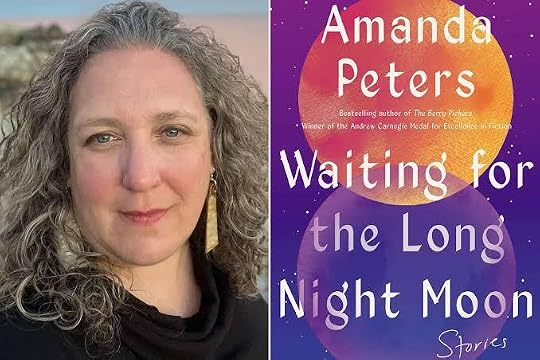
Amanda Peters
3 books2,651 followersAmanda Peters is a writer of Mi’kmaw and settler ancestry. Her work has appeared in the Antigonish Review, Grain Magazine, The Alaska Quarterly Review, the Dalhousie Review, and filling station magazine. She is the winner of the 2021 Indigenous Voices Award (IVA) for unpublished prose and a participant in the 2021 Writers Trust Rising Stars program. Amanda has a certificate in creative writing from the University of Toronto and she is a graduate of the Master of Fine Arts program at the Institute of American Indian Arts in Santa Fe New Mexico. Amanda is an Associate Professor in the Department of English and Theatre at Acadia University. She lives and writes in the Annapolis valley Nova Scotia with her fur babies Holly and Pook.
Ratings & Reviews
Friends & Following
Create a free account to discover what your friends think of this book!
Community Reviews
Displaying 1 - 30 of 311 reviews

September 4, 2026
My Reviews Can Also Be Found On:
The Book Review Crew Blog

⭐⭐⭐⭐
The Birthing Tree
Amanda Peters
Publication Date: September 1st, 2026
HarperCollins Canada | Harper Perennial
304 Pages
Amazon | Bookshop.org
Genre: General Fiction
This book was just over 300 pages, and it was epic. It's historical fiction that is very character-driven. It's set in Nova Scotia and it's about an Indigenous woman who was born under a birthing tree, a sacred oak where many generations have given birth. In Aliet's case, her mother died giving birth to her while a storm raged on. Aliet's grandmother, Kiju, raised her. She is a traditional midwife in the community and taught Aliet the way of Indigenous medicine. There is a lot of prejudice from outside the community, so the old ways of traditional midwifery were criminalized. Aliet turns her back on the tradition, leaves home, and becomes a nurse of modern medicine.
When her grandmother dies many years later, Aliet goes back home and starts to restore the house she grew up in. Aliet finds there are many family secrets along the way, including the mystery of her mother's death and her father's identity—not to mention the local orchard secrets that people have been trying to keep a lid on.
I enjoyed reading about the Mi'kmaq way of life and their traditions, especially midwifery. The author did a great job showing Aliet's confusion and the push and pull she feels between her heritage and the modern world. I was so happy Aliet reclaimed her heritage and learned to be proud of it.
There is a lot of generational trauma in the backstory, and it just goes to show that keeping secrets helps no one. The story is very emotional and atmospheric. The writing is wonderful, and what I liked most about it was the connection between community, the land, and one's heritage. The birthing tree in the title is like a character itself, bringing women together in an almost magical way.
The dual timelines move well between Aliet's upbringing by her fierce grandmother in the 1960s and her return home in the 1990s. It added so much more emotion to the plot knowing Aliet as a child, making finding the buried secrets feel that much more important.
Peters writes the different relationships among the women in a realistic way, with tiny details that make a big difference and feel very emotional at heart. This was a powerful read, but not the in-your-face kind; it's beautifully written as a tribute to identity, legacy, and family history. An excellent piece of literary fiction I won't soon forget. I haven't read The Berry Pickers yet, but I do have it on my shelf and am looking forward to it.
Thank you to NetGalley and the publisher for the ARC.

Goodreads ratings reflect reader demographics and
popular enthusiasm rather than objective literary merit.
The Book Review Crew Blog
⭐⭐⭐⭐
The Birthing Tree
Amanda Peters
Publication Date: September 1st, 2026
HarperCollins Canada | Harper Perennial
304 Pages
Amazon | Bookshop.org
Genre: General Fiction
This book was just over 300 pages, and it was epic. It's historical fiction that is very character-driven. It's set in Nova Scotia and it's about an Indigenous woman who was born under a birthing tree, a sacred oak where many generations have given birth. In Aliet's case, her mother died giving birth to her while a storm raged on. Aliet's grandmother, Kiju, raised her. She is a traditional midwife in the community and taught Aliet the way of Indigenous medicine. There is a lot of prejudice from outside the community, so the old ways of traditional midwifery were criminalized. Aliet turns her back on the tradition, leaves home, and becomes a nurse of modern medicine.
When her grandmother dies many years later, Aliet goes back home and starts to restore the house she grew up in. Aliet finds there are many family secrets along the way, including the mystery of her mother's death and her father's identity—not to mention the local orchard secrets that people have been trying to keep a lid on.
I enjoyed reading about the Mi'kmaq way of life and their traditions, especially midwifery. The author did a great job showing Aliet's confusion and the push and pull she feels between her heritage and the modern world. I was so happy Aliet reclaimed her heritage and learned to be proud of it.
There is a lot of generational trauma in the backstory, and it just goes to show that keeping secrets helps no one. The story is very emotional and atmospheric. The writing is wonderful, and what I liked most about it was the connection between community, the land, and one's heritage. The birthing tree in the title is like a character itself, bringing women together in an almost magical way.
The dual timelines move well between Aliet's upbringing by her fierce grandmother in the 1960s and her return home in the 1990s. It added so much more emotion to the plot knowing Aliet as a child, making finding the buried secrets feel that much more important.
Peters writes the different relationships among the women in a realistic way, with tiny details that make a big difference and feel very emotional at heart. This was a powerful read, but not the in-your-face kind; it's beautifully written as a tribute to identity, legacy, and family history. An excellent piece of literary fiction I won't soon forget. I haven't read The Berry Pickers yet, but I do have it on my shelf and am looking forward to it.
Thank you to NetGalley and the publisher for the ARC.
Goodreads ratings reflect reader demographics and
popular enthusiasm rather than objective literary merit.

Review of advance copy received from NetGalley
I was so excited to receive an arc of Amanda Peters’ new book because I had enjoyed The Berry Pickers.
The focus is on holding onto the threads that connect us to our past and Peters reminds readers of the risk of losing a connection to our heritage; the ripple effects run through generations. She encourages us to live boldly AND keep our traditions.
Aliet Paul was raised in Nova Scotia by her grandmother and taught the Mi’kmaq medicinal wisdom. When her grandmother dies, Aliet returns to her hometown and is devastated when she discovers the extent of restoration needed. Aliet sets aside her journey toward modern medicine and rebuilds Kiju’s home and focuses on restoring the Mi’kmaq traditions under the birthing tree. Trauma may have pulled her on a different trajectory, but her love of her heritage pulled her home and gave her the strength to reconcile a broken heritage.
I appreciated reminders about:
🌳Choosing love over hate
🌳Sharing knowledge
🌳The danger in lies of omission
🌳Living with grief
🌳Belonging and purpose
As much as I enjoyed The Berry Pickers, I feel that this one will spend more time in the spotlight! It’s worthy of the silver screen and will resonate with a wider audience. The examination of what happens when we stop serving our purpose kept me spellbound.
I was gifted this copy and was under no obligation to provide a review.
The focus is on holding onto the threads that connect us to our past and Peters reminds readers of the risk of losing a connection to our heritage; the ripple effects run through generations. She encourages us to live boldly AND keep our traditions.
Aliet Paul was raised in Nova Scotia by her grandmother and taught the Mi’kmaq medicinal wisdom. When her grandmother dies, Aliet returns to her hometown and is devastated when she discovers the extent of restoration needed. Aliet sets aside her journey toward modern medicine and rebuilds Kiju’s home and focuses on restoring the Mi’kmaq traditions under the birthing tree. Trauma may have pulled her on a different trajectory, but her love of her heritage pulled her home and gave her the strength to reconcile a broken heritage.
I appreciated reminders about:
🌳Choosing love over hate
🌳Sharing knowledge
🌳The danger in lies of omission
🌳Living with grief
🌳Belonging and purpose
As much as I enjoyed The Berry Pickers, I feel that this one will spend more time in the spotlight! It’s worthy of the silver screen and will resonate with a wider audience. The examination of what happens when we stop serving our purpose kept me spellbound.
I was gifted this copy and was under no obligation to provide a review.

Read
June 2, 2026I was granted an uncorrected Advanced Readers Copy of The Birthing Tree, which means that the final version of this engrossing book will probably have major corrections or additional scenes added to it before it reaches the reading public on September 1, 2026.

I thoroughly enjoyed seeing the world through Aliet Paul's young - and later middle-aged - eyes. I first encountered the roots of this story in Amanda Peters' collection of short stories: Waiting for the Long Night Moon. Lat year I missed the boat on requesting the ARC for Waiting for the Long Night Moon. I remember at the time thinking that the short story on which The Birthing Tree novel is based would have made a riveting novel - and I was so right!
I loved The Birthing Tree: that ending was downright touching - and thoroughly appropriate! Totally full circle! Ben and Sally (I can hear her laughter even now!) became real friends to me and I was always happy when they reappeared in Aliet's life in this story.

The mystery of who Aliet's father could possibly be had me turning the pages late into the night. Aliet was suitably shocked when she learned the truth, but I began to suspect the truth by the midway point. Everyone who loved Aliet had wanted to protect her from the heartbreaking truth.
I'm rating this lyrical, visually and emotionally captivating novel 5 out of 5 glowing stars, even in its uncorrected proof format. Can't wait to read the final version of this book once it is published on September 1, 2026! My thanks to the author, Amanda Peters, her publisher and NetGalley for an ARC of this novel in exchange for an honest review. I Absolutely Loved it!

HIGHLY, HIGHLY RECOMMENDED!

I thoroughly enjoyed seeing the world through Aliet Paul's young - and later middle-aged - eyes. I first encountered the roots of this story in Amanda Peters' collection of short stories: Waiting for the Long Night Moon. Lat year I missed the boat on requesting the ARC for Waiting for the Long Night Moon. I remember at the time thinking that the short story on which The Birthing Tree novel is based would have made a riveting novel - and I was so right!
I loved The Birthing Tree: that ending was downright touching - and thoroughly appropriate! Totally full circle! Ben and Sally (I can hear her laughter even now!) became real friends to me and I was always happy when they reappeared in Aliet's life in this story.
The mystery of who Aliet's father could possibly be had me turning the pages late into the night. Aliet was suitably shocked when she learned the truth, but I began to suspect the truth by the midway point. Everyone who loved Aliet had wanted to protect her from the heartbreaking truth.
I'm rating this lyrical, visually and emotionally captivating novel 5 out of 5 glowing stars, even in its uncorrected proof format. Can't wait to read the final version of this book once it is published on September 1, 2026! My thanks to the author, Amanda Peters, her publisher and NetGalley for an ARC of this novel in exchange for an honest review. I Absolutely Loved it!
HIGHLY, HIGHLY RECOMMENDED!

September 8, 2026
🍁🇨🇦—Another gorgeous Indigenous novel of the women who assist with births at The Birthing Tree. The tree holds memories of the thousands of women who have given birth against the tree over the centuries in the traditional way of the Mi’kmaq. It takes place in rural Nova Scotia from early in the 20th century until the 1990s.
This is Peters’ second novel and her first novel—The Berry Pickers—is seamlessly mentioned at least a couple of times, considering the two stories share a timeline. It was a lovely surprise to read a little about the overlap.
The Birthing Tree is an absolutely beautiful story that I recommend wholeheartedly!!
5 “We–are–all–guests–on–this–land–—–nobody–owns–her” stars ⭐⭐⭐⭐⭐
This is Peters’ second novel and her first novel—The Berry Pickers—is seamlessly mentioned at least a couple of times, considering the two stories share a timeline. It was a lovely surprise to read a little about the overlap.
The Birthing Tree is an absolutely beautiful story that I recommend wholeheartedly!!
5 “We–are–all–guests–on–this–land–—–nobody–owns–her” stars ⭐⭐⭐⭐⭐

September 8, 2026
Rating - ⭐️⭐️⭐️⭐️⭐️
Amanda Peters has quickly become one of those authors I'll read without even looking at the synopsis. The Birthing Tree is a beautiful, moving novel that feels deeply rooted in place, family, and the stories that connect generations.
The Birthing Tree is set in Nova Scotia and follows generations of women whose lives are connected through ancestral traditions, exploring identity, family, and the lasting impact of history through dual timelines.
Having previously loved The Berry Pickers, I noticed several themes that have become hallmarks of Amanda Peters' writing. Once again, she draws on her Mi'kmaq heritage to thoughtfully explore identity, marginalization, discrimination, coming of age, and the ways the past continues to shape future generations. Yet this never felt repetitive. Instead, it felt like another deeply personal story told from a different angle.
What especially stood out to me was the exploration of women's autonomy in childbirth. Peters beautifully illustrates how the Mi'kmaq people honored a woman's right to choose her own birthing experience long before European settlement. The traditions surrounding birth serve as powerful symbols of trust, community, and the passing of knowledge from elders to younger women. The novel also thoughtfully considers what happens when those traditions meet modern medicine, asking what is gained, what is lost, and who gets to decide. I found those sections especially moving.
Nova Scotia came alive on the page, and the setting felt every bit as important as the characters themselves. The land, the changing seasons, and the deep connection between people and place created an atmosphere that quietly carried the entire novel.
One of my favorite parts was the ending. While I admired The Berry Pickers, I wished for something different in its conclusion. The Birthing Tree delivered exactly that for me. The main character was allowed to remain beautifully flawed, and the ending honored her choices, experiences, and humanity without forcing a resolution that felt too neat. It was deeply satisfying and emotionally true to the story.
Perfect for readers who love literary fiction, multigenerational family stories, Indigenous literature, and novels that linger long after the final page. If you're looking for the perfect book to begin your fall reading season, I can't recommend this one highly enough.
Amanda Peters has quickly become one of those authors I'll read without even looking at the synopsis. The Birthing Tree is a beautiful, moving novel that feels deeply rooted in place, family, and the stories that connect generations.
The Birthing Tree is set in Nova Scotia and follows generations of women whose lives are connected through ancestral traditions, exploring identity, family, and the lasting impact of history through dual timelines.
Having previously loved The Berry Pickers, I noticed several themes that have become hallmarks of Amanda Peters' writing. Once again, she draws on her Mi'kmaq heritage to thoughtfully explore identity, marginalization, discrimination, coming of age, and the ways the past continues to shape future generations. Yet this never felt repetitive. Instead, it felt like another deeply personal story told from a different angle.
What especially stood out to me was the exploration of women's autonomy in childbirth. Peters beautifully illustrates how the Mi'kmaq people honored a woman's right to choose her own birthing experience long before European settlement. The traditions surrounding birth serve as powerful symbols of trust, community, and the passing of knowledge from elders to younger women. The novel also thoughtfully considers what happens when those traditions meet modern medicine, asking what is gained, what is lost, and who gets to decide. I found those sections especially moving.
Nova Scotia came alive on the page, and the setting felt every bit as important as the characters themselves. The land, the changing seasons, and the deep connection between people and place created an atmosphere that quietly carried the entire novel.
One of my favorite parts was the ending. While I admired The Berry Pickers, I wished for something different in its conclusion. The Birthing Tree delivered exactly that for me. The main character was allowed to remain beautifully flawed, and the ending honored her choices, experiences, and humanity without forcing a resolution that felt too neat. It was deeply satisfying and emotionally true to the story.
Perfect for readers who love literary fiction, multigenerational family stories, Indigenous literature, and novels that linger long after the final page. If you're looking for the perfect book to begin your fall reading season, I can't recommend this one highly enough.

September 3, 2026
I read Amanda Peters first book The Berry Pickers earlier this year and absolutely loved it. I was super excited to read The Birthing Tree, which again reflects on the steep Mi'kmaq history.
The ancient oak, "The Birthing Tree", holds the memory of generations, a reminder that to know where you came from is to know who you are. Born beneath its sacred canopy, Aliet enters a world her mother leaves in the same breath. Raised by her grandmother Kiju, a guardian of traditional medicine and unsanctioned midwifery, Aliet grows up with an absent father and an uncertain heritage. But as modern medicine encroaches on their secluded community, Kiju's ancestral knowledge faces an unprecedented reckoning.
There is a mystery involved, love gained and lossed, and finding out what family really is underneath this tree. It's about traditions and the lengths we will go to preserve them for future generations.
While this book wasn't as powerful as her first, I just love Peters writing. She writes with emotional depth and I will read anything she writes next!!!
The ancient oak, "The Birthing Tree", holds the memory of generations, a reminder that to know where you came from is to know who you are. Born beneath its sacred canopy, Aliet enters a world her mother leaves in the same breath. Raised by her grandmother Kiju, a guardian of traditional medicine and unsanctioned midwifery, Aliet grows up with an absent father and an uncertain heritage. But as modern medicine encroaches on their secluded community, Kiju's ancestral knowledge faces an unprecedented reckoning.
There is a mystery involved, love gained and lossed, and finding out what family really is underneath this tree. It's about traditions and the lengths we will go to preserve them for future generations.
While this book wasn't as powerful as her first, I just love Peters writing. She writes with emotional depth and I will read anything she writes next!!!

Want to Read
March 23, 2026I love when an author's catalog has cohesive covers <3

Want to Read
July 26, 2026✧・゚: ✧・゚: 𝘱𝘳𝘦-𝘳𝘦𝘢𝘥 𝘶𝘱𝘥𝘢𝘵𝘦 :・゚✧:・゚✧
ARC received ✨ Won a giveaway!
Thank you HarperCollins Canada for the arc copy!
Full thoughts coming soon 💫
ARC received ✨ Won a giveaway!
Thank you HarperCollins Canada for the arc copy!
Full thoughts coming soon 💫

September 5, 2026
5 stars - excellent
September 6, 2026
I appreciated the culture and tradition and the birthing tree but something fell flat for me.

April 26, 2026
I really loved The Berry Pickers so I was thrilled to receive an advanced copy of Amanda Peters new novel.
Aliet Paul was raised by her grandmother, Kiju, a Canadian native Mi'kmaq woman who was the town's midwife. Tradition dictated that the women she helped would give birth at the birthing tree, a majestic tree that they believed held the stories of all those who birthed at the tree. As time progresses, the old ways give way to more traditional medicine, and Kiju is forbidden from midwifery; the birthing tree becomes just another tree in a dense forest. When Kiju dies, Aliet returns home to a crumbling house and secrets that were left by Kiju.
This book was so beautifully written. Amanda Peters does such a wonderful job of telling the story and developing the characters in such a way that you feel fortunate to have known them. It wasn't a long novel - just at 300 pages - but each page was intentionally written to add important elements to the story. There were so many nuggets of wisdom from Kuji that I loved.
"We need to hold on to the threads that connect us to our past. Without knowing our past, we won't know who we are."
"Violence, whether with words or hands, is always a bad idea. But boy, did that feel good."
"It's a greedy thing, grief. You have to sit with it, let it do what it does, and then rise up and keep going."
The book was told in dual timelines - Aliet's childhood and teen years, and the present day. Sometimes this works, sometimes it doesn't. This one worked very well because the historical story really informed the present day. And to be honest, both stories could have stood on their own; both had just the right amount of suspense to keep me interested. The book took me through a wide range of emotions - nostalgia for my grandmother and simpler times, grief at lost family members, excitement for new babies. It was so very well done.
This book has taken a well-deserved place in my list of top 2026 reads. 5 ⭐s!
Many thanks to NetGalley and Catapult, Counterpoint Press, and Soft Skull Press for an advanced copy of this novel. It's scheduled to be published on September 1, 2026.
Aliet Paul was raised by her grandmother, Kiju, a Canadian native Mi'kmaq woman who was the town's midwife. Tradition dictated that the women she helped would give birth at the birthing tree, a majestic tree that they believed held the stories of all those who birthed at the tree. As time progresses, the old ways give way to more traditional medicine, and Kiju is forbidden from midwifery; the birthing tree becomes just another tree in a dense forest. When Kiju dies, Aliet returns home to a crumbling house and secrets that were left by Kiju.
This book was so beautifully written. Amanda Peters does such a wonderful job of telling the story and developing the characters in such a way that you feel fortunate to have known them. It wasn't a long novel - just at 300 pages - but each page was intentionally written to add important elements to the story. There were so many nuggets of wisdom from Kuji that I loved.
"We need to hold on to the threads that connect us to our past. Without knowing our past, we won't know who we are."
"Violence, whether with words or hands, is always a bad idea. But boy, did that feel good."
"It's a greedy thing, grief. You have to sit with it, let it do what it does, and then rise up and keep going."
The book was told in dual timelines - Aliet's childhood and teen years, and the present day. Sometimes this works, sometimes it doesn't. This one worked very well because the historical story really informed the present day. And to be honest, both stories could have stood on their own; both had just the right amount of suspense to keep me interested. The book took me through a wide range of emotions - nostalgia for my grandmother and simpler times, grief at lost family members, excitement for new babies. It was so very well done.
This book has taken a well-deserved place in my list of top 2026 reads. 5 ⭐s!
Many thanks to NetGalley and Catapult, Counterpoint Press, and Soft Skull Press for an advanced copy of this novel. It's scheduled to be published on September 1, 2026.

September 4, 2026
4.5 rounded up. It is my first book by Amanda Peters, but I'll be reading her other books for sure. Her writing is just...Beautiful! The Birthing Tree was an experience. I appreciated how culture and traditions were represented and talked about, and put into perspective by the main character becoming a nurse but still coming back to her roots. The characters were so well described, all so unique that I'll miss them. I'm so grateful for this story. The audio narrator did an amazing job bringing it to life!
Thank you, Netgalley and HarperCollins Canada Audio , for providing me with an ARC in exchange for an honest review
Thank you, Netgalley and HarperCollins Canada Audio , for providing me with an ARC in exchange for an honest review

September 8, 2026
4.25 stars. 📖🎧

August 26, 2026
3.5
Thank you to @prhaudio for the gifted ALC. I quite enjoyed the audio experience read by Julia Davis.
This is a coming of age story of Aliet who’s raised by her grandmother in Nova Scotia. The Birthing Tree is often referenced in regards to traditions of the indigenous peoples and the value they gathered from it. This is countered by others who don’t understand the history, culture, and importance of it. We see through Aliet’s eyes how times are changing, (but aren’t they always)!
Secrets are hidden and discovered, love is lost and found, and learning to stand up for what is right is emphasized in this story of her life.
I thought the story was fine, but I found myself wanting for a stronger plot and/or a connection to the characters. When something big happened and I should have felt emotional about it, I didn’t at all. By the end, I was bored. Sadly. I really enjoyed the Berry Pickers and I think that had more intrigue, discovery, and mystery that pulled me in more than this one.
Thank you to @prhaudio for the gifted ALC. I quite enjoyed the audio experience read by Julia Davis.
This is a coming of age story of Aliet who’s raised by her grandmother in Nova Scotia. The Birthing Tree is often referenced in regards to traditions of the indigenous peoples and the value they gathered from it. This is countered by others who don’t understand the history, culture, and importance of it. We see through Aliet’s eyes how times are changing, (but aren’t they always)!
Secrets are hidden and discovered, love is lost and found, and learning to stand up for what is right is emphasized in this story of her life.
I thought the story was fine, but I found myself wanting for a stronger plot and/or a connection to the characters. When something big happened and I should have felt emotional about it, I didn’t at all. By the end, I was bored. Sadly. I really enjoyed the Berry Pickers and I think that had more intrigue, discovery, and mystery that pulled me in more than this one.

July 3, 2026
It's hard to imagine reading a better fiction in 2026!! The Birthing Tree is steeped in family, grief, and tradition. I'm a sucker for a dual timeline, which Peters does so well.
It's devastating to read about how Indigenous practices and wisdom were systematically erased, but also so necessary.
I think anyone could read this book and would find something to love about it!!
Best book of 2026??
It's devastating to read about how Indigenous practices and wisdom were systematically erased, but also so necessary.
I think anyone could read this book and would find something to love about it!!
Best book of 2026??

September 12, 2026
Peters has definitely earned the honor of “if she writes it, i will read it” in my world. I adored Berry Pickers & this follow up novel did not disappoint. Highly recommend!

September 1, 2026
Happy release day to Amanda Peters!
I was lucky enough to receive an e-ARC of The Birthing Tree, so first of all, thank you to NetGalley and the publisher for the opportunity to read and review this book.
Now, before getting into the actual review, let me give you the unnecessarily long backstory.
I had never read anything by Amanda Peters before, but a few months ago I borrowed The Berry Pickers from my public library after hearing so many good things about it. Of course, by the time I got the book, I was in a reading slump and had to return it unread. I kept thinking about it, though, so when I saw The Birthing Tree on NetGalley, I crossed my fingers and requested it. And here we are. A full-circle moment that probably didn't need this much explanation.
Anyway, I finally read Amanda Peters, and I can say it won't be my last book by her.
I really enjoyed The Birthing Tree. It’s a powerful story about women, Indigenous culture, family, and trying to figure out who you are when so much of your own history has been kept from you.
Aliet is the main protagonist and the center of everything. I followed her from childhood into adulthood, moving between her younger years and her life in 1997. I liked the way the timelines were put together because the past isn't simply presented in order. I got pieces of it as the story went on, while her present life gave me little clues about what happened before. This fueled my urge to keep reading because I needed to know what had happened in those missing years.
Aliet is born beneath the Birthing Tree, a place sacred to generations of Mi’kmaw women. Her mother dies giving birth to her, her father is a mystery, and she grows up with her grandmother Kiju, a Mi’kmaw midwife. Kiju was probably my favorite character. She’s had a difficult life but still manages to raise Aliet with so much love. Through her, I was able to see Mi’kmaw traditions and the knowledge passed down through generations, especially around birth and healing.
Then comes the outside world, dismissing these practices as barbaric, dangerous, or simply wrong because they don't fit into the version of “progress” being imposed on the community. And that made me angry. There were several moments when I wanted to punch someone. But no violence, guys.
I actually thought about The Frozen River by Ariel Lawhon while reading this. The stories are different but both have midwives at their center and explore what happens when women's knowledge is questioned or dismissed by the people and institutions around them. I find the role of midwives fascinating, especially the way this knowledge was traditionally passed between women and yet was so often treated as "inferior". And Kiju was such a strong example of the value of those traditions, which is why it was even sadder to watch Aliet lose faith in everything she had grown up with. But after everything she goes through, I really can't blame her for questioning it all and trying to find another path.
All that to say, it wasn't always an easy read. There is a lot of grief, loss, and generational trauma. I obviously got emotional many times. But there is also so much love shown in this book between women, friends, family, and within a community.
By the end, I think what Aliet has to figure out isn't simply where she came from but what she wants to carry forward. Your past is part of you, but so are the people who raised you, the things you learned, your culture, your choices, and the life you've built yourself.
Final thoughts: this made me sad and angry but it also gave me a lot to think about (as always with historical novels). And after everything Aliet went through, I was glad the story gave her a little bit of hope too.
“She may think that tragedy has imprinted on her. But joy also follows her. She will learn to embrace the joy with the sorrow.”
I was lucky enough to receive an e-ARC of The Birthing Tree, so first of all, thank you to NetGalley and the publisher for the opportunity to read and review this book.
Now, before getting into the actual review, let me give you the unnecessarily long backstory.
I had never read anything by Amanda Peters before, but a few months ago I borrowed The Berry Pickers from my public library after hearing so many good things about it. Of course, by the time I got the book, I was in a reading slump and had to return it unread. I kept thinking about it, though, so when I saw The Birthing Tree on NetGalley, I crossed my fingers and requested it. And here we are. A full-circle moment that probably didn't need this much explanation.
Anyway, I finally read Amanda Peters, and I can say it won't be my last book by her.
I really enjoyed The Birthing Tree. It’s a powerful story about women, Indigenous culture, family, and trying to figure out who you are when so much of your own history has been kept from you.
Aliet is the main protagonist and the center of everything. I followed her from childhood into adulthood, moving between her younger years and her life in 1997. I liked the way the timelines were put together because the past isn't simply presented in order. I got pieces of it as the story went on, while her present life gave me little clues about what happened before. This fueled my urge to keep reading because I needed to know what had happened in those missing years.
Aliet is born beneath the Birthing Tree, a place sacred to generations of Mi’kmaw women. Her mother dies giving birth to her, her father is a mystery, and she grows up with her grandmother Kiju, a Mi’kmaw midwife. Kiju was probably my favorite character. She’s had a difficult life but still manages to raise Aliet with so much love. Through her, I was able to see Mi’kmaw traditions and the knowledge passed down through generations, especially around birth and healing.
Then comes the outside world, dismissing these practices as barbaric, dangerous, or simply wrong because they don't fit into the version of “progress” being imposed on the community. And that made me angry. There were several moments when I wanted to punch someone. But no violence, guys.
I actually thought about The Frozen River by Ariel Lawhon while reading this. The stories are different but both have midwives at their center and explore what happens when women's knowledge is questioned or dismissed by the people and institutions around them. I find the role of midwives fascinating, especially the way this knowledge was traditionally passed between women and yet was so often treated as "inferior". And Kiju was such a strong example of the value of those traditions, which is why it was even sadder to watch Aliet lose faith in everything she had grown up with. But after everything she goes through, I really can't blame her for questioning it all and trying to find another path.
All that to say, it wasn't always an easy read. There is a lot of grief, loss, and generational trauma. I obviously got emotional many times. But there is also so much love shown in this book between women, friends, family, and within a community.
By the end, I think what Aliet has to figure out isn't simply where she came from but what she wants to carry forward. Your past is part of you, but so are the people who raised you, the things you learned, your culture, your choices, and the life you've built yourself.
Final thoughts: this made me sad and angry but it also gave me a lot to think about (as always with historical novels). And after everything Aliet went through, I was glad the story gave her a little bit of hope too.
“She may think that tragedy has imprinted on her. But joy also follows her. She will learn to embrace the joy with the sorrow.”

September 8, 2026
[ 4.5/5 stars ]
Aliet Paul was born under the sacred birthing tree and raised by her loving grandmother Kiju. When she hears of her grandmother's sudden death, she returns home to a crumbling house and needs to face a past that she thought she had left behind.
With grounded writing, Peters starts by building our intimacy with the land and memories. The pages are laden with the mundanity of slice-of-life as Aliet navigates loss, belonging and loneliness while searching for her identity. Then the small moments prepare the ground for an emotional resonance that I didn't see coming - Aliet's memories didn't feel intrusive, rather, it invited me to slow down while her grief reminded me of my own.
In the fondest instances, they let us find purpose in what we call life; let us see the bright side amidst darkness; let us embody quietness even when the chaos seems to take over; let us hold on to traditions and roots; let us witness the joy of simplicity and let us grief and heal together. The transition from the tenderness of THE BERRY PICKERS (which I also adored) to apple pickers in this book is priceless as well as the metaphorical incorporation of the birthing tree. And it almost seems like an unfair exchange to enjoy Peters' undeniable storytelling that is very Indian and anchored in a multitude of resilience and legacy.
"You wear memory like a charm, like a weird sort of hedge of protection. Like it's going to keep you from getting hurt. It's a dangerous thing, to use memory that way."
THE BIRTHING TREE is a poignant tale that also carries love and mends the brokenness. It will make one treasure the meaning of home and the connections with the past. In short, a story that I found beautiful.
[ I received a complimentary copy from the publisher - Catapult books . All opinions are my own ]
Aliet Paul was born under the sacred birthing tree and raised by her loving grandmother Kiju. When she hears of her grandmother's sudden death, she returns home to a crumbling house and needs to face a past that she thought she had left behind.
With grounded writing, Peters starts by building our intimacy with the land and memories. The pages are laden with the mundanity of slice-of-life as Aliet navigates loss, belonging and loneliness while searching for her identity. Then the small moments prepare the ground for an emotional resonance that I didn't see coming - Aliet's memories didn't feel intrusive, rather, it invited me to slow down while her grief reminded me of my own.
In the fondest instances, they let us find purpose in what we call life; let us see the bright side amidst darkness; let us embody quietness even when the chaos seems to take over; let us hold on to traditions and roots; let us witness the joy of simplicity and let us grief and heal together. The transition from the tenderness of THE BERRY PICKERS (which I also adored) to apple pickers in this book is priceless as well as the metaphorical incorporation of the birthing tree. And it almost seems like an unfair exchange to enjoy Peters' undeniable storytelling that is very Indian and anchored in a multitude of resilience and legacy.
"You wear memory like a charm, like a weird sort of hedge of protection. Like it's going to keep you from getting hurt. It's a dangerous thing, to use memory that way."
THE BIRTHING TREE is a poignant tale that also carries love and mends the brokenness. It will make one treasure the meaning of home and the connections with the past. In short, a story that I found beautiful.
[ I received a complimentary copy from the publisher - Catapult books . All opinions are my own ]

September 10, 2026
While I loved The Berry Pickers, I liked The Birthing Tree, both by Amanda Peters. It was especially clever how the author incorporated references of The Berry Picker into this new book. The Birthing Tree is about the culture and history of the Nova Scotia, Mi’kmaq women and their sacred birthing tree. Aliet Paul was raised by her beloved, grandmother, Kiju, a Mi’kmaq midwife and healer who tried to preserve Mi’kmaq birthing traditions despite the government forcing women to give birth in hospitals. The government made birthing tree traditions illegal, labeling her life-long work as witchcraft, sadly with little support from her community. Aliet’s childhood is filled with precious memories of friendships formed during the seasonal arrival of the apple pickers. Told in two alternating timelines, the 1960(s)/70(s) and the 1990(s), Aliet’s childhood back-story is revealed, and her past informs her present 41 year-old self, never-married, solitary, hard-working, city-hospital nurse, far removed from her home and heritage. It was a good story, but I needed a little more. 3.5 stars.
August 27, 2026
Aliet Paul is born under a tree sacred to generations of Mi’kmaq women, on the night her mother dies beneath it. Raised in rural Nova Scotia by her grandmother Kiju, the community’s midwife, she inherits a house full of secrets when Kiju dies—and has to decide how much of the past she’ll carry with her.
This is not a book that grabs you and refuses to let go until the last page. It’s the other kind. I needed pauses. I needed rest and time to process. There were so many moments where I had to set it down and just sit with what I’d read, and I think that’s the highest compliment I can pay it. Grief here isn’t an event, it’s a climate, and Peters writes it with enormous patience.
Sad, yes. But hopeful too. It’s a book about family, tradition, legacy, identity and what survives when the people who held the stories are gone. “Without our stories, we are lost.”
The half star I’m holding back is mostly pacing in the middle stretch, though even that felt intentional in hindsight.
Thank you to NetGalley and Penguin General UK for the eARC in exchange for an honest review.
This is not a book that grabs you and refuses to let go until the last page. It’s the other kind. I needed pauses. I needed rest and time to process. There were so many moments where I had to set it down and just sit with what I’d read, and I think that’s the highest compliment I can pay it. Grief here isn’t an event, it’s a climate, and Peters writes it with enormous patience.
Sad, yes. But hopeful too. It’s a book about family, tradition, legacy, identity and what survives when the people who held the stories are gone. “Without our stories, we are lost.”
The half star I’m holding back is mostly pacing in the middle stretch, though even that felt intentional in hindsight.
Thank you to NetGalley and Penguin General UK for the eARC in exchange for an honest review.
September 19, 2026
Really enjoyed The Birthing Tree. I liked the dual timelines and how the two stories slowly came together, especially the family connections and slow reveal and resolution of secrets. The characters, as well as the Mi’kmaq traditions, history, and language, added so much to the story.

September 12, 2026
Liked this one even more than the Berry Pickers. Aliet is raised by her grandmother when her mother dies giving birth to her. She faces many challenges as an Indigenous female and she is able to overcome many obstacles.
July 20, 2026
This book was well written and held my attention to the very last pages!!!

Review of advance copy received from NetGalley
Returning home, reclaiming midwifery traditions, grappling with generational trauma and an unexpected midlife shift. Aliet's story is beautifully told, but didn't really hold me as fiercely as her debut. Thanks to NetGalley, Harper Perennial, and HarperCollins Audio for advanced copies for an honest review.

August 26, 2026
With The Berry Pickers still vivid in my memory, I was thrilled to read Peters' second novel—and even more thrilled to find it as good as, if not better than, the first. This dual-timeline book has so much to offer: lifelong love, unmitigated hate, Indigenous culture, and a compelling look at the advantages of midwifery versus modern hospital births.
I couldn't put this book down and finished it in less than 24 hours.
This is a 2026 must-read.
I couldn't put this book down and finished it in less than 24 hours.
This is a 2026 must-read.

Review of advance copy
4.5 ⭐️
“Spoilers” are simply quotes shared below. 🤗
Received an early release of this book at Novel Bay during Indie Book Store Day! 🤍 Thank you for hand selecting this for me!
Page 20: Grief is hard to look at straight on, especially when it’s so new and unfocused. It feels almost contagious. Looking into the eyes of the grieving, only serves to remind you of your own grief, those moments of sadness stored in the past. They threatened to burst out when you make eye contact with the bereft.
Page 46: When I see wood painted over with a colour, or even plain white, I cringe. The beautiful grains of wood, the twists and turns of age lines, stories of long winters and wet springs written in the grain— that's what I love. My grandmother never painted the wood in our little house. She always left it as nature intended.
Page 55: "When you hear a bird sing at night, it means that there is a skite' kmuj about, a ghost wanting to talk to you. The birds can see them, so best be keeping your ears open. Might be a bad ghost."
Page 89: She thinks she is unlovable. I wish she could leave the past in the past and see what I see, the love she has yet to experience. She may not believe it, but her joy is written in my rings.
Page 112: "But those medicines, they steal your memory. How can you tell your own child their birth story it you cant remember it your-self? How will they know where they came from, who they came from?" Kiju's voice was desperate, her face drawn. "And you sleep through the most beautiful..." She stammered. "And the lights, and the noise, so harsh on the ears of a new born. And they steal the cord, the birth sac."
"Superstition is what they told my girl when I asked to keep them. She tried to explain that it needs to be buried to remind children of their roots. But they made her feel silly, like she was a child. so she let them take it." She looked sad. Kiju reached over and held her hand. There was no admonishment, no advice, only comfort.
Page 120: *the entire page*
Page 274: There is no word for goodbye in our language because there is no such thing. You can't give a name to something that doesn't exist. For us, we are always walking among the ancestors. We will see each other again someday is always true.”
Page 276: "If there is anyone who can understand your heart right now, it's me. But this is your grief, it's heavy, and I'll be here to help you carry it.”
“Spoilers” are simply quotes shared below. 🤗
Received an early release of this book at Novel Bay during Indie Book Store Day! 🤍 Thank you for hand selecting this for me!
Page 20: Grief is hard to look at straight on, especially when it’s so new and unfocused. It feels almost contagious. Looking into the eyes of the grieving, only serves to remind you of your own grief, those moments of sadness stored in the past. They threatened to burst out when you make eye contact with the bereft.
Page 46: When I see wood painted over with a colour, or even plain white, I cringe. The beautiful grains of wood, the twists and turns of age lines, stories of long winters and wet springs written in the grain— that's what I love. My grandmother never painted the wood in our little house. She always left it as nature intended.
Page 55: "When you hear a bird sing at night, it means that there is a skite' kmuj about, a ghost wanting to talk to you. The birds can see them, so best be keeping your ears open. Might be a bad ghost."
Page 89: She thinks she is unlovable. I wish she could leave the past in the past and see what I see, the love she has yet to experience. She may not believe it, but her joy is written in my rings.
Page 112: "But those medicines, they steal your memory. How can you tell your own child their birth story it you cant remember it your-self? How will they know where they came from, who they came from?" Kiju's voice was desperate, her face drawn. "And you sleep through the most beautiful..." She stammered. "And the lights, and the noise, so harsh on the ears of a new born. And they steal the cord, the birth sac."
"Superstition is what they told my girl when I asked to keep them. She tried to explain that it needs to be buried to remind children of their roots. But they made her feel silly, like she was a child. so she let them take it." She looked sad. Kiju reached over and held her hand. There was no admonishment, no advice, only comfort.
Page 120: *the entire page*
Page 274: There is no word for goodbye in our language because there is no such thing. You can't give a name to something that doesn't exist. For us, we are always walking among the ancestors. We will see each other again someday is always true.”
Page 276: "If there is anyone who can understand your heart right now, it's me. But this is your grief, it's heavy, and I'll be here to help you carry it.”
This entire review has been hidden because of spoilers.

September 3, 2026
4 🌟 for me! I have been waiting for this book all year because I enjoyed "The Berry Pickers" by Amanda Peters. "The Birthing Tree," tells the story of a young nurse raised by her grandmother. Like Peter's first novel, it also centers on the culture and traditions of the Mi’kmaq people of eastern Canada.
Aliet's mother died giving birth to her, and Aliet has never known her father’s identity. She was brought up by her grandmother Kiju, a traditional Mi’kmaq healer and midwife, who tends the birthing tree, a sacred place where generations of women have labored and brought children into the world. Kiju wants to pass down her knowledge to Aliet, but midwifery is challenged by traditional medicine.
Aliet’s childhood is brightened by friendships with Mi’kmaq apple pickers who pass through every fall, and by her grandmother’s love. But she also faces racist hostility from the non-Indigenous townspeople and endures the uneasiness of not knowing her full lineage.
Decades later, after Kiju’s death, Aliet returns to find her grandmother’s residence in disrepair and the birthing tree used as a dumping ground for litter. As she reconnects with old friends and makes a few new ones, she finds comfort in restoring the house and the tree. Aliet realizes that she belongs in the town, even while seeking the truth about her origins.
This book has dual timelines: one in the 1960s exploring Aliet’s childhood and community, including the events that led her to leave for the city, and the other in the ’90s, following her reconnection with her heritage. These two branches weave and intersect, much like the boughs of a tree, offering a complete portrait of Aliet’s life and how her past choices shape her present. A quietly impactful novel of community, grief, and personal growth. I have heard some people dislike the dual timeline but I enjoyed it and felt it was impactful to the story. Lastly the cover of the book is spectacular.
Aliet's mother died giving birth to her, and Aliet has never known her father’s identity. She was brought up by her grandmother Kiju, a traditional Mi’kmaq healer and midwife, who tends the birthing tree, a sacred place where generations of women have labored and brought children into the world. Kiju wants to pass down her knowledge to Aliet, but midwifery is challenged by traditional medicine.
Aliet’s childhood is brightened by friendships with Mi’kmaq apple pickers who pass through every fall, and by her grandmother’s love. But she also faces racist hostility from the non-Indigenous townspeople and endures the uneasiness of not knowing her full lineage.
Decades later, after Kiju’s death, Aliet returns to find her grandmother’s residence in disrepair and the birthing tree used as a dumping ground for litter. As she reconnects with old friends and makes a few new ones, she finds comfort in restoring the house and the tree. Aliet realizes that she belongs in the town, even while seeking the truth about her origins.
This book has dual timelines: one in the 1960s exploring Aliet’s childhood and community, including the events that led her to leave for the city, and the other in the ’90s, following her reconnection with her heritage. These two branches weave and intersect, much like the boughs of a tree, offering a complete portrait of Aliet’s life and how her past choices shape her present. A quietly impactful novel of community, grief, and personal growth. I have heard some people dislike the dual timeline but I enjoyed it and felt it was impactful to the story. Lastly the cover of the book is spectacular.

September 14, 2026
At the heart of this novel stands a sacred birthing tree. It was the place where generations of Mi'kmaq women have laboured, and where Aliet Paul's own mother died bringing her into the world. That image alone was so powerful. It represented the Mi’kmaq culture where women were central life givers, healers, and the holders of practices passed down my matriarchies. Trees, like these women, send their roots deep to hold family, culture, and Country steady. Trees give of themselves to sustain life in so many ways, and this was an important image for the birthing tree in this story where women's strength and community sustained new life.
Raised by her midwife grandmother Kiju, Aliet grew up straddling two worlds. One was full of old world healing wisdom and traditional Nova Scotian life. The other scorned traditional birthing practices and indigenous culture. This book illustrated how those rituals were forcibly eroded away, how Indigenous knowledge and practices were criminalised, and communities were left to deal with the damage.
The novel's dual timeline moved between Aliet's childhood and the present day where she was a practising nurse, notified that Kiju had died. Returning to her grandmother's crumbling house, Aliet was forced to confront all the things she was too afraid to deal with in her younger years: what happened when her mother died, the true identity of her father, and other secrets from within the farm life of the past. These secrets and stories were slowly unearthed, and it is the realisation of how much Aliet was protected from the past that was quite tragic. A lot of her emotions were still hidden away from the reader which shone more light on the plight of indigenous communities and their hardships and persecution, especially when it came to childbirth and rearing families. This was a tender book of quiet resolution.
Raised by her midwife grandmother Kiju, Aliet grew up straddling two worlds. One was full of old world healing wisdom and traditional Nova Scotian life. The other scorned traditional birthing practices and indigenous culture. This book illustrated how those rituals were forcibly eroded away, how Indigenous knowledge and practices were criminalised, and communities were left to deal with the damage.
The novel's dual timeline moved between Aliet's childhood and the present day where she was a practising nurse, notified that Kiju had died. Returning to her grandmother's crumbling house, Aliet was forced to confront all the things she was too afraid to deal with in her younger years: what happened when her mother died, the true identity of her father, and other secrets from within the farm life of the past. These secrets and stories were slowly unearthed, and it is the realisation of how much Aliet was protected from the past that was quite tragic. A lot of her emotions were still hidden away from the reader which shone more light on the plight of indigenous communities and their hardships and persecution, especially when it came to childbirth and rearing families. This was a tender book of quiet resolution.

September 4, 2026
I really enjoyed this story, and learning about the Mi'kmaq traditions. I loved the solidarity we see with most of the women in this story, along with Kiju showing Aliet her healing tonics and midwifery duties.
There are so many things I want to say about this book! First off, the way Aliet wants to stem away from her grandmother's ways, just to come looking for home again is something that really hit for me. I really enjoyed that! I think the way that Kiju is written was such an important factor. I love how true she is to her culture and had the capability to do so many herbalistic things that most of us have no clue to do anymore.
I also love how central the birthing tree is in this story. I found myself wondering about my own family's history and what our traditions once were. How much of it has changed due to the convenience of what we have now?
I also really loved the community that is within this story. I found myself enjoying how all these characters were written, Aliet is so raw and I felt her grief for her! The way that she stepped away for a while and comes back to her roots (no pun intened) really made for such a beautiful story. I really feel community today is lacking in so many aspects, and I loved seeing how everyone stood together and helped when needed.
Overall, this one really hit for me personally and I don't regret one moment of it! Thank you Catapult for my advanced reader copy.
There are so many things I want to say about this book! First off, the way Aliet wants to stem away from her grandmother's ways, just to come looking for home again is something that really hit for me. I really enjoyed that! I think the way that Kiju is written was such an important factor. I love how true she is to her culture and had the capability to do so many herbalistic things that most of us have no clue to do anymore.
I also love how central the birthing tree is in this story. I found myself wondering about my own family's history and what our traditions once were. How much of it has changed due to the convenience of what we have now?
I also really loved the community that is within this story. I found myself enjoying how all these characters were written, Aliet is so raw and I felt her grief for her! The way that she stepped away for a while and comes back to her roots (no pun intened) really made for such a beautiful story. I really feel community today is lacking in so many aspects, and I loved seeing how everyone stood together and helped when needed.
Overall, this one really hit for me personally and I don't regret one moment of it! Thank you Catapult for my advanced reader copy.
Displaying 1 - 30 of 311 reviews