

What do you think?

Weavingshaw #1
Weavingshaw
In this debut gothic fantasy, the first book of an enthralling fantasy romance trilogy, a young woman who can see the dead strikes a deal with a magnetic and dangerous purveyor of dark secrets to save her brother’s life.
Three years ago, Leena Al-Sayer awoke with a terrible power.
She can see the dead.
Since then, she has hidden herself from the world, knowing that if she ever reveals her curse she will be locked away in an asylum.
When her beloved brother, Rami, falls fatally ill, Leena is faced with a terrible CHOICE: Let him die or buy the expensive medicine that will save his life by bartering the only valuable thing she has—her secret.
The Saint of Silence, a ruthless merchant who trades in confessions and is shrouded in unearthly rumors of cruelty and power, accepts her bargain, for a deadly price. Leena must find the ghost of Percival Avon, the last lord of Weavingshaw—or lose her freedom to the Saint forever.
As Leena’s search takes her and the Saint to Weavingshaw, she finds the estate and the surrounding moors to be living things—hungry for blood and sacrifice. Fighting against Weavingshaw’s might, Leena must also fight her growing pull toward the enigmatic Saint himself, whose connection to Percival Avon remains a mystery.
As the house begins to entomb them, time is running out on their desperate hunt for answers. For Leena has come to see that here in Weavingshaw, the dead are not hushed—and some secrets are better left buried with them.
Three years ago, Leena Al-Sayer awoke with a terrible power.
She can see the dead.
Since then, she has hidden herself from the world, knowing that if she ever reveals her curse she will be locked away in an asylum.
When her beloved brother, Rami, falls fatally ill, Leena is faced with a terrible CHOICE: Let him die or buy the expensive medicine that will save his life by bartering the only valuable thing she has—her secret.
The Saint of Silence, a ruthless merchant who trades in confessions and is shrouded in unearthly rumors of cruelty and power, accepts her bargain, for a deadly price. Leena must find the ghost of Percival Avon, the last lord of Weavingshaw—or lose her freedom to the Saint forever.
As Leena’s search takes her and the Saint to Weavingshaw, she finds the estate and the surrounding moors to be living things—hungry for blood and sacrifice. Fighting against Weavingshaw’s might, Leena must also fight her growing pull toward the enigmatic Saint himself, whose connection to Percival Avon remains a mystery.
As the house begins to entomb them, time is running out on their desperate hunt for answers. For Leena has come to see that here in Weavingshaw, the dead are not hushed—and some secrets are better left buried with them.
458 pages, Hardcover
First published February 24, 2026
About the author
Heba Al-Wasity
3 books709 followersHeba Al-Wasity was inspired to write by her own experiences of being born an Iraqi refugee in Libya, growing up in Canada, and attending medical school in the UK. She has worked in emergency care and most recently in primary care, gaining firsthand insight into the ways that poverty and deprivation can lead to social inequalities. She currently lives with her husband near Manchester, England, just close enough to the moors to set her imagination alight.
Ratings & Reviews
Friends & Following
Create a free account to discover what your friends think of this book!
Community Reviews
Displaying 1 - 30 of 3,641 reviews

March 10, 2026
After reading Weavingshaw, it has dawned on me that I seem to be a complete fiend for sentient cursed estates with ivy-draped walls, wild roses, deep veined marble floors, rich leather bound books, oil paintings, hot sadbois who may seem monstrous (but are they really) and haunted moors with murdery secrets.
Would I live there though?
Eh, despite my obsession with Weavingshaw (the name of said estate), given how many haunted spirits and other paranormal entities seem tethered to it, I’m gonna say yeah, nah [in Australian, that means: no].
Nonetheless, I am astounded this masterpiece is a debut. It truly was ominous, creepy and angsty all at once, plus written beautifully and layered exquisitely. The yearning almost killed me to the point where I am likely deceased and now can go haunt the moors myself as a spirit.
To classify this as a gothic paranormal fantasy with romance may be technically accurate, but it achieved so much more to me in its exploration of profound themes and commentary on classism, displacement vs belonging vs being othered and the refugee experience. Not to mention the allegories that parallel what’s going on in the world right now… and ooh boy, it’s pretty hard hitting and not subtle if you can deduce what certain paranormal beings represent on the political side of things. [Won’t say more because spoilers… but holy shit.]
Anyway, this to me was my idea of a perfect gothic fantasy. Yes I said what I said. Read it if you like to read really good books?
Thanks so much to Del Rey & Netgalley for the ARC.
﹏﹏﹏﹏﹏
The vibe is she sees dead people and is going to wander some extremely gothic haunted moors and I love this for us.
If you have a penchant for gothic fantasy with a bunch of yearning, there is a good chance you will adore this too.
Would I live there though?
Eh, despite my obsession with Weavingshaw (the name of said estate), given how many haunted spirits and other paranormal entities seem tethered to it, I’m gonna say yeah, nah [in Australian, that means: no].
Nonetheless, I am astounded this masterpiece is a debut. It truly was ominous, creepy and angsty all at once, plus written beautifully and layered exquisitely. The yearning almost killed me to the point where I am likely deceased and now can go haunt the moors myself as a spirit.
To classify this as a gothic paranormal fantasy with romance may be technically accurate, but it achieved so much more to me in its exploration of profound themes and commentary on classism, displacement vs belonging vs being othered and the refugee experience. Not to mention the allegories that parallel what’s going on in the world right now… and ooh boy, it’s pretty hard hitting and not subtle if you can deduce what certain paranormal beings represent on the political side of things. [Won’t say more because spoilers… but holy shit.]
Anyway, this to me was my idea of a perfect gothic fantasy. Yes I said what I said. Read it if you like to read really good books?
Thanks so much to Del Rey & Netgalley for the ARC.
﹏﹏﹏﹏﹏
The vibe is she sees dead people and is going to wander some extremely gothic haunted moors and I love this for us.
If you have a penchant for gothic fantasy with a bunch of yearning, there is a good chance you will adore this too.

April 17, 2026
I want to start this review by telling you guys my life story. Just kidding. Well, almost. I put a Libby hold on this, and by the time it arrived, I had completely forgotten what it was about. I saw it was romantasy and thought "ugh, really?". Not because I don't like the idea of romantasy (I do), but because too many copies of copies of copies have left me sick of the genre. Then I read the premise and perked right up: a sentient gothic mansion. A woman who can see the dead. A ruthless merchant who trades in secrets. Ok. I'm sat.
You know what I love? A gothic mansion. Crumbling stone, wreathed iron gates, ivy-covered walls, secrets and ghosts in the walls. You know what I love even more? A sentient gothic mansion. So imagine my disappointment when I read more than half of the book and no sentient gothic mansion had made an appearance yet. Like, where is the titular sentient mansion I was promised? Helluuur? Weavingshaw doesn't actually show up until the second half, and while I can see why the book was marketed the way it was, it still felt misleading.
Al-Wasity draws from her own background as an Iraqi refugee, and I think that is where this book shines. Arabic is such a beautiful language, and I really enjoyed reading romantasy (normally very western) from this angle, but it goes above just aesthetics. It's the foundation for a story about class, hierarchy, racism and immigration. The parts about outsidership and life as an immigrant were easily the strongest parts of the book for me.
The slow burn is slow burning. The yearning is yearning, the tension is tensioning. You know that gif of Mr. Darcy's hand? It's that.
Unfortunately, for most of its length, the book felt completely scattered. Mystery, ghosts, gothic atmosphere, rebellion, political intrigue: all of it present, but none of it in sufficient quantity to make me care. Thin pieces with no cohesion. I assumed all the pieces would come together at some point, but I don't think that excuses how scattered everything felt at first. The writing itself is lovely, but I guess I wish the beautiful prose was used to describe something of more substance.
The world-building also left me pretty confused about where I was. I assume the setting is Victorian, but honestly, it's mostly because men are referred to as "My Lord" and people travel by carriage. So Victorian. Or maybe Harry Potter? I have no idea what anything actually looks like. What does the Morish architecture look like? Golborne? How does Algaaran influence shape the city? And what was the point of all the mentions of wolves and Deathgrip only for them to have literally no impact on the story at all? Did I miss something? Did I skip a chapter?
Another issue I had was that I was expecting a book for adults. I seriously went back and checked Goodreads probably three times to make sure that the label really didn't say YA. Why is this marketed for adults? What part of this appeals more to adults than teens/young adults? I feel like someone took YA and just increased the characters' ages slightly without changing how they behave. Two teenagers in a trenchcoat, pretending to be the character of an adult novel. I think I would have liked this a lot more if I had expected YA.
And why is it that these FMCs make deals with a terrifying man, given simple instructions for a life of luxury, often for them and their family, and yet these petulant children cannot even follow said instructions, even for their family? Have you guys noticed that many times in this genre, the FMC claims to have a plan but cannot seem to control her emotions beyond the capabilities of a toddler, and ends up ruining everything for herself? I am not one to complain about feminine rage and taking a stand against power imbalances (I am, in fact, partial to it), but I am sick of these childish FMCs. I would love a female lead who was actually in control. Someone who bides her time, feigning compliance until she has enough resources to strike back for real, rather than exposing her childlike nature at the first opportunity. Why can't female leads ever be interesting on merit of their personality? Their wit? Their intelligence? Why must it always be that they're only interesting because they're around some tall, lethal douchebag, and their only unique quality is that they dare stand up to him? And in reality, it's not even that she "dared", she just couldn't control herself and threw a tantrum?
The final maybe 2% of the book were actually pretty good, but spending 98% of the book confused and bored is a steep price to pay.
You know what I love? A gothic mansion. Crumbling stone, wreathed iron gates, ivy-covered walls, secrets and ghosts in the walls. You know what I love even more? A sentient gothic mansion. So imagine my disappointment when I read more than half of the book and no sentient gothic mansion had made an appearance yet. Like, where is the titular sentient mansion I was promised? Helluuur? Weavingshaw doesn't actually show up until the second half, and while I can see why the book was marketed the way it was, it still felt misleading.
Al-Wasity draws from her own background as an Iraqi refugee, and I think that is where this book shines. Arabic is such a beautiful language, and I really enjoyed reading romantasy (normally very western) from this angle, but it goes above just aesthetics. It's the foundation for a story about class, hierarchy, racism and immigration. The parts about outsidership and life as an immigrant were easily the strongest parts of the book for me.
The slow burn is slow burning. The yearning is yearning, the tension is tensioning. You know that gif of Mr. Darcy's hand? It's that.
Unfortunately, for most of its length, the book felt completely scattered. Mystery, ghosts, gothic atmosphere, rebellion, political intrigue: all of it present, but none of it in sufficient quantity to make me care. Thin pieces with no cohesion. I assumed all the pieces would come together at some point, but I don't think that excuses how scattered everything felt at first. The writing itself is lovely, but I guess I wish the beautiful prose was used to describe something of more substance.
The world-building also left me pretty confused about where I was. I assume the setting is Victorian, but honestly, it's mostly because men are referred to as "My Lord" and people travel by carriage. So Victorian. Or maybe Harry Potter? I have no idea what anything actually looks like. What does the Morish architecture look like? Golborne? How does Algaaran influence shape the city? And what was the point of all the mentions of wolves and Deathgrip only for them to have literally no impact on the story at all? Did I miss something? Did I skip a chapter?
Another issue I had was that I was expecting a book for adults. I seriously went back and checked Goodreads probably three times to make sure that the label really didn't say YA. Why is this marketed for adults? What part of this appeals more to adults than teens/young adults? I feel like someone took YA and just increased the characters' ages slightly without changing how they behave. Two teenagers in a trenchcoat, pretending to be the character of an adult novel. I think I would have liked this a lot more if I had expected YA.
And why is it that these FMCs make deals with a terrifying man, given simple instructions for a life of luxury, often for them and their family, and yet these petulant children cannot even follow said instructions, even for their family? Have you guys noticed that many times in this genre, the FMC claims to have a plan but cannot seem to control her emotions beyond the capabilities of a toddler, and ends up ruining everything for herself? I am not one to complain about feminine rage and taking a stand against power imbalances (I am, in fact, partial to it), but I am sick of these childish FMCs. I would love a female lead who was actually in control. Someone who bides her time, feigning compliance until she has enough resources to strike back for real, rather than exposing her childlike nature at the first opportunity. Why can't female leads ever be interesting on merit of their personality? Their wit? Their intelligence? Why must it always be that they're only interesting because they're around some tall, lethal douchebag, and their only unique quality is that they dare stand up to him? And in reality, it's not even that she "dared", she just couldn't control herself and threw a tantrum?
The final maybe 2% of the book were actually pretty good, but spending 98% of the book confused and bored is a steep price to pay.
January 29, 2026
i just realized I really need to read the description of a book better before starting it because I never realize this is a trilogy🧍🏻♀️ I’m once again victim of a book not being a standalone
this was so good tho and atmospheric with the slowest slow burn ever😭 I honestly don’t know what to do with myself after this ending, idk how I’m going to wait until the next book
this was so good tho and atmospheric with the slowest slow burn ever😭 I honestly don’t know what to do with myself after this ending, idk how I’m going to wait until the next book
November 24, 2025
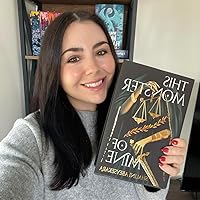
If you asked me what my ideal Gothic Fantasy is, I’d say it’s this book.
Weavingshaw checked all the boxes for me:
✔️Atmospheric writing
✔️Rich and immersive world-building and lore
✔️Paranormal mystery with ghosts and demons
✔️Intricate political landscape
✔️A true, slow burn romance
✔️Strong-willed and honest FMC
✔️Tortured and secretive MMC
This is a slower-paced read, but I personally felt that it aided the story, granting the reader space to submerse themselves in the atmosphere and connect more deeply with the characters. This is largely a credit to the writing, which was beautiful and very well done, making it easy to stay engaged.
Another area where this book shines is with its romantic subplot. It’s a rarity in today’s era of books, but Weavingshaw delivered a true, slow burn romance, devoid of insta lust or love. Leena and St. Silas are such a strong pairing; their chemistry is palpable, and I loved seeing their connection slowly grow as the story progressed.
The ending left me immediately wanting to dive into book two, and I can’t wait to find out what happens next!
Thank you NetGalley and Del Rey for the e-arc in exchange for my honest review.
Weavingshaw checked all the boxes for me:
✔️Atmospheric writing
✔️Rich and immersive world-building and lore
✔️Paranormal mystery with ghosts and demons
✔️Intricate political landscape
✔️A true, slow burn romance
✔️Strong-willed and honest FMC
✔️Tortured and secretive MMC
This is a slower-paced read, but I personally felt that it aided the story, granting the reader space to submerse themselves in the atmosphere and connect more deeply with the characters. This is largely a credit to the writing, which was beautiful and very well done, making it easy to stay engaged.
Another area where this book shines is with its romantic subplot. It’s a rarity in today’s era of books, but Weavingshaw delivered a true, slow burn romance, devoid of insta lust or love. Leena and St. Silas are such a strong pairing; their chemistry is palpable, and I loved seeing their connection slowly grow as the story progressed.
The ending left me immediately wanting to dive into book two, and I can’t wait to find out what happens next!
Thank you NetGalley and Del Rey for the e-arc in exchange for my honest review.

September 10, 2026
okayyy this was expectedly so cute and eerie in its way at the same time and i absolutely adoredd. adored the prose and writing it was just beautiful. its definitely more plot based (not complaining, i was HOOKED.) but the slight tension between the love interests in this book? saurrr delectable. 3.5 stars but im going to have to rate up bc the author GOTTT me with the sweet as acknowledgements. also that ending??? WHAT DO YOU MEANN... cmon silas dont do thiss🥲.
kicking off autumn!!!! buddy read this w lena, can we have our own enemies to lovers already?🙄
kicking off autumn!!!! buddy read this w lena, can we have our own enemies to lovers already?🙄

February 7, 2026
Weavingshaw = YEARNING
Yearning for a better life.
Yearning for freedom.
Yearning for the safety of family.
Yearning for whats rightfully yours.
Yearning for vengeance.
Yearning for the obstinate little menace that refuses to submit.
Yearning for the devilish monster that deals in secrets.
Atmospheric, gothic, slow burn in plot and even slower burn in romance.
I read this in less than 24 hours. I need the next book immediately.
Whats to love…
- Did I mention the yearning?
- ghosts, demons, and magic
- political intrigue & complicated dynamics
- Family forward
- strong FMC
- stoic MMC (he’s got his own secrets)
- Atmospheric, sweeping narrative
- SLLLLLLLLLLOOOOOWWWWWWWNNNN burn romance
Whats not to love...
- I got a little confused at times with the who is who of things because characters are referred to by both their first names, and also Lady/Lord lastname. This is more of a me problem than a book problem. But something to note before you go in. I might have enjoyed this a tiny bit more had I paid better attention or had a dramatis personae to reference.
4.75⭐️| IG | TikTok |
Thank you Del Rey for the gifted book. All opinions are my own.
Yearning for a better life.
Yearning for freedom.
Yearning for the safety of family.
Yearning for whats rightfully yours.
Yearning for vengeance.
Yearning for the obstinate little menace that refuses to submit.
Yearning for the devilish monster that deals in secrets.
Atmospheric, gothic, slow burn in plot and even slower burn in romance.
I read this in less than 24 hours. I need the next book immediately.
Whats to love…
- Did I mention the yearning?
- ghosts, demons, and magic
- political intrigue & complicated dynamics
- Family forward
- strong FMC
- stoic MMC (he’s got his own secrets)
- Atmospheric, sweeping narrative
- SLLLLLLLLLLOOOOOWWWWWWWNNNN burn romance
Whats not to love...
- I got a little confused at times with the who is who of things because characters are referred to by both their first names, and also Lady/Lord lastname. This is more of a me problem than a book problem. But something to note before you go in. I might have enjoyed this a tiny bit more had I paid better attention or had a dramatis personae to reference.
4.75⭐️| IG | TikTok |
Thank you Del Rey for the gifted book. All opinions are my own.

April 12, 2026
4 🌟 “𝓑𝓮𝔀𝓪𝓻𝓮 𝓽𝓱𝓮 𝓹𝓻𝓸𝓶𝓲𝓼𝓮 𝓸𝓯 𝓦𝓮𝓪𝓿𝓲𝓷𝓰𝓼𝓱𝓪𝔀. 𝓐𝓵𝓵 𝓐𝓿𝓸𝓷𝓼 𝓪𝓻𝓮 𝓭𝓮𝓶𝓸𝓷 𝓴𝓲𝓼𝓼𝓮𝓭, 𝓶𝔂 𝓵𝓸𝓿𝓮”
🕯️ 𝙶𝚘𝚝𝚑𝚒𝚌 𝙵𝚊𝚗𝚝𝚊𝚜𝚢
❤️🔥 𝚂𝚕𝚘𝚠 𝙱𝚞𝚛𝚗 + 𝚈𝚎𝚊𝚛𝚗𝚒𝚗𝚐
👻 𝙷𝚊𝚞𝚗𝚝𝚎𝚍 𝙴𝚜𝚝𝚊𝚝𝚎
🔍 𝙼𝚢𝚜𝚝𝚎𝚛𝚢
the cozy rainy weather 🌧️🧦 called for a ⋘ 𝑔𝑜𝓉𝒽𝒾𝒸 𝒻𝒶𝓃𝓉𝒶𝓈𝓎 𝓇𝑜𝓂𝒶𝓃𝒸𝑒 ⋙ and this absolutely delivered! the writing in this was soo beautiful and worked so well with the world building + overall vibe of the book.
we follow our FMC 𝙇𝙚𝙚𝙣𝙖 as she tries to navigate life with a new power she awoke with. on top of trying to keep this power a secret, 𝙇𝙚𝙚𝙣𝙖 is also trying to save her brothers life after he falls fatally ill. this leads her to our MMC, 𝘛𝘩𝘦 𝘚𝘢𝘪𝘯𝘵 𝘰𝘧 𝘚𝘪𝘭𝘦𝘯𝘤𝘦 aka 𝙎𝙩 𝙎𝙞𝙡𝙖𝙨, a merchant who deals in secrets 🤫 𝙇𝙚𝙚𝙣𝙖 in efforts to save her brother decides to sell her most valuable secret, she can see ghosts.
the story takes off from there and is centered around a mystery with a side of reluctant allies. i won’t lie this is slower paced at the start but once i got into the world, and the plot got going it had me soo intrigued. oh and the romance? the slowest of burns 🖤🔥 the tension, the yearning all soo good!!!
➵ “𝙾𝚑, 𝚑𝚘𝚠 𝙸 𝚕𝚘𝚊𝚝𝚑𝚎 𝚢𝚘𝚞” - 𝙇𝙚𝙚𝙣𝙖
: ¨·.·¨ :ㅤ
`· .⠀ ⠂⠄⠄⠂⠁⠁⠂⠄⠄⠂⠁⠁⠂⠄⠄⠂ ⠂⠄⠄⠂☆
“𝚈𝚘𝚞 𝚜𝚑𝚘𝚞𝚕𝚍 𝚋𝚎 𝚠𝚊𝚛𝚢 𝚘𝚏 𝚑𝚘𝚠 𝚢𝚘𝚞 𝚊𝚛𝚎 𝚕𝚘𝚘𝚔𝚒𝚗𝚐 𝚊𝚝 𝚖𝚎.”
“𝙷𝚘𝚠 𝚊𝚖 𝙸 𝚕𝚘𝚘𝚔𝚒𝚗𝚐 𝚊𝚝 𝚢𝚘𝚞?” 𝙇𝙚𝙚𝙣𝙖 𝚊𝚜𝚔𝚎𝚍 “𝙻𝚒𝚔𝚎 𝚢𝚘𝚞 𝚗𝚘 𝚕𝚘𝚗𝚐𝚎𝚛 𝚕𝚘𝚊𝚝𝚑𝚎 𝚖𝚎” ᢉ𐭩 .•· ➴
that ending woahhh!! yeah i’m going to be needing that book 2 ASAP!
🕯️ 𝙶𝚘𝚝𝚑𝚒𝚌 𝙵𝚊𝚗𝚝𝚊𝚜𝚢
❤️🔥 𝚂𝚕𝚘𝚠 𝙱𝚞𝚛𝚗 + 𝚈𝚎𝚊𝚛𝚗𝚒𝚗𝚐
👻 𝙷𝚊𝚞𝚗𝚝𝚎𝚍 𝙴𝚜𝚝𝚊𝚝𝚎
🔍 𝙼𝚢𝚜𝚝𝚎𝚛𝚢
the cozy rainy weather 🌧️🧦 called for a ⋘ 𝑔𝑜𝓉𝒽𝒾𝒸 𝒻𝒶𝓃𝓉𝒶𝓈𝓎 𝓇𝑜𝓂𝒶𝓃𝒸𝑒 ⋙ and this absolutely delivered! the writing in this was soo beautiful and worked so well with the world building + overall vibe of the book.
we follow our FMC 𝙇𝙚𝙚𝙣𝙖 as she tries to navigate life with a new power she awoke with. on top of trying to keep this power a secret, 𝙇𝙚𝙚𝙣𝙖 is also trying to save her brothers life after he falls fatally ill. this leads her to our MMC, 𝘛𝘩𝘦 𝘚𝘢𝘪𝘯𝘵 𝘰𝘧 𝘚𝘪𝘭𝘦𝘯𝘤𝘦 aka 𝙎𝙩 𝙎𝙞𝙡𝙖𝙨, a merchant who deals in secrets 🤫 𝙇𝙚𝙚𝙣𝙖 in efforts to save her brother decides to sell her most valuable secret, she can see ghosts.
the story takes off from there and is centered around a mystery with a side of reluctant allies. i won’t lie this is slower paced at the start but once i got into the world, and the plot got going it had me soo intrigued. oh and the romance? the slowest of burns 🖤🔥 the tension, the yearning all soo good!!!
➵ “𝙾𝚑, 𝚑𝚘𝚠 𝙸 𝚕𝚘𝚊𝚝𝚑𝚎 𝚢𝚘𝚞” - 𝙇𝙚𝙚𝙣𝙖
: ¨·.·¨ :ㅤ
`· .⠀ ⠂⠄⠄⠂⠁⠁⠂⠄⠄⠂⠁⠁⠂⠄⠄⠂ ⠂⠄⠄⠂☆
“𝚈𝚘𝚞 𝚜𝚑𝚘𝚞𝚕𝚍 𝚋𝚎 𝚠𝚊𝚛𝚢 𝚘𝚏 𝚑𝚘𝚠 𝚢𝚘𝚞 𝚊𝚛𝚎 𝚕𝚘𝚘𝚔𝚒𝚗𝚐 𝚊𝚝 𝚖𝚎.”
“𝙷𝚘𝚠 𝚊𝚖 𝙸 𝚕𝚘𝚘𝚔𝚒𝚗𝚐 𝚊𝚝 𝚢𝚘𝚞?” 𝙇𝙚𝙚𝙣𝙖 𝚊𝚜𝚔𝚎𝚍 “𝙻𝚒𝚔𝚎 𝚢𝚘𝚞 𝚗𝚘 𝚕𝚘𝚗𝚐𝚎𝚛 𝚕𝚘𝚊𝚝𝚑𝚎 𝚖𝚎” ᢉ𐭩 .•· ➴
that ending woahhh!! yeah i’m going to be needing that book 2 ASAP!

February 6, 2026
he takes two spoonfuls of sugar in his coffee. she does not *sobbing * he takes two spoonfuls of sugar in his coffee. she does not!!
the crimson peak-esque gothic fantasy we deserve with secrets, debts, and a complicated, fierce heroine at the forefront.
i’m a victim of not knowing this was a series😭
thank you to edelweiss and the publisher for providing me an advance copy. full review to come.
Bookstagram | Blog
the crimson peak-esque gothic fantasy we deserve with secrets, debts, and a complicated, fierce heroine at the forefront.
i’m a victim of not knowing this was a series😭
thank you to edelweiss and the publisher for providing me an advance copy. full review to come.
Bookstagram | Blog

November 24, 2025
5.0 ★— Gothic Girl Winter has settled in, and I am happy to see Weavingshaw carrying forward the spirit of the season flawlessly.
Leena has been hardened by years of ghost hauntings, the only one able to see and interact with the beings. It’s a half-life, really, because that gift has stolen any chance at an ordered one. Her alienation — rooted not only in her ability but in her refugee identity in a country where her people are seen as Other — has marked her. And when she meets the book’s MMC, the Saint of Silence, you get an odd girl who sees ghosts encountering an equally odd, though in a very different way, shadowed man people sell their secrets to.
As a character, he didn’t disappoint. With his cool sharpness and the sense that he is always a step ahead, he immediately fascinated me. And as the book slowly, very slowly, showed him reacting to Leena and becoming more human through their interactions, I felt just as she did, wanting to see behind the curtain of this man’s hidden depths.
This book is undoubtedly a slow burn in the way it tells its story. It doesn’t rush, and there’s no fast revelations. Instead, it lets you stew in the unsaid, in the unknowns, as you watch Leena navigate her new life under the Saint. And, yes, there is a ton of yearning! So. Much. Of. It. Leena and the MMC’s dynamic is filled with distrust and animosity… until it isn’t, and I loved watching it slowly evolve.
The central mystery and story sharpen as the book continues, and while some revelations were more obvious, others left me in various states of emotions. I felt like I had to catch my breath after some parts of this story, and I still don’t know what got to me more: the beautifully dark atmosphere of the world, the tension between Leena and the Saint or the way this story completely consumed me.
_______________
Thank you to Del Rey for the ARC in exchange for my honest review.
Leena has been hardened by years of ghost hauntings, the only one able to see and interact with the beings. It’s a half-life, really, because that gift has stolen any chance at an ordered one. Her alienation — rooted not only in her ability but in her refugee identity in a country where her people are seen as Other — has marked her. And when she meets the book’s MMC, the Saint of Silence, you get an odd girl who sees ghosts encountering an equally odd, though in a very different way, shadowed man people sell their secrets to.
As a character, he didn’t disappoint. With his cool sharpness and the sense that he is always a step ahead, he immediately fascinated me. And as the book slowly, very slowly, showed him reacting to Leena and becoming more human through their interactions, I felt just as she did, wanting to see behind the curtain of this man’s hidden depths.
This book is undoubtedly a slow burn in the way it tells its story. It doesn’t rush, and there’s no fast revelations. Instead, it lets you stew in the unsaid, in the unknowns, as you watch Leena navigate her new life under the Saint. And, yes, there is a ton of yearning! So. Much. Of. It. Leena and the MMC’s dynamic is filled with distrust and animosity… until it isn’t, and I loved watching it slowly evolve.
The central mystery and story sharpen as the book continues, and while some revelations were more obvious, others left me in various states of emotions. I felt like I had to catch my breath after some parts of this story, and I still don’t know what got to me more: the beautifully dark atmosphere of the world, the tension between Leena and the Saint or the way this story completely consumed me.
_______________
Thank you to Del Rey for the ARC in exchange for my honest review.

September 12, 2026
amazing premise...not so great execution.
dnf @ 35%
dnf @ 35%

April 23, 2026
My first 5 stars read since March 12th 😭 I was despairing
« Everything that has been taken from me will be mine once more. »
This was sooo good. I debated giving it 4.5✨ but I just loved it so much.
I didn’t know what I was getting into when I started it. For some reason I thought it was dark academia? Which it wasn’t obviously but I was flabbergasted by the rich writing and worldbuilding this had. It’s darkly atmospheric and the gothic vibes were there. I definitely wouldn’t want to live at the Weavingshaw manor.
It was easy to root for the characters and the slow burn was perfectly done. The yearning was top tier.
Since the author went through immigration, I found it very touching for her to include this in her novel. It shed a light to some of the difficulties they go through. I would never presume knowing what it is like but I find the population needs more education on those topics.
It ended on a cliffhanger that made me really excited for the sequel!
« Everything that has been taken from me will be mine once more. »
This was sooo good. I debated giving it 4.5✨ but I just loved it so much.
I didn’t know what I was getting into when I started it. For some reason I thought it was dark academia? Which it wasn’t obviously but I was flabbergasted by the rich writing and worldbuilding this had. It’s darkly atmospheric and the gothic vibes were there. I definitely wouldn’t want to live at the Weavingshaw manor.
It was easy to root for the characters and the slow burn was perfectly done. The yearning was top tier.
Since the author went through immigration, I found it very touching for her to include this in her novel. It shed a light to some of the difficulties they go through. I would never presume knowing what it is like but I find the population needs more education on those topics.
It ended on a cliffhanger that made me really excited for the sequel!
June 4, 2026
firstly, thank you to the publisher for an arc!
i have been so excited to read this debut gothic fantasty, and especially when i found out it would be selected for a fairyloot pick! weavingshaw follows a young woman who awaoke one day to a terrible power: she can see the dead; she strikes a deal with a magnetic and dangerous purveyor of dark secrets to save her beloved brother’s life. but of course, it’s much more than that…
if i were to compare weavingshaw to any classical gothic novel, the one that stands out to me the most is wuthering heights; this is rather surprising to me because i have my personal qualms with wuthering heights, but overall i did enjoy it.
however, both novels have such a moody and atmospheric setting, with characters full of yearning (this is a big thing, especially in weavingshaw), and many ghosts of the past returning (or really remaining) to haunt present inhabitants.
i really enjoyed the relationship development between our two mcs leena and the saint of silence.
i also listened to the audio through libby, and the narrator was phenomenal!
and of course, my fairyloot edition is stunning ❤️!!
i have been so excited to read this debut gothic fantasty, and especially when i found out it would be selected for a fairyloot pick! weavingshaw follows a young woman who awaoke one day to a terrible power: she can see the dead; she strikes a deal with a magnetic and dangerous purveyor of dark secrets to save her beloved brother’s life. but of course, it’s much more than that…
if i were to compare weavingshaw to any classical gothic novel, the one that stands out to me the most is wuthering heights; this is rather surprising to me because i have my personal qualms with wuthering heights, but overall i did enjoy it.
however, both novels have such a moody and atmospheric setting, with characters full of yearning (this is a big thing, especially in weavingshaw), and many ghosts of the past returning (or really remaining) to haunt present inhabitants.
i really enjoyed the relationship development between our two mcs leena and the saint of silence.
i also listened to the audio through libby, and the narrator was phenomenal!
and of course, my fairyloot edition is stunning ❤️!!

December 29, 2025
deadass pulling out my computer to write this review so i can get serious. i’ve had a busy week with not a lot of time to read and every single second i couldn’t read i was thinking about Weavingshaw. this is already going to be one of my best books of 2026 i’m telling you right now. prepare to be absolutely sick of me talking about it. atmospheric, slow (positive), gothic/Victorian romantic fantasy mystery — it’s a little bit of everything that is immediately elevated by Leena’s background and her motivations. St. Silas feels like a mix of Kaz Brekker and Arin of Nizahl if they were the MMC/love interests in a gothic historical romance. i know people will likely find this slower paced but i think that’s exactly what this story needs to build up the world, the stakes, the eerie feeling to everything, and especially the tension. it’s clear the author’s background as a refugee, doctor, and book lover has shaped the story and it feels extremely personal as a story of her heart. you can just tell!
i am THRILLED and blown away by how much i enjoyed this. i’ll be sat for the next two books, trust!
i am THRILLED and blown away by how much i enjoyed this. i’ll be sat for the next two books, trust!
July 3, 2026
4.75⭐️ A stunning debut novel!! I’m pretty sure I found the perfect Gothic Romantic Fantasy with such a unique premise!
The story follows our FMC, Leena, who has the ability to see ghosts. In a desperate attempt to save her ill brother's life, she enters a contract with St. Silas, a mysterious and dangerous merchant who exchanges coin for confessions.
The romance is the slowest of slow-burns, and I completely ate it up. Leena and St. Silas had amazing chemistry, and every stolen glance, subtle touch, and flirty quip had me BEGGING for more. And while the romance is definitely a subplot, I was so invested in the political intrigue and unfolding mysteries that the book never felt lacking.
One thing to keep in mind is that this leans more heavily on description and inner monologue than dialogue. Personally, it didn't bother me since the gothic setting was so captivating and the plot still moved along at a steady pace. But I know that others might have to be in the right mood to truly enjoy this!
The story follows our FMC, Leena, who has the ability to see ghosts. In a desperate attempt to save her ill brother's life, she enters a contract with St. Silas, a mysterious and dangerous merchant who exchanges coin for confessions.
The romance is the slowest of slow-burns, and I completely ate it up. Leena and St. Silas had amazing chemistry, and every stolen glance, subtle touch, and flirty quip had me BEGGING for more. And while the romance is definitely a subplot, I was so invested in the political intrigue and unfolding mysteries that the book never felt lacking.
One thing to keep in mind is that this leans more heavily on description and inner monologue than dialogue. Personally, it didn't bother me since the gothic setting was so captivating and the plot still moved along at a steady pace. But I know that others might have to be in the right mood to truly enjoy this!

March 28, 2026
ೃ⁀➷ 4.5 stars *ੈ✩‧₊˚
Guys omg why did I think this book was a standalone 😭😭😭 turning that last page and expecting more only to find out that’s the end is such a devastating experience because ur like wait pause hold up a second stop for a minute JUST PLEASE COME BACK- 😭😩🙏
First and foremost this is a paranormal gothic fantasy with romance. It’s got demons and ghosts and delicious amount of secrecy. Romance is the side plot. I usually don’t read many books with romance as side plots but when I do I just know they’re gonna be so juicy. Like the angst and the tension?? Nothing can beat it I’m telling you. The romance being so agonisingly tender at times literally undid me at the seams. I was done forrrrr.
I love Leena omg my best girl. She was strong without needing to be loud about it. She was compassionate without being boastful. She was sharp but also gentle and ugh I can go on and on. I just adore her.
Mr Bram St Silas the perfectly tortured secretive mysterious man. God how I love him. It’s the way this man yearned. Like truly. Oh how I myself yearned for his pov and when it came?? I was undone. I’m litch still making this face 😩😩 whenever I think about how he feels. This mannnn like ugh he deserves everything in the world. My baby my precious I wanna protect him from everyoneeeee.
This book was so atmospheric and beautifully captured the way everything was designed but was also very raw and real at times. The topics about refugees and racism was handled so well in this it truly made a meaningful impact on me. Truly sm respect for Heba for weaving such intricate details into this book without it taking away from the story.
Also from the literary aspect this book was gorgeous. Absolutely had me melting. The writing structure, the metaphors, the dialogue, the inner monologue, the pacing - even though it was slow it stayed perfectly executed, the plot, the themes woven throughout the book. God. It was Devine. Delicious. Scrumptious if I do say so myself.
ೃ⁀➷ Thank you so incredibly much Bantam Books UK for the proof copy! ♥︎
─── ⋆⋅☆⋅⋆ ──
STOP IT YOU CANT JUST END IT LIKE THAT 😩😩😩
Guys omg why did I think this book was a standalone 😭😭😭 turning that last page and expecting more only to find out that’s the end is such a devastating experience because ur like wait pause hold up a second stop for a minute JUST PLEASE COME BACK- 😭😩🙏
First and foremost this is a paranormal gothic fantasy with romance. It’s got demons and ghosts and delicious amount of secrecy. Romance is the side plot. I usually don’t read many books with romance as side plots but when I do I just know they’re gonna be so juicy. Like the angst and the tension?? Nothing can beat it I’m telling you. The romance being so agonisingly tender at times literally undid me at the seams. I was done forrrrr.
I love Leena omg my best girl. She was strong without needing to be loud about it. She was compassionate without being boastful. She was sharp but also gentle and ugh I can go on and on. I just adore her.
Mr Bram St Silas the perfectly tortured secretive mysterious man. God how I love him. It’s the way this man yearned. Like truly. Oh how I myself yearned for his pov and when it came?? I was undone. I’m litch still making this face 😩😩 whenever I think about how he feels. This mannnn like ugh he deserves everything in the world. My baby my precious I wanna protect him from everyoneeeee.
This book was so atmospheric and beautifully captured the way everything was designed but was also very raw and real at times. The topics about refugees and racism was handled so well in this it truly made a meaningful impact on me. Truly sm respect for Heba for weaving such intricate details into this book without it taking away from the story.
Also from the literary aspect this book was gorgeous. Absolutely had me melting. The writing structure, the metaphors, the dialogue, the inner monologue, the pacing - even though it was slow it stayed perfectly executed, the plot, the themes woven throughout the book. God. It was Devine. Delicious. Scrumptious if I do say so myself.
ೃ⁀➷ Thank you so incredibly much Bantam Books UK for the proof copy! ♥︎
─── ⋆⋅☆⋅⋆ ──
STOP IT YOU CANT JUST END IT LIKE THAT 😩😩😩

January 2, 2026
6/5 Absolutely loved this book and thought about it during all the times I wasn't reading it.
This is a world of secrets-- secrets that consume, secrets that betray, secrets that indebt you to another. The atmosphere is slow and haunting, restrictive and also a little bit musty (in the way that many gothics are). And the main characters are all fierce and fleshed out, inextricably bound to their families whether they wish to be or not.
There are haunts and spooks that make this quite appropriate for Spooky Season, and an undercurrent of violence set against a backdrop of colonialism, unrest, and revolution. Though I questioned the title of the novel for the first half of the book (knowing this is a series and we were really slow to getting there in this first installment), by the end it couldn't have been named anything else.
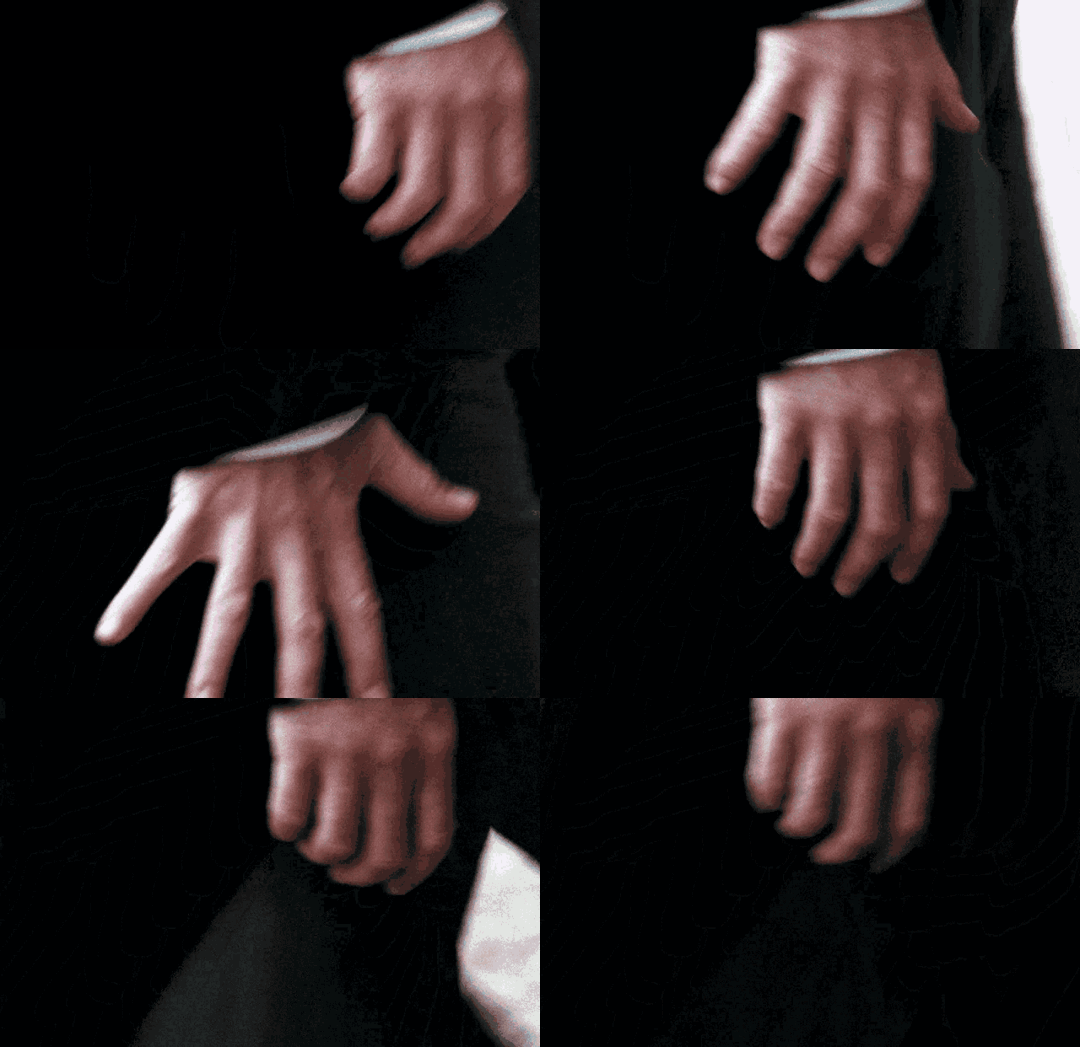
And ohhhhh the slowburn was giving. I think a lot of people will see the Romantasy subgenre tag and make assumptions about what this book is based on other Romantasy, and I think that might be a disservice to it. I was truly spoiled for the number of scenes that made me think of the Mr Darcy hand gif and found the buildup and tension to be just delicious. Who knew chaste could be so steamy?
Overall:
I was so, so impressed that this was a debut and had me hooked from the beginning with the haunting atmosphere and villainous banter. I will be eagerly anticipating both the sequels and this book's eventual release so that y'all can finally read and talk about it with me!!
Thank you to Del Rey and NetGalley for providing me with an ARC. All thoughts and opinions are my own.
ps I listened to this "Dark Academia Piano and Cello" mood music while I was reading toward the end and it totally dialed up my enjoyment:
https://www.youtube.com/watch?v=20uf9...

September 7, 2026
5 - ⭐️⭐️⭐️⭐️⭐️
St Silas would never be satisfied until he undid her completely. Until she was as transparent as a phantom, and he held mastery of all her secrets.
From the very first page as I stepped into this story, Weavingshaw entranced me with its eerie charm and haunting setting. It's steeped in exquisite gothic imagery, and I have long since surrendered and remain under its thrall (and gladly so).
This is a story where vicious truths and sordid secrets intertwine and unravel, like threads weaving around our beloved characters until they find themselves entangled within a web of danger, deceit and desire.
Between a conflicted woman with supernatural sight and an enigmatic man who trades in heinous secrets—add to that a dangerous deal that guides them towards uncovering sinister bargains and treacheries: you get the most intriguing set up for a gothic romance and Heba crafted it stunningly.
Leena and St Silas have the most decadent chemistry and slowburn, as their dynamic is not defined by words, but by action and body language. Strong emphasis on body language as we have two secret yearners and I eagerly gobbled up every lingering look, touch, and even a whiff. It is not explicit as much as it feels intimate. It is not loud but it's not timid either.
Another important aspect of this book is shedding light on the classism and racism the Algaraans are subjected to—it becomes quite stark between Leena whose Algaraan parents are refugees and St Silas who is a native Morish. We do get a glimpse of how prejudice is weaponized against the Algaraan people. And Leena's feelings resonated with me on a profoundly personal level, because that prejudice seems familiar to me (not exactly but in some ways).
I knew halfway through that this would only get a stellar review from me, and I would gladly have you know that my opinion has not changed as I turned that last page. It was a guaranteed 5-star read. I'm very eager to get my hands on the sequel as soon as it's out.
It has this dark decadence that has me savoring every particle of it—and for that it easily made its way to my list of favorite gothic (with a mix of fantasy and paranormal) romances.
Note: it's not a standalone, I believe it's a trilogy with more sequels to come.
Content warning: death, murder, graphic violence, ghosts, demons, xenophobia, racism.
St Silas would never be satisfied until he undid her completely. Until she was as transparent as a phantom, and he held mastery of all her secrets.
From the very first page as I stepped into this story, Weavingshaw entranced me with its eerie charm and haunting setting. It's steeped in exquisite gothic imagery, and I have long since surrendered and remain under its thrall (and gladly so).
This is a story where vicious truths and sordid secrets intertwine and unravel, like threads weaving around our beloved characters until they find themselves entangled within a web of danger, deceit and desire.
Between a conflicted woman with supernatural sight and an enigmatic man who trades in heinous secrets—add to that a dangerous deal that guides them towards uncovering sinister bargains and treacheries: you get the most intriguing set up for a gothic romance and Heba crafted it stunningly.
Leena and St Silas have the most decadent chemistry and slowburn, as their dynamic is not defined by words, but by action and body language. Strong emphasis on body language as we have two secret yearners and I eagerly gobbled up every lingering look, touch, and even a whiff. It is not explicit as much as it feels intimate. It is not loud but it's not timid either.
Another important aspect of this book is shedding light on the classism and racism the Algaraans are subjected to—it becomes quite stark between Leena whose Algaraan parents are refugees and St Silas who is a native Morish. We do get a glimpse of how prejudice is weaponized against the Algaraan people. And Leena's feelings resonated with me on a profoundly personal level, because that prejudice seems familiar to me (not exactly but in some ways).
I knew halfway through that this would only get a stellar review from me, and I would gladly have you know that my opinion has not changed as I turned that last page. It was a guaranteed 5-star read. I'm very eager to get my hands on the sequel as soon as it's out.
It has this dark decadence that has me savoring every particle of it—and for that it easily made its way to my list of favorite gothic (with a mix of fantasy and paranormal) romances.
Note: it's not a standalone, I believe it's a trilogy with more sequels to come.
Content warning: death, murder, graphic violence, ghosts, demons, xenophobia, racism.

March 5, 2026
Thanks to Netgalley and the publisher for access to this eARC! All opinions are my own.
____________
This was a well-written fantasy romance, but I wasn't enamoured by any of its other aspects.
The characters felt rather cookie cutter; I've definitely read these same people in many other books. The romantic relationship left a lot to be desired, and they felt like fumbling teenagers who were only attracted to each other and didn't actually *like* each other. They had hardly any chemistry together and I tended to cringe when there was supposed to be romantic/tension filled dialogue.
The plot was a bit wavy, filled with side characters that all felt like the same person and archetype, and there wasn't really any that I found myself caring about. The demon lore was quite interesting, but didn't seem to go anywhere except from the end which felt convoluted and very rushed. The title building 'Weavingshaw' felt like an afterthought and very sidelined in its own book.
____________
This was a well-written fantasy romance, but I wasn't enamoured by any of its other aspects.
The characters felt rather cookie cutter; I've definitely read these same people in many other books. The romantic relationship left a lot to be desired, and they felt like fumbling teenagers who were only attracted to each other and didn't actually *like* each other. They had hardly any chemistry together and I tended to cringe when there was supposed to be romantic/tension filled dialogue.
The plot was a bit wavy, filled with side characters that all felt like the same person and archetype, and there wasn't really any that I found myself caring about. The demon lore was quite interesting, but didn't seem to go anywhere except from the end which felt convoluted and very rushed. The title building 'Weavingshaw' felt like an afterthought and very sidelined in its own book.

March 17, 2026
I had such a good time with this slow-burn gothic fantasy, cannot wait to continue in the series! The world building was perfectly laid out, the middle was a bit slow but the detailing of events made sense once we got to all of the reveals, and boy were those fun to uncover!

June 17, 2026
✩ 4 stars ✩
What to Expect:
➼ Morally Gray MMC
➼ She Sees Ghosts
➼ Slow Burn
➼ Forced Proximity
➼ Political Intrigue
➼ Social Inequality
➼ He Trades in Secrets
➼ Gothic Fantasy
➼ Narrated by Antonia Salib
➼ Third Person POV
This book deserves more hype! I really can’t believe this is a debut! 👏🏻👏🏻
This was definitely a SLOOOOW burn. I honestly wasn’t even sure this was headed in a romantic direction at first. Only in the book world would someone called “The Saint of Silence” turn out to be a sexy young love interest instead of an old man. 😂 Once the story got going though, the yearning was definitely there! There is one thing the MMC wants more than anything, and the FMC’s ability to see the dead makes her the one person who might be able to help him get it. The longer they’re together though, the more he starts to lose focus on his goals in order to keep her safe which is where the mutual comes into play.
The story had some twists and big reveals that were all very well paced. There were a few that did surprise me, so I’d say it wasn’t the most obvious story. I’ve seen some other reviewers claiming that this book was confusing, but I personally didn’t feel that way. We were sometimes learning about the FMC’s powers alongside her in real time, and I wonder if that might have thrown some people off. I personally really enjoyed the way things were laid out. 🤷🏼♀️
If you’re only interest in the spooky mansion, just know that it really only comes into play near the end of the book. There were plenty of ghosties along the way though, and this will be a trilogy, so I’m sure we’ll see more of it in future books! Trust that the gothic atmosphere was on point! 🙌🏻
✼ ҉ ✼ ҉ ✼ ҉ ✼ ҉ ✼ ҉ ✼ ҉ ✼
Pre-read: I got a new bookcase today, and the audio is going to keep me company while I build it. 🫶🏻 Looking forward to decluttering my space! 📚📚📚
≪ ◦ ❖ ◦ ≫
Connect with me on Instagram ✩ Tiktok
What to Expect:
➼ Morally Gray MMC
➼ She Sees Ghosts
➼ Slow Burn
➼ Forced Proximity
➼ Political Intrigue
➼ Social Inequality
➼ He Trades in Secrets
➼ Gothic Fantasy
➼ Narrated by Antonia Salib
➼ Third Person POV
This book deserves more hype! I really can’t believe this is a debut! 👏🏻👏🏻
This was definitely a SLOOOOW burn. I honestly wasn’t even sure this was headed in a romantic direction at first. Only in the book world would someone called “The Saint of Silence” turn out to be a sexy young love interest instead of an old man. 😂 Once the story got going though, the yearning was definitely there! There is one thing the MMC wants more than anything, and the FMC’s ability to see the dead makes her the one person who might be able to help him get it. The longer they’re together though, the more he starts to lose focus on his goals in order to keep her safe which is where the mutual comes into play.
The story had some twists and big reveals that were all very well paced. There were a few that did surprise me, so I’d say it wasn’t the most obvious story. I’ve seen some other reviewers claiming that this book was confusing, but I personally didn’t feel that way. We were sometimes learning about the FMC’s powers alongside her in real time, and I wonder if that might have thrown some people off. I personally really enjoyed the way things were laid out. 🤷🏼♀️
If you’re only interest in the spooky mansion, just know that it really only comes into play near the end of the book. There were plenty of ghosties along the way though, and this will be a trilogy, so I’m sure we’ll see more of it in future books! Trust that the gothic atmosphere was on point! 🙌🏻
✼ ҉ ✼ ҉ ✼ ҉ ✼ ҉ ✼ ҉ ✼ ҉ ✼
Pre-read: I got a new bookcase today, and the audio is going to keep me company while I build it. 🫶🏻 Looking forward to decluttering my space! 📚📚📚
≪ ◦ ❖ ◦ ≫
Connect with me on Instagram ✩ Tiktok

March 25, 2026
absolutely diabolical to just end it like that. this was just So Good!! i am happy when fmc and mmc are in a duel of words and match each other's energy very nice stuff i enjoy.
i love any book that has inklings of ross geller "MY BEST FRIEND AND MY SISTERRRRRR!!!"
i love any book that has inklings of ross geller "MY BEST FRIEND AND MY SISTERRRRRR!!!"

Review of advance copy received from Netgalley
yayyyyy! Just got my Physical copy😍😍😍
ARC from Netgalley
Knew it was a 5 stars 🌟 🤩 from the first 50%
Until she saw her first glimpse of Weavingshaw, Leena didn’t believe in monsters.
I was very intrigued by this book ever since I knew that the author is an Iraqi immigrant
However, it is not inspired by any Arabian/Islamic culture save for the names, but rather by the experience of immigrants
I have to say first, that the book is not perfect.
there are certain unclear elements
the many "tell not show" style was a bit over, but honestly I thought it served the plot
However, the beautiful writing style, the well-written characters, the amazing world and magic system and the intricate plot deserved to have a 5 star especially for a debuted novel
With how bad recent books that promises Slow Burn Yearning but delivers empty shells, Weavingshaw is a gem 💎
You may see People promoting it as enemies to lovers
I did not see it as such
its more like hate to like
there is definetly slow burn Yearning
however, please read it for what it is
A Fantasy Gothic
the book is divided into three parts and deserved a reading update thoughts
No spoilers
Part one: The Reckoning
this part holds almost half the book
we meet Leena Al Sayir, a 20 something POC Algaaran who can see ghosts
In a Faustian kinda deal to save hers and her brother's life, she strikes a bargain with the St of Silence the Misterious Bram Silas
This part is told mainly from Leena's pov
we get a chapter from certain side characters' which I found refreshing
I love Leena. She knows her limitations and flaws
I thought she would be a push over, but she impressed me on different levels
she is smart and can hold her own
through her eyes we meet the enigmatic St Silas. Our resident I-want-to-appear-as-the-villain-of-the-story hot guy
We dont know a lot about his powers except he deals with secrets
we also dont know why Leena in particular can see ghosts
the world is simple yet unique
and to me, this read like a fresh fantasy
===============
"The words were like a balm, releasing a ghost she did not realize had haunted her ever since that day ...."
ooooh I love that...such a clever twist on "she released a breath she did not know was holding"
****************************
Part 2: The Revelation
OMG! We get Silas' POV 😍😍😍😍😍
My poor Morally Grey Silas 😫😫😭😭
What a revelation 😍😍😍
Their differences had never been so apparent, standing there as they were within the tumultuous ocean: the control he wielded, the noble blood that flowed through his veins, his strong and rugged form a battlefront against the wind— a sharp contrast to Leena, who was stripped to the elements and flooded with the remains of the dead.
beautiful writing
somehow, I do not see a HEA though i wish it
part 3: The Ruin
There he stood—.... St. Silas, ....., waist-deep in vows, in vengeance, born to privilege, marked by brutality. There he stood, the Saint of Silence, triumphant in the dark.
ARC from Netgalley
Knew it was a 5 stars 🌟 🤩 from the first 50%
Until she saw her first glimpse of Weavingshaw, Leena didn’t believe in monsters.
I was very intrigued by this book ever since I knew that the author is an Iraqi immigrant
However, it is not inspired by any Arabian/Islamic culture save for the names, but rather by the experience of immigrants
I have to say first, that the book is not perfect.
there are certain unclear elements
the many "tell not show" style was a bit over, but honestly I thought it served the plot
However, the beautiful writing style, the well-written characters, the amazing world and magic system and the intricate plot deserved to have a 5 star especially for a debuted novel
With how bad recent books that promises Slow Burn Yearning but delivers empty shells, Weavingshaw is a gem 💎
You may see People promoting it as enemies to lovers
I did not see it as such
its more like hate to like
there is definetly slow burn Yearning
however, please read it for what it is
A Fantasy Gothic
the book is divided into three parts and deserved a reading update thoughts
No spoilers
Part one: The Reckoning
this part holds almost half the book
we meet Leena Al Sayir, a 20 something POC Algaaran who can see ghosts
In a Faustian kinda deal to save hers and her brother's life, she strikes a bargain with the St of Silence the Misterious Bram Silas
This part is told mainly from Leena's pov
we get a chapter from certain side characters' which I found refreshing
I love Leena. She knows her limitations and flaws
I thought she would be a push over, but she impressed me on different levels
she is smart and can hold her own
through her eyes we meet the enigmatic St Silas. Our resident I-want-to-appear-as-the-villain-of-the-story hot guy
We dont know a lot about his powers except he deals with secrets
we also dont know why Leena in particular can see ghosts
the world is simple yet unique
and to me, this read like a fresh fantasy
===============
"The words were like a balm, releasing a ghost she did not realize had haunted her ever since that day ...."
ooooh I love that...such a clever twist on "she released a breath she did not know was holding"
****************************
Part 2: The Revelation
OMG! We get Silas' POV 😍😍😍😍😍
My poor Morally Grey Silas 😫😫😭😭
What a revelation 😍😍😍
Their differences had never been so apparent, standing there as they were within the tumultuous ocean: the control he wielded, the noble blood that flowed through his veins, his strong and rugged form a battlefront against the wind— a sharp contrast to Leena, who was stripped to the elements and flooded with the remains of the dead.
beautiful writing
somehow, I do not see a HEA though i wish it
part 3: The Ruin
There he stood—.... St. Silas, ....., waist-deep in vows, in vengeance, born to privilege, marked by brutality. There he stood, the Saint of Silence, triumphant in the dark.

March 2, 2026
Once in a blue moon, a debut author will release a book that makes you go, “Wow, I cannot believe that was a debut”, and Weavingshaw by Heba Al-Wasity is a perfect example that encapsulates this. I was floored by this book. Absolutely floored. Weavingshaw gripped me from the get go – one of the rare instances I knew it was going to be a five star read early on. There were a lot of mediocre reads in February and I was scared I was going to fall into a slump because of it, but Weavingshaw absolutely came to the rescue and I found myself dreading its end because holy shit, I loved everything about this book. Forget best book of the year. This is now one of my favorite books of all time.
Leena was such a refreshing FMC. She has a quiet strength to her and is incredibly likable with how empathetic she is. But I also love that she's not one to be underestimated, always careful and cautious but also really capable. She’s so resilient and I loved her determination to do whatever it is necessary to save her brother.
St. Silas was also such a good character! His biggest strength is his intelligence and it’s what makes him such an unpredictable but alluring character. You never quite know what he’s scheming nor what his next moves will be and it keeps you on edge as a reader because of his unpredictability. A lot of what makes Leena and St. Silas’s dynamic so good is how secretive they are. Both of them keep their cards close to their chest though St. Silas has that slight edge over Leena where he’s always two steps ahead of her, able to read her like an open book. Seeing them try to figure out each other’s secrets was incredibly entertaining.
Weavingshaw is also a masterclass in showing not telling, particularly in the romance department. The romance was a sloooow burn, one that really forces you to read between the lines to understand our protagonists’ feelings since both of them never explicitly convey how they feel. So much of what they say is so elusive, shrouded in half-truths and deflections, but it doesn’t need them to say, “I love you” to each other – everything is shown to you and you feel it when their relationship begins to shift into something more. A rare novel where the romance stems more from the unspoken words that are said between them. I absolutely inhaled the pining and yearning between them.
This book is also hugely relevant and a book I think will inspire a lot of empathy to refugees and immigrants. But I love how the underlying political messages are subtly done. Nothing is ever too on the nose or in your face. They’re present but never to the point where it preaches its message or becomes overbearing. The same goes for the romance and the dialogue. What I love about this book was how much of a breath of fresh air it was. The dialogue felt original and the romance never feels like it relies on tropes, though there were a lot of my favorites in there. Still, it never feels forced.
There’s so many other things I want to say, especially plot wise, but Weavingshaw is a book best read blind. I went into this book with certain expectations, but I really got more than my money’s worth. The intrigue and mystery was soooo strong. Weavingshaw is more than what it appears and I absolutely loved unravelling all the secrets. Absolutely delivered on all the reveals and that ending!! Heba Al-Wasity, when I catch you!!
Leena was such a refreshing FMC. She has a quiet strength to her and is incredibly likable with how empathetic she is. But I also love that she's not one to be underestimated, always careful and cautious but also really capable. She’s so resilient and I loved her determination to do whatever it is necessary to save her brother.
St. Silas was also such a good character! His biggest strength is his intelligence and it’s what makes him such an unpredictable but alluring character. You never quite know what he’s scheming nor what his next moves will be and it keeps you on edge as a reader because of his unpredictability. A lot of what makes Leena and St. Silas’s dynamic so good is how secretive they are. Both of them keep their cards close to their chest though St. Silas has that slight edge over Leena where he’s always two steps ahead of her, able to read her like an open book. Seeing them try to figure out each other’s secrets was incredibly entertaining.
Weavingshaw is also a masterclass in showing not telling, particularly in the romance department. The romance was a sloooow burn, one that really forces you to read between the lines to understand our protagonists’ feelings since both of them never explicitly convey how they feel. So much of what they say is so elusive, shrouded in half-truths and deflections, but it doesn’t need them to say, “I love you” to each other – everything is shown to you and you feel it when their relationship begins to shift into something more. A rare novel where the romance stems more from the unspoken words that are said between them. I absolutely inhaled the pining and yearning between them.
This book is also hugely relevant and a book I think will inspire a lot of empathy to refugees and immigrants. But I love how the underlying political messages are subtly done. Nothing is ever too on the nose or in your face. They’re present but never to the point where it preaches its message or becomes overbearing. The same goes for the romance and the dialogue. What I love about this book was how much of a breath of fresh air it was. The dialogue felt original and the romance never feels like it relies on tropes, though there were a lot of my favorites in there. Still, it never feels forced.
There’s so many other things I want to say, especially plot wise, but Weavingshaw is a book best read blind. I went into this book with certain expectations, but I really got more than my money’s worth. The intrigue and mystery was soooo strong. Weavingshaw is more than what it appears and I absolutely loved unravelling all the secrets. Absolutely delivered on all the reveals and that ending!! Heba Al-Wasity, when I catch you!!
February 5, 2026
huge thanks to netgalley and the publishers for an arc in exchange for an honest review.
this was every bit of gothic, paranormal fantasy you can imagine. plus enemies to lovers with real slow-burn? perfection.
the book does start off a bit slow and you are left with so many questions forever. but the story-telling, the world-building, everything at the beginning ties together and i'm just in love with the writing of it all.
also, that ending was so cruel to my dear heart.
i want to also make a small comment that i loved that the author mentioned immigration and people being on foreign land and the different cultures, but also showing that some people still felt the same pain even with different skin tone. with everything currently going on in the world right now, it felt too close to home.
this was every bit of gothic, paranormal fantasy you can imagine. plus enemies to lovers with real slow-burn? perfection.
the book does start off a bit slow and you are left with so many questions forever. but the story-telling, the world-building, everything at the beginning ties together and i'm just in love with the writing of it all.
also, that ending was so cruel to my dear heart.
i want to also make a small comment that i loved that the author mentioned immigration and people being on foreign land and the different cultures, but also showing that some people still felt the same pain even with different skin tone. with everything currently going on in the world right now, it felt too close to home.

August 29, 2026
Gothic. Atmospheric. Mysterious. Beautifully written and so complex and intricate, this story is full of yearning, secrets, and bargains. I loved it all.
December 18, 2025
2.75
Weavingshaw was one of my most anticipated reads of 2026, and I went into it genuinely excited, especially after the first chapters, which felt promising enough, imo.
The beginning does its job well. The atmosphere is gothic, the premise has promise, and the characters are introduced with personalities that do indeed feel distinct (like i genuinely enjoyed Leena’s character in the beginning so much). So for a while, it feels like you’re being guided toward a story that knows exactly what it wants to become.
But once the romantic tension between Leena and Saint Silas starts to surface, the story begins to lose its footing… like any other typical romantasy out there. And that’s what particularly bore me, 50% into the book and forward.
Saint Silas is initially framed as this untouchable, feared, cruel villain of his own world. That edge fades far too quickly lol. Him starting to be ‘softer’ feels like it was simply triggered because of a girl, which you know, fair I guess?! But what’s the point of all that fuss around him being this alpha and untouchable man? To the point where you genuinely believe this is some immortal being. But suprise! (It’s not really a surprise, this is so expected in YA in recent years) Both characters lose their depth once the romance begins to develop. Leena somehow loses the motivations of whatever she wanted to do before, and Saint Silas is suddenly this all lovey dovey person. Honestly, there’s barely anything left to say about their characterization. It’s especially FRUSTRATING because they start with such a strong foundation, clear personalities, motivations, and depth, but once the romance comes back into focus, all of that gets pushed aside. Like why bother with all their core traits when you’re going to abandon them later?
Anyway, as for the worldbuilding, it’s fine, but it’s not fully immersive. For a gothic fantasy, I expected a LOT more…. A more intricate universe, somethint that genuinely shapes these characters and their fate. This might seem strange to see, since the reviews are all big fans of the world- building is.
I understand this is the first book, but first books matter, they set the foundation, and this one doesn’t quite commit, let’s say?
Look, it’s not a bad book, there’s clear potential here, and I can see the story it wanted to be. But the execution falls shoooooort, especially when it comes to character depth and the handling of romance.
Part of me wishes this was less romance and more about these people navigating through political schemes and drama, it would’ve been so much better.
Thank you NetGalley and Del Rey for the early copy.
Weavingshaw was one of my most anticipated reads of 2026, and I went into it genuinely excited, especially after the first chapters, which felt promising enough, imo.
The beginning does its job well. The atmosphere is gothic, the premise has promise, and the characters are introduced with personalities that do indeed feel distinct (like i genuinely enjoyed Leena’s character in the beginning so much). So for a while, it feels like you’re being guided toward a story that knows exactly what it wants to become.
But once the romantic tension between Leena and Saint Silas starts to surface, the story begins to lose its footing… like any other typical romantasy out there. And that’s what particularly bore me, 50% into the book and forward.
Saint Silas is initially framed as this untouchable, feared, cruel villain of his own world. That edge fades far too quickly lol. Him starting to be ‘softer’ feels like it was simply triggered because of a girl, which you know, fair I guess?! But what’s the point of all that fuss around him being this alpha and untouchable man? To the point where you genuinely believe this is some immortal being. But suprise! (It’s not really a surprise, this is so expected in YA in recent years) Both characters lose their depth once the romance begins to develop. Leena somehow loses the motivations of whatever she wanted to do before, and Saint Silas is suddenly this all lovey dovey person. Honestly, there’s barely anything left to say about their characterization. It’s especially FRUSTRATING because they start with such a strong foundation, clear personalities, motivations, and depth, but once the romance comes back into focus, all of that gets pushed aside. Like why bother with all their core traits when you’re going to abandon them later?
Anyway, as for the worldbuilding, it’s fine, but it’s not fully immersive. For a gothic fantasy, I expected a LOT more…. A more intricate universe, somethint that genuinely shapes these characters and their fate. This might seem strange to see, since the reviews are all big fans of the world- building is.
I understand this is the first book, but first books matter, they set the foundation, and this one doesn’t quite commit, let’s say?
Look, it’s not a bad book, there’s clear potential here, and I can see the story it wanted to be. But the execution falls shoooooort, especially when it comes to character depth and the handling of romance.
Part of me wishes this was less romance and more about these people navigating through political schemes and drama, it would’ve been so much better.
Thank you NetGalley and Del Rey for the early copy.
Review of advance copy received from NetGalley
Are you a fan of:
💖 YEARNING
👹 demons
👩🏽🦱 dutiful and independent FMCs who care about their family
🤵🏻 dangerous, mysterious, flirty,and sometimes cranky dark-haired men who really need therapy
Then this is your Gothic fantasy romance!
I'm a huge fan of the Gothic genre. Yes, sometimes these books can get pretty corny and tropey, but you know what? This is my guilty pleasure.
And I won't lie. The cover didn't convince me at all. But after seeing a rave review from my friend, Andi, I thought, "Why not? It's worth a try."
Absolutely no regrets on my end.
The slow-burn will-they-won't-they component was done really well imo. As in, it didn't turn into a full-blown romantasy. (Thank god.) It reminded me of my favorite fanfics with my favorite ships. I was uncharacteristically giddy. It felt like I was reading something familiar, yet new at the same time.
Look, I have a weakness for guys like St. Silas. So that could've possibly, probably most definitely, marred my good judgment. But add in demons, a FMC whose parents escaped a civil war and became refugees, nobility drama, and I was hooked.
Being a fantasy romance, the worldbuilding and its politics were a bit on the older YA side. Nothing overtly complicated. You have refugees from a SWANA-coded country (Algaraa) who fled to a UK-coded country (Morland). There's racism, of course. Leena has a superpower. The MMC/love interest might or might not have a superpower. And this might be a somewhat niche reference, but the demons were giving Magik/Illyana from X-Men and that whole demons living in another dimension thing is one of my favorite fantasy tropes.
Usually, I'd give these types of books a 3-star rating or lower. But the yearning really got to me. I'm a lifelong yearner. Yearning is my passion. Being biased and pro yearning, I'm rating this higher than I usually do.
I'm hoping for more worldbuilding, more international politics (this might be asking for too much), more lore (demon lore and family lore from both Leena and St. Silas), and of course, a lot more yearning in the sequel. Hopefully it doesn't turn into a romantasy. We'll see.
Thank you to Del Rey and NetGalley for this arc.
💖 YEARNING
👹 demons
👩🏽🦱 dutiful and independent FMCs who care about their family
🤵🏻 dangerous, mysterious, flirty,
Then this is your Gothic fantasy romance!
I'm a huge fan of the Gothic genre. Yes, sometimes these books can get pretty corny and tropey, but you know what? This is my guilty pleasure.
And I won't lie. The cover didn't convince me at all. But after seeing a rave review from my friend, Andi, I thought, "Why not? It's worth a try."
Absolutely no regrets on my end.
The slow-burn will-they-won't-they component was done really well imo. As in, it didn't turn into a full-blown romantasy. (Thank god.) It reminded me of my favorite fanfics with my favorite ships. I was uncharacteristically giddy. It felt like I was reading something familiar, yet new at the same time.
Look, I have a weakness for guys like St. Silas. So that could've possibly, probably most definitely, marred my good judgment. But add in demons, a FMC whose parents escaped a civil war and became refugees, nobility drama, and I was hooked.
Being a fantasy romance, the worldbuilding and its politics were a bit on the older YA side. Nothing overtly complicated. You have refugees from a SWANA-coded country (Algaraa) who fled to a UK-coded country (Morland). There's racism, of course. Leena has a superpower. The MMC/love interest might or might not have a superpower. And this might be a somewhat niche reference, but the demons were giving Magik/Illyana from X-Men and that whole demons living in another dimension thing is one of my favorite fantasy tropes.
Usually, I'd give these types of books a 3-star rating or lower. But the yearning really got to me. I'm a lifelong yearner. Yearning is my passion. Being biased and pro yearning, I'm rating this higher than I usually do.
I'm hoping for more worldbuilding, more international politics (this might be asking for too much), more lore (demon lore and family lore from both Leena and St. Silas), and of course, a lot more yearning in the sequel. Hopefully it doesn't turn into a romantasy. We'll see.
Thank you to Del Rey and NetGalley for this arc.

May 4, 2026
“ᴡʜᴀᴛ ᴀʀᴇ ʏᴏᴜ ᴛʜɪɴᴋɪɴɢ ᴏꜰ?”
“ɪ ᴀᴍ ᴛʜɪɴᴋɪɴɢ ᴏꜰ ʏᴏᴜ.”
This book moves like a slow walk through a cursed estate: deliberate, atmospheric, and heavy with something unspoken...before unraveling into something far more dangerous than it first seems. Heba doesn’t just build a world; she encloses you in it.
The estate itself feels alive in the same way its secrets do — sealed behind heavy, enforced walls, breathing with history, rot, and things that were never meant to be uncovered. And as the truth begins to unfold, it feels less like discovery and more like trespassing.
Leena is everything. Strong-willed, sharp, and endlessly carrying the weight of her family and history. As an eldest daughter, I felt her deeply. The constant calculation of what can be held, what can be sacrificed, and what it costs to keep going. I loved her resilience, even when it quietly broke her in places.
And I felt like I was right there with her— part companion, part detective—trying to piece together shifting truths while she navigated a web that never stopped moving. If you like a story that makes you form your own theories and sit in uncertainty, this is it!
St. Silas…I must admit....I was a hater at first.
Cold, controlled, distant—an immovable figure of silence and restraint, a man others confess to while he remains the greatest secret in the room. But Heba slowly peels him back, and he begins to mirror Weavingshaw itself—layered, fortified, and built like something meant to contain more than it reveals. Watching those walls crack is where the tension truly builds.
The world itself is just as heavy: rebellion on the horizon, erased histories, displacement, and loss threaded through everything.
I also loved the subtle Arabic references woven in—it added such grounding warmth amid all the haunting atmosphere.
And the ending… I was literally at the edge of my bed, staring at the page, fully unwell.
I need book two immediately. I have too many theories, too many questions, and absolutely no patience left for what comes next.
This is not just a romance. It is grief, secrets, survival, and haunting all at once.
And somehow, it is also yearning.
I didn’t just read this book.
I lived in it 🕯️
“ɪ ᴀᴍ ᴛʜɪɴᴋɪɴɢ ᴏꜰ ʏᴏᴜ.”
This book moves like a slow walk through a cursed estate: deliberate, atmospheric, and heavy with something unspoken...before unraveling into something far more dangerous than it first seems. Heba doesn’t just build a world; she encloses you in it.
The estate itself feels alive in the same way its secrets do — sealed behind heavy, enforced walls, breathing with history, rot, and things that were never meant to be uncovered. And as the truth begins to unfold, it feels less like discovery and more like trespassing.
Leena is everything. Strong-willed, sharp, and endlessly carrying the weight of her family and history. As an eldest daughter, I felt her deeply. The constant calculation of what can be held, what can be sacrificed, and what it costs to keep going. I loved her resilience, even when it quietly broke her in places.
And I felt like I was right there with her— part companion, part detective—trying to piece together shifting truths while she navigated a web that never stopped moving. If you like a story that makes you form your own theories and sit in uncertainty, this is it!
St. Silas…I must admit....I was a hater at first.
Cold, controlled, distant—an immovable figure of silence and restraint, a man others confess to while he remains the greatest secret in the room. But Heba slowly peels him back, and he begins to mirror Weavingshaw itself—layered, fortified, and built like something meant to contain more than it reveals. Watching those walls crack is where the tension truly builds.
The world itself is just as heavy: rebellion on the horizon, erased histories, displacement, and loss threaded through everything.
I also loved the subtle Arabic references woven in—it added such grounding warmth amid all the haunting atmosphere.
And the ending… I was literally at the edge of my bed, staring at the page, fully unwell.
I need book two immediately. I have too many theories, too many questions, and absolutely no patience left for what comes next.
This is not just a romance. It is grief, secrets, survival, and haunting all at once.
And somehow, it is also yearning.
I didn’t just read this book.
I lived in it 🕯️
June 10, 2026
What an interesting read!
What Worked: This is an eerie fascinating gothic fantasy steeped in revenge, power, rage, politics, legend, and lore. To be fair, I wasn't sure what to expect before diving in. Quite a few of my favorite readers have given this book high ratings, but I still felt some hesitancy. Heba Al-Wasity didn't disappoint. The writing, plot development, and character development are fascinating. Several twists at the end kept me on the edge of my seat itching for the second installment in the series.
What Didn't Work: There are moments when the plot is extremely slow even for someone like me who enjoys a good slow burn. It takes some patience to work through the middle of the book. I am not completely sold on the romance, but I think that it does have potential to grow since it was not the sole focus on the plot.
Overall, I enjoyed my read of this one and I'm definitely looking forward to checking out the rest of this series.
What Worked: This is an eerie fascinating gothic fantasy steeped in revenge, power, rage, politics, legend, and lore. To be fair, I wasn't sure what to expect before diving in. Quite a few of my favorite readers have given this book high ratings, but I still felt some hesitancy. Heba Al-Wasity didn't disappoint. The writing, plot development, and character development are fascinating. Several twists at the end kept me on the edge of my seat itching for the second installment in the series.
What Didn't Work: There are moments when the plot is extremely slow even for someone like me who enjoys a good slow burn. It takes some patience to work through the middle of the book. I am not completely sold on the romance, but I think that it does have potential to grow since it was not the sole focus on the plot.
Overall, I enjoyed my read of this one and I'm definitely looking forward to checking out the rest of this series.

August 28, 2025
Took me a bit to get into it but once I was immersed it was chef's kiss, the yearning was unmatched, it was gothic, it was layered, there's secrets and ghosts and some unforgettable scenes. Need need the next book.
I'm so happy to finally see the hijabis thriving in trad pub and with stunning covers too!
I received a digital arc from the publisher via Netgalley. All opinions are my own.
I'm so happy to finally see the hijabis thriving in trad pub and with stunning covers too!
I received a digital arc from the publisher via Netgalley. All opinions are my own.
Displaying 1 - 30 of 3,641 reviews