

What do you think?

واپسین انسان
همین که توانستم، آن واژه که همواره در مورد او اندیشیدهام به زبان آوردم: که او واپسین انسان است. در حقیقت چیزی او را از دیگران متمایز نمیساخت. بیشتر گوشهگیر بود، وقتی حرف نمیزد که البته از روی تکبر یا فروتنی هم نبود آنگاه در سکوت، هرکسی افکاری را باید به او نسبت میداد که او با ملایمت رد میکرد؛
120 pages, Paperback
First published February 6, 1957
About the author
Maurice Blanchot
150 books647 followersMaurice Blanchot was a French philosopher, literary theorist and writer of fiction. Blanchot was a distinctly modern writer who broke down generic boundaries, particularly between literature and philosophy. He began his career as a journalist on the political far right, but the experience of fascism altered his thinking to the point that he supported the student protests of May 1968. Like so many members of his generation, Blanchot was influenced by Alexandre Kojeve's humanistic interpretation of Hegel and the rise of modern existentialism. His “Literature and the Right to Death” shows the influence that Heidegger had on a whole generation of French intellectuals.
Ratings & Reviews
Friends & Following
Create a free account to discover what your friends think of this book!
Community Reviews
Displaying 1 - 30 of 38 reviews

September 3, 2018
Are You a Nobody Too?
Existentialism is often adept at expressing the contradictions of Homo Sapiens as a species, but rather less good at demonstrating these contradictions at the level of an individual person, and fairly awful at describing the contradiction in the first person. I take The Last Man as Blanchot’s attempt to correct that literary defect. Essentially the book is an exercise in discovering exactly how many variations there are to be contradictory about oneself.
Blanchot starts quite properly at the beginning: “Now I think that maybe he didn’t always exist or that he didn’t yet exist.” OK, the present moment as the synthesis of never and always? Complicated but comprehensible. Similarly the dialectic of the experiencing writer and the reflective writer form a ‘we’. That's what someone contemplating his own memories appears to be - we'll sort of. But Blanchot's synthesis isn’t very stable: “In this ‘we,’ there is the earth, the power of the elements, a sky that is not this sky, there is a feeling of loftiness and calm, there is also the bitterness of an obscure constraint. All of this is I before him, and he seems almost nothing at all.” Yep, pretty close to nothing at all.
Nonetheless, he does get a glimpse of himself from time to time, only to have that too disintegrate into his own authorly product: “There are moments when I recover him as he must have been: a certain word I read, write, moves aside to make room for his own word.” He can’t trust himself to even recall the dialectical encounter: “I became convinced that I had first known him when he was dead, then when he was dying.” I get how ephemeral language can be; but this is taking the mickey. Is it a parody of a parody signifying the end of parody? Or maybe just a wind-up?
Everything about himself immediately contradicts whatever it is that might be the case: “A creature so irresponsible, so terribly not guilty, like a madman, but without a speck of madness, or else hiding that madness inside him, always infallible: he was a burn in the eyes.” Whose eyes? His? The narrator’s and his associates’? The reader’s? His character is entirely ambiguous: “He inspired terror, much more so than someone absolutely powerful would have done, but it was a rather gentle terror and, for a woman, tender and violent.” As a man , he is unable to confront himself at all: “And more than anything else his immeasurable weakness: this was what I didn’t have the courage to approach, even if only by knocking up against it.” Is any of this actually descriptive? Even of a lack of description? This is language simply negating itself ad nauseam.
The constant shifting from first to second to third person, and then from singular to plural is, I suppose, meant to represent movement of perspective around the semiotic wheel. But, aside from making the text more or less incomprehensible, what does this passage, for example, accomplish: “...was he a broken man? On his way downhill from the very beginning? What was he waiting for? What did he hope to save? What could we do for him? Why did he suck in each of our words so avidly? Are you altogether forsaken? Can’t you speak for yourself ? Must we think in your absence, die in your place?” And why am I as the reader bothering to invest time to decipher any of this? It is not beautiful prose; it is a nonsensical mashup that makes Finnegans Wake look like a children's primer.
So of what value is such autobiographical ‘honesty’? Can it even be called honesty? Blanchot is ready with an answer: “He did not have any precise notion of what we call the seriousness of facts.” If so, why spend the effort writing about yourself? And more important for the reader, why bother with it at all? I’ve been trying, but I can’t think of a good reason. Perhaps someone else can provide a helpful suggestion.
Existentialism is often adept at expressing the contradictions of Homo Sapiens as a species, but rather less good at demonstrating these contradictions at the level of an individual person, and fairly awful at describing the contradiction in the first person. I take The Last Man as Blanchot’s attempt to correct that literary defect. Essentially the book is an exercise in discovering exactly how many variations there are to be contradictory about oneself.
Blanchot starts quite properly at the beginning: “Now I think that maybe he didn’t always exist or that he didn’t yet exist.” OK, the present moment as the synthesis of never and always? Complicated but comprehensible. Similarly the dialectic of the experiencing writer and the reflective writer form a ‘we’. That's what someone contemplating his own memories appears to be - we'll sort of. But Blanchot's synthesis isn’t very stable: “In this ‘we,’ there is the earth, the power of the elements, a sky that is not this sky, there is a feeling of loftiness and calm, there is also the bitterness of an obscure constraint. All of this is I before him, and he seems almost nothing at all.” Yep, pretty close to nothing at all.
Nonetheless, he does get a glimpse of himself from time to time, only to have that too disintegrate into his own authorly product: “There are moments when I recover him as he must have been: a certain word I read, write, moves aside to make room for his own word.” He can’t trust himself to even recall the dialectical encounter: “I became convinced that I had first known him when he was dead, then when he was dying.” I get how ephemeral language can be; but this is taking the mickey. Is it a parody of a parody signifying the end of parody? Or maybe just a wind-up?
Everything about himself immediately contradicts whatever it is that might be the case: “A creature so irresponsible, so terribly not guilty, like a madman, but without a speck of madness, or else hiding that madness inside him, always infallible: he was a burn in the eyes.” Whose eyes? His? The narrator’s and his associates’? The reader’s? His character is entirely ambiguous: “He inspired terror, much more so than someone absolutely powerful would have done, but it was a rather gentle terror and, for a woman, tender and violent.” As a man , he is unable to confront himself at all: “And more than anything else his immeasurable weakness: this was what I didn’t have the courage to approach, even if only by knocking up against it.” Is any of this actually descriptive? Even of a lack of description? This is language simply negating itself ad nauseam.
The constant shifting from first to second to third person, and then from singular to plural is, I suppose, meant to represent movement of perspective around the semiotic wheel. But, aside from making the text more or less incomprehensible, what does this passage, for example, accomplish: “...was he a broken man? On his way downhill from the very beginning? What was he waiting for? What did he hope to save? What could we do for him? Why did he suck in each of our words so avidly? Are you altogether forsaken? Can’t you speak for yourself ? Must we think in your absence, die in your place?” And why am I as the reader bothering to invest time to decipher any of this? It is not beautiful prose; it is a nonsensical mashup that makes Finnegans Wake look like a children's primer.
So of what value is such autobiographical ‘honesty’? Can it even be called honesty? Blanchot is ready with an answer: “He did not have any precise notion of what we call the seriousness of facts.” If so, why spend the effort writing about yourself? And more important for the reader, why bother with it at all? I’ve been trying, but I can’t think of a good reason. Perhaps someone else can provide a helpful suggestion.

May 22, 2025
«واپسین انسان» حول محور یک رابطه سه نفره، میان سه شخصیت ناشناس و شبحمانند دو مرد و یک زن میچرخد که در فضای مبهم یک هتل ساحلی پرسه میزنند و تأمل میکنند. راوی، که تازه وارد است، با زن جوان رابطهای برقرار میکند و گفتوگوهای آنها به کاوش در هستی (یا عدم هستی) و ارتباطشان با یک مرد پروفسور میپردازد که «نه خیلی پیر است اما به طرز عجیبی ویران شده است». روایت از دیدگاه اول شخص است. اما در این پرسهزنیها، تنشهایی خاموش و جسمنشناخته در هوا معلقاند: زن جوان، با حرکتهای کند و نگاهی که میان دعوت و گریز نوسان دارد، گاه به یکی نزدیک میشود و گاه از هر دو فاصله میگیرد؛ راوی در نزدیکی با او چیزی بین شهوت و بیقراری ذهنی را تجربه میکند، در حالی که حضور خاموش پروفسور، مانند سایهای سنگین، هم تهدید است و هم تماشا. در سکوتهای بلند میان جملهها، تماسهایی ناتمام، اشارههایی مبهم، و عطشی که نه بر زبان میآید و نه خاموش میشود، رابطهی این سه را به مثلثی از میل، انفعال و انتظار بدل میکند.
راوی در واپسین انسان مردی است بیچهره، زادهی سکوت، درگیر گفتوگویی بینتیجه با زنی که یا هست یا شبحی از یاد رفته. در فضای مهآلود هتل، که خود استعارهای است از مرز خنثای میان حیات و مرگ، بلانشو نه داستان میگوید و نه شخصیت میسازد، بلکه وضعیتی میآفریند: وضعیتی اگزیستانسیالیستی، جایی که انسان در رنجِ "نمردن" پوسیده میشود، و هستی به زیستنی بیمعنا بدل میگردد. اینجاست که "مرگ زیسته" به مفهومی بدل میشود که از فهم عرفی ما فراتر میرود.
بلانشو با نگاهی فلسفی، اما آمیخته به شعر و مکاشفه، مرگ را نه پایان که "حدی" میبیند؛ نه رویدادی که رخ میدهد، بلکه مفهومی که هیچگاه تماماً حاضر نمیشود. تأثیرات او از نیچه، هایدگر، کوژو، باتای و لویناس، کتاب را به میدانی بدل میکند که در آن، مرگ، زبان، و خویشتن در جدالی خاموش اما رادیکال درگیرند. او از ما میخواهد نه به درک مرگ، بلکه به همزیستی با عدم تن دهیم، و در سکوتی فعال، امکان تجربهای دیگرگونه از بودن را بیازماییم.
زبان در این اثر، نه وسیلهای برای معنا، بلکه خود موضوع معناست. بلانشو واژگان را چون پوستهای فرسوده میتراشد، تا به جوهر تلخ و شفاف زبان برسد: زبانی که نه بیانگر است و نه خاموش، بلکه در تعلیق میان گفتن و نگفتن، حقیقتی ناگفتنی را لمس میکند. نحو نامتعارف، ضمایر نوسانگر، و گفتاری که مدام از سخن فرار میکند، ما را به تجربهای شبیه رؤیای بیدار بدل میسازد: مکاشفهای بیانتها در خلأ.
واپسین انسان تنها یک اثر ادبی نیست؛ بیانیهای است علیه سلطه، علیه خودمحوری، و علیه سیاست بهمثابه کنش قاطع. بلانشو ضعف، فرسودگی، و سکوت را نه بهعنوان نقص، که بهمثابه استراتژیهایی برای بازاندیشی در باب قدرت، کنشگری، و ارتباط میانذهنی میبیند. بهجای سوژهی خودبسندهی غربی، ما را با انسانی مواجه میکند که در پذیرش آسیبپذیریاش، به درکی ژرفتر از ارتباط میرسد. او یادآوری میکند که گاه تنها در لحظاتی که نمیدانیم چگونه آغاز کنیم، امکان حقیقی آغاز پدیدار میشود.
در نهایت، واپسین انسان تجلی ادبی فلسفهای است که نمیخواهد راه حلی بدهد، بلکه میخواهد پرسش را زنده نگه دارد. پرسش از مرگ، از زبان، از بودن. این کتاب دعوتی است به نوعی "اندیشیدن از سر رنج"، به بازتعریف معنا نه از خلال سلطه و بازنمایی، بلکه در خاموشی و عدم. و شاید همین است راز ماندگاریاش: آنکه ما را به جایی میبرد که نمیدانیم، اما حس میکنیم. جایی در حاشیهی جهان، در طنین واپسین صدای انسان.
راوی در واپسین انسان مردی است بیچهره، زادهی سکوت، درگیر گفتوگویی بینتیجه با زنی که یا هست یا شبحی از یاد رفته. در فضای مهآلود هتل، که خود استعارهای است از مرز خنثای میان حیات و مرگ، بلانشو نه داستان میگوید و نه شخصیت میسازد، بلکه وضعیتی میآفریند: وضعیتی اگزیستانسیالیستی، جایی که انسان در رنجِ "نمردن" پوسیده میشود، و هستی به زیستنی بیمعنا بدل میگردد. اینجاست که "مرگ زیسته" به مفهومی بدل میشود که از فهم عرفی ما فراتر میرود.
بلانشو با نگاهی فلسفی، اما آمیخته به شعر و مکاشفه، مرگ را نه پایان که "حدی" میبیند؛ نه رویدادی که رخ میدهد، بلکه مفهومی که هیچگاه تماماً حاضر نمیشود. تأثیرات او از نیچه، هایدگر، کوژو، باتای و لویناس، کتاب را به میدانی بدل میکند که در آن، مرگ، زبان، و خویشتن در جدالی خاموش اما رادیکال درگیرند. او از ما میخواهد نه به درک مرگ، بلکه به همزیستی با عدم تن دهیم، و در سکوتی فعال، امکان تجربهای دیگرگونه از بودن را بیازماییم.
زبان در این اثر، نه وسیلهای برای معنا، بلکه خود موضوع معناست. بلانشو واژگان را چون پوستهای فرسوده میتراشد، تا به جوهر تلخ و شفاف زبان برسد: زبانی که نه بیانگر است و نه خاموش، بلکه در تعلیق میان گفتن و نگفتن، حقیقتی ناگفتنی را لمس میکند. نحو نامتعارف، ضمایر نوسانگر، و گفتاری که مدام از سخن فرار میکند، ما را به تجربهای شبیه رؤیای بیدار بدل میسازد: مکاشفهای بیانتها در خلأ.
واپسین انسان تنها یک اثر ادبی نیست؛ بیانیهای است علیه سلطه، علیه خودمحوری، و علیه سیاست بهمثابه کنش قاطع. بلانشو ضعف، فرسودگی، و سکوت را نه بهعنوان نقص، که بهمثابه استراتژیهایی برای بازاندیشی در باب قدرت، کنشگری، و ارتباط میانذهنی میبیند. بهجای سوژهی خودبسندهی غربی، ما را با انسانی مواجه میکند که در پذیرش آسیبپذیریاش، به درکی ژرفتر از ارتباط میرسد. او یادآوری میکند که گاه تنها در لحظاتی که نمیدانیم چگونه آغاز کنیم، امکان حقیقی آغاز پدیدار میشود.
در نهایت، واپسین انسان تجلی ادبی فلسفهای است که نمیخواهد راه حلی بدهد، بلکه میخواهد پرسش را زنده نگه دارد. پرسش از مرگ، از زبان، از بودن. این کتاب دعوتی است به نوعی "اندیشیدن از سر رنج"، به بازتعریف معنا نه از خلال سلطه و بازنمایی، بلکه در خاموشی و عدم. و شاید همین است راز ماندگاریاش: آنکه ما را به جایی میبرد که نمیدانیم، اما حس میکنیم. جایی در حاشیهی جهان، در طنین واپسین صدای انسان.

November 21, 2016
birinden bahsediyor gibi ama değil, kendinden bahsediyor gibi o da değil, çok çok fena bir kopukluk var ama illa ki o da değil. monolog türünde kafa kopartıcı bir kitaptı benim için...

Read
April 21, 2020در حقیقت چیزی او را از دیگران متمایز نمیساخت. بیشتر گوشهگیر بود، وقتی حرف نمیزد که البته از روی تکبر و یا فروتنی نبود آنگاه در سکوت، هرکسی افکاری را باید به او نسبت میداد که او با ملایمت رد میکرد.
این را میشد در چشمهایش خواند که با تعجب و تشویش از ما میطلبد: چرا اینگونه فکر میکنید؟ چرا نمی توانید کمکم کنید؟
چشمهایش کمفروغ بودند، پریدهرنگ همچون چشمان کودکی. در حقیقت چیزی کودکانه در چهرهاش ؛ حالتی که ما را به تامل فرامیخواند و در عین حال به شکل مبهمی حس حمایتگرانهای در خود داشت. او بسیار کم حرف میزد، با این حال غالباً سکوتش نادیده گرفته میشد.
این را میشد در چشمهایش خواند که با تعجب و تشویش از ما میطلبد: چرا اینگونه فکر میکنید؟ چرا نمی توانید کمکم کنید؟
چشمهایش کمفروغ بودند، پریدهرنگ همچون چشمان کودکی. در حقیقت چیزی کودکانه در چهرهاش ؛ حالتی که ما را به تامل فرامیخواند و در عین حال به شکل مبهمی حس حمایتگرانهای در خود داشت. او بسیار کم حرف میزد، با این حال غالباً سکوتش نادیده گرفته میشد.

January 6, 2015
"Υπάρχει κάτι σαν αιχμή, μια αιχμή εξαιρετικά λεπτή που προσπαθεί να με κάνει να οπισθοχωρήσω, να με εξωθήσει στην ησυχία. Αισθάνομαι μόνο την αιχμή και καθόλου την ησυχία".

February 19, 2019
I only started feeling comfortable writing a review of this book when I thought "I only..."
Kind of reminded me of a mix of The One Who Was Standing Apart From Me and Madness of the Day. Most of the book was surprisingly (and in a way, disappointingly) lucid, but still had classic elements of Blanchotian enigma. The second part of the book (the last 20 or so pages) is the Blanchot I'm most familiar with: saying dense, bizarre things that only lead to more questions and endlessly defers to any definitive answer. The last paragraph is very good and was what primarily reminded me of Madness of the Day.
As to what it's about.... probably death like all of his other stuff.... but motifs that pop up are forgetting/remembering, the sky, waiting, the night (of course), and an interesting idea of not being able to die due to being unable to withstand the suffering prior to death. The plot deals with three (?) people: I, her, and the last man. They are in... a hospital? A sanatorium? An apartment complex? I was thinking the 2nd one because there are allusions to coughing and stuff but they're rare.
I and her seem to be in some sort of relationship, and the last man and her get close. I is jealous, I think, but it seems like it's because he's not the one close to the last man. That is, until she dies at the end of part 1 (mentioned in passing, I had to re-read it to make sure I understood it right). Part 2 seems to be their thoughts and dialogue completely intermixed. There are weird references in part 1 of I not knowing if they were "I" or "We". I don't know if the intention was that I and the last man were the same person, but I suspect not.
It's just Blanchot, bizarre, paradoxical, dense, and probably the most abstract way to write about whatever it is he's writing about. There's also a motif in his fiction that I like where people seem unable to fully describe rooms. No idea what that's about.
Kind of reminded me of a mix of The One Who Was Standing Apart From Me and Madness of the Day. Most of the book was surprisingly (and in a way, disappointingly) lucid, but still had classic elements of Blanchotian enigma. The second part of the book (the last 20 or so pages) is the Blanchot I'm most familiar with: saying dense, bizarre things that only lead to more questions and endlessly defers to any definitive answer. The last paragraph is very good and was what primarily reminded me of Madness of the Day.
As to what it's about.... probably death like all of his other stuff.... but motifs that pop up are forgetting/remembering, the sky, waiting, the night (of course), and an interesting idea of not being able to die due to being unable to withstand the suffering prior to death. The plot deals with three (?) people: I, her, and the last man. They are in... a hospital? A sanatorium? An apartment complex? I was thinking the 2nd one because there are allusions to coughing and stuff but they're rare.
I and her seem to be in some sort of relationship, and the last man and her get close. I is jealous, I think, but it seems like it's because he's not the one close to the last man. That is, until she dies at the end of part 1 (mentioned in passing, I had to re-read it to make sure I understood it right). Part 2 seems to be their thoughts and dialogue completely intermixed. There are weird references in part 1 of I not knowing if they were "I" or "We". I don't know if the intention was that I and the last man were the same person, but I suspect not.
It's just Blanchot, bizarre, paradoxical, dense, and probably the most abstract way to write about whatever it is he's writing about. There's also a motif in his fiction that I like where people seem unable to fully describe rooms. No idea what that's about.

November 14, 2019
Άπαιχτο ..!

November 26, 2023
Je ne sais que penser de ce livre. D'un côté la plume m'a transporté, certains passages sont sublimes, moins par leur signifiant, que par la visée poétique qu'ils véhiculent. Parfois j'ai cru toucher du doigt la surface de ce roman philosophique, mais toujours en vain. Il s'agit du style de bouquin qu'on voudrait étudier pour le décortiquer, parce que le contexte d'écriture et les vélléités de l'auteur apparaissent essentielles à la compréhension de l'ouvrage. La question demeure donc : un roman est-il un grand roman si il a besoin de plus que lui-même pour donner sa substantifique moelle au lecteur ?

September 19, 2014
I know Blanchot has written herein a novella of appreciable intelligence and existential gradients—yet it's so enigmatic and esoteric, its paged voice so ephemeral, so determinedly elusive towards being pinned down with any degree of concrete surety, that his genius resolves itself as an element intuited and tasted, rather than captured for ready description. Difficult, but rewarding—perhaps, ultimately, in equal measure.
September 21, 2015
it can be read here: http://www.ubu.com/ubu/blanchot_last_...
It isn't that, from stories I've read before, these words were better at telling. It's that, what these words do describe, I haven't read about it anywhere else—this way. Totally unexpected to find the experiences written or even hinted at being written.
It isn't that, from stories I've read before, these words were better at telling. It's that, what these words do describe, I haven't read about it anywhere else—this way. Totally unexpected to find the experiences written or even hinted at being written.
October 20, 2013
I had picked this up looking for a quick read but it turned out to a pretty tough one. Really demands full attention. My first study of alterity and the more I read, the less I know.

January 9, 2020
Felsefenin edebiyatla harmanlandığı enteresan bir kitap. Belki de birkaç sene sonra tekrar okumalıyım daha iyi anlayabilmek için. Diyalogların tarzı bana Ferit Edgü'nün öykülerini anımsattı. Meraklısına tavsiye ederim.
January 2, 2009
No puedes pretender conocer a las personas.
December 4, 2013
Surely the best thing I have read this year

August 30, 2015
Probably the most beautiful prose I have ever read or will ever read in my lifetime. Reading Blanchot is like hearing the soul speak for the first time.

April 13, 2024
Kitabı anlayabilmek için okuma yapmak durumunda kaldım.
Anladım mı, hayırevet.
Aslında çok kapalı bir anlatımı yok, tabii Blanchot’a ne kadar açık diyebilirseniz.
Yine genel olarak mekan, karakter ve zaman ögeleri belirsizliğini koruyor, okudukça anlam kazanıyor ancak anladığımız da şaibeli.
Anlatıda ana tema “ölüm”; bu ekseriyette sükunet, bekleyiş, acı, ben ve biz kavramları.
3 karakter var; bazen profesör diye hitap edilen ‘son adam’, buranın kraliçesi denilen ‘kadın’, ve ‘anlatıcı’, sadece anlatıcı. Mekan muhtemel bir sanatoryum, dağlarda veya izole bir yerde.
Her zamanki gibi oksimoronlar, menfilikler, zıtlıklar metnin her yerinde; fakat akışkan, içten ve neredeyse melodik. Belirsiz, keskin ve kaygan.
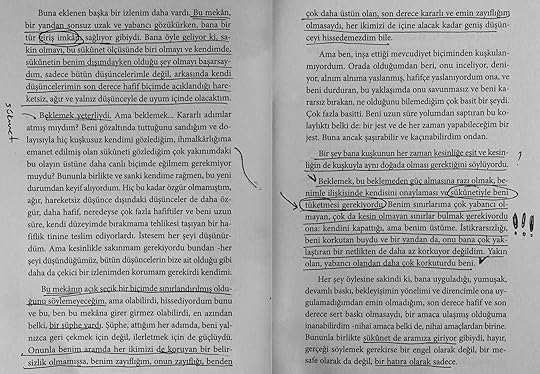
Blanchot bir yandan sanatoryumdaki üç insanı anlatırken bir yandan da temalarını anlatıcı gözünden ele alıyor.
Tüm bunlar oluyorken, veyahut olmuyorken pat diye bir romantizm patlıyor. Baştaki o paradoksal anlatım daha hüzünlü, daha içrek, daha duygulu bir vaziyet alıyor.
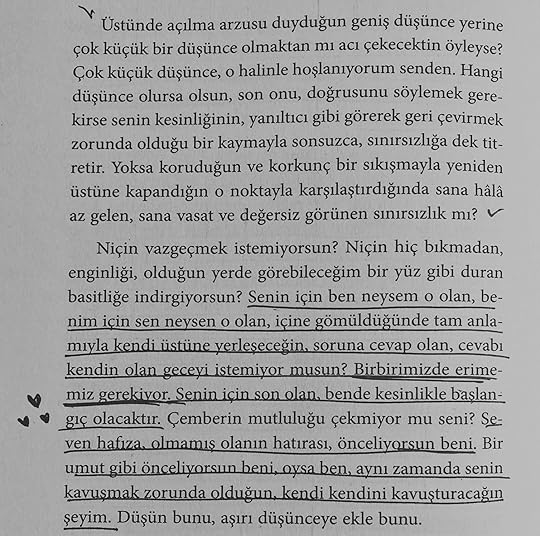
YA DA

Metinde tekrar edip duran bir ‘sivri uç’ var; 13 kez geçiyor, sonunda anladığım sivri uçtan kasıt gökyüzü, ama olmayabilir de, bu imgeyi yazar farklı şeylere de gömmüş olabilir, izlemek gibi, umut gibi. Ayrıca 3 tane de ‘ok’ var ki benzer amaç için kullanılıyor. Sanıyorum.
Böyle metinler okuduğum zaman fransızcam olsun diye heves ediyorum (ama Rabbim sakınsın) çünkü fransızca okumak için var gibi bir dil, biraz da türkçedeki zamir ve çekimlerin cinsiyetsizliği ile ilgili, ki okuduğuma göre zaten syntaxta da oyunlar oynamış Blanchot, bunu çeviride ne kadar başardılar hiçbir fikrim yok (ühü). Örneğin bu dil yetersizliğinden başta son adamdan kasıt anlatıcının kendi ölen varlığını anlatması sandım ben. Değilmiş.
Ama köşeli parantez içinde kişi verilmiş bazen.
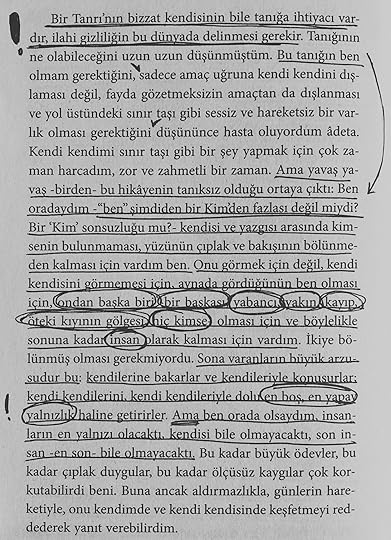
En azından zincirleme isim tamlamaları için okunur, öyle yakışıklı, öyle tatlı, öyle vurucu.
“sonsuz onaylanmanın mutluluğu, “öteki kıyının gölgesi”, “canlı bir varlığa uygun bir yalnızlıkla”,,,
Bu da kalsın burda.
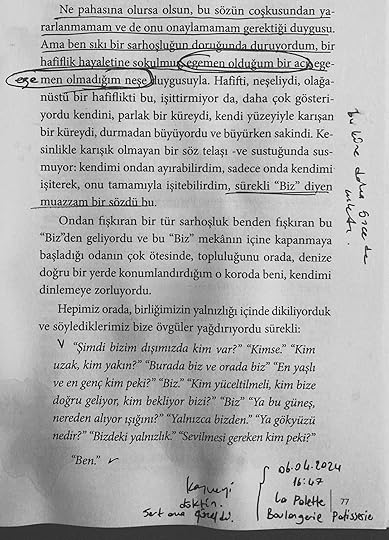
Anladım mı, hayırevet.
Aslında çok kapalı bir anlatımı yok, tabii Blanchot’a ne kadar açık diyebilirseniz.
Yine genel olarak mekan, karakter ve zaman ögeleri belirsizliğini koruyor, okudukça anlam kazanıyor ancak anladığımız da şaibeli.
Anlatıda ana tema “ölüm”; bu ekseriyette sükunet, bekleyiş, acı, ben ve biz kavramları.
3 karakter var; bazen profesör diye hitap edilen ‘son adam’, buranın kraliçesi denilen ‘kadın’, ve ‘anlatıcı’, sadece anlatıcı. Mekan muhtemel bir sanatoryum, dağlarda veya izole bir yerde.
Her zamanki gibi oksimoronlar, menfilikler, zıtlıklar metnin her yerinde; fakat akışkan, içten ve neredeyse melodik. Belirsiz, keskin ve kaygan.
Blanchot bir yandan sanatoryumdaki üç insanı anlatırken bir yandan da temalarını anlatıcı gözünden ele alıyor.
Tüm bunlar oluyorken, veyahut olmuyorken pat diye bir romantizm patlıyor. Baştaki o paradoksal anlatım daha hüzünlü, daha içrek, daha duygulu bir vaziyet alıyor.
YA DA
Metinde tekrar edip duran bir ‘sivri uç’ var; 13 kez geçiyor, sonunda anladığım sivri uçtan kasıt gökyüzü, ama olmayabilir de, bu imgeyi yazar farklı şeylere de gömmüş olabilir, izlemek gibi, umut gibi. Ayrıca 3 tane de ‘ok’ var ki benzer amaç için kullanılıyor. Sanıyorum.
Böyle metinler okuduğum zaman fransızcam olsun diye heves ediyorum (ama Rabbim sakınsın) çünkü fransızca okumak için var gibi bir dil, biraz da türkçedeki zamir ve çekimlerin cinsiyetsizliği ile ilgili, ki okuduğuma göre zaten syntaxta da oyunlar oynamış Blanchot, bunu çeviride ne kadar başardılar hiçbir fikrim yok (ühü). Örneğin bu dil yetersizliğinden başta son adamdan kasıt anlatıcının kendi ölen varlığını anlatması sandım ben. Değilmiş.
Ama köşeli parantez içinde kişi verilmiş bazen.
En azından zincirleme isim tamlamaları için okunur, öyle yakışıklı, öyle tatlı, öyle vurucu.
“sonsuz onaylanmanın mutluluğu, “öteki kıyının gölgesi”, “canlı bir varlığa uygun bir yalnızlıkla”,,,
Bu da kalsın burda.

December 9, 2022
احساس میکردم دارم نامناپذیر بکت رو میخونم.
لذتِ انتظار فراموشی رو نداشت برام.
لذتِ انتظار فراموشی رو نداشت برام.

December 18, 2020
Son İnsan, Felaket Yazısı ve Karanlık Thomas ile birlikte bugüne kadar okuduklarım arasında ilk üçe girdi. Blanchot, Son İnsan'da daha güzel bulanık tümcelerle yazıyor. Joyce'un aksine "okunamaz" metinler ya da Mallarmé gibi müzikal metinler değildir.
Blanchot'nun anlatısı öylesine hafif ki, sürekli bir soru biçiminde gösteriliyor. Blanchot'nun soru sükuneti içerisinde daha çok coşkulanıp eğleniyorum. Bu sükunet farklı bir solukta usandırabilirdi. Oysa Blanchot sır yokluğu içindedir, zaman zaman yinelenen sözleri dile getirmekten başka bir şey yapmadığını anladığını söyler sanki. Gündüz ve gece, gündüz ve gece... Aldatmaz. Gündüz ve geceyle tekrarladığı şey, yaranın geçmesidir ve ağır olacak ama, samimi bir itiraftır.
Son olarak, diğer Türkçe'ye çevrilen kitaplarında çeviri sorunuyla fazlaca karşılaşıyordum, Son İnsan hem çeviri konusunda içimi rahatlattı hem de Karanlık Thomas'ta bahsettiği derin okura (metin karşısında erkek peygamberdevesinin dişisi tarafından öldürülüp yutulduğu andaki içinde bulunduğu durum) diyalogvari bir alan açtı. Daha önce açığa çıkmamış hiçbir şeyini açığa çıkarmadı, Blanchot, tastamam kendisi.
Kitap bir yazma hüznüyle bitiyor: Daha sonra o nasıl sakinleştiğini sordu. Kendi kendine konuşamazdı bunu. Sadece sözcüklerle ilişki içinde neşeli hissediyordu kendisini: "Daha sonra o..."
Blanchot'nun anlatısı öylesine hafif ki, sürekli bir soru biçiminde gösteriliyor. Blanchot'nun soru sükuneti içerisinde daha çok coşkulanıp eğleniyorum. Bu sükunet farklı bir solukta usandırabilirdi. Oysa Blanchot sır yokluğu içindedir, zaman zaman yinelenen sözleri dile getirmekten başka bir şey yapmadığını anladığını söyler sanki. Gündüz ve gece, gündüz ve gece... Aldatmaz. Gündüz ve geceyle tekrarladığı şey, yaranın geçmesidir ve ağır olacak ama, samimi bir itiraftır.
Son olarak, diğer Türkçe'ye çevrilen kitaplarında çeviri sorunuyla fazlaca karşılaşıyordum, Son İnsan hem çeviri konusunda içimi rahatlattı hem de Karanlık Thomas'ta bahsettiği derin okura (metin karşısında erkek peygamberdevesinin dişisi tarafından öldürülüp yutulduğu andaki içinde bulunduğu durum) diyalogvari bir alan açtı. Daha önce açığa çıkmamış hiçbir şeyini açığa çıkarmadı, Blanchot, tastamam kendisi.
Kitap bir yazma hüznüyle bitiyor: Daha sonra o nasıl sakinleştiğini sordu. Kendi kendine konuşamazdı bunu. Sadece sözcüklerle ilişki içinde neşeli hissediyordu kendisini: "Daha sonra o..."

Read
December 14, 2015(Blanchot is undeniably intriguing, but whenever I try to read him it always feels like Beckett without the jokes. I once described him as such to someone I'd just met, a professor who loved Blanchot. She smiled and seemed to think I meant this as a compliment, but actually not at all. Beckett without the jokes would hardly be worth reading.)
March 19, 2016
the best part was when she put her legs in water.
January 30, 2017
Un libro que es más que un indicio de la naturaleza del pensamiento, una exploración a la presencia del hombre ante su desaparición.

December 20, 2018
Whenever you read any Blanchot's novel, be vigilant that your 'rewind' button is always 'on' ...

Read
March 21, 2022reminding me of my high-school-once-had eagerness to express something but avoiding anyone from getting even just a slight piece of IT when reading

September 21, 2018
Maurice Blanchot, on his birthday September 22
Maurice Blanchot is a matador, wielding the nonteleological sword of Nietzsche against the atavistic barbarism and monstrous brutalitiy of history and of authoritarian tyrannies, his words swirling like a cloak of diversion and concealment. And it is as a performance that I esteem his works classics of world literature; with dazzling wit, nimbleness, and grace he has battled a thing of darkness and terrible force, in a dance of human meaning and value against meaninglessness and death, a jester riding a tyrannical beast, a song hurled into the empty and echoing canyons of night. This I name beautiful, this defiance and fearless refusal to abandon ourselves.
For is this not the beauty of men; when authority threatens us with dehumanization and the capture of ownership of our identity to resist and yield not, when the gates of the future open and new possibilities of being human are created to adapt and embrace change with the will to become, and to bear the torch of Liberty so long as there are hands to pass it to?
As a philosopher he reinterpreted Bataille, Levinas, Hegel, Nietzsche, and Heidegger; as a novelist and literary theorist he reimagined Duras, Kafka, Rilke, Sade, Mallarmé, and Hölderlin; and then leaped beyond them all, into the unknown like the Spear of Archytas, and inspired Barthes, Foucault, and Derrida in an ideological revolution which recreated our civilization.
The Infinite Conversation, which includes his invention and championing of a neutral gender and the reshaping of the whole French language, together with The Space of Literaure, are foundational critical and philosophical works and also among the most delightful of his books to read, as they discuss literature; also the exquisite short essay Literature and the Right to Death. The Writing of the Disaster, essays grappling with the Holocaust as a sign and metaphor, is his third major work and represnts a summa philosophica of his ideas.
The Unavowable Community explores the possibilities of authentic community based on the work of his collaborator George Bataille; the Community of Lovers follows this inquiry by the light of Marguerite Duras' The Malady of Death to the ramparts of the May 1968 protests in Paris.
Of his amazing novels The Last Man serves as a great introduction; the Death Sentence, and The Madness of the Day complete the set .
Maurice Blanchot also wrote many unclassifiable works, demonstrations of his theories, including a compendium of elegaic fragments titled The Step Not Beyond, written as if on Nietzsche's "tombs and sepulchres of God."
Maurice Blanchot is a matador, wielding the nonteleological sword of Nietzsche against the atavistic barbarism and monstrous brutalitiy of history and of authoritarian tyrannies, his words swirling like a cloak of diversion and concealment. And it is as a performance that I esteem his works classics of world literature; with dazzling wit, nimbleness, and grace he has battled a thing of darkness and terrible force, in a dance of human meaning and value against meaninglessness and death, a jester riding a tyrannical beast, a song hurled into the empty and echoing canyons of night. This I name beautiful, this defiance and fearless refusal to abandon ourselves.
For is this not the beauty of men; when authority threatens us with dehumanization and the capture of ownership of our identity to resist and yield not, when the gates of the future open and new possibilities of being human are created to adapt and embrace change with the will to become, and to bear the torch of Liberty so long as there are hands to pass it to?
As a philosopher he reinterpreted Bataille, Levinas, Hegel, Nietzsche, and Heidegger; as a novelist and literary theorist he reimagined Duras, Kafka, Rilke, Sade, Mallarmé, and Hölderlin; and then leaped beyond them all, into the unknown like the Spear of Archytas, and inspired Barthes, Foucault, and Derrida in an ideological revolution which recreated our civilization.
The Infinite Conversation, which includes his invention and championing of a neutral gender and the reshaping of the whole French language, together with The Space of Literaure, are foundational critical and philosophical works and also among the most delightful of his books to read, as they discuss literature; also the exquisite short essay Literature and the Right to Death. The Writing of the Disaster, essays grappling with the Holocaust as a sign and metaphor, is his third major work and represnts a summa philosophica of his ideas.
The Unavowable Community explores the possibilities of authentic community based on the work of his collaborator George Bataille; the Community of Lovers follows this inquiry by the light of Marguerite Duras' The Malady of Death to the ramparts of the May 1968 protests in Paris.
Of his amazing novels The Last Man serves as a great introduction; the Death Sentence, and The Madness of the Day complete the set .
Maurice Blanchot also wrote many unclassifiable works, demonstrations of his theories, including a compendium of elegaic fragments titled The Step Not Beyond, written as if on Nietzsche's "tombs and sepulchres of God."

January 7, 2023
Where to start describing this book now? I didn't think so. There are such details that it is very difficult to go out of the book and return to the book without telling about Blanchot, processing his language and thinking structure. The review article will also get very long, but I would like to talk from the middle of the book, write directly focused on the topic, and tell about this beautiful book without stifling the review.
In this book, Blanchot deals with emptiness and nothingness, both through the subject and the text. The same image of emptiness in two separate areas... This is so confusing that you lose the concept of time-melan in Blanchot readings. Anyway, this is exactly what the author wanted. Because Blanchot doesn't just want to make you read a book, he wants you to think about the philosophical problems of your existence, to be able to realize your place in the chaos of space when life and nature are in it. This is not the advance judgment of "we are nothing, this world is a test master". Questioning it is another thing. The author has also torn up his text for this interrogation. The book, which is thought to be a narrative, is actually nothing more than texts divided into parts. In this book, which has been created in this way, he wants to see the deletion* indicator instead of connecting between the topics. Dec. He has already taken his first step with the feeling of time and space emptiness created by textual spaces in the reader. The second way is through the subject space. The book begins with the relationship between three people (the narrator, a man and a woman) on the sea-Decked slope of the mountain. Before we can learn much detail about the characters, we move on to the second part, and the subject-characters become completely abstract. Finally, now the last man disappears. An amazing space-time narrative is processed with the last man who was skillfully destroyed in the subject, philosophical interrogations that do not leave us throughout the book make us realize the thematic emptiness into which we are being drawn. Just like the disappearance of our existence in crowds. The themes of calmness and calmness, which he mainly deals with in the second part, are also related to the perception of space-time. He has handled the conflict between our self's perception of time and the world's perception of time Decisively in this way.
An extremely interesting and beautiful book. How to bring out a literary product with an intense philosophical content? there may be an answer to his question. I highly recommend it to the interested person.
In this book, Blanchot deals with emptiness and nothingness, both through the subject and the text. The same image of emptiness in two separate areas... This is so confusing that you lose the concept of time-melan in Blanchot readings. Anyway, this is exactly what the author wanted. Because Blanchot doesn't just want to make you read a book, he wants you to think about the philosophical problems of your existence, to be able to realize your place in the chaos of space when life and nature are in it. This is not the advance judgment of "we are nothing, this world is a test master". Questioning it is another thing. The author has also torn up his text for this interrogation. The book, which is thought to be a narrative, is actually nothing more than texts divided into parts. In this book, which has been created in this way, he wants to see the deletion* indicator instead of connecting between the topics. Dec. He has already taken his first step with the feeling of time and space emptiness created by textual spaces in the reader. The second way is through the subject space. The book begins with the relationship between three people (the narrator, a man and a woman) on the sea-Decked slope of the mountain. Before we can learn much detail about the characters, we move on to the second part, and the subject-characters become completely abstract. Finally, now the last man disappears. An amazing space-time narrative is processed with the last man who was skillfully destroyed in the subject, philosophical interrogations that do not leave us throughout the book make us realize the thematic emptiness into which we are being drawn. Just like the disappearance of our existence in crowds. The themes of calmness and calmness, which he mainly deals with in the second part, are also related to the perception of space-time. He has handled the conflict between our self's perception of time and the world's perception of time Decisively in this way.
An extremely interesting and beautiful book. How to bring out a literary product with an intense philosophical content? there may be an answer to his question. I highly recommend it to the interested person.
Read
September 10, 2024quotes
“(What would happen to a man who came up against a death too strong for him? Every man who escapes violent death wears, for an instant, the glimmer of that new dimension.)”
“We wouldn't tolerate the sky being a single point. This is probably the source of the thought that has lain down on me, that wraps me around and protects me like a veil:
‘But if it weren't a point, if it weren't as infinitesimal as the sharpest needle point, how could I bear it? Do you mean the sky sinks into us like the point of a needle?’
‘That's it, yes, that's right.’
This point would therefore be what pierces the most distant of my memories.”
“Thought which allows me to be without suffering, thought in which I suffer so very far away from myself, to the point where I don't exist, you who have a torment in the center of your transparency that you hide from us: don't think I'm indifferent to your fate, I pay more attention to it than I should. But consider how vain, light, insignificant, truthless we are already, and always unsteady, always saying what never stops being said. Day and night, day and night. We're over there, and the absence of secrecy is our condition. Even where impenetrability reigns, all the more impenetrable as it draws back moment by moment under pressure from you, nothing is secret, nothing is revealed that wasn't revealed in the beginning. And yet, with you, I would like to talk in secret, in secret in relation to everyone, in secret in relation to you. It is like a new desire. It is in me like a future taking me by surprise.
Don't hold it against me, and don't think I want to exert a power of indiscretion and influence over you. It is understood that between us, every answer is excluded. I wouldn't like you to be able to answer me, and I'm happy with your silence, which doesn't answer, which doesn't even draw me into silence. Answering belongs to a region that the two of us must have left a very long time ago. How could I question you, if every answer hadn't already dissipated?
It's true that I would like to come near, but without wanting to, and does that mean near you? To look for you in you? To keep watch in your place?”
“(What would happen to a man who came up against a death too strong for him? Every man who escapes violent death wears, for an instant, the glimmer of that new dimension.)”
“We wouldn't tolerate the sky being a single point. This is probably the source of the thought that has lain down on me, that wraps me around and protects me like a veil:
‘But if it weren't a point, if it weren't as infinitesimal as the sharpest needle point, how could I bear it? Do you mean the sky sinks into us like the point of a needle?’
‘That's it, yes, that's right.’
This point would therefore be what pierces the most distant of my memories.”
“Thought which allows me to be without suffering, thought in which I suffer so very far away from myself, to the point where I don't exist, you who have a torment in the center of your transparency that you hide from us: don't think I'm indifferent to your fate, I pay more attention to it than I should. But consider how vain, light, insignificant, truthless we are already, and always unsteady, always saying what never stops being said. Day and night, day and night. We're over there, and the absence of secrecy is our condition. Even where impenetrability reigns, all the more impenetrable as it draws back moment by moment under pressure from you, nothing is secret, nothing is revealed that wasn't revealed in the beginning. And yet, with you, I would like to talk in secret, in secret in relation to everyone, in secret in relation to you. It is like a new desire. It is in me like a future taking me by surprise.
Don't hold it against me, and don't think I want to exert a power of indiscretion and influence over you. It is understood that between us, every answer is excluded. I wouldn't like you to be able to answer me, and I'm happy with your silence, which doesn't answer, which doesn't even draw me into silence. Answering belongs to a region that the two of us must have left a very long time ago. How could I question you, if every answer hadn't already dissipated?
It's true that I would like to come near, but without wanting to, and does that mean near you? To look for you in you? To keep watch in your place?”

August 4, 2025
"In the calm persistence of what disappears, were continuing to turn me into a memory and search for what could recall me to you, great memory in which we are both held fast, face to face, wrapped in the lament I hear: Eternal, eternal; space of cold night into which we have drawn me without being there and in which I affirm you without seeing you, knowing that you are not there, not knowing it, knowing it."
A distance that was both fragmented and compact: something terrible without terror, a cold and dry animation, a rarefied, entangled, and mobile life which was perhaps everywhere, as though in that place separation itself had assumed life and force, by obliging us to see ourselves only as distant and already separated from ourselves. The cries, there, the aridity both of the silence and of words, the relentless moans one heard without taking any notice, moans that did not want to be heard. This grew without increasing a creature whose life seemed to consist in expanding by becoming rarefied, in developing by becoming exhausted, in invisibly breaking off relations by leaving them as they were. And the feeling that we were deceiving ourselves by vainly misleading ourselves, with a falseness that was not real falseness, as though we only wore the aspect of what we seemed to be. A movement of separation, but also of attraction, which seemed to cause faces to become attractive, attracted to one another as though to form, together, the future of a completely different figure, necessary and yet impossible to represent.
A distance that was both fragmented and compact: something terrible without terror, a cold and dry animation, a rarefied, entangled, and mobile life which was perhaps everywhere, as though in that place separation itself had assumed life and force, by obliging us to see ourselves only as distant and already separated from ourselves. The cries, there, the aridity both of the silence and of words, the relentless moans one heard without taking any notice, moans that did not want to be heard. This grew without increasing a creature whose life seemed to consist in expanding by becoming rarefied, in developing by becoming exhausted, in invisibly breaking off relations by leaving them as they were. And the feeling that we were deceiving ourselves by vainly misleading ourselves, with a falseness that was not real falseness, as though we only wore the aspect of what we seemed to be. A movement of separation, but also of attraction, which seemed to cause faces to become attractive, attracted to one another as though to form, together, the future of a completely different figure, necessary and yet impossible to represent.

February 9, 2023
Quite ambiguous, but beautifully rendered and translated by Lydia Davis, whose own style somehow seems to shine through in her translation. I took this to be a loose meditation on Alzheimer’s in an elderly man (who I believe narrates Part 2) and the resulting ego death that occurs in both his female caretaker and queer lover, the narrator (who narrates Part 1) — though the Goodreads info says that the narrator was in love with the woman in the story, so my interpretation remains completely up for debate. I read this for a graduate class called “The Third Person,” and the question of whose perspective we are reading from is certainly a very interesting and uncertain matter here. All I know is I’m definitely looking forward to class discussion today, because I’d love some elucidation here! Though perhaps a lack of elucidation is the point. We’ll see.
December 6, 2022
Ruh hali tevekkeli bir insan olarak bu kitabı okumamalıydım. En azından şu dönemde okumamalıydım. O kadar zorlandım ki ne okuyorum, ne anlatıyor bu kitap demekten odaklanamadım bir türlü. Aslında içerisinde derinlikli cümleler olan kitapları hep sevmişimdir ama sanırım çok yanlış bir zamana denk geldi. Her okuduğum kitapta illa bir olay örgüsü olsun diye bir takıntım yok ama sanırım fazla yüklendim kendime anlamak adına. Ömür olursa bir kez daha üstünden geçmek istiyorum.

January 27, 2026
Okurken birçok şeyi düşünme fırsatım oldu sonluk, yalnızlık, sükunet, yokluk ve ölüm. Her başlıktan bir parçamı düşünerek okudum. Önemli olanın sadece insanlığın varoluşsal iyiliği üzerine olduğunu fark ettim. Kaygılar, beklentiler, gidenler, gelenler hayatın oluşturduğu bir düzen önemli olanın kalbinin iyi olabilmesi için verilen mücadele olduğunu anladım. İçime birçok şeyi işledi üzüldüm çoğu zaman duyguların benzerlikleri yüzünden.
Displaying 1 - 30 of 38 reviews