''Perdido,'' a fragment from a never completed longer work, is a rare and unexpected gift for Peter Straub's legion of fans. Even in this fragmentary form, it offers the sort of vivid, unexpected pleasures that only the finest imaginative fiction can provide.
On one level, ''Perdido'' tells the story of a troubled family: a discontented husband and wife and the teenaged son who was--but is no longer--a musical prodigy. On another, it is the story of the isolated Norwegian resort known as Perdido, and of the impossible, dreamlike things that happen there. Perdido is a place where the rules of ordinary life no longer apply, where reality is malleable and infinitely strange. It is a place where ''you get what you didn't know you wanted'' and where lives are altered forever. For the unhappy couple invited to attend--and for the teenaged son awaiting their return--it is the place where a marriage ends and a life filled with alternate possibilities begins. Mysterious, evocative, and always superbly written, ''Perdido'' offers readers something genuinely special: a visit to an imaginary landscape that only Peter Straub could have created.
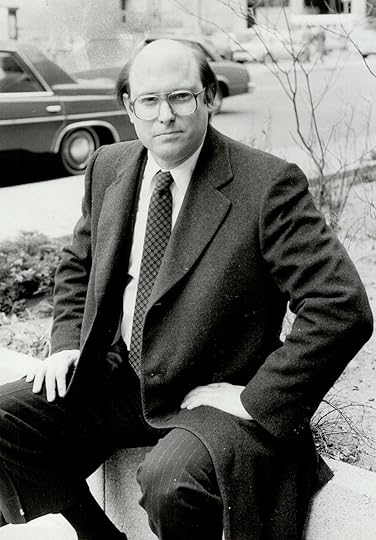
Peter Straub was born in Milwaukee, Wisconsin, the son of Gordon Anthony Straub and Elvena (Nilsestuen) Straub.
Straub read voraciously from an early age, but his literary interests did not please his parents; his father hoped that he would grow up to be a professional athlete, while his mother wanted him to be a Lutheran minister. He attended Milwaukee Country Day School on a scholarship, and, during his time there, began writing.
Straub earned an honors BA in English at the University of Wisconsin–Madison in 1965, and an MA at Columbia University a year later. He briefly taught English at Milwaukee Country Day, then moved to Dublin, Ireland, in 1969 to work on a PhD, and to start writing professionally
After mixed success with two attempts at literary mainstream novels in the mid-1970s ("Marriages" and "Under Venus"), Straub dabbled in the supernatural for the first time with "Julia" (1975). He then wrote "If You Could See Me Now" (1977), and came to widespread public attention with his fifth novel, "Ghost Story" (1979), which was a critical success and was later adapted into a 1981 film. Several horror novels followed, with growing success, including "The Talisman" and "Black House", two fantasy-horror collaborations with Straub's long-time friend and fellow author Stephen King.
In addition to his many novels, he published several works of poetry during his lifetime.
In 1966, Straub married Susan Bitker.They had two children; their daughter, Emma Straub, is also a novelist. The family lived in Dublin from 1969 to 1972, in London from 1972 to 1979, and in the New York City area from 1979 onwards.
Straub died on September 4, 2022, aged 79, from complications of a broken hip. At the time of his death, he and his wife lived in Brooklyn (New York City).
"Where's our darn victim? You can't have a murder mystery without a victim."
Initial Thoughts
I'm a self-confessed fan of Peter Straub and have been on a mission for over a year to read all of his suspense fiction. It seems fitting to finish with Perdido: a fragment, with it being an unfinished piece that was released as a taster for those who just couldn't wait for the release of the completed article. But after the authors sad passing in September 2022 from a long, ongoing illness it's going to remain ever so unfinished.
So with this only being a sample to a full novel its important to warn any would be reader before they invest their hard earned cash. For me personally, I couldn't resist the opportunity to see what possibly could have been. Nevertheless, it makes it difficult to write a meaningful review on such a short and incomplete piece.
The great Peter Straub
The Story
Straub explains in the afterword how the idea for the story came to him in a surreal dream where he was following a friend around a swanky hotel. A friend he just couldn't catch up with, always out of reach, loosing sight of her around each corner.
It centres around the dysfunctional Carter family and starts with Mr and Mrs taking a trip to the exclusive Norwegian mountain resort of Perdido. We find out that the holiday destination was recommended by their mysterious friend Silsbee and there's a lot of intrigue surrounding it and what actually goes on there. In fact im now planning that Norwegian cruise I'd always fancied.
But then, as he usually does, the author throws a curveball our way and introduces a completely different story in the second chapter with a new character, a composer in his late thirties. But he soon begins to recall past memories and links become apparent. As always with Straub memory looks to be a key component in this story but that's all I'm going to give you as anymore and I'll completely ruin the experience for you.
The Writing
Y'all know my opinion on Straub's writing by now. With me reviewing nearly all of his books. But in case you need a reminder, it is sumptuous. Some of the best writing you'll find in any genre, not just suspense fiction. If he were an artist it would be da Vinci with such careful and beautiful prose.
The storyline here gets progressively more complicated and Straub talks about this in the afterword where he explains it was originally started off as a novella that just refused to finish. It got to the point where he had to put the manuscript to one side in favour of a more pressing piece of work. Hence why he decided to release this one unfinished.
But even as it is, its disorientating, creepy and interlaced with an unsettling vibe that adds to a mounting sense of dread. It's reminiscent in a way to Charles Dickens’ ‘The Mystery Of Edwin Drood’ and it's funny because he's an author I often compare Straub with in terms of his use of the English language. The way he illustrates the setting of Perdido is fantastic with a sense of ascetic beauty while containing an element that I sensed was just not right.
"everything from here on out will sound like a fever dream. It probably will anyhow, no matter what I do."
The Characters
This author has a talent for creating complex individuals with a range of emotions and all kinds of baggage. From his first suspense novel, Julia, he demonstrated the ability to delve in to a characters psyche and explore the potential for trauma lurking within the subconscious. And it's certainly evident in the early pages of Perdido as he tells the story of the Carvers, a fractured family on the verge of breaking up. Each one was brought quickly to life in a very realistic and intriguing way.
But the one that caught my attention was the mysterious figure of Silsbee. He was an eccentric figure, prone to fancy when describing the destination of Perdido and had me in two minds over the truthfulness of his claims. The only problem was it left me wanting more from them as it was barely an introduction.
"Maybe I should go to Perdido," I said.
"Sorry, kid," Silsbee said. "They wouldn't let you in. Anyhow, you have your own Perdido, so to speak, you just don't know it yet."
Final Thoughts
So the main thing you need to know is that when the author calls this story a fragment, it really is and if you're looking for a complete story then you're definitely going to be disappointed. For a hardcore Straub fan like myself it was essential reading as it was a glimpse at would could have been. So for any one else who shares a love for this author I would certainly recommend it.
It's a great shame that Straub had to abandon this due to the pressure of completing a more pressing priority. What I will say is that a lot of us know this author for his work with Stephen King with The Talisman and Black House. The pair were great friends and is it too much to ask for King to take this one and finish it off? A bit like his wife Tabitha King did for their good friend Michael McDowell completing Candles Burning. Who knows? We can dream, we can hope...
Five balls of flaming gasses for what this could’ve been.
Damn. If there was ever a novel I wanted that I will never get, it’s this one. This little fragment is just overflowing with all the Straubian mystery and strangeness that his fans love him for; a peek into this big world, with big mysteries, he created that we will never get answers to.
The first and likely last time I will ever rate a small piece of a would-be novel five stars, but in 60 (small) pages, Straub sets up a story, with living, breathing characters, a deeply mysterious location, with a mystery at its core that may be unknowable. 60 pages of brilliance that I will without a doubt be thinking of from time.
One could dream that an outline of this novel was written, and perhaps the machinery of Stephen King’s brain could finish it, but I doubt it. I can’t help but wonder if the mysteries of Perdido may have been too big for even Straub himself to wrangle answers for.
four stars for the potential, i mean it is Peter Straub... and yeah, his recent works have started to get really odd in that "what the absolute fuck is he writing about here?!?!?" sort of way, his body of work is spectacular... i would have loved for him to have finished this, as the postscripty thing really makes it sound amazing... alas, it was just too short, but unsettling because you wondered "where was this going?"...
Three stars, only because it truly is just a piece of something else and has no real ending.
Straubsessives, though, will dig it. It's got that dreadful flavor that came through so awesomely in his brilliant recent work, 'The Ballad of Ballard and Sandrine'.
Everybody else: read 'Ghost Story' or 'Shadowland' and thank me later. Or, if you want to try his shorter works, '5 Stories' or 'Houses Without Doors'.
How does one rate a fragment? By its own merits? By how much one would be interested in reading the larger work? Or by how likely it is to ever be completed (spoiler: not very, according to the author's note)?
Perdido is a piece published four years ago (though copyrighted eighteen years ago) that tells an intriguing story of a mysterious hotel, which serves as a backdrop for a troubled couple who visit there, and their son, who stays at home but has to endure the fallout of his parents having been to the hotel. It has the back-and-forth nature between narratives that Straub likes so much, and it has the easy literary style readers of Straub will recognize, but it ultimately proves to be frustrating because it is nothing but a fragment.
There's no conclusion here, though it introduces a good conflict between the four principle characters. Neither is there a lot of development, though the characters are anything but flat. For something subtitled "A Fragment", I don't know why those characteristics of the book frustrate me, but what on earth is the point of publishing this if it's not complete? Were readers begging for whatever there was of this story, like people did for The Plant by Stephen King, or is it just a piece published to fulfill an outstanding contract?
(And speaking of Stephen King, he makes a brief appearance in the fragment, which was ... well, odd. I think it was supposed to be odd, to underline the otherworldliness of Perdido, but it was a strange inclusion, especially considering the friendship and working relationship between King and Straub.)
Readers of this piece (I hesitate to call it a story) will get what they expect, and what they deserve for picking up something called "A Fragment". Straub fans will enjoy what tidbit we get from the book, and be frustrated that this is all we get. Anyone else is just going to hate it for being incomplete.
Imagine you find the remains of a shattered window on the sidewalk outside your door. One shard in particular intrigues you, a large trapezoid. It draws your eye as would a strange precious jewel. Pick it up easy, because it’s sharp. Ah, there’s your reflection, but no details. It’s not a mirror backed with reflective material, just a piece of broken glass. You should be able to see right through, say to the sidewalk you stand on. Your hand starts to tremble. Because instead of sidewalk, you see another world bound by that fragment, neither a view of the world in front of nor a reflection of the world behind you. The fragment is a portal, like the broken lens of a camera staring into part of another world. You shudder with fear and sorrow at the wrongness of it.
This is obviously a part of a bigger, not yet published, novel and thus I must rate it according to my interest of ever, if published, I would read the whole book. Based on that I must say, the premise was not interesting enough for me and like Pete Straub's "Shadowland" I found myself confused and completely disconnected with the characters. It was boring and only started to pick up just on the last part, which is unfortunate since this book is so small.
It was good. The problem with this book is that there is more of the story to be told. It is the fragment of a longer work of fiction. Straub first published the fragment in 2001 as an excerpt of a novel he was working on. Unfortunately, it has been 15 years and we have yet to see this novel come to be. The worse part is, I don't believe that we will ever see the finished project.
For 72 pages, I quite liked the story. Frustrated that it hasn't been finished, but it was enormously compelling and imaginative - especially near the end. Would love to read the finished work.
I enjoyed this rather short story but wish there had been more. I want to be able to know what happened to me he cat, why his wife left him but also want to know more of Silsbee