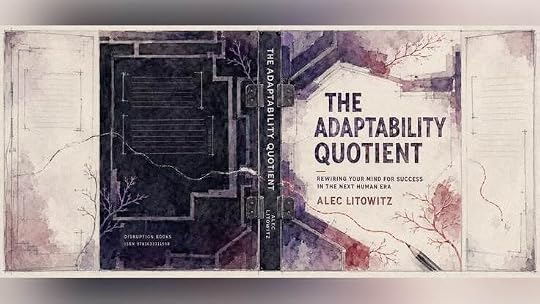
Groundbreaking investor and global enterprise builder Alec Litowitz shows how to move from “making the right decision” to “making decisions right” in The Adaptability Quotient, a guide to thinking and acting under uncertainty.
Over decades of success across volatile markets, creating cultures and businesses that innovate at scale and endure, Litowitz arrived at a crucial insight. What separates progress from paralysis is not foresight, but adaptability.
In an era of uncertainty, decision-making and problem-solving require developing a high adaptability quotient or AQ—the ability to think clearly, act decisively, and pivot when the path ahead isn’t clear. And unlike intellect or emotional intelligence, AQ is not fixed. It can be learned.
In The Adaptability Quotient, Litowitz offers a three-part system that trains readers in:
-Metacognition – How to interrogate your assumptions and decision process -Simulation – How to absorb information and model complex systems effectively -Experimentation – How to make decisions that maximize learning and minimize downside -Drawing from his experience—as well as insights from business, technology, psychology, and cognitive science—Litowitz shows how successful people and organizations move forward when navigating change.
For readers of The Scout Mindset, Thinking in Systems, and Thinking, Fast and Slow, The Adaptability Quotient shifts the focus from understanding how we think to improving how we act. As artificial intelligence, media, and scientific advances reshape the cognitive landscape, adaptability becomes the essential discipline for reclaiming human agency.
For leaders and decision-makers who want more than theory in a world where the old playbooks no longer apply, Alec Litowitz shares an actionable framework for raising and realizing your adaptability quotient.
A Quotient Walks Into a Lab Coat and Forgets to Bring the Measurements Alec Litowitz overstates the science of “The Adaptability Quotient” but earns the usefulness of its method for changing course without surrendering command. By Demetris Papadimitropoulos | August 24th, 2026
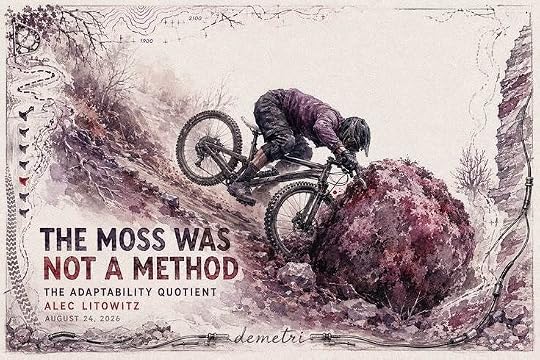
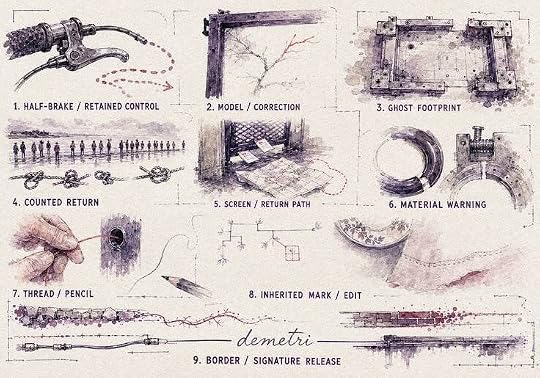
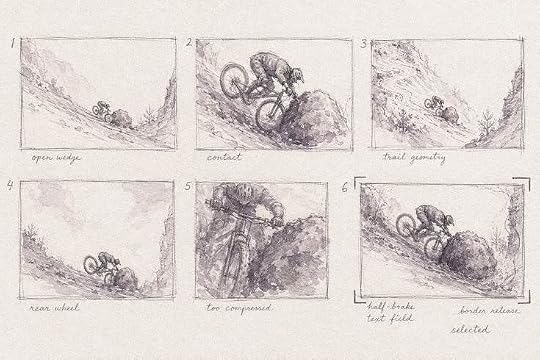
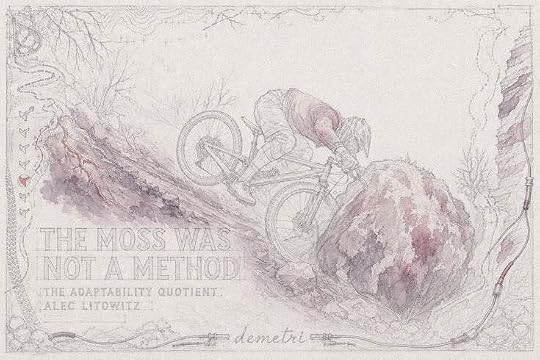
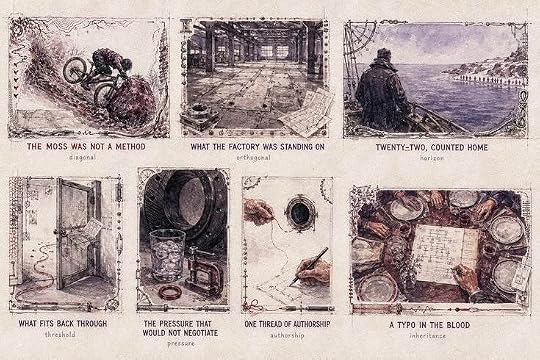
“The Moss Was Not a Method” — Between instinct and deliberation, the half-applied brake becomes the book’s governing image: a lucky landing that cannot be mistaken for a method.
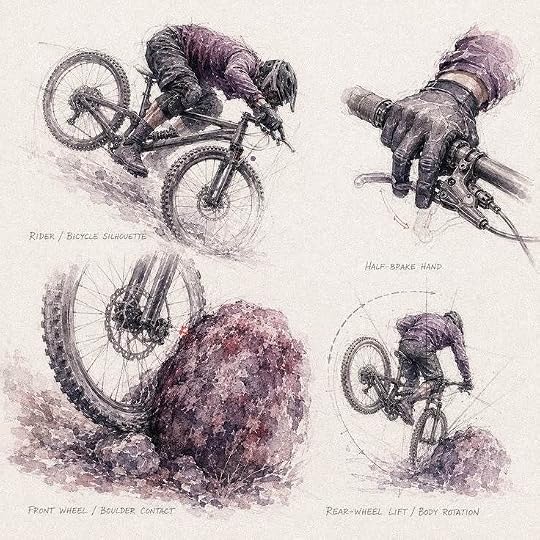
During a seven-day mountain-bike race across the Pyrenees, Alec Litowitz sees a jump he cannot read. Instinct says commit; deliberation, dismount. He splits the difference, which on a cliffside is less compromise than physics. He feathers the brake, commits late, sails over the handlebars, and drives his head into a boulder. A patch of moss saves him. The scene, from “The Adaptability Quotient,” is almost too tidy as a parable, except that bruises have a rude way of authenticating abstractions. Litowitz’s error was not choosing the wrong mode of thought. It was failing to decide which mind was in command.
Everything returns to that half-brake. Litowitz proposes the Adaptability Quotient, or AQ, as a third capacity beside analytical and emotional intelligence: the ability to revise a model, a goal, or one’s conduct when the facts change. Slowness is the advertised problem. Surrender is the more interesting one. Reflex, hierarchy, fashion, or an increasingly fluent machine may choose not only the answer but the question. To adapt without capitulating, a person must still name the goal and decide what would count as evidence. Some losses have to remain unacceptable. Otherwise adaptation shrinks into compliance with better branding.
Measured against the scientific promise of its title, “The Adaptability Quotient” comes up short. The title offers an instrument; the manuscript supplies a practice. No validated scale appears. Litowitz does not say how AQ would be scored or show that it predicts anything beyond the traits already named. Nor does he explain why revising belief, altering conduct, and redefining purpose should count as a single capacity. The book improves when AQ is understood as a discipline rather than a score. Its subject then is how to change one’s mind while retaining the right to decide what the change is for.
Easy on the page, harder at the moment of consequence, the method runs through three phases. Metacognition separates what belongs to the world from what the decider has brought into it: an assumption, a loyalty, the relief of having settled too soon. Simulation reopens the field before certainty closes it. Experimentation makes one possibility answer to consequences. The distinction underneath the terminology matters more. A lucky choice can land correctly. A usable process has to do so more than once.
The first phase joins self-observation, beginner’s mind, and what Litowitz calls telescoping: movement between a detail and the larger pattern that gives it consequence. The second begins with maximum entropy. Empty the puzzle pieces onto the table, name what is missing, and resist making the picture pretty before it is true. Expertise should supply evidence rather than identity. Intuition may testify but does not receive a vote by divine right. Litowitz wants a strong opinion weakly held, firm enough to guide action and loose enough to survive contact with fact.
Reality arrives in the third phase. A well-designed experiment changes one thing clearly enough that the result can answer back. It leaves enough money or time for another attempt and does not ruin the undertaking it was meant to improve. Failure is not automatically educational; only interpreted failure pays tuition. Then Phase III folds back into Phase II. Results return as observations, stripped of their first explanation and considered again. The ladder quietly curls into a loop.
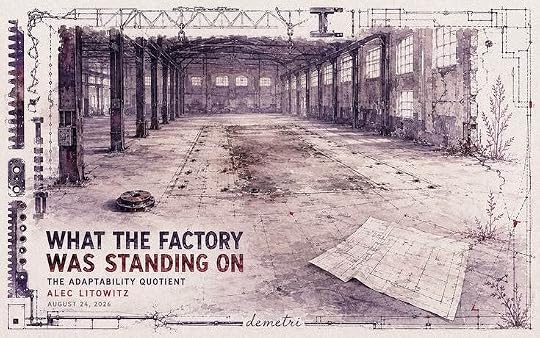
“What the Factory Was Standing On” — In the emptied Xi’an factory, the absent press leaves a ghost on the floor while the property lines beneath it reveal how adaptability begins by noticing what the old model failed to value.
In the later chapters, the private loop becomes organizational circuitry. Leaders must set a shared aim, state the constraints, and create conditions in which dissent can reach them as more than a career-safe murmur. Litowitz then moves to artificial intelligence, gene editing, and the prospect of human beings shifting from reading an inherited future to writing portions of it. The change in scale is abrupt. A habit of checking one’s own thought is suddenly being asked to carry an organization, an algorithmic tool, even inherited biology. The same portability that makes AQ useful also lets it claim new territory before its evidence has caught up. The cost of a bad model is no longer private; it can set policy, allocate capital, or silence an engineer.
Prose matters because a method carrying technical language can easily sound like an appliance manual. Litowitz has the necessary ear. Most sentences move through two or three balanced clauses, then stop short with a fragment or question. One hears a practiced speaker controlling the pace. The cadence helps the method stick. It can also make discovery feel scheduled: sometimes the prose switches on the spotlight before the reader has found the takeaway. Litowitz assumes his reader can follow him, a courtesy many books in this category mistake for a risk. The pages work unusually well aloud.
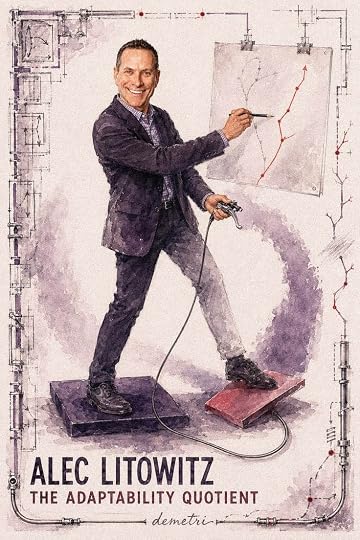
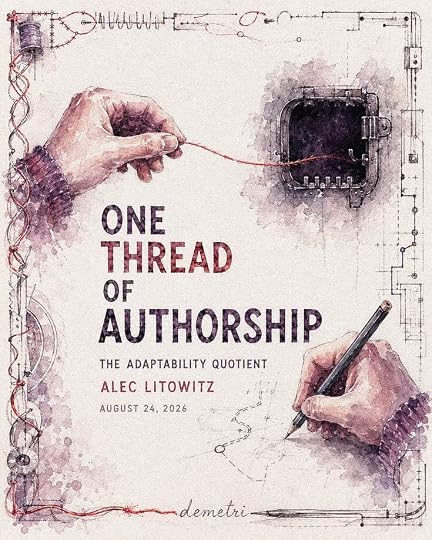
Alec Litowitz balances between an inherited model and a revisable one, keeping one hand on the brake and the other on the pencil—the book’s argument made bodily.
Among the book’s images, Max Q does the most intellectual labor. The point of maximum dynamic pressure during a rocket’s ascent gives analytical, emotional, and adaptive intelligence a felt strain: no one capacity can bear the conditions alone. Maps and territory explain how a model can be useful while remaining incomplete. Binocular vision earns its place too, turning disagreement into depth. The loop is simpler: learning returns. Yet the metaphors sometimes jostle. A decision becomes a rocket, a branching tree, a ship, an operating system, and a casino before it has finished being a choice. Occasionally, the next metaphor arrives where the next inference should.
Pattern supplies the momentum: anecdote, distinction, examples from distant fields, direct application, field guide. Once the pattern is visible, suspense shifts from what the next story will prove to how far Litowitz can stretch AQ. At close range, the chapters can look preassembled. Every anecdote seems to know which lesson it has been hired to deliver. The repetition matters more at book scale. Each return moves AQ outward, from a solitary mind to a team and then into a technological society. The method changes meaning as it travels. A business manual slowly reveals a book about sovereignty.
A more ordinary book about adaptability would praise flexibility, resilience, and the entrepreneurial pivot, then send the reader away with a laminated checklist. Litowitz asks the better question: what is flexibility serving? His distinction between shallow and deep success, paired with shallow and deep failure, keeps adaptability from becoming opportunism. An experiment can lose money and still buy knowledge. A victory can meet its target while exposing a failure of purpose. A decision-maker has to name what cannot be traded away; otherwise adaptability has no moral direction. Flexibility by itself is only motion.
Deep success earns its name in Ernest Shackleton’s Antarctic expedition. When Endurance is trapped and crushed by ice, Shackleton abandons the announced crossing and replaces it with a more fundamental objective: bring every man home alive. All twenty-eight survive. By the expedition’s advertised terms, the venture is a wreck; by its revised human purpose, it is a feat of leadership. Litowitz shows that adaptation may require changing the operative goal, not merely the route. The example works because its hierarchy is morally plain: lives outrank itinerary. Most institutions receive messier ledgers. They must decide whose loss counts, which purpose takes priority, and whether the person revising the mission has the right to do so.
“Twenty-Two, Counted Home” — At the bow, Shackleton’s expedition contracts from conquest to arithmetic: twenty-two figures on Elephant Island, each one counted home, each life outranking the map.
Ideas gain force here by refusing to travel alone. Grit can protect a failed hypothesis indefinitely unless curiosity interrupts it; curiosity without grit drifts elegantly and goes nowhere. Expertise and beginner’s mind perform the same correction in reverse. One supplies judgment. The other keeps judgment from hardening into doctrine. Psychological safety must coexist with pressure on ideas, or agreeable blindness sets in. These conjunctions are where the book thinks most clearly. No virtue is allowed to enjoy the room unsupervised.
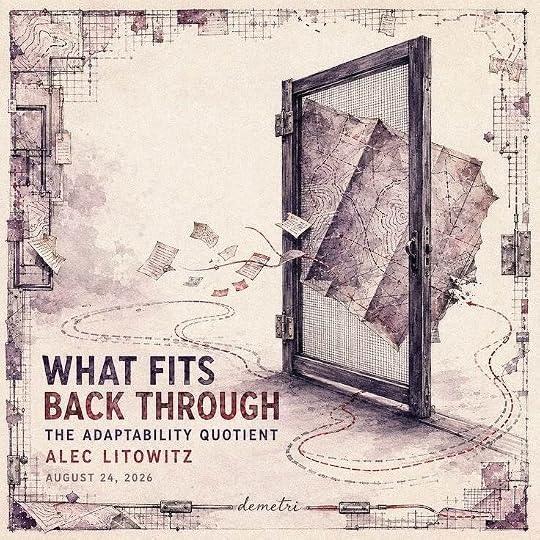
“What Fits Back Through” — A model earns its usefulness only when contradiction can pass back through it: small observations return, the old map catches, and the route remains open to revision.
Matters sharpen when private error becomes institutional design. The Challenger disaster shows engineers warning about cold-sensitive O-rings while schedule pressure and hierarchy thin their objections into acquiescence. OceanGate’s Titan presents the inverse corruption: contrarianism hardens into identity, expertise is recast as timidity, and irreversible risk passes for entrepreneurial courage. Their creeds differ, but both organizations strip inconvenient evidence of force before it can alter the decision. What is missing is not intelligence but permission to revise.
If leaders are to protect that permission, Litowitz’s rule is neat: safety for people, tension for ideas. His case for diversity follows from the same premise. Different histories, disciplines, and incentives widen a group’s range of hypotheses. Here diversity is neither décor nor reputation; it is a mechanism for noticing. A leader need not supply every answer but must keep the channels of correction open. Yet correction usually arrives attached to someone with something to lose. A homogeneous room may reach consensus faster because everyone shares the same blind spot. Harmony is pleasant, but so is a rug over a trapdoor.
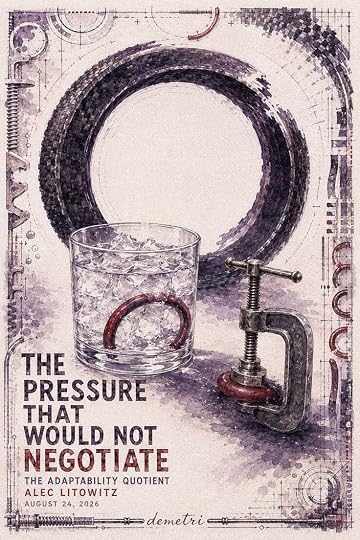
“The Pressure That Would Not Negotiate” — An O-ring in ice water and a dark pressure hull refuse schedule, charisma, and consensus—the material world delivering its answer without negotiation.
Trouble begins when Litowitz treats synthesis as discovery. Metacognition, Bayesian updating, systems thinking, optionality, psychological safety, and feedback loops all predate AQ. His contribution is their sequence. What begins as private discipline can be used in a meeting, carried into an experiment, even brought to a dispute about policy. That portability is real; discovery is too large a claim. The title’s officious noun arrives wearing a lab coat but never takes the measurement it advertises.
Repetition blunts the method’s edge. Chapters on designing experiments, launching them, learning from them, and returning to the loop revisit the same machinery from neighboring angles. Some recurrence is justified; Litowitz wants the sequence to become reflex. Yet by Chapter 9, I was no longer learning the sequence. I was being reminded that I had learned it. The field guides reward return visits, but they also confirm material the prose has already announced, illustrated, restated, and indexed for retrieval.
Often the exemplary cases behave too well. Alfred Wegener becomes the outsider vindicated by continental drift; Kodak, the incumbent unable to cannibalize film; Apple, the company willing to displace its own success; SpaceX, the apostle of informative failure. Such reductions can illustrate a principle, not validate a method. Because examples are selected after the outcome is known, they show how AQ can redescribe success or failure more readily than they show whether it could have predicted either. A method capable of explaining every triumph and disaster after the fact may be insightful, or it may simply own a very accommodating filing cabinet. The histories carry rival causes, accidents, and contested interpretations that the lessons politely leave outside.
Perhaps the book acknowledges this problem in its final “MVP” coda, which calls the manuscript a minimum viable product. Litowitz admits that he is not a specialist in every discipline he crosses and expects portions of the work to age. He is candid about those limits, and calling the manuscript an experiment fits the method. The coda also gives the book a ready reply to criticism: any incompleteness can be treated as evidence that the experiment is still running. Provisionality should invite correction, not relieve a universal method of supplying firmer evidence before readers install it.
One warning keeps its grip after the book’s topical examples recede: the invisible handoff. No machine rebellion is required. Attention, memory, interpretation, and choice pass incrementally to tools whose convenience makes scrutiny feel wasteful. A human remains nominally inside the loop, supplying the final click after the tool has framed the options and ranked the answers. The ceremony of choice survives; much of the substance has moved elsewhere. Attention is not merely a productivity asset. It is how a person notices who chose the menu.
“One Thread of Authorship” — One hand offers a thread to the machine while another keeps the pencil outside it, accepting assistance without surrendering authorship of the next line.
Up to this point, writing the future has mostly been metaphor. The final chapter makes it bodily. Litowitz, who inherited high cholesterol, hears from his son about an experimental gene-editing treatment that might remove its biological source. In one body, the movement from reading to writing becomes literal: inheritance itself may become revisable. Yet power does not choose its own purpose. The sharper the tool, the more costly it becomes to confuse an ability to alter a living system with wisdom about what the alteration should serve.
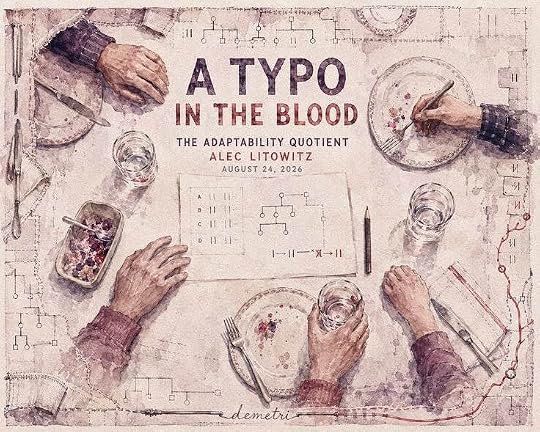
“A Typo in the Blood” — At the family table, inheritance appears as editable notation, and one corrected mark makes the question of what can change inseparable from who decides what change is for.
Litowitz is easiest to place by noticing what his neighbors do better. Annie Duke’s “Thinking in Bets” separates process from outcome with greater probabilistic discipline. Donella H. Meadows’s “Thinking in Systems” offers a more rigorous account of feedback and system behavior. Ethan Mollick’s “Co-Intelligence” stays closer to the daily terms of living and working with artificial intelligence. Where those books narrow their objects, Litowitz keeps widening his, which accounts for both this book’s reach and its looseness. Litowitz makes the broader wager: updating is how a person keeps the right to set the goal.
One tidy number cannot contain a book about revision, but it can mark the temperature: 81/100, corresponding to 4/5 stars. The circling middle keeps it there. So do the obedient cases and the title’s borrowed scientific authority. The method, however, is usable, and the outward movement gives private judgment public consequences: other people may have to live inside the decision.
Still, the boulder outlives the acronyms. Litowitz survives because the world, for once, cushions the cost of indecision. Most systems will not lay down moss. The book’s lasting question is not how quickly we can change, but whether, at the instant the ground moves, the hand choosing the next line is still our own.
Cover-Derived Proportional Palette Ledger
Book-Specific Visual Grammar Atlas
Emblematic Composition Thumbnail Sheet
Rider–Bicycle–Boulder Contact Study
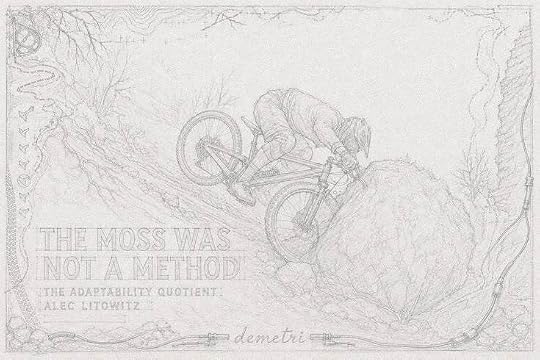
Emblematic Border Architecture Study
Series Hand-Lettering Specimen
First Underdrawing
First-Wash Visualization
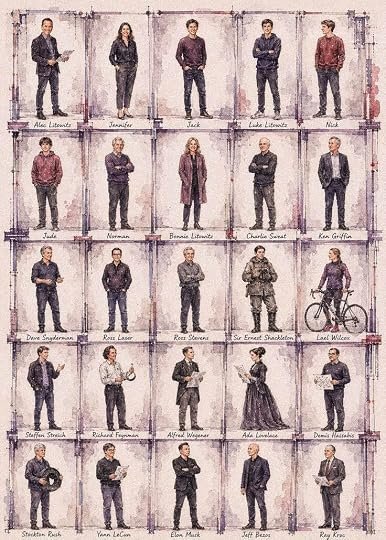
Full-Body All-Character Watercolor Study
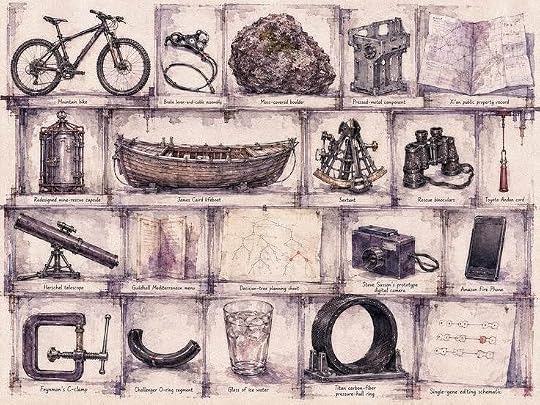
Important-Items Watercolor Study
Seven-Work Series Rhythm Contact Sheet
Alternate Full-Jacket Watercolor Study
All watercolor illustrations by Demetris Papadimitropoulos. Watercolors are done on 140lb vellum and then scanned into the computer using an Epson scanner. From there, they are finalized in Procreate. No AI was used in writing this review — all art and opinions are my own.
The Adaptability Quotient argues that success in the next human era will belong less to those who possess the right answers than to those who can revise their thinking under pressure. Alec Litowitz frames AQ as a learnable discipline built from metacognition, simulation, and experimentation, drawing on finance, entrepreneurship, cognitive science, systems thinking, AI, and lived experience to show how adaptive minds turn uncertainty into motion. The book moves from the eerie Chinese factory investigation that becomes a lesson in hidden value to the Chilean mine rescue, Shackleton’s survival logic, Kodak’s failure to cannibalize itself, and finally to the deeper question of human agency in a machine-shaped world.
I found the book most compelling when Litowitz lets the story carry the architecture of his ideas. The opening China episode has the snap of a thriller. Still, it’s really a portrait of disciplined doubt: the refusal to accept the market’s easy story, the willingness to send someone into the fog, the patience to ask what facts would make the apparent contradiction make sense. That habit of mind gives the book its pulse. I also appreciated the way Litowitz treats failure without sentimentality. The Chilean miners’ rescue, with its parallel Plans A, B, and C, becomes more than an inspirational anecdote. It becomes a moral argument for process, humility, and plurality of response. His best passages have a clean, searching confidence, especially when he writes about false certainty, cognitive drift, and the need to keep “the human in the loop.”
Litowitz wants to braid together Bayes, beginner’s mind, entropy, System 1 and System 2, cybernetics, entrepreneurship, leadership, AI, and culture, and most of the time the braid holds. There are moments when the density of frameworks threatens to crowd the emotional clarity of the argument. But I admired the intellectual generosity of the project. The ideas are serious without being bloodless, and the writing often has a restless, humane urgency. The sections on Kodak and on the Macy Conferences, in particular, lingered with me because they widen the book’s scope from personal performance to collective intelligence. Adaptability here isn’t just a career advantage; it’s a way of staying awake.
The Adaptability Quotient is a thoughtful, vigorous defense of human judgment at a time when judgment is increasingly outsourced, optimized, and dulled by convenience. It’s not merely a business book. It asks for effort, self-suspicion, curiosity, and the courage to kill weak ideas before they harden into identity. Litowitz has written a timely field guide for people who know the old maps are failing but don’t want to surrender the pen. I’d recommend it to entrepreneurs, investors, executives, educators, and reflective professionals who are trying to make better decisions in unstable conditions, especially readers who enjoy books that blend strategy with psychology and a quietly philosophical concern for what keeps us fully human.
The Adaptability Quotient is a thoughtful, timely, and unusually practical book about how to think clearly and decide wisely when the world is changing faster than our instincts can keep up.
Alec Litowitz brings together ideas from investing, psychology, technology, information theory, cybernetics, complexity, and decision science into a compelling case for epistemic adaptability and practical empiricism: the ability to question assumptions, update beliefs, experiment with reality, learn from uncertainty, and remain active rather than passive in the face of change. The writing is ambitious but accessible, and the book is full of frameworks and language that stay with you after you finish.
What sets it apart is that it does not treat adaptability as a vague personal virtue. It presents it as a discipline—one that can be developed by anyone willing to examine how they think, decide, and respond when old answers stop working.
Especially relevant in the age of AI, this is a valuable read for founders, investors, leaders, teachers, students, and anyone trying to stay competent, develop sound judgement, and retain agency in a changing, uncertain world.
I really enjoyed this book because it challenges the idea that success comes from always having the right answers. One concept that really stuck with me was Alec's idea of starting with "maximum entropy", letting go of assumptions and staying open to new information before making decisions. It was a refreshing way to think about navigating uncertainty, and the lessons felt practical whether you're leading a business or making everyday life decisions. Definitely worth the read if you're looking for a new perspective on resilience, decision-making, and success.