Jump to ratings and reviews
Rate this book

A Time to Keep Silence

Rate this book
The author shares his impressions of monastic life, today and in the past, and describes his experiences visiting monasteries in France and Turkey

96 pages, Paperback

First published January 1, 1953

124 people are currently reading
3352 people want to read

About the author

Patrick Leigh Fermor

54 books584 followers
Sir Patrick Michael Leigh Fermor, OBE, DSO was of English and Irish descent. After his stormy schooldays, followed by his walk across Europe to Constantinople, he lived and travelled in the Balkans and the Greek Archipelago acquiring a deep interest in languages and remote places.

Fermor was an army officer who played a prominent role behind the lines in the Battle of Crete during World War II. He lived partly in Greece in a house he designed with his wife Joan in an olive grove in the Mani, and partly in Worcestershire. He was widely regarded as "Britain's greatest living travel writer".

Ratings & Reviews

What do you think?
Rate this book

Friends & Following

Create a free account to discover what your friends think of this book!

Community Reviews

5 stars
482 (25%)
4 stars
793 (41%)
3 stars
517 (27%)
2 stars
99 (5%)
1 star
16 (<1%)
Displaying 1 - 30 of 284 reviews
Profile Image for Kelly.
907 reviews4,862 followers
July 12, 2016
Full photo-illustrated review at my blog, Shoulda Coulda Woulda Books.

Patrick Leigh Fermor is best known for adventure. First, his incredible journey backpacking across Europe in the dawning years of Europe's best effort so far to blow itself to smithereens, as he recorded the last vestiges of a world dying and the restless busyness of the one being born. And second, his escapades during the war itself working with the Greek resistance (his stint as the ringleader of the band who captured a German general has even been made into a movie, wonderfully dramatically called Ill Met By Moonlight). Indeed, his biographer, Artemis Cooper, could come up with no better title for his story than An Adventure. I wouldn't have titled it anything different myself.

As is fitting for this subject matter, his writing is lush and multilayered and memorable. Although of course, the most fascinating layers were always the threads of the man himself woven into the story as he created his Self for his readers and for himself. One of the things I loved so much about A Time of Gifts was that he seemed to be indulging in an exercise that benefited him as much as the reader, but without it ever feeling confessional or like I was inappropriately attending someone's therapy sessions- he actually withheld more than I would have liked at times. But it always felt like he was being open with me... which doesn't always mean the same thing as truth- not if you're a writer of Fermor's caliber.

Not everyone likes that sort of thing. I understand that. But he's got something else up his sleeve to keep you hooked, which is the other thing, the primary thing I loved about my experience of Fermor: his capacity for what I can only call awe. I've read very few things more genuine or affectingly felt than when he circles off a space for the divine. When he was taken with something, it shone off the pages in a way that could make a plotless description seem like you'd just been momentarily swept away entirely into a tale older than anyone could remember. His literary and historical resources are vast, his mind constantly working, which means these wonderful flights of fancy could go on for pages as he followed the thought down his seemingly never ending path of ideas. To me, more than the boundless charm, more than the stories, this divine sense of joy and otherness is the most precious thing he offers.

And that is what A Time to Keep Silence is about, ultimately. This piece is a tripartite essay, with a coda. Each essay covers Fermor's sojourns to different monastic communities during the 1950s. While this sounds like typical Fermor travelogue fare, this volume actually differs greatly from his most famous series. This book is not about him almost at all. And when it is, it isn't to point the finger at himself, but generally serves to illustrate the point he is making or shed light on the place where he is.* It's a surprisingly modern collection of short essays that would not be out of place as a series in The Atlantic.

The first essay covers his writing retreat to the great Benedictine Abbey of St. Wandrille in Normandy, the second his stay at the Abbey of La Trappe, the origin point of the very different Cistercian Order of the Strict Observance. The third is something quite different and covers his journey to Turkey to explore the remains of a long abandoned group of Christian temples, churches and decorated hermitages hewn into the desert rock of Cappadocia many centuries before. Through all of them, Fermor seeks to understand the monastic way of life and ultimately, what would motivate someone to leave behind the world and everything in it for another world that may or may not exist.

Fermor's intellect is challenged by his attempt to understand the seemingly unforgiving philosophy and harsh way of life of the Cistercian order. His imagination is captured by the fading paintings of Christ and the saints so incongruously leaping to life inside darkened caves the Turkish desert. But it is, perhaps unsurprisingly, the gentle, cultivated, scholarly Benedictines who capture his heart and come the closest to helping him to understand the monastic way of life. He starts his monastic inquiry with them at St. Wandrille and it is with them we find him three years later in the afterword, having not only revisited the abbey several times in the intervening years, but having apparently become the regular guest of the three revived Benedictine cloisters of England as well.

Although it is clear he comes to appreciate the monks, Fermor does not start off doing so. On his first stay with the Benedictines, Fermor has serious difficulty with adjusting to the strict routine and isolation that comes with their lives. (Extensive metaphors about walking corpses are used- I suspect many of them crafted after he first ran out of his emergency-extensive- stash of alcohol. Dark comparisons to the evil monks of Ann Radcliffe's Gothic imagination I suspect not-coincidentally shortly followed.) But eventually he undergoes a change. At first it is because he sees the benefits of monastic life that many of us might expect-regular and plentiful sleep, a removal of distractions, sharpened focus, encouragement to think less selfishly, exercise. But then, after the shock treatments to the body are complete, a true imaginative expansion of thought occurs that allows him to see not only practical benefit of this life, but also its beauty:

"The chanting became steadily more complex, led by a choir of monks who stood in the middle of the aisle, their voices limning chants that black Gregorian block-notes, with their comet-like tails and Moorish-looking arabesques, wove and rewove across the threads of the antique four line clef on the pages of their graduals. Then, with a quiet solemnity, the monks streamed into the cloister in the wake of a jewelled cross. Slowly they proceeded through the cylinders of gold into which the Gothic tracery cut the sunlight. Their footfalls made no noise and only the ring of the croiser on the flags the the clanging of the censer could be heard across the Gregorian. The procession reached the shadow-side, pausing a few minutes while the sixty voices sailed out over the tree-tops; and then back through the church door, where arcs and parentheses of smoke from the burning gums, after the sunlit quadrangle, deepened the vaulted shadows..."

As you see, what many readers love about Fermor's writing is still intact. While journalistic in nature where appropriate, his classic ability to paint a picture has lost nothing and is still capable of sweeping his audience away along with him when he is transported by discovery. Although he has difficulty reaching his place of supernatural awe with the Cistercians (which makes sense- although I admire him for seeing that as his own failing and not theirs), he finds a similar place of joy in the still lingering, still beautiful mysteries of Cappodocia:

"The churches can be numbered in the dozens, and the neighboring hermitages by the score. Every second cone is chambered and honeycombed till it is as hollow sometimes from peak to base as a rotten tooth. Occasionally, where the rock is thin, the brittle sides have fallen away to expose the painted prophets and seraphim to the open air. But most of them, posturing in stiff heiratic attitudes, are hidden in the cold half-darkness. Saints Constantine and Helen supporting the True Cross between them, St. John Prodromos bearing his haloed head in a charger, while an obliging curve in the foliage of a miniature tree redeems from scandal the nakedness of St. Onouphrios. The personage who appears most frequently-for Cappodocia was his birthplace- is our own island-patron, St. George. Armored, red-clocked, heavily helmted, and reproduced ad infintum, he cranes from the saddle of his white charger to drive his lance through the serpentine coils of innumberable dragons. Eternal twilight surrounds these prancings and death-throes. But each time we we emerged, the same incandescent glare was beating down. Out of the shadowy churches, we were once more in the kingdom of accidie, in the land of the basilisk and the cockatrice, of Panic terror and the Noonday Devil..."

Beyond this, Fermor's prose offers other attractions. He is more focused in his writing than I've ever seen, and his descriptions of each place are lucid and thoroughly well-intentioned, even when offered temptation not to be (oh man, those Trappists would have tempted me to some less than kind adjectives for sure). And his historical anecdotes are well-chosen, colorful, and memorable as always. (Did you know that the founder of the Cistercian order was originally a libertine of a courtier in the court of Marie de Medici who became a zealot, harsh religious reformer after he saw the chopped off head of his mistress in her coffin? Explains a lot!)

There are gifts enough in this slim volume, then. But I think ultimately what touched me was thinking about the underlying question: Why was he doing this at all? Of all subjects he could have chosen? On the snap judgment face of it, it does seem odd and out of character for our typically dashing hero. Why does the leader of dashing nighttime raids and haver of hijinx with teenage girls in prewar Bavaria, who admittedly isn't sure that he believes in God, suddenly seek out a cloister? And then why does it he do it again and again and again later on? In a throwaway comment early in the book, he talks about the "quiet and healing spell" that he experienced at St. Wandrille once its lifestyle forced him to stop self-medicating with alcohol (joking from earlier aside, he comments on the "the usual flood" he drinks daily) and constant socializing and movement. It reminds me of all the walking clubs that formed after the Great War, about the interest in Eastern meditation traditions that would follow in the 1960s, and about all the counter-revolutionary movements that cycle through after upheaval. With a moment of thought, his fascination with the way that the various abbeys and orders he visited rose from the dead over the centuries** becomes understandable and his repeated insistence on reviving centuries-old English guilt for the destruction of the great abbeys of the British Isles doesn't seem so strange.

I don't know if he ultimately found the certainty about the divine he never seemed comfortable with, but he did find something. And so, I think, will readers of this book.


*The one exception to this being his sometimes melodramatic worry about the fact that he is a guest of people who have devoted their lives to a God that he isn't quite sure that he believes in. Which is always funny to me that people think that Catholic monks or priests have never encountered people who doubt their faith- as if they don't doubt it within themselves, to start with.

**Seriously, the story of St. Wandrille is pretty amazing. Being situated in Normandy will ensure you always live in very interesting times- the same order of brothers lived through the recruitment for William's invasion of England and through the landings on D-Day. You guys. History! And the brief notes on the English Benedictine abbeys thrown in in the afterword were incredible on their own- did anyone else know that Napoleon III, Empress Eugenie and their son are buried at a Benedictine abbey in Hampshire? Where their son was only brought after dying for England in their South African wars? Is there a book out there that's just about the lives of leaders after they lose power or go into exile? I need to read it if so. Fascinating.
Profile Image for Diane.
1,116 reviews3,190 followers
August 18, 2013
This book was not what I expected. Other authors had referenced it, and I thought it was going to be a 96-page meditation about the power of silence and how rejuvenating it can be to take time away from the hassles of modern life.

While there was some of that, most of the book was about the history and routine of venerable monasteries in France and Turkey. In the 1950s, Patrick Leigh Fermor had wanted to find somewhere cheap and peaceful where he could write, so he became a guest at the Abbey of St. Wandrille in Normandy. He had to learn the routine of the monks and obey their rule of silence. His first few days and nights there he struggled to adapt: "I had asked for quiet and solitude and peace, and here it was; all I had to do now was to write. But an hour passed, and nothing happened."

Fermor felt restless in his solitary room and had insomnia. Then he spent several days where he slept almost constantly. Finally, he was revived and felt refreshed: "No demands, once I had emerged from that flood of sleep, were made upon my nervous energy: there were no automatic drains, such as conversation at meals, small talk, catching trains, or the hundred anxious trivialities that poison everyday life. Even the major causes of guilt and anxiety had slid away into some distant limbo and not only failed to emerge in the small hours as tormentors but appeared to have lost their dragonish validity. This new dispensation left nineteen hours a day of absolute and god-like freedom."

Fermor spends many pages sharing the history of the Abbey and of some of the monks who live there, and describing their daily routine. Fermor also visits three other monasteries: Solesmes in France; Cappadocia in Turkey; and the ascetic Trappist monastery of La Grande Trappe in France.

While the information was interesting, it was not the insight that I had hoped for. If you do seek out this book, I recommend finding the 2007 edition which has a thoughtful introduction by Karen Armstrong on the significance of monasteries in history: "Very few of us can be contemplative nuns or monks, but we can learn to appreciate their way of experiencing the sacred and integrate something of this gentle, silent discipline into our own lives."
Profile Image for Geoff.
444 reviews1,519 followers
August 5, 2013
~~~~~~~~~~~~~~~~~~~~~~~~~~~~~

...the troubled waters of the mind...

Here’s a cathedral: a rocky stream flowing from distant hidden sources in the blue mountains, mountain-cold and crisp on my reddening ankles which bend to accommodate footholds among the slippery stones, I am little more than a child and my swimsuit is speckled with spray, the light drifts down through the bending trees (a verdant heliocanopy where breeze plays and sings, there it is mirrored and turned to shards where the water breaks around the bank), and have you ever smelled the wind filtered through mountain-forest and swept across pastures where dung piles and hay bales perfume its breath, its freshness made pungent and then herbed with leaf sap, so that the many smells settle into just this one memory’s moment? Here’s a monastery: that river runs by an old farmhouse long abandoned, where the one who begot the one who begot myself used to rest in evenings, when cricket songs ascended and aching muscles were reprieved- the walls are logs from the surrounding forest, and have been shaped and made by the same winds that sing and the same soil that brings vegetables and grasses and makes the animals and the men. So the house is made of the sun and the water and the earth and so are the men. Now rooms stand empty and open to a kind of reclamation, shattered window panes and weeds through the floorboards, vines on rotting wood and long tendrils on the skeletal stairs. I am little more than a man and here is a picture (let your vision traverse the landscape like a wind): across the pastureland and across the stream where as a child I waded looking for crayfish and minnows and across the rising blue hills late afternoon light is ladled into the crevices of the forested mountains, and bare rock stands out at places, bleached and ancient like bone. The one uniting factor in these words attempting at a recollection should be this: only death is silent. Other than that the wind makes music in tall grasses, trees creak with breeze, leaves are tongues and crickets sing infinite timeless sad accompaniment, stones sizzle and boom, and all rivers whisper of their travels, hide choruses in their basins and falls, even blood in the veins is a resonant hymn and the spinning of the earth is an aria that you can locate only in memories and deliberately stilled moments...

...and much that is hidden away and all that clouds it floats to the surface and can be skimmed away...

~~~~~~~~~~~~~~~~~~~~~~~~~~~~~
Profile Image for Jacob.
88 reviews551 followers
July 5, 2021
When one thinks of Wisconsin, the Dalai Lama (probably) doesn't come to mind. Imagine His Reincarnatedness milking a cow or drunkenly cheering whatever our football team is called, cheesehead clashing with his robes. But it's true! The Wisconsin bit, I mean: there's a Buddhist monastery near Madison, about an hour's drive from where I live, and the Dalai Lama stops by occasionally to crash on their couch.

(Man, that guy needs to get a job, or else our new Lord Governor might not let him back into the state. Wisconsin: Open for Business Bring Money!)

I discovered this monastery, Deer Park Buddhist Center, back in the spring of 2006. At the time, I wanted to run away and become a monk. I’m still not sure why, really--I mean, the economy was somewhat decent, and Sarah Palin hadn't yet ridden down from the frozen North upon her gilded war-grizzly to rape and pillage the Lower 48, so things weren't that bad yet--but I had this great, deep desire to hide away from the world and to dedicate my life to silence and solitude and poverty and, yeah, even chastity (which in those days was hardly a struggle). I wanted to disappear, but not completely--I’m too hopelessly incompetent to survive as a forest-dwelling hermit--so I figured finding a place with like-minded people would work better. But not a Christian place; I was hopelessly agnostic at that point, and had no interest in dedicating my life to a god I wasn't sure existed--and although I wasn't spiritual either, I figured Buddhism was worth a try. Imagine my surprise when I found a Buddhist monastery in my state, and less than a hundred miles away. The Dalai Lama had already come and gone, but I noticed on their visitor's page that another monk, possibly a lama but maybe not, was visiting soon, and was holding a class on peace or serenity or whatever Buddhism was about. Seemed like an opportunity, so I decided to visit...

I got lost on the way there. I got lost on the way back. Even when I found the place, I was still lost: somehow it hadn’t ocurred to me, in all the time I spent thinking about visiting, that I should probably learn a thing or two about Buddhism before showing up. In between all the bowing and the kneeling and the meditating and the listening to the tiny old Tibetan-or-maybe-Nepali monk speak about I-can't-remember-what, I was completely, shamefully, hopelessly, embarrassingly lost. I didn't know what I was doing. I didn't belong there.

Monasteries: apparently not for me.

Not so for Patrick Leigh Fermor. L. F., the Dalai Lama of travel writing (and the New York Review of Books' favorite Buddha), may have felt a little lost and confused when he visited the Abbey of St. Wandrille de Fontanelle in Northern France, when he journeyed from Solesmes to La Grande Trappe, and when he went to the abandoned rock monasteries of Cappadocia while travelling through Turkey--but while I slunk away in embarrassment and never went back, he wrote this beautiful little book instead.

And what a book. A Time to Keep Silence is an exploration of some of Europe's oldest monasteries, a history of some of the monastic orders and their ways of life, and a meditation on the nature of silence and solitude--all in 96 pages. The stark, almost brutal beauty of the places and lives Leigh Fermor describes is almost--almost--enough to make me reconsider my fear of monasteries, but I would probably benefit more from rereading (and rereading again, and again, and again) this little book. And the rest of Patrick Leigh Fermor's travel writing. Most of it's been published by the New York Review of Books, so it's not like I need an excuse...
Profile Image for Emmkay.
1,387 reviews144 followers
August 1, 2025
The used copy I bought had a slip of paper from a previous owner tucked inside, partway through - “antipodean inexorable cenobitic concupiscence ascetics crepitates velleities,” it read. I empathize with that reader, and with Fermor’s girlfriend, later wife, in letters to whom this very short book first unfolded. I imagine she must have had a well-thumbed dictionary handy when reading, as I did. Fermor clearly loved a ten dollar word.

This is a series of three brief essays published in the 1950s, about 3 monasteries - a French Benedictine one, a strict Trappist one, and the caves at Capodoccia. Dense, erudite, and stuffed with monastic history and untranslated morsels of Latin and French, it felt longer than its brevity might suggest. The first, Benedictine essay was the most engaging, perhaps because I could best sense both the author and the experience. The introduction by Karen Armstrong was also very good.
Profile Image for Jonfaith.
2,140 reviews1,740 followers
May 15, 2020
This solitary demon, the legend continues, sleeps at his post. There is no work for him; the battle was long ago won. But monasteries, those scattered danger points, become the chief objectives of nocturnal flight; the sky fills with the beat of sable wings as phalanx after phalanx streams to the attack, and the darkness crepitates with the splintering of a myriad lances against the masonry of asceticism.

Ultimately this pamphlet proved too thin. It would have benefitted from two or three times the bulk, the normal flowing detail and esoteric genealogy which Fermor flourishes, almost effortlessly. . There didn't appear to be any focus towards empathy, only capturing a moment in time journalistically for comparison with the context.

Fermor goes to stay in a monastery in effort to work on a book. He notes how his body responds to the new regimen. he speaks with the Abbot and makes comparisons with other eremitic traditions in Asia Minor and the British Isles. Strangely enough, that is about it. There's an uncharacteristic restraint, an unexpected brevity.
Profile Image for Scott.
207 reviews63 followers
June 14, 2011
By the mid 1950s, Patrick Leigh Fermor was living in France, drinking abundantly, enjoying the company of friends, and reading everything he could get his hands on – all of which severely distracted him from the real task at hand: writing a book. In ‘search for somewhere quiet and cheap to stay’, he retreated to the abbey of St Wandrille, a Benedictine foundation in Normandy known for its hospitality, the purity of its plainsong, and most importantly, its vow of silence. The book that emerged from this sojourn, A Time to Keep Silence (1957), may not be the book Leigh Fermor intended to write when he entered the abbey; but this short, sober meditation, drawn mostly from letters he wrote during his stays at St Wandrille and other monastic communities, remains a favourite with many readers who delight in its gentle insights on the rigours and rewards of the cenobitic life.

‘A novice advanced with a silver ewer and a basin; the Abbot poured a little water over our hands, a towel was offered, and our welcome, according to Benedictine custom, was complete’. In spite of this warm welcome, Leigh Fermor can’t at first shake a painful feeling of living in a catacomb: silence and insomnia torment him, followed by regret and boredom. After a few days, though, his mind begins to clear of worries, his system starts to dry out, the distractions of life outside the abbey’s walls gently drift away; and refreshed by deep, uninterrupted sleep, he finds that his work has become a pleasure. For the next couple of months he lives among the abbey’s residents, rising with them in the early morning hours appointed for the Divine Office, dining with them in silence while the lector reads aloud in Latin from the Martyrology, and studying extensively in the abbey’s excellent library (even calling occasionally for books from Enfer, a depository of works considered ‘damaging to monastic life’ – alas, he names no titles).

A short time later, seeking a more severe monastic experience, Leigh Fermor takes a ‘plunge into the depths of a Trappist monastery’ known for its ‘fierce asceticism, cloistered incarceration ... abstinence, fasting, humiliation, the hair shirt, the scourge’. The dip leaves him a little more bewildered than refreshed. Unimpressed by the Cistericians’ emphasis on physical asceticism and intellectual simplicity, he goes so far as to describe his stay there as fruitful only insofar as he took ‘masochistic enjoyment’ in its ‘sad charm’. A third monastic visit, this time to the abandoned subterranean churches and hermitages of Cappadocia, likewise proves almost as perplexing as inspiring. Unable to determine who exactly the former inhabitants were or what their mode of spiritual exercise entailed, he at least finds some philological satisfaction when he notes that, judging from the inscriptions on the frescoes, the 11th-century community there pronounced Greek in much the same way as a modern Athenian.

While A Time to Keep Silence is a book about the quiet, contemplative life, it is also to a surprising extent a book about words and their use. During his long walks with the Benedictine abbot, Leigh Fermor confesses to feeling a ‘spasm of delight’ whenever the abbot slips into the ‘Latin of the Vatican’. This delight in arcane, foreign, and unusual words (noctambulism, giaour, villeggiatura are a few I had to look up) reverberates throughout the book in a way that would have made Corvo green. ‘Dans le monde hors de nos murs, on fait un grand abus de la parole’, the abbot opines. Leigh Fermor may have nodded in agreement at the time, but this book, like much of his work, is nevertheless best read with a thick dictionary and a set of encyclopaedias at your side.

‘The secret of monastic life, that entire abdication of the will and the enthronement of the will of God which solves all problems and trials and turns a life of such acute outward suffering into one of peace and joy, is a thing that is given to few outside a cloister fully to comprehend’. Leigh Fermor never claims to have been one of the lucky few. Even thirty years after writing the book and after countless other visits to monastic communities scattered across Europe and the New World, he felt himself ‘unqualified still to deliver a verdict on the conditions and possibilities of life in that hushed and wintry solitude’. What he does come to understand, though, is his own ‘capacity for solitude’ coupled with an undeniable sorrow for the sight of empty monasteries. Not exactly earth-moving revelations. And to be sure, A Time to Keep Silence isn’t a profound spiritual autobiography, or even a particularly religious book. But it does offer a brief, interesting look at the world of mid-century monasticism; and in the end, you’ll probably take away not only a greater sympathy for those who have chosen to pursue the conventual life, but also a deeper appreciation of Patrick Leigh Fermor’s geniality, humanity, and wit.
Profile Image for Jim.
2,407 reviews795 followers
April 20, 2011
With every book by Patrick Leigh Fermor that I read, I become saddened that there are so few left for me to read, especially as what remains were written so many years ago. Fermor's effortless erudition and flights of verbal fancy are without equal in our time. Take, as an example, this description of a Cistercian service at La Grande Trappe:
In church there was a kind of minstrels' gallery from which the guests, like Moslem ladies in a zenana, gazed down at the Trappists. The Victorian Gothic architecture of the church had none of the Romantic splendour of Solesmes; it was a great, dark north-Oxford nightmare, a grey sepulchre in the depths of which, hour upon hour, the chanting monks stood or knelt. The glaucous light was drained of colour. Fathoms below, columns of beard and brown home-spun, were the foreshortened lay-brothers. Beyond, their white habits and black scapulars covered by voluminous cowls, evolved the choir-monks. Each topiaried head was poised, as it were, on three cylinders of white fog: the enveloped body flanked by two sleeves so elongated and tubular that their mouths touched the ground, flipping and swinging, when the monks were in motion, like the ends of elephants' trunks.
Ostensibly, A Time to Keep Silence is about visits to four monastic communities over a three-year period in the 1950s: St Wandrille de Fontenelle, Solesmes, La Grande Trappe, and finally, the remains of the Byzantine tufa rock monasteries of Cappadocia in present-day Turkey. Fermor provides some interesting comparisons between the Benedictine (St Wandrille and Solesme) and Cistercian (La Grande Trappe) orders of Catholic monks and the former Byzantine monks.

I was astonished when I came to the end of this book in something less than an hour and a half. The concluding "Postscript," which covers the remaining monasteries in Britain, expresses profound regret that so little remained after the ravages of Henry VIII of what Fermor considers to be a profound and viable religious life completely divorced from the noise and distractions of the 20th century.

Profile Image for Justin Evans.
1,716 reviews1,125 followers
February 8, 2014
A few quick little bits about monasteries, one Benedictine, one Trappist, and some monasteries carved out of stone in Cappadocia. This may not seem like much, and it's not, but it's also perfectly done; Fermor's prose (this is my first encounter) is wonderful and wonderfully English (syntax! clauses! subordination!). You get a bit of local color, a bit of the history of monasticism, and of the individual monasteries in question, and a bit of meditation on what a monastery could mean to a twentieth century visitor.

Just as importantly, Fermor treats the monks with respect but not unquestioning awe. He's obviously a little uncomfortable at La Trappe, which seems reasonable--whereas the Benedictines offer splendor, an obvious path back to the history of Christianity and, indeed, Western Civilization, the Trappists seem to offer little of anything other than suffering. But even then he's willing to see that there could be some attraction.

Karen Armstrong's preface is solid, too--she avoids the vaguely new-agey 'let's all just love one another' stuff that sometimes ruins her writing.

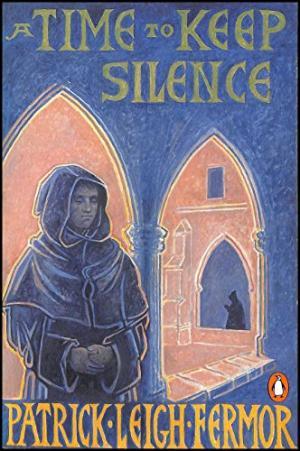
I only wish there'd been some pictures, particularly of Cappadocia, which is on the cover.
Profile Image for Sunny.
874 reviews57 followers
May 24, 2016
A very neat short book in which the author describes a few monasteries in around Europe / Asia and he also describes the lives of the monks who lived there and what that was like. Fermor stayed at the monasteries themselves so got a living version of what it was like to be there so was able to describe in intricate detail the spiritual magic of the place. In many ways the book reminded me of the challenge the west sometimes has with Islam being a religion which is circa 1400 years old. Some of these monasteries were built in and before the 1400s also. Much of what Fermor describes would seem too many in the west to be extreme asceticism which to me, as a Muslim anyway, didn’t seem too alien in fact. The contemplative silence, the fasting, the self-denial, the focus on God and the attempted focus on prayer and good is not something totally alien to devout Muslims in the world (I couldn’t tick all those boxes unfortunately :( In places the book was beautifully descriptive and there was a beautiful simplicity to Fermor’s writing style that is very refreshing. He has taken a potentially very dull subject and brought it to life beautifully. The book raised an interesting point about the triple unction of the soul which is worth mentioning. The first is the lightness and buoyancy that the soul gets by shedding all of its earthly possessions, vanities and ambitions. The second is the positive effect on the soul from the praying for all of humanity at large and the third and arguably the most important is the benefits to the soul from the prayers the monks administer at multiple times during the day for God. Very short book and worth a read.
Profile Image for Karishma.
121 reviews40 followers
October 23, 2014
One of the most poetic and moving books I've ever read, Patrick Leigh Fermour writes of the time he spent in two monasteries in France and his observations on monastic life such as it is, quite different from how it's often perceived, are truly honest and tenderly written.

The lives of the monks who are devout and hard working are dedicated to achieving a spiritual cleansing and perhaps, an enlightenment that the rest of us forgo or do not consider.

Leigh Fermour experiences a kind of culture shock when he enters the monastery feeling entombed by the silence and somewhat stifled by the rigorous discipline. Slowly as days pass, he begins to delight in living there as he writes and reads in solitude and his contemplation of the purity of his experience is incredible to read.

His description of his first days in St. Wandrille is perhaps the most beautiful passage in the book. Closely followed by his heartbreaking meditation on the abandoned rock monasteries of Cappadocia in Turkey.

A Time to Keep Silence is a short book but it is not a book one can rush through. You must take your time as you accompany the author on his profound inward journey because in the end, you're certain to find a measure of the inner peace he found, amidst these pages.
Profile Image for Julie.
1,970 reviews76 followers
March 15, 2020
Stunningly dull. I only finished it because it was less than a hundred pages long. Otherwise a DNF, for sure. Terribly mis-marketed. This is not about "an inward journey" or "a meditation on the meaning of silence and solitude for modern life" per the back cover of the book. Instead, it is a dry history of 3 monasteries the author visited. Chock full of untranslated paragraphs of French and Latin, written using obscure and pedantic vocabulary, this is a struggle to read. I think in order to like this slight book, the reader must be a staunch Catholic well versed in the history of both the church and France and fluent in both French and Latin. Knowing off-hand words like biretta, mansuetude, cenobite, antiphony, giaour and velleities would be a plus as well.
Profile Image for Miguel.
Author 8 books38 followers
August 4, 2018
É, tanto quanto sei, a primeira edição em PT de um dos nomes maiores da literatura de viagens em língua inglesa. Um verdadeiro clássico. Trata-se de uma das obras mais conhecidas de PLF, que reúne relatos de estadias do autor em mosteiros na zona francesa da Normandia, bem como da visita às ruínas de um mosteiro cristão na Capadócia, abandonado há cerca de mil anos.
A escrita de PLF é de uma qualidade extraordinária, a sua capacidade de descrever características artísticas e arquitectónicas, de contar a história e as histórias associadas aos lugares, de relatar as suas impressões e as suas experiências pessoais, tudo qualidades que tornam a leitura uma experiência de luxo.
Destaque para a tradução de Alda Rodrigues, que mantém o texto a um nível de qualidade literária muito elevado.
Profile Image for Bob.
892 reviews80 followers
March 9, 2016
In a scant 100 pages including multiple forewords and afterwords, Fermor visits four monasteries in the early 1950s (three active in France, the other a millennium-abandoned in Turkey) and writes about the monastic life and its settings.
His beautiful and invigorating prose makes all his work extraordinary - the subject hardly matters. This one has added appeal for enthusiasts of esoteric vocabulary; both that of "conventual" architecture (a word learned in the course of reading) and the terms for the many rituals that punctuate the monks' days. After its publication, some abbot wrote to the Times Literary Supplement or its equivalent, critiquing Fermor either for having presumed to write on the subject at all, or with relatively brief experience of it. Fermor still sounds apologetic about this in an afterword written 30 years later and far be it from me to accuse him of abdicating some kind of writer's responsibility but it does seem that in a work which is really about the writing and not some sort of magazine article purporting to report on a subject, that is scarcely an issue. His sympathies are clearly with those who choose that life.
Profile Image for Christopher McCaffery.
177 reviews53 followers
March 11, 2015
This is just a stunning, slim volume which, like every encounter with Fermor's prose, leaves me wanting more and with the need to tell everyone who will listen that this book is beautiful. I have no complaints, and the lists of friends and acquaintances who need to read this book is exhaustive.
Profile Image for Josh Friedlander.
829 reviews135 followers
November 21, 2018
PLF's two great gifts - boundless, obscure knowledge, and an infectious enthusiasm - are brought to bear on the sombre beauty of monastic life, in France and (now abandoned) in Cappadocia. Even if you think you're not interested in the topic, Fermor will rope you in.
Profile Image for Peter Blair.
108 reviews1 follower
March 1, 2023
This was a re-read, I was more taken with it this time than previously.

On the whole, I still think it falls between genres and audiences in a way that doesn't fully come off. But it's a delight to read and it does have its occasional tidbits and nicely expressed insights—and really what more could you ask for from a little 95 page volume?
Profile Image for Ken.
Author 3 books1,237 followers
February 24, 2013
Some books require special approaches and conditions. This would be one of them. Although it can be downed in one sitting, A Time to Keep Silence is no lightweight and cannot be underestimated. I suggest you find a quiet spot in a place where you know the silence will hold. Ironically, a monastery would serve nicely, but you probably don't have one out back, so consider your house when everyone else (spare the dog) has gone a-malling. That's what I did.

Also, if you have great expectations, leave them at the door. Like its monkish subject, this book is simplicity itself -- chiefly description and history. If the thought of getting away from it all as a guest at a monastery appeals to you as much as it does to me, you might even expect more than this slim volume is capable of delivering. Bad idea.

In his introduction, Patrick Leigh Fermor states that this book was based on letters he wrote to his future wife. Thus, his purpose was to be an erudite fly on the wall, simply providing narrative snapshots of the monastery's architecture and surroundings as well as short descriptions of the monks' daily rituals. It stands to reason, then, that on a ledger between Romanticism and Realism, this 97-pager is going to land deep in the land of realism.

And there's the rub. With his impressive vocabulary (typically 1-3 words every 5 pages that I do not know or fully know) and established track record as a travel writer nonpareil, Fermor might leave you hungering for more of the Romantic angle. You know, Fermor in his cell, for instance, writing feverishly, stopping to look out at the lush evergreen woods and a single path disappearing in the firs, musing about life, solitude, love, sadness, regret, nature, and so forth. All that good stuff. Well, you get some nature description (albeit brief), but you'll be sadly disappointed if you seek more. It's just not there.

Instead of adopting the role of vicarious soul partner, you are left instead to be a student. PLF teaches us about the histories of the Abbey of St. Wandrille, Solesmes, and La Grande Trappe. The first is the most thorough and thus satisfying. It also represents the Benedictines, who come across as more approachable than the Trappists. In addition to the history, PLF shares the daily ritual, the prayer services, the chants, the allegiance to silence, obedience, chastity.

He's disappointed the first night at St. Wandrille. He sits at the dinner table expecting red wine to wash down his supper with and finds instead a pitcher of water. Interestingly, he describes a severe period of getting used to life in a monastery -- the loneliness, the doubt, the depression even -- and how it dissipates after four days or so. Then, suddenly, with the weight of the world washed away, he begins to sleep more soundly. Similarly, when he leaves St. Wandrille after an extended stay, he finds trouble in "decompressing" in order to function again in modern society. Entering and leaving monastic life seemed reminiscent of falling into and then struggling out of certain forms of addiction -- a definite struggle:

"If my first days in the Abbey had been a period of depression, the unwinding process, after I had left, was ten times worse. The Abbey was at first a graveyard; the outer world seemed afterwards, by contrast, an inferno of noise and vulgarity entirely populated by bounders and sluts and crooks. This state of mind, I saw, was , perhaps, as false as my first reactions to monastic life; but the admission did nothing to decrease its unpleasantness."

I also enjoyed Karen Armstrong's introduction. She took issue with PLF on one count: he stressed the importance of belief in the monasteries, whereas she holds the emphasis lies in behavior. Her final paragraph speaks to me and perhaps to the reason I bought the book in the first place:

"I sympathize with Leigh Fermor, when he remarked one day to the Abbot what a blessed relief it was to refrain from talking all day long. 'Yes,' the Abbot replied; 'in the outside world, speech is gravely abused.' Our world is even more noisy than it was in the 1950s when Leigh Fermor wrote this book: piped music and mobile phones jangle ceaselessly, and silence and solitude are shunned as alien and unnatural. We expect instant communication and seek knowledge at the click of a mouse. We are also living at a time of competing certainties and religious stridency. It is important to realize that there are more profound and authentic ways of being religious. Very few of us can be contemplative nuns or monks, but we can learn to appreciate their way of experiencing the sacred and integrate something of this gentle, silent discipline into our own lives. This gem of a book can help us to do just that."

To which I can only say: "Amen."
Profile Image for Graychin.
874 reviews1,831 followers
September 24, 2010
I fiercely loved Fermor’s ‘A Time of Gifts’ and ‘Between the Woods and Water’ –two volumes recounting his 1930s jaunt across Europe on foot. Anyone with an interest in western culture, history, literature or the arts, should read them. If this brief little book isn’t so expansive as those, it isn’t intended to be. Here Fermor recounts some of his experiences and impressions visiting and staying in monasteries in France, the UK and Asia Minor. Though by his own admission Fermor lacks certain pre-requisites that would presumably enable a fuller appreciation of such places in their devotional aspect, his observations are always keen and respectful. The final section on the ancient abandoned rock monasteries of Cappadocia is a brief, evocative masterpiece in itself. The trademark qualities of Fermor’s prose are present throughout: richly textured, precise, full of savor. Keep a dictionary on hand, however, for deciphering obscure architectural adjectives like: ‘ogival,’ ‘pendentive,’ and ‘rupestral.’
Profile Image for Katy.
306 reviews
December 27, 2013
Although not a Catholic, Patrick Leigh Fermor had a deep appreciation of Western culture. I was literally blown away by his accounts of his walk from the Hook of Holland to Constantinople after being summarily dismissed from his English secondary school at age 17. There is much to be learned about Europe just before the beginning of WW II, but what really struck me was the breadth and depth of his education. His language, writing ability, curiosity, and maturity at age 18(!) are so far beyond what one finds today.
This book is an account of his stays at three major monasteries in Belgium and France where he sought quiet time to finish some writing and to learn something about the monastic tradition. He also visited some ancient sites of early monasteries in Turkey, where the tradition began. His reactions to and appreciation of a life so radically opposed to the prevailing culture is full of interesting observations and thoughtful insights. While he found the Benedictine monasteries quite congenial, the austerity Cistercian rule was repellant.
Profile Image for J.
730 reviews554 followers
April 25, 2018
I'm most familiar with Patrick Leigh Fermor through his charming, erudite memoirs of travel through Europe. A Time to Keep Silence is a fundamentally different sort of book, concerning time he spent as a guest in various monsastic orders throughout Europe.

The tone of this short book is, by nature of its subject, contemplative, and he does a brilliant job not only of elucidating the obscure historys of these monasteries, but also of conveying the ambiance and inherent peacefulness they present to a modern, secular sensibility: the sheer otherness of their routines, rhythms and missions.

It's a lovely recollection of an ancient, vanishing way of life, which is the kind of theme that Fermor seems to specialize in.
Profile Image for Steve.
899 reviews273 followers
January 25, 2023
Basically three essays (in a short book), two of which are on three active Catholic monasteries, and short piece on the ancient abandoned monasteries in the Cappadocia area of Turkey (which resembles a moonscape). The book itself is fronted by a fine and informative introduction by Karen Armstrong. As always, when it comes to Fermor, the prose sparkles. That said, one wonders just what Fermor's motivation was for visiting monasteries. As the book starts, Fermor does tell you that his visit to the Benedictine Abbey of St. Wandrille (France) was prompted by the recommendation of a friend. Apparently Fermor is looking for some peace and quiet for his writing, though he doesn't tell you what he's writing (one assumes it's not Church related). After a few disoriented days of adjusting to the daily routine of prayer, study, and work, of the monks, Fermor finds himself feeling lighter and sleeping better. Stripped of his usual "monsoon" of alcohol (the monks drink water not wine), he quickly readjusts. Whatever the writing project was, Fermor being Fermor, he ferrets out the history of the Abbey, and makes some friends. Although Fermor doesn't tell you when he arrived at the abbey, he gives you the impression that he stayed there for several months. At the end of the book he indicate that there were further visits. The peace he found there initially would always be there when he returned. One senses that, even though he doesn't quite grasp contemplative life, he appreciates the balance the Benedictines have in place.

In contrast, in a shorter essay, Fermor visits the Trappist monastery of La Grande Trappe. This monastery is run by the Cistercians, who observe a strict observance. From Fermor's point of view, it's a harsh nearly inhuman existence. (He also notes that the Benedictines are hardly soft in their routines.) At the end of the essay, he refuses to pass judgement on the Cistercians, confessing there is probably much be doesn't understand. But in a way he does.

The third essay on the abandoned monasteries in Cappadocia is quite short. There's really nothing much to say about them. Historians know next to nothing about them, and we are left with only an imagined connective thread between the faith of the early church, and the different paths taken by the monasteries in the earlier essays in the book. It's a good book that one wishes Fermor had expanded on, but we must be thankful for what we have. If interested in reading this book, I highly recommend getting the Kindle version. Fermor includes a number of Latin and French quotes without translations (I'm sure this original text of the book). The translate feature on the Kindle will come in quite handy.
Profile Image for Bill.
1,988 reviews108 followers
March 15, 2025
To be fair, I'd never heard of English author Patrick Leigh Fermor until I read Susan Hill's Howards End is on the Landing. In it she discusses books she wants to read, books she's cherished and from that made a list of 40 books she would keep if that's all she was allowed to read until she died. A Time to Keep Silence by Fermor was one of those 40 books and it sounded interesting so here I am, providing my meagre thoughts on it.

A Time to Keep Silence is a very short book, my edition being just 96 pages (New York Review Books Classics paperback), sort of a combination travel book, book on religion and a book on searching one's soul. It's a collection of essays as Fermor, sometime after WWII, visits a collection of Benedictine monasteries in France and Turkey, specifically Cappadocia. During these visits, he provides historical info on the various monasteries, branches of the Benedictines and also his thoughts on his feelings while staying at the various monasteries. (He did spend some time in most and found the transition from busy life in Paris and other cities to the quiet and calm of the monasteries, a big adjustment.)

The various Benedictines were all intersting, from the more intellectual sects that lived in St Wandrille de Fontanelle to the more austere, isolated sect of Cistercians at Le Grand Trappe. It's an aspect of life in general that I know very little about, being a relatively non-religious person. Well, except for my Cadfael mysteries, I guess. :) But it was fascinating to read about. The small section dealing with the abandoned monasteries in Turkey was fascinating and looking at photos of them, make them even more fascinating.

It's a thoughtful, calm, beautifully written book. It was nice to take the time to appreciate it, not to rush though the chapters. Did it teach me anything? I'm not sure but to read more about this side of religious life was most interesting. (4.5 stars)
Profile Image for Gabs DiLiegro.
31 reviews2 followers
January 25, 2023
“These men really lived as if each day were their last, at peace with the world…ready at any moment to cease upon the midnight with no pain. Death, when it came, would be the easiest of change-overs. The silence, the appearance, the complexion and the gait of ghosts they had already; the final step would be only a matter of detail”
Profile Image for Christos.
223 reviews13 followers
March 6, 2022
Άλλο ένα βιβλίο του Πάτρικ Λι Φέρμορ γεμάτο με τις εξαιρετικές περιγραφές του που σε μεταφέρρουν άλλες εποχές και μέρη, το ανοιχτό μυαλό του και τη δίψα του για να γνωρίσει τον κόσμο, παρότι το θέμα του αυτή τη φορά ομολογώ δε με συγκινεί ιδιαίτερα προσωπικά.
Profile Image for Evan Hays.
634 reviews9 followers
August 4, 2019
This was my first foray into Fermor (going for some alliteration there), and it won't be my last. I think I have found an author whom I will have to eventually read all of his work. For now, I started with a very short one, but I needed a little sojourn about silence and monasticism here before I soon enter back into a busy season of teaching. This book has definitely got me thinking about the serious need for even short times of silence in my life, especially with two noisy toddlers and plenty of screens and social media seeking my attention.

I have read about monasticism a decent bit, visited current and abandoned monasteries, and I am a strong proponent (as an Anglican) of bringing monasticism back more into the mainstream of Christianity. We know it isn't without its abuses and problems, just like anything, but I think it would be a remedy to many of today's problems, and it is something that Christendom (yes, I think we can still use that word in a sense) has had for over 1,500 years for good reason.

The books I have read that are most like it, are of course first St. Benedict's Rule itself, but then Esther DeWaal's illuminating elucidation of that rule. Scott Cairns' A Short Trip to the Edge also had some similarities, but from the world of Eastern Orthodox Monasticism.

The thing I most appreciated about Fermor's work here is his honesty that he isn't a faithful believer, yet he is full of such empathy as a writer that he can fully embrace the true joys he finds in especially Benedictine monasticism. He is also honest enough to be very honest about his dislike of Cistercian monasticism. He has convinced me for certain that should Amy die later once the kids were on their own and I decide to become a monk (I'm not that seriously considering it), an Anglican monastery following the Benedictine way would be my best way to go.

His writing is beautiful, and shares the best sort of observational qualities of some of my newer favorite authors like MacFarlane and Deakin. He has specific names for just about everything and challenges my vocabulary, yet never in a pedantic way because his true love for his subject shines through every time.

The reason I give it only 4 stars is that the final section on Cappadocia, which I visited in 2005, is too different from the rest of the book. I think he should have written an entire book on visiting abandoned monastic sites, such as say Tintern/Glastonbury, Cluny, and Cappadocia, or he should have written about three monasteries that are currently active. He tried to link them together in the last section, but it was just too short to really pull that off.

In the end, Fermor is sort of the author that I would have wanted to be should I have not ever gotten married. Traveling around, immersing himself in language and culture, studying prodigiously, and then writing beautifully to pull it all together. I can't wait to find time to read another one by him.
Profile Image for Stephen Kiernan.
Author 9 books1,011 followers
September 25, 2020
In every society, it seems, there is a subset of the populace not content with the buzz and motion of everyday life. Instead these people seek quiet, and solitude, and a chosen life of simplicity and prayer. We may find it courageous and wise, we may consider it a frightened withdrawal from reality, but in either case it is a way of life as foreign to ordinary folk as it is deliberate to those who embark on the monastic path.
Patrick Leigh Fermor all but stumbles into his first experience at a monastary. Already an established travel writer, he decides to enter an abbey as a quiet and inexpensive place to finish his latest book project. Yet in a matter of days he finds his inner hubbub quieting, and the paucity of stimuli allows for expansive thought and meditation.
So begins his travel through a number of monastic orders. He does his homework, explaining how and why one group espouses silence while another upholds worship through chanting (and protects the ancient songs with militaristic rigidity), how one abbey has seen wars and mayhem and yet frets about whether the penitents' clothing is white or black, and how days are structured not only for worship, but for obedience.
Some of it sounds sublime, appealing and serene. Other places sound willfully severe, even narrow minded -- and punitive though there is no actual way for the abbeys residents' to misbehave.
In the end, whatever effort it takes for the author to quiet the world and settle himself in an abbey, it is a far smaller exertion that regaining his customary life when he returns to the regular world.
This short book is an open-minded and vivid consideration of how large a role spirituality ought to play in a person's life, and what the limits of order and discipline might be.
Profile Image for Annelies.
165 reviews3 followers
August 15, 2016
Wat we krijgen in dit boek is meer een overzicht van hoe de religieuze ordes die hij bezoekt leven en hun christelijke visie ervaren maar er had toch wat meer van het contemplatieve in gemogen. We krijgen weinig zicht in wat Patrick Leigh -Fermor nu zelf ervaart en in deze zin heeft de titel mij wat misleidt. Je merkt dat hij meer een schrijver van reisverhalen is. Ik wil dus zeker ook zijn boeken over zijn wandeltochten lezen.
Profile Image for booklady.
2,712 reviews171 followers
May 2, 2009
Read this a long, long time ago--so long ago, that for all practical purposes I don't remember it, which seems a shame from brief glimpses at my highlights. Found this when cleaning and rearranging books on shelves. It looks like a gem.
Profile Image for Roger.
517 reviews24 followers
October 17, 2017
Patrick Leigh Fermor, even if he never wrote a word, would still be known for his daring wartime work with the Special Operations Executive, where he played a vital part in the daring kidnap of a German General, Heinrich Kreipe on the island of Crete in 1944.

Fortunately for us he did write, and write beautifully. Known as a travel writer, he was far more - his works are full of not only travel, but history, philosophy, art and an overflowing evanescence of language.

A time to keep silence is a collection of three - should we call them essays? - perhaps meditations might be a more exact term - written by Fermor in response to sojourns at two Abbeys in France, and a journey to the deserted cathedrals and cells for the Basilian monks in Cappadocia.

The work is sourced mainly from letters Fermor wrote at the time to his future wife, worked up for publication. In his introduction he points out that he is in no way an expert on religion or monasticism, and in fact not really fit to describe the monastic life in any complex way. And yet the book is a fascinating account of the life and times of the great Abbeys. The first 'meditation', written from the Abbey of St. Wandrille De Fontanelle, is Fermor's first introduction to such an institution - he has travelled to the Abbey as he thinks the peace and seclusion of the location will help him with his writing.

At first Fermor has an aversion to everything in the Abbey: the monks seem cadaverous, the location grim, and the solitude lead-heavy, like being "by mistake locked up in a catacomb". After a few days however, he begins to fall into the rhythm of the Abbey, and feels wonderfully refreshed. He writes "The two ways of life [monastic and secular] do not share a single attribute; and the thoughts, ambitions, sounds, light, time and mood that surround the inhabitants of a cloister are not only unlike anything to which one is accustomed, but in some curious way, seem its exact reverse."

He gives a history of the Abbey, which, far from being a millenium-long island of peace, coped with many periods of dis-establishment, despoilation and despair; in fact as recently as 1901 the monastry was dispersed, and passed to a new owner who roller-skated down the cloisters followed by his various hounds! The power of the life of prayer for those who chose to follow it is wonderfully evoked by describing all the hurdles these communities have overcome to just be able to devote their lives to their Lord.

As he delves further into the life and belief of the monks who share this space with him, he realises "the dominating factor of monastic existance is a belief in the necessity and efficacy of prayer; and it is only by attempting to grasp the importance of this principle - a principle so utterly remote from every tendency of modern secular thought - to the monks who practise it, that one can hope to understand the basis of monasticism." Fermor directly asked one of the monks ..."how he could sum up, in a couple of words, his way of life. He paused a moment and said, 'Have you ever been in love?' I said 'Yes.' A larger Fernandel smile spread across his face. 'Eh bien,' he said, 'c'est exactement pariel...'".

From the contemplative surroundings of St. Wandrille De Fontanelle, Fermor then moves, with a quick detour via Solesmes, to La Grande Trappe, the headquarters of The Order of Cistercians of the Strict Observance (O.S.C.O.), or Trappists. Fermor quickly describes the much stricter rules of this house (no separate cells for monks, no talking at all, very vigorous daily labour, prayers beginning at about 2 am after a mere five hours sleep), and then proceeds to try to understand why these monks would submit to such a labour. The following quote is long, but neatly encapsulates the way of Trappist thought - "To understand these Cisterican rigours, we must dismiss modern accomodations and rationalistaions and seek to return to the uncompromising literalness of the early Christians. Prayer for the redemption of mankind is the basis of Benedictine monasticism; and in the Cisterican branch of the Benedictine family the principle of prayer has been supplemented by the idea of vicarious penance........A Cistercian Cloister is a workshop of intercession and a bitter cactus-land of expiation for the mountains fo sin which have accumulated since the Fall. A Trappist career is a long-drawn-out atonement, a protracted imitation of the Wilderness, the Passion, the Agony in the Garden, the Way of the Cross, and the final sacrifice of Golgotha. By fierce asceticism, cloistered incarceration, sleeping on straw and rising in the darkness after a few hours' sleep, by abstinence, fasting, humiliation, the hair shirt, the scourge, the extremes of heat and cold, and the unbroken cycle of contemplation, prayer and back-breaking toil, they seek, by taking the sins of others on to their own shoulders, to lighten the burden of mankind."

Fermor is allowed no contact with the monks at La Grande Trappe, which frees him for his writing, but leaves him wondering how a person can chose this life; he falls back on conversations with someone who has left the order to try and gain insights into the psychology of a Trappist, a problem he grapples with in this section of the book.

The final section is a description of a trip taken by Fermor and a friend to Urgub, in Cappadocia. These few pages are mostly given to marvellous descriptions of the cells and churches cut into the living rock, with a wonderful evocation of the life that must have once been lived there, centuries ago, and, when Fermor was there, all but forgotten by the modern world.

A short postscript describes the growing monastic movement in Fermor's home country England.

At 96 pages, this is a book that is short in length, but long in what it gives the reader - highly recommended for those who are interested in finding out more about the monastic life without too much religion thrown into the mix, or those who love magnificent evocative writing - it has encouraged this reviewer to read more of Fermor.

Check out my other reviews at http://aviewoverthebell.blogspot.com.au/
Displaying 1 - 30 of 284 reviews

Can't find what you're looking for?

Get help and learn more about the design.