Jump to ratings and reviews
Rate this book

The Honorary Consul

Rate this book
When the alcoholic British 'Honorary Consul' in an Argentinian town is kidnapped by a band of revolutionaries, a local doctor negotiates with his captors and with the authorities for the man's release, but the corruption of both soon comes to the fore.

268 pages, Paperback

First published January 1, 1973

126 people are currently reading
3921 people want to read

About the author

Graham Greene

801 books6,118 followers
Henry Graham Greene was an English writer and journalist regarded by many as one of the leading novelists of the 20th century.
Combining literary acclaim with widespread popularity, Greene acquired a reputation early in his lifetime as a major writer, both of serious Catholic novels, and of thrillers (or "entertainments" as he termed them). He was shortlisted for the Nobel Prize in Literature several times. Through 67 years of writing, which included over 25 novels, he explored the conflicting moral and political issues of the modern world. The Power and the Glory won the 1941 Hawthornden Prize and The Heart of the Matter won the 1948 James Tait Black Memorial Prize and was shortlisted for the Best of the James Tait Black. Greene was awarded the 1968 Shakespeare Prize and the 1981 Jerusalem Prize. Several of his stories have been filmed, some more than once, and he collaborated with filmmaker Carol Reed on The Fallen Idol (1948) and The Third Man (1949).
He converted to Catholicism in 1926 after meeting his future wife, Vivienne Dayrell-Browning. Later in life he took to calling himself a "Catholic agnostic". He died in 1991, aged 86, of leukemia, and was buried in Corseaux cemetery in Switzerland. William Golding called Greene "the ultimate chronicler of twentieth-century man's consciousness and anxiety".

Ratings & Reviews

What do you think?
Rate this book

Friends & Following

Create a free account to discover what your friends think of this book!

Community Reviews

5 stars
1,082 (19%)
4 stars
2,688 (47%)
3 stars
1,533 (27%)
2 stars
260 (4%)
1 star
44 (<1%)
Displaying 1 - 30 of 451 reviews
Profile Image for Fergus, Weaver of Autistic Webs.
1,270 reviews18.4k followers
November 17, 2024
And voices are in the wind singing
More distant and more solemn
Than a fading star.

The Hollow Men

When, as a conflicted adolescent, Graham Greene was "turned around" by a student counselor, he not only inherited the mantle of adulthood, but also its curse - his cynical alter ego gelled.

But his bipolar condition, here, is recessive - as thankfully, is mine. We have attained one of the most rewarding fruits of old age, equanimity. Gone are the waspish stings directed at the establishment.

In this new reign of resignation, the novel ranks among his finest. He thought the same...

I read this book fifty years ago next year - and now have added it to my Kindle library, having realized I have (almost) irretrievably lost the existential anxiety that marked my personality in 1973.

During fifty years of pretending I was at heart a rah-rah-rah type of guy.

I'm Not.

I was kidding myself. My workplace attitude had turned me into my own dreaded Other. So it was no longer the merely Same, as Levinas says. My own bipolar self gelled.

But now I know I am a Plarr, the character in Greene’s book. Cured, I am a poor schmoe who always (rightly) downplays himself as a lost case. Is that what the docs had in mind for me when glutting my brain with psychotropics?

If they did, they were RIGHT.

And now, rereading this book after half a century, Greene's deadpan irony sticks into my heart like a stiletto. A busily frantic career as a supply team leader now buried, that conditioning has a radioactive half-life that blinded me to myself.

But there are no good guys or bad guys here in this book. As for me now. And I now, disillusioned by the way the can-do mentality blinded me, see all too clearly that the consul's not wearing a white hat, nor the leader of these desperate kidnapping rebels a black one.

But me - dumb rah-rah-rah ME - once thought I could go Faster, Smarter and Better than the poor half-dead Plarr who was really me - and merrily run through Vanity Fair. My positivity reeked of self-deception.

I thought I was being a Christian by being positive, and that was wrong. You become a Christian - like a straight William Burroughs - by seeing EXACTLY what's on your plate. Then you wake up.

I saw now I was living a lie by not admitting to being the broken type of washed-up dude Jesus came to save: Plarr. The only way He'd save me too.

Folks, seeing that, you might still find all the REAL love you'd thought you lost. The REAL deal. We are all wash-ups! Therein lies our true JOY. Not in the perfection the ad agencies tell us about.

So I ask you...

If the Lord came to save sinners, where are they right now in this modern world?

Safely out of sight.

And safely out of Mind.

For how could they be anywhere else in our comfortable middle class, jazzed-up, certifiably out-of-touch world?
Profile Image for Orsodimondo.
2,460 reviews2,435 followers
March 1, 2022
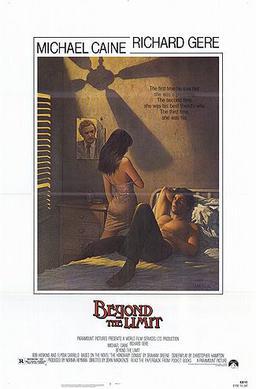
BEYOND THE LIMIT – OLTRE IL LIMITE

description
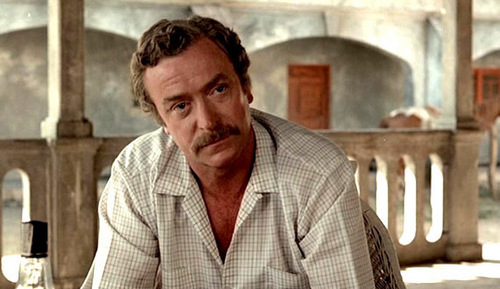
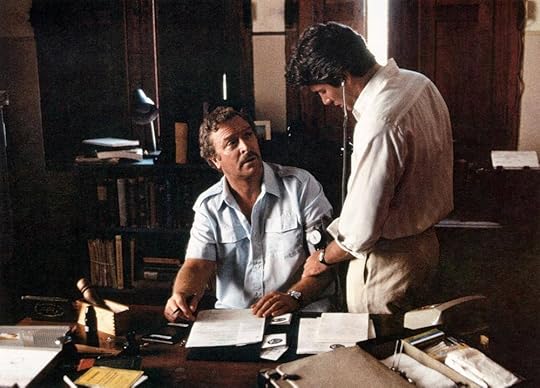
Michael Caine è Charles Fortnum, il console onorario del titolo. Il magnifico attore inglese all’epoca aveva 50 anni.

Greene considerava questo romanzo del 1973 forse il suo migliore, però non fu tra i suoi commercialmente più fortunati.
Io non saprei dire se è il migliore. Forse no, credo di no. Ma, che fascino, che esotismo, quanto sottile, ingarbugliata eppure lineare, e struggente, la storia raccontata in queste pagine.

description
Il medico Eduardo Parr, nato in Paraguay da genitori inglesi, è interpretato da Richard Gere, all’epoca 34enne, nel pieno del suo periodo di maggior successo.

I consoli onorari sono in fondo alla catena diplomatica: contano poco, non sono scelti tra il personale di carriera, ma tra emigrati, gente che ce l’ha fatta nel nuovo paese d’accoglienza, per lo più mercanti, che ricoprono la carica senza compenso e senza immunità, in cambio del modesto status che la carica attribuisce.
Diplomatici low cost. Anzi, a costo zero.
Grazie al non memorabile film di John Mackenzie del 1983, ma dignitosissimo e gradevole, questo console onorario ha le sembianze indimenticabili di Michael Caine, sullo schermo, che, come le pagine impongono, è dedito al bere 24/7. Fino a un dato momento.

description
Clara è interpretata da Elpidia Carrillo, un buon esempio di miscast.

Siamo nel nord dell’Argentina, qualche anno prima che la dittatura facesse scomparire (desaparecidos) trentamila persone scaraventandole da aerei (i voli della morte) al largo nell’oceano Atlantico dopo averle rapite torturate stuprate.
Quanti morti ci sono nel mare? Di cosa si nutrono i pesci che mangiamo?

La città è probabilmente Corrientes sul fiume Paranà, e quindi al confine col Paraguay.
Paese nel quale era, invece, già in corso una dittatura, una di quelle cui l’America Latina ci ha così solidamente abituati.
Il dittatore dell’epoca si chiamava Stroessner, nella finzione romanzesca così come nella vita reale.

C’è un medico nato in Paraguay da genitori inglesi, Eduardo Parr, che nel film ha il volto e il fisico non indifferenti di Richard Gere.
Suo padre è un oppositore del dittatore, viene arrestato, non torna più indietro.
Il figlio si porta dentro la speranza che sia ancora vivo, seppure incercerato, e quindi, la speranza di poterlo liberare.

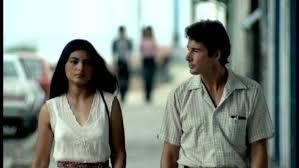
description
I giovani amanti. Il film è del 1983, la regia è di John MacKenzie, meglio noto per null’altro.

Dopo la scomparsa del padre, Eduardo Parr si trasferisce dall’altra parte del fiume, e del confine, in quella città che il romanzo lascia presumere sia Corrientes, Argentina. Diventa amico della piccola comunità inglese locale: due uomini, un insegnante divorato dalla frustrazione, Humphries, e Charles Fortnum, sessant’anni, dedito al bere, console onorario. Michael Caine, come dicevo.

Una notte Eduardo Parr conosce una giovane prostituta, Clara, dalla quale è subito attratto: ma non hanno rapporto perché vorrebbe dire acquistare una mercanzia e Eduardo Parr si sottrae. Romantico fino allo stordimento.
Due anni dopo il console onorario chiama a casa sua Eduardo Parr, che non dimentichiamoci è medico: si tratta di visitare la sua giovane moglie.

description
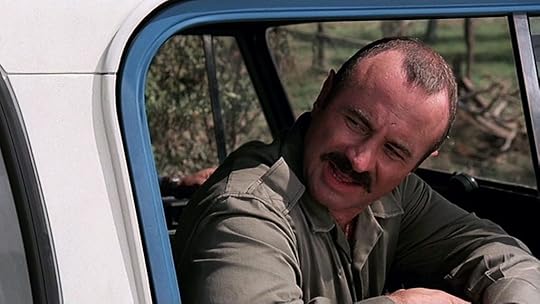
Magnifico, grandioso, rimpianto, indimenticabile Bob Hoskins. Qui è il capo della polizia argentina, colui che informa Parr/Gere che fa male a sperare nella liberazione di suo padre, che è morto ormai da tempo.

Chi mai sarà la donna convolata a nozze con un sessantenne straniero, alcolizzato e disilluso?
Non può che essere Clara, la giovane prostituta, che ha marcato il cuore del medico.
Clara guarisce e inizia una storia proprio con il suo dottore, Eduardo Parr.
Rimane incinta.
Il console onorario crede che il nascituro sia suo figlio e smette di bere. Vuole cambiare, ravvedersi, iniziare una nuova vita, se mai possibile.

Nell’ambulatorio di Eduardo Parr si presenta un gruppo di terroristi paraguayani. Tra loro c’è un ex sacerdote cattolico che è stato compagno di scuola di Eduardo Parr. Chiedono l’aiuto di Parr per rapire l’ambasciatore americano in modo da poterlo scambiare con i prigionieri politici detenuti in Paraguay: tra loro c’è sicuramente il padre di Eduardo.

description

Il medico si presta. Ma il rapimento fallisce: nel senso che invece di rapire l’ambasciatore, sequestrano un semplice console, anzi, un misero console onorario. Proprio Fortnum.
Che, ovviamente, non vale nulla, non è merce di scambio.

Eduardo Parr è sospettato di essere complice dei sequestratori, anche perché alla polizia argentina è nota la sua relazione con Clara, la giovane moglie del console (onorario) rapito. La polizia informa Eduardo che suo padre non potrà essere scambiato con Fortnum perché morto da tempo in un tentativo di fuga.

description
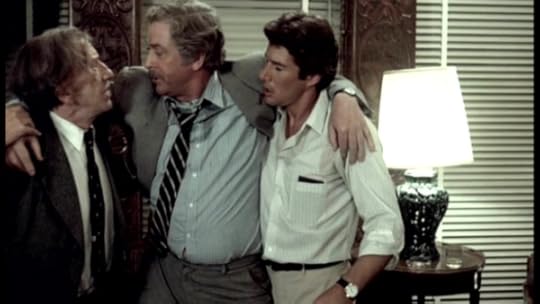
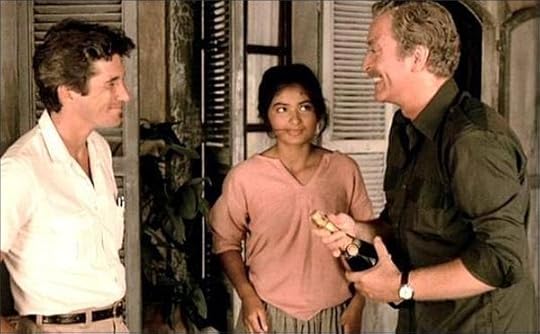
Il console onorario, magnifico cornuto, in compagnia della sua giovane moglie e del suo miglior amico.

La polizia interviene per liberare il console onorario e nel conflitto a fuoco muore Eduardo Parr. Fortnum si salva. Torna a casa. Apprende che il bimbo che sta per nascere non è suo, ma di Parr. Lo chiameranno Eduardo.

Distillato della quintessenza di Greene, lo scrittore inglese è tutto dentro queste pagine: intreccio e divertissement, suspense e thriller, che prima di tutto è psicologico, umano – occidentali trapiantati ai tropici, o giù di lì – senso di colpa, religione, cattolicesimo – contraddizioni dei sentimenti – peccatori in un mondo abbandonato da dio verso i quali è impossibile non provare empatia – rigidità morale coniugata con la pietas - romanticismo declinato con una robusta dose di disincanto - propensione al bere.
Adoro Graham Greene, amo questo romanzo.


Profile Image for Luís.
2,376 reviews1,373 followers
February 16, 2025
One could believe this humorous novel, but in fact, not really. In a country in revolution, Doctor Plarr lives in a small dead town, looks after its patients all day long, and converses in the evening with his only English relations, Doctor Humphries and the honorary consul Charley Fortnum. Charley Fortnum is a grotesque and alcoholic character who is useless for his country and makes a living from what the English state gives him. One fine day, he was accidentally kidnapped instead of the ambassador. But who would want to release prisoners of war in exchange for the release of this unknown and useless little honorary consul?
The concept of the work is cynical and funny, but the story is rather sad. We see a doctor, Plarr, who struggles between his English and South American origins, lives a rather dreary life, and cares for more and more patients. Not believing in anything and unable to forge a real relationship with women. The honorary consul takes advantage of the system and stays alive thanks to his daily bottle. The revolutionaries are heading towards an impasse and continue their struggle, running out of steam. The embassy has nothing to do with these recriminations and attaches more importance to minor scandals (the honorary consul marries a 20-year-old prostitute.)
It's not pretty, but Graham Greene is on target when he highlights South America's miseries and revolutionary inconsistencies by kidnapping an absurd character.
Profile Image for Fabian.
1,004 reviews2,117 followers
June 17, 2020
Graham Greene has two bonafide/genuine masterpieces in "The Quiet American" & "The End of the Affair," but by all rights "The Honorary Consul" takes a very honorary place alongside "The Power and the Glory"; that is, lesser giants. It too is about these incredibly Hollywoodesque (or legends of) important people making choices & suffering the inevitable... In perfect prose, in lucid detail and exquisite, meaningful dialogue, "Consul" is intriguing and exciting at all times. The characters are very much alive, and their roles all exude pathos at diverse (and therefore interesting) levels. Greene is a total pleasure to read. That said, it may be the weakest novel of his (I've read) by far. "Brighton Rock" was way more unexpected, the aforementioned classic masterpieces ("Quiet" and "Affair") are complete and utterly, (devastatingly!!!!) hugely beautiful. "Power and the Glory" seems more magnificent--not as asphyxiated with themes of Catholic Church-bashing as this novel is (esp. at its concluding pages). Alas, "Consul" offers the best of Greene, though not THE VERY best of Greene. But as consolation, you pretty much always know that you can't go wrong going Greene.
Profile Image for James.
505 reviews
February 21, 2018
Sex, love, life, death, whiskey, Catholicism and South American politics – all familiar territory to Graham Greene – but ‘The Honorary Consul’ (1973) whilst revisiting and exploring all these themes, is by no means a re-tread or a recycling of previous Greene novels.

The story this time is ostensibly centred around a bungled kidnapping attempt, all those whom it affects and its catastrophic aftermath. This is, as is more often than not the case with Green at his best – powerful and compelling. Whilst not perhaps quite up there with classic Graham Greene (‘End of the Affair, Power and the Glory, Heart of the Matter’) it is very close.

‘The Honorary Consul’ is intriguing and compelling – the unrelenting tension builds throughout. Apparently this was one of Green’s favourite of his own novels, the reason being given as the way the characters change throughout the course of the story.

There is a lot here about fathers of all types – both familial and religious and the long shadows that they can cast. There is also much here concerning political causes in the wider sense, in relation to the resultant moral and religious dilemmas at a personal level. Macro idealism vs reality at the Micro level.

Graham Greene writes so very well, the best of his work is so accomplished, so well-constructed and paced throughout with well-drawn and thoroughly believable characters. As with Greene’s greatest novels, ‘Honorary Consul’ is imbued with a sense of reality and authenticity throughout – it is accessible whilst deeply meaningful – profound. This is a novel not to be missed and an important part of Graham Greene’s truly great literary canon.


Profile Image for Alma.
751 reviews
October 23, 2020
“I have to think of all the possibilities, doctor. Even a crime of passion is possible.’ ‘Passion?’ the doctor smiled. ‘I am an Englishman.”
Profile Image for Marc Lamot.
3,465 reviews1,982 followers
January 27, 2022
A very typical Graham Greene-novel with all the classic dilemma's the protagonists (with them again a former priest) are confronted with: what is right or wrong? Is there a loving God? What is the meaning of life? The setting is the north of Argentina and the story revolves around the abduction - by mistake - of a British honorary consul. Even more than in other Greene-novels there are quite a lot of very cynical protagonists, but as always they appear to have their weak sides in time of need. Not his greatest novel, but nice. (2.5 stars)
Profile Image for Bettie.
9,977 reviews5 followers
June 27, 2015


Description: In a provincial Argentinean town, Charley Fortnum, a British consul with dubious authority and a weakness for drink, is kidnapped by Paraguayan revolutionaries who have mistaken him for the American ambassador. Dr. Eduardo Plarr, a local physician with his own divided loyalties, serves as the negotiator between the rebels and the authorities. These fumbling characters play out an absurd drama of failure, hope, love, and betrayal against a backdrop of political chaos. The Honorary Consul is both a gripping novel of suspense and a penetrating psychological and sociological study of personal and political corruption.


Wonderful read, especially after my last Greeneland episode of 'The Heart of the Matter', which I didn't enjoy very much at all. Lots to mull over with this one and it is good to have thought provoking issues on the menu. Fully recommended.

3* The Quiet American
4* The End of the Affair
3* The Power and the Glory
2* The Heart of the Matter
3* Our Man in Havana
4* Brighton Rock
3* The Third Man
4* Travels With My Aunt
4* The Human Factor
TR The Comedians
4* A Burnt Out Case
CR The Honorary Consul
3* A Gun for Sale
TR Complete Short Stories
3* The Captain and the Enemy
2* The Man Within
4* Monsignor Quixote
TR The Confidential Agent
4* The Ministry of Fear
Profile Image for Lyn Elliott.
837 reviews245 followers
August 8, 2019
It’s a long time since I read any of Graham Greene’s work, the last being the glorious Travels with my Aunt which I read just before heading off on eight weeks of travel in Europe with my favourite aunt, and during which we encountered no smugglers, bandits, revolutionaries or political thugs, , though it was set partly in Latin America where Greene set The Honourary Consul and other works.

Greene was such a great storyteller that he was able to write a gripping narrative while dealing with great themes of political repression; the effects of isolation (physical, social and emotional); political disillusionment and corruption; the existence (or not) of god and the possibility (or not) of love.

He takes his time to set the scene and introduce his characters in their ‘torpid Argentinean city whose only visible cultural institution is the brothel’, and although there is in fact a great deal of action, he plays out the line of the story slowly, until the last 3 chapters when it seems as though inevitable execution of the mistakenly-kidnapped hostage is imminent.
Once the inevitable death has happened, the emotional tone shifts from fear and resignation to sorrow and tenderness. Masterfully set up, masterly resolved.
I can understand why it was on of Greene’s favourite works.
Profile Image for dianne b..
699 reviews176 followers
May 28, 2020
“Life isn’t like that. Life isn’t noble or dignified. Even Latin-American life. Nothing is ineluctable. Life has surprises. Life is absurd. Because it’s absurd, there is always hope.”

This story arises from the horrible seventies in South America. Dr. Eduardo Plarr, a Paraguayan exile? expat? refugee? is living in Argentina, having had to leave his English father in Asunción as a young boy, because of his father’s efforts to resist the reprehensible General Strossner - the vicious torturing dictator supported by the USA - who ruled Paraguay from 1954 to 1989 - with uninterrupted repression and cruelty.

A memory from Eduardo's childhood:
“...he listened to the noise of keys which were turned and bolts which were pushed to -his father was making the house secure, but he was afraid all the same. Perhaps someone had been locked in who should have been locked out.”

He finds himself in the Chaco - across the Parana river from Paraguay, firmly believing in his inability to believe in anything.
“I have reached a premature old age when I can no longer mock a man for his beliefs, however absurd. I can only envy them.”

He lives with dubious boundaries, balancing chauvinistic rationalization and self-loathing:

“On the stairs...he tried to remember what that question of hers had been which he had never answered. It could not have been very important. The only questions of importance were those which a man asked himself.”

Being questioned by police:
“I have to think of all the possibilities, doctor. Even a crime of passion is possible.”
“Passion?” the doctor smiled. “I am an Englishman.”
“Yes, it is unlikely - I know that.”


The characters are as only Greene could create - hilarious and heartbreaking, banal and so beautiful. Eduardo’s interactions with these folks, and his sardonic observations of them, are marvelous. Noting the poor furnishings of a fellow (not immediately terminal) Englishman:
“...not the kind of surroundings in which anyone with free will - if such a man existed - would have chosen to await death.”

Of the same man, who is cutting about a common acquaintance:
“... he recognized the malice which remained alive and kicking in the old man long after discretion had died from a lifetime’s neglect.”

Despite himself, Dr. Plarr gets involved in an action, a botched kidnapping, carried out by old compatriots of his from Paraguay, intended to free some political prisoners.

Unfortunately, because the accidentally kidnapped person, the Honorary Consul, isn’t important to anyone, a happy outcome is doubtful. Being “honorary” carries its own issues:
“I wish we had a simpler flag than the Union Jack. I hung it upside down once on the Queen’s birthday.”
Smile.

The kidnappers are full of courage, passion and righteous anger; their insights causing me to catch my breath:

“...malnutrition is much safer for the rich than starvation. Starvation makes a man desperate. Malnutrition makes him too tired to raise a fist. The Americans understand that well... Our people do not starve - they wilt.”

Another brilliant and memorable Graham Greene novel. He is simply unmatched in his explication of our hypocrisies, the governments we allow, and the stories we tell ourselves to live with our inaction in this savagely inequitable world.
Profile Image for Shane.
Author 12 books300 followers
November 27, 2009

I picked up a Graham Greene novel after a long time and it was pure nostalgia to be transported back to "Greeneland": usually a third-world country with a despotic government, with British expatriates forgotten by Her Majesty's Government, where the men are middle-aged, guilt-ridden and unable to love, men who have lost their faith in God and whose only outlets are the bottle or a prostitute. Where the search for redemption is their only remaining life force.

Dr, Plarr is the central character, a British-Parguayan doctor who sleeps with his patients' wives but loves none of them. He is secretly loyal to the revolution in Paraguay, to which he lost his father, and lives in a border town on the Argentinian side, while his exiled mother overdoses on pastry and sugar in the affluent suburbs of Buenos Aires. Plarr's foil is Fortnum, the Honorary Counsel, a Brit forgotten by his government, consigned to this outpost out of convenience, a drunk and aging man who has fallen in love with his twenty-year old wife Clara, a former prostitute from the town's whorehouse. Clara has slept with every man in town, including Dr. Plarr. She is presently carrying Plarr’s baby although Fortnum is under the impression that it is his own.

Revolutionaries from Paraguay flit over the border into Argentina in an attempt to kidnap the visiting US Ambassador, helped with some inside information from Plarr, but they capture Fortnum instead in a mixup. Thus starts the situation where Plarr is forced to save the man he hates and wishes dead. The pressure cooker plot corners the kidnappers, Plarr and Fortnum inside a shack in the barrio, surrounded by police who are determined to kill the perpetrators and rescue the Honorary Counsel. Fortnum and Plarr, and the kidnappers, are forced to face their mortality and come to terms with issues such as their belief in God, in love, and in justice. Often their conversations slump into becoming confessions.

Now that I am an older reader of Greene and not in idealistic awe of his work anymore, I found some limitations in this book: the dialogue was excessive went in circles at times, and scenes inside the shack were claustrophobic and resembled debates on the existence of God - as if Greene was trying to come to terms with his own conflicted faith. The metaphors were striking -e.g. Plarr the flawed Christ-like figure, sacrificing himself to save a bunch of sinners. And while the male characters were well drawn, the women lacked the same depth.

There were some interesting observations, or Greeneisms as I call them:
1) Writing is a cure for melancholy
2) There is a Great Church beyond our time and place, not the one on earth
3)God has good and evil inside Him, and so do we mortals

Now that I have read most of Greene's "Catholic" novels as opposed to his earlier "entertainments", I am convinced that he used his later writing to come to terms with his personal estrangement with the Catholic Church, to expose its failings, while affirming his belief that he could still be a good Catholic outside of his Church.
Profile Image for John.
1,686 reviews130 followers
August 14, 2020
Over the last few months I have read several Graham Greene novels and once again another enjoyable read. I can see why this was Greene's favourite novel. The plot about kidnapping gone wrong draws you in to the comedic and tragic story. The betrayal, good versus evil, corruption, loneliness themes in a South American dictatorship is excellent.

Dr Plarr is a weak character in his beliefs and Charley becomes the stronger one even though he is an alcoholic and corrupt. The God that is evil and good is a common theme in his books. An enjoyable and thought provoking read.
Profile Image for Zoeb.
198 reviews62 followers
April 12, 2023
The bookmark for the hardbound edition (discovered in a thrift shop selling old clothes and gifted to me by the wife in our anniversary) that I had for my second reading of Graham Greene's "The Honorary Consul" is rather intriguing in its own way. The note at the back of the medieval picture describes it as "The First Kiss Of Lancelot and Guinevere", an illumination from LANCELOT DU LAC, a painting from around 1310. Some of us might know already that the tryst between Sir Lancelot and Queen Guinevere was one of the catastrophic incidents that led to the dissolution of the Round Table and of King Arthur's reign as well. It is a classic travesty of infidelity and thus the consequences of the illicit act and the conundrums of loyalty and love that it entailed are encapsulated in this portrait perfectly. The bookmark thus complements the novel - a thriller about a wrong kidnapping and its consequences, surely, but also a thriller, not of politics or crime, but rather of the human soul.

A thriller of the human soul....now, how many thrillers or novels for that matter can be described with that intriguing name, I wonder? Perhaps, one would only have to revisit the nineteenth century to find an equivalent - perhaps in the novels of Dickens or in Stevenson's adventures which could feature the themes of betrayal and danger convincingly as well as characters who could not be trusted entirely or even villains who were not wholly evil. Greene, perhaps the only author of the twentieth century, to usher in the same sense of danger and suspicion, even in the relationships of love and friendship, had always been fascinated with these authors - and so "The Honorary Consul" can be deemed as a rousing ode to these novels about greedy uncles who got their own unsuspecting nephews abducted and sold as slaves and about unreliable father figures and guardians who could get their own wards killed or plunged into mortal danger.

But eventually, Greene's novel is far beyond all the usual tales of drama and heroism - it is a tale rooted in the grim and dangerous reality of the world we live in, just as "Oliver Twist" followed its titular character through the sordid streets of London and "Kidnapped" followed David Balfour as he tried to wade through dangerous political upheavals in the Scottish highlands. It is set in one of the author's beloved landscapes - the South American milieu of violence and machismo, of romantic passion and revolution and indeed, how astutely, through its exquisitely orchestrated plot of an old, bamboozled British Consul, wrongly kidnapped by a ragged band of Paraguayan rebels in a not-so-sleepy Argentinian town, does this writer portray, intelligently yet intimately, the dilemma between idealism and betrayal, between hope and despair, that haunts this terrain, ruled by despotic tyrants, fed on American aid and yet lingering in vain on the brink of some hope of change.

Neither is Greene's interest merely political - this was a writer, who, as Maria Aurora Couto once said, never lost grasp of the "the human factor" - the never-simple tangle of human relationships, feelings and emotions, of hope and pathos that elevates even his entertainments to the rank of great literature. And "The Honorary Consul", true to his signature style, is filled to the brim with characters, fascinating and brilliantly etched - men and women, priests and policemen, writers and exiles, prostitutes and criminals - people who are utterly believable and deserving of empathy in their flaws and virtues, in their delusions and fears, in their deceptions and confessions. There is indeed a story of kidnapping and a deadline approaching dangerously at the crux of the novel but Greene also makes sure that each flashback reveals a character's emotional and moral depth, each conversation develops an utterly believable relationship among them and that through their actions and decisions, the reader is compelled skillfully to think and dwell on the irony of the situation. The consul, Charley Fortnum and his unimportant stature makes it even more difficult for the authorities to save him and the only man who wants to do something is the much younger and more dispassionate Eduardo Plarr, his wife's illicit lover, who seems to have discovered finally a purpose to his burnt-out, fatherless existence.

In this sad yet strangely story of these two men and their captors, themselves despairing men chasing a lost cause and fighting a lost battle, Greene delivers something unexpected - a thriller that deftly deconstructs and disinters the quixotic romance behind the English stiff upper lip and the despair that lies coiled behind the Spanish ideal of machismo. And in case one would think that the writer has lost his knack for suspense, think again. There's a constant sense of unease in the proceedings, even in the beginning of an affair or in the conversations made inside a hut of tin and mud in the barrio of the poor while the clocks wind down to the deadline.

In the last fifty pages of the novel, Greene even makes us live, talk, listen, eat and sleep and wait along with these hapless rebels and their victim, unaware of what would happen next. To take up such a brave challenge at a time when you are already established as a great author? To write your eighteenth novel with the same energy and passion of your first? Nobody else than Greene could have succeeded on both counts and still deliver a masterpiece of pure, potent storytelling.
Profile Image for Hossein.
224 reviews121 followers
January 20, 2021
از آنهایی بود که فهمیدمش. مثل دوستی که سراغت می‌آید و حرف‌هایی نامرتبط و پراکنده می‌زند که هیچ ربطی به موضوع اصلی ای که ذهنش را مشغول کرده، ندارد. حتی ممکن است حرفهایش تمام شود و واژه کم بیاورد و با این حال با تمام وجود میفهمی‌اش. من و گراهام گرین هم همینطوریم. گنگ می گوید و گاهی واژه کم می آورد، ولی میفهمم در دلش چه میگذرد.

پ.ن.: خواندن کتاب‌های گراهام گرین، شبیه داستایفسکی‌خواندن است. شخصیت‌های رادیکال، اتفاقات عجیب و غریب، صفحات نفس‌گیری که بی آنکه منتظرشان باشی غافلگیرت می‌کنند و به همان سرعت خاتمه می‌یابند و بیشتر از همه جدال آدم‌ها... همان جدال همیشگی شک و ایمان ...
Profile Image for Jean-Luke.
Author 3 books484 followers
July 17, 2024
Amateur hour in Argentina. In my mind South America has always been a place of magic and mystery, and so it is hardly surprising that I am easily enchanted by any work of fiction (The Bridge of San Luis Rey, A Book of Common Prayer) that is set there. This one was no exception. The protagonist, Eduardo Plarr, is not a particularly likeable character, but Charley Fortnum, the Honorary Consul of the title, more than makes up for him. With his weakness for Long John scotch and his fear of getting old, it is easy to worry about what will happen to him when he is mistakenly kidnapped. Unfortunately Charley is small beer in diplomatic terms and to most his kidnapping is a very small affair.

Not sure whether Greene considered this one of his serious novels or one of his entertainments, but in this one he strikes an almost perfect balance between the two—from the more somber ruminations of a lapsed priest or a poet criminal to the hilarity of Doctor Plarr recounting the story of the Three Bears while having sex with a woman whose husband is asleep nearby and will remain asleep as long as there is a steady murmur of conversation. There is a tortured novelist and a self-styled Doctor of Letters, each with a flair for the dramatic. A literary joke:
"I don't blame him for that. Do you know the Ambassador travels with an icebox full. of Coca-Cola? I wouldn't have drunk so much of that bloody wine if he hadn't watched me with those New England eyes of his. I felt like that girl in the book who had a scarlet letter A on her dress. A for Alcoholism."
"I think it was Adultery, dear."
"I daresay. I only saw the film. Years ago. They didn't make it clear."

The story loses steam somewhat in the last section as God becomes more of a presence:
"Christ was a man," Father Rivas said, "even if some of us believe that he was God as well. It was not the God the Romans killed, but a man. A carpenter from Nazareth. Some of the rules He laid down were only the rules of a good man. A man who lived in his own province, in his own particular day. He had no idea of the kind of world we would be living in now. Render unto Caesar, but when 'our' Caesar uses napalm and fragmentation bombs...
With much rumination on the nature of love.
"Love" was a claim which he wouldn't meet, a responsibility he would refuse to accept, a demand... So many times his mother
had used the word when he was a child; it was like the threat of an armed robber, "Put up your hands or else…" Something was always asked in return: obedience, an apology, a kiss which one had no desire to give.
Finally and completely beside the point: there is much anticipation by one of the characters about 'the new Agatha Christie,' even though by then the Queen of Crime was churning out one disaster after another.
Profile Image for F.E. Beyer.
Author 3 books108 followers
September 10, 2023
An atheist doctor? A former priest with wavering faith? An exotic, isolated setting with whiskey-sodden British expats? Check all these. In “The Honorary Consul” the local characters are as vivid as the expat Brits, something not always the case with Greene. (Although, I think he did a good job in his African novels of not assuming to know what the African characters were thinking.) Two of the three Englishmen here aren’t really expats at all. Born in Paraguay to a British father and a local mother, Doctor Plarr is our atheist. Born in Argentina to British parents, Charlie Fortnam is the honorary British consul in a small town on the Paraná River in Northeast Argentina. The only other Brit in town is Doctor Humphries, a grumpy teacher of literature whose background we are not sure of, but he was probably born in England. I found it true even in the early 21st century that Anglo-Argentinians held fast to a 'colonial era' English accent and customs, like five o’clock gin and tonics, not maintained among British descendants in my part of the world. So the idea of a locally born Englishman not quite fitting in that Greene introduces rings true.

The setting seems to be based on Formosa (I've got that wrong it was Corrientes a bit further south), the capital of the oppressively hot Formosa province - a million miles away from the cosmopolitan capital Buenos Aires, where Doctor Plarr’s Paraguayan mother grows fat on dulce de leche. I don’t know how long Greene was in Argentina, the novel is dedicated to Victoria Ocampo, an Argentine writer he stayed with. He refers vaguely to the political troubles in Argentina in the early 70s, the period just before the return of Perón. (Quickly followed by his death, his wife taking over and the subsequent military dictatorship.) Over the Paraná River, is Paraguay - under the control of the American-backed dictator, General Stroessner. In a mix up Charlie gets kidnapped by Paraguayan rebels hoping for an exchange of prisoners; the American Ambassador was the real target. The British government isn’t eager to get involved, Charlie is a sixty-year-old ‘honorary’ consul and alcoholic - worse still he has recently married Clara, a young prostitute - not a becoming image at all. He lives by growing maté and importing cars and then selling them on - flaunting the diplomatic rights he doesn't actually have.

The intellectual conversations at Clara’s (former) brothel between Plarr and local writer Doctor Saavedra are amusing - and Saavedra comes off as a joke, a man obsessed with machismo - until we see that he lives in poverty and Plarr gives him grudging respect for devoting his life to literature. Greene’s idea of Argentine machismo is accurate in its knife fights but also seems mixed up with the Mexican version which is more pervasive than the Argentine one.

The kidnappers are known to Plarr, who is involved because his British father is a political prisoner in Paraguay. Plarr lacks the faith and personal morality of the head kidnapper, his ex-classmate former priest Rivas, but is a doctor committed to the poor - he resembles Dr Colin the atheist doctor treating lepers in Greene’s “A Burnt Out Case”. In both novels, Greene seems to be debating with himself the merits of the man of faith and the practical man who tries to save lives rather than souls. The saving of souls is a much more tortuous business because it raises the possibility of personal damnation. The pace never drops off much in this book - it didn’t get bogged down in Catholic theology and moral debate (although there is certainly a sufficient amount of these). There is a fair deal of humour too. I was just in the right mood for this novel - so a subjective five stars.

F.E. Beyer is the author of Buenos Aires Triad
Profile Image for Jessica.
Author 6 books212 followers
February 16, 2010
One of his later novels (1973), it was better than I thought it would be. The same themes: love, betrayal, justice, and faith, with a newer one: machismo. Set in northern Argentina on the border with Paraguay, Dr Plarr, of an Argentine mother and British father, seems much older than his 30 years, world-weary.
Not quite as intense as my favorite 4 (The Quiet American; The Heart of the Matter; A Burnt Out Case; The End of the Affair) but it's still Greene in top form and convincing. (Forget Bel Canto, this kidnapping is much more real and compelling).

There are some very funny parts about a mediocre novelist...but as usual, one comes to feel compassion for the characters, even the ones one was laughing at earlier...I love how Greene does that: deepens our understanding...just as Plarr comes to realize more about himself, and as a result, those around him.


Profile Image for Matthew Ted.
1,010 reviews1,042 followers
May 13, 2021
50th book of 2021.

A gift from my dear friend in Mumbai. Another beautifully written and gripping novel by Greene. And what characters here! This is my 11th Greene, and is certainly in the upper-tier. I stand by the fact that his greatest novels are The End of the Affair and The Quiet American. Full review to come, again; I have so many reviews to write once I'm home, it'll be a day's work for me.
Profile Image for George K..
2,759 reviews372 followers
April 30, 2019
Τελευταία φορά που διάβασα βιβλίο του αγαπημένου Γκράχαμ Γκριν, ήταν τον Δεκέμβριο του 2015, οπότε, όπως είναι φυσικό, μου έλειψε πάρα μα πάρα πολύ. Αυτό είναι το ένατο βιβλίο του που διαβάζω και δηλώνω για ακόμα μια φορά εξαιρετικά ικανοποιημένος και αναγνωστικά χορτασμ��νος, τόσο από την πλοκή, όσο κυρίως από τη γραφή και τη γενικότερη ατμόσφαιρα.

Η όλη ιστορία διαδραματίζεται σε μια φανταστική επαρχιακή πόλη της Αργεντινής, κοντά στα σύνορα με την Παραγουάη, όπου μια μάλλον ερασιτεχνική επαναστατική ομάδα απαγάγει κατά λάθος έναν ασήμαντο Άγγλο επίτιμο πρόξενο, αντί του Αμερικανού πρεσβευτή. Όπως και να’χει, η εν λόγω επαναστατική ομάδα απαιτεί την άμεση απελευθέρωση δέκα πολιτικών κρατουμένων, ειδάλλως τα μέλη της θα εκτελέσουν τον επίτιμο πρόξενο, έναν ασήμαντο ανθρωπάκο εξήντα και βάλε ετών, που έχει παντρευτεί μια κοπελίτσα από οίκο ανοχής. Ένας Άγγλος γιατρός, που είναι και εραστής της κοπέλας, θα παίξει πολύ σημαντικό ρόλο στην όλη διαπραγμάτευση, αν και η λογική λέει ότι θα έπρεπε να μείνει αμέτοχος, όντας ουσιαστικά ερωτικός αντίζηλος του προξένου…

Πρόκειται για ένα πραγματικά εξαιρετικό μυθιστόρημα, κράμα πολιτικού θρίλερ και κοινωνικού δράματος με κάποιες υπαρξιακές αναζητήσεις, το οποίο αναδεικνύει και την έκρυθμη κατάσταση που επικρατούσε στις χώρες της Νότιας Αμερικής, κατά τη δεκαετία του ’70. Η γραφή του Γκριν είναι πανέμορφη και εξαιρετικά οξυδερκής, με φοβερές περιγραφές και διαλόγους γεμάτους νόημα, ενώ φυσικά ο κυνισμός του είναι έντονος σε πολλά σημεία. Επίσης, ο συγγραφέας αγγίζει θέματα όπως η πολιτική, ο Καθολικισμός και το τίμημα των επιλογών που κάνει ο καθένας, δίνοντας στον αναγνώστη λίγη τροφή για σκέψη. Για λεπτομέρειες δεν τσιμπάει πέμπτο αστεράκι.
Profile Image for Jim.
2,416 reviews800 followers
June 26, 2015
The Honorary Consul ranks with the best of Graham Greene's work. It takes me back to my teenage years, when I loved such of his works as The Power and the Glory and The Heart of the Matter. Greene cared a great deal about crises of faith. When I was young, I had none: I was a good Catholic boy. Then, later, things grew more complex. I love that moral complexity in Greene.

This book is about a botched kidnapping. A mixed group of Paraguayan and Argentinian "terrorists" attempt to take the American ambassador, but they get the Honorary British Consul, one Charley Fortnum, an elderly alcoholic who has married a skinny young prostitute out of the local brothel. The leader of the kidnappers is a lapsed priest, who has married. Yet no one lets him forget he once was a priest. The priest, Leon Rivas, has many of the best lines, as when he explains why he likes detective stories:
Oh, there is a sort of comfort in reading a story where one knows what the end will be. The story of a dream world where justice is always done. There were no detective stories in the age of faith -- an interesting point when you think of it. God used to be the only detective when people believed in Him. He was law. He was order. He was good. Like your Sherlock Holmes. It was He who pursued the wicked man for punishment and discovered all. But now people like the General [Stroessner, dictator of Paraguay] make law and order. Electric shocks on the genitals. Aquino's [an accomplice] fingers. Keep the poor ill-fed, and they do not have the energy to revolt. I prefer the detective. I prefer God.
The Honorary Consul is not like one of Rivas's detective novels: One does not know how it will end. Even though I had read the novel before (years ago), I was still surprised.

I loved this book, and now I want to read more of Greene's work. That's the way it goes: Read a great book, and you never lack for other books to be read.
Profile Image for Joy D.
3,139 reviews330 followers
August 22, 2021
“A voice announced the station and the news bulletin, and news of Charley Fortnum took first place. A British Consul – the speaker left out the qualifying and diminishing adjective [honorary] – had been kidnapped. There was no mention of the American Ambassador…. The omission lent Charley a certain importance. It made him sound worth kidnapping.”

Set in northern Argentina in the early 1970s, a group of rebels mistakenly kidnaps Honorary British Consul Charley Fortnum, mistaking him for the American Ambassador. They demand the release of political prisoners in return for his safety, not realizing that he is not important enough to give them much leverage. Protagonist Eduardo Plarr is a local doctor whose father is English, and mother is Argentinian. He grew up in Paraguay and attended school with one of the kidnappers, ex-priest León Rivas. Plarr is having an affair with Fortnum’s wife, a former prostitute. He has not heard from his father, believed to be a political prisoner, in many years.

The kidnappers end up together in a hut with Charley and the doctor. The reader is drawn along to find out what happens to Charley. It does not look good for him. The British government officials do not appear to be very concerned and do not want to succumb to extortion. Though Plarr claims to not love or care for anyone, he takes extreme actions out of compassion.

“Doctor Plarr thought: the desperadoes! That is what the papers would call them. A failed poet, an excommunicated priest, a pious woman, a man who weeps. For heaven’s sake let this comedy end in comedy. None of us are suited to tragedy.”

Primary themes include love, justice, and faith. As in many of Greene’s books, there is much discussion of religion. The story is full of irony. Despite being full of rather unlikeable people, this novel inspires deep thinking and, possibly, even hope.
Profile Image for BrokenTune.
756 reviews223 followers
November 18, 2014
Review first posted on BookLikes:
http://brokentune.booklikes.com/post/...

"The God I believe in must be responsible for all the evil as well as for all the saints. He has to be a God made in our image with a night-side as well as a day-side."

The Honorary Consul is somewhat heavier fare than Graham Greene's "entertainments". The justification of man's actions based on faith or based on the conflict created by the expectations of religious instruction and the reality of life features heavily in this book.

Charlie Fortnum is an elderly, worn out diplomat, a British Honorary Consul based in northern Argentina who has been largely forgotten by the Foreign Office until he becomes inadvertently entangled in a plot to kidnap the American ambassador.
Unfortunately for Charlie, the kidnapping goes horribly wrong. Even more unfortunate, the Foreign Office don't like the idea of being reminded about Charlie.

The only ones who do care about Charlie are his wife and his doctor - two by-standers. Except of course, that this is Greene-land where soon enough things turn out different from what they appear.


So, what we get in The Honorary Consul, is a tense thriller capturing the moral dilemma created by kidnapping and the desperate attempts of atonement by everyone involved.

And all of it in Greene's very dark and ironic style:

"Free Will was the excuse for everything. It was God’s alibi."
Profile Image for Chloe.
374 reviews812 followers
January 15, 2019
This was an exemplary read. Comedic indictments of the Latin ideal of machismo, kidnappers who are absolutely no good at kidnapping, the consistently volatile political situation of Latin American countries, the lonely emptiness of the ex-pat, and the utter worthlessness of one man's life when viewed through a Utilitarian framework: all of these themes find expression in Greene's Honorary Consul.

This had been floating around in my to-be-read queue for a while and I have no regrets about bumping it to the top of my list. Greene was a master wordsmith and his characters are always, at the least, interesting constructions. The ability he has of writing characters that pursue two goals that are completely at odds with one another is flawless and with it he captures the often maddening complexity of even the most dull person. Humans are beautifully flawed and fascinating creatures and too often the challenge of expressing that is above the skills of most writers. Greene rightfully earned his place among the pantheon of literary giants.
Profile Image for Dvd (#).
513 reviews93 followers
May 23, 2025
10/01/2019 (***)

Tutto sommato un bel romanzo, anche se non mi ha molto coinvolto. Inquadrarlo o classificarlo non è facile: non è propriamente un thriller (non ne ha il ritmo serrato e ipnotico, né la tensione incipiente) nè un giallo nè un noir, mancando sia il mistero che l'atmosfera. E' tuttavia ben scritto, e ben ponderato.
Lo definirei più che altro un romanzo di introspezione psicologica, soprattutto di un viaggio nella mente normale e per nulla amabile del dottor Eduardo Plarr, un medico argentino di padre inglese che si ritrova suo malgrado invischiato nel rapimento del console onorario (che è poco più di un titolo onorifico privo di valore) britannico, nonché suo amico, Charley Fortnum. Quest'ultimo è un vecchio disilluso, non particolarmente intelligente, perennemente ubriaco che - in un ultimo scatto di vitalità - s'è sposato una certa Clara, giovanissima indigena pescata nel bordello di paese. Plarr, amico e medico curante (suo malgrado) del vecchio Fortnum, che apparentemente disistima profondamente, è giovane, sufficientemente sfrontato e indifferente da tutto da prendersi la ragazza come amante e metterla incinta. Nel tran tran quotidiano fatto di corna e indifferenza e in cui l'amore non esiste, o è tutt'al più è ridotto a pietosa pantomima, almeno apparentemente, un disguido stravolge tutto: Fortnum viene rapito per errore da alcuni guerriglieri paraguaiani comunisti, che lo scambiano per l'ambasciatore americano (bersaglio ben più importante). La dritta gliela da Eduardo, loro vecchio amico d'infanzia: non per affinità ideologica, ma sperando con questo di ottenere il rilascio del vecchio padre, detenuto nelle carceri paraguiaiane da molti anni.
Il rapimento, ideato male, si svolge peggio, nel massimo pressapochismo e dilettantismo, coinvolgendo lo stesso Eduardo, che tenta di salvare il vecchio Fortnum (che dopotutto non gli è poi così indifferente). La veglia del rapito, che si svolge nella speranza di una resa del governo paraguaiano (siamo negli anni della dittatura sanguinaria di Stroessner) e della polizia argentina, è una lunga - e devo dire molto affascinante e ben scritta - riflessione sulla religione e sulla morte.

Alla fine Plarr e Fortnum scoprono di volersi bene, nonostante il ferale tradimento scoperto all'ultimo momento e Plarr scopre di essere in fondo assai più simile al padre di quanto avesse mai creduto. Un'altra cosa si scopre alla fine, oltre al fatto che il vecchio console ubriacone è la figura umanamente migliore del libro: che l'amore è assai più forte e persistente dell'indifferenza, nonostante tutto.

L'amore, signori, è come una nebbia dolce densa e odorosa che persistendo aleggia in fondo all'anima e la attanaglia e appesantisce e addolcisce e, quando finisce, si degrada in un dolciastro nauseante odore di decomposizione: così la romantica nebbiolina di una tersa giornata primaverile che appare sulla superficie di un incantevole lago montano diventa greve e ammuffita umidità che pesantemente emerge dal fangoso fondale di una immota e morta palude.

La qual cosa c'entra poco col libro, ma molto col mondo reale.

Amen.
Profile Image for Robert.
827 reviews44 followers
December 22, 2016
Angst. Too much of it. Apparently angst bores me, whether it be Catholic angst, angst about being incapable of love, angst about being a failure or anything else this motley crew of idiots, incompetents, buffoons, alcoholics and pompous arses find to angst about.

Which is a shame, because when the plot is advancing it's a fairly good story, though the plot turns on an imbecilic decision by one of the protagonists. There's a good, taut, 150p novel struggling to escape all the angst but ultimately drowning in it.
Profile Image for Troy Alexander.
276 reviews63 followers
December 24, 2025
No matter how many Graham Greene novels I read (and this is my thirteenth), I’m continually impressed by how he weaves together complex characters, tragedy, comedy, moral and ethical questions, and a certain “Englishness”, despite them often being set in some strange, far-flung location.

The Honorary Consul was a bit of a slow starter for me but once things began to ramp up, I was hooked and thoroughly enjoyed it.
Profile Image for Laura.
7,133 reviews606 followers
February 8, 2016
From BBC radio 4 - Drama :(31/01/2016)
In a conversation with Nicholas Shakespeare, Graham Greene once named 'The Honorary Consul' as his favourite among all his novels, "..because the characters change and that is very difficult to do."

In this superbly tense story of political kidnap and sexual betrayal set at the beginning of Argentina's Dirty War in early 1970s, Greene's characters find themselves on a switchback ride of love, sacrifice and violence.

Isolated Dr Eduardo Plarr, son of a missing political prisoner, is lured into collaborating with a defrocked priest in a kidnap plot, only to find the lives of two people he doesn't care for, suddenly in his hands.

Meanwhile Charles Fortnum, the elderly and drunken Honorary Consul in a one-horse town near the Paraguayan border, faces his own terrors, and the loss of the young prostitute he has fallen in love with.

Greene added: "For me the sinner and the saint can meet; there is no discontinuity, no rupture... The basic element I admire in Christianity is its sense of moral failure. That is its very foundation. For once you're conscious of personal failure, then perhaps in future you become a little less fallible. In 'The Honorary Consul' I did suggest this idea, through the guerrilla priest, that God and the devil were actually one and the same person - God had a day-time and a night-time face, but that He evolved, as Christ tended to prove, towards His day-time face - absolute goodness - thanks to each positive act of men."

In this concluding episode, Plarr's attempts to help Charley get him death threats from the police. Not only is the state closing in on Plarr, but his own past too.

Produced and directed by Jonquil Panting.


http://www.bbc.co.uk/programmes/b06z1zf4

A movie was made based on this book: Beyond the Limit (1983) with Michael Caine, Richard Gere, Bob Hoskins.


3* The Third Man
4* The End of the Affair
4* Our Man in Havana
3* The Captain and the Enemy
3* The Quiet American
4* The Ministry of Fear
4* The Power and the Glory
4* TR The Honorary Consul
TR Brighton Rock
TR Travels With My Aunt
TR The Tenth Man
TR Monsignor Quixote
TR The Heart of the Matter
TR Orient Express
Profile Image for Cody.
995 reviews304 followers
November 18, 2023
Hip tip of the week for literary cats:

Go for the trifecta! Read Under The Volcano, The Vice-Consul, and this for complete Consulate Literature Snobbery (CLS). Collect all three now and you’ll have Lowery’s Consul battling the booze; Duras’ Vice-Consul as your enigmatic shadow-self of existentialist liberation-via-fucking; and Greene’s Honorary variant. This guy’s so pathetic he doesn’t even have any official authority. What an asshole! What he does have is a deeply Catholic novel that attempts to separate God’s existence from God’s own chances at redemption, the difference between the receiving of the Eucharist and true communion, and a bunch of other book-type things—like Greene jabbing playfully ‘meta’ via his own worse in-universe author—that stand no chance against booze and fucking.

Popularly, I mean. Us book people know where the real substance is. (Hint: rhymes with ‘clues’ and ‘clucking.’)
Profile Image for Sandra.
964 reviews334 followers
April 12, 2025
Mi sembra che il commento perfetto per questo libro lo abbia scritto Alessandro Baricco nell’introduzione al volume, ed io lo riporto perché Baricco critico letterario è un gigante.
“In questo libro il lettore sarà trasportato in un Sud America mirabilmente riallineato a una sorta di decoro inglese: dipinto con una precisione e una verosimiglianza notevoli, ma sempre con i colori di un plaid. E’, d’altronde, una storia di inglesi sperduti nelle viscere del continente, esuli dalla madre patria e da sé stessi……Non c’è in tutto il libro un solo personaggio -uomo o donna- che non sia esecrabile e, al tempo stesso, commovente….L’endemico virus della terra sudamericana -conoscere solo sentimenti e decisioni estreme (quello che viene più volte ripetuto nelle pagine del romanzo come il machismo)- li ha ormai da tempo contagiati.
Non mi dilungherò sulla trama, che ruota intorno al rapimento per errore da parte di guerriglieri rivoluzionari -tra i quali vi è padre Leon, o semplicemente Leon, un ex prete che ha lasciato la Chiesa, che lo ha deluso, per abbracciare la rivoluzione- del console onorario britannico in Argentina, Charlie Fortnum, che non vive a Buenos Aires, ma in uno sperduto centro abitato al nord, al confine con il Paraguay. Accanto a Fortnum c’è il dottor Eduardo Plarr, giovane medico mezzo sudamericano e mezzo inglese, dedito esclusivamente alla sua professione e non a coltivare rapporti umani e tra loro c’è Clara, una bellissima prostituta conosciuta da Plarr in un bordello e sposata poi dall’anziano Fortnum, incinta di un figlio che già dalle prime pagine sappiamo essere di Plarr. Sembrerebbe il solito triangolo amoroso ed una banale storia, ma non è così. I temi religiosi, politici, sociali, i conflitti di coscienza sono trattati in modo insuperabile, con dei dialoghi tra i personaggi di una bellezza e profondità sorprendenti.
A me ad esempio ha colpito molto il tema della figura paterna che aleggia costantemente nelle pagine: Plarr è ossessionato dalla figura paterna, un inglese che ha abbandonato lui e sua madre per restare in Paraguay a combattere con i rivoluzionari (mi sono chiesta se sia un caso che Richard Gere interpreti spesso personaggi con un rapporto non risolto col padre, come nel film tratto da questo romanzo e come anche in Ufficiale e gentiluomo e anche in altri); Charlie Fortnum è un vecchio ubriacone, che ricorda spesso suo padre, più alcolizzato di lui, che non lo amava o meglio amava l’alcool più degli esseri umani; padre Leon ha anch’egli un rapporto non risolto con il padre, con Dio padre, un Dio che è bene e male, che ha fatto l’uomo a sua immagine, e dunque non può che essere come noi, straziato e diviso nell’animo.
Per me è stata una delle migliori letture fatte negli ultimi tempi, benchè non sia nel mio stile ne consiglio caldamente la lettura.
Profile Image for Padmin.
991 reviews57 followers
August 10, 2021
Indicazioni editoriali
Uno dei più bei romanzi di Graham Greene, tra i massimi scrittori del ’900. «Una letteratura ideale per quell’indolenza dell’anima che a volte prende» (Alessandro Baricco).
Graham Greene si è espresso nei generi narrativi più diversi – dal thriller, alla storia d’amore, allo spionaggio –, mostrando sempre «che un romanzo serio può essere un romanzo travolgente, che un romanzo di avventura può essere anche un romanzo di idee» (Ian McEwan).
Per un errore, Charley Fortnum, console onorario britannico in una lontana località dell’Argentina, è stato rapito dai ribelli paraguayani invece dell’ambasciatore americano. A questo punto i guerriglieri non possono più tirarsi indietro. E Fortnum è così poco rilevante che nemmeno i governi e gli apparati hanno voglia di fare un passo per salvarlo. Nessuno è interessato a prenderlo per quello che è: una persona. Tranne l’individuo dal cui punto di vista, non sempre imparziale, è ricostruita tutta la storia: il giovane medico, mezzo inglese mezzo paraguayano, Eduardo Plarr. Attorno si agita una piccola comunità di persone che hanno conosciuto il console onorario e tutti, anche gli autoctoni, sembrano relitti di un naufragio abbandonati per caso in una terra «troppo vasta per gli esseri umani».
Un movimento narrativo che intreccia tanti temi, dialoghi, situazioni, personaggi, in modo tale da aver attratto il cinema, ma la vicenda serve anche all’autore per analizzare, con straziante profondità, l’ambiguità umana, come sia illusoria la possibilità di distinguere con sicurezza e di prendere posizione. Greene, diceva Mario Soldati, «ha un dono per scoprire la bellezza, una bellezza davvero esistente e non immaginaria, di ciò che tutti, per convenzione, credono e chiamano brutto, storto, sgradevole».

E' una storia magistrale, con ritmi da film e dialoghi sopraffini. Tutti i personaggi, siano essi principali o comprimari, sono pensati per essere indimenticabili. Un affresco corale degno di un grande narratore.
La battuta più bella, rivolta al prete guerrigliero, è del console onorario, quando rinuncia a un tentativo di fuga dalla prigione del popolo: «Riportami al mio whisky. Quello è il mio sacramento».

Displaying 1 - 30 of 451 reviews

Can't find what you're looking for?

Get help and learn more about the design.