

What do you think?

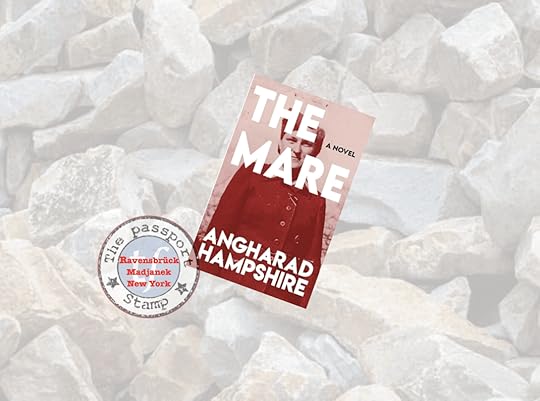
The Mare
Before the Second World War broke out, Hermine Braunsteiner was an ordinary young woman, a teenage housemaid from Vienna. By the time the war ended, she had transformed into one of the most notoriously cruel and violent guards in the Nazi concentration camps, the ‘Stamping Mare’ known for kicking prisoners to death.
In the aftermath of WWII, she disappeared back into civilian life, her crimes largely unknown and unpunished. Then she met a US war veteran, a bachelor holidaying alone in Austria. Ignorant of her past, he fell in love with her, married her and brought her back to America, where she lived for years as a well-liked suburban housewife. Until one day a tip-off from a Holocaust survivor sent a New York Times journalist to the couple's door . . .
The Mare offers a gripping portrait of the descent of ordinary people into absolute inhumanity. Unflinching and charged with urgent relevance, it asks how we attempt to justify the unjustifiable – and forgive the unforgivable.
In the aftermath of WWII, she disappeared back into civilian life, her crimes largely unknown and unpunished. Then she met a US war veteran, a bachelor holidaying alone in Austria. Ignorant of her past, he fell in love with her, married her and brought her back to America, where she lived for years as a well-liked suburban housewife. Until one day a tip-off from a Holocaust survivor sent a New York Times journalist to the couple's door . . .
The Mare offers a gripping portrait of the descent of ordinary people into absolute inhumanity. Unflinching and charged with urgent relevance, it asks how we attempt to justify the unjustifiable – and forgive the unforgivable.
320 pages, Paperback
First published September 18, 2024
Ratings & Reviews
Friends & Following
Create a free account to discover what your friends think of this book!
Community Reviews
Displaying 1 - 30 of 113 reviews

June 9, 2025
The Mare is the fictionalised account of the life of Hermine Braunsteiner who served as a prison guard in two concentration camps during WW2. It alternates between the points of view of Hermine herself and her husband, Russell Ryan. Each gives us a very different impression.
Russell meets Hermine in 1957 at a hotel in Austria where she is working. From the very beginning, he is besotted with her. She takes the driving seat in their relationship, whether due to genuine affection for him or because he offers a convenient gateway to a better life. He navigates the complex process of obtaining a marriage licence and facilitating their move to America. Their conventional married life is upended in July 1964 when they are confronted by allegations about Hermine’s past. Russell is unwavering in his support even as damning evidence is revealed during her trial for war crimes. You ask yourself, did he so want to believe the woman he married was not capable of such evil that he accepted her assurances she didn’t do the things she was accused of?
Hermine’s first person narrative takes us through her early life to the annexation of Austria by Germany and the outbreak of the Second World War. She takes a job in a brewery, then in a munitions factory before learning from a German officer with whom she is besotted about a job in a newly built women’s prison. The prison is Ravensbruck. She’s told its purpose is to ‘re-educate criminals through hard work,’ an explanation she naively accepts. (She’ll later tell Russell she only took the job because it was better paid.) Initially, she is shocked by the violence meted out to prisoners. Soon, though, it’s she who is threatened with punishment if she doesn’t ‘toughen up’ and praised for physical violence against prisoners. Eventually, she willingly carries out the acts of brutality that earn her the nickname ‘the Mare’.
One of the most chilling thing about Hermine’s account is her increasing nonchalance about the things she is witnessing and doing. She complains, ‘It doesn’t matter how many prisoners we gas, more just keep on coming’, as if they are a logistical inconvenience rather than fellow human beings she’s consigning to a horrific death. Acts of unspeakable brutality are treated as commonplace or justified as ‘necessary’. And as time goes on she even takes pride in being recognised by her superiors for her ‘efficiency’. It’s disturbing to enter the mind of someone capable of such despicable acts but somehow you can’t look away. You want to understand how someone could get to the point where they lose all concept of humanity. The author makes you confront that question.
The brilliance of the book’s structure is that we get to see the contradictions between Hermine’s own account of her actions and motivations, and what she tells Russell about her wartime experiences: the omissions, the obfuscations, the downright lies. Even more so at her trial when she continues to dispute the evidence of multiple individuals who witnessed her cruelty although we know what they are saying is correct because she has already told us so herself.
It’s possible I overuse the word ‘thought-provoking’ in my book reviews but I genuinely think it’s justified here.
The Mare is an unflinching exploration of humanity’s capacity for violence.
Russell meets Hermine in 1957 at a hotel in Austria where she is working. From the very beginning, he is besotted with her. She takes the driving seat in their relationship, whether due to genuine affection for him or because he offers a convenient gateway to a better life. He navigates the complex process of obtaining a marriage licence and facilitating their move to America. Their conventional married life is upended in July 1964 when they are confronted by allegations about Hermine’s past. Russell is unwavering in his support even as damning evidence is revealed during her trial for war crimes. You ask yourself, did he so want to believe the woman he married was not capable of such evil that he accepted her assurances she didn’t do the things she was accused of?
Hermine’s first person narrative takes us through her early life to the annexation of Austria by Germany and the outbreak of the Second World War. She takes a job in a brewery, then in a munitions factory before learning from a German officer with whom she is besotted about a job in a newly built women’s prison. The prison is Ravensbruck. She’s told its purpose is to ‘re-educate criminals through hard work,’ an explanation she naively accepts. (She’ll later tell Russell she only took the job because it was better paid.) Initially, she is shocked by the violence meted out to prisoners. Soon, though, it’s she who is threatened with punishment if she doesn’t ‘toughen up’ and praised for physical violence against prisoners. Eventually, she willingly carries out the acts of brutality that earn her the nickname ‘the Mare’.
One of the most chilling thing about Hermine’s account is her increasing nonchalance about the things she is witnessing and doing. She complains, ‘It doesn’t matter how many prisoners we gas, more just keep on coming’, as if they are a logistical inconvenience rather than fellow human beings she’s consigning to a horrific death. Acts of unspeakable brutality are treated as commonplace or justified as ‘necessary’. And as time goes on she even takes pride in being recognised by her superiors for her ‘efficiency’. It’s disturbing to enter the mind of someone capable of such despicable acts but somehow you can’t look away. You want to understand how someone could get to the point where they lose all concept of humanity. The author makes you confront that question.
The brilliance of the book’s structure is that we get to see the contradictions between Hermine’s own account of her actions and motivations, and what she tells Russell about her wartime experiences: the omissions, the obfuscations, the downright lies. Even more so at her trial when she continues to dispute the evidence of multiple individuals who witnessed her cruelty although we know what they are saying is correct because she has already told us so herself.
It’s possible I overuse the word ‘thought-provoking’ in my book reviews but I genuinely think it’s justified here.
The Mare is an unflinching exploration of humanity’s capacity for violence.

October 14, 2025
3.5. Hermine Braunsteiner was the first Nazi war criminal to be extradited from the United States to face trial in West Germany. The person behind it, the famous Nazi hunter Simon Wiesenthal (he played a role in finding Adolf Eichmann) got his lead by chance in Tel Aviv. She was known as the 'Mare', because she took such pleasure in kicking prisoners to death. During her trial the witness testimonies against her not only included taking children from their mothers to be thrown onto the gas chamber-bound trains, but killing children herself.
And yet, after the war, she met a US Air Force mechanic, Russell Ryan, married him and moved to Nova Scotia, Canada, before finally moving to New York. She became an American citizen. Ryan knew almost nothing about her past, only that she had worked in a 'prison'. Then one day a man knocked on their front door. He was from The New York Times; he knew the truth about Braunsteiner, and was going to write an article about her. Their lives very quickly changed.
Hampshire's novel about Braunsteiner's life and trial, focusing mostly on her relationship with Russell Ryan, is an engaging read, though sometimes the writing left something to be desired. It is told in very short chapters, alternating between two timelines and two perspectives: Hermine is the narrator in the war-era chapters, detailing her life as a camp guard, meanwhile Russell is the narrator of the post-war chapters, dealing with their relationship and ultimately, her trial. Even after finding out the truth about Hermine, Ryan decides to stay with his wife, which is something Hampshire explores. That was the most fascinating element of the story for me: how could he stay with a woman after finding out what she did? I had hoped Hampshire would have delved a little bit deeper into it, but equally I understand the difficulty (and controversy) of mining and potentially inventing a real person's thoughts for the sake of character. Hampshire said in an interview that she read hundreds upon hundreds of witness statements so that the violence that occurs in the camp chapters are almost always accounts of real violence.
The story itself is horrible and interesting enough to warrant a read. Hampshire's dialogue is particularly wooden at times and both Ryan and Braunsteiner, as narrators, are clumsy at times (for example, after The New York Times reporter leaves, Ryan speaks to Braunsteiner and she admits that some of what he says is true. Ryan panics, goes into the next room and takes up the calling card the reporter left. The chapter could have ended there, but instead the final line is, 'I need to stop him from writing an article.' The novel is filled with these sorts of clumsy overstatements, as if the reader cannot figure out what Ryan is hoping to achieve by rushing to pick up the reporter's card). I would generally recommend it though; I'm not sure I'd ever heard of Braunsteiner, despite being the first extradited Nazi war criminal from the US. Even though it lacked some of the depth I was hoping for, I did find it a thought-provoking novel, particularly concerning Russell Ryan, the American man who decided to stay as her husband, despite everything.
And yet, after the war, she met a US Air Force mechanic, Russell Ryan, married him and moved to Nova Scotia, Canada, before finally moving to New York. She became an American citizen. Ryan knew almost nothing about her past, only that she had worked in a 'prison'. Then one day a man knocked on their front door. He was from The New York Times; he knew the truth about Braunsteiner, and was going to write an article about her. Their lives very quickly changed.
Hampshire's novel about Braunsteiner's life and trial, focusing mostly on her relationship with Russell Ryan, is an engaging read, though sometimes the writing left something to be desired. It is told in very short chapters, alternating between two timelines and two perspectives: Hermine is the narrator in the war-era chapters, detailing her life as a camp guard, meanwhile Russell is the narrator of the post-war chapters, dealing with their relationship and ultimately, her trial. Even after finding out the truth about Hermine, Ryan decides to stay with his wife, which is something Hampshire explores. That was the most fascinating element of the story for me: how could he stay with a woman after finding out what she did? I had hoped Hampshire would have delved a little bit deeper into it, but equally I understand the difficulty (and controversy) of mining and potentially inventing a real person's thoughts for the sake of character. Hampshire said in an interview that she read hundreds upon hundreds of witness statements so that the violence that occurs in the camp chapters are almost always accounts of real violence.
The story itself is horrible and interesting enough to warrant a read. Hampshire's dialogue is particularly wooden at times and both Ryan and Braunsteiner, as narrators, are clumsy at times (for example, after The New York Times reporter leaves, Ryan speaks to Braunsteiner and she admits that some of what he says is true. Ryan panics, goes into the next room and takes up the calling card the reporter left. The chapter could have ended there, but instead the final line is, 'I need to stop him from writing an article.' The novel is filled with these sorts of clumsy overstatements, as if the reader cannot figure out what Ryan is hoping to achieve by rushing to pick up the reporter's card). I would generally recommend it though; I'm not sure I'd ever heard of Braunsteiner, despite being the first extradited Nazi war criminal from the US. Even though it lacked some of the depth I was hoping for, I did find it a thought-provoking novel, particularly concerning Russell Ryan, the American man who decided to stay as her husband, despite everything.

August 25, 2026
The Mare is an exceptionally powerful novel about Hermine Braunsteiner, a young woman who was a prison guard at Ravensbruck and Majdanek. Whilst Hermine was a real person, Hampshire is clear that the story she relates is pure fiction and her portrayal of Hermine and husband, Russel Ryan, are inventions.
The novel is divided into two timelines - Hermine's life following the war when she meets (and falls in love with) a young American, Russell Ryan. The second timeline describes Hermine's life just before and during the war.
Whilst the actual narrative is fiction Hermine was traced by Simon Wiesenthal and did stand trial for war crimes. We are shown some parts of what Hermine's life as a guard could have been like and it is hard to stay even vaguely objective, knowing how the camps were run and the sheer brutality shown to the Jews and Poles who inhabited them.
This is a horrific read at times, juxtaposed with Hermine's later life before she is tracked down. Whilst Hampshire does give you pause for thought with Hermine's age when she became a guard, she was nonetheless, given the nickname The Mare for a reason.
Very highly recommended. Angharad Hampshire has written a thought-provoking novel which will, however, sicken readers at times.
Thankyou very much to Netgalley and Penguin General UK for the digital review copy.
The novel is divided into two timelines - Hermine's life following the war when she meets (and falls in love with) a young American, Russell Ryan. The second timeline describes Hermine's life just before and during the war.
Whilst the actual narrative is fiction Hermine was traced by Simon Wiesenthal and did stand trial for war crimes. We are shown some parts of what Hermine's life as a guard could have been like and it is hard to stay even vaguely objective, knowing how the camps were run and the sheer brutality shown to the Jews and Poles who inhabited them.
This is a horrific read at times, juxtaposed with Hermine's later life before she is tracked down. Whilst Hampshire does give you pause for thought with Hermine's age when she became a guard, she was nonetheless, given the nickname The Mare for a reason.
Very highly recommended. Angharad Hampshire has written a thought-provoking novel which will, however, sicken readers at times.
Thankyou very much to Netgalley and Penguin General UK for the digital review copy.

November 5, 2024
This is an incredibly powerful book that confronts difficult issues about the nature of evil and love.
By fictionalising the life of a female concentration guard, Angharad Hampshire is able to explore how ordinary people commit unthinkable acts of violence and how they live with themselves and compose their identity in the years afterwards.
Half of the narrative in told from the perspective of the man who chose to stand by his wife through the initial journalistic article that reveals her past, a long trial in Germany listening to victims testify of the horrors committed against them, and her prison sentence and eventual release due to illness.
It is expertly written by an author who always seems fully in control of both the darkness and humanity of her subject matter.
By fictionalising the life of a female concentration guard, Angharad Hampshire is able to explore how ordinary people commit unthinkable acts of violence and how they live with themselves and compose their identity in the years afterwards.
Half of the narrative in told from the perspective of the man who chose to stand by his wife through the initial journalistic article that reveals her past, a long trial in Germany listening to victims testify of the horrors committed against them, and her prison sentence and eventual release due to illness.
It is expertly written by an author who always seems fully in control of both the darkness and humanity of her subject matter.

October 30, 2024
This is a tricky book to assess. Yes, it is gripping - based on the true story of The Mare of Majdanek, camp guard at both Ravensbrück and Majdanek, daughter, wife, kindly neighbour, vicious brute. The psychology of how ordinary people became killers, torturers and sadists is partially what this story is trying to tell. It is also a story of love and blind belief.
Told in two voices, one 1st person (Hermine telling her life from childhood to being saved from the Red Army) and 2nd person, told by her husband, Russell, though the ‘you’ isn’t the reader, it is Hermine herself.
There is nothing held back about life in the camps, either the work camps or the death camps, and it makes for grim reading as Hermine slowly loses all sense of self, becoming as cruel and unfeeling as those she once despised. Her story, and her character, is built from trial transcripts, interviews etc with the fictional story binding the rest into a whole. His story is entirely fictionalised.
Did I enjoy it? Not sure enjoy is the right word. I’m going to think on this further, as I’m not sure about how I feel about the idea of the few being executed for collective national guilt. If indeed that is what the book was implying. Her crimes were real, maybe not all, but certainly more than enough. Her excuse was - that was how things were! What would you have done? Good question.
I’m curious too, when other female and male camp guards were hanged not long after the war, how did these other cases take so long to come to trial? And then for the trials to last seemingly up to six years. As i said, I’m still thinking.
Told in two voices, one 1st person (Hermine telling her life from childhood to being saved from the Red Army) and 2nd person, told by her husband, Russell, though the ‘you’ isn’t the reader, it is Hermine herself.
There is nothing held back about life in the camps, either the work camps or the death camps, and it makes for grim reading as Hermine slowly loses all sense of self, becoming as cruel and unfeeling as those she once despised. Her story, and her character, is built from trial transcripts, interviews etc with the fictional story binding the rest into a whole. His story is entirely fictionalised.
Did I enjoy it? Not sure enjoy is the right word. I’m going to think on this further, as I’m not sure about how I feel about the idea of the few being executed for collective national guilt. If indeed that is what the book was implying. Her crimes were real, maybe not all, but certainly more than enough. Her excuse was - that was how things were! What would you have done? Good question.
I’m curious too, when other female and male camp guards were hanged not long after the war, how did these other cases take so long to come to trial? And then for the trials to last seemingly up to six years. As i said, I’m still thinking.

August 5, 2026
The Mare by Angharad Hampshire shook me to my core
In a fictional retelling of a true story, Angharad Hampshire creates an account of Hermine Braunsteiner, the first person to be extradited from the US in respect of Nazi war crimes during WW2.
Hermine Brausteiner was born into poverty in Austria, to a deeply religious family of seven children. After an unremarkable adolescence and a couple of jobs impeded by her low level of literacy, Brausteiner began work in an arms factory when Nazi Germany took over Austria in 1938. However, in 1939, Brausteiner learned of opportunities to work in the concentration camps, for four times the hourly wage she was earning. She did not hesitate to apply. What followed was a horrific litany of abuse at her hands, the cruelty earning her the name "The Mare of Madjenek" which remained with her when she transferred to Genthin
After the war (and her 3 year imprisonment), she met and married Russell Ryan, an American who had no clue about her history or her part in the war. They moved to Nova Scotia and then to America where Brausteiner gained American citizenship, only to be deported in 1973 after being found by a New York journalist/ Nazi Hunter.
The dual pov is striking in that it explores the subject from the perspective of Braunsteiner for the duration of the war and from the perspective of her husband, Russell Ryan after the war. This is a bold but relevant choice and works well to understand the facade that Braunsteiner put on and how she managed to fly under the radar of accountability for so long.
The story of Braunsteiner is tragic and upsetting but a part of history that cannot be sugarcoated or erased. Justice was only partially served and this book highlights the different persepctives and factors involved in how a person can become so evil, if it is inherent and how they can change their skin depending on their life at the time. The perspective of the husband absolutely boggled my mind, having been lied to for theentirety of their relationship, and how he supported her throughout (and despiite of her behaviour during) her trial
This book is raw and gritty. It doesn't pull punches and gets straight to the point. An easy read it is not, but it is certainly an important one
Thank you to Netgalley, the author and Penguin General UK - Fig Tree, Hamish Hamilton, Viking, Penguin Life, Penguin Business | Penguin . My review is left voluntarily and all opinions are my own
In a fictional retelling of a true story, Angharad Hampshire creates an account of Hermine Braunsteiner, the first person to be extradited from the US in respect of Nazi war crimes during WW2.
Hermine Brausteiner was born into poverty in Austria, to a deeply religious family of seven children. After an unremarkable adolescence and a couple of jobs impeded by her low level of literacy, Brausteiner began work in an arms factory when Nazi Germany took over Austria in 1938. However, in 1939, Brausteiner learned of opportunities to work in the concentration camps, for four times the hourly wage she was earning. She did not hesitate to apply. What followed was a horrific litany of abuse at her hands, the cruelty earning her the name "The Mare of Madjenek" which remained with her when she transferred to Genthin
After the war (and her 3 year imprisonment), she met and married Russell Ryan, an American who had no clue about her history or her part in the war. They moved to Nova Scotia and then to America where Brausteiner gained American citizenship, only to be deported in 1973 after being found by a New York journalist/ Nazi Hunter.
The dual pov is striking in that it explores the subject from the perspective of Braunsteiner for the duration of the war and from the perspective of her husband, Russell Ryan after the war. This is a bold but relevant choice and works well to understand the facade that Braunsteiner put on and how she managed to fly under the radar of accountability for so long.
The story of Braunsteiner is tragic and upsetting but a part of history that cannot be sugarcoated or erased. Justice was only partially served and this book highlights the different persepctives and factors involved in how a person can become so evil, if it is inherent and how they can change their skin depending on their life at the time. The perspective of the husband absolutely boggled my mind, having been lied to for theentirety of their relationship, and how he supported her throughout (and despiite of her behaviour during) her trial
This book is raw and gritty. It doesn't pull punches and gets straight to the point. An easy read it is not, but it is certainly an important one
Thank you to Netgalley, the author and Penguin General UK - Fig Tree, Hamish Hamilton, Viking, Penguin Life, Penguin Business | Penguin . My review is left voluntarily and all opinions are my own

April 5, 2026
This is a difficult book for me to review. I had to stop reading it for a bit because the subject matter was messing with my head. It is a well-written book, compelling to read, which surprised me because this is written in first person, which I don't typically love, and told in alternating POV chapters between the husband and wife. Oh my god, they are both gross. And it's one thing to read something entirely fictional, and another to read something based on fact, like this novel. This person did these things, this person is the definition of the "banality of evil," and really I am ready for my next book club book to be a total palate cleanser because I feel gross now.

September 7, 2025
Very interesting story but I couldn’t get past how badly it was written sorry

August 30, 2026
complex, saddening and infuriating

April 27, 2026
The thing about The Mare is that Angharad Hampshire avoids the usual literary theatrics. She lays out the facts of Hermine Braunsteiner’s life and lets them sit there. You have a woman who ditched a factory job for a guard position at Ravensbrück because the pay was better. It wasn't a grand ideological shift; it was a career move that ended with her kicking prisoners to death. Then the story shifts to Queens, New York, decades later. She is a housewife. She makes lunch. Her American husband thinks she is the gentlest person alive. That transition is what actually gets under your skin.
The logic here isn’t really about the camps themselves. It is about how elastic the human conscience can be. Hampshire looks at how someone can slide out of a uniform and into a suburban kitchen without missing a beat. It is a study of the "ordinariness" that makes atrocities possible, stripped of any academic cushion. It suggests that becoming a monster isn't some dramatic, cinematic transformation. It is just a sequence of small, pragmatic choices made for comfort. The terrifying part isn't the cruelty, but the ease of the slide back into "normal" life.
The husband, Russell, is the most abrasive part of the book. His devotion is a jagged pill. In an era where we demand absolute moral clarity, watching a man offer radical empathy to a war criminal feels almost offensive. He isn't just ignorant; he actively maintains a version of her that fits his living room. It forces a realization that monsters aren't usually hiding in the shadows. They are often being cherished by people who find it easier to love them than to acknowledge the truth. Love, in this context, looks a lot like complicity.
Hampshire’s prose is lean. She isn't interested in making you cry or manipulating your feelings with heavy adjectives. There is a sharp, observational distance that feels much more honest than a typical historical drama. She isn't giving a history lesson; she is pointing out that the people who built the scaffolds were neighbors looking for a raise. There is no sugarcoating the reality that the line between a civilian and a criminal is mostly a matter of circumstance. It is a brutal look at how easily the past can be tucked away behind a floral apron.
The logic here isn’t really about the camps themselves. It is about how elastic the human conscience can be. Hampshire looks at how someone can slide out of a uniform and into a suburban kitchen without missing a beat. It is a study of the "ordinariness" that makes atrocities possible, stripped of any academic cushion. It suggests that becoming a monster isn't some dramatic, cinematic transformation. It is just a sequence of small, pragmatic choices made for comfort. The terrifying part isn't the cruelty, but the ease of the slide back into "normal" life.
The husband, Russell, is the most abrasive part of the book. His devotion is a jagged pill. In an era where we demand absolute moral clarity, watching a man offer radical empathy to a war criminal feels almost offensive. He isn't just ignorant; he actively maintains a version of her that fits his living room. It forces a realization that monsters aren't usually hiding in the shadows. They are often being cherished by people who find it easier to love them than to acknowledge the truth. Love, in this context, looks a lot like complicity.
Hampshire’s prose is lean. She isn't interested in making you cry or manipulating your feelings with heavy adjectives. There is a sharp, observational distance that feels much more honest than a typical historical drama. She isn't giving a history lesson; she is pointing out that the people who built the scaffolds were neighbors looking for a raise. There is no sugarcoating the reality that the line between a civilian and a criminal is mostly a matter of circumstance. It is a brutal look at how easily the past can be tucked away behind a floral apron.

July 6, 2025
A gruelling read in terms of the subject matter but an important examination of the consequences when ordinary people, who consider themselves good and kind, are able to convince themselves that those who are ‘different’ are a threat to their way of life and must be exterminated. The potential for evil lies in all of us once we allow ourselves to be brainwashed by propaganda. A salutary warning for our times.
Sadly, however, the author did not do justice to the material despite the thorough research she has obviously conducted. The back and forth between Hermine’s war years and the later story of her marriage to Russell and subsequent court case were disappointing and trite. The war chapters were very short, often little more than a page or two with little space for anything more than one horror after another, a litany of brutality interwoven with trite romances and rivalries amongst the guards, none of which was convincing.
There was little attempt at characterisation: the guards were as featureless as their sad victims. In the post war chapters, the twee romance with a nerdy American tourist as her escape route brings Hermine to suburban America where she embarks on a humdrum existence with her lapdog of a husband. We are told it is a passionate romance but it seems little more than a marriage of convenience, whatever Russell tells himself.
There are clumsy attempts to humanise Hermine through her love for birds, plants and dogs, and pages of repetitive and stilted dialogue between the couple and their friends that is particularly wooden and unconvincing , and often quite risible.
The final section, the trial and imprisonment reads like summarised notes ands the final heartsearching is perfunctory.
Unless the author has some more profound insights to share, non fiction would be the better format with material like this.
Sadly, however, the author did not do justice to the material despite the thorough research she has obviously conducted. The back and forth between Hermine’s war years and the later story of her marriage to Russell and subsequent court case were disappointing and trite. The war chapters were very short, often little more than a page or two with little space for anything more than one horror after another, a litany of brutality interwoven with trite romances and rivalries amongst the guards, none of which was convincing.
There was little attempt at characterisation: the guards were as featureless as their sad victims. In the post war chapters, the twee romance with a nerdy American tourist as her escape route brings Hermine to suburban America where she embarks on a humdrum existence with her lapdog of a husband. We are told it is a passionate romance but it seems little more than a marriage of convenience, whatever Russell tells himself.
There are clumsy attempts to humanise Hermine through her love for birds, plants and dogs, and pages of repetitive and stilted dialogue between the couple and their friends that is particularly wooden and unconvincing , and often quite risible.
The final section, the trial and imprisonment reads like summarised notes ands the final heartsearching is perfunctory.
Unless the author has some more profound insights to share, non fiction would be the better format with material like this.

August 27, 2025
A tricky book to read. Very powerful as we try to learn from a history which repeats…but never again

April 1, 2025
Dual timeline novel set in WW2 and beyond
4.5*
Dual timeline novel set in WW2 and after
This novel is the fictionalised account of the life of Hermine Braunsteiner. who served as a prison guard – an Aufseherin – in two concentration camps during WW2.
The chapters are short and punchy and move between the years during WW2 and the post War period in America. The chapters alternate between Hermine’s experiences during the war and her subsequent life with her husband Russell, whom she met in Austria after the war; Russell’s running narrative addresses his wife directly as ‘you’ as the story unfolds.
The structure of this novel, I thought at first, would be off putting, I am not overly fond of a storyline whereby one character addresses another character directly. I thought I would struggle to engage. Further, when the present tense is used, it needs a capable writing hand to confidently handle prose and can often fall flat, but here, it works well, as it offers pathos and immediacy – it feels like we are peering over the shoulders of the characters. This is very competent, snappy writing and storytelling and the chosen format works really well, as the narrative is propelled forward through the war years and beyond.
Hermine is an average Austrian young woman, who is in her early twenties during the war years. Work was scarce at that time and she was offered the opportunity of working as a guard at Ravensbrück, a burgeoning women’s camp. At first it seemed like a run-of-the-mill job but as the numbers of prisoners began to swell, the brutality rose incrementally – and much of the novel looks at the complicity of the overseers, whilst balancing the notion that the ‘warped logic of Nazism held you in its thrall’. Spurned by her early lover, she exacts revenge on the nearest humble being. She fell in love but was betrayed (or, so she saw it) and seeks to move to another camp. She lands at Majdenek, which is beyond description. Disease is rife and several times she herself is felled by typhus, coming close to death on at least one occasion. It is beyond intolerable and she requests a transfer back to Ravensbrück.
A couple of decades after the war, she is extradited and put on trial in Germany, examining her time in Majdanek and for the atrocities she is deemed to have committed there. Her defence is that she suffered repeat attacks of typhus and was confined to bed during the alleged mistreatment/killing of prisoners. She also ‘doesn’t remember‘, although plenty of witnesses are prepared to testify against her.
Her husband’s blind faith in her is, of course, rattled but he is a loyal soul who sacrifices his life and friendships because of his (almost) unwavering commitment to her. During the trial, however, he is shocked to the core by what he hears but cannot reconcile the woman he married with the eponymous ‘mare’ of the book title, someone who kicked prisoners to death with her steel capped boots.
This is a very interesting fictional rendition of Braunsteiner’s life, weaving a great many recorded events into the storyline and set against the unfolding political developments in Europe, Vietnam and the USA. It encourages the reader to think about the situation from a good many perspectives and ponders the notion of amnesia and whether it can be a physical manifestation when someone has behaved barbarically, or whether it is a useful tool to avoid admitting culpability. How can someone live with themselves when they have been responsible for murdering thousands? How, even, is a monster created?
Justice for the victims is fittingly served and the reader is left to reflect on the reading experience. This novel set in in Ravensbrück / Majdanek and New York is well worth picking up, the research shines through.
4.5*
Dual timeline novel set in WW2 and after
This novel is the fictionalised account of the life of Hermine Braunsteiner. who served as a prison guard – an Aufseherin – in two concentration camps during WW2.
The chapters are short and punchy and move between the years during WW2 and the post War period in America. The chapters alternate between Hermine’s experiences during the war and her subsequent life with her husband Russell, whom she met in Austria after the war; Russell’s running narrative addresses his wife directly as ‘you’ as the story unfolds.
The structure of this novel, I thought at first, would be off putting, I am not overly fond of a storyline whereby one character addresses another character directly. I thought I would struggle to engage. Further, when the present tense is used, it needs a capable writing hand to confidently handle prose and can often fall flat, but here, it works well, as it offers pathos and immediacy – it feels like we are peering over the shoulders of the characters. This is very competent, snappy writing and storytelling and the chosen format works really well, as the narrative is propelled forward through the war years and beyond.
Hermine is an average Austrian young woman, who is in her early twenties during the war years. Work was scarce at that time and she was offered the opportunity of working as a guard at Ravensbrück, a burgeoning women’s camp. At first it seemed like a run-of-the-mill job but as the numbers of prisoners began to swell, the brutality rose incrementally – and much of the novel looks at the complicity of the overseers, whilst balancing the notion that the ‘warped logic of Nazism held you in its thrall’. Spurned by her early lover, she exacts revenge on the nearest humble being. She fell in love but was betrayed (or, so she saw it) and seeks to move to another camp. She lands at Majdenek, which is beyond description. Disease is rife and several times she herself is felled by typhus, coming close to death on at least one occasion. It is beyond intolerable and she requests a transfer back to Ravensbrück.
A couple of decades after the war, she is extradited and put on trial in Germany, examining her time in Majdanek and for the atrocities she is deemed to have committed there. Her defence is that she suffered repeat attacks of typhus and was confined to bed during the alleged mistreatment/killing of prisoners. She also ‘doesn’t remember‘, although plenty of witnesses are prepared to testify against her.
Her husband’s blind faith in her is, of course, rattled but he is a loyal soul who sacrifices his life and friendships because of his (almost) unwavering commitment to her. During the trial, however, he is shocked to the core by what he hears but cannot reconcile the woman he married with the eponymous ‘mare’ of the book title, someone who kicked prisoners to death with her steel capped boots.
This is a very interesting fictional rendition of Braunsteiner’s life, weaving a great many recorded events into the storyline and set against the unfolding political developments in Europe, Vietnam and the USA. It encourages the reader to think about the situation from a good many perspectives and ponders the notion of amnesia and whether it can be a physical manifestation when someone has behaved barbarically, or whether it is a useful tool to avoid admitting culpability. How can someone live with themselves when they have been responsible for murdering thousands? How, even, is a monster created?
Justice for the victims is fittingly served and the reader is left to reflect on the reading experience. This novel set in in Ravensbrück / Majdanek and New York is well worth picking up, the research shines through.

August 30, 2026
What would you do if your wife or husband or someone else you loved took part in a genocide?
That question is what drives “the Mare”, the astonishingly good debut novel by Angharad Hampshire.
Based on the real life story of Hermine Braunsteiner, who was a guard at Ravensbrück & Majdanek and her husband Russell Ryan. We explore the book which is made up of very short chapters from the POV of Russell (present) and Hermine (past).
Hampshire does a terrific job in showing how ordinary these people were, how they were almost, almost, lured into the horrific deeds they did.
Even though the author doesn’t shy away from describing the atrocities committed, the book is easily readable. A rare feat!
In the chapters of Ryan, we really see him struggle when it comes to light what Hermine did during the war. The struggle he’s facing, the friends who don’t want anything to do with them anymore and the frenzy by the media.
“i’m sorry, you say, I know this is hard for you but I cannot be made to feel ashamed of everything my country did. It’s not fair. I’m not responsible for everything that happened. I thought you of all people understood that but now it feels like even you are turning against me. I was in the wrong place at the wrong time. It was only six years of my life all the rest of my life I’ve been kind if I could erase those years, I would but I can’t.”
That question is what drives “the Mare”, the astonishingly good debut novel by Angharad Hampshire.
Based on the real life story of Hermine Braunsteiner, who was a guard at Ravensbrück & Majdanek and her husband Russell Ryan. We explore the book which is made up of very short chapters from the POV of Russell (present) and Hermine (past).
Hampshire does a terrific job in showing how ordinary these people were, how they were almost, almost, lured into the horrific deeds they did.
Even though the author doesn’t shy away from describing the atrocities committed, the book is easily readable. A rare feat!
In the chapters of Ryan, we really see him struggle when it comes to light what Hermine did during the war. The struggle he’s facing, the friends who don’t want anything to do with them anymore and the frenzy by the media.
“i’m sorry, you say, I know this is hard for you but I cannot be made to feel ashamed of everything my country did. It’s not fair. I’m not responsible for everything that happened. I thought you of all people understood that but now it feels like even you are turning against me. I was in the wrong place at the wrong time. It was only six years of my life all the rest of my life I’ve been kind if I could erase those years, I would but I can’t.”
November 12, 2025
After seeing this book reviewed and enjoyed by many people, and as it is being reprinted so it was a last chance to get it before then, I read it myself to see what it was all about.
Hermine Braunsteiner, a prison guard at Ravensbruck and Majdanek concentration camp during the war, age 20, became known as The Mare as she kicked prisoners to death, and was the first person to be extradited from the US to Germany to face war crime trials. After the war, she fled back to Vienna, met an American who she fell in love with and moved to America with him. He knew nothing of her past, and she was a perfect and kind wife who loved nature and birds and looking after her husband.
The novel, based on a true story, told in alternating narratives by Hermine and Russell, begins as a love story, and intertwines the brutality of the prisons and camps with normal life and how a person can go from filling beer cans to working as a guard for the Nazi regime. How can we reconcile the degradation and filth of life then, the killing, beatings, filth, sickness, starvation and cruelty with a woman who loved nature and was essentially kind. Do we do what we have to do, do we believe the lies, or do we just look away for fear of retribution ourselves? And is it fair to blame individuals for what a regime imposed and those within the system had to follow...
Relevant today, with what is happening and the hysteria that is being whipped up, we are clearly not there yet, but how far will people go when they are told what they should believe about a group of people. Plus it was war. No excuses for the atrocities at all, but it is a fascinating book that makes you wonder how did that happen and how did it go so far?
@angharadhampshirewriter #themare #booksreadin2025 #bookreview #bookreviewersofinstagram #booksbooksbooks #booksirecommend
Hermine Braunsteiner, a prison guard at Ravensbruck and Majdanek concentration camp during the war, age 20, became known as The Mare as she kicked prisoners to death, and was the first person to be extradited from the US to Germany to face war crime trials. After the war, she fled back to Vienna, met an American who she fell in love with and moved to America with him. He knew nothing of her past, and she was a perfect and kind wife who loved nature and birds and looking after her husband.
The novel, based on a true story, told in alternating narratives by Hermine and Russell, begins as a love story, and intertwines the brutality of the prisons and camps with normal life and how a person can go from filling beer cans to working as a guard for the Nazi regime. How can we reconcile the degradation and filth of life then, the killing, beatings, filth, sickness, starvation and cruelty with a woman who loved nature and was essentially kind. Do we do what we have to do, do we believe the lies, or do we just look away for fear of retribution ourselves? And is it fair to blame individuals for what a regime imposed and those within the system had to follow...
Relevant today, with what is happening and the hysteria that is being whipped up, we are clearly not there yet, but how far will people go when they are told what they should believe about a group of people. Plus it was war. No excuses for the atrocities at all, but it is a fascinating book that makes you wonder how did that happen and how did it go so far?
@angharadhampshirewriter #themare #booksreadin2025 #bookreview #bookreviewersofinstagram #booksbooksbooks #booksirecommend
August 13, 2025
Can be confronting at times but primarily does not focus solely on the holocaust victims but rather Hermine Braunsteiner, a WW2 prison guard who became the first woman in the USA to be extradited for war crimes.
it is both humane and inhumane and leads you to the question of whether Hermine's actions were the result of her circumstances.
Well written and constructed, particularly from the husband's point of view, who knew only fragments of his wife's past life and who dutifully remained loyal to her to the end.
Written as a novel, it was an excellent read.
it is both humane and inhumane and leads you to the question of whether Hermine's actions were the result of her circumstances.
Well written and constructed, particularly from the husband's point of view, who knew only fragments of his wife's past life and who dutifully remained loyal to her to the end.
Written as a novel, it was an excellent read.
December 31, 2025
The Mare is a book like no other. It was deeply thought-provoking and made me look at the situation from so many different points of view. At times, what I was reading was shocking, but the story was handled with such care and restraint that it never felt gratuitous. The writing was impeccable, and it held me from beginning to end. This is a story I know will stay with me forever.

August 29, 2026
Would undoubtedly say this is one of the most thought-provoking books I’ve ever read. Truly unnerving, powerful and harrowing right until the very last page

July 23, 2025
Thought provoking and unsettling

September 21, 2025
This is one of the most extraordinary, harrowing, thought provoking and brilliant books I have read.
On their first meeting Russell and Hermine discuss plants and edelweiss. As their relationship develops, he wants to take her back to New York with him. It takes months to secure her US citizenship. They settle happily together, get a house and a dog. Then there’s a knock on the door and a New York Times journalist blows Hermine’s story apart, alleging that she served as a guard in German concentration camps. Witnesses have identified Hermine as ‘the mare’ a guard accused of extreme cruelty. This novel is based on the true story of Hermine Braunsteiner a female concentration camp guard. She had not told her anything of this history.
Short chapters move between Hermine’s past, the camps, her relationship with Russell; between Hermine’s and Russell's narratives. Hermine protests her innocence, ‘I only did what everyone else did back then. I just did my job.’ ‘If you had been me, you would have done the work too.’ Russell believes culpability lies with those in power, but nevertheless his narratives betrays doubt. Scenes in the camp document appalling cruelty. The structure made me feel like being in a courtroom, piecing together a story, sifting through evidence, weighing up housewife Hermine with The Mare. I found myself in the role of judge and juror. Three people were on trial..
Russell. Why did he continue to believe in his wife?
Hermine - Was she simply carrying out orders?
Myself - would I have done the same in these circumstances?
The author uses the medium of fiction so brilliantly, imagining dialogues, and allowing Hermine’s character to reveal itself through her own fictionalised narrative. She complains about her constant illness whilst showing no compassion for the prisoners; she comments, “Everyone here seems to side with the Jews.” She chooses the prison work because of the higher salary. One scene really stuck out for me as the prison guards head out for a meal in a horse-drawn carriage, “as if in a fairytale..’
This contrasts to the picture of Hermine the wife, the friend, the daughter. A woman devoted to her family, a hard and conscientious worker. Where do the two sides of Hermine intersect and how can she be both?
This book completely absorbed me. I found myself looking at old reels of Hermine’s trial, reading articles by the author and others and talking about it to anyone who would listen. I found this quote from the author, “The true horror of genocide is found in the similarity between us and the perpetrators, not in the difference.’
One of my top reads of 2025.
On their first meeting Russell and Hermine discuss plants and edelweiss. As their relationship develops, he wants to take her back to New York with him. It takes months to secure her US citizenship. They settle happily together, get a house and a dog. Then there’s a knock on the door and a New York Times journalist blows Hermine’s story apart, alleging that she served as a guard in German concentration camps. Witnesses have identified Hermine as ‘the mare’ a guard accused of extreme cruelty. This novel is based on the true story of Hermine Braunsteiner a female concentration camp guard. She had not told her anything of this history.
Short chapters move between Hermine’s past, the camps, her relationship with Russell; between Hermine’s and Russell's narratives. Hermine protests her innocence, ‘I only did what everyone else did back then. I just did my job.’ ‘If you had been me, you would have done the work too.’ Russell believes culpability lies with those in power, but nevertheless his narratives betrays doubt. Scenes in the camp document appalling cruelty. The structure made me feel like being in a courtroom, piecing together a story, sifting through evidence, weighing up housewife Hermine with The Mare. I found myself in the role of judge and juror. Three people were on trial..
Russell. Why did he continue to believe in his wife?
Hermine - Was she simply carrying out orders?
Myself - would I have done the same in these circumstances?
The author uses the medium of fiction so brilliantly, imagining dialogues, and allowing Hermine’s character to reveal itself through her own fictionalised narrative. She complains about her constant illness whilst showing no compassion for the prisoners; she comments, “Everyone here seems to side with the Jews.” She chooses the prison work because of the higher salary. One scene really stuck out for me as the prison guards head out for a meal in a horse-drawn carriage, “as if in a fairytale..’
This contrasts to the picture of Hermine the wife, the friend, the daughter. A woman devoted to her family, a hard and conscientious worker. Where do the two sides of Hermine intersect and how can she be both?
This book completely absorbed me. I found myself looking at old reels of Hermine’s trial, reading articles by the author and others and talking about it to anyone who would listen. I found this quote from the author, “The true horror of genocide is found in the similarity between us and the perpetrators, not in the difference.’
One of my top reads of 2025.

January 22, 2025
This is a very well researched, well written book which deals in nuance and compassion even while it describes some of the darkest things humans have ever done to one another.
The narrative is split between Hermine in the 1940s and her husband, Russell, in the second half of the twentieth century. Hampshire tries to answer the questions How do ordinary people come to commit cruel acts? and How do kind people keep loving someone after they discover cruelty in that person’s past? Obviously these are not questions with straightforward, universal answers, but, through humanising the Ryans, Hampshire explores them and provides implied answers.
She is clear that these are fictional characters based on the historical figures, and not the people themselves. This is a novel, for all the factual historical content. As such is is well structured and the characters and settings are fully realised. My only slight quibble, which is a matter of taste, is that there were times while I was reading it when it would have been clearer if quotation marks had been used. Perhaps some of those ambiguities were intentional.
This novel seems particularly important now as right wing politicians gain power all over the world. Hermine Braunsteiner slipped easily, tiny step by tiny step, into being a tool of a totalitarian regime, and committing violence in its support. The world needs people to be aware of how that happens, vigilant to stop ourselves following the same route.
The narrative is split between Hermine in the 1940s and her husband, Russell, in the second half of the twentieth century. Hampshire tries to answer the questions How do ordinary people come to commit cruel acts? and How do kind people keep loving someone after they discover cruelty in that person’s past? Obviously these are not questions with straightforward, universal answers, but, through humanising the Ryans, Hampshire explores them and provides implied answers.
She is clear that these are fictional characters based on the historical figures, and not the people themselves. This is a novel, for all the factual historical content. As such is is well structured and the characters and settings are fully realised. My only slight quibble, which is a matter of taste, is that there were times while I was reading it when it would have been clearer if quotation marks had been used. Perhaps some of those ambiguities were intentional.
This novel seems particularly important now as right wing politicians gain power all over the world. Hermine Braunsteiner slipped easily, tiny step by tiny step, into being a tool of a totalitarian regime, and committing violence in its support. The world needs people to be aware of how that happens, vigilant to stop ourselves following the same route.

November 3, 2024
It's 1957. A young man from the US and a woman from Vienna meet and fall in love. They get married and move to New York to create a quiet life for themselves.
Until one day a reporter knocks on their door to talk to Hermine Braunsteiner-Ryan about her work as a guard in a Nazi Concentration Camp.
In two alternating storylines we learn how Hermine first became a prison guard because of the good pay and then gradually becomes more violent over time.
And how after the war she denies her role in everything that happened.
Her husband stays with her. Even when she loses her American citizenship and gets extradited to Germany and put on trial.
It is a hard-to-read book that explores the limits of justice, love and solidarity.
But most of all it is a story of ambiguity and cognitive dissonance.
Great book!
Until one day a reporter knocks on their door to talk to Hermine Braunsteiner-Ryan about her work as a guard in a Nazi Concentration Camp.
In two alternating storylines we learn how Hermine first became a prison guard because of the good pay and then gradually becomes more violent over time.
And how after the war she denies her role in everything that happened.
Her husband stays with her. Even when she loses her American citizenship and gets extradited to Germany and put on trial.
It is a hard-to-read book that explores the limits of justice, love and solidarity.
But most of all it is a story of ambiguity and cognitive dissonance.
Great book!
January 29, 2025
I’m really struggling with this book but all the reviews are so positive I’m confused. There is the seed, no, a nearly fully fledged plant of an interesting, engaging read here but the narrative style is extremely difficult to get into and one of the perspectives from which the story is told, the husband, is so soppy as to be totally unbelievable. On top of that, there are occasional lines that are so clunky as to be akin to yanking the gear stick out without pressing the clutch. What makes matters worse is the excruciatingly slow pace it takes to get beyond what we’re told on the blurb. It will make a good film. Maybe that’s what the author is going for, getting a clunky poorly edited book out quick so someone can buy the rights to adapt it.
May 1, 2025
2.5/5 stars
A worthwhile story, which is deserving of a fictional retelling, Hampshire's treatment nonetheless seems to shy away to some degree from the brutality meted out by it's protagonist. The result is that the juxtaposition of this compared to the comfortable existence of her life as an immigrant to the US doesn't quite work.
In spite of this, the book does try to ask the reader some interesting questions such as where the line between obligation to one's nation and that of the morals of a wider society lie, and when breaches of such societal obligations should be forgiven, if at all.
A worthwhile story, which is deserving of a fictional retelling, Hampshire's treatment nonetheless seems to shy away to some degree from the brutality meted out by it's protagonist. The result is that the juxtaposition of this compared to the comfortable existence of her life as an immigrant to the US doesn't quite work.
In spite of this, the book does try to ask the reader some interesting questions such as where the line between obligation to one's nation and that of the morals of a wider society lie, and when breaches of such societal obligations should be forgiven, if at all.

August 27, 2026
Thank you to NetGalley, Penguin, and Angharad Hampshire for an ARC of ‘The Mare’.
This book details the life of Hermine Braunsteiner, an Austrian SS Helferin and female camp guard at Ravensbrück and Majdanek concentration camps during WW2. The narrative switches between the perspectives of Hermine and her American husband Russell, as well as 2 time periods: the war and her trial in the ‘70s.
Simply written, staggeringly tragic, and raising important questions about the morality of serving one’s country at a time of war, Hampshire’s historical fiction novel is a tour de force. It sensitively explores a dark and complex time while provoking questions of individual vs group culpability. Her use of the second person also forces us, as the reader, to question ourselves: how would we have acted, if placed under similar circumstances? Would we blame ourselves, or the system that put us there? And at time of such normalised brutality and bigotry, and when America was heralding the troops they sent to fight and to kill in Vietnam as heroes, was it right for them to judge the young people swept into the regime of the losing side?
I loved this book. It was thought-provoking, well-researched, viscerally devastating and informative in equal measure. I especially enjoyed the dichotomy between the older and younger versions of Hermine. Her growing apathy in the camps, the occasional remark as an older woman that showed she still held some of the same beliefs. And how, despite all that she did, she can still be someone deserving of sympathy. Hampshire does an excellent job of reminding us of the human story behind the Nazi regime, and the infinite complexities of judging history.
This book details the life of Hermine Braunsteiner, an Austrian SS Helferin and female camp guard at Ravensbrück and Majdanek concentration camps during WW2. The narrative switches between the perspectives of Hermine and her American husband Russell, as well as 2 time periods: the war and her trial in the ‘70s.
Simply written, staggeringly tragic, and raising important questions about the morality of serving one’s country at a time of war, Hampshire’s historical fiction novel is a tour de force. It sensitively explores a dark and complex time while provoking questions of individual vs group culpability. Her use of the second person also forces us, as the reader, to question ourselves: how would we have acted, if placed under similar circumstances? Would we blame ourselves, or the system that put us there? And at time of such normalised brutality and bigotry, and when America was heralding the troops they sent to fight and to kill in Vietnam as heroes, was it right for them to judge the young people swept into the regime of the losing side?
I loved this book. It was thought-provoking, well-researched, viscerally devastating and informative in equal measure. I especially enjoyed the dichotomy between the older and younger versions of Hermine. Her growing apathy in the camps, the occasional remark as an older woman that showed she still held some of the same beliefs. And how, despite all that she did, she can still be someone deserving of sympathy. Hampshire does an excellent job of reminding us of the human story behind the Nazi regime, and the infinite complexities of judging history.

July 17, 2025
A fictionalised account of the life of Hermine Braunsteiner, one of a few thousand women who worked as a concentration camp guard. Living her life as a suburban housewife, her history catches up with her.
Jumping between her discovery, and the key moments of the path that led her to be a tool in the Nazi atrocities, we follow this young woman seeking work as the war breaks out. Following opportunities from Vienna to a factory, then the prison camp, her path to better pay to send home to her family seems so normal, even as it is disturbing. The slow emergence into horror and cruelty, the witnessing and participation in the most hideous of war crimes.
After the war, Hermine meets an American, they fall in love, and she migrates to build a life together with him. When the past comes knocking, this man is forced to question everything, and needs to work out who his wife is, what she was, and what he is to do as her husband.
A book to challenge us all about the always burning question - what would/are you doing in times of genocide and depravity of people's human rights? Are you caught up in the propaganda, the things you are told? Do you stand up for what's right, no matter the cost to yourself and your family?
Jumping between her discovery, and the key moments of the path that led her to be a tool in the Nazi atrocities, we follow this young woman seeking work as the war breaks out. Following opportunities from Vienna to a factory, then the prison camp, her path to better pay to send home to her family seems so normal, even as it is disturbing. The slow emergence into horror and cruelty, the witnessing and participation in the most hideous of war crimes.
After the war, Hermine meets an American, they fall in love, and she migrates to build a life together with him. When the past comes knocking, this man is forced to question everything, and needs to work out who his wife is, what she was, and what he is to do as her husband.
A book to challenge us all about the always burning question - what would/are you doing in times of genocide and depravity of people's human rights? Are you caught up in the propaganda, the things you are told? Do you stand up for what's right, no matter the cost to yourself and your family?

May 15, 2025
I'm not sure what I was expecting when I picked this up, but confusion was definitely not on my radar. Not about the story, which is a good one. This book makes you question who you REALLY are, deep inside, when faced with impossible choices. Morality, love, kindness, evilness, cruelty, and hate all live in our inner psyche, and they live closely, side by side. It may take a perfect storm to unleash it all, but it all exists in there.
The other half is politics. So few were punished for crimes against humanity. As I recall, Nazis were hidden all over the world, even in the US, within our government, for their knowledge of science. Was it fair to imprison old people who had committed heinous crimes in the 90s? Yes. Was it fair to hide and protect higher-ups considered useful to our governments? No. Absolutely not. Many of the companies complicit in the Nazi war machine are multi-billion dollar companies today, despite the history. I couldn't help but feel anger that, indeed, the smaller fish got nailed, while the brains behind the genocide walked free, with world governments' blessing. Very interesting book that makes you *feel*.
The other half is politics. So few were punished for crimes against humanity. As I recall, Nazis were hidden all over the world, even in the US, within our government, for their knowledge of science. Was it fair to imprison old people who had committed heinous crimes in the 90s? Yes. Was it fair to hide and protect higher-ups considered useful to our governments? No. Absolutely not. Many of the companies complicit in the Nazi war machine are multi-billion dollar companies today, despite the history. I couldn't help but feel anger that, indeed, the smaller fish got nailed, while the brains behind the genocide walked free, with world governments' blessing. Very interesting book that makes you *feel*.
This entire review has been hidden because of spoilers.

August 7, 2026
4.5 stars. This was an incredibly well drawn, well researched novel. It’s told in a dual voice narrative through the alternating perspectives of Hermine Braunsteiner and her husband, Russell. Hermine was the first person to be extradited from the US to Germany to be put on trial for Nazi war crimes. She worked first at Ravensbrück as a guard, then at Majdanek.
It makes for a difficult read due to the distressing recounting of events in the camps and the horrendous brutality and suffering endured. Yet the style of the book, with very short chapters, moving back and forth in time, means we are never forced to dwell too long back in the camps before the story moves forward in time again.
Hampshire has us repeatedly questioning how seemingly normal everyday young women could have taken on these roles and been desensitised to the violence so quickly and readily. The author also has us put her husband’s actions under the spotlight too. How could Russell have stood by his wife to the very end? Even after learning about her horrendous actions?
A recommended read albeit a sad and sombre one.
It makes for a difficult read due to the distressing recounting of events in the camps and the horrendous brutality and suffering endured. Yet the style of the book, with very short chapters, moving back and forth in time, means we are never forced to dwell too long back in the camps before the story moves forward in time again.
Hampshire has us repeatedly questioning how seemingly normal everyday young women could have taken on these roles and been desensitised to the violence so quickly and readily. The author also has us put her husband’s actions under the spotlight too. How could Russell have stood by his wife to the very end? Even after learning about her horrendous actions?
A recommended read albeit a sad and sombre one.

August 27, 2026
Extraordinary.
Imagine if the woman you love and have married turned out to have been a concentration camp guard during WWII. Imagine if you only found out when a journalist comes to knock on your door. The woman you love tells you that she has not committed any of the atrocities she’s accused of. What do you do, who do you belief and what stories do you tell yourself?
The narrative is split between Hermine’s story, slowly revealing her understanding of what she did in the camps, and Russel’s story, starting as a love story when he meets Hermine in Austria 12 years after the war, marries her and brings her back to the U.S. His narrative soon turns into a nightmare when Hermine is outed by nazi hunter’s and brought to trial.
Based on a true story, this novel asks deeply personal questions about the nature of love, of memory and of what justice means. Heavy stuff but it’s also extremely well written and reads like a thriller. Best book I’ve read this year, I’m in awe of this author.
Imagine if the woman you love and have married turned out to have been a concentration camp guard during WWII. Imagine if you only found out when a journalist comes to knock on your door. The woman you love tells you that she has not committed any of the atrocities she’s accused of. What do you do, who do you belief and what stories do you tell yourself?
The narrative is split between Hermine’s story, slowly revealing her understanding of what she did in the camps, and Russel’s story, starting as a love story when he meets Hermine in Austria 12 years after the war, marries her and brings her back to the U.S. His narrative soon turns into a nightmare when Hermine is outed by nazi hunter’s and brought to trial.
Based on a true story, this novel asks deeply personal questions about the nature of love, of memory and of what justice means. Heavy stuff but it’s also extremely well written and reads like a thriller. Best book I’ve read this year, I’m in awe of this author.

August 11, 2025
Wow this was an incredible story. This made me think about guilt and war crimes and responsibility…not just in Germany during WW2 but also with what is happening around the world today….
This is about a real woman who was a guard at a women’s concentration camp during WW2. She was living a peaceful life in America after the war when she is suddenly extradited to Germany and put on trial for murder. This was fascinating to read and by the end I still wasn’t sure if I was supposed to feel sympathy for her or not. Was her version of events true? Was she in denial? Was she evil? Did she feel like she really had no choice? Was she brainwashed? I will be thinking about this book for a long time, it deserves more attention!!
This is about a real woman who was a guard at a women’s concentration camp during WW2. She was living a peaceful life in America after the war when she is suddenly extradited to Germany and put on trial for murder. This was fascinating to read and by the end I still wasn’t sure if I was supposed to feel sympathy for her or not. Was her version of events true? Was she in denial? Was she evil? Did she feel like she really had no choice? Was she brainwashed? I will be thinking about this book for a long time, it deserves more attention!!
Displaying 1 - 30 of 113 reviews