

What do you think?

Lincoln's Dreams
"A novel of classical proportions and virtues...humane and moving."–The Washington Post Book World
"A love story on more than one level, and Ms. Willis does justice to them all. It was only toward the end of the book that I realized how much tension had been generated, how engrossed I was in the characters, how much I cared about their fates."–The New York Times Book Review
For Jeff Johnston, a young historical researcher for a Civil War novelist, reality is redefined on a bitter cold night near the close of a lingering winter. He meets Annie, an intense and lovely young woman suffering from vivid, intense nightmares. Haunted by the dreamer and her unrelenting dreams, Jeff leads Annie on an emotional odyssey through the heartland of the Civil War in search of a cure. On long-silenced battlefields their relationship blossoms–two obsessed lovers linked by unbreakable chains of history, torn by a duty that could destroy them both. Suspenseful, moving, and highly compelling, Lincoln’s Dreams is a novel of rare imaginative power.
"A love story on more than one level, and Ms. Willis does justice to them all. It was only toward the end of the book that I realized how much tension had been generated, how engrossed I was in the characters, how much I cared about their fates."–The New York Times Book Review
For Jeff Johnston, a young historical researcher for a Civil War novelist, reality is redefined on a bitter cold night near the close of a lingering winter. He meets Annie, an intense and lovely young woman suffering from vivid, intense nightmares. Haunted by the dreamer and her unrelenting dreams, Jeff leads Annie on an emotional odyssey through the heartland of the Civil War in search of a cure. On long-silenced battlefields their relationship blossoms–two obsessed lovers linked by unbreakable chains of history, torn by a duty that could destroy them both. Suspenseful, moving, and highly compelling, Lincoln’s Dreams is a novel of rare imaginative power.
229 pages, Mass Market Paperback
First published April 1, 1987
About the author
Connie Willis
253 books4,793 followersConstance Elaine Trimmer Willis is an American science fiction writer. She is one of the most honored science fiction writers of the 1980s and 1990s.
She has won, among other awards, ten Hugo Awards and six Nebula Awards. Willis most recently won a Hugo Award for All Seated on the Ground (August 2008). She was the 2011 recipient of the Damon Knight Memorial Grand Master Award from the Science Fiction Writers of America (SFWA).
She lives in Greeley, Colorado with her husband Courtney Willis, a professor of physics at the University of Northern Colorado. She also has one daughter, Cordelia.
Willis is known for her accessible prose and likable characters. She has written several pieces involving time travel by history students and faculty of the future University of Oxford. These pieces include her Hugo Award-winning novels Doomsday Book and To Say Nothing of the Dog and the short story "Fire Watch," found in the short story collection of the same name.
Willis tends to the comedy of manners style of writing. Her protagonists are typically beset by single-minded people pursuing illogical agendas, such as attempting to organize a bell-ringing session in the middle of a deadly epidemic (Doomsday Book), or frustrating efforts to analyze near-death experiences by putting words in the mouths of interviewees (Passage).
She has won, among other awards, ten Hugo Awards and six Nebula Awards. Willis most recently won a Hugo Award for All Seated on the Ground (August 2008). She was the 2011 recipient of the Damon Knight Memorial Grand Master Award from the Science Fiction Writers of America (SFWA).
She lives in Greeley, Colorado with her husband Courtney Willis, a professor of physics at the University of Northern Colorado. She also has one daughter, Cordelia.
Willis is known for her accessible prose and likable characters. She has written several pieces involving time travel by history students and faculty of the future University of Oxford. These pieces include her Hugo Award-winning novels Doomsday Book and To Say Nothing of the Dog and the short story "Fire Watch," found in the short story collection of the same name.
Willis tends to the comedy of manners style of writing. Her protagonists are typically beset by single-minded people pursuing illogical agendas, such as attempting to organize a bell-ringing session in the middle of a deadly epidemic (Doomsday Book), or frustrating efforts to analyze near-death experiences by putting words in the mouths of interviewees (Passage).
Ratings & Reviews
Friends & Following
Create a free account to discover what your friends think of this book!
Community Reviews
Displaying 1 - 30 of 437 reviews

June 24, 2011
I have a few issues with this book. I enjoyed it but it is probably my least favorite Willis.
Things she did right:
The historical research, as always, was top notch. The Civil War scenes felt real and immediate and personal. Of all of the characters in the novel, it was Robert E Lee that resonated with me the most. And Traveller, of course.
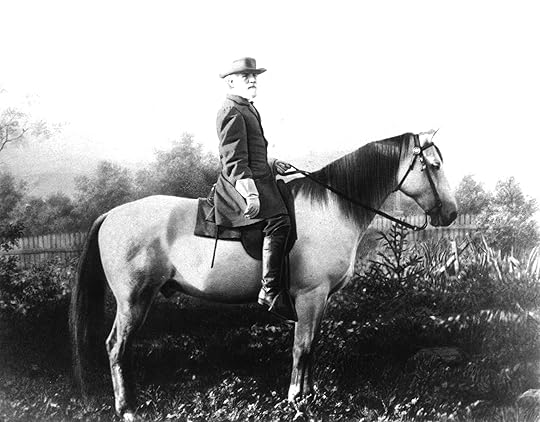
The book is well written and has a fascinating semblance of action despite the presence of the usual Willis running-back-and-forth business and the usual ships passing in the night Willis mis-communications. I've come to expect those things in her novels and enjoy them for the way they circle toward a goal in a way that makes yo think they may never get there.
The book within the book was used cleverly, as were the research passages that started each chapter.
Things that didn't work for me this time around:
1) A number of the characters felt a little thin to me. Annie was a little too waifish and too willing to be cared for by whichever man happened to step into the creepy father-husband role. Jeff's and Broun's and Richard's motivations and obsessions were a little too circular and convenient.
2)A little too much of the novel occurred via answering machine message.
3) In real life, the man who sold Robert E. Lee his horse Traveller was named Broun. If Jeff were really doing all this Civil War research for his own boss Broun, he should have been bowled over by this coincidence - or at least acknowledged it. I'm sure it's just Willis's tip o'the hat, but it feels a little obvious to me.
It leads to my big pet peeve: horse details done wrong. Willis obviously did meticulous historical research. I'm sure she had beta readers checking her facts and her timelines for accuracy. So how did she let so many mistakes into the two pages of modern horse vet interaction?
There's a scene with a large animal vet examining a lame horse. He walks the horse to determine the source of lameness, then ties it securely by the bridle in order to brush dirt off her hoof with a knife.
Connie Willis, champion of historical settings, gets numerous things wrong in a single scene.
1) It seems unlikely that the vet would use a knife instead of a hoof pick, since they are in his own barn and presumably he would have the tools of the trade handy. That's kind of like a chef, in her own kitchen, choosing to cut an orange with a spoon. It'll work, but there are better tools.
2) He puts his hand on the sole of each foot, presumably to feel for heat/infection, but he doesn't clean the hoof out until a page or two later. If he's feeling for infection as he says, he should probably be putting his hand on the actual hoof, not the layer of shavings and muck described a moment later. The first thing you would do in looking for a source of mysterious lameness is clean the friggin' hooves.
3) It's pretty hard for a vet to determine a source of lameness while walking a horse himself "parading her in a slow circle." Way easier to have somebody else do the walking (and preferably trotting) so that he can stand away and see how clean the gait is, if a particular hoof is being favored, if the horse is bobbing her head at a particular point in the stride (an indication of pain). He had at least two extra people there to do this for him, but didn't ask either.
4) Most egregious: he ties her securely by the bridle? Willis probably meant by the reins, not the bridle, for starters, though that isn't any better. You don't tie a horse by the bridle (or the reins) because it is dangerous and painful. If the mare moves to the end of her range of motion she'll be jabbed in the mouth by the bit. Unfair punishment, and possibly a cause of panic and further injury. You use a leadrope attached to a halter and tie with a quick-release knot, or cross-tie directly to the halter. Not the bridle, not the reins.
For me this is frustrating just because it causes me to doubt the accuracy of other aspects of the book. As in any novel with a lot of historical details, my belief in the story demands trust in the writer. I'm still a huge fan of her writing, but I'm going to have to write this one off as an early, minor work.
Things she did right:
The historical research, as always, was top notch. The Civil War scenes felt real and immediate and personal. Of all of the characters in the novel, it was Robert E Lee that resonated with me the most. And Traveller, of course.
The book is well written and has a fascinating semblance of action despite the presence of the usual Willis running-back-and-forth business and the usual ships passing in the night Willis mis-communications. I've come to expect those things in her novels and enjoy them for the way they circle toward a goal in a way that makes yo think they may never get there.
The book within the book was used cleverly, as were the research passages that started each chapter.
Things that didn't work for me this time around:
1) A number of the characters felt a little thin to me. Annie was a little too waifish and too willing to be cared for by whichever man happened to step into the creepy father-husband role. Jeff's and Broun's and Richard's motivations and obsessions were a little too circular and convenient.
2)A little too much of the novel occurred via answering machine message.
3) In real life, the man who sold Robert E. Lee his horse Traveller was named Broun. If Jeff were really doing all this Civil War research for his own boss Broun, he should have been bowled over by this coincidence - or at least acknowledged it. I'm sure it's just Willis's tip o'the hat, but it feels a little obvious to me.
It leads to my big pet peeve: horse details done wrong. Willis obviously did meticulous historical research. I'm sure she had beta readers checking her facts and her timelines for accuracy. So how did she let so many mistakes into the two pages of modern horse vet interaction?
There's a scene with a large animal vet examining a lame horse. He walks the horse to determine the source of lameness, then ties it securely by the bridle in order to brush dirt off her hoof with a knife.
Connie Willis, champion of historical settings, gets numerous things wrong in a single scene.
1) It seems unlikely that the vet would use a knife instead of a hoof pick, since they are in his own barn and presumably he would have the tools of the trade handy. That's kind of like a chef, in her own kitchen, choosing to cut an orange with a spoon. It'll work, but there are better tools.
2) He puts his hand on the sole of each foot, presumably to feel for heat/infection, but he doesn't clean the hoof out until a page or two later. If he's feeling for infection as he says, he should probably be putting his hand on the actual hoof, not the layer of shavings and muck described a moment later. The first thing you would do in looking for a source of mysterious lameness is clean the friggin' hooves.
3) It's pretty hard for a vet to determine a source of lameness while walking a horse himself "parading her in a slow circle." Way easier to have somebody else do the walking (and preferably trotting) so that he can stand away and see how clean the gait is, if a particular hoof is being favored, if the horse is bobbing her head at a particular point in the stride (an indication of pain). He had at least two extra people there to do this for him, but didn't ask either.
4) Most egregious: he ties her securely by the bridle? Willis probably meant by the reins, not the bridle, for starters, though that isn't any better. You don't tie a horse by the bridle (or the reins) because it is dangerous and painful. If the mare moves to the end of her range of motion she'll be jabbed in the mouth by the bit. Unfair punishment, and possibly a cause of panic and further injury. You use a leadrope attached to a halter and tie with a quick-release knot, or cross-tie directly to the halter. Not the bridle, not the reins.
For me this is frustrating just because it causes me to doubt the accuracy of other aspects of the book. As in any novel with a lot of historical details, my belief in the story demands trust in the writer. I'm still a huge fan of her writing, but I'm going to have to write this one off as an early, minor work.

February 8, 2008
I usually love Connie Willis, but this novel failed to click for me. I had several problems: first, Willis asks readers to sympathize with Robert E. Lee, a lot. But even though Americans of my generation are kind of trained, from elementary school on up, to think of Lee as not such a bad guy, my sympathy, frankly, cuts off after a certain point. (Totally different debate here, but: blah blah blah duty, yeah sure; but basic morality trumps duty, okay?) More significant, probably, was how underdeveloped the characters in this felt: by the end I had no idea, really, of what type of guy Jeff was, and Annie I found mostly annoying. The parts of the narrative I found the most interesting were the bits about Lee’s horse Traveller; I’m willing to go out on a limb here and say that the main narrative draw should pretty much never be the horse. (Certain children’s novels excepted.) The whole book almost feels like a warm-up for Passage, and if this is what Willis needed to get out of her system in order to write that book, fine, because Passage is amazing. Lincoln’s Dreams, on the other hand…not so much.
March 22, 2008
I read this book out on the strength of its Amazon reviews. I was sadly disappointed. Perhaps it's just that I don't find anything about the Civil War particularly compelling. Perhaps it's that the female character was too much of a shadow figure. Perhaps (and I favor this explanation) it's just that this book wasn't well written. The main character is a researcher for a man who writes novels about the Civil War. He meets a young woman who is having the dreams of Robert E. Lee and is immediately in love. He tries to help the woman escape from her dreams even though she feels compelled to go on dreaming them. The only character that seemed well drawn was Robert E. Lee in the dreams. None of the other characters had understandable motives or real personalities. The plot itself was sketchy, and there were odd inserts of sections of a book that the civil war author in the novel had supposedly written which foreshadowed happenings in the lives of the characters. It felt artificial and contrived. The dreams are really the only compelling part of the novel. They were described in all their grisly detail and I was struck by how awful it would be to suffer from PTSD. All in all quite disappointing.

June 8, 2020
I had a few problems with this book, but not because the American Civil War is an unfamilar subject (being British, I am far more familiar with the English Civil War which took place in the 17th century).
The male protagonist is Jeff, an historical researcher who works for a somewhat eccentric novelist called Broun. Broun is currently reworking a novel about a young man called Ben who was a participant in a Civil War battle. Broun can't let the novel go and is reworking it despite it being set in galleys (this being the pre-digital publishing days, changes at this stage were very expensive and could be charged to the author). Meanwhile he also shows interest in rekindling an old project around Abraham Lincoln, and he sets Jeff various tasks: to find out about Lincoln's supposed presient dreams about his own assassination and to find out where Lincoln's young son was buried before his body was disinterred to be buried alongside Lincoln after the latter's death.
Broun invites an old room-mate of Jeff's to the prelaunch party for his novel, wanting to question him about dreams. Richard is now a doctor specialising in sleep disorders and he brings with him a young woman called Annie, passing her off as his girlfriend when really she is his patient. It soon transpires that he has been committing various breaches of professional conduct, by sleeping with her among other things. Annie comes across from her first appearance as rather a basket case and didn't win my sympathy when she systematically destroyed an African violet. She is in Richard's "care" because she has been having disturbing dreams, and when she tells Jeff about them, he recognises elements pertaining to General Robert E Lee. Soon it transpires that she is having dreams for Lee who suffered from insomnia, somehow between time periods or - .
Apart from the unconvincing nature of the underlying premis, another major problem is the characters, especially Annie who is by turns irritating and a doormat. She is not only subservient to Richard who has been drugging her without her permission - and with disastrous results it later transpires - but also to General Lee, when she later refuses to stop dreaming for him out of some inexplicable loyalty. In the scenes between her and Jeff, I found her reminiscient of an emotional vampire, as he falls for her but ends up as a caregiver rather than lover. Richard meanwhile inexplicably veers from one self-serving and beligerent stance to another, with no real explanation of why, other than he is fanatically determined, for no given reason, to stop Annie dreaming at all costs. This is the plot device that drives Jeff to take Annie on the run to get away from him, but the whole thing remains very unbelievable.
Another major issue with the story is the elephant in the room: slavery. Even I know that the American Civil War was fought over that, with the North opposing it and the South wanting to retain it, presumably for economic reasons. Despite the whole novel revolving around the Civil War - including extracts from Broun's novel slotted in when Jeff and Annie spend part of their time away proofreading it (!) - there isn't one single reference to the subject. No slaves are shown in the novel within a novel even in scenes where they might be expected to appear such as when Ben is being treated in a southern states hospital. The complete absence of the reason why the whole war was being fought was akin to writing a novel set in WWII Germany without showing a single Jewish character. So I found that extremely odd. Presumably it is because showing slavery would intefere with the portrayal of Lee as a sympathetic character, given that he is leading a fight to retain such an awful system. Instead he is portrayed as loyal, dutiful and someone who inspires deep loyalty from his troops, plus is kind to horses.
Each chapter is prefaced with some information about Lee's favourite horse, Traveller, and I did find that interesting though the horse's ultimate fate is sad. However it is downright odd that at the end of the book Jeff is viewing himself as Traveller and Annie as Lee. It was a very odd ending. It is also very odd that the book disappoints expectation by not really being about Lincoln's Dreams at all, but about Lee's.
So given all these problems, I can only rate this as a rather disappointing 'OK' read - 2 stars.
The male protagonist is Jeff, an historical researcher who works for a somewhat eccentric novelist called Broun. Broun is currently reworking a novel about a young man called Ben who was a participant in a Civil War battle. Broun can't let the novel go and is reworking it despite it being set in galleys (this being the pre-digital publishing days, changes at this stage were very expensive and could be charged to the author). Meanwhile he also shows interest in rekindling an old project around Abraham Lincoln, and he sets Jeff various tasks: to find out about Lincoln's supposed presient dreams about his own assassination and to find out where Lincoln's young son was buried before his body was disinterred to be buried alongside Lincoln after the latter's death.
Broun invites an old room-mate of Jeff's to the prelaunch party for his novel, wanting to question him about dreams. Richard is now a doctor specialising in sleep disorders and he brings with him a young woman called Annie, passing her off as his girlfriend when really she is his patient. It soon transpires that he has been committing various breaches of professional conduct, by sleeping with her among other things. Annie comes across from her first appearance as rather a basket case and didn't win my sympathy when she systematically destroyed an African violet. She is in Richard's "care" because she has been having disturbing dreams, and when she tells Jeff about them, he recognises elements pertaining to General Robert E Lee. Soon it transpires that she is having dreams for Lee who suffered from insomnia, somehow between time periods or - .
Apart from the unconvincing nature of the underlying premis, another major problem is the characters, especially Annie who is by turns irritating and a doormat. She is not only subservient to Richard who has been drugging her without her permission - and with disastrous results it later transpires - but also to General Lee, when she later refuses to stop dreaming for him out of some inexplicable loyalty. In the scenes between her and Jeff, I found her reminiscient of an emotional vampire, as he falls for her but ends up as a caregiver rather than lover. Richard meanwhile inexplicably veers from one self-serving and beligerent stance to another, with no real explanation of why, other than he is fanatically determined, for no given reason, to stop Annie dreaming at all costs. This is the plot device that drives Jeff to take Annie on the run to get away from him, but the whole thing remains very unbelievable.
Another major issue with the story is the elephant in the room: slavery. Even I know that the American Civil War was fought over that, with the North opposing it and the South wanting to retain it, presumably for economic reasons. Despite the whole novel revolving around the Civil War - including extracts from Broun's novel slotted in when Jeff and Annie spend part of their time away proofreading it (!) - there isn't one single reference to the subject. No slaves are shown in the novel within a novel even in scenes where they might be expected to appear such as when Ben is being treated in a southern states hospital. The complete absence of the reason why the whole war was being fought was akin to writing a novel set in WWII Germany without showing a single Jewish character. So I found that extremely odd. Presumably it is because showing slavery would intefere with the portrayal of Lee as a sympathetic character, given that he is leading a fight to retain such an awful system. Instead he is portrayed as loyal, dutiful and someone who inspires deep loyalty from his troops, plus is kind to horses.
Each chapter is prefaced with some information about Lee's favourite horse, Traveller, and I did find that interesting though the horse's ultimate fate is sad. However it is downright odd that at the end of the book Jeff is viewing himself as Traveller and Annie as Lee. It was a very odd ending. It is also very odd that the book disappoints expectation by not really being about Lincoln's Dreams at all, but about Lee's.
So given all these problems, I can only rate this as a rather disappointing 'OK' read - 2 stars.

April 6, 2018
So this broke my heart. It has left me thinking of many things, of Robert E. Lee and Traveller and the horror of a war that ended 153 years ago and still eats away at the American psyche now. I read this many years ago, my copy is from 1992 and back then I didn’t have money to buy books and then never get around to reading them the way I do now. Or maybe I just had more time. I don’t think that first reading left me as emotionally wrung out as reading it now did. I’m not sure why it did, although the present day political situation might has something to do with it. Maybe I’m just getting old and weepy for no reason. Connie Willis’ books are often amusing. This one is not.

August 13, 2014
I genuinely have no idea what this book was about. First of all, there was a baffling assumption throughout that I, the reader, knew a lot about the American Civil War. Given that many Americans think former slave plantation houses are a great place to have a wedding (which would be like a European getting married in Auschwitz), it's a big leap to assume that, and an even bigger one for non-American readers. I had to stop halfway through to google Robert E. Lee. I assumed any self-aware book written in the twentieth century wouldn't romanticise the bad guys, and even I know the Confederates are the bad guys. That was also a pretty bad assumption on my part.
Baffling is a word I must reuse because I am baffled that I should be expected to side with the leader of an army whose side upheld slavery. (Caveat: I know there was far more to the war than that, but it IS what it's come to symbolise. The Confederate flag spells racism the same way a swastika spells anti-semitism, no matter the origins of the symbols.) Morever, the book was called Lincoln's Dreams, but it was all about Lee's dreams.
Baffling is a word I must reuse because I am baffled that I should be expected to side with the leader of an army whose side upheld slavery. (Caveat: I know there was far more to the war than that, but it IS what it's come to symbolise. The Confederate flag spells racism the same way a swastika spells anti-semitism, no matter the origins of the symbols.) Morever, the book was called Lincoln's Dreams, but it was all about Lee's dreams.

September 7, 2018
This is the first solo Willis novel, but is so polished and fine-tuned that one would never know that without being told. The historical research seems impeccable and the characters are quite convincing though perhaps not as engaging as the ones from her later, longer novels. There isn't as much light-heartedness either. The American Civil War, for some reason, has always been a popular and successful setting for modern science fiction, and this is one of the better examples.

October 11, 2017
I found the premise of this novel to be incredibly fascinating, and dove right into the book. Dreams have always been fascinating to me, and reading about what others think they mean, and why they have them is also - if you'll pardon the overuse of a single word - fascinating.
I enjoyed this book throughout it; and I liked the characters and the storyline just enough to keep reading through the night, until it was finished. And while the characters were pale imitations of others that Willis has written in other novels, they still struck a slight chord for me. (Yes, even Annie, who needed someone/anyone to take care of her). Mostly Braun and Traveller, but that's ok with me. It was a nice, rainy night's read, it expected little to no agonizing/thinking/feeling about anything difficult for me, and I enjoyed it.
the ending was way too vague for me, though. I have NO idea what happened to Annie at the end, and then Jeff's announcement at the end was confusing to me, and the novel or author didn't elucidate. If you know what happened to Annie, or what Jeff meant by his pronouncement, please let me know? I'd appreciate that a lot.
Meanwhile, I will give this novel 3.5 stars, and recommend it to those who adore Connie Willis and everything she writes.
I enjoyed this book throughout it; and I liked the characters and the storyline just enough to keep reading through the night, until it was finished. And while the characters were pale imitations of others that Willis has written in other novels, they still struck a slight chord for me. (Yes, even Annie, who needed someone/anyone to take care of her). Mostly Braun and Traveller, but that's ok with me. It was a nice, rainy night's read, it expected little to no agonizing/thinking/feeling about anything difficult for me, and I enjoyed it.
the ending was way too vague for me, though. I have NO idea what happened to Annie at the end, and then Jeff's announcement at the end was confusing to me, and the novel or author didn't elucidate. If you know what happened to Annie, or what Jeff meant by his pronouncement, please let me know? I'd appreciate that a lot.
Meanwhile, I will give this novel 3.5 stars, and recommend it to those who adore Connie Willis and everything she writes.

February 28, 2010
Annie dreams of things she should have no knowledge of, Antietam, Chancellorsville,and Gettysburg. Her dreams are horrifyingly real. Her psychiatrist believes Annie is hiding something deep in her subconsciousness. His former roommate sees it differently. He works as a historical researcher for a writer of Civil War novels. His employer is writing about Lincoln's dreams. Annie is having Robert E. Lee's dreams. Lee is restless even in death. He cannot sleep. Annie is helping him rest. Can she survive it? Willis writes gracefully of responsibility, guilt and redemption. "Lincoln's Dreams" won the John W. Campbell Memorial award for best novel in 1988.

December 17, 2007
Lincoln's Dreams
This is book with a divided fan base. On GoodReads most of the reviewers love Connie Willis but few seem to love Lincoln's Dreams. This review is the result of a second read for me. Like many others Connie Willis is one of my favorite writers. I've read six of her other novels, five of them part of the Oxford time travel series, and all were entertainingly brilliant. Part of Willis's great virtue as a writer, especially as a science fiction writer, is that her works are deeply humane. Indeed, the Oxford series seems to use the time travel device as more of an interesting convention to get characters into even more interesting situations.
Lincoln's Dreams was Willis's first novel and it is, to my mind, a even greater achievement than the succeeding novels which have won so many Hugo and Nebula awards. I don't mean with this comment that it is a better novel than the ones that followed but rather that it is, in my opinion, hugely imaginative. The time travel stories are, in one sense, merely time travel tales, however, they are brilliantly rendered with deep characterizations and a real sense of the past times presented. Lincoln's Dreams is a strange and different kind of tale concerned with the nature of dreams, of who dreams, and what if someone else was dreaming your dreams.
The story begins with Broun, a successful writer of Civil War fiction and his researcher Jeff. One night Jeff's college roommate Ricard, now a doctor of psychiatry, shows up with Annie, a young woman in his care. Jeff is immediately attracted to her even though there is clearly something wrong with her. As the story develops she tells Jeff that her problems are her dreams. She then describes them to Jeff and, strangely enough, he recognizes people and places she has dreamt.
The two then go on the run, escaping from Richard, who wants to treat the dreams so that they will go away. What results is a tour of several Civil War historic sites and some very wild dreaming. It's presented in an accessible but mysterious style so that the reader is never sure exactly whose dreams they are. this is not really science fiction in a strict sense but there are elements here that will appeal to both science and literary fiction fans.
This is book with a divided fan base. On GoodReads most of the reviewers love Connie Willis but few seem to love Lincoln's Dreams. This review is the result of a second read for me. Like many others Connie Willis is one of my favorite writers. I've read six of her other novels, five of them part of the Oxford time travel series, and all were entertainingly brilliant. Part of Willis's great virtue as a writer, especially as a science fiction writer, is that her works are deeply humane. Indeed, the Oxford series seems to use the time travel device as more of an interesting convention to get characters into even more interesting situations.
Lincoln's Dreams was Willis's first novel and it is, to my mind, a even greater achievement than the succeeding novels which have won so many Hugo and Nebula awards. I don't mean with this comment that it is a better novel than the ones that followed but rather that it is, in my opinion, hugely imaginative. The time travel stories are, in one sense, merely time travel tales, however, they are brilliantly rendered with deep characterizations and a real sense of the past times presented. Lincoln's Dreams is a strange and different kind of tale concerned with the nature of dreams, of who dreams, and what if someone else was dreaming your dreams.
The story begins with Broun, a successful writer of Civil War fiction and his researcher Jeff. One night Jeff's college roommate Ricard, now a doctor of psychiatry, shows up with Annie, a young woman in his care. Jeff is immediately attracted to her even though there is clearly something wrong with her. As the story develops she tells Jeff that her problems are her dreams. She then describes them to Jeff and, strangely enough, he recognizes people and places she has dreamt.
The two then go on the run, escaping from Richard, who wants to treat the dreams so that they will go away. What results is a tour of several Civil War historic sites and some very wild dreaming. It's presented in an accessible but mysterious style so that the reader is never sure exactly whose dreams they are. this is not really science fiction in a strict sense but there are elements here that will appeal to both science and literary fiction fans.

June 9, 2010
Willis' first novel; won the John W. Campbell award.
Jeff is a research assistant to an historical novelist. The novelist, Broun, has just barely finished a book on the Civil War, and thinks his next book will be about Abraham Lincoln. He is somewhat fixated on analyzing Lincoln's dreams to try to gain insight into the man. So he invites Jeff's old college roommate, Richard, a dream researcher and physician, to a reception. Reluctantly, Richard shows up... with a young woman, Annie, in tow. Jeff is immediately drawn to Annie, but can tell something is wrong - she seems upset, and the dynamic between Annie and Richard is odd. He suspects his old friend may be exploiting a patient... When Annie tells him of the odd dreams that have been plaguing her, things get even stranger - because all the historical details are correct... and from the viewpoint of Robert E. Lee, during the Civil War.
This is really a great book... though emotionally harrowing, and not at all funny, as some of Willis' later works are. Great use of literary parallelism - with the plot of one of Broun's novels, historical details of the Civil War, and 'current' events all reflecting off each other... themes of the book are duty and love...
I have definitely become a big fan of Willis' work!
Jeff is a research assistant to an historical novelist. The novelist, Broun, has just barely finished a book on the Civil War, and thinks his next book will be about Abraham Lincoln. He is somewhat fixated on analyzing Lincoln's dreams to try to gain insight into the man. So he invites Jeff's old college roommate, Richard, a dream researcher and physician, to a reception. Reluctantly, Richard shows up... with a young woman, Annie, in tow. Jeff is immediately drawn to Annie, but can tell something is wrong - she seems upset, and the dynamic between Annie and Richard is odd. He suspects his old friend may be exploiting a patient... When Annie tells him of the odd dreams that have been plaguing her, things get even stranger - because all the historical details are correct... and from the viewpoint of Robert E. Lee, during the Civil War.
This is really a great book... though emotionally harrowing, and not at all funny, as some of Willis' later works are. Great use of literary parallelism - with the plot of one of Broun's novels, historical details of the Civil War, and 'current' events all reflecting off each other... themes of the book are duty and love...
I have definitely become a big fan of Willis' work!

May 11, 2025
Esta novela tiene cosas que me han atraído. En su argumento emergen multitud de interpretaciones del origen de los sueños que resultan estimulantes y se conectan bien con lo que experimentan los personajes. Ofrece una interesante exploración de lo histórico, lo que queda, lo que se olvida, repleto de contrastes como que se sepa más de una gallina que acompañó al general Lee durante un tiempo que de los cientos de miles de muertos en la contienda o los desaparecidos que aprovecharon para iniciar una nueva vida en otro lugar. Aquí defiende el poder de la ficción para traer de vuelta a los olvidados, conectar con sus experiencias y nuestras vidas, establecer un recuerdo perdurable. Todo con la cercanía y el punto de emoción justo que puede ayudar a conectar con el lector.
El marco en el que Willis sitúa esto funciona peor. El intento de crear una trama se queda en un amago y la novela tira a muchos palos sin afianzar ni uno solo. Investigación histórica, relato romántico, narración de carretera, demasiado bastidor para las ideas, débil para atraer a alguien apenas interesado en los temas que trata. Con sus cuestiones problemáticas como un argumento reducido a gente blanca en un conflicto que, en parte, iba sobre la esclavitud y con un proceso de "blanqueamiento" del general Lee sin darle una vuelta a detalles históricos como que él mismo tenía sus personas en propiedad. Que se hable de su caballo, su gallina y su gato mientras sus "negros" quedan fuera da que pensar, Connie.
El marco en el que Willis sitúa esto funciona peor. El intento de crear una trama se queda en un amago y la novela tira a muchos palos sin afianzar ni uno solo. Investigación histórica, relato romántico, narración de carretera, demasiado bastidor para las ideas, débil para atraer a alguien apenas interesado en los temas que trata. Con sus cuestiones problemáticas como un argumento reducido a gente blanca en un conflicto que, en parte, iba sobre la esclavitud y con un proceso de "blanqueamiento" del general Lee sin darle una vuelta a detalles históricos como que él mismo tenía sus personas en propiedad. Que se hable de su caballo, su gallina y su gato mientras sus "negros" quedan fuera da que pensar, Connie.

April 16, 2014
I enjoyed this one (as I do all Connie Willis' work), but not as much as usual. A few things really bugged me:
1. I'm sure Robert E. Lee was a great guy and fantastic leader who was well-loved by all, etc., but he was still the leader of an army fighting for the right to keep people enslaved. And for a book on the Civil War, Willis doesn't mention ANY Black people - doesn't even acknowledge what the Confederates were fighting for and why. She just treats the Union and the Confederates as two sides in some war about something or other. Which... yeah. Problematic.
2. Annie is a Manic Pixie Dream Girl (without the Magic or the Pixie, because she has like no personality). She is a pale waif who exists solely for other men to worry about. You learn maybe five things about her that have nothing to do with her dreams, or how she worries Jeff/Richard (one of these things is that she has blonde hair that tends to curl when wet). AND THEN . WHAT THE BITCH HELL. I KNOW that Lee inspired loyalty in his men (and various animals), and I know that love, empathy, and compassion are themes that run throughout Willis' work. BUT SERIOUSLY. Annie is a sketch of a character who exists for the needs of people who are not herself, and that really bothers me.
3. Also Willis' positivist stance on history, which is pretty much an entire academic article right there. But I'm still working out my feelings about this, and they don't involve all caps (yet).
What did I like about this one? Broun. The fact that he loves his research assistant in a way that does not involve sexy feelings. Traveller the horse. Excerpts about the book Broun is writing/Jeff is researching. The concept of . The parallels between the Civil War and the present day. The glimpses into how things worked before cell phones and the internet (I know, I know, I was around during some of this time, but I wan't conscious of it). The way that Willis makes history come alive.
1. I'm sure Robert E. Lee was a great guy and fantastic leader who was well-loved by all, etc., but he was still the leader of an army fighting for the right to keep people enslaved. And for a book on the Civil War, Willis doesn't mention ANY Black people - doesn't even acknowledge what the Confederates were fighting for and why. She just treats the Union and the Confederates as two sides in some war about something or other. Which... yeah. Problematic.
2. Annie is a Manic Pixie Dream Girl (without the Magic or the Pixie, because she has like no personality). She is a pale waif who exists solely for other men to worry about. You learn maybe five things about her that have nothing to do with her dreams, or how she worries Jeff/Richard (one of these things is that she has blonde hair that tends to curl when wet). AND THEN . WHAT THE BITCH HELL. I KNOW that Lee inspired loyalty in his men (and various animals), and I know that love, empathy, and compassion are themes that run throughout Willis' work. BUT SERIOUSLY. Annie is a sketch of a character who exists for the needs of people who are not herself, and that really bothers me.
3. Also Willis' positivist stance on history, which is pretty much an entire academic article right there. But I'm still working out my feelings about this, and they don't involve all caps (yet).
What did I like about this one? Broun. The fact that he loves his research assistant in a way that does not involve sexy feelings. Traveller the horse. Excerpts about the book Broun is writing/Jeff is researching. The concept of . The parallels between the Civil War and the present day. The glimpses into how things worked before cell phones and the internet (I know, I know, I was around during some of this time, but I wan't conscious of it). The way that Willis makes history come alive.

May 23, 2017
I actually finished this book a little while ago, but I have been reluctant to write a review. You see, I LOVE Connie Willis. I recently went to a talk she did, and got to see her argue with G.R.R. Martin about whether or not telepathy is a good thing. It boiled down to whether or not people are horrible and the two authors took the opposite positions you would expect from someone who writes bloody fantasy and someone who writes Sci Fi Rom Coms. It was one of the best nights of my life.
But, Lincolns Dreams was disappointing. The situational comedy was there, the careful research, the competent but overwhelmed main character, all of the classic Connie Willis staples. In fact, this is one of her earlier works, so you can see her trying things out, testing techniques that will show up better and funnier in later books. And that's great, I love that.
But, I couldn't see why this story existed. It follows a woman named Annie who is dreaming Lee's (not Lincoln's) dreams. And it is clearly harming her, but she has to keep doing it because... I'm not sure. Because it gives Lee some relief, in her mind. But why does she care so much about a man on the wrong side of history? Why does she want to help a dead man sleep, no matter who he is? It is never made clear.
Another issue with the book is that it is about the Civil War, and doesn't mention slavery at all. Not even once. For a book about history, this is a glaring omission, and it reminded me of another omission in Willis' body of work. In Black Out/All Clear the Holocaust isn't mentioned either. That seemed more explainable, because that book focused on the Blitz, so I didn't notice it at the time. However, it seems irresponsible to not mention slavery in a book about the Civil War, and it bothers me more that this flaw shows up in later Willis novels.
So, I still love Willis, but Lincoln's Dreams does no favors to her body of work.
But, Lincolns Dreams was disappointing. The situational comedy was there, the careful research, the competent but overwhelmed main character, all of the classic Connie Willis staples. In fact, this is one of her earlier works, so you can see her trying things out, testing techniques that will show up better and funnier in later books. And that's great, I love that.
But, I couldn't see why this story existed. It follows a woman named Annie who is dreaming Lee's (not Lincoln's) dreams. And it is clearly harming her, but she has to keep doing it because... I'm not sure. Because it gives Lee some relief, in her mind. But why does she care so much about a man on the wrong side of history? Why does she want to help a dead man sleep, no matter who he is? It is never made clear.
Another issue with the book is that it is about the Civil War, and doesn't mention slavery at all. Not even once. For a book about history, this is a glaring omission, and it reminded me of another omission in Willis' body of work. In Black Out/All Clear the Holocaust isn't mentioned either. That seemed more explainable, because that book focused on the Blitz, so I didn't notice it at the time. However, it seems irresponsible to not mention slavery in a book about the Civil War, and it bothers me more that this flaw shows up in later Willis novels.
So, I still love Willis, but Lincoln's Dreams does no favors to her body of work.

November 17, 2007
I had just come from "To Say Nothing of the Dog" as was vastly dissapointed. Too many bland characters. Too many unexplained motives or actions---what was the deal with Richard? Why did he do what he did? And Annie had no life at all. Very flat. Jeff was good. He redeemed the book. Well, Traveller actually redeemed the book. I caught on to the sentiment and shed a brief tear at the end, but it could have been told much better. I think the concept would have been better portrayed in a poem. I understand though that she needed to give a lot of historical background and explain the importance of Traveller and what he eventually represented, but truthfully? By the end I didn't care at all about Annie. I felt no love there. If maybe Jeff had been married for 20 years...that would have made more sense. Annie just wasn't real.

March 25, 2017
This book is incredibly frustrating. All the things Connie Willis gets right in her later books - the comedy of miscommunication, the tragedy of details, gradual romances - she gets completely wrong here. I don't care about Jeff and his weird ideas, I don't care about Annie, a non-entity vessel for the dreams of someone else I don't really care about, Robert E. Lee. Forgive me for not feeling very sympathetic toward Lee, but that's the entire emotional drive of Lincoln's Dreams and I just. Don't. Care.
Two stars (well, one and a half rounded generously up) because Willis puts words together well and I'm reluctant to stick any title of hers down with the Fifty Shades of One-Star-Reviews.
Two stars (well, one and a half rounded generously up) because Willis puts words together well and I'm reluctant to stick any title of hers down with the Fifty Shades of One-Star-Reviews.

May 26, 2012
I was sorely disappointed in this one. The historical pieces were great, but I just didn't think this was good fiction. I found the characters flat and the dialogue and relationships contrived.
Plot Summary: Good guy rescues helpless woman who is beautiful and submissive. Guy and girl exchange furtive glances, and girl frequently says "Oh!" Oh-ing is interrupted by robo-psychologist bad guy who is sinister and non-sensical. This is intertwined with pieces of a historical novel the main character's boss is writing, and reflections on Robert E. Lee's love affair with his horse.
Plot Summary: Good guy rescues helpless woman who is beautiful and submissive. Guy and girl exchange furtive glances, and girl frequently says "Oh!" Oh-ing is interrupted by robo-psychologist bad guy who is sinister and non-sensical. This is intertwined with pieces of a historical novel the main character's boss is writing, and reflections on Robert E. Lee's love affair with his horse.

May 21, 2016
Stands up to rereading, and interesting to compare with her later novels -- similar themes and approach, but far more stream-lined.

February 11, 2020
One of my favorite authors. Her first book. How significant are our dreams? Is there such a thing as true dreaming? Or are they manifestations of society's collective unconscious, or mere chemical impulses or imbalances in the myriad pathways of our brain. How about all are possible answers. "There are more possibilities in heaven and earth than are dreamed of in your philosophies. " A background in Civil War history is useful. How much psychic impulse and influence could be generated by the deaths and sufferings of hundreds of thousands of civilians and soldiers in our nation's greatest calamity?

September 16, 2023
This is a very Connie Willis book. She shows her homework, has lots of phone tag, and the mystery is solved in front of you. It isn’t as long as other novels of hers that I have read, which could be a good thing.
I do have prior interest in the American civil war that may have affected some of my opinion on the topic.
I think it all comes together in a complex and impressive way at the end.
I do have prior interest in the American civil war that may have affected some of my opinion on the topic.
I think it all comes together in a complex and impressive way at the end.

October 9, 2016
I didn't realize this was Connie Willis' first novel until I read the afterward! It is immediately clear that a lot of research went into this novel. The mystery of the dreams bleeding through and trying to decide what they meant was very interesting, interwoven as it was with the events of Robert E. Lee's life during the Civil War and after. That's right, Robert E. Lee. To me the Lincoln's Dream part was a little misleading, as it was really a lesser part of the story and to me felt like it was included because it would seem more sensational as a draw? The blurb also exaggerates the relationship of our two main characters, which is the weakest part of the story, but I suppose the mechanism needed to draw us through the dreams.
At any rate, while there are some definite flaws or lack of development in the characters themselves, the basic premise of the story, and the setting of the Civil War were the main draws for me, and did not disappoint. This is the second novel I have read by Willis (whom I didn't quite get to meet at Worldcon, but I did see her speak in the Grand Master's panel, yay!), the first being Doomsday Book, which was really good, but very affecting. Lincoln's Dreams also is very affecting and its emphasis the horrors of the Civil War, along with the allure of dreams and their meanings, made it a solid and satisfying read for me. I look forward to more of Willis' work, and expect just as much depth.
At any rate, while there are some definite flaws or lack of development in the characters themselves, the basic premise of the story, and the setting of the Civil War were the main draws for me, and did not disappoint. This is the second novel I have read by Willis (whom I didn't quite get to meet at Worldcon, but I did see her speak in the Grand Master's panel, yay!), the first being Doomsday Book, which was really good, but very affecting. Lincoln's Dreams also is very affecting and its emphasis the horrors of the Civil War, along with the allure of dreams and their meanings, made it a solid and satisfying read for me. I look forward to more of Willis' work, and expect just as much depth.

September 7, 2019
3,5 stars
It’s always problematic to go back to the earlier novels of a writer after have read some of the later masterpieces.
This is one of Willis’s first books from 87, 5 years before doomsday book.
The style is unmistakable, the hectic narrative with a lot of crossing storylines, people constantly missing each other and in the background a major theme which is painstakingly researched.
In this novel the theme is the civil war with all it’s gruesome, horrific and meaningless bloodshed.
It’s easy to see the building blocks to doomsday book and later blackout/all clear here, but contrary to those later works I never really connected to the characters in this novel.
It’s always problematic to go back to the earlier novels of a writer after have read some of the later masterpieces.
This is one of Willis’s first books from 87, 5 years before doomsday book.
The style is unmistakable, the hectic narrative with a lot of crossing storylines, people constantly missing each other and in the background a major theme which is painstakingly researched.
In this novel the theme is the civil war with all it’s gruesome, horrific and meaningless bloodshed.
It’s easy to see the building blocks to doomsday book and later blackout/all clear here, but contrary to those later works I never really connected to the characters in this novel.

May 14, 2017
It’s odd. Every other Connie Willis’s book that I’ve read is emotional and thrilling with a central mystery that propels the reader through hundreds of pages in a blink of an eye. Sometime there are moments of tedious struggles. People never seem to be there when called. Messages always seem to be delayed. Mazes always need to be navigated. And while these things help to build tension, sometime they’re used too often, dragging down the momentum. Regardless, by the second half, I have always been glued to her words, desperate to know what will happen to her beloved characters.
Only this time, the opposite happened. If the book was any longer, I would’ve probably stopped reading before well the end.
Funnily enough, Lincoln’s Dreams has many of the same elements as her other novels. There’s the central mystery based on history, this time centered on one woman’s dreams. One night, Jeff Johnston, a researcher for a Civil War novelist, meets Annie. She is beautiful but haunted by dreams that frighten and confuse. Jeff is entranced, especially when he figures out that Annie’s dreams are eerily similar to the events and figures he’s been researching. There’s the seemingly endless searching as Jeff constantly tries to pin down the details of Annie’s dreams. There’s the fatherly figure that acts as a guide and helps move the story along in the shape of Jeff’s boss, Broun. And finally, there’s the bureaucratic antagonistic force, this time in the form of Richard, Jeff’s old college roommate who is obsessively trying to “cure” Annie of her dreams.
With everything many of the same elements that structure Willis’s other novels, you’d think I would enjoy Lincoln’s Dreams as much as the Oxford Time Travel series or even Passage . But there were a couple big aspects of the novel that took me out of the story, that made the events less exciting, the mystery less engaging and ultimately made the whole book fairly boring.
The Civil War is a touchy topic. Obviously Willis was purposely focusing on the anguish of the soldiers, the horrors of the battles similar to how many treat WWI. It’s about the awfulness of war, not about the conflict’s objectives and causes. And that’s a perfectly just way to look at the Civil War but not in the context of duty. Duty a central theme in Lincoln’s Dreams (I mean Broun’s novel is called The Duty Bound). And yet, she doesn’t mention once why these people were fighting. Not once does she speak about slavery and racism. The soldiers may’ve not a particularly clear reason to fight beyond blind obligation, but the generals, in particular Confederate general Robert E. Lee (the central historical figure of the novel despite what the title might suggest) would. Obviously she didn’t want to tread into the topic of race and thereby muddy the nearly heroic depiction of Lee that she created. But I feel like she should’ve at least mentioned slavery, how it sparked a chain reaction that sent millions of people to their deaths mostly because they acted out of a sense of duty. She missed a chance to add some real depth to her depiction of the conflict and dimension of version of the Confederate general.
I spent the whole novel thinking about the exclusion of this important aspect of the Civil War and therefore found it hard to be sympathetic to Lee and the soldiers’ struggles, a central aspect of the plot. But there was another part of the story that also constantly bugged me: The whole concept that Jeff (or anyone for that matter) would immediately think Annie’s dreams were some echo of something greater, that they were some great mystery that needed to be solved. I mean, dreams are dreams and most people nowadays don’t give them much credence. Jeff’s connection and engagement in Annie’s dreams was too quick, too unrealistic to be taken seriously. Willis could’ve at least expanded on the whole love-at-first-sight motivation that she was clearly going for and round it out by giving Jeff a little more skepticism and hesitation. I mean if you’re going to use him as the Investigator, the person that is out to answer the reader’s questions, you should at least make his motivations believable and clear.
All in all, the historical omission and improbability of Jeff’s actions bothered me enough to take me completely out of the story’s momentum. It’s a shame really. She had an interesting concept (the power of dreams and collective memory) but the craft just wasn’t there this time.
Only this time, the opposite happened. If the book was any longer, I would’ve probably stopped reading before well the end.
Funnily enough, Lincoln’s Dreams has many of the same elements as her other novels. There’s the central mystery based on history, this time centered on one woman’s dreams. One night, Jeff Johnston, a researcher for a Civil War novelist, meets Annie. She is beautiful but haunted by dreams that frighten and confuse. Jeff is entranced, especially when he figures out that Annie’s dreams are eerily similar to the events and figures he’s been researching. There’s the seemingly endless searching as Jeff constantly tries to pin down the details of Annie’s dreams. There’s the fatherly figure that acts as a guide and helps move the story along in the shape of Jeff’s boss, Broun. And finally, there’s the bureaucratic antagonistic force, this time in the form of Richard, Jeff’s old college roommate who is obsessively trying to “cure” Annie of her dreams.
With everything many of the same elements that structure Willis’s other novels, you’d think I would enjoy Lincoln’s Dreams as much as the Oxford Time Travel series or even Passage . But there were a couple big aspects of the novel that took me out of the story, that made the events less exciting, the mystery less engaging and ultimately made the whole book fairly boring.
The Civil War is a touchy topic. Obviously Willis was purposely focusing on the anguish of the soldiers, the horrors of the battles similar to how many treat WWI. It’s about the awfulness of war, not about the conflict’s objectives and causes. And that’s a perfectly just way to look at the Civil War but not in the context of duty. Duty a central theme in Lincoln’s Dreams (I mean Broun’s novel is called The Duty Bound). And yet, she doesn’t mention once why these people were fighting. Not once does she speak about slavery and racism. The soldiers may’ve not a particularly clear reason to fight beyond blind obligation, but the generals, in particular Confederate general Robert E. Lee (the central historical figure of the novel despite what the title might suggest) would. Obviously she didn’t want to tread into the topic of race and thereby muddy the nearly heroic depiction of Lee that she created. But I feel like she should’ve at least mentioned slavery, how it sparked a chain reaction that sent millions of people to their deaths mostly because they acted out of a sense of duty. She missed a chance to add some real depth to her depiction of the conflict and dimension of version of the Confederate general.
I spent the whole novel thinking about the exclusion of this important aspect of the Civil War and therefore found it hard to be sympathetic to Lee and the soldiers’ struggles, a central aspect of the plot. But there was another part of the story that also constantly bugged me: The whole concept that Jeff (or anyone for that matter) would immediately think Annie’s dreams were some echo of something greater, that they were some great mystery that needed to be solved. I mean, dreams are dreams and most people nowadays don’t give them much credence. Jeff’s connection and engagement in Annie’s dreams was too quick, too unrealistic to be taken seriously. Willis could’ve at least expanded on the whole love-at-first-sight motivation that she was clearly going for and round it out by giving Jeff a little more skepticism and hesitation. I mean if you’re going to use him as the Investigator, the person that is out to answer the reader’s questions, you should at least make his motivations believable and clear.
All in all, the historical omission and improbability of Jeff’s actions bothered me enough to take me completely out of the story’s momentum. It’s a shame really. She had an interesting concept (the power of dreams and collective memory) but the craft just wasn’t there this time.

May 5, 2014
This is not a book I would have chosen as recently as a month ago. I am not a civil war buff. I recently became interested in the work of Connie Willis, and I found this and another of her novels at a library book sale in Newport News, so I snagged them, along with a bag full of other books.
The following evening I was feeling ill. I grabbed this book out of the bag for temporary distraction from my pain, nausea, and alternating hot and cold sweats, and it drew me in immediately. Nine pages…then sixteen…then thirty two…and before I knew it I was halfway through reading this novel. I forgot all about being sick, and, really, what better recommendation is there for a book? But, read on….
This is not a mystery, crime, action, or noir novel. However, it was interesting to me that Willis used several things that could appear in a noir novel, such as prescient dreams, research to solve a mystery, a damsel in distress, and a rescuer for the damsel, unrequited love, and an unethical psychiatrist drugging and bedding his patient, plus a kick in the gut ending.
Broun is a civil war novelist obsessed with Lincoln’s dreams. His research assistant, Jeff, meets a woman named Annie who appears to be dreaming the visions of someone involved in the civil war. Annie’s dreams are a mix of fact, symbolism, point of view, history, and current happenings. Jeff spirits Annie away from her psychiatrist, Richard. They leave D.C. and go to Fredericksburg to hide out. After that, the novel is really a series of sightseeing, followed by Jeff watching over Annie as she dreams and/or sleepwalks, Annie reveals her dream, they eat in a diner, then more sightseeing. This goes on for most of the book while Richard keeps leaving messages for Jeff to call him immediately. This book is very dated now. It was written before cell phones or smart phones, before PC’s, before tablets, etc. There is a convoluted answering machine system at Broun’s house. Jeff does research in libraries, using books and writing notes. Quaint, right?
The writing is smooth and easy. I found characters I was interested in, and civil war trivia that fascinated me. Especially about the prescient dreams Abraham Lincoln is reported to have had prior to his assassination. President Lincoln is supposed to have told people he dreamed of waking in the White House to the sound of crying, which he followed to the East Room. There he found a coffin containing a figure draped in black cloth. He asked the guard who was dead, and the guard replied, “The President” (this dream has been reported in a number of different sources, and was not a fiction created for this novel). The paragraphs of civil war trivia that open each chapter are interesting. The occasional excerpts from Broun’s novel we are ”treated to”, are not interesting, and I found them tedious.
However, much like Mickey Spillane, the final line of the entire novel is the kick in the gut ending. I could tell you what the line is and it would not spoil the book. I won’t, though. In fact, this book is so well written, you could find a copy, open it to the last page, read the last line and it would still mean nothing to you without having read the entire novel. Willis makes you feel for these characters, and it’s cool how she builds so much subtle tension that you don’t even notice until that final kick in the gut line.
In my opinion, not a great book, but a diverting and easy read. You can enjoy this book without any knowledge whatsoever, or even interest in, the American civil war. This is not a novel about the civil war. This is a book about people and how they affect us. Connie Willis makes her characters affect us.
In 1988, this novel won the John W. Campbell Memorial Award, and was nominated for the Locus Award for Best Fantasy Novel.
The following evening I was feeling ill. I grabbed this book out of the bag for temporary distraction from my pain, nausea, and alternating hot and cold sweats, and it drew me in immediately. Nine pages…then sixteen…then thirty two…and before I knew it I was halfway through reading this novel. I forgot all about being sick, and, really, what better recommendation is there for a book? But, read on….
This is not a mystery, crime, action, or noir novel. However, it was interesting to me that Willis used several things that could appear in a noir novel, such as prescient dreams, research to solve a mystery, a damsel in distress, and a rescuer for the damsel, unrequited love, and an unethical psychiatrist drugging and bedding his patient, plus a kick in the gut ending.
Broun is a civil war novelist obsessed with Lincoln’s dreams. His research assistant, Jeff, meets a woman named Annie who appears to be dreaming the visions of someone involved in the civil war. Annie’s dreams are a mix of fact, symbolism, point of view, history, and current happenings. Jeff spirits Annie away from her psychiatrist, Richard. They leave D.C. and go to Fredericksburg to hide out. After that, the novel is really a series of sightseeing, followed by Jeff watching over Annie as she dreams and/or sleepwalks, Annie reveals her dream, they eat in a diner, then more sightseeing. This goes on for most of the book while Richard keeps leaving messages for Jeff to call him immediately. This book is very dated now. It was written before cell phones or smart phones, before PC’s, before tablets, etc. There is a convoluted answering machine system at Broun’s house. Jeff does research in libraries, using books and writing notes. Quaint, right?
The writing is smooth and easy. I found characters I was interested in, and civil war trivia that fascinated me. Especially about the prescient dreams Abraham Lincoln is reported to have had prior to his assassination. President Lincoln is supposed to have told people he dreamed of waking in the White House to the sound of crying, which he followed to the East Room. There he found a coffin containing a figure draped in black cloth. He asked the guard who was dead, and the guard replied, “The President” (this dream has been reported in a number of different sources, and was not a fiction created for this novel). The paragraphs of civil war trivia that open each chapter are interesting. The occasional excerpts from Broun’s novel we are ”treated to”, are not interesting, and I found them tedious.
However, much like Mickey Spillane, the final line of the entire novel is the kick in the gut ending. I could tell you what the line is and it would not spoil the book. I won’t, though. In fact, this book is so well written, you could find a copy, open it to the last page, read the last line and it would still mean nothing to you without having read the entire novel. Willis makes you feel for these characters, and it’s cool how she builds so much subtle tension that you don’t even notice until that final kick in the gut line.
In my opinion, not a great book, but a diverting and easy read. You can enjoy this book without any knowledge whatsoever, or even interest in, the American civil war. This is not a novel about the civil war. This is a book about people and how they affect us. Connie Willis makes her characters affect us.
In 1988, this novel won the John W. Campbell Memorial Award, and was nominated for the Locus Award for Best Fantasy Novel.

August 12, 2011
I have really enjoyed every Connie Willis I've read in the past (okay, the two I've read), and so I was disappointed that Lincoln's Dreams was just not as good. It lacked the emotional punch of the stories in Fire Watch, and is far too similar to Passage, which is simply a better book.
But Passage really does seem to be a reworking of the same ideas - dreams/near-death experiences take people to historical places (The Civil War/the Titanic) where they struggle with the meaning of their experiences and the messages they bring back.
And Passage does it much better.
Also, while I got at the end, finally, the central metaphor of the book, and it's an interesting one, the main character still strikes me as irritatingly passive. It's one of those stories where the guy falls in love with the girl with no conversation, and indeed, there is no substantive conversation between them over the rest of the book - he avoids ever engaging her in actual discussion or even asks her what she thinks is going on.
I'm struggling to explain this without giving away that central metaphor, but it comes down to this: people aren't the same as domesticated animals. Avoiding every important conversation in obvious ways, never actually engaging with the love interest, this is all irritating rather than interesting.
And the bottom line is, Passage does the whole concept a lot better, and without the bits that drove me crazy about Lincoln's Dreams.
But Passage really does seem to be a reworking of the same ideas - dreams/near-death experiences take people to historical places (The Civil War/the Titanic) where they struggle with the meaning of their experiences and the messages they bring back.
And Passage does it much better.
Also, while I got at the end, finally, the central metaphor of the book, and it's an interesting one, the main character still strikes me as irritatingly passive. It's one of those stories where the guy falls in love with the girl with no conversation, and indeed, there is no substantive conversation between them over the rest of the book - he avoids ever engaging her in actual discussion or even asks her what she thinks is going on.
I'm struggling to explain this without giving away that central metaphor, but it comes down to this: people aren't the same as domesticated animals. Avoiding every important conversation in obvious ways, never actually engaging with the love interest, this is all irritating rather than interesting.
And the bottom line is, Passage does the whole concept a lot better, and without the bits that drove me crazy about Lincoln's Dreams.

May 16, 2012
I've gone back and forth on the rating since finishing. Ultimately, it is a flawed book. About 3/4s of the way through, I paused and realized how very little we know about the two main characters. And yet, somehow, it didn't really matter. I cared about them, I could sympathize in their manic but misguided quest to find answers. And, ultimately, these are Connie Willis' characters, with shades of people she would write later.
And then there's the ending. We never officially know what has happened to Annie, and yet there is no doubt in Broun's and Jeff's (or Richard's, apparently) minds. [I have to admit that I was expecting to hear more, if only because an excerpt from another book was including at the end, making me expect another 20 or so pages]. And then there's the fact that we never come to any definite conclusions about the dreams. Maybe it makes for a better ending, if we don't know what is really going on there, but I'd like to know.
All in all, though there are flaws, I read this book in little over a day, I was interested the whole time, wanting to find out what happened next, staying up later than I should have. And those are the marks of a good book to me--even if they're not reason to recommend the books to others.
And then there's the ending. We never officially know what has happened to Annie, and yet there is no doubt in Broun's and Jeff's (or Richard's, apparently) minds. [I have to admit that I was expecting to hear more, if only because an excerpt from another book was including at the end, making me expect another 20 or so pages]. And then there's the fact that we never come to any definite conclusions about the dreams. Maybe it makes for a better ending, if we don't know what is really going on there, but I'd like to know.
All in all, though there are flaws, I read this book in little over a day, I was interested the whole time, wanting to find out what happened next, staying up later than I should have. And those are the marks of a good book to me--even if they're not reason to recommend the books to others.

May 25, 2015
I like Connie Willis and I think she is one of the best out there. This one is certainly strange-- or you could say it's original.
A historical researcher gets involved with a woman who has very vivid nightmares concerning the Civil War.
We follow the two people on an odyssey that explores the Civil War, especially Lee's part in it. There's more about Confederate General Robert E. Lee than Lincoln despite the title.
I don't know what to think about this story. I rate it as 3 stars which may be too low. This is one I will probably have to read again.
A historical researcher gets involved with a woman who has very vivid nightmares concerning the Civil War.
We follow the two people on an odyssey that explores the Civil War, especially Lee's part in it. There's more about Confederate General Robert E. Lee than Lincoln despite the title.
I don't know what to think about this story. I rate it as 3 stars which may be too low. This is one I will probably have to read again.


July 8, 2014
library copy

June 26, 2025
Unusual. I was pleasantly surprised to find so much American Civil War history here. Robert E. Lee and his fine horse, Traveller, provide the focal point.
Displaying 1 - 30 of 437 reviews