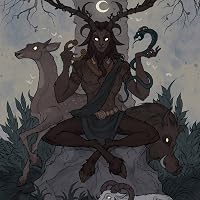
This thought-provoking and engaging guide is filled with a wide range of practical information and step-by-step plans for beginning your study and personal practice, including: - Exploring the connection between spirituality and sexuality - Meditating and creating sacred spaces - Finding rituals and deities that are right for you - Manifesting your desires through magic - Living a joyful, purposeful life - Eight original stories inspired by the Wiccan Sabbats - And so much more!
Michael Thomas Ford is the author of more than 75 books in genres ranging from humor to horror, literary fiction to nonfiction. His work for adult readers includes the best-selling novels What We Remember, The Road Home, Changing Tides, Full Circle, Looking for It and Last Summer, and his five essay collections in the "Trials of My Queer Life" series. His novel Lily was a Tiptree Award Longlist title and a finalist for both the Lambda Literary Award and the Shirley Jackson Award. He is also the author of the Sickening Adventures series of books featuring popular contestants from RuPaul's Drag Race.
As a writer for young adults he is the author of the novels Suicide Notes, Z, and Love & Other Curses, and under the name Isobel Bird he wrote the popular "Circle of Three" series. His work has been nominated for 14 Lambda Literary Awards, twice winning for Best Humor Book, twice for Best Romance Novel, and once for Best Mystery. He was also nominated for a Horror Writers Association Bram Stoker Award (for his novel The Dollhouse That Time Forgot).
I found out about this book after reading Ford’s novel ‘The Road Home’. It serves as an introduction to paganism and witchcraft from the point of view of a gay man and explains a brief history of the tradition. It also describes how Ford created a spiritual group based on gay men practising their own form of pagan rituals. I found it interesting and honest, particularly when Ford opens up about his own experiences and his learning journey.
While some of the history and tenets are a bit shaky (law of three, *cough cough*), this book was a really good read. I loved the chapter structure: some "theory" and then a sabbat-related story. And of course I loved the stories, Ford is a master storyteller; I really enjoyed his (written as Isobel Bird) Circle of three. Will read again.
I've read this book several times. I highly recommend it for any gay man interested in the path of Wicca, or to get another perspective on alternative paths. I especially liked the storytelling style of introducing the various deities.
I was very curious to see what one of my very reliable authors had to say about Wicca, spirituality, Pagans, etc. (This is a complete departure; it is his only published foray into these topics. But people who enjoy his writings will pretty much be aware of this fact already.)
I never picked up a book before about these topics, let alone an LGBT version, alive and strong. His Path of the Green Man was lovely. I got quite a bit out of it because I knew so little. I would recommend this to other completely oblivious, genuinely curious neophytes.
I wish I had encountered more books like this when I was young enough to need them badly. Michael Thomas Ford is not trying to squeeze gay men into a preexisting version of Wicca and reassure us that the Goddess loves everybody. He begins with gay male experience and asks what sort of Wiccan life can grow from it. That sounds like a small change in emphasis now. In 2005 it was not.
What I remember most about learning Wicca as a gay man was the amount of invisible translation involved. You could intellectually understand that the God and Goddess represented enormous cosmic principles and still notice that their relationship was constantly described through heterosexual courtship, intercourse, pregnancy, and reproduction. Male and female became not merely one symbolic polarity among many but the machinery through which the universe itself supposedly operated. Ford has little interest in pretending gay men need to borrow that mythology unchanged. He writes about sexuality, deity, sacred space, magic, seasonal ritual, and spiritual practice with the assumption that our own desires and experiences can generate religious meaning.
I especially enjoyed the eight stories connected with the Sabbats. Ford is a novelist as well as a nonfiction writer, and that matters because myth sometimes teaches things that explanation cannot. The Wheel of the Year is easy to reduce to correspondences and seasonal bullet points. Stories give it bodies, relationships, longing, conflict, loss, and change. They also demonstrate something queer Paganism has needed more of, which is not simply reinterpretation of inherited mythology but the creation of new sacred stories in which gay men are already part of the mythic world.
Some portions feel very much of their era. The conversation around gender and queer identity has widened enormously since 2005, and I would not expect one book about gay men to speak for the range of people now gathered under the queer umbrella. But there is something valuable about its specificity. Ford is actually writing about gay men rather than using us as shorthand for universal inclusivity. Our relationships with masculinity, sex, chosen family, community, religion, and one another are allowed to remain particular.
The chapter on building magical community affected me differently now than it would have twenty years ago. Finding other gay witches once meant considerably more than locating a hashtag. Community had to be made deliberately, and sometimes painfully, because neither mainstream gay culture nor mainstream Paganism necessarily provided the whole of what someone needed. The idea that a magical life includes building relationships with other people, creating ritual together, and helping shape the culture around you feels almost old-fashioned now. I mean that as praise.
I would put this beside Christopher Penczak's Gay Witchcraft and Storm Faerywolf's The Satyr's Kiss, not because the three books say the same thing, but because together they show how the conversation developed. Ford's book feels particularly warm and human to me. It is less interested in announcing a revolutionary queer magical theology than in helping a gay man construct a life in which sexuality, spirituality, magic, and community no longer have to occupy separate rooms. After spending enough of one's youth learning how to compartmentalize, there is tremendous magic in discovering that nothing actually requires you to keep doing it.
This year I wanted to explore queer culture more fully. I selected this book because I don't know much about queer spirituality / Wicca. The book is an easy read and enjoyable. Ford balances the explanation with engaging story telling. I would have liked to have seen more development of the interwoven stories. However, it is a good resource for the curious.
In my humble opinion, this is one of the best (and one of my favorite) books on Wicca, Witchcraft & Paganism. Though it is written for Gay men in mind, anyone, including heterosexuals & cisgender people will still find this an informative, thought provoking & enjoyable read. His views are in a similar vein as Starhawk, so if you enjoy her work, I’d also recommend this book. LGBTQ Friendly.
A great book for beginners to Wicca, definitely aimed at gay men. Even those who have experience in witchcraft can gain interesting insights into both the history of modern Wicca and other spriritual practices.
Both spiritual and imaginative I had no idea what I'd let myself in for by reading this book. A pagan spirituality book catered especially for gay men, this was perfect. I'd never read a book that I felt more included in so it was a strange experience to read some of my beliefs from a gay male perspective. And as for the stories that represent the 8 Sabbats of the Wheel of the Year... they were so beautiful that I got lost in each story for ages and felt such a contentedness and connection that I barely wanted the book to end. You come to love and associate yourself with the main character, The Green Man, as he journeys through the year. Cant wait for the journey this year's turning will bring.
The best book on the topic out there, bar none. Mr. Ford makes no pretense of the demands of an unknowable history but draws on what is known as a starting point for the initiate (and probably no small number of "established" practitioners) to start on his (and her) own path. The connectedness of the "theology" of the Green Man path to the cycle of the year and related (and frequently powerful) sabbat stories to illustrate the concepts makes for a genuinely inspirational and practical read that will continue to be a resource into the future.