

What do you think?

Over the Water: Essays on Islands
130 pages, Kindle Edition
Published April 23, 2026
About the author
Various
1,360 followersVarious is the correct author for any book with multiple unknown authors, and is acceptable for books with multiple known authors, especially if not all are known or the list is very long (over 50).
If an editor is known, however, Various is not necessary. List the name of the editor as the primary author (with role "editor"). Contributing authors' names follow it.
Note: WorldCat is an excellent resource for finding author information and contents of anthologies.
If an editor is known, however, Various is not necessary. List the name of the editor as the primary author (with role "editor"). Contributing authors' names follow it.
Note: WorldCat is an excellent resource for finding author information and contents of anthologies.
Ratings & Reviews
Friends & Following
Create a free account to discover what your friends think of this book!
Community Reviews
Displaying 1 - 15 of 15 reviews

May 24, 2026
Delightful! I think I understand less what an island is now after this. These were so punchy, and I felt like I was having a good mingle with writers and literary people reading this. As a collection it’s rapid, punchy, and delivers in understanding different writers reacting to what an island is to them. My favourites were by Ella Frears, noreeen masud, Alexandra Pringle, Cecile pin, and Megan Nolan. These acted as a brilliant introduction to many of these writers’ works. Felt like I was doing literary wine tasting. Need to read more from these daunt books collections
August 1, 2026
“Since my move to Britain ten years ago, I’ve had to reconcile with living a largely monolingual life. It felt uncomfortable at first, to be hemmed in by these barbed-wire borders. I was so used to island hopping, choosing words from here and there to give my sentences the best chance, to breathe essence into them. Here, I am bound by the flora and fauna of English, its weather and ways. The natives rarely speak another language. If they do, they’re reticent and self-conscious. When they do, they’re celebrated for it.”
I will never - NEVER - get tired of non-English people talking about their heritage and all the cracks within the self that derive from living here.
I will never - NEVER - get tired of non-English people talking about their heritage and all the cracks within the self that derive from living here.
May 30, 2026
I think there’s something about an island, near or far, warm or cold, that tempts every kind of imagination. After all, Odysseus took his sweet time getting home for a reason.
This was a brilliant little collection around a compelling central theme. Broken into three categories - island as escape, metaphor, and home, the essays are as diverse and strong as the excellent writers they’ve asked to contribute. The writing was beautiful, poignant, and thought-provoking. It’s hard not to reflect on your own connections to islands, real or imagined.
Of course, some of the essays are better than others. I preferred the escape and metaphor sections, but that is just me.
This was a brilliant little collection around a compelling central theme. Broken into three categories - island as escape, metaphor, and home, the essays are as diverse and strong as the excellent writers they’ve asked to contribute. The writing was beautiful, poignant, and thought-provoking. It’s hard not to reflect on your own connections to islands, real or imagined.
Of course, some of the essays are better than others. I preferred the escape and metaphor sections, but that is just me.

May 11, 2026
I enjoyed this lovely collection of short essays. They all have an island as a central theme, but explore it from different angles: memory, history, identity, transitions, family, beauty, and nature. I bought this to read pieces by Cecile Pin and Nicola Dinan, my favourite authors. Their essays alone make the book worth buying. The other pieces are bangers too. Some are perhaps more memorable than others, but I found this collection wonderful overall. Highly recommend it for your summer reading!
4.5/5 🌟
4.5/5 🌟

Read
April 19, 2026Lovely and thoughtful as always. I’m biased but the st ives chapter was my fave
July 15, 2026
Loved this book! Love this series. Particularly enjoyed Octavia Bright’s Italian escapade and Megan Nolan’s Manhattan musings! Get me back to NYC 🤪
May 17, 2026
The cover of this essay collection is quite misleading. I expected stories of hot sun, tanning on the beach, and tropical nights, and while there was some of that, the collection turned out to be a good example of how one-dimensionally we tend to think about what an island is.
Coming from Northern Europe myself, I don’t often think of cold islands as “islands” in the same way. To me, an island means sandy beaches, lush greenery, colorful birds, and so on.
The essays themselves were thought-provoking, leaning toward melancholy, nostalgic, and existential in tone. Stylistically, they were surprisingly similar. They were also quick reads which is always a plus for this slow reader. These essays made me feel lonely which was interesting because I was alone for days while I was reading this essay collection.
I’m taking off one star because when I picked this book up quickly from a bookstore shelf, I was hoping for stories set in the tropics or Mediterranean adventures - slow days at the beach and chilled wine balancing out the warmth of the sun. Something that I craved coming from a very long winter.
I’m curious to read other essay collections from this series.
Coming from Northern Europe myself, I don’t often think of cold islands as “islands” in the same way. To me, an island means sandy beaches, lush greenery, colorful birds, and so on.
The essays themselves were thought-provoking, leaning toward melancholy, nostalgic, and existential in tone. Stylistically, they were surprisingly similar. They were also quick reads which is always a plus for this slow reader. These essays made me feel lonely which was interesting because I was alone for days while I was reading this essay collection.
I’m taking off one star because when I picked this book up quickly from a bookstore shelf, I was hoping for stories set in the tropics or Mediterranean adventures - slow days at the beach and chilled wine balancing out the warmth of the sun. Something that I craved coming from a very long winter.
I’m curious to read other essay collections from this series.

May 22, 2026
Some lovely little essays in here. Few too many bogged down, however, with rather trite questions of 'belonging' that are rarely resolved with any originality and so appear more than a little self-indulgent (could do with fewer meditations on honestly pretty banal childhood, diaspora experiences).
A couple, too, almost read as advertisements for their authors' recent novels.
Still, the quality of the writing is top-notch, and the stories are often humorous. Just need to be grounded a bit more in the 'present experience' of being, rather than what has been.
A couple, too, almost read as advertisements for their authors' recent novels.
Still, the quality of the writing is top-notch, and the stories are often humorous. Just need to be grounded a bit more in the 'present experience' of being, rather than what has been.

May 18, 2026
13 collected short stories set on islands across the world
The latest in a series that includes In the Garden, At the Pond, By The River and more
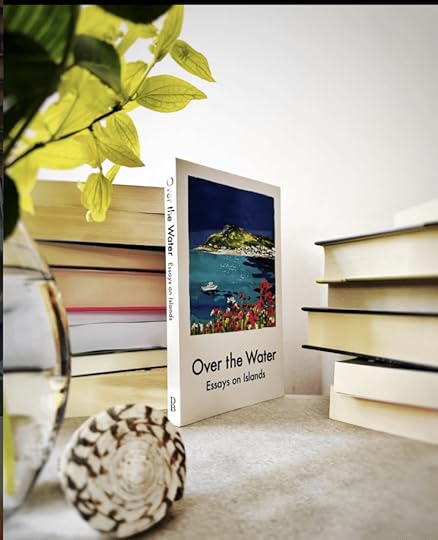
Thirteen essays to “transport you to shores far and near“. In the first story author Alexandra Pringle describes a year in her life when she was teaching in Italy. She and Paco take a trip to Isola S Pietro, a small island off the coast of Sardinia. These are carefree days, the weather and the delights of ‘just being’. In the next story the Isle of Lewis is beautifully described, where the author feels “subsumed by nature” and how the perpetual wind in the Winter months served to take over human life, especially someone who is trying to hide whilst processing the sense of self.
Noreen Masud was paid to fly to Tasmania (the “little snip off the edge of Australia“), the home of the duck-billed platypus but it is extraordinarily rare to spot one. However, her luck is in and is over the moon at being so privileged to see one.
Did you know that the Isola d’Elba looks like a child’s drawing of a fish? Spending time on this island offers a period of reflection by author Octavia Bright. A particularly pensive author, Cecile Pin, ponders her time in Phuket, starkly underscored by her reading around the terrible crimes perpetrated on women of her heritage on a different Thai island, Koh Kra. Curiously the reader discovers that Glastonbury Tor is actually an island in Somerset, which is featured in “Leaving Avalon”.
The stories include themes of emigration/immigration, assimilation and the notion of home. The changes and impositions made by colonialists, the choosing of island setting for an author’s novel; and what it means to be “born of” an island. Manhattan features in the final story and in contrast to others is, of course, a very city centric story about a relationship, written by Megan Nolan, whose novel Acts of Desperation appealed to me when it first came out. You can read my review here.
This is such an interesting and eclectic mix of islands, the geography, peoples and cultures, seen13 collected short stories set on islands around the WORLD through personal lenses of the authors. There is certainly learning to be had amongst these well-written and beautifully penned stories.
The latest in a series that includes In the Garden, At the Pond, By The River and more
Thirteen essays to “transport you to shores far and near“. In the first story author Alexandra Pringle describes a year in her life when she was teaching in Italy. She and Paco take a trip to Isola S Pietro, a small island off the coast of Sardinia. These are carefree days, the weather and the delights of ‘just being’. In the next story the Isle of Lewis is beautifully described, where the author feels “subsumed by nature” and how the perpetual wind in the Winter months served to take over human life, especially someone who is trying to hide whilst processing the sense of self.
Noreen Masud was paid to fly to Tasmania (the “little snip off the edge of Australia“), the home of the duck-billed platypus but it is extraordinarily rare to spot one. However, her luck is in and is over the moon at being so privileged to see one.
Did you know that the Isola d’Elba looks like a child’s drawing of a fish? Spending time on this island offers a period of reflection by author Octavia Bright. A particularly pensive author, Cecile Pin, ponders her time in Phuket, starkly underscored by her reading around the terrible crimes perpetrated on women of her heritage on a different Thai island, Koh Kra. Curiously the reader discovers that Glastonbury Tor is actually an island in Somerset, which is featured in “Leaving Avalon”.
The stories include themes of emigration/immigration, assimilation and the notion of home. The changes and impositions made by colonialists, the choosing of island setting for an author’s novel; and what it means to be “born of” an island. Manhattan features in the final story and in contrast to others is, of course, a very city centric story about a relationship, written by Megan Nolan, whose novel Acts of Desperation appealed to me when it first came out. You can read my review here.
This is such an interesting and eclectic mix of islands, the geography, peoples and cultures, seen13 collected short stories set on islands around the WORLD through personal lenses of the authors. There is certainly learning to be had amongst these well-written and beautifully penned stories.

July 2, 2026
Mlle Alice, pouvez-vous nous raconter votre rencontre avec Over the Water ?
"Depuis to the Pond, le premier livre de cette collection éditée par Daunt Books que j'ai lu, je ne rate plus une seule sortie. Je guette même le sujet suivant avec impatience."
Dites-nous en un peu plus sur son histoire...
"Dans trois catégories différentes, Island as Escape, Island as Metaphor et Island as Home, treize essayistes nous présentent leur vision de l'île et de tout ce qu'elle leur inspire..."
Mais que s'est-il exactement passé entre vous ?
"Je suis toujours aussi charmée par le principe de ces ouvrages, modèles de diversité, qui me permettent d'élargir mes horizons, de découvrir de nouveaux auteurs et de nouvelles visions. C'est un délice sans cesse renouvelé. Et est-ce qu'il est utile de parler de la couverture ? Je serais bien incapable d'y résister. Évidemment, certains essais m'ont plus plu que d'autres, mais comme à chaque fois, ceux que j'ai aimé restent majoritaires. Ici, je n'oublierai pas je pense celui de Noreen Masud, à la recherche des ornithorynques, de Santanu Bhattacharya, où les îles sont les langues qu'il parle, une très belle métaphore, et celui de Ralph Webb, qui évoque son père disparu une nostalgie de l'enfance qui est inscrite en chacun de nous. Malgré tout, j'ai moins voyagé que ce à quoi je m'attendais et over the water n'entrera pas dans mon top trois de la collection qui reste donc composé de to the pond, freewheeling et by the river. Je vous les recommande chaleureusement."
Et comment cela s'est-il fini ?
"Une nouvelle fois, je ne peux que terminer en disant que je suis déjà impatiente de découvrir le prochain sujet, en espérant qu'il y en aura d'autres bien sûr."
http://booksaremywonderland.hautetfor...
"Depuis to the Pond, le premier livre de cette collection éditée par Daunt Books que j'ai lu, je ne rate plus une seule sortie. Je guette même le sujet suivant avec impatience."
Dites-nous en un peu plus sur son histoire...
"Dans trois catégories différentes, Island as Escape, Island as Metaphor et Island as Home, treize essayistes nous présentent leur vision de l'île et de tout ce qu'elle leur inspire..."
Mais que s'est-il exactement passé entre vous ?
"Je suis toujours aussi charmée par le principe de ces ouvrages, modèles de diversité, qui me permettent d'élargir mes horizons, de découvrir de nouveaux auteurs et de nouvelles visions. C'est un délice sans cesse renouvelé. Et est-ce qu'il est utile de parler de la couverture ? Je serais bien incapable d'y résister. Évidemment, certains essais m'ont plus plu que d'autres, mais comme à chaque fois, ceux que j'ai aimé restent majoritaires. Ici, je n'oublierai pas je pense celui de Noreen Masud, à la recherche des ornithorynques, de Santanu Bhattacharya, où les îles sont les langues qu'il parle, une très belle métaphore, et celui de Ralph Webb, qui évoque son père disparu une nostalgie de l'enfance qui est inscrite en chacun de nous. Malgré tout, j'ai moins voyagé que ce à quoi je m'attendais et over the water n'entrera pas dans mon top trois de la collection qui reste donc composé de to the pond, freewheeling et by the river. Je vous les recommande chaleureusement."
Et comment cela s'est-il fini ?
"Une nouvelle fois, je ne peux que terminer en disant que je suis déjà impatiente de découvrir le prochain sujet, en espérant qu'il y en aura d'autres bien sûr."
http://booksaremywonderland.hautetfor...
July 11, 2026
Reading this in Australia made for a more wondrous experience!
The essays on "island as escape" stood out the most; while they were quieter, they were also introspective. The underlying sense of lack was compelling and felt larger than life. Essays in the other two sections were more of windows into subjective, individualised experiences that were nonetheless interesting -- Leaving Avalon and Take Me Oh Sea! moved me deeply; the island becomes equal parts oppressive and magical. Could islands be anything apart from a dreamscape, on which the enigmatic parental figure and the unceasing, better, other self must be imposed?
The essays on "island as escape" stood out the most; while they were quieter, they were also introspective. The underlying sense of lack was compelling and felt larger than life. Essays in the other two sections were more of windows into subjective, individualised experiences that were nonetheless interesting -- Leaving Avalon and Take Me Oh Sea! moved me deeply; the island becomes equal parts oppressive and magical. Could islands be anything apart from a dreamscape, on which the enigmatic parental figure and the unceasing, better, other self must be imposed?

August 12, 2026
I liked this less than “At The Pond,” but I liked it still! This is such a fun format. Over The Water expanded my idea of what an island is. I read this in one day starting on the train in New York and finishing it on the ferry from Athens to Sifnos. Stand-out essays were: “A Portion of Land and A Cow,” “You Will Never Touch a Duck-Billed Platypus,” “Isola di San Pietro,” and “Island Fragments.” Also shout out L’Isola D’Elba, which I have been to!!!!
Review of advance copy
Four stars because collections of short stories hardly ever have a 100% success rate but this one had far more hits than misses - some really interesting writing and I appreciated how the stories were divided into sections: island as escape, island as metaphor, and island as home. I do think the opener and closer could’ve been stronger - the ones I loved most were all in the middle.
April 26, 2026
Could’ve been 5 stars if it mentioned Drake’s Island

June 7, 2026
'Despite being only forty miles from the nearest bit of coast, London seemed to me to be a patchwork of municipalities designed to keep people contained and localised.'
Displaying 1 - 15 of 15 reviews