Jump to ratings and reviews
Rate this book

Life of M

Rate this book
From the critically acclaimed author of the Outline trilogy, an irresistible novel of fame, power, beauty, and truth―and a blazing renovation of the form.

The film star M is one of the most recognizable faces of our time. Her image is everywhere. It has been like that since she was a child.

With such fame, her life has the appearance of freedom: people are instantly obliging, spaces are altered to accommodate her, time can be rearranged. M may live in the same places as real people. She may meet her friends or collect her children from school or walk her dogs as they do. But it seems the rules of reality have melted away.

Now, a writer has decided to pay close attention to M’s life, in the hope of understanding who she really is. It is hard not to feel ugly next to M, hard not to feel insignificant. But what truths―about the very experience of living―might this proximity allow the writer to briefly capture? Is M to play a character in the book, or is it the writer who is acting the role of M?

In this astonishing, explosive novel, Rachel Cusk hunts for the nature of truth without ever swerving away into self-deceptions. She investigates who we are, and pretend to be, at this late stage of modern life when we are hypnotized, more and more effectively, by the images we see everywhere. She shows us that the real value of life might lie not in beauty but in ugliness; in having a self that has survived the violence of the world. Life of M is a beautiful piece of music, audible in a world of noise and spectacle.

147 pages, Kindle Edition

First published August 25, 2026

Loading...
Loading...

About the author

Rachel Cusk

58 books5,725 followers
Rachel Cusk was born in Canada, and spent some of her childhood in Los Angeles, before her family returned to England, in 1974, when Cusk was 8 years old. She read English at New College, Oxford.

Cusk is the Whitbread Award–winning author of two memoirs, including The Last Supper, and seven novels, including Arlington Park, Saving Agnes, The Temporary, The Country Life, and The Lucky Ones.

She has won and been shortlisted for numerous prizes: her most recent novel, Outline (2014), was shortlisted for the Folio Prize, the Goldsmith's Prize and the Bailey's prize, and longlisted for Canada's Giller Prize. In 2003, Rachel Cusk was nominated by Granta magazine as one of 20 'Best of Young British Novelists'

She lives in Brighton, England.

Ratings & Reviews

What do you think?
Rate this book

Friends & Following

Create a free account to discover what your friends think of this book!

Community Reviews

5 stars
236 (11%)
4 stars
489 (23%)
3 stars
766 (37%)
2 stars
407 (19%)
1 star
143 (7%)
Displaying 1 - 30 of 560 reviews
Profile Image for Meike.
Author 1 book5,713 followers
Review of advance copy received from NetGalley
July 17, 2026
The internet is buzzing with the rumour that main character M was inspired by Natalie Portman, and I can report that this is very obviously the case: For instance, the whole thing is set in Paris where Cusk and Portman live, and there are discussions of Black Swan, Vox Lux, several hints at Portman's break out role in Léon: The Professional, variations on her being a Dior Book Tote ambassador etc.pp. But this is not a hit piece, so in case Portman really feels betrayed by Cusk, that raises the question what she expected fom a Cusk novel inspired by her.

Identity has always been Cusk's major concern, her famous annihilated perspective doesn't rely on characters sharing their innermost thoughts, but depicts them through reflections by others and through what happens, which creates a mosaic of moving fragments (The Outline Trilogy: Outline, Transit and Kudos has it in the title, and it's not her most famous work for nothing). Second Place (2021) and Parade (2024) have dealt with creativity and being an artist, mainly pondering painting, sculpture and portraiture, but "Parade" also has a section ("The Spy") on a filmmaker who uses a pseudonym to not let his ego interfere with his art - in fact, the whole novel moved further into the direction of visual art, deconstructing the idea of having one protagonist and one coherently developing story arc.

So "The Life of M" is a logical progression: It shows an actress devoid of anonymity and questions what fame does to her construction of identity, because she lives in a world that constantly and relentlessly presents her with mirror images of her perceived persona, both as a celebrity (her playing the public "Natalie Portman" / M) and her playing roles - and we also get glimpses into her mind, to highlight the effects. Of course, there is no "real" Natalie Portman / M in the sense that she can grasp all dimensions of her being - no one can - but the perspective of a person in her position is annihilated to a completely different degree. The novel shows that and ponders how it messes with M - but the text does not criticize M for it, it just refuses to play into marketing ideas of relatability and authenticity: The fact that M, living with the distancing aura of fame since childhood, struggles with these concepts is rooted in her being human and living under extreme circumstances. There is a recurring shift to "we", and it might be the multitude of roles within M, but it might also be M and the narrator (who is also at least two different people: a painter and Cusk-esque writer), or M and all of us - the oscillation underlines questions of not only identity, but also belonging.

The novel is constructed as a flow of individual scenes that often prompt M to remember aspects of her life, and of course it's impossible to determine which parts are based on what Portman might have said to Cusk (the person who really looks bad here is Benjamin Millepied, btw). So on one hand, the novel does ponder individual presentation shaped by outside influence, but it also investigates self-presentation based on volition and beyond habitus - Cusk calls upon Louis' confessional autofiction Changer : Méthode to illustrate this. It should be clear though that this book is fiction, because there is so much that Cusk clearly adds by projection and by making points about the nature of identity. And fiction as art allows us, both readers and writers, to occupy someone else's identity as we imagine it to be.

And if you look at it like that, this is Schrödinger's novel: It's about Natalie Portman, and it's also not about Natalie Portman. It's the value of these discussions plus, of course, Cusk's pristine language that render this book worthwhile.

You can listen to the podcast gang discussing the German translation Das Leben der M here: https://papierstaupodcast.de/podcast/...
Profile Image for emma.
2,689 reviews101k followers
August 25, 2026
i wanted to read this even before it was scandalous

(thanks to the publisher for the arc)
(review to come)
Profile Image for Blair.
2,107 reviews6,058 followers
August 17, 2026
Tempted to just write ‘shrug’ and then run for cover but I suppose I should try to find something to say about this. As you probably already know, Life of M gained notoriety prior to it even being published because of the suggestion that it’s based on Natalie Portman, an acquaintance of the author’s, who is allegedly dissatisfied with how ‘she’ is portrayed. Reading the book, it’s clear Portman is indeed the basis for the character of ‘M’ (there are several beat-for-beat descriptions of scenes from her films), though there’s nothing especially scandalous about Cusk’s typically cool portrayal (unless you consider it a revelation that a very wealthy actress, famous for most of her life, might be a bit out of touch with the general public). And anyway, of course, the scenes depicting the ‘life of M’ are filtered through the perspective of the novel’s writer-narrator, who is ‘making it all up’ and ultimately writing a story that ‘isn’t about anyone’.

I’m neither a Cusk superfan nor someone looking for gossip about Portman, although you could say the marketing – if that’s what it is – worked on me regardless. My ears pricked up when I heard about this because I enjoy reading fictional depictions of fame, and I’m particularly interested in the recent resurgence of novels that feature lightly fictionalised versions of real people (as opposed to the author simply inventing a fictional celebrity). Life of M is the third such novel I’ve read this year, and as with American Spirits and Ultranatural, it didn’t manage to persuade me that the use of real biographical details truly adds anything beyond a PR-friendly selling point.

I’d also say that if you’re already a reader of fiction examining celebrity and its distorting effects, this offers nothing new. While Cusk’s observations are well crafted as part of the particular perspective they aim to inhabit, I’ve read ‘trashier’ and yes, definitely more gossipy novels about fame, fandom, influence etc that have given me much more to chew on about celebrity and our relationship with it (Idol springs to mind). I think Life of M will be most rewarding for fans of Cusk’s work who will be better equipped to situate it within her wider autofictional project. I’m happy to sit out the discourse; I just didn’t think the book was that interesting.

I received an advance review copy of Life of M from the publisher through Edelweiss.
Profile Image for Anna Dorn.
Author 6 books1,246 followers
Read
September 8, 2026
life of i’M falling asleep
Profile Image for Katia N.
764 reviews1,289 followers
Read
September 7, 2026
First reaction:

I liked this novel a lot. It is more akin to Parade than her earlier work (inc.Outline trilogy). However, this text is less enigmatic, less adorned and more accessible than fragmented shattered glass of 'Parade'. This is especially on a sentence level: here the sentences are relatively short and the present tense is unusually dominant for her. Initially, I thought it was because her recent reading was predominantly in French - not her native language- since she has moved to Paris or it might have been a general influence of living in a foreign language. But now I think it was my mistake on my part. She has had a more intrinsic, profound motive: in this novel, she explores what does it mean to live in the present (even to an extreme of giving up on memories of the past). She also contemplates what is time. As result, this text is probably the most immediate, lucid and sincere out of the ones I’ve read. Yes, there is a thread with the character of an actress; and Cusk’s narrator plays with the character exploring fame vs anonymity, class, power, beauty, body etc. This part is more like a script itself. But I've preferred another main thread written in a strange 'we' voice. It a thread about 'we' and Paris: complex, varied, hostile, ugly and beautiful co-existence. But It seems to me that for the first time in her last six books Cusk’s narrator has revealed a very human vulnerability previously unknown in her alter-egos. There is still this detachment and tendency to observe, hover over the novel. In one vignette, 'we' imagine themselves as a little tone in a wall of a Paris's grey buildings. But the stone has to be very high in the wall. Yet, her persona is starting to reveal something less steely underneath. For the first time, the narrator comes across a bit more exposed: occasionally not outside but in the thick of it; a bit lost and without all the answers.

Sometimes, in the evening, we find ourselves conversing with someone more deeply or sincerely than usual.Something around or between us falls into place and aligns. The words become a kind of song, a harmony, each of us singing our part. We relax and let it come out, this song of ourselves. For a while, singing this song, we are at home in time. It is late, the lighting in the room is warm and dim, there is darkness at the windows flecked with little bright points of golden reflection. We are like islands in that darkness, our lights glittering at one another from our separate shores across the black sea.

PS
I see the novel has received a significant negative press. I deliberately have not read anything about it. I plan to write a more extended review soonish. And only after this 'review' is done and posted, I plan to read the recently published ‘renowned’ criticism of this novel (not paywalled at that) for the sake of an experimentand maybe react:-))
Profile Image for lark benobi.
Author 1 book4,095 followers
Want to Read
August 16, 2026
do I really “want to read” this novel?

hmm
Profile Image for Pedro.
259 reviews601 followers
Review of advance copy received from Publisher
August 11, 2026
Here’s my advice for anyone who’s read Rachel Cusk before and didn’t like her: don’t even bother opening this one. And now my advice for those who read and appreciated the Outline trilogy: don’t go into this expecting the same kind of book. And finally, if you like what you might call “old-fashioned storytelling”, with characters jumping out of the pages, again, don’t even bother, because that’s not what she’s going for here.

But if you appreciate really good writing, a strong sense of place, and some of the smartest and most profound insights, you can’t really go wrong with this one.

As usual when I read Cusk, I highlighted the hell out of these pages, to the point where I’m now struggling to choose a passage that might make you run to the nearest bookshop. I’ve gone for this one because I think it will speak to most readers:

The time when things happened seems to have passed. There was a time, a long time, in which reality served to delight or astonish us. It could pick us up and whirl us into something new. It worked without warning: it could intrude on our plans and forecasts in the most unexpected ways. This was because we had less control over the things that happened to us. We had fewer choices and less knowledge of the choices we had. Sometimes it was unpleasant, the intrusion of reality, and sometimes it was wondrous or hilarious. We have memories and stories we can tell about those times with their mishaps and surprises. Now, it feels as though an intrusion could only signify violence. We do nothing to court that risk; we stay close to what is known and reliable. We do not indulge our hopes nor wait for news. All at once, we suspect that the only news from now on will be bad.

See what I mean, guys? Just astonishingly insightful, and written in a way that everyone can understand. No need for words that only a ninety-year-old professor would come up with, like I so often see in reviews and comments on here. Let’s keep it real, yeah? This is the 21st century! No one’s got time for dictionaries.
Profile Image for Paul Fulcher.
Author 2 books2,139 followers
Review of advance copy received from NetGalley
June 12, 2026
This was how people and things behaved around her. Reality became malleable, was always giving way and changing its rules. In a sense it was the same lawlessness as that of films, as though M were always in a film, even when she wasn’t. It seemed like the greatest good fortune, to have been removed from reality and its rules in this way.

The Life of M begins A little while ago, I told the actor M that I was thinking of writing her autobiography. She liked the idea. She’s a good sport. Would you just make it up? she said.

And the novel shifts fluidly between three narrative strands: the 'I' narrator telling stories about the famous M (where, we discover, the narrator takes the brief literally); parts written in the collective first person describing life in a modern city (unnamed but seems to be Paris) which is both prosperous and squalid at the same time (there is something of a preoccupation with public defecation by both humans and animals the people walking their dogs do not intend to make the streets smell unpleasant but do so nevertheless); and sections on the narrator's own life, in particular the illness of 'my partner' (always referred to as such, with pronouns assiduously avoided, perhaps setting up a rather odd last line).

One of a number of screenplays/films featured, some real (e.g. François Truffaut's The 400 Blows and Akira Kurosawa's Drunken Angel) and others imagined by Cusk:

On the desk in the office is a screenplay. It was written by a friend of hers and he hopes M will agree to star in it. It is about a famous actor who bears more than a little resemblance to M herself. Her repertoire, her history, her mannerisms and style are all recognisable as M’s own, with the horrifying difference that this actor is a sort of emotionless automaton, eviscerated by the globe-wide possession of her image. The being who lives in or behind this image is a vagrant soul struggling to gain purchase on the frictionless surfaces through which she moves, never encountering a boundary or border that would signify the limit of her identity. Severed from her own nature, she enacts her character as though it were a part she were playing whose lines, as soon as she has mastered them, invoke ever greater terrains of emptiness and silence. M does not know how to tell her friend that she is offended by his screenplay, which he has explained to her as a kind of game or conceit that would interrogate the notion of celebrity–and thus of self–in a new way. Without her participation, this conceit would fall flat. He evidently believes her to be capable of intellectualising her situation, and in a way she is, but something in the friend’s manner of transforming her into an object of artistic enquiry arouses in M a violent and almost inarticulate instinct of self-protection. He would doubtless be astonished to know this, given all the things from which, in his imagination, she has had to protect herself. He evidently sees her life as a chain of coercions that have loosened her hold on her own existence. He thinks he is dignifying her fundamental powerlessness. But in fact it is to this empty and passionless alter ego that she will never surrender.

Similarly works of art (the real including Francesca Woodman's photography) and created by Cusk:

The room contains numerous works of art, all of them contemporary. The most immediately striking, or simply unexpected, is a group of metal sun loungers taking up the corner of the room nearest the door. They stand in a row. Their adjustable backs are each set at a different position between flat and upright. The sun loungers are painted a bright and sinister yellow. On one of them a flimsy black-lace garment–perhaps an item of lingerie–has been casually draped. At the other end of the room, above the illuminated sideboard, hangs a colour photograph mounted on an aluminium panel. The photograph is very large, almost the size of the section of wall it occupies. It shows a child, a girl, standing in the ruins of a structure of some kind, a sort of hangar. Metal beams and uprights lie or lean here and there like fallen trees in a forest. The plastic sheeting that was the structure’s roof hangs down around her in great shredded flaps, letting in a cold white light. The floor is strewn with rubbish and broken glass. The girl is skinny and is dressed in a ragged sort of school uniform that is too small for her, a very short plaid skirt that shows her bare legs, a mis-buttoned white shirt from which her gawky arms protrude, a school tie that hangs askew.

The narrator's project unravels when she sees M as herself on television, having based her stories on M's movies, where she is clearly playing a character:

The process had felt like a surrender to my own ugliness. It was the same ugliness in proximity to M that I had noted at the beginning, the ugliness of experience. I had dealt with that ugliness in the past by trying to pay attention to myself. But it seemed that the project had caused me to lose the ability to do that. It was this abandonment of myself that had helped me. It had enabled me to leave and go and live in someone else. Using an actor had enabled me to relinquish my experience. One day I had happened to see a tennis match playing on a television screen. While I was watching the camera cut away from the players and showed the people sitting in the crowd. There was M, smiling and laughing in a straw hat in the VIP section. I wasn’t sure I could explain to her the unbearable strain this sight had imposed on me. It was as though my most private interior world had suddenly been cast out into the light. It was as though the being in which I was attempting to live was refusing to host me any more.

The Life of M feels an amalgam of the innovative Outline trilogy, with its unique annihilated perspective, and Cusk's subsequent novels, the brilliantly constructed Second Place and the ekphrastically excellent Parade. Here there is more focus on spaces (architecture but particularly interior design) and the nature of fame.

And I think this can be seen either as a culmination of the works before it, or something of a derivative, lesser work. I re-read it on completion but a re-read didn't add to my appreciation), so I lean towards the second interpretation, but this may be one to revisit at the time of publication, as Cusk's works often contain hidden depths. Star rating pending but between 3 and 4.

Postscript 1

A fascinating article in Unherd argues, convincingly, that M is inspired by Natalie Portman

https://unherd.com/2026/07/a-novelist...

description

Postscript 2

The opening section of Life of M originally appeared in the New Yorker as a short story. In the same edition, Cusk wrote an article on Muriel Spark's 1966 story The House of the Famous Poet, from which she took inspiration. She says:

"I took several things from the story: the atomizing nature of catastrophe, which yet grants a peculiar clarity of perception; the electric influence of fame; the haphazard quality of experience, which militates against narrative; and the unstructured possibilities of female association. The story culminates in the idea of an “abstract funeral”: I was intrigued and moved by this but couldn’t find a way of answering it in my own story, “Project.” I did, however, take two lines from the opening of “The House of the Famous Poet” and put them largely unaltered into my story—a genuflection to the master."

I struggled initially to find those lines - but it transpires these are from a section of the story that was then cut for the final novel.

Spark: In the summer of 1944, when it was nothing for trains from the provinces to be five or six hours late, I travelled to London on the night train from Edinburgh, which, at York, was already three hours late. There were ten people in the compartment, only two of whom I remember well, and for good reason.

I have the impression, looking back on it, of a row of people opposite me, dozing untidily with heads askew, and, as it often seems when we look at sleeping strangers, their features had assumed extra emphasis and individuality, sometimes disturbing to watch. It was as if they had rendered up their daytime talent for obliterating the outward traces of themselves in exchange for mental obliteration. In this way, they resembled a twelfth-century fresco; there was a look of medieval unself-consciousness about these people, all except one.

Cusk - in the New Yorker story only, after visiting her partner to find they are having an operation - in the novel this is replaced with a completely different section beginning "After my partner came out of hospital M and I met in a restaurant for lunch" and concluding "After that I didn't see M for a long time" (the words in italics are largely kept in the novel):

M had told me that she didn’t see a therapist. She took advice from her accountant. Her accountant was very down-to-earth. She looked at M’s problems from a practical point of view. Oh, grow up, the accountant sometimes said to her.

I occasionally thought of M’s parents as having sold her, though it probably wasn’t like that. The writer of the book about the stepfather also seemed to have been offered up and given to the world. The ending of childhood was not just a premature exposure to reality, it was a forsaking of the possibility of return. There was nowhere to go back to, no dream country where the original self might one day be found. Instead one was woken into an eternal godlike vigilance, as though the experience of objectification had in the end borne the fruit of objectivity. M knew that it was pointless to think about the past or the future, to feel self-pity, to believe in a story of life. She knew that people shouldn’t try to fix or solve their characters: this was how others got power over them. Instead, they should act the part of themselves.

My partner was weak after the operation. We decided to go to the coast for a few days. Through the windows of the train, the steel-gray clouds were low and full, but better things were forecast. Most of the other passengers were asleep. In sleep their features had assumed extra emphasis and individuality, sometimes disturbing to watch. It was as if they had surrendered their daytime talent for obliterating the outward traces of themselves in exchange for mental obliteration. There seemed, at that moment, to be nothing in the world more desirable than to be an actor.
Profile Image for Matthew Ted.
1,113 reviews1,092 followers
September 15, 2026
Awful. Wooden and lifeless. Last year I put my head together with a friend to drum up our list of the best books of the century so far (bold, I know). Either way, Cusk’s Outline trilogy was one entry. We both put it forwards gladly. And yet here we are with Cusk writing a novel like this. Pages and pages of cold, pseudo-philosophical rambling. If we consider the fact that some of the greatest books ever written seem to have their own beating heart, then Life of M is certainly a cadaver.

At university and in my early 20s, as I was starting to get quite a few books, and classics, under my belt, I began to consider myself something of an expert. There was a lot of kidding myself, I think. I can’t say for sure, but this might have been one of those books I pretended to like a lot more than I actually did, had it been published ten years ago. Before my current job I taught, for many years, Wing Chun Kung Fu. When I first started learning, let’s say, three months in, I genuinely believed that with my newfound knowledge I could take on five men in a barfight. By the time I had trained for over a decade and was opening my own school to teach it, I felt as unprepared and amateur as I’d felt my entire ‘career’. I realised how little I knew in the beginning, but how brilliant I thought I was!

Similarly, aged 20, I might have said that this Cusk was fantastic and unlike anything I’d ever read before, but only because I'd read so little. So I might have exaggerated my feelings. I might have imagined I could take on five men in a barfight. Now I can happily admit that this is a terrible novel... and that five men would most certainly kill me in a barfight.
Profile Image for Jaclyn.
Author 56 books867 followers
Read
August 16, 2026
The conjecture on whether or not the subject of this book is based on Natalie Portman is funny to me – Cusk is not attempting to hide who it’s based on in ANY way. It’s on the page. And it’s not what makes this book interesting. What is much more interesting is the way Cusk aligns the reader with the narrator and makes the construction of M a collaborative process. We become complicit in the hyper scrutiny of M. Cusk is interested in artifice, authenticity and simulation as well as the conflation of persona and person. Where Cusk kills me is prose. Her language is simple, her sentences clipped. And then she kneecaps you with an observation so profound you lose breath. The best of them are at the end of this slip of a book.
Profile Image for nathan.
757 reviews1,472 followers
August 27, 2026
Major thanks to NetGalley and Faber&Faber for sending me an ARC of this in exchange for my honest thoughts:

"𝘓𝘪𝘷𝘪𝘯𝘨 𝘪𝘯𝘴𝘪𝘥𝘦 𝘴𝘰𝘮𝘦𝘰𝘯𝘦 𝘦𝘭𝘴𝘦 𝘩𝘢𝘥 𝘩𝘦𝘭𝘱𝘦𝘥 𝘮𝘦,” 𝘐 𝘴𝘢𝘪𝘥. "𝘛𝘩𝘦 𝘱𝘳𝘰𝘤𝘦𝘴𝘴 𝘩𝘢𝘥 𝘧𝘦𝘭𝘵 𝘭𝘪𝘬𝘦 𝘢 𝘴𝘶𝘳𝘳𝘦𝘯𝘥𝘦𝘳 𝘵𝘰 𝘮𝘺 𝘰𝘸𝘯 𝘶𝘨𝘭𝘪𝘯𝘦𝘴𝘴. 𝘐𝘵 𝘸𝘢𝘴 𝘵𝘩𝘦 𝘴𝘢𝘮𝘦 𝘶𝘨𝘭𝘪𝘯𝘦𝘴𝘴 𝘪𝘯 𝘱𝘳𝘰𝘹𝘪𝘮𝘪𝘵𝘺 𝘵𝘰 𝘔 𝘵𝘩𝘢𝘵 𝘐 𝘩𝘢𝘥 𝘯𝘰𝘵𝘦𝘥 𝘢𝘵 𝘵𝘩𝘦 𝘣𝘦𝘨𝘪𝘯𝘯𝘪𝘯𝘨, 𝘵𝘩𝘦 𝘶𝘨𝘭𝘪𝘯𝘦𝘴𝘴 𝘰𝘧 𝘦𝘹𝘱𝘦𝘳𝘪𝘦𝘯𝘤𝘦."

In large part, I think its marketing succeeds in the intrigue of the formation fo this book. Is this about Natalie Portman? Well, yes! At first I wondered if this was going to be vague enough to not be about her. But mentions of particular films like Black Swan even Portman’s early involvement with Léon: The Professional make it clear and obvious that it is, yes, about Portman.

This paints a different light to her, less of a person and more of a spectacle. Though most of the book is essentially an intro to acting with skimmed musings on the self, projected and innate, it surprises by the end, a narrative that becomes more about the Cuskian narrator famously present in the Outline trilogy. You could say this is a prelude in thought of sorts to the trilogy.

This will be a fan favorite for most, and a great introduction to her work if one hasn’t started the trilogy. To me, this is diet Cusk at best, but any Cusk is good Cusk as a writer who remains intriguing in contemporary literature.
Profile Image for Alan.
752 reviews284 followers
August 25, 2026
I was 60 pages into this book when I came across the billboard at a major intersection. Any other day and I am barely glancing at it, if at all. She is beautiful, of course, but we have had nothing but an inundation of gorgeous individuals on billboards and ads for many years. It’s not new. But this time, I was fresh off of having put the book down earlier that morning. Natalie Portman stared at me, the centrepiece of a Tiffany campaign.

I discovered Cusk during deep lockdown, if I remember correctly. The Outline trilogy was refreshing. I was unable to do much of import but thinking; thoughts about family and friends and relationships current and old. I was not alone in feeling jaded, but I might have been in the minority with feeling joy. It was confusing, and Cusk’s willingness to take a chance on the hackneyed was needed. In her exploration of mundane relationship dynamics, I felt much-needed rejuvenation. Second Place and Parade after that did not quite land for me, but I have committed to reading anything Cusk puts out in my life. I may go back and play some catch-up as well.

I wish that I had never heard about Natalie Portman’s potential likeness and inclusion in this story as the character “M”. I’m doing nothing here but propagating this, but I do need to write it out somewhere. It may as well be here. I suspect I would have figured it out through Cusk’s description of M being involved in a film about ballerinas, but maybe even before that through M’s involvement (as a child) in a film with a questionable initial script. If I had missed those two, maybe I would have picked it up when she had described the sharp features of the director of the ballerina movie. Either way, I guess we’ll never know. I was robbed of that chance, because the gossip surrounding celebrity seeped in. It was not “M” doing such and such, but Natalie Portman. I read the sentences in her voice. I kept seeing her scenes in movies replaying in my head. I even kept hearing her unforgettable (for a millennial) rap lines from SNL’s “Natalie Raps” skit:

Damn Natalie, you a crazy chick
Yo shut the fuck up and suck my dick


Do you see how far you feel from anything literary as you read those two lines? Exactly.

Throughout the book, M wanders from situation to situation, usually finding herself in scenes that we have come to know with our “Celebrity 3.0” awareness in the age of parasocial relationships, mental health, and emotional abuse. I can’t help but read these reflections as Cusk’s exploration of these imagined scenes (I mean, that’s quite literally what they are) as opposed to M’s descriptions. The Cusk stand-in character barely features, anyway. We wonder a bit about what M’s early life was like. A little bit about the vapid nature of fame, a little bit about the irregularity of her relationships, and a little bit more about the urge to go back to normality. Nothing you haven’t thought about if you have so much as watched a single late night show clip in the last 20 years.

I like Cusk’s writing a good bit. Without seeming snobby, this book was finally the one that made me realize that there is a sense of shallow profundity to what she discusses. Not that she is unable to get there, but that the discussions are somewhat middlebrow. She skips across the pond, briefly making contact with the water and never really diving in deep. There are many sentences that are pure intellectual popcorn – read that in the sense of delicious, buttery goodness as opposed to empty calories. But that’s just the thing. Popcorn is also just empty calories, no matter how much I want to get my macros while shoving it in my piehole. Take this section, for instance:

“We do not, as we did when we were young, see the evening as a mysterious kingdom in which we might meet our destiny. We do not invest our hopes in the unknown. Since we ourselves are known, the unknown no longer promises us anything. We would have to become unknown again ourselves in order to receive it.”

That’s such an interesting idea. It’s offered with about as much context that I have given you here. I want to know more about the sense of mystery that this night holds. I have had that exact discussion with my best friend, making jokes about being young and walking into the night with nothing but a backpack and a sense of hope that something will come of the silence. Perhaps there is a reason that this is quintessentially tied to our youth, and Cusk goes there. We are unknown. Is she saying that our young selves are grab-bags of ideas, easily influenced, too malleable? Is she implying that our boundaries are not quite fully drawn in because of our inability to say no to the masses? Or is she using known/unknown more literally, about our stature growing? Traditionally, the best way for me to know what an author means precisely is through character and plot (no matter how sparse or apparent), or perhaps successive approximations of sentences that don’t quite touch on the subject, instead asymptotically approaching the “truth” and never quite touching it. The bubble bursts when it is met head on as such. Any more and the “literary fiction” is gone. Any less and you’re in Paulo Coelho territory. So she checkmates herself. And that is completely fine, but I believe I am seeing myself slowly moving past her, inching toward the giant, old texts that have scared me for decades.

When I read (a relatively rare occurrence for me these days, it seems), I am happy for the author to take control of the back of my head and shove it into different Pensieves at will. But I want to stay with any given memory within the Pensieve long enough to be able to gain some traction. I am not given that chance with Cusk’s works. This used to work for me, and now it doesn’t. In no way, shape, or format does that mean anything about Cusk’s talent. It just means that she continues to master her trade while I wave an impermanent goodbye through the window of the moving train. We are not in the same location anymore, but I will always come back for a short stay.
Profile Image for Lula Earley.
30 reviews1 follower
September 1, 2026
Tortured auto fiction writer born with a silver spoon in her mouth with notable noble savage complex about bus drivers and trash collectors writes a severely self preoccupied book wherein she creepily and invasively projects her severe self preoccupation onto an acquaintance who she is jealous of. 1.5
Profile Image for Bogdan.
163 reviews113 followers
September 9, 2026
Life of Meta
(see update below)


This book is a character study of the title figure – a very famous actress. It is an essay (or trial) in prose, an exercise in contemplation – and an attempt at actually seeing – a person behind her Persona.

Originally, ‘persona’ was the ancient mask worn by actors on stage. It is, by derivation, a social mask in the modern, Jungian understanding of the term, or also, in postmodernity, the ‘profile’ as the form taken by our presence on social media – that which we expose and perform of ourselves in our common virtual reality. Persona by Ingmar Bergman is one of the films M watches in the course of this book. The film is not named, like all the few others she watches, but can be immediately identified by any cinephile. Just as in the case of the others, what makes the film recognizable is that something very specific about it is described. This something is what deeply impresses M and which simultaneously expresses something about her to us, reveals a concealed and authentic part of her to the narrator and to us, the readers who are trying to perceive M’s true(r) self. Much of what we get is through second-order observation.

M watches an old film, featuring a legendary star. The star plays a theater actor, who breaks down in the middle of a public performance. The actor is suddenly paralyzed by the horror of her pretence in the midst of the real world and its evil. She sees that she has no identity and hence no morality of her own. She enters a state of delirium, in which, like a bodiless soul, she tries to find another person in whom she could live.
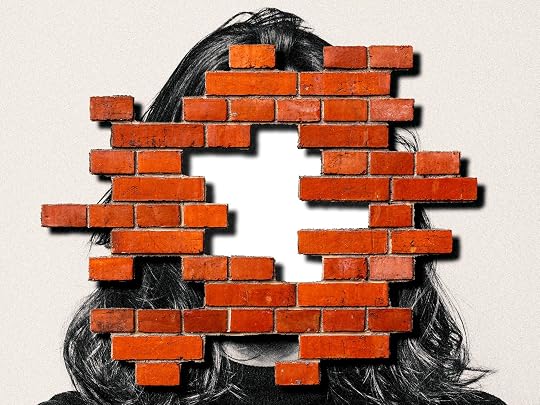
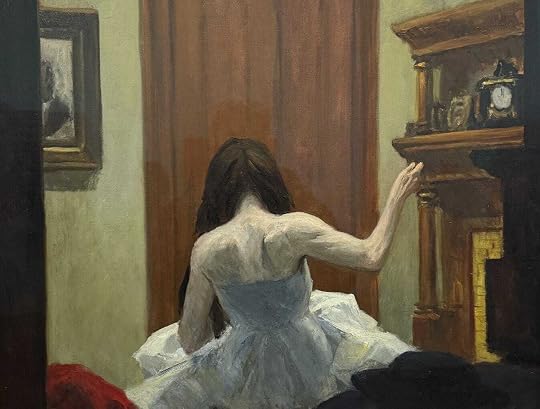
I think what works very well in this book-experiment is the narrator’s unintrusiveness in the psyche of its main character. It is introspective in a very indirect way, almost extrospectively introspective. M is given ample room (from the public to her private sphere) to gather knowledge of herself from many angles, in contact with others or alone. Yet she remains as elliptical a person as her initial suggests.

I have unfortunately not read the book, but fortunately listened to it as read by the author herself. I wrote down the quote above – from which I deduced that M was watching Persona – while listening to Rachel Cusk read it, so I'm not entirely sure about the punctuation. Another classic film in which M sees a part of herself is Les quatre cent coups by François Truffaut.

I think one would get more from this book, and from cinema as art, by watching or having watched those two films than by being familiar with the entire filmography of Natalie Portman, who is supposed to have inspired the character of M

I’ve listened to the audiobook for free on Libby. It contains a treat at the end: an interview with the author.


Update:

Thanks to a discussion with Katia and having listened to the audiobook more carefully for the second time, I felt I had to make the following update:

I'm a bit allergic to what is widely called 'metafiction', but, if this is the case here, it is also – as Vincenzo Latronico remarks in the interview he conducts with the author – a going back to pre-modern modes of making fiction, where the author (we could take Cervantes in the second volume of Don Quixote, for example) was 'simply' present in the narrative, made all sorts of free interventions in it, and, oblivious and unconcerned about what the critics would later call metaficción, he just naturally and indiscriminately referred to his characters – who were already made famous by the first published volume – as characters from that book and as real-life persons. Similarly, in Life of M, we have a simple fictional quartet: The narrator is a character and also the writer of the book; M is a character, but the actress who is the model for the character M is also a character, albeit a more real one, just like the author. And just as the latter exists in real life, we can suppose that the living model for M also exists there (the bulk of this figure being, as many have deduced, Natalie Portman, but I think M is a hybrid of hers and the generic contemporary actress).

With the intuition of a writer who personally knows an actress, meets her and discusses things with her on several occasions, the narrator tells us about the 'life of M'. M is mostly deduced from, inspired by, the actress. The narrative is a meditation on M, and a trial at working out who she is in essence. The ironic result of all this is that, at the end, the actress is confronted with M, but she only vaguely and partially recognizes herself in that narrative mirror.

It turns out that ‘despite’ her keen intuition and deductive prowess, the author has merely created a character – which, of course, is not a minor accomplishment, but it is only natural for writers to do so…

The part of M that doesn't resemble the actress (Natalie Portman) pertains to that of the more 'generic contemporary actress', which means that M, although inspired by a living being, is (mostly) a figure, a type.

Coming back to the classics, I can say that the narrator is like a Pygmalion who sculpts M from reality, from her daily life (as perceived by the narrator), from the backstage of the actress's celebrity. But, just like a postmodern Galatea, M breaks loose from the hands of her creator and comes to autonomous, albeit fictional, 'life'.

In other words, I can also say, quoting Katia, that M is mostly the 'projection' of the author, thus the ghost haunting this book.

PS: I think I've just written a meta-review :D
Profile Image for makayla.
242 reviews685 followers
May 31, 2026
Rachel Cusk fan first, person second
Profile Image for Yalla Balagan.
819 reviews57 followers
September 15, 2026
A nameless writer meets a movie star called M in a bookshop and proposes to compose her autobiography. Make it up, M says, half joking...

Chapters alternate between glossy scenes of M at spas, film shoots, literary salons and dinner parties, and quieter passages back home, where the writer's own partner occupies a hospital bed behind curtains that stay half open. Late in the book, the two strands collide.

M plays a cipher on purpose, an actor so practiced at performance that her face offers the effect of a screen test for feeling, instead of feeling in the flesh. She poses for a brand while a nearby family, busy with pastries, catches her by accident in their photo. She lies still for a masseur she has visited many times, and he still gives a different massage every session. At a glass spa above the city, cold water pours over her head again and again, an accidental replay of a torture scene from a film she once starred in.

At home, the writer's own crisis threads through every glossy scene, hospital corridors and plastic chairs standing in stark contrast to M's marble fireplaces and private spas.

The M on the page barely resembles the M living outside the pages. The writer conjured her from sorrow and borrowed fame, a stunt double for a life too painful to shoot directly.

The scenes come pre lit. The characters are typecast by circumstance, the nannies playing mothers, the mothers playing employers, a nanny at the school gate playing daughter to an absent mother, gone abroad for money. Cusk keeps the camera rolling on cruelty without commentary, a mercy of a sort.

An "M is Natalie Portman" reading isn't just fan speculation, it is impossible to deny. It is a thinly veiled, largely unflattering portrait of Portman, who has been a public champion of Cusk's work. Portman picked Cusk's 2024 novel Parade for her book club and has spoken warmly about her as a favorite writer, and the two both live in Paris.

The fictional M's filmography maps onto Portman's real signature roles, including a child-star breakout, a ballerina role, and a "vox lux"-style pop-star part, and M is a former child star raising kids largely alone in Paris, which lines up well with Portman's biography.

Cusk and Portman are rumored to be friendly acquaintances rather than close friends, and there's no public confirmation Portman consented to or even knew about the project in advance. Portman's publicist and Cusk's publisher both declined to comment when asked directly. Does this add up to betrayal and backstabbing? Does a novelist owe a real person permission to become raw material? Is this part of the discomfort the book provokes on purpose? After all, actors do the same for a living.

Life of M turns a famous face into a hall of camera flashes bouncing light off an empty center. The more thoroughly a person gets photographed, staged, and typecast, the more thoroughly that same person loses any grip on something genuine beneath the ring of lights. Fame plays the part of a magnifying glass aimed at absence. Watching someone closely turns out to be a poor substitute for knowing them.


❤️ 🇮🇱
Profile Image for Kyle C.
737 reviews140 followers
Review of advance copy received from NetGalley
August 4, 2026
"A little while ago, I told the actor M that I was thinking of writing her autobiography. She liked the idea. She's a good sport. Would you just make it up? She said."

So Cusk begins her metafictional puzzle-book. Right at the outset, readers are teased with an oxymoronic joke: the life of M will be a ghostwritten autobiography and it will be "made-up" fiction—ergo, not an autobiography at all. Nor does it resemble a biography in form, either. Instead of birthdates, key milestones, children's names, the narrative arc of a human life, Cusk's narrator concocts an intensely introspective story of an actress (identified only as M) who sees herself reduced to an object, whose career in film has made her a constant spectacle to others in the outside world, and who feels she is only ever performing the idea of a true self. Everything in her life becomes role-play, with the writer always mysteriously accompanying and observing her over the course of a few weeks.

The novel that unfolds is a highly abstracted meditation on the phenomenology of fame—of a woman whose childhood career and subsequent celebrity divested her of a sense of normalcy and authenticity and made her question whether her feelings are ever real or just simulated. Ironically, however, Cusk's narrator anonymizes its famous subject: M is singular and separate from ordinary people, always given an exclusive table or a private room, and yet readers don't know who she even is. Reduced to a letter of the alphabet, she could be anyone.

The frenzied media speculation that M is actually Natalie Portman misses the point: it is an autobiography in search of a self, a musing on what the "auto" means in "autobiography". This is the portrait of a woman who, in trying to uncover her inner self, unravels a fiction. If elements of the novel correspond with the life and filmography of Portman, then this is just part of the metafictional pantomime: the similarities only make M more artificial and unreal, a constructed gestalt of fact and imagination. With its elaborate chronicling of an interior life, the novel is not about M at all but about the writer who follows her, imagines herself in M's head, and loses a sense of her own self in trying to understand M's experience of fame.

While the novel might be based on Natalie Portman, it is not about Natalie Portman—and that is part of Cusk's self-referential mocking. This novel is about a novelist projecting onto an actress, imagining the inner life that is kept from the public, and thereby eliding her even as it seeks to elucidate her. By conjuring the actress Natalie Portman, the novel also disappears her into a realm of fantasy and abstraction. The unstated truth of the novel is not that fame dehumanizes the actress but rather that it desensitizes everyone else to a real person, robbing them of the ability to see the actress clearly as an individual with real experiences. So the novelist invents an actress troubled by her own unrealness. It's irony all the way down.

The writer in Life of M, therefore, has made up the life of M—she has simply scripted M for a role in her book just as directors have scripted and ventriloquized her for their films. The writer is no better than the intrusive fan who follows M into a brasserie in order to get her autograph. Both the writer and the fan just see her as a thing to be watched, followed, collected, curated. Neither of them is genuinely interested in the actual inner life of the actress: the fan wants her signature (and calls her a bitch when she doesn't get it), the writer wants the material of her life for her own writing project (and she seems more interested in theorizing about film and noting the interior decor of new rooms than in truly following her subject). The true M, the woman behind the character, the self behind the persona, is irrelevant to them.

I think this is a brilliant novel. With supreme confidence and self-assuredness, Rachel Cusk does not explain her jokes or irony. It's taut and cerebral without becoming dense. Thank you to the publishers for the advance copy!
Profile Image for Ira Madison.
Author 1 book681 followers
September 1, 2026
More time was spent describing rooms in excruciating detail than M’s actual psychology. I found her to be Rachel Cusk’s weakest protagonist, tbh, and the writer, I, was mostly a cypher too.
Profile Image for Samantha.
2,910 reviews204 followers
August 18, 2026
Those looking for the alleged Natalie Portman hit piece are going to be disappointed.

That this book was inspired by the actress’ life and career is clear, but if there’s an issue between the author and the subject it’s one in which the subject gave permission and didn’t like the ultimate portrayal rather than a deliberate attack by the author. It’s possible there is still a betrayal in play here, but one of significantly lesser malice.

As for the actual book? It’s…okay.

I’m historically not a huge fan of Cusk’s work, as her distance and detachment from her subjects always make her stories hard to invest in. As with her other novels, if you’re here just for precise and spare prose, you’ll get it. But if you’re hoping for characters and a story to invest in, you’ll be disappointed.

I liked this book better than many of Cusk’s novels, mostly because I think it has some interesting things to say about observing and being observed, particularly for those who can’t ever truly escape observation.

*I received an ARC of this book in exchange for an honest review.*
Profile Image for imogen.
279 reviews179 followers
September 1, 2026
this book was kind of a nothing burger except for the ending. i feel indifferent towards it.
Profile Image for Joy D.
3,467 reviews372 followers
September 8, 2026
The Life of M presents itself as a fictional biography of M, a celebrity actor who agrees to the project and then asks whether the whole thing will be invented. Real situations show up in fictional dress, and it turns into a study of how people read their own lives into fiction. Even though M is told the book is fiction, and the author reinforces it, she still objects to her portrayal. The premise held my interest throughout, and the ending is brilliant.

I think it shows that whatever you may invent about a person's life, they will find themselves in it and take issue with what they find. After finishing, I found myself thinking about the implications. I believe we often find our own reality in fiction, and that recognition is one of the pleasures of reading.

Cusk writes artsy novels, which can be polarizing. I've been in the middle, liking her books without loving them. This one is different in a good way. It goes further inside the lives and minds of its characters and is my favorite of the four I’ve read so far.
Profile Image for Erica Naegle.
15 reviews
August 30, 2026
I’ll be honest, I read this because of the rumors/buzz about this book being based on Natalie Portman, and had also read that those reading it for that reason with the hope of an interesting story would be disappointed. That was so accurate. This very loosely uses that hype (which the author’s team seems to have planned), to pull an audience. So they were successful in that. However, the main character is barely provided as a foundation for any kind of story. If you want to read someone waxing poetic about desks in a room and barely making an effort to appear as if they tried to come up with believable thoughts of a famous person, then this is the book for you. I highly doubt being world famous truly makes someone incapable of furrowing their brows as a true response out of feeling real feelings and only because they sit and think that is what seems to be the correct response. Just because you don’t relate to the world in the same way as everyone else doesn’t mean you’re a psychopath. This book was painfully boring and I’m so glad the audiobook was only four hours so I didn’t have to DNF it. even then, I came close.
Pretentious and philosophical were the two words I kept thinking through this book.
Profile Image for Carolina Ernst.
11 reviews
August 30, 2026
It’s remarkable how a media phenomenon can make a book seem much bigger than it actually is. I’m a big fan of Rachel Cusk’s other books, but this one left me disappointed. A whole narrative was built around the idea that Natalie Portman was the inspiration for the character M, yet the book ultimately feels too short and underdeveloped to live up to that premise. Its reflections on fame, motherhood, and the other themes connected to the world of an actress are extremely superficial.
Profile Image for Anna Mikulec.
354 reviews344 followers
August 26, 2026
Thank you so much FSG for an ARC!

I genuinely had no idea how I was going to rate this until I finished. Now I’m 1000% confident this is five stars.

Truly one of the most fascinating (and mentally stimulating) books I’ve read in a while! At its core, it’s an exploration of performance. How we construct identities, how other people construct identities for us, and how impossible it is to ever fully separate the person from the role they’re performing. Cusk is constantly blurring the boundaries between fiction and reality.

That’s exactly what made this such an uncomfortable reading experience at times. M is very clearly based on a real person, to the point that it becomes difficult to ignore the real world implications of writing a book like this. There are deeply personal observations and interpretations that feel invasive precisely because the fictionalization is so thin. I spent most of the book wondering whether simply calling something fiction can really absolve a writer of every ethical responsibility toward the person being fictionalized.

BUT what makes this book so brilliant is that Cusk doesn’t just explore that question within the story itself. She takes it one step further and makes the reader participate in it. The entire book encourages you to make assumptions about who these people are. You’re led to believe that you understand who’s speaking and who’s being portrayed. Then the ending fundamentally destabilizes that belief.

I obviously can’t explain exactly what happens without ruining it, but the final pages recontextualizes the entire book. It isn’t necessarily a twist in the conventional sense. It instead directly implicates the reader in the book’s obsession with identity, performance, and the act of constructing another person from incomplete information. Cusk doesn’t let you comfortably sit outside the philosophical questions she’s asking. She turns them back onto you. The ending looks you right in the eyes and asks why YOU felt so comfortable making assumptions about these characters you don’t truly know. I absolutely fucking LOVE when authors do that! The book doesn’t just talk about the unreliability of perception and the artificiality of identity. It forces you to experience it yourself.

Honestly, that ending made all of my earlier assumptions and discomforts with the book even more fascinating. The ethical questions aren’t simply something you can point at and say “that’s problematic.” They deliberately become part of the book’s architecture. Cusk doesn’t simply explore her philosophical questions. She puts those questions to the test through the construction of the book itself.

Then there’s that very last page… Might just be the most subtlety brilliant last line of a book I’ve ever read. I will be thinking about it for a very long time.

This absolutely won't be for everyone. It’s quiet, abstract, deliberately ambiguous, and much more interested in psychological and philosophical questions than conventional plot. It’s exactly the kind of book I personally become completely consumed by though, and I can’t recommend it more!
Profile Image for Sophia Eck.
774 reviews263 followers
Read
August 31, 2026
The news publication Vulture posted an article with a title boldly claiming that this book is “Not Very Good”, and though I hate to give in to baiting headlines, I may have to concur. As I’ve seen said in a handful of other reviews, the most interesting and identifiable thing about this book is its tenuous rumored relation to and speculated basis in the life of actress Natalie Portman, who is apparently but not subtly the basis for the titular character of “M”. Said “M” features consciously as herself in the novel very little (maybe 30% of the whole), waylaid by paragraphs upon paragraphs of benign setting expositions that feel like the literary equivalent of the calming exercise of “name 5 things”, and a we/us perspective obviously used as an attempt at self identification with “M” and her “unique” perspective, and both ultimately feel like filler inserted between M’s predictable self speculation in order to make this article resembling project of a book worthy length. It reads genuinely as shallow and unattached as would flipping through various articles in a magazine and reading a small chunk of each one; Who knew a fictional celebrity could have such stringent PR training even in her own supposed thoughts?

It so often felt like a handful of writing exercises patch-worked together, asked infinitely more questions of itself than it gave answers, and I left the book still waiting for the other gifted designer heel to drop off the foot of the generic version of Natalie Portman’s foot. I fear that while Cusk evades questions concerning any of her inspirational definitives for the book, her novels seem to evade even themselves! TLDR: The M must stand for McDonald’s because this was a nothingburger
Profile Image for Steffi.
1,154 reviews287 followers
September 12, 2026
Cusk schreibt immer sehr essayistisch, auf die eigenen Gedanken fokussiert, wenig handlungsgetrieben. Das hat z.B. in Lebenswerk: Über das Mutterwerden gut funktioniert, hier hingegen fand ich es hin und wieder etwas öde. Dabei sind die Ideen, die hier verhandelt werden, ziemlich interessant: Kann eine real existierende Person so beschrieben werden, dass tatsächlich deren Wesen getroffen wird? Denn das setzt nicht nur voraus, dass die Autorin diese Person wahrhaftig kennt, sondern auch dass die Autorin die reale Person nicht nur als Material benutzt. Muss man bei einem Roman nicht immer davon ausgehen, dass eine Figur gestaltet wurde?
Kann eine berühmte Person, die von allen erkannt wird und die allen als Projektionsfläche dient, bei sich bleiben? Und spielt sie, da immer beobachtet, auch immer eine Rolle, während sie sich selbst verliert und leer fühlt?
Profile Image for lauren.
247 reviews96 followers
Review of advance copy received from NetGalley
August 14, 2026
!!!!!!
Move over Yesteryear, we’ve got a new buzzy book in town

I am so mixed on this one.

If I’m being quite frank, I wish this book had no attachment to Natalie Portman, because whether or not the book is actually about her, the gossip is distracting, and the hype around the book won’t be about the actual book. Sigh.

The writer implies that The Life of M was written as the personification of the writer’s emotional wellbeing using M’s physical self as the catalyst for exploration. But because the lead in the book is a famous actress, whoever’s emotional wellbeing is represented is irrelevant: because the attention will always fall on the actor. We have seen too many times before that even when false allegations or information hits the media about a person, it sticks. Even if disproven later. Life of M documents abuse of actors, so that begs the question of, is the sheer existence of this book is a perpetuation of that abuse? Am I continuing the cycle of abuse by even writing this review, bringing more attention to Natalie Portman’s life? If that’s the case, I’ll own my faults. But I also feel implored as a book reviewer, if everyone is going to read this book anyway, to bring up these questions so that readers can reflect. I’m an advocate for discussion and conversation around difficult topics; growth is always rooted in discomfort.

Is this book even about Natalie Portman? Or is she an innocent bystander? Is this a prime example of how “normal” people project themselves onto the famous elite in the hopes of discovering something about themselves? Or is this a book about the high cost of fame? Or seriously, is this about Mila Kunis? I haven’t quite figured it out yet because, it could be all of the above.

So.

Did I love the book? Yes. Did I wish M had no parallels to any real person, because it would have made the message more powerful, even at the expense of selling less books or having less buzz around the book? Absolutely.

You can read my full length review on Substack (book talk with lauren)

Thank you to FSG and Net Galley for the ARC
Displaying 1 - 30 of 560 reviews