Lost Island is a romantic novel about escaping from New York City and into a voyage on a schooner toward the unknown sea. Jane Carey, who is the protagonist, finds love, a deserted island, and struggles with civilization, and yet on her mind is always the iridescent merry nature. Lost Island is undoubtedly Follett's masterpiece in which she develops her themes of love, escape, nature worship, and takes the reader on a romantic adventure into her world.
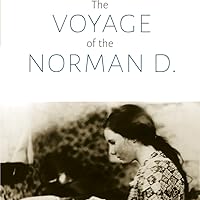
Barbara Newhall Follett (born March 4, 1914 – December 7, 1939 (disappeared)) was an American child prodigy novelist. Her first novel, The House Without Windows, was published in 1927 when she was thirteen years old. Her next novel, The Voyage of the Norman D., received critical acclaim when she was fourteen.
In 1939 she became depressed with her marriage and walked out of her apartment with just thirty dollars when she was 25 years old. She was never seen again.
I'm Barbara's half-nephew and publisher of "Barbara Newhall Follett: A Life in Letters" (Farksolia, 2015). I warn potential readers of this edition that it's full of errors and was not authorized by me nor Barbara's family.
In 2020 I've published a better edition, also on Farksolia, called "Lost Island (plus three stories and an afterword)". The other stories are "Rocks" (thrilling Katahdin adventure); "Travels Without a Donkey" (account of hike+canoe trip through Maine in the summer of 1932, following the path of the Appalachian Trail); and "Walking the Mallorcan Coast" (ten days backpacking in 1933). My afterword describes Barbara's life following her meeting of Edward Anderson at sea in 1929 ("Lost Island" is dedicated to E.A.) and includes much information that's surfaced since my earlier book.
This book pulled at my heart. The author has an endearing writing style that invokes such emotion. Lush and vibrant, dreamy yet genuine, I found myself lost in this story and at one with the characters. Highly recommend.
Lost Island is more than just a story about love and adventure, it is a story that parallels the author's own life in many ways. A wonderful story that read in the context of the real world people it was portraying - makes you really get into each character even more. It's sad that this was her last book, as she possibly could have received recognition as a writer again had her life went differently. The afterword was well done and a very intriguing read, especially if you don't know the history. The three appendices were a great addition - "Travels Without a Donkey" was the standout for me, but they were all great reads. Recommend.
An excellent read that was both inspiring (Jane's resilience in the last part of Lost Island) and depressing (lost of beauty) at the same time. You really get a feel for Barbara Newhall Follett's personality through her writings and her fierce love for freedom and nature. The three extra stories were also enjoyable, but my favorite part of the entire book was the afterword which detailed Follett's life and her haunting disappearance. Thank you Stefan Cooke for bringing Follett's name and works back into the public light and allowing us readers to learn more about a talented writer.
I just finished this one last night, actually. It is, in reality, several stories. At least the book I have is. Lost Island, of course, and a few other stories by Ms. Follett of her travels with Nickerson Rogers. A very great read. She was amazing. And still is amazing.
The beginning is a bit slow as she reflects on meeting with the crew and becoming familiar with the ship. As she decides to travel with this crew and leave her post with the professor, things become very fast-paced as she spends time on the ship. This female is something that this crew is not familiar with as they sail to their destination.
Jane becomes very friendly with the captain, and she also wants to get to know another mate. His name is Davidson. He is often reading when he is not working. She admires his choice of writers. Jane watches his progress. She is always thinking about him. She left behind her friends and co-workers to see the world beyond New York.
A storm becomes the ending for this crew and their ship. Davidson finds himself and Jane together. Everyone else is lost at sea. He grabs Jane from the floor and brings her along with him. They are floating along for several days, barely staying alive, when they spot land. A spot that becomes their paradise for several years. Just the two of them on an island where they discover their love for each other as they plan how they will live on this island. Their reality is now to survive here. One day, they spot a speck in the distance. Jane does not know how to feel about the arrival of others. Davidson seems excited about this approaching craft. They are joined by a group of scientists. At first, this seems like a great idea to join the crew and leave the island. However, as they stay on the island with Jane and Davidson, Jane becomes distant and fearful about returning to New York.
This will be a new path for both of them. When they arrive, Jane is fearful about her appearance. She is very tan, thin, and unkempt. Her hair has been cut and is uncombed. Davidson appears to be comfortable and unconcerned about his appearance and hers. They are a bit afraid of how they will survive in this big city without money or a place to live. After days of looking for a solution. Jane finds a new friend who provides help to her. However, Davidson is not having good luck in finding a job. He becomes concerned with this as Jane provides a place for them to live. She also gets her old position back with the professor. He is writing a book about butterflies. The professor wants Jane to help him with this task.
Davidson decides it would be best if he left with a crew to find a better fit for him. He does not want to leave Jane but feels he must seek a better place to work. Davidson wants to be able to provide for his wife. He is not comfortable with her working and bringing in all the money. Jane does not want him to leave, and she can't go with him. Finally, they agree to part.
Jane misses nature, the woods, and her home life. She meets up with an old friend. They hit it off. They enjoy dancing in the evenings and talking about their past together. When Davidson returns, he learns that Jane has reconnected with a guy from her past. He is jealous. However, Jane explains that she was lonely when he did not come back for such a long time. She tells him it is nothing to worry about, but Davidson does not believe her.
She is devoted to Davidson. Jane loves the joy she gets from being with her old friend. She wants both lives. The schooner cruise is something she will always remember about Davidson. She escaped from a dusty office to be there. The Lost Island is their island adventure—something she will always share with Davidson.
She returns to the woods. Jane is happy there, surrounded by the lake, the birds, and the wild open spaces. This is where she feels she needs to be as her friend continues to write in the cabin while she explores the woods.
This book includes a wealth of additional information and material related to the writing. The book consists of facts about how the author published it. I enjoyed reading about her life and how she formed this story about two men she admired and loved. Follett is an accomplished writer and storyteller. Lost Island mirrors her life.
"Follett, who published her 1927 novel, The House Without Windows, at age 12, before disappearing in 1939, left in her papers this engaging story of a restless young woman. Jane Carey, tired of soothing her friends’ troubles and bored with her job as an entomologist’s secretary, yearns for the wildness of her Maine childhood, which she fled after leaving her fiancé at the altar. She impetuously signs up to join the crew of the schooner Annie Marlow and, once on board, endears herself to the other sailors, especially the captain—she reminds him of his deceased daughter—and Davidson, a Joseph Conrad–adoring second mate. When the ship goes down in a squall, only Jane and Davidson survive, drifting on the open sea. They eventually land on an uninhabited island where they rhapsodize their primitive lifestyle and fall in love. After three years, a research team arrives on the island and rescues them, despite their hesitation to return to modernity. Back in New York, their choices pull them apart as Jane grapples with reintegrating into her old life. The zesty, ratatat dialogue echoes the era’s screwball comedies, and the plot flies by. It’s a strange thrill to encounter this assured young writer’s voice emerging from the ether."
Unfortunately PW appears not to have read Barbara's other three stories included in the Farksolia edition, nor my afterword. :(
"Follett, who published her 1927 novel, The House Without Windows, at age 12, before disappearing in 1939, left in her papers this engaging story of a restless young woman. Jane Carey, tired of soothing her friends’ troubles and bored with her job as an entomologist’s secretary, yearns for the wildness of her Maine childhood, which she fled after leaving her fiancé at the altar. She impetuously signs up to join the crew of the schooner Annie Marlow and, once on board, endears herself to the other sailors, especially the captain—she reminds him of his deceased daughter—and Davidson, a Joseph Conrad–adoring second mate. When the ship goes down in a squall, only Jane and Davidson survive, drifting on the open sea. They eventually land on an uninhabited island where they rhapsodize their primitive lifestyle and fall in love. After three years, a research team arrives on the island and rescues them, despite their hesitation to return to modernity. Back in New York, their choices pull them apart as Jane grapples with reintegrating into her old life. The zesty, ratatat dialogue echoes the era’s screwball comedies, and the plot flies by. It’s a strange thrill to encounter this assured young writer’s voice emerging from the ether."
Unfortunately PW appears not to have read Barbara's other three stories included in the Farksolia edition, nor my afterword. :(
I enjoyed reading about this author in the after Word, and of course, her written work one novel called lost Island and three short stories about her travel adventures in Maine in Mallorca.. The authur mysteriously disappeared in 1939 and this work was finished and published by a nephew. I enjoyed the short stories more than a novel about the whole addition was fascinating.