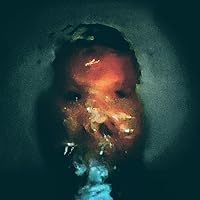
In the middle of downtown Los Angeles, an abandoned cathedral stands, fenced in and ignored by the world around it. The preoccupied passers-by have long since ceased to notice the dilapidated church in their midst, never mind sensing the danger and centuries old evil trapped inside its walls. A gruesome murder one late night pulls the structure into the spotlight, triggering a police investigation into the loss of one of their own. Lieutenant Christine Marks, along with detectives Paul Hernandez and Steve Mayfield, must enter the church in search of the monster that murdered her father. Every step takes them deeper into the belly of the church revealing the mystery of an ancient evil imprisoned within. For centuries, shamans, warriors and priests have fought a powerful demon, holding it to this piece of earth. Now it’s trying to rise again, and these three must learn the secrets of those who’ve gone before them in order to find the demon and end the centuries long battle, once and for all. Their stamina, resolve and faith will all be tested and every small victory along the way brings them closer and closer to indescribable horrors only hinted at in myths and nightmares.
I wish I could report that Carpenter had somehow recaptured the old magic in a new medium, but I struggled to finish this. It feels like we've been plopped down at the beginning of a movie's third act- no character development, no setting of mood or building of suspense. I may yet listen to the accompanying album. But just to cheer myself up for now, and with fall around the corner, I will try to list my six...no, let's say seven...favorite Carpenter films.
7) Escape from New York 6) In the Mouth of Madness 5) Assault on Precinct 13 4) The Fog 3) Prince of Darkness 2) Halloween 1) The Thing
Finished John Carpenter's Cathedral and now I wanna rewatch John Carpenter's Vampires.
The vibes were so good, the art too. As a whole it felt like a John Carpenter project which is all I was hoping for, really. The story could've used a little more development, but it was fun. I'll have to check out the soundtrack in a bit.
John Carpenter came up with this in a dream and it shows. A detective's father is turned inside out and she immediately investigates instead of being distraught like anyone else would. She and 2 other detectives basically descend into Hell under an abandoned cathedral. The story is real bad, especially the ending. What isn't bad is the art. It's really good. From a couple of artists I didn't know.
I like the smart parts of Carpenter's films, but there's nothing of that subtlety or wit here. This is just a well drawn, bloody slog through some dark fantasy cliches. There's a soundtrack, also by Carpenter, available on your favorite digital music service that's much better than the visual part of the entertainment.
I absolutely love John Carpenter's films. I think I was expecting a bit more lore out of this one, and maybe a bit more in the way of dialogue that was there. Maybe some of that expectation was influenced by having recently rewatched "In the Mouth of Madness" which is even more brilliant than I remember. Rest in peace, Sam Neill!
Even so, I feel like so much of Carpenter's work is elevated by his music, so I'm definitely planning to reread when the soundtrack to this comes out in August. I love the couple of singles that have been released so far.
In short, I initially wanted more out of this graphic novel, but I'm going to reread with the soundtrack here in a couple weeks and see if that changes things for me. I will always take more John Carpenter!
4/ 5 Stars. Excellent art. The story was short and a little rushed. I believe it could have developed a little bit more. Jumped right into the thick of the story immediately.
I'm surprised how poorly this is currently rated. Is it the best comic ever? Absolutely not. I hate a lot of the hatching on the faces, which drew me out of the story a bit. The story is a little basic, but it worked for me.
Well, mostly. There is no way a cop whose relative died would be allowed to investigate. Ain't no way. If they wanted that connection, the officer could have snuck in to investigate, rather than be allowed to outright. Would have been a great way to show that help was unavailable, as sneaking is not authorized.
Still, I was invested in what happened and the ending worked. Could this have been better? Absolutely, see my complaints. But was this worth a read? Yeah, I'd say so.
Also, I am listening to the accompanying music and it goes hard. 10/10 so far.
John Carpenter’s Cathedral is a dark supernatural horror graphic novel created by John Carpenter in collaboration with Sandy King and Sean Sobczak. It takes place in the heart of downtown Los Angeles, where an abandoned cathedral has stood unnoticed for years. Surrounded by fences and largely ignored by the people passing through the city, the old church appears to be nothing more than a decaying building. But beneath its neglected walls lies something far older and more dangerous than anyone realizes. An ancient evil has been imprisoned beneath the cathedral for centuries, and a violent murder eventually sets in motion a chain of events that threatens to release it. The story combines police investigation, occult horror, ancient mythology, and psychological terror in a distinctly Carpenter-like atmosphere.
The story begins with a gruesome murder that immediately draws the attention of the Los Angeles police. What makes the crime particularly disturbing is that the victim is one of their own. Lieutenant Christine Marks is personally affected by the case because the murdered officer is her father. She is determined to discover what happened and refuses to accept an ordinary explanation for his death. Christine joins forces with detectives Paul Hernandez and Steve Mayfield, and together they are sent into the abandoned cathedral to investigate. What begins as a professional investigation quickly becomes something far more frightening as they realize that the building contains secrets that have been hidden for generations.
The cathedral itself becomes one of the most important elements of the story. It is not simply an old church or an atmospheric setting. It is effectively a prison built around an ancient supernatural threat. The deeper Christine, Paul, and Steve travel into the structure, the more they discover that the building has a history far beyond anything they had imagined. Hidden passages, forgotten chambers, ancient symbols, and disturbing evidence begin to reveal that the cathedral was constructed around a much older struggle. The familiar world of modern Los Angeles gradually gives way to a buried world of legends, rituals, sacrifice, and supernatural forces.
At the center of the mystery is a powerful demon that has been trapped beneath the cathedral for centuries. Long before the present-day investigation, shamans, warriors, and priests fought against this entity and somehow managed to confine it to a particular piece of land. Their efforts were not part of a single battle but an ongoing struggle passed down through generations. The people who came before Christine and her companions understood the danger and devoted their lives to keeping the creature imprisoned. Over time, however, the knowledge surrounding the ancient battle became fragmented and almost forgotten. The modern city grew around the cathedral, while the supernatural threat remained hidden underneath it.
The murder changes that situation. The ancient evil is no longer completely dormant, and something is beginning to disturb the prison that has held it for so long. Christine and the two detectives are therefore not merely looking for a murderer. They are entering the middle of a conflict that has existed for centuries. Their investigation forces them to follow clues left behind by people who fought the demon long before modern police departments, technology, or even the city of Los Angeles existed. To survive, they must understand the methods and sacrifices of those earlier generations.
Christine is especially important because her investigation is deeply personal. She is not simply following orders; she is searching for answers about her father's death. Her grief and determination push her deeper into the cathedral even when the evidence suggests that she should turn back. Her emotional connection to the case gives the story a human center. The supernatural horror becomes more frightening because the characters are not fearless heroes entering an imaginary world. They are ordinary people confronting something they were never prepared to understand.
Paul Hernandez and Steve Mayfield provide additional perspectives as the three investigators gradually uncover the truth. Each of them is forced to confront the limitations of ordinary logic. At first, they approach the cathedral as police officers investigating a crime. They look for evidence, identify possible suspects, and try to reconstruct what happened. But the deeper they go, the more impossible their discoveries become. The investigators are eventually forced to accept that the case cannot be solved using conventional methods alone. They need to understand the supernatural history of the place if they are going to survive.
The novel's horror grows through this gradual revelation rather than depending only on sudden violence. The cathedral becomes increasingly claustrophobic as the characters descend into its hidden depths. Every discovery suggests that something worse is waiting further below. Ancient writings and remnants of past battles reveal the scale of the danger, while the investigators begin to understand that the stories they once might have dismissed as superstition were actually warnings. The demon is not a myth created to frighten people. It is a real and extraordinarily powerful entity that has been waiting for an opportunity to return.
Faith is another important theme running through the story. The original shamans, warriors, and priests relied on different forms of spiritual knowledge and courage to keep the evil imprisoned. Christine and her companions inherit the consequences of their struggle without necessarily sharing their beliefs. As the investigation progresses, however, the modern characters are forced to confront questions that science and police procedure cannot easily answer. Their survival depends not only on physical strength but also on their ability to believe in something beyond what they can see and understand.
The characters' journey is therefore both physical and psychological. Every step deeper into the cathedral brings them closer to the imprisoned demon, but it also strips away their assumptions about reality. They begin with the confidence that they are investigating a murder and gradually realize that they are participating in an ancient battle. The closer they come to the source of the evil, the more their stamina, courage, and faith are tested. Even small victories are temporary because each one brings them closer to a much greater horror.
The story's atmosphere is central to its appeal. Carpenter's horror has always been associated with isolation, darkness, suspense, and the feeling that ordinary places can conceal extraordinary evil. Cathedral follows that tradition by transforming a familiar urban environment into a gateway to something ancient and terrifying. The contrast between busy Los Angeles above ground and the nightmare world beneath the cathedral makes the setting particularly effective. The city continues its ordinary life while an unimaginable supernatural threat exists almost directly beneath its streets.
Ultimately, John Carpenter’s Cathedral is a story about an ancient evil returning after centuries of imprisonment and the unlikely group of investigators who must stop it. Christine, Paul, and Steve begin by seeking justice for a murdered officer, but their mission becomes a fight for survival and for the future of the city. They must uncover the secrets left behind by generations of people who fought the demon before them and find a way to complete a battle that has never truly ended. The graphic novel turns a murder investigation into a descent into supernatural darkness, blending modern police drama with occult mythology and visceral horror. Its central idea is both simple and frightening: sometimes the greatest dangers are not new threats but ancient evils that humanity has merely forgotten how to fear.
Started: 8.15.26 Finished: 8.15.26 ~Cathedral by John Carpenter, Sally King & Sean Sobczak | #GraphicNovel #paperback ~Art by: Federico De Luca #JayBookSin2026Boal Book.95
SynopSin: It took a few pages for me to get into it, but once I was in, damnnnnn. Carpenter based this GN on a dream he had. The creativity of Carpenter is not bound to screen alone. The dialogue was ok. The horror elements were great. The art is fantastic. The story was short which suited it perfectly. In all honesty, the story was basic. The horror bits were the star and I don’t think Carpenter fans will be disappointed with that. As Carpenter says in the introduction: “Remember, this is a dream, and like all dreams it is mystical, fanciful, and resistant to logic, all the more reason to enjoy it.” Indeed, sir. Indeed.
John Carpenter’s Cathedral is a sharp, dark graphic novel from Storm King Comics that leans heavily into supernatural dread and classic good-versus-evil conflict with distinct satanic undertones.
The artwork really stands out here. The dark color palettes and heavy shadow work set a brooding tone right from page one, giving the whole book a rich, claustrophobic atmosphere. Premise-wise, it weaves in fascinating motifs around sacred protection and occult iconography—specifically leaning into eye symbolism, from ancient mythic safeguards like the Eye of Horus to broader historical archetypes. That presence runs strong throughout the entire narrative, all the way down to the final pages (no spoilers, but how those eyes factor into the resolution is brilliant).
It hits a few familiar genre beats along the way, but the visual execution and thematic depth make it a compelling read.
You can tell that Cathedral is following a dream logic, with a bare-bones story that definitely could have been explored more (hell biomes, for example). The final action sequence is properly trashy; Rawhead Rex meets Diablo boss fight.
I didn't like the artwork at first (too much white space), but after I was about halfway through, it changed (tied to the story) and properly colored the pages and blocks. The moment it changed was a highlight of the graphic novel for me, so that, coupled with an almost comic boss fight, I still got some enjoyment out of it.
P.S. Listening to Carpenter's Cathedral's Spotify playlist is a must while reading.
This book can't really elevate itself above what the introduction describes it as - a dream made into a screenplay. None of the characters are particularly deep, and the motivations are thin. But the dark fantasy of the world under the cathedral has a couple intriguing locales and one or two of the secondary characters have a little spark. It's fine enough, but I can definitely understand why no one would finance this for a movie. Much as I love John Carpenter's work, this would not rank high in his pantheon.
Hollywood's loss is comics' gain. Because this book is allowing John Carpenter to tell visual horror stories again. I had a blast with it. It felt like In the Mouth of Madness era Carpenter (especially with the excellent soundtrack that Carpenter, his son Cody, and Daniel Davies mace for the book) with a healthy dose of the dream/nightmare logic of David Lynch. Plus, there was no budget limiting the visuals. The illustrations, vibrant colors and excellent character designs were all incredible. The dreamy nature of this story may mean it's not for everyone, but it certainly was for me.
I did not like this. I was excited about it when I heard about it and read the synopsis, because it was giving me apocalypse trilogy vibes. And I don’t think that was an entirely inaccurate comparison, but unfortunately the vibes aligned much more with Prince of Darkness, which I didn’t care for, rather than the Thing or In the Mouth of Madness. I also just felt like the character work was severely lacking.
Somebody give John Carpenter the budget to film Cathedral as a feature, please!
Highly evocative of Carpenter classics from the 1980s, namely Prince of Darkness (a church that contains an ancient evil) and Big Trouble In Little China (a journey through a hidden underworld beneath a West Coast American city, and giant carnivorous creatures popping out of underground caverns).
Read along with John Carpenter's heavy metal Cathedral album for the full rocking experience.
Could be considered an entry in the "Apocalypse Trilogy" of The Thing (1982), Prince of Darkness, & In the Mouth of Madness if it were not trying so hard to do so. Like many a Carpenter story, it is dark, brooding, and has no happy ending. Unlike most Carpenter stories, it is a railroaded question of WTF is going on here?
The soundtrack that accompanies it is typically a JC masterpiece.
I've yet to listen to the accompanying album, but this comic was pretty fun! 3.5 stars really but Goodreads still doesn't have half star options. Not much going on character wise, almost feels more like a theme park ride (or a dream, which makes sense, as a dream Carpenter had was the inspiration), but it's got great art, pithy dialogue, a fun premise, and lots of memorable nightmare imagery. Plus, it riffs on a lot of JC's best film work, particularly PRINCE OF DARKNESS, IN THE MOUTH OF MADNESS, BIG TROUBLE IN LITTLE CHINA, and THE THING. Carpenter fans will enjoy.
I can easily see this being a storyboard for a film but I'm glad it has no plans to be turned into it as it would end up being nothing but AI/CGI. JC will always remain one of my favourite horror storytellers. I'm looking forward to popping the LP on my turntable this week as I wasn't able to listen to it today while I read this tale.
Absolute rubbish. If this is the best AI can produce and people are actually enjoying it then America is in more trouble with illiteracy than i originally thought.
Complete Trash. Why even make something like this?
i love john carpenter's mind. this is a really cool world with great art to depict it. there's gnarly gore and weird people. so happy to still experience the horrors from the mind of john carpenter even if in a different medium
Here to fuck up y’all’s algorithms, but yeah, I loved. She’s a shorty, but it didn’t need much more fat. Gnarly, gothic, punk and weird. Cops get fucked up and demons go wild. Carpenter does a little Lovecraftian religion vibe, go off!
Cathedral is best experienced as a multimodal work, with the music, liner notes and comic telling the story together. Each part adds to the others, and the story becomes greater than the comic alone.