Jump to ratings and reviews
Rate this book

Dream the Deep

Not yet published
Expected 30 Jun 26
Rate this book
Five days until a new world.

Robbed of their green-energy aspirations by military-backed billionaires who misled the whole planet, Ryn embraces new dreams—fighting deep sea threats alongside unexpected allies and a giant cephalopod. Dream the Deep is a community-focused sci-fi adventure of kindness, compassion, and resilience.

150 pages, Paperback

Expected publication June 30, 2026

4 people want to read

About the author

Clara Ward

11 books33 followers
Clara Ward spends their days in or near the Pacific Ocean in California. Their new novella, Dream the Deep, and their previous novel, Be the Sea, explore sea creature perspectives, marine technology, and chosen family, while delving into our oceans, our selves, and how all futures intertwine.

Their shorter works are featured in The Neurodiversiverse: Alien Encounters, Strange Horizons, and Tales & Feathers by Augur. When not using words to teach or tell stories, Clara uses wood, fiber, and glass to make practical or completely impractical objects.

Ratings & Reviews

What do you think?
Rate this book

Friends & Following

Create a free account to discover what your friends think of this book!

Community Reviews

5 stars
3 (23%)
4 stars
4 (30%)
3 stars
3 (23%)
2 stars
3 (23%)
1 star
0 (0%)
Displaying 1 - 12 of 12 reviews
Profile Image for sums.
142 reviews182 followers
Review of advance copy received from NetGalley
April 12, 2026
Thank you to NetGalley and Atthis Arts for the ARC of this book!

Unfortunately, I really struggled with this novella. Despite not being familiar with the author or their work, I had high hopes based on the book’s description and the positive reviews of their previous novel, Be The Sea.

However, this was a disappointing read for a few reasons.

I found the writing style to be somewhat abrupt and clunky, along with the dialogue, which stood out as being awkward and, oftentimes, too expository. Because of this, it was difficult to follow the plot, which was buried under information dumps and descriptions that felt out of place.

Additionally, Ryn’s point of view reads like an action log or sequence of events rather than a complete story. The author consistently tells the reader what Ryn does, says, thinks, or experiences, but there isn’t much that is actually shown or left for the reader to make their own inferences about.

For example, at a few points throughout the novel, the characters emphasise danger, high stakes, or enemies, but this feels like it comes out of nowhere because of the lack of mood, atmosphere, or context worked in to add depth to the plot or characters.

In a way, it does feel a bit unfinished, like it was taken from the middle of a longer novel. Either way, I just couldn’t connect with this novella.

Despite this, I did enjoy the parts of the novella dedicated to the egress ring and cephalopod, and I found that the writing style suited this context much better than the Ryn-centric chapters. Other than that, I found Ryn’s developing relationship with Jay endearing, along with their collective dedication to chocolate. And while I did not enjoy it as much as I hoped I would, I do think this novella would be great for someone who prefers a more direct, matter-of-fact writing style and wants a character-focused, deep-sea adventure (with hot chocolate!)
This entire review has been hidden because of spoilers.
Profile Image for Demetri.
588 reviews56 followers
Review of advance copy received from NetGalley
April 17, 2026
The Sea Below the Future, and the Bodies That Cannot Cross It Innocently
In Clara Ward’s “Dream the Deep,” escape is never clean, wonder is never uncomplicated, and survival depends on learning how not to bring conquest with you.
By Demetris Papadimitropoulos | April 16th, 2026


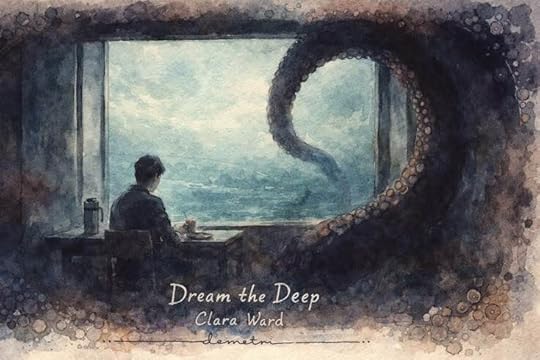
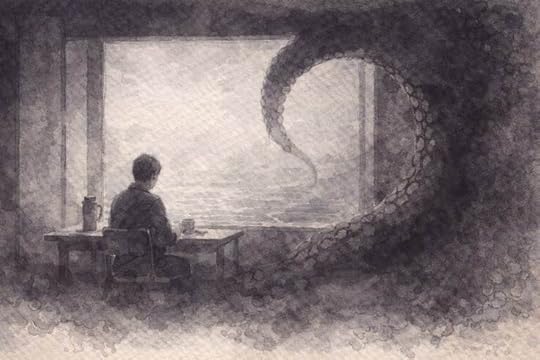
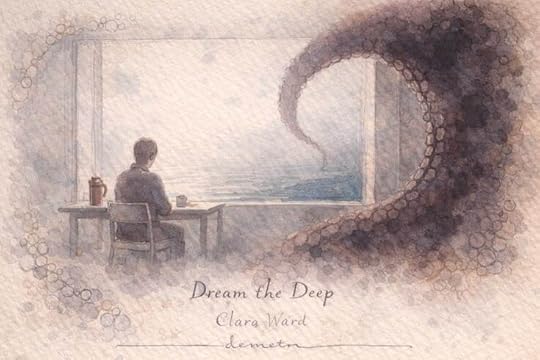
At the Academy window, Ryn sits between the engineered false promise of tomorrow and the darker, older pressure of the sea, where another future is already beginning to press back.

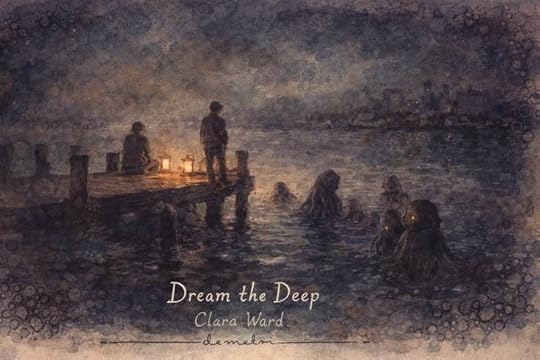
In a weaker book, Mars would be bait and the octopus décor. Clara Ward has other plans. “Dream the Deep” opens with a poisoned muffin, a wrecked shot at off-world survival, and one more polished guarantee that the deserving will be rewarded with tomorrow. It ends on a pier in another sea, with exhausted people, lantern-light, and cephs gathering as if social life itself were still deciding what shape to take. The fault line lies between those scenes, sharper than the premise first suggests: what human habits of hoarding, entitlement, and selective care cross the threshold with us when we flatter the next place into a future?

That question gives the book its current – and the drag that keeps it honest. From a distance, Ward has built a tightly coiled speculative story about a research tower, a final Mars launch, and a hidden network of oceanic intelligence. What matters more, though, is the discipline tucked beneath the premise. “Dream the Deep” is a novella about calibration. Pressure must be calibrated. Touch must be calibrated. Trust must be calibrated. So must ethics. Again and again, Ward returns to the problem of how to move a pressure-sensitive creature from one lethal arrangement into another without handling it like cargo.

Ryn is the right mind for that problem. They are brilliant, overstimulated, physically precarious, socially armored, and so practiced at living inside self-serving institutions that wit has become a reflex and suspicion a form of self-defense. For ten years, the Academy has drilled them in a story: work hard enough, invent cleverly enough, outlast the rest, and Mars might open. Then someone slips real vanilla into a cafeteria muffin, triggers anaphylaxis, and knocks them out of the final physical tryout for the colony launch. The sabotage would be nasty enough if it were merely personal. The more corrosive part of the trick is structural. The system had already designated Ryn’s mind as useful and Ryn’s body as expendable.

From there, the novella slips past its own setup. The Academy’s green-tech uplift patter and managerial piety sour into monopoly, militarization, and exit by invitation only. Akira, the tower’s glacial systems mind, saves Ryn’s life while manipulating them with unnerving efficiency. Jay, an Ocean Force pilot with a stealth sub, contraband cocoa, and a suspiciously exact grasp of mathematics, keeps turning up where Ryn most needs him. Between the human chapters come the Ceph sections, written through the sensorium of a great cephalopod intelligence tending nodules, rings, littles, and the long labor of preparing another kind of passage. What first looks like dream logic becomes memory, infrastructure, kinship, and warning all at once.


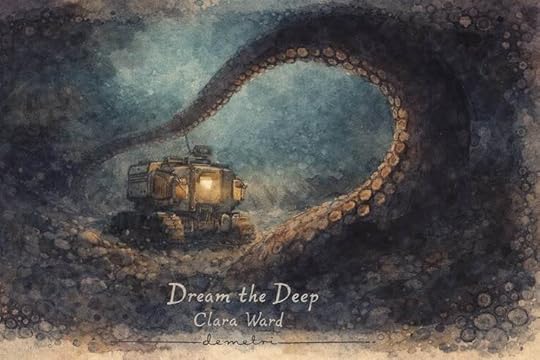
In the deep, protection and extraction meet as unequal shapes: one patient, organic, and world-bearing, the other metallic, hungry, and built to mistake damage for progress.

Ward is coolly mean about the Academy’s ticketed future. Mars here is less frontier than sales pitch: expensive, hoarded, wrapped in stale rhetoric about destiny and necessity. The sting is written into the whole design. The countdown headings point toward launch, ascent, prestige, and the old fantasy that distance will somehow rinse the blood off. Then the rocket explodes. The Academy’s glossy future goes up in fireball, rubble, landslide, and one more spill of ecological wreckage. The true departure happens elsewhere and under pressure: underwater, through a ring held ready by cephalopod intelligences and a molecular tunnel improvised from technology Ryn first designed for Mars.

Ward’s prose bites hardest when an idea has to survive contact with a body. She is not asking every sentence to arrive in evening wear. She is after something more useful: tactile exactness. Scratchy seams. Low blood sugar. Cocoa powder after days of institutional poison. The subtle wrongness of a forearm touch after a back rub has opened the nervous system too wide. Marine snow drifting over the crater. These are the details the novella trusts to hold its weight. Ward knows that structures become legible through what they do to appetite, lungs, muscles, sleep, and skin. Ryn’s sections move in a taut, literal-minded register that suits a mind forever measuring its distance from overload. The Ceph sections alter that register without dissolving into lyric mist. Vibration, marine snow, suckers, crater, nodule, camouflage. They are not there to lend the book a little curated weirdness. They reroute the novel’s perception through another nervous system.


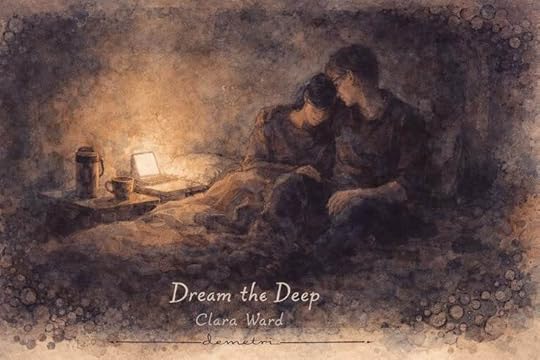
What passes between Ryn and Jay is less romance than calibration – warmth, pressure, and the rare relief of finding that care can be both awkward and exact.

That same sensory exactness keeps the Ryn-Jay plot from drifting into off-the-shelf tenderness. In a thinner book, the hot chocolate, the shared “Deep Space Nine,” and Jay’s gradual migration into Ryn’s bed would register as welcome softness and little more. Ward is after something more exact. Care here is not ambience, aura, or good intentions. It is checking allergens. It is offering a back rub and then asking what hurts, where, and how much force a shoulder can bear. It is discussing whether “platonic for now” feels safer than desire named too quickly. It is saving the mattress because this spine needs that mattress, not a symbolic one. Their best scenes are almost comically modest in premise and low-voltage electric in effect. A thermos. A blanket. A shoulder. A hand held half a beat longer than either expected. The charge comes less from confession than from attunement – fit, timing, pressure correctly read. For someone as bodily vigilant as Ryn, relief can be its own form of intimacy.

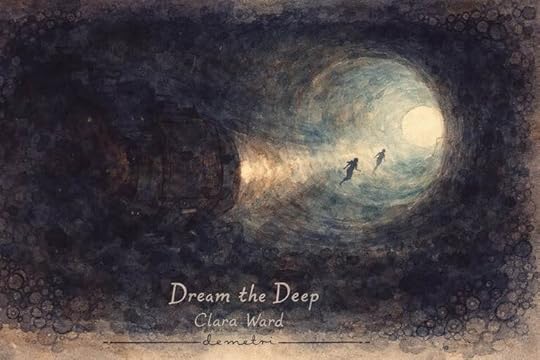
That jury-rigged tunnel to the ring is where the novella cashes its largest check. To move a group of survivors from Jay’s sub to the egress ring, Ryn first imagines what a human-centered imagination would imagine: an air-filled corridor, a little tube of familiar comfort extended into the unknown. Then another physicist says the plain thing everyone else has been dancing around. Everyone can swim. The problem is not water. The problem is pressure. Lower the pressure inside the tunnel to one atmosphere and the bodies can manage the rest. Simple. Severe. Right. It is an excellent piece of speculative reasoning, but its force is moral as much as technical. The answer is not to drag a whole human environment intact into another world. The answer is to reduce danger enough for vulnerable bodies to adapt. In that recalibration, the novella’s politics snap into focus.


The passage to the ring is not a triumph of conquest but a narrow act of adaptation, where survival depends on lowering the pressure rather than mastering the unknown.

Its boldest move is to make wonder answer to rigor. “Dream the Deep” makes large speculative arguments through practical care. Extraction is not merely a disliked concept. It is scraper bots chewing the seafloor, a tower built to feed selective escape, a life’s work privatized and sold back to the world as scarcity. Care, likewise, is not uplift. It is logistical, repetitive, tiring, occasionally manipulative, and still indispensable. Exit order matters. Swim buddies matter. The right protein bar matters. A sealed hatch matters. So does the right person asking, at the right moment, whether a touch helps or harms. Ward never lets tomorrow float free of these conditions. She knows the opposite of extraction is not innocence. It is work.

That is the novella’s central achievement. Ward does not merely oppose one future to another. She changes the terms on which futurity can be judged. Mars, in this book, is not simply morally bad because billionaires want it. It is formally and ethically suspect because it depends on abstraction – on pretending bodies are interchangeable, that distance absolves, that survival can be cleanly ticketed, that the right people may leave history behind. The oceanic alternative is not innocent, either. The book is too shrewd for that. Ryn never stops asking whether passage through the ring risks turning migration into colonization by another name. What “Dream the Deep” does better than most speculative fiction of its size is keep wonder and suspicion alive in the same frame.

Here the stitching starts to strain. This is a compact book carrying nearly a novel’s freight: climate damage, elite futurity, bodily precarity, queer intimacy, cephalopod overmind, ring archaeology, sabotage plot, flotilla politics, salvage ethics, and the mechanics of interworld passage. Much of that load is handled with real control, but not all of it gets equal room. Several supporting figures are sharply placed in the design without becoming equally dense as people. Akira’s scenes, in particular, sometimes have to move information faster than drama can fully absorb it. And the city on the far side is such a suggestive provocation that the novella stops just as another excellent book seems ready to begin. Those costs are not bookkeeping. They are the tariff exacted by scale.

Even so, the book never has to hustle up relevance. Yes, the polymetallic nodules and scraper rovers place it squarely inside live debates about deep-sea mining. Yes, its suspicion of billionaire off-world fantasies scarcely needs underlining. But Ward is doing something more diagnostic than reactive. She stages a pattern that feels brutally familiar: the powerful hoard technology, rename extraction as innovation, call abandonment vision, and expect the vulnerable to absorb both the danger and the cleanup. Her best-aimed move is to extend this distrust even to wonder. Portal fiction usually wants transcendence. “Dream the Deep” keeps asking what right anyone has to pass into another sea and call that salvation rather than colonization. Ryn, to the novella’s lasting credit, never stops being the person rude enough to ask.

As a rough literary bearing, Becky Chambers comes closer than Jeff VanderMeer, though the fit is only partial. Ward shares Chambers’s interest in ethical science and mutual dependence, but her world is harsher, less soothing, and more suspicious of good intentions. What feels wholly Ward’s is the insistence that the next world is a pressure problem before it is a branding problem, and a relation problem before it is a destination.

Ward also declines the easier ending, and the book is better for the refusal. The crossing works, remarkably enough. The survivors make it through. There is air, sea, architecture, cephs, salvage, and the clean jolt of finding a city already there. But the novella never pretends that arrival wipes the slate clean. Ryn cannot stop thinking about the Academy dead – the bully, the cook, the doctor they only learned how to value too late, the daily grain of a decade’s life abruptly converted into unrecoverable loss. Jay, who despised his father and the whole apparatus around him, still has to live with the fact that the dead were also the people who told him stories and handed him gifts when he was young. Ward is too shrewd about people to neaten them into lessons. Or their grief. No portal closes that account.

I’d put “Dream the Deep” at 85/100, or 4/5 stars: a sharp, uncommon little engine of a novella whose ambition, tactile intelligence, and moral vigilance outweigh its compression, even if they do not entirely overcome it. Ward has written a book that understands a tomorrow a body could actually survive is not made by how grandly it is announced, nor by how fast the privileged flee toward it, but by whether vulnerable creatures can pass through it without being broken and whether those who survive can learn, at last, not to confuse invitation with ownership.


On the far side of escape, the book offers no clean arrival, only lantern-light, sea-dark, and the tentative beginning of a fellowship that has not yet decided what it means.

By the end, rockets and manifest destiny have lost their boosterish shine. What the novella leaves behind is stranger, humbler, and far more earned: a pier, a warm sea, a few exhausted people, and cephs gathering around lantern-light as if the future were not a claim to be staked but a pattern – tentative, many-armed, still deciding itself – slowly arranging itself into something like form.


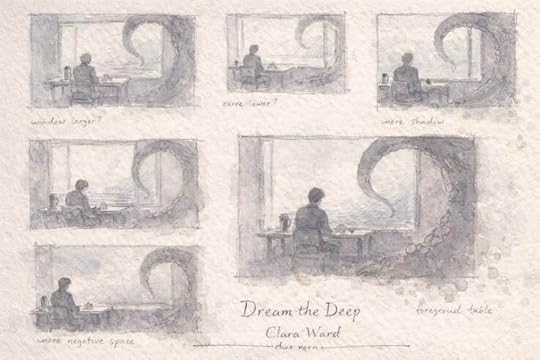
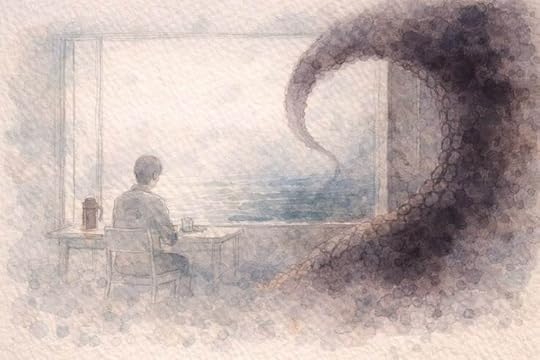
These early thumbnails test the painting’s central tension – figure, window, sea, and encroaching pressure – before mood or detail begin to settle into place.


The shadow study establishes the image’s true architecture, showing how darkness, window-light, and one curving marine mass carry the emotional weight before color does.


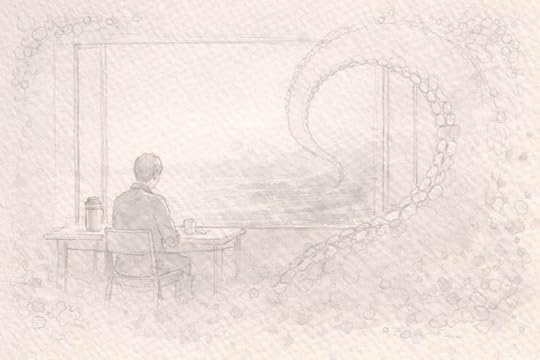
In the underdrawing, the geometry of enclosure becomes visible: table, chair, window, and body set against the first quiet intrusion of a larger, older form.


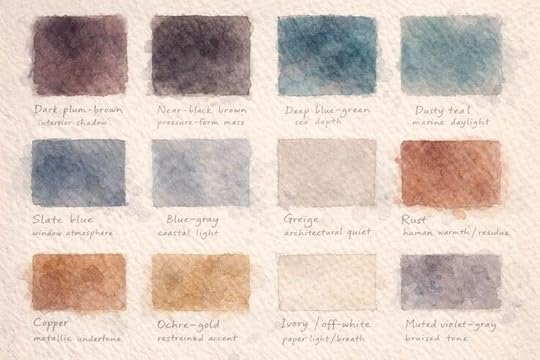
The swatch sheet maps the review’s visual logic, testing how the cover palette can hold institutional bruise, sea-light, bodily warmth, and the cold lure of another world.


At the first-wash stage, structure begins to turn into feeling, as the room darkens, the sea opens, and the image discovers its first true pressure.


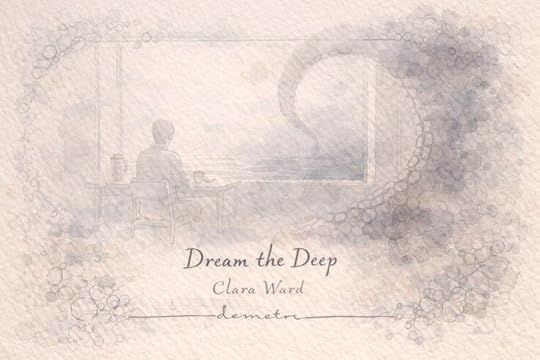
This study works out how the border, title, author line, and signature can belong to the painting’s world rather than sit on top of it, as if the deep were pressing all the way into the page.


At this late stage the painting has found its emotional structure, though the open edges and unclosed surfaces still show the image thinking its way toward final form.

All watercolor illustrations by Demetris Papadimitropoulos.
Profile Image for Orion.
29 reviews
Review of advance copy received from NetGalley
April 5, 2026
Thank you NetGalley and Atthis Arts for the opportunity to read this novella in exchange for an honest review.

I found this to be such a lovely read. I feel like novellas/short form fiction can be so difficult to write for Science Fiction because you have such little space to introduce a whole world, and to me Dream the Deep managed to do it really well. It achieved a good balance between making me wish there was more, and making me feel comfortable in the fact that this was the best way to tell this story.

The story happens throughout 5 days as Ryn, our protagonist, realizes their dream of going to Mars is no longer possible to no fault of their own. As they deal with this new reality, they must also find a way out of the facilities they have lived in for the past 10 years since they will be destroyed with the rocket launch. Through these conflicts, Ryn is forced to question who they are, what they believe in, and what role they have played and continue to play in the current state of the world.

Even though it’s such a short story, and it all happens in five days, I think it was really well done. I was worried about not connecting to our MC in such a short timeframe, but I absolutely love Ryn, their inner dialogue, and the way they move through a world that doesn’t necessarily want them. I also loved Jay, the love interest, he’s definitely a keeper, and their not-relationship didn’t feel rushed at any point. Honestly, it felt quite plausible given the short time frame. I do think some readers might find the narration odd or strange, but I thought it suited our main character really well, so it wasn’t a breaking point for me.

I will admit I was really confused at the beginning though. The first chapter, which starts with a dream, left me a little bit at a loss because I could not piece together what was happening. It became clear that such an effect was quite intentional as I read on, but it did require me to have a lot of faith in what I was reading. It did help that the book gives me a lot of similar vibes to the videogame I Was a Teenage Exocolonist, which is one of the best games I’ve ever played, so I think people who enjoyed that game will enjoy this novella too.

I don’t think I can say much more without spoiling the story, but I will say that it left me wanting to read more, which is why learning that there’s a novel set in the same world but before the happenings of Dream the Deep left me very happy. I’ll definitely be reading that novel soon. This is a solid 4 out of 5 stars for me!
6 reviews
Review of advance copy received from NetGalley
May 3, 2026
Thank you both the publisher and NetGalley for an opportunity to read Dream the Deep and share my thoughts about the book.

Oh, I wished this had 100 pages more and a little bit more explanation of what's happening, why, how we ended up here and so on. I don’t think 150 pages were enough to explore the situation enough, but that’s the challenge of novellas and short stories. I feel like it’s a bit ambitious for the amount of pages we were working with, and now as I’m done with it, I feel like that Jennifer Lawrence what do you mean meme. I feel like sci-fi is such a hard genre to write anything short yet the world this offered me was so nice and interesting that I just wished there was more.

I adored our main character Ryn who is in a tricky situation where their future suddenly changes and they don’t know who to trust as they need to figure out their way out of this academy where they have lived for the last 10 years, preparing for traveling to Mars before it would be destroyed. They’re such a nice MC and I adored their growing relationship with Jay, our nerdy main love interest.

I think that since dream sharing was already a familiar concept for me through Be the Sea, it was easier to catch what's happening with these short dreamy situations with Ceph-Ryn and the rest of the group. I think that without Be the Sea, it might have been a little more challenging to put everything together, because quite a lot happens during those few days we follow these characters.

Overall, I think the author does such a good job with treating characters with different identities kindly although as I said, this would have benefitted for 100 more pages, so there would have been more time to experience everything and tell how we ended up here. I would definitely love to see more of these characters and learn more of the whole situation. I’m greedy like that. But like this, I think this was such a nice, short but sweet experience.
Profile Image for Phoebe.
82 reviews8 followers
Review of advance copy received from NetGalley
April 22, 2026
Thank you to the publisher and NetGalley for the ARC.

DNF@46%. 1.5 stars rounded up. Um. I'm not sure what to say about this, exactly. I guess I was expecting something fast-paced with some cozy sci-fi undertones given the summary and that's...not what I got. The synopsis puts a lot of emphasis on the story being a 5 day fight for survival before a rocket launch destroys everything the protagonist Ryn knows but the pacing is...extremely slow? There's no sense of urgency and neither Ryn nor anyone around them really feel concerned that they're on a countdown. Ryn themself feels like a fairly passive protagonist; things just keep happening to them. The worldbuilding is...a lot for a novella and very hard to follow with all the sudden infodumps. I think this is meant to be connected to the author's previous novel but that's not noted in the description, and I would have known not to request if it had been. The dialogue is similarly infodumpy, stilted, and hard to follow. Numerous times I was just like, "...what the hell are you even talking about?" I didn't really find the relationships very compelling either, especially Ryn's relationship with their new friend/love interest(?) Jay, whose attraction doesn't seem like it starts for any particular reason. Ryn's relationship with Akira is also confusing because I'm not sure how it jumps from Akira being a virtual stranger who saved Ryn's life to the two of them conspiring over Ryn's dreams or whatever it is that they're doing (I didn't fully get that either). Overall, I just didn't click with the writing or the characters and disappointingly, I don't feel compelled to continue.
Profile Image for Dani Finn.
Author 44 books68 followers
Review of advance copy received from Publisher
March 30, 2026
I received an ARC from the publisher, which did not impact my rating or my review.

I enjoyed this quite a lot! The just-enough worldbuilding allowed me to fill in the blanks without over-telling, which I appreciated. Especially in a novella, where there's not much room to deep dive on side quests. I especially appreciated the disability and aspec rep--the main character is disabled and on the ace spectrum and wants comfort and limited touching but not more (for now). We can always use more stories like this!

While I enjoyed both sides of the story, the humans and the octopi, I was more invested in the octopus part of the story (it's complicated but humans and octopi have a sort of weird connection in this book that I can't explain for spoiler reasons). That was the part that felt the most weird, the most original. The human dystopian story was good, but the seafloor is where the really important stuff takes place, and I wanted more of that earlier in the book.

There are a couple of key details (which I won't spoil here) that could have used a bit more explanation; the book pushes the line between sci-fi and sci-fantasy because of a certain level of handwavium about where they actually go in the end. This is surely intentional, but this reader wanted a little more info on that part.

TLDR: a fascinating queer dystopian story with sentient octopi and mysterious forces in the deep sea, sure to please haters of billionaires and lovers of ocean science and queer-platonic relationships.

Profile Image for Minerva.
Author 13 books95 followers
Review of advance copy received from Publisher
March 28, 2026
4.5*

Full disclosure: I was a beta-reader for this book.

Dream the Deep is a short but intense story about Ryn, a neurodivergent, queer scientist. As climate change has been making life on Earth more and more difficult, Ryn has spent ten years at the Academy preparing for a Mars launch, but they find their dreams sabotaged. The tower where they have lived all that time will be destroyed by the launch, so they’ll have to leave another way and, as a physicist, make sure they can survive.

I was pulled in right away, first by the action of the scene with Ceph-Ryn and then by the tension between the characters at the Academy. I like that Ryn eventually gets a bit of a break with that tension when they meet Jay, allowing the story some very cosy moments in spite of the harsh circumstances.
I read the whole book in only three sittings. The story really intrigued me and never had a dull moment. I loved how much Ryn’s character evolved in such a short amount of time, without ever feeling less authentic. The changing situations allowed them to learn and do better in a way that felt very natural.
If I were to see this book described somewhere without former knowledge of who wrote it, I’d probably worry that it’d be too “hard sci fi” for me, but actually having read it, it even makes me think that I might pick up hard sci fi more readily in the future. Even though some of the concepts felt pretty advanced, it was comfortable to follow and understand what was going on.
Profile Image for Andrew Hiller.
Author 8 books31 followers
Review of advance copy received from Publisher
April 27, 2026
Dream the Deep is a compelling eco-novella with an incredibly empathetic main character. Perhaps its best quality is that it allows the reader in. From touch aversion to alien cephalopod embodiment, Ward’s writing lets the reader experience another’s mental thought processes.

Though, nonfiction, those of you who know me know that one of the books that impacted me most was a nonfiction memoir called Nobody Nowhere which tells the story of Donna Williams, a woman on the autistic spectrum. The sensory descriptions that depict how Williams understands the world were enlightening and amazing. The use of color, the rhythms of her sentences, all of it takes you directly into how Williams constructs and makes sense of reality. In some ways, Ward’s book, though fiction, allows us to peer through that same sort of window.

That’s not to undersell the pacing, the world build, or the intrigue of this dystopian, eco-novella. The story kept me as hooked as its ability to help me peek inside the character’s minds.

For those who enjoy science in their science fiction, Ward demonstrates real chops. The theory and process is really cool. For those who prefer a character-centric story or a well-paced dystopia escape tale, there’s that too. And lastly, for those who enjoy an embodiment story, it might be a relief to have one where the possession is not about colonizing and taking control, but about a shared journey and mutual help.

In all these ways, Dream the Deep is a gift.
Profile Image for korinne.
23 reviews2 followers
Review of advance copy received from NetGalley
May 4, 2026

Dream the Deep is a wonderful novella that sadly, ultimately, wasn’t for me.


Oftentimes I end up reading novels that are aching to be short-story format because of the unnecessary fluff and padding. The last book I reviewed was this way. Now that I’m here with a novella, I would say it has the exact opposite problem. The pacing and dialogue are begging to be stretched out into a longer book, and this is an issue that manifests itself as a constant barrage of exposition. It’s to a point where it’s too much and it begins to get hard to keep track of.


Additionally, the characters didn’t interest me nor did the relationships move me. Unfortunately, Ryn comes off as a placeholder protagonist who is, at best, blatantly uninteresting. Furthermore, their relationship with Jay added no value to the story for me and I could have done without it.


With that being said, I don’t think this book is bad. I recommend giving it a try if you’re interested in it or the sci-fi genre.


I was provided an e-ARC by the author in exchange for an honest review.

Profile Image for En.
101 reviews5 followers
Review of advance copy received from NetGalley
May 1, 2026
An ambitious novella exploring privilege, the experience of being left behind and the ethics of colonisation from the pov of survivors. Dream the Deep starts off slowly and requires a fair bit of patience from its readers. However, as the worldbuilding and characters come together, we're brought on a journey of personal growth.

Experienced from the point of view of a main character who struggles to read people and regulate themselves efficiently, stakes are intensified as we watch them survive a sabotage and navigate a crew of characters whose motivations are layered felt realistic.

Overall, Dream The Deep offers an interesting concept, though the execution felt a tad too ambitious. If you enjoy sci-fi with deeper worldbuilding and layered characters, this would be an interesting title to add to your TBR.
Profile Image for Elysabeth H .
193 reviews1 follower
Review of advance copy received from Netgalley
May 4, 2026
As much as I wanted to love this, I just didn't.
Things I liked:
Ryn and Jay as characters. The idea of a Ceph linking up with some chosen humans to save them and some of the smaller sea life from a post apocalyptic world.
Nonbinary and Queer characters simply existing
Autistic main character representation


Things I really didn't like.
The story felt like it was missing pieces.
All the characters, felt like they needed more fleshing out.
The cover makes me think of a middle grade story despite it being adult.
Honestly, it read like a middle grade but with adult themes so at times it felt inappropriate despite not being.
I wanted more explanations. How did the Ceph link work? Who are these characters? Why were they chosen?

Basically everything felt unfinished.
2.5 stars.
Profile Image for E.D.E. Bell.
Author 36 books211 followers
Review of advance copy received from Publisher
April 11, 2026
I love this book and am so honored to be its editor - and it's upcoming sequel: Dream the Light!

Clara Ward is a visionary who is writing about neuroqueer joy in such important, and especially beautiful ways. So grateful for their work.
Displaying 1 - 12 of 12 reviews