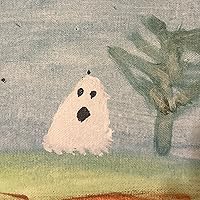
Attila Veres' The Black Maybe was hailed as one of the best horror debuts in years and was chosen as Rue Morgue's best collection of 2022 and a finalist for the Bram Stoker Award. Critics compared it to debuts by Clive Barker and Thomas Ligotti in terms of its sheer originality of style and vision. Now Veres is back with a follow-up collection of unforgettable cosmic horror.
In 'a pit full of teeth', a writer finds out that one of his stories will be translated into an extremely obscure language. But when his copy of the book arrives, it doesn't match what he instead, the text contains a much more horrific narrative that may be playing out in reality. In 'The Designated Contact Individual', a traveling representative for a soft drink company finds his sales territory expanding when he is sent to an alternate reality where they have their own nightmarish use for his cola. The narrator in 'The Summer I Chose to Die' is ready to give up on life, until a murderous army of fish-people begins to rise from the oceans. And in the title story, money literally does grow on trees when the government tries to alleviate poverty by supplying families with a strange new plant species, but their newfound financial gain comes at a terrible cost.
Like the stories in his first collection, the tales in This'll Make Things a Little Easier are blood-chillingly frightening, often darkly humorous, and always dazzlingly brilliant.
Still a solid collection, but didn't live up to The Black Maybe: Liminal Tales for me. Only the first story of six in this one was a five-star read, and that was the only one that was creepy (my horror style preference). The other five stories were mostly a mix of the comical, the cosmic, and social commentary. I will say that I won't forget the image of Cthulhu at a rave any time soon.
A good way to have a bad time. This'll Make Things a Little Easier features cosmic horror with Lovecraftian edges, including a straight-up pastiche in which a character is coy about the world’s new “tentacled fish god or whatever”.
The first three stories in the book lightly link together to give us a glimpse into a creatively hellish universe beyond our world. They are the strongest pieces from a literary perspective. I don’t care to see a wasp any time soon.
Commerce and the evils of corporatization underline most of the stories. Veres has come up with ways to torture Hungary’s working class, starving artists, and mid-level managers alike.
And so accordingly, this book’s greatest chills are supplied in the form of neoliberalism. Who knew we needed the concept of an evil giving tree?
While stories in this book quite literally take us into multilayered hells, it’s free market demands that make you squirm the most.
TL;DR: Veres has built a horror cosmology out of austerity, employment law, and the exact mechanisms by which systems convert human bodies into value. It is not metaphor. It is precision. Five stories, two minor sags, one ending with nine words that will not leave you. Serious contender for the best weird fiction collection of the year.
The Ratun-Sampi people have a punishment for those who steal teeth. They don’t kill you. They turn you into a story. You are killed into a character in a narrative. An eternal, repeating hellish death, a nightmare with no exit. This is what the unnamed linguist explains to the narrator of “a pit full of teeth,” the opening story of Attila Veres‘ second English-language collection, and I read that paragraph at 11pm and sat very still for about thirty seconds before continuing.
That is what this book does. It doesn’t rush you toward the monster. It tells you exactly how the punishment works, in plain language, and waits for you to understand what that means for the person you’ve been reading about for the last forty pages.
This’ll Make Things a Little Easier is a collection of five stories, long stories, some of them close to novella length, and it operates out of a place that is very specifically Hungary: austerity-battered, bureaucracy-haunted, post-Soviet in its bones, populated by people who have been squeezed into smaller and smaller spaces by forces with no faces and no names. The horror Veres makes from this is not the horror of monsters arriving. It is the horror of discovering that the machinery that was already running you — the institute, the company, the state, the market — has always been monstrous. You just didn’t have a word for it until now.
The prose is flat on the surface and boiling underneath. Veres writes in a register of dry official reportage that keeps sliding into nightmare without raising its voice. His narrators describe the unbearable with the same tone they use to describe rental terms and bank details. When Petra, the protagonist of the title story, realizes her child is crying money from her mouth, the sentence that delivers this does not flinch or widen its eyes. It states it. The horror in Veres is always the horror of exact statement. He is not trying to disturb you by implication. He is disturbing you by being precise.
Here is what I wanted from this book: I wanted the same sick feeling I got from The Black Maybe, his Bram Stoker-nominated debut collection, where I read “Return to Midnight School” on a train and had to put my phone away for a full stop because something that began as a pastoral folk-horror story had done something to me that I was still trying to locate. I wanted that feeling of a hand going through my chest and finding something I didn’t know was there. I got it. Not five times in five stories (I’ll come to the exceptions) but I got it, and I got it badly enough that I finished the book in two sittings and spent an hour afterward just doing dishes, needing to hear faucet sounds and be in a room with normal objects.
What he’s building is a specific cosmology of exploitation. The Institute in “Transistor” (the longest and most punishing story in the collection) extracts value from human bodies in ways that start as labor and end as something that doesn’t have a clinical name in any language I speak. Zsuzsi is eight years old when her family, poor enough to eat borrowed time, accepts a relocation offer. The Institute grows things inside them. This is never stated with the language of science fiction. It is stated with the language of employment law. She is Transistor 47. She produces. She is harvested. She breaks, literally, and it is devastatingly clear that this was always the destination. The horror of “Transistor” is the horror of consent: she agreed to this, in the way you agree to things when the alternative is starving in Borsod, in the way people agree to things when they have already been told that their life is only worth what they can produce. Veres doesn’t make this metaphor explicit. He makes it flesh.
The title story, which closes the collection, is shorter and more ferocious and completely devastating. Petra has been converting her pain into money. There is a tree in the neighborhood. You crawl inside it, you suffer, money comes out. This is the economy as it actually works, with the supernatural element removed for clarity. The ending is the most quietly catastrophic thing I’ve read this year.
Attila Veres was born in Nyíregyháza in 1985 and has been writing horror and weird fiction in Hungary since his debut novel Odakint sötétebb (Darker Outside) landed in 2017. He is a screenwriter with a Hungarian Film Award for Best Television Screenplay on his shelf, for the 2020 feature Lives Recurring. His story “The Time Remaining” was chosen to represent Hungary in Valancourt’s Book of World Horror Stories, and The Black Maybe, his first English-language collection, translated by Luca Karafiáth, was named Rue Morgue’s best collection of 2022. With This’ll Make Things a Little Easier, Veres does his own translation for the first time. The fact that he did it himself matters more than it might appear to. These stories have a very particular flatness, a very particular way of puncturing their own sentences, a very specific relationship between comedy and catastrophe. A translator would have to understand all of that. He understands it because it came from him.
“The Designated Contact Individual” is the funniest story in the collection and also, in its final movement, one of the most alien things I have read in horror in years. A Broc Cola sales rep (Veres opens the story with several paragraphs of actual corporate product description, written with a perfectly straight face) is dispatched to an alternate territory. The way the wrongness accumulates is masterful. The way the horror arrives is through food. There is a scene involving scorpions that made me say something unkind out loud to nobody in particular.
Not everything lands with equal weight. “Damage d10+7,” a tabletop RPG story, starts from an interesting premise about the violence of narrative and what it means to force characters through suffering for other people’s entertainment . Then loses the thread in its middle third, spinning through character backstory that dissipates the dread instead of concentrating it. It recovers. But it’s the only story in the collection that required me to actively trust the book rather than be carried by it. And “The Summer I Chose to Die” which has the best first line in the collection and a premise that could be its best story (a man who has decided to die before summer ends, encountering cosmic monsters on a beach) runs about fifteen pages longer than it needs to. Veres is genuinely funny in that story, and the cosmic horror arrives well, but the rambling drug-addled energy of the narrator eventually becomes its own kind of fog.
These are real criticisms and they’re proportionate. Two stories out of five that have a bit of a soggy stretch in the middle is not a failed collection. It is a collection by a writer who is still discovering the exact length his ideas need, and who is otherwise doing things that very few people in horror are doing at all.
The opening story, “a pit full of teeth,” is about a writer who can’t get out of his own head, who can’t stop the machinery of his own fiction from running, who eventually realizes that the tribe’s punishment, death-by-narrative, a character’s eternal recurring nightmare, has found him. It begins as comic absurdism about the indignities of Hungarian literary life, about Zsoldos Péter Award medals nobody’s heard of and Zoom writing academies for people who just want to believe they’re authors, and it ends inside a cave where something is happening to a dead woman. It is the strangest opening for a collection I have read in a long time, and it is exactly right.
What Veres is doing, across all five stories, is identifying what we have agreed to let be done to us. The Institute. The market. The company. The tree. The narrative. Everything extracts. Everything converts your substance into someone else’s value. The horror is not that these systems are evil. The horror is that they are legible. You understand exactly what they are. You just couldn’t name them until now.
In the Ratun-Sampi tradition, the worst punishment is not death. It is becoming a story someone else tells about you, forever, without your consent.
So good! I knew this book was going to be killer but it still wound up totally exceeding my expectations. I liked all six stories, but two in particular are going to stay with me for a long time: ‘a pit full of teeth’ was Lovecraftian in all the best ways, while Damage d10+7 was hauntingly grimy.
“It’s good to know that every decision I’ve made or ever will make is essentially meaningless. It takes the pressure off. But I live in Hungary, so it’s no big surprise.”
Attila Veres is Hungarian. Each story in this collection wrestles with this fact, as its characters go to extreme lengths—and I do mean extreme—to pay their bills and lead their lives with some sense of dignity, no matter how mutated that dignity may end up being in a country portrayed as in decline.
I know very little about Hungry. It surprised me to learn that it is extremely socially conservative, yet still maintains universal healthcare and free college education programs. That reminded me that the flavor of conservatism that exists in the USA is quite specific to us. In other countries, an old, right wing religious fundamentalist man would fight passionately for his right to free healthcare.
I’m not sure how this relates back to Veres’ fiction, so I’ll force it along by saying this: reality is never fixed. One’s subjective experience does not define existence. The characters in this collection are all more or less acting out of places of economic and spiritual desperation. Without any sense of national pride, any stable family structure, or any solid economic footing, they must resort to dark magic to make ends meet.
In “Transistor,” a young girl is encouraged by her family to leave her job at a nightmarish factory to instead work another, slightly better job in which she is drained of her life force to fuel the strange travel of inter-dimensional salespeople. In the next story, “The Designated Contact Individual,” we get to see one of these salesmen as he travels to a bizarro Pyongyang-esque city to sell cola…and the residents of said city have very bizarre intentions for said soda.
The collection is bookended by its two shortest and arguably most accessible stories: “a pit full of teeth,” which reads quite a bit like Brian Evenson, and the title story, “This’ll Make Things a Little Easier,” which is like a downbeat, sinister take on “The Giving Tree.”
I was thrilled by this collection and am really looking forward to whatever Veres comes up with next. Even if you are burnt out on the Kafka-esque, I’d say Veres’ strange and vivid imagination really sets these stories apart. The effect is mind altering.
This is simply one of the greatest modern single author story collections I’ve read. Themes running throughout are the cruelty of capitalism and modern politics, the nature of reality, and resignation in the face of insurmountable forces, from politicians and corporate executives to eldritch gods beyond our comprehension. All written in a clear and unpretentious way. Even better than his previous collection as it’s more cohesive and while the stories are widely varied, the themes unify them symbolically and some aspects of the stories are directly tied to others. I expect this to be a keystone work of modern horror. I look forward to much more from this author.
A solid collection of weird tales of a distorted Hungary, where systematic inequalities and cultural malaise slowly spiral into cosmic horror, sending capitalist drones to lands beyond time, bringing drug-addled burnouts face to face with Cthulhu, and turning language into a tangible sensory organ that reaches beyond the pages of fiction. Interestingly, Veres did his own translation, which I have found is unusual in publishing, even for authors who are perfectly fluent in more than one language. He did an excellent job, and I would never have guessed I was reading a non-native speaker. As someone slowly learning Spanish, this is a skill level I simply cannot comprehend.
Last year my book club read Veres' first collection, The Black Maybe, and loved it. This one is on the same level, albeit shorter. There was one absolute 5/5 stand out, and I rated every story 3.25 stars or above. I'm usually annoying and actually calculate the average to determine my final rating, but all together this one "feels" like a 4.25/5 perfectly represents my enjoyment of the book.
Note - Attila Veres did his own translation for this one and he did an admirable job. The Black Maybe was, however, a touch more cleanly translated.
'a pit full of teeth' (3.5/5) - Second weakest of the collection, some interesting ideas it would have been fun to develop more, but sinks a bit too far into a kind of predictable absurdity for my taste.
Transistor (5+/5!!) - EXCEPTIONAL, no hints or spoilers for what this one is about - it's the only story not represented in the blurb, and it's best read blind.
The Designated Contact Individual (4.25/5) - This one ties into the previous story (there is some light overlap with a few stories), and also brings back the travel guide, Jufus, from my least favorite story in Veres' last collection. This story is much better than that one. More strengths than weaknesses.
Damage d10+7 (3.75/5) - Mixed bag. I love tabletop RPG based stories, but this one combined that with a few different flavors of trauma that felt out of the blue, and a fairly predictable ending.
The Summer I Chose to Die (4/5) - Straight up Lovecraftian, and a decent entry, but I wanted something more, especially after something that happens near the end. I expect his next collection might include something like a sequel/extension.
This'll Make Things a Little Easier (3.25/5) - Weakest of the collection. I feel like I've read and seen this idea done before multiple times, and this is the only story that is really local-politics infused. There are hints of criticism of the Hungarian government through many of the stories, but this one is explicit. I know absolutely nothing about the political landscape of Hungary, and knowledge is assumed, so I just could not get into it.
I'll try to record my impressions while they're fresh.
The Black Maybe, the author recent debut collection had left a very strong impression on me, so strong I'd say Veres is among the 10 most exciting living authors for me.
Therefore, it'd be an understatement to say I was eagerly waiting for his second collection which is now finally out in the dawn of 2026.
Don't second books have a reputation as in, it's hard to follow a successful first book? possibly there's some truth in this statement. Anyway I've been ever so slightly disappointed with this one. Had it been his debut I might nevertheless have been under the spell but...it isn't.
What this tome manages to achieve and this has correctly been mentioned in another review here, is to convey a subtext of societal criticism which is very well done, no doubt, it has a Ligottian whiff, especially Teatro Obscuro, in describing human alienation through quotidian horror. It is somehow more high brow than the previous collection, it is Kafkaesque, Borgesian even not mentioning Bruno Shulz and Lovecraft. Sounds good right? but for me where the shoe pinches is that as Veres at times reaches the pinnacles of some of the above authors he has lost some of the Veresian blood of his first collection.
In other words, for all the qualities of the present stories, I liked none as much as those featured in the Black Maybe which were more idiosyncratic, more weirdly Hungarian.
having said that I still tremendously enjoyed This Will Make Things a Little Easier, I will also always remember some images the author has created, the trees in the eponymous story, the russian hard bass club in the parallel world and the faery in the role play game are some of them.
best book i've read so far this year. incredibly dreadful, achingly sad stories that are all so tight and interesting. i like how some are interlinked, perhaps all of them in their way. the last one will fuck you up, what a perfect metaphor
I was so excited for a new collection from this author (The Black Maybe was a top read for me a few years ago) and it did not disappoint. The first story ('a pit full of teeth') was my favorite, but I think they'll all stick with me for a bit.
These stories are just as weird as Veres' stories in The Black Maybe, but these new ones hit harder. There is tragedy here that imbues the weird with the terrifying. Another great collection!
Another masterpiece of cosmic horror and terror, THIS'LL MAKE THINGS A LITTLE EASIER seeps and seethes with dread and unease. Attila Veres' newest collection is a dazzling foray into various Hells; a bleak, dark delight of utterly unique, unforgettable new nightmares that will haunt you.
This sort of feels like terrible government policy dressed up in what appears to basically be a horror story. I’m not sure if it is cosmic horror or anything but it does go to show that there is no such thing as free money, especially when this free money is being given to everybody. Actually, that is kind of what it was like during Covid, though ironically the inflationary effect of all that money being given out sort of ended up happening a little further down the track.
So, things are tough for the protagonist as it feels that her paycheck doesn’t seem to last the whole month (it seems that it is more common to get paid monthly because here in Australia, fortnightly seems to be the norm). Anyway, she is approached by the local council to plant a money tree, but to get the money you have to climb into the stump and inflict pain on yourself, and the pain needs to be greater everytime.
Well, there is a bit of a catch though, and that is that everybody is doing it, and the story doesn’t ignore that because since all of this money is magically appearing it means that the prices go up because more people are buying stuff, and the more people create money, the more prices go up. Not surprisingly the entire economy collapses.
The problem is that nobody stops doing it. Basically it is the case that people probably should stop inflicting pain on themselves because by doing so they are creating more pain which ends up being a vicious cycle. More damage and more pain which leads to more economic damage. I guess this is the nature of humanity, namely that we keep on doing the same thing, expecting a different result, even if that action is slowly killing us.
Collection - Hungarian Horror 27 July 2026 Well, I’m probably going to agree with the person who wrote the single line review that said that it wouldn’t, unless Goodreads gets upset with me for reviewing each of the stories individually, which is something that I do, especially with short story collections since it is hard, if not impossible, to consider each of the stories individually. Well, okay, some have suggested that all of the stories are connected, but when I read them I could only see a connection between two of them.
The odd thing about the book was that the first story was treated like an introduction where it appeared that the author was discussing about how he had become a well know writer. In fact, his dig at the Hungarian writing scene sounded somewhat plausible (and having little knowledge of Hungary beyond a guy that rigged the entire voting system to keep himself in power, until some other guy came along that was so popular that the system that he had rigged completely backfired). However, then it go weird.
What attracted me to thing collection though was that one of the stories was about a guy that roleplays, and I have commented on that elsewhere (such as here) so I won’t go over old ground. Well, there is also the story where the denizens of the world of Cthulhu decide to invade, but it turns out that they are pretty easy to kill, and more than that, if you cook and eat the meat you have a pretty good trip. Well, it turned out that everybody, or at least all the young drug users, migrated to the beach to give it a go.
It sort of reminds me of Amsterdam. They legalised the sale of marijuana because that meant that the police were no longer chasing after small time dealers and users (though ironically it is illegal to import, grow, and distribute commercial quantities, and the store won’t tell you how they get around it, which means that there is a good use for AI) but it resulted it all the kids travelling to Amsterdam to smoke weed legally (and whenever somebody tells me they are going to Amsterdam my immediate thought is that they doing so to smoke weed). It sort of also reminded me of a story of an American that makes regular trips to Germany because prostitution is legal.
So, yeah, it’s quite an interesting book. I wouldn’t describe it as cosmic horror, though it does go in a different direction that where Lovecraft went. Mind you, he was writing in a different time and place. Here we have a world of factories were people are fed mud to produce stuff to feed other people, and corporate salespeople travel to hell (or we think it is hell because we are never actually told what this place is). It is a pretty interesting, and rather different, book to read, though he does make Hungary sound like a place that you really wouldn’t want to like (though Adam Something also makes that pretty clear too).
Brilliant. I got that same excitement reading these as I did when I first picked up Mariana Enriquez.
The 6 tales are shocking, scary, darkly funny, bitingly satirical, thought provoking and on occasion, bat shit crazy.
Unlike a lot of short story collections I don't think there is a bad one here.
'The Summer I Chose to Die' was probably the weakest entry but it was still a solid 3/5. And it also has my favourite line in the whole collection: "It's good to know that every decision I have made or ever will make is essentially meaningless. It takes the pressure off. But I live in Hungary, so that's no big surprise."
I mean, how could you not love a book with a line like that?
No se ven muchos libros de horror cósmico como este. Hay pocos libros que, de hecho, resuelven algunas cuestiones del horror cósmico. Este es uno, con el cuento "El verano que elegí morir". Es uno de los pocos cuentos de terror que llegué a la última frase, a la última palabra, y me quedé mirando el horizonte al tratar de digerir la idea de que tan buena resolución me caiga como un piano encima. Y ni hablar el último cuento. A veces el horror cósmico es menos terrible, cruel e incluso mas accesible que el horror de la realidad capitalista. Es fácil de leer, pero solo se consigue en inglés.
Another knockout from Veres, whose sensibility is really like no one else out there - cosmic horror, black comedy, nightmarish body horror, and so much more, all in a surreal package that constantly unnerves. I think The Black Maybe might be a touch better, but both are fantastic. If you're up for adventurous, nightmarish horror that often finds a way to hit you with its wry sensibility about modern capitalist hells right before plunging you into terror, well, look no further.
It isn’t that the stories are turned up to 11. They aren’t. They are just sped up a little bit. They are just what’s happening, metaphors for what’s happening, turned up a little bit. To realize how real the scary parts are and how awful it could be sped up and amplified makes the fear of the world and the possibilities of countries whose governments are trying to replicate some of Orban’s tactics a little easier to swallow.
Excellent alienated ironic post-Communist, post-capitalist transition Mitteleuropean Lovecraft, and a bit more unified than his first collection. (Hungarianness as always already cosmic horror: "insignificance and lack of control have always been a fact of life for me....It's good to know every decision I made or ever will make is essentially meaningless. It takes the pressure off. But I live in Hungary, so that's no big surprise.") Tropes and ideas and images repeat, with at least three stories that are keepers. The opener feels like an in-joke from the start about Hungarian's linguistic oddness, but also a surprisingly sincere reflection on writerly marginalization and dreams; I pretty much never tire of metafictional plots involving some sort of unspeakable (I suppose literally in this case) text, this with pomo twist about a barely-known tribal language that shapes reality.
How about cosmic horror as droll capitalist satire? (And also, given where things stand these days, essentially realist fiction.) The corporate-drone one, where a protagonist all too willing to sell his soul to the company store (best line: "every time upper management praised my work, I told them I was doing so well because I genuinely loved Broc Cola. I felt an emotional swelling inside when I said it, because I meant every word, even though management always thought I was being sarcastic") gets the opportunity of a lifetime on a sales trip to another dimension, ruled by a corporation devoted to servicing a desert-dwelling Lovecraftian entity, is just fabulous. Feels like an exemplary satire of the imposition of casino capitalism on 1990s Eastern Europe (which the last story literalizes into brutal folk-horror parable), as well as the contemporary tech-genius cult in America--or, as I said, just straight realist fiction. If it turned out "Elon Musk" was an avatar of some sanity-blasting tentacled creature from before time, would that really come as much of a surprise?
Later, how about a mashup of Everything Is Illuminated, some fear and loathing, and "The Shadow Over Innsmouth"? In which, again, you're too riddled with despair for Cthulhu. Or the horrific consequences of performative cruelty in an RPG, a self-made copy of a copy of a "Hungarian knockoff" of D&D, "but in many ways a better functioning system"? Veres uses cosmic horror in a way I've never quite seen before: someone like Nick Mamatas, say, tosses it in the blender with Kerouac, but imagine this in the mix with Kafka and Kundera and Foer and a whole legion of post-89 cynics raised in a culture where, it seems increasingly clear to them, there will never be any good days, or even sunshine. This is savagely satirical, annihilating, and nihilistically funny all at once.
There are some wonderfully weird stories here. The ones that delve into cosmic horror feel unique. I think my favorite, and the one that I will keep thinking about most, is the opener - a pit full of teeth. I fascinating idea that I wish was explored further and/or continued in the following stories.
This was a great cosmic horror anthology. I hadn't read any Hungarian horror before "This'll Make Things a Little Easier" and this was a memorable introduction. My favorite story was "Damage d10+7", since there aren't that many horror stories about tabletop RPG's. It's well-written, dark, and filled with trauma. A haunting, bleak read, as are the other stories in this collection.
Pretty weird book. I was interested when I was reading it, just to see what happened, so it was entertaining. But the stories were so bizarre for the most part that they lost me a bit. Hard to enjoy stuff you're reading and thinking "Huh?!?" at (but out of confusion rather than shock)
Although I admire Veres's style, sense of humour, social commentary and ebullient creativity, I find his very long, convoluted short stories quite tiresome to finish. It was the same with his first collection. He's a very talented writer, but cosmic horror just isn't for me.
Each story has its own strength, and although not all of them really stood out for me, I really enjoyed the social commentary behind the horror elements throughout the entire book. It's not necessarily a dark or intense collection of narratives, but it's a four star experience for people like me who appreciate originality without expecting for perfection.
Me parece que solo el primer cuento es propiamente de terror, al estilo de Negro tal vez (que por cierto, me encantó). El resto de los cuentos resultan terroríficos porque son alegorías de la explotación y el capitalismo desde la perspectiva de distintos actores: la clase obrera, los trabajadores de cuello blanco y las personas desempleadas.
Me gustó mucho más Negro tal vez, pero definitivamente voy a leer todo lo que se traduzca de este autor.