Книжку одного з найавторитетніших фахівців з історії Центрально-Східної Европи, очільника катедри ім. Грушевського й Українського наукового інституту Гарвардського університету професора Сергія Плохія присвячено питанню про історичні корені сучасних українців, білорусів і росіян. Зіперта на вельми широкій джерельній базі та зосереджена передусім на колізіях змагань за "руську спадщину" й на аналізі домодерних групових ідентичностей східних слов’ян, спільного і відмінного в їхніх культурах, історичних мітах, ідеологіях, візіях себе та інших тощо, монографія охоплює період від хрещення Русі до середини XVIII століття і має за мету підважити усталену традицію розглядати східнослов’янські народи як наперед визначені "предковічні" утворення, перенесені у давнину етноцентричні нації Нового часу. Ідентичність є проєктом і завжди перебуває у русі, стверджує це глибоко новаторське, переконливо ревізіоністичне дослідження, що його західні рецензенти оцінили як доконечне читання для всіх, хто вивчає історію слов’янства.
Serhii Plokhy is a Ukrainian and American historian. Plokhy is currently the Mykhailo Hrushevsky Professor of Ukrainian History and Director of the Ukrainian Research Institute at Harvard University, where he was also named Walter Channing Cabot Fellow in 2013. A leading authority on Eastern Europe, he has lived and taught in Ukraine, Canada, and the United States. He has published extensively in English, Ukrainian, and Russian. For three successive years (2002-2005) his books won first prize of the American Association for Ukrainian Studies.
For his Ukrainian-language profile, please see: Сергій Плохій
This is a very interesting book that made me rethink what I knew about Russian history.
Plokhy's subject is the development of national identity, and he makes many good points about the development of Russian and Ukrainian identity, revealing it to be a much longer, much more complicated process than I had realized.
A strong feature of the book is the importance of religion, even the Reformation and Counter-Reformation in Eastern Europe.
Not a book for beginners in the subject, but anyone with a serious interest in the history of Eastern Europe should read Plokhy's book.
“The Origins of the Slavic Nations” from Serhii Plokhy is an absolute must read for anyone trying to wade through the ethno-political language of contemporary Russia and Ukraine.
While the subtitle of the book suggests that it will cover the premodern identities of Russia, Ukraine, and Belarus, the reality is that the book largely focuses on the premodern identities (and their evolutionary developments) of Russians and Ukrainians. Belarusians are occasionally mentioned but even when Plokhy is dealing with the Ruthenians of the Polish-Lithuanian Commonwealth he largely focuses on the southern Rus’ lands which would eventually be included within the Ukrainian state. My only criticism of the book is that I would have liked to see more about the region that would become Belarus and its inhabitants.
The starting point for Plokhy is the competing narratives that are typical for both Russian historiography and Ukrainian historiography when it comes to identifying the Rus’ian people from the times of Kyivan-Rus up until the 18th century when the concepts of nationalism, statehood, motherland, and ethnic communities became more developed and pronounced among the Eastern Slavs. The standard Russian narrative is that there was a single “All-Rus” nationality shared by the inhabitants of the various principalities of Kyian-Rus, which implies that the subsequent history of the East Slavs is the history of the Russian people (whether they were a part of the regions of Kyivan-Rus that came under Mongol control following the collapse of Kyvian-Rus or if they were part of the Polish-Lithuanian Commonwealth). The standard Ukrainian position emphasizes the distinctions between the various inhabitants of Kyivan-Rus and that the different political-social developments of the various Rus’ian people led to even more distinctions between them.
So which narrative is the right one? While Plokhy seems to be more sympathetic to the Ukrainian narrative, he rejects both since neither accurately reflects the history of the development of the different Rus identities both in Kyivan-Rus and following its collapse. His goal throughout the book is to work with the primary sources to understand how the Rus’ian peoples (as well as their neighbors) thought of themselves. Rather than trying to retroactively project contemporary national identities onto the ancestors of the East Slavs, he lets them speak for themselves and tries as best he can to present their voices.
When it comes to Kyivan-Rus itself, he recognizes that there was a strong localism in regards to identity (Kyivan, Novgorodian, Volhynian, etc..) and that the original Rus’ Land (strictly speaking) was limited to Kyiv, Chernihiv, and Pereiaslav. These three cities, and the surrounding areas, where the Rus’ Land in the strict sense, while the rest of the regions projected local identities, though they still understood themselves to be a part of the Rus’ realm. Despite the prevalence of local identities, over and against the theory of an “All-Rus” identity, there were still elements that united the people within a larger identity; one of shared historical memory, linguistics, religion, and law. Taking both of these identifying elements into account, it appears that there was at the same time both a shared and distinct identity among the people of within Kyivan-Rus.
The rest of the book follows the history of the Rus’ian people as they are politically fragmented and ultimately separated with the south-western Rus’ian lands coming under Lithuanian rule (and subsequently Polish by virtue of the union of Lithuania with Poland) while the north-eastern lands come under the Mongol rule. Plokhy convincingly demonstrates, by analyzing the chronicles and other primary sources of the time, that the different socio-political experiences of the Rus’ian people, either under the Mongols or the Poles and Lithuanians, led to different understandings of what it meant to be a part of the Rus’ian people. The experience of the Rus’ians under Mongol rule inherited certain socio-political practices from the Mongols which shaped their understanding of state and rule which was drastically different from the understanding possessed by the Rus’ians within the Polish-Lithuanian state. The consolidation of Muscovy and the progressive understanding that all the inhabitants under the rule of Moscow were de-facto Rus’ians can be contrasted to the Rus’ian identity that was exclusive within the Polish-Lithuanian Commonwealth; a Rus’ian identity that necessarily needed to be contrasted against the Poles and the Lithuanians. Whereas events such as the Times of Trouble, the Old Believer Schism, and Victory at Poltava had significant identity shaping impact of the people within the Tsardom, and subsequently Empire, of Moscow, the Union of Lublin, the Council of Brest, and the Khelmnitsky uprising played a more fundamental role shaping the identity of the Rus’ians within the Polish-Lithuanian Commonwealth. Even when the Zaporizhian Cossacks accept the rule of Moscow and their elites begin to adopt terminology such as “Little Russian” it’s still visible that they view themselves as distinct from the inhabitants of “Greater Russia”. The Muscovites themselves likewise looked at the inhabitants of the “Little Russian” lands as being different than themselves and, interestingly enough, it was actually the work of Kyivan intellectuals and clergy who were major figures in articulating a larger Rus’ian identity that comprised both the Greater and Little Russians (though by no means at the expense of the unique identity of either).
The historical narrative ends in the 18th century and Plokhy summarizes his presentation. In addressing the modern identities of the East Slavs in relation to their histories he says, “the modern Russian nation grew out of the Russian imperial project and preserved many of its characteristics, including the blurred boundary between the Great Russians per se and the non-Russian subjects of the empire. The modern Ukrainian identity developed out of the Ukrainian/Little Russian project of the Hetmanate, excluding Russians and Belarusians and taking over not only the former Polish-ruled Right-Bank Ukraine but also Austrian Galacia, Bukovyna, and eventually Transcarpathia, providing legitimacy for one nation out of historically, culturally, and religiously diverse regions. The Belarusian national project was based on Ruthenian identity that had previously developed in the Grand Duchy of Lithuania but failed to produce a distinct identity in early modern times, given the lack of proto-Belarusian polity comparable to the Cossack Hetmanate in the Left-Bank Ukraine.” The conclusion seems to be that none of the Eastern Slavs can retroactively claim Kyvian-Rus exclusively for themselves. While Russians, Ukrainians, and Belarusians have a shared heritage going back to Kvyian-Rus, each has had their historical development which resulted in different Rus’ian people with their own identity shaping history. The Tsardom of Muscovy had elements of continuity as well as discontinuity with Kvyian-Rus just as the Cossack Hetmanate had their own continuities and discontinuities. Neither was an exact replica of Kyivan-Rus yet both were able to still trace their heritage back to Kyivan-Rus.
My conclusion is that neither the Russians, nor the Ukrainians, nor the Belarusians have an exclusive claim to Kyivan-Rus yet all of them have legitimate ties to it. All of them have their own unique historical stories yet there are many points of commonality, and intersections, between them. The East Slavs have much in common yet each retains their own uniqueness about them. “The Origins of the Slavic Nations” is one of the most important books when it comes to the complicated subject of Eastern Slavic identity and, in my opinion, it will be impossible to have a constructive conversation on this topic without having read this book.
Надзвичайно цікава і грунтовна книга. Автор розглядає ті проекти ідентичностей, що існували на східнослов'янській території у домодерний та ранньомодерний період, виходячи з того, що, хоча нації у сучасному розумінні - це продукт ХІХ ст., (і віковічне прагнення українського народу до побудови власної соборної держави - це гарний патріотичний міф), але існували і певні домодерні ідентичності та колективні лояльності серед населення (зокрема його політичного народу/панівного стану), які могли змінюватися з часом, але які лягли в основу модерних національних спільнот, і зокрема, становили їх історичний міф про початок. Так, зокрема, автор розглядає від початку формування руської ідентичності і колективної лояльності до династії Рюриковичів за Київської Русі (де Русь у вузькому значенні позначала Київ, Чернігів та Переяслав). Після монгольської навали "руську" ідентичність на себе перебрали, у різний час Галицько-Волинське князівство та значно пізніше - північно-східні князівства. На політичний розвиок, культуру та самоусвідомлення останніх значну роль справило перебування під монгольською владою. Далі проекти ідентичності розвивалися: у пн-сх слов'ян - від "Московської держави", основними об'єктами лояльності у якій у якій були православна віра та царська династія - до "Великоросії"/"Росії", що була "вітчизною", окремою від персони царя (але не до кінця) і будувалася паралельно як національна держава та як імперія. До створення проекту загальної Російської ідентичності та лояльності значно доклалися Київські церковні інтелектуали, в першу чергу - Теофан Прокопович. У слов'янських землях, що входили до Речі Посполитої розвиток відбувався від локальних ідентичностей (Волинь, Київщина, Поділля), до загальної Руської ідентичності. Вона особливо викристалізувалася у період релігійної полеміки навколо Берестейської унії 1596 р. Тоді утворилося 2 моделі руського народу - "руського народу-шляхти" (і князів), та загального "руського народу", до якого входили і козаки, міщани та духовенство. Об'єднавчими факторами була православна віра та руська мова. Після війни Богдана Хмельницького руська ідентичність на Правобережжі значно послабилася (з неї фактично вийшла шляхта, а православна церква змінилася на унійну). А на Лівобережжі утворилася окрема козацька держава - Гетьманщина - де, впродовж наступних кількох століть конкурувало кілька проектів ідентичності - старі Річпосполитські інтелектуали продовжували мислити Руськими категоріями, духовна еліта Києво-Могилянської академії підтримувала Російський проект і докладалася до створення імперії, а козацький проект передбачав ідею "України" як держави козацького стану. У книзі також розглянуто і самознави, які визначали ці проекти, і те, на чому вони базувалися (в основному, на мовно-культурній та релігійній спільності). Також цікавим є і використання різними проектами князівського міфу Києва та слави Київської династії. Одним із основних факторів, що впливали на розвиток одних і згасання інших проектів ідентичностей була держава, у якій ці проекти виникали. Загалом, у цій книзі текст побудовано максимально не-телеологічно - от якби автор не знав, чим справа побудови ідентичностей закінчиться, а розглядав їх утворення і зміну хронологічно від початку і далі. Надзвичайно хороша книга!
Потрібна і важлива книжка. Автор показує показує генеалогію руських ідентичностей, намагаючись зрозуміти як вони змінювалися з часом, як перепліталися політична, локальна, релігійна. Слово конструкт наводить на думку, що хтось свідомо сидів і це все складав, хоча йдеться радше про природній процес пояснення самим собі ким ми є. Ідентичність як живий організм, дерево, в якого з одної гілки виростає інша, але не завжди. Це цікаво читати і як альтернативний підручник історії Україні і методологічно - Сергій Плохій аналізує як те чи інше слово вживається у текстах - як і хто себе ідентифікує. Такі слова як „Русь”, „руський”, „православний”, „католицький” означали різні речі залежно від часу і контексту - тому кожне з джерел треба максимально уважно в цей контекст вводити. Крім аналізу джерел автор робить проблемний огляд величезної історіографії на різних мовах - це дуже корисно, бо всі ці товсті томи, написані нестерпною мовою в ХІХ столітті чи в радянські часи не доведеться читати нам. Для мене досить несподіваним виявилося те, що релігійна ідентичність середньовіччя чи ранньомодерного часу не була аж такою всюдисущою - деколи визначення себе як православного ставало важливим, аде часто пріоритетними ставала локальна чи культурна спільність.
I read this book because my husband is Russian. The prolonged conflict between his country and Ukraine made me curious about their origins. Coming from the archipelagic nation of Indonesia, I have always understood national identity as something forged through a shared aspiration rather than ancient bloodlines. My compatriots and I may not share the same ethnic or historical background, yet we feel united because our ancestors once dreamed of becoming a single nation. From my Indonesian perspective, I have always struggled to understand why European and Slavic peoples, despite sharing ancestry, seem so prone to war and fratricide. This book provided me with an answer.
Through meticulous historical analysis, the author dismantles the modern assumptions about the monolithic identity of the Eastern Slavs. The idea that Russia, Ukraine, and Belarus once formed a singular, undivided people is not only misleading but historically inaccurate. Instead, identities in this region have always been fluid, shaped more by political allegiance, religious affiliation, and historical contingencies than by any innate sense of ethnic unity. The book traces how the concept of "Rus’" evolved across different polities—from Kievan Rus’ to the Grand Duchy of Lithuania, to Muscovy, and later the Russian Empire—each reinterpreting its legacy to serve its own purposes.
What struck me most was the realization that national identity is never a fixed entity. In Indonesia, the idea of a nation was forged through a conscious, almost ideological effort to unite disparate ethnic groups under one banner. In contrast, the Slavic world, bound by linguistic and religious commonalities, fragmented into competing identities based on political structures rather than a collective national will. Moscow's claim to be the sole heir of Rus’ was not a natural progression but a political construct.
Reading this book was both illuminating and unsettling. It forced me to reconsider my own assumptions about nationhood, about what binds people together, and what drives them apart. It made me see how history can be weaponized to justify political ambitions, how myths of shared ancestry can be turned into tools of dominance. But more than anything, it confirmed something I have long suspected: nations are not born; they are made. And in the making, they can just as easily be unmade.
Since I am going to travel to Ukraine in July I have decided in the meantime to learn as much as I can about the culture and the history. Coming from another Slavic country (Croatia) I thought I knew a lot about Slavic nations but, alas, how superficial I was! Reading this book I have found myself short of knowledge of both history and culture of the East Slavic countries and nations. I highly recommend The Origins of the Slavic Nations to anybody interested in non biased and comprehensive reading about the matter.
I think that the book provides a reader with a balanced review of available literature on the origin of three Slavic nations.The author does not impose his opinion,but rather in a gentle would tries to make his reader to think critically.Definitely worth reading.
Plokhy: When the conflict started, Putin was voicing the opinion of the majority of Russians that there is no real difference between Russians and Ukrainians, but the war is changing that.
---
David G. Rowley, University of Wisconsin-Platteville
In The Origins of the Slavic Nations, historian Serhii Plokhy has written a history of identity-building among the East Slavs from the creation of Kyiv Rus' in the ninth century to the formation of the early modern nations of Ukraine, Belarus, and Russia in the eighteenth century.
In the course of his exposition, Plokhy displays a masterful command of both the written records of the East Slavs, chronicles, saints lives, treaties, letters, polemics, and memoirs, and of the historiography.
Plokhy appears to have read all relevant interpretations of East Slavic nation-building in the English, Ukrainian, and Russian languages, and his historiographical reviews at the beginning of each chapter will be a boon to all future researchers who take up this field.
Most importantly, Plokhy offers innovative and convincing reinterpretations of the key controversies in the histories of the national development of the East Slavs. In the introduction, Plokhy promises to "suggest a new outline of the development of East Slavic identities and thus prepare the ground for a reconceptualization of the premodern history of Russia, Ukraine, and Belarus" (page 9). I believe he has delivered on his promise.
That Plokhy brings a modernist sensibility to his investigation is evident from his treatment of national identity as the construction of elites as well as from his goal of seeking "'to deconstruct the existing nation-based' narrative of East Slavic history" (p. 9). Plokhy characterizes himself as a "revisionist" in the tradition of John Armstrong and Anthony Smith, who recognize that although nations are modern constructions they cannot successfully be built except on the basis of historical ethnicities. However, he provides evidence that is completely consistent with unreconstructed "modernism," and, in fact, he cites Benedict Anderson more often than Armstrong and Smith combined.
In analyzing the identity-building projects of Slavic elites, Plokhy is really looking at "imagined communities", a term he uses a number of times.
He does not attempt to conclude whether any particular East Slavic "people" shared a culture, language, origin myths, or history.
All the evidence provided by Plokhy confirms that identities did not evolve but were periodically remade by new elites for new circumstances, and were heavily influenced by institutions of the state and the church.
In his own words, Plokhy "interprets the growth of East Slavic identities as a succession of identity-building projects. Such projects served as blueprints for the construction of new identities, which in turn are prerequisites for the existence of self-conscious communities" (pp. 354-355).
This is a very different proposition from the revised modernism of Armstrong and Anderson.
Plokhy provides no evidence that an East Slavic ethnie (to say nothing of a Ukrainian, Belarusian, or Russian ethnie) ever existed.
To say that an idea of Kyiv Rus' was invented, that was then used by subsequent elites, is far different from saying that a nation of Kyiv Rus' came into existence and then evolved.
No matter what Serhii Plokhy's own hope, his work reinforces the perspective of the modernists.
In chapter 4, "The Rise of Muscovy," Plokhy shows how a ruling dynasty, a single Church structure, and a homogenous population all supported a nation-building project by Muscovite grand princes. Plokhy concludes that "Great Russian history per se, at least when it comes to self-identification and ethnopolitical identity, begins with the reign of Ivan III (1462-1505)" (p. 158).
Plokhy also points out that Muscovite identity was clearly separated from the identity of the Slavic populations across the Polish-Lithuanian border.
Nevertheless, Plokhy does not claim that modern Russian national identity appeared at this time, since the people (Rus') were defined by their loyalty to a dynasty and a church, not membership in a nation.
In chapter 6, "Was There a Reunification," Plokhy deals with the Cossack uprising against Poland-Lithuania led by Bohdan Khmelnytsky in the mid-seventeenth century.
In this process, Cossack territories and the Rus' Land east of the Dnipro broke away from Poland-Lithuania and put itself under the protection of Moscow. A major element in this rebellion was the religious loyalty of the population to Constantinople and not to Rome.
From the point of view of Great Russian (and Soviet) historiography, the Pereiaslav Agreement of 1654 marked the reunification of Moscow and Kyiv. Plokhy, however, refers to it as the "Pereiaslav Disagreement" and demonstrates that neither side saw the unification as an ethnic unification.
Bohdan Khmelnytsky "made no use of the theme of ethnic affinity" (p. 246) and Tsar Aleksei "continued to think not just primarily but almost exclusively in dynastic terms" (p. 247).
In chapter 7, "The Invention of Russia," Plokhy investigates the early modern creation of a Russian identity in the era of Peter the Great.
He examines the complexity and ambiguity of a nation with an imperial mission. He points out that the old national identity, which was rooted in religion, lived on among the Old Believers, while the new vision of an imperial nation owed much to the contributions of Ruthenians such as Teofan Prokopovych.
The new identity did not reunite all the Slavs, however. "The new Russian imperial identity developed with the help of the Kyivans was designed to include the Little Russian (Ukrainian) and Muscovite elites, as well as Westerners who were joining the imperial service. It failed, however, to include Ruthenians west of the Russian imperial boundary and non-Slavs in the borderlands of the empire" (p. 297).
In chapter 8, "Ruthenia, Little Russia, Ukraine," Plokhy shows that the unifying Ruthenian identity (described in chapter 6) did not survive Pereiaslav. When Ruthenian and Cossack territories to the east of the Dnipro River united with Russia, they separated from the remaining Ruthenian population in Poland-Lithuania, and a new Ukrainian identity was formed.
Moreover, this new identity did not evolve from old Kyiv Rus.
"The Ukrainian identity of the period was deeply rooted in Cossack practices and traditions, and the elites of the Hetmanate imagined Ukraine as a society led and represented by the Cossack estate" (p. 358).
Plokhy sums up his conclusions regarding the modern East Slavic nations with these words:
"The modern Russian nation grew out of the Russian imperial project and preserved many of its characteristics, including the blurred boundary between the Great Russians per se and the non-Russian subjects of the empire."
"The modern Ukrainian identity developed out of the Ukrainian/Little Russian project of the Hetmanate, excluding Russians and Belarusians and taking over not only the formerly Polish-ruled Right-Bank Ukraine but also Austrian Galicia, Bukovyna, and eventually Transcarpathia, proving legitimacy for the creation of one nation out of historically, culturally, and religiously diverse regions."
"The Belarusian national project was based on the Ruthenian identity that had previously developed in the Grand Duchy of Lithuania but failed to produce a distinct identity in early modern times, given the lack of a proto-Belarusian polity comparable to the Cossack Hetmanate in Left-Bank Ukraine."
"Ultimately, the Ruthenian name was claimed by the Rusyns of Transcarpathia, whose leaders insist today that they are distinct from the Ukrainians" (pp. 360-361).
Serhii Plokhy does not add substantively to the scholarship on general theories of or approaches to the problem of nations and nationalism.
However, his contribution to the history East Slavic identities is huge.
He has, indeed, delivered on his promise to reconceptualize the field. This is must reading for all historians of the East Slavs in the pre-modern period.
---
Amazon review
Importat, timely but not an easy read
The Title of this book makes it highly important to read today against the background of the ongoing Russian war against Ukraine. Who are the Russians, Ukrainian and the Belarussians? The Subtitle tells us that this question will be answered from the perspective of what they themselves thought they were and not from any other standpoint.
This is not a popular history book. It is not "fun" to read. It is pure work. Professor Serheii Plokhy are writing for serious students and academics and in order to fully appreciate the book it helps a lot if you know Russian and have a very good knowledge of East European geography. This is not a book you start with if your interest is Slavic history.
The Book starts with the Kiev Rus state a thousand years ago. This is a problem since we know that the Slavs living in todays western Russia, Belarus and Ukraine arrived there at least 500 years earlier.
The Whole platform for a discussion of who they are leaves out where they came from and if all of them came from the same place. There are some references to mythology but nothing at all about archeology or DNA research. There is no answer to the question if all Slavs have the same origin.
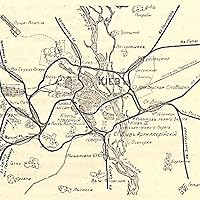
The Book then continues to present seven hundred years (the book ends more or less in the early 1700-hundreds) of Slavic religious, political and ethnological discussion on the subject on what to call themselves. Russian, Ukrainian, Rus, White Rus, Ruthenian etc. Professor Plokhy takes us through a large amount of books, documents and letters between various historical figures as well as what other researchers have found out. All of these discussions are supported with a general outline of the history of these territories. There are also some maps that are of great help but as always you need more of them.
It is a complicated history and there are a number of problems in the text that makes it a challenge to take in. There are a lot of different Slavic tribes in the text without any explanation who they were. There are important people with titles that are very hard to understand since they are not explained. Is it a bishop in todays language or a librarian?
Even more problematic is the use of Russian words to explain or clarify something without translating these words.
The Book only has two index. One over authors and one "General". What would have helped and made the book easier to take in are several more like:
- an index over all Slavic tribes with information who they were and were they lived - a Russian vocabulary for those words used in the text - a timeline for the history of these areas since in some chapters the presentation jumps back and forward between centuries - more maps to sort out what the text presents.
What goes through your mind reading the book is the question if it really is only what is in the minds of people that defines if they are Russian, Ukrainian or Belarussian?
There is nothing on archeology and there is nothing on language.
Did all the Slavs speak the same language 1500 years ago?
Today we know that there is a big difference between Russian and Ukrainian (try Google translate and see the difference) but what was the case in 1500?
The Book focuses on who is a Russian. Only in the last fifty pages are there any discussion on who is Ukrainian. There is almost nothing in the book about Belarus except that armies fought there. In fact, there is so little on Belarus that the word Belarus should be stricken from the subtitle of the book.
What is important and well presented in the book is the tremendous importance of the Orthodox Church. Up until Peter the Great the willpower of the Orthodox Church was one of the most important factors in the Slavic history. When you read about the Orthodox Church and read todays news there are a lot of similarities.
Having read the book you will get a clearer picture of what makes these people think and behave today. The Similarity of the problems 3-500 years ago and today are striking.
You will recognize a lot of political statements and propaganda that are being said and used today as based on (or not on) their previous history.
This is very important since there is a very strong political willpower coming out of Moscow today to claim historical background to various things that are simply not supported by what we know.
Granted, professor Plokhy is Ukrainian but I found the book to present an objective story rather than a Ukrainian version of it.
So, is Ukraine a part of Russia that got lost? No. Is Russia the true descendant from Kiev-Rus? No. Are Ukraine? No. Then who are these people? The Book gives us an important part of the answer but not the full answer.
Strv 74
---
Casting Light on a Complicated Subject
This was a very interesting book that made me rethink what I know about Russian history.
Plokhy's subject is the development of national identity, and he makes many good points about the development of Russian and Ukrainian national identity, revealing it to be a much longer, much more complicated process than I had realized.
A strong feature of this book is the importance of religion in determining identity, showing that even the Reformation and Counter-Reformation had an impact in Eastern Europe.
This is not a book for beginners in the subject, but anyone with a serious interest in the history of Eastern Europe should read this book. Highly recommended.
Michael Samerdyke
---
A current understanding of Putin's Imperialist viewpoint.
I have been reading the History of Eurasia and Central/Eastern Europe for the last 60 years. I have to say that when reading the history of Eastern Europe, it is very difficult to follow the history of any one nation in a linear fashion.
This is the best book written on this topic by any historian and believe me I think I have read most of them.
The first problem are the histories written by the victors and then histories written by the defeated.
Second there is the problem of countries popping up and then disappearing and then popping up and so forth ad nauseum.
Third is the problem of multi-national empires.
Fourth there are Nations without political borders or a National ruling elite.
Fifth the National Elites change their national allegiances.
Ultimately we have the book written by Prof. Plokhy and finally all is clear!
Oksana Piaseckyj
---
Brian J. Boeck Journal of Interdisciplinary History
In the final section of the book, Plokhy argues that although some Ukrainian intellectuals advanced a vision of a Little Russian fatherland that excluded Russians and Belarusians from their imagined community, others played a central role in shaping the “all-Russian identity” that pervaded the Russian imperial project.
Much of what modern Russians believe about their nation, origins, and affinities to other East Slavs can [page 587] be traced to intellectual constructs first articulated in early modern Ukraine.
The only major criticism pertains to the author's contention that early modern Russians lacked a developed ethnonational vocabulary to distinguish themselves and their people (see especially 216, 235).
Abundant examples of vocabulary related to nations and national identity can be documented decades before the Petrine period, and the influence of Western concepts in shaping Russian national identity can be traced to seventeenth-century translations of European newspapers, German cosmographies, and Polish histories.
---
Robert H. Greene Journal of World History
For Plokhy, the East Slavic nations are, indeed, imagined communities, but the processes of collective imagination that created them—what Plokhy refers to as “premodern identity-building projects”—long preceded the eighteenth century and the emergence of modern nationalism.
In his conclusion, Plokhy returns to the fundamental question underlying his work. Had “Kyivan rulers and elites managed to....succeed [page 452] in shaping a coherent Rus’ nationality that later gave birth to the three modern nations of Russia, Ukraine, and Belarus?
Or was the East Slavic world divided from the very beginning and did the three nations already exist in Kyivan times?”
Plokhy’s answer is no to both. The Kyivan state was swept away by the Mongol invasions of the thirteenth century well before its religious and secular elites had completed the task.
---
The New Yorker
How did Putin’s speech this week fit into this conversation that we’re having?
It fits very well in the sense that what you see in his speech is a rejection of the Soviet-era policies. He blamed the Soviet Union for everything, even the creation of Ukraine. So what you see now is a return to a pre-revolutionary understanding of what Russians are. It is a very imperial idea of the Russian nation, consisting of Russians, Ukrainians, and Belarusians. The last two groups don’t have a right to exist as separate nations. We are almost back to the mid-nineteenth century with imperial officers trying to hinder the development of Ukrainian culture and ideas.
Is your sense that, within Russia, even among people who may not like Putin, there is a certain amount of jingoism about the Ukrainian question? Or do you sense more division within Russia?
There was a very strong feeling about Crimea being Russian. Putin had high approval ratings after that. With the rest of Ukraine, I think there is more ambiguity. The distance between Russia and Ukraine, from the perspective of how the populations view each other, has grown since this war started. I am not a sociologist, but my sense is that the Russian narrative of history around Ukraine is in decline. The beginning of Russian history is Kyiv. You go to school and learn about that. So that stuff is there, but realities make this historical mythology problematic.
It seems like you are suggesting that, by waging this war with Ukraine, Putin has made his own population less interested in thinking of the two sides as one country.
Yes, that is my impression, and there is also a Russian resistance that has contributed to that. If Putin keeps talking about the fascists and things like that, it doesn’t help to create a sense of unity. The Maidan protesters were described as radical nationalists by Russian propaganda. When you present the citizens of another country that way, it doesn’t help with the discourse of brotherhood and unity.
Дуже хороша книжка, щоб, по-перше, розширити свої знання про середньовічні і домодерні події на території Сх. Європи. А по-друге, щоб розвінчати у своїй голові багато міфів, про "адін народ", наприклад, або про те що ми бідні-нещасні завжди були.
А ще цікаво було зрозуміти суть російської (московської) ідентичності, і висновок напрошується сам: нам з їхнім імперським баченням боротися довго.
A fascinating and meticulously researched book, but one which assumes a lot of prior knowledge on the part of the reader. Definitely one for the re-read pile.
Very detailed and extremely well argued. Some historic background necessary to be able to follow the reasoning. I wish a similar book on Polish and Lithuanian identity-formation were available.
I was never disappointed to include this book in my reading series on the Russo-Ukrainian War, especially in light of the recent U.S.-proposed peace plan. The book is unique in that its title, Pre-Modern Identities in Russia, Ukraine, and Belarus, signals a focus on the socio-historical and political factors that shaped the identities of these nations. What I took away from the book—something I assume most readers will as well—were two particularly significant points. First, the national myths (mostly from the medieval and Renaissance eras) that underpin contemporary Russian and Ukrainian identities (with Belarusian identity discussed to a lesser extent). Russian identity, as presented, is constructed around the continuity of the Kyivan Rus’ heritage—especially with the rise of the Grand Duchy of Moscow as an independent political entity—and around Eastern Orthodoxy, which Russian sources often portrayed as persecuted in the western borderlands. Meanwhile, the Eastern Slavs, the predecessor groups of today’s Ukrainian and Belarusian nations, were subjected to Catholic conversion within the Polish-Lithuanian Commonwealth, a process synonymous with cultural Polonisation. Touching on religion, the Commonwealth’s push to convert its Eastern Slavic subjects from Eastern Orthodoxy to Catholicism (in the Greek Rite) served clear political aims, primarily to secure their loyalty to the state. This process created a distinction between Eastern Orthodox and Greek-Catholic Eastern Slavs, contributing to the later divergence between Russians and Ukrainians. Sociologically, while Russian identity was shaped through an imperial project centered on the figure of the Tsar, Ukrainian identity emerged through the idealisation of the Cossacks—particularly their uprisings aimed at securing the rights of Eastern Orthodox Slavs within the Polish-Lithuanian Commonwealth. In conclusion, this book challenges both Putinist irredentist and far-right Ukrainian integral nationalist narratives of identity by grounding its analysis in scientific research, historical documents, and archival sources rather than pseudo-historical myths.
A good in depth overview that makes sense of the origins of Slavic nations.
However it doesn't really start at the beginning of slavic anthropological record but only the written record.
Anyhow so Kyiv was founded by Kyi a few hundred years later Rurik with the Rus clan from Sweden invaded and named the country after his clan. At some point they converted to Orthodox Christianity under influence of Constantinople.
For a while the Rurik princes were the nobles, they often fought with each other and divided the nation into fragments.
The Lithuanians allegedly had some german influence, which gave them a similar power lust to the Rurik princes who were also germanic, and so Lithuanian princes were also common.
Eventually the Mongols arrived an annexed Muscovy, Then Lithuania annexed the western portion of Rus. The Polish and Lithuanians under influence of western Europe converted to Catholicism. Eastern Ukraine wan under control of the Cossacks.
Belarus was under influence of Lithuania and Western Ukraine under influence of Poland, which changed their languages to have more of their words. Meanwhile Muscovy adopted many words from the mongols. The cossacks kept close ties with muscovy.
Eventually Prussia split off from Lithuania by converting to protestantism. Around that time Lithuania/Poland started to get mean to their Orthodox subjects.
Ukraine as the name suggests was the name of some bordeland Polish provinces.
Due to persecution by the Catholics, Ukraine and Belarus split off from poland and Luthenia and allied with Orthodox Muscovy. Muscovy invited some Kyiv scholars to teach them the greek orthodoxy, and that caused a split between old believers and the new kyified Orthodoxy.
At the time and for most of history all the orthodok regions idontified an Rus, Belarus was white rus, Kyiv was little rus and muscovy was great rus.
At some point the cossacks got fed up with muscovy trying to rule them and they adopted the polish name for the borderlands they had liberated from catholic oppression, that being Ukraine.
Якщо коротко - академічний погляд на властиво політичне питання окремішності трьох східнослов'янських націй. Якщо детальніше - книга аналізує письмові джерела 11-18 століть, аби зрозуміти критерії, за якими їх автори себе ідентифікують. Тут і династична приналежність, і релігійна, етнічна, політична, територіальна, культурна та ін. Примітно те, змінюються із часом не лише їх ознаки, але і сам цей набір не є сталим: у різних суспільствах у різний час визначальними є різні фактори. Так і простежуємо, як літописна племінна ідентичність змінюється територіальною, династичною, етнічно-релігійною і так далі до модерних націй. На сучасне око, чимало що у цьому процесі виглядатиме контрінтуїтивно, тим цікавіша інформація за фактажем і методологією. Щодо недоліків - за рясністю джерел і імен легко згубити загальну ідею розділу (добре, що є вступ і загальні висновки). Окремий мінус до тексту (або перекладу), що переобтяжений довгими складнопідрядними реченнями: дочитавши до крапки, уже забуваєш початок.
Найважливішою напевне в цій книзі, що вона фактично є доступною для масового читача. Неперевантажена термінологією, глибоко терудована і, що головне захоплюча. В ній можна знайти героїв простежувати їх непрості долі, і що найголовніше відкривати для себе не нудну історію - набір якихось фактів і дат, подій і постатей, а хитросплетіння доль. Вражаючі інтриги і те на скільки важливий символічний характе. Що певні дії, слова, постави, незрозумілі для нас сучасних є вкрай важливими для майбутнього. Ну і найголовніше для нашої сучасності це чергова спроба поглянути на народження націй і що важливо відкрити для себе людей, що відіграли роль повитух біля колисок новонароджених.
1. Дивна назва для книги, де білоруська домодерна ідентичність практично не розглядається. 2. Вкотре заінтригувала постать Прокоповича. Хитрий жук, треба більше про нього дізнатись. 3. Не забуваймо, що у постанні російського імперського дискурсу важливу роль відіграла київська інтелектуальна еліта. Інакше кажучи, я тебе породив - я тебе уб'ю. 4. Якщо виходити з п.3, наскільки доречно розглядати російську імперію як "нашу" державу?
A readable and useful introduction to a huge topic, this book should appear on university syllabi for courses covering or touching upon the history of Slavic--especially east Slavic--countries (Russia, Belarus, Ukraine).
Відносно прекладу - з одного боку перекладається на сучасну українську середньовічні українські тексти (сторінки 195,213)- зовсім зрозумілі сьогодні, а з другого боку російські тексти не перекладаються(багато прикладів - хочби сторінка 326)
Very detailed history on the origins of Ukraine, Russia and Belarus. The delivery is very dry, monotonous and texbook-ish. Not interesting to read, but very informative.
Одна з найцікавіших книжок з української історії, що я читав останнім часом.
Автор досліджує становлення національних ідентичностей на території колишньої Київської Русі у домодерні та ранньомодерні часи, тобто відповідає на питання ким себе вважали наші предки, як, коли і чому змінювалось їх самосприйняття та сприйняття сусідів та сусідами.