In Lives of the Intellectuals one of contemporary America’s leading critics and scholars offers a provocative reassessment of the lives and work of eight influential twentieth- century American
Lionel Trilling Dwight Macdonald W.H. Auden William Maxwell Saul Bellow Alfred Kazin Norman Mailer Frank O’Hara
Drawing on newly published letters and diaries, Edward Mendelson explores the responses of these writers, very public figures all, to major historical events—among them the rise and fall of fascism, the cold war, the struggles for civil rights and against the Vietnam War, and the sexual revolution—and shows how intensely personal concerns, relating to childhood, religion, status, sex, and money, largely shaped their views. Mendelson’s vivid portraits cut to the quick, changing our perceptions of these brilliant, complicated, often deeply troubled men while offering readers a new understanding of their contributions to American intellectual and political life.
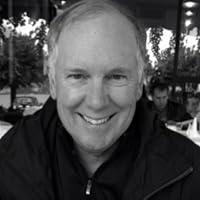
Edward Mendelson is a professor of English and Comparative Literature and the Lionel Trilling Professor in the Humanities at Columbia University. He is the literary executor of the Estate of W.H. Auden and the author or editor of several books about Auden's work, including Early Auden (1981) and Later Auden (1999). He is also the author of The Things That Matter: What Seven Classic Novels Have to Say About the Stages of Life (2006), about nineteenth- and twentieth-century novels, and Moral Agents: Eight Twentieth-Century American Writers (2015). He has edited standard editions of works by W. H. Auden, including Collected Poems (1976; 2nd edn. 1990; 3rd edn., 2007), The English Auden (1977), Selected Poems (1979, 2nd edn., 2007), As I Walked Out One Evening (selected light verse, 1995), and the continuing Complete Works of W. H. Auden (1986– ). His work on Thomas Pynchon includes Pynchon: A Collection of Critical Essays (1978) and numerous essays, including "The Sacred, the Profane, and The Crying of Lot 49" (1975; reprinted in the 1978 collection) and "Gravity's Encyclopedia" (in Mindful Pleasures: Essays on Thomas Pynchon). The latter essay introduced the critical category of "encyclopedic narrative," further elaborated in a later essay, "Encyclopedic Narrative from Dante to Pynchon". He is the editor of annotated editions of novels by Thomas Hardy, George Meredith, Arnold Bennett, H.G. Wells, and Anthony Trollope. With Michael Seidel he co-edited Homer to Brecht; The European Epic and Dramatic Traditions (1977). He was elected to the American Academy of Arts and Sciences in 2015. He was elected a Member of the American Philosophical Society in 2017. He is a Fellow of the Royal Society of Literature, and was the first Isabel Dalhousie Fellow at the Institute for Advanced Studies in the Humanities at the University of Edinburgh. Before teaching at Columbia, he was an associate professor of English at Yale University and a visiting associate professor of English at Harvard University. He received a B.A. from the University of Rochester (1966) and a Ph.D. from the Johns Hopkins University (1969). Since 1986 he has written about computing, software, and typography and is a contributing editor of PC Magazine. He is married to the writer Cheryl Mendelson.
“Had Bellow done less damage in life he might have written even better novels.” Oh honey, no, it’s never that simple. I hear Newton Arvin, another therapist-critic, who insisted that if Hawthorne had been an extrovert like Dickens, he would have been a better Hawthorne. Leave them alone, these genii, to boil in their juices.
I read this liberating little book over three days of lunch and coffee breaks – it’s a somewhat severe meditation on eight 20th-century American writers: Lionel Trilling, Dwight Macdonald, Alfred Kazin, William Maxwell, Saul Bellow, Norman Mailer, W.H. Auden, and Frank O’Hara. An odd octet, but it reflects Mendelson's interest in “the conflicts between the inward, intimate private lives of authors and the lives they led in public, the choices they continually made between wearing a mask and exposing their face.” Of this group, I’m only familiar with Maxwell, Auden and O’Hara. At some point in my reading life, I sampled the others and waved them aside for boring me, which probably makes me an immoralist.
I can’t say Mendelson changed my opinion, but he certainly illuminated my prejudices. It’s tempting, even in a sally such as this, to pluck sour cherries from each chapter, but I’ll limit myself to a few bon mots:
“Instead of writing the novels he wanted to write, Trilling wrote fictions about other people's novels and made them seem like truth.”
“Kazin’s breast-beating mythologizing was his favored method of consoling himself: he confessed to a grave fault that he didn't commit so that he could avoid thinking about the lesser one he did. To betray his people was daemonic and exciting; to betray his wife was merely tawdry.”
“‘Saintly’ is a word that recurs in everything written about Maxwell and his work. But in the same way that his friends ignored the primitive, amoral magic that governs the realistic-looking world of his fiction, they ignored his contempt for any ethical understanding of life.”
Mendelson’s morality is sharp in every sense, and informs his criticism throughout. Its import is best grasped in the contrast he makes (several times) between European and American writers. In the chapter on Mailer he notes:
“No European writer imagines writing the Great English or French or German Novel because the great theme of European literature is the mutual relation of individual persons with each other and with the differentiated hierarchy of the social world… The European novel always exists in dialogue with other novels. The Great American Novel – if it could actually exist – would stand alone in its capacious greatness.”
I was surprised to learn of Bellow's fascination with the work of Owen Barfield. (For a period in my 20s I was also fascinated, to the point that I ended up writing a master's thesis on the man.) And I was a bit shocked by his judgment that
“The moral and emotional truths that Maxwell’s wise-sounding realistic novels studiously deny are the same truths that his wild and naive-sounding improvisations – freed from his power, released from his circle – triumphantly and movingly affirm.”
The best chapter is on Auden (not surprisingly; Mendelson is the author of Early Auden and Later Auden). Mendelson focuses on Auden’s “religionless Christianity” (a term from Bonhoeffer), summed up in the duty to love one’s neighbor.
“Auden had a secret life that his closest friends knew little or nothing about. Everything about it was generous and honorable. He kept it a secret because he would have been ashamed to have been praised for it.”
Mendelson concludes his study with Frank O’Hara, and naturally this was my favorite. Its few pages are packed with precise, vivid appreciations of the man and his poetry. “O’Hara was a major writer who tried to convince himself that he was a minor one.”
This is an edifying and gracefully written collection of essays on major ~male~ (it should be stressed) Anglo-American writers of the Cold War period in which the relationship between biography and literature is explored in fruitful and never reductive ways. Mendelson is a deft and acute psychological portraitist, alert to some of the more morally disquieting aspects of his subjects’ lives yet tolerant of human foible. The Trilling and Bellow essays seem to me the best of the bunch, the O’Hara piece a touch rickety. The absence of women writers and writers of color from the book is obviously a serious weakness.
The book is an instructive example of a certain kind of Cold War cultural liberalism that reigned at the NYRB, under whose aegis these essays were first published, during the Silvers era and that persisted long after the fall of the Berlin Wall. Mendelson does not acknowledge that the disillusionment with left-wing mass politics on the part of many writers profiled in this book and their later adoption of a moral and aesthetic stance supposedly uncontaminated by politics were themselves political and ideological choices, the result of a particular Cold War conjuncture that privileged a personal, private aesthetics in which a depoliticized subject operates independently of culture, guided solely by individual conscience. The author valorizes such retreats from politics as virtuous acts of autonomous "moral agents" instead of recognizing them as the product, at least in part, of the special political and cultural dynamics of the Cold War era.
Hoping to find something new about these writers I instead got bored reading graduate-level observations of technique or style. More attention could have been given the writers' personal lives and their poetic motivation rather than the largely academic-speak in this entry. Highly recommended for post graduate level students but not for the layman wanting to learn more about his/her favorite writer.
"It is a commonplace bit of critical deprecation to say that a book would be twice as good at half its length. In the case of Moral Agents, it would have been (and might yet be) twice as good at twice its length. Mendelson's essays gain resonance from being placed in close juxtaposition, and it would be nice to think of his book as a work in progress, intended to grow by accretion as edition follows edition.
We have great need of writers such as Edward Mendelson, who know in their bones what made these complicated people tick and can help us grasp them in fresh and intellectually fruitful ways."
–Gerald Howard on Edward Mendelson's Moral Agents: Eight Twentieth-Century American Writers in the April/May 2015 issue of Bookforum