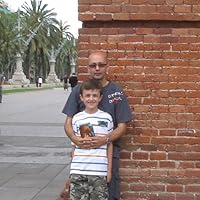
Of Scottish descent, Boyd was born in Accra, Ghana on 7th March, 1952 and spent much of his early life there and in Nigeria where his mother was a teacher and his father, a doctor. Boyd was in Nigeria during the Biafran War, the brutal secessionist conflict which ran from 1967 to 1970 and it had a profound effect on him.
At the age of nine years he attended Gordonstoun school, in Moray, Scotland and then Nice University (Diploma of French Studies) and Glasgow University (MA Hons in English and Philosophy), where he edited the Glasgow University Guardian. He then moved to Jesus College, Oxford in 1975 and completed a PhD thesis on Shelley. For a brief period he worked at the New Statesman magazine as a TV critic, then he returned to Oxford as an English lecturer teaching the contemporary novel at St Hilda's College (1980-83). It was while he was here that his first novel, A Good Man in Africa (1981), was published.
Boyd spent eight years in academia, during which time his first film, Good and Bad at Games, was made. When he was offered a college lecturership, which would mean spending more time teaching, he was forced to choose between teaching and writing.
Boyd was selected in 1983 as one of the 20 'Best of Young British Novelists' in a promotion run by Granta magazine and the Book Marketing Council. He also became a Fellow of the Royal Society of Literature in the same year, and is also an Officier de l'Ordre des Arts et des Lettres. He has been presented with honorary doctorates in literature from the universities of St. Andrews, Stirling and Glasgow. He was appointed Commander of the Order of the British Empire in 2005.
Boyd has been with his wife Susan since they met as students at Glasgow University and all his books are dedicated to her. His wife is editor-at-large of Harper's Bazaar magazine, and they currently spend about thirty to forty days a year in the US. He and his wife have a house in Chelsea, West London but spend most of the year at their chateau in Bergerac in south west France, where Boyd produces award-winning wines.
March 1964, Santa Monica Pier. Travel writer and oft time reluctant spy, occasional hero and saver of days is, as usual, doing Faith Green’s bidding for The Institute of Developmental Studies, aka MI6. Our hero is in California where he receives information relating to World War II, Bletchley Park and a termite, a traitor. It seems all roads lead to the USSR, where Gabriel is eventually dispatched to extract triple agent Kit Caldwell from Moscow. Here, he is drawn into a daring and dangerous escape plan. However, Gabriel reluctantly comes to the unwelcome realisation that he cannot trust those he has previously placed all his faith in……
“I'm back in the U-S-S-R You don't know how lucky you are, boy Back in the U-S-S-R” Actually not that lucky as it turns out.
This is such a good political spy thriller series as Gabriel falls haplessly into one espionage escapade after another. It’s the biggest wonder he can manage to stand up on occasions, as his capacity for alcohol is as legendary as the unmasked traitors such as Kim Philby. In addition, there must be quite a fug around him as he smokes one French cigarette after another! A definite sign of the 1960s times. Gabriel is a very likeable central protagonist although he is very naive and easily led by Faith Green and he does drive me a little bit mad with his continued willingness and her blowing hot and very cold! Still, it makes very good edge of the seat reading.
William Boyd is an excellent writer, he peppers his clever plots with wit and humour and I really enjoy his style. He seamlessly weaves fact with fiction into the plot making it feel authentic as Gabriel gets himself into one pickle after another. He is becoming quite adept as extricating himself from tricky situations and often has luck on his side.
The novel is not fast paced but the slow burn suits the central espionage focus as it twists and turns with revelations, danger and derring do, a spot of romance and a bottle or three. It’s tense on occasions, you feel Gabriel‘s bafflement and loss of trust as things escalate, at times, it appears out of control. The spy game is a dangerous one, who can be trusted in this very murky subterranean world and the unpredictability is what makes them such good reading. This is especially true of attempts to uncover who the latest MI6 termite is.
I hope this series continues, there’s definitely unfinished and unresolved issues so I eagerly anticipate number four. This is a series I can highly recommend as it captures the early 1960’s to perfection.
With thanks to NetGalley and especially to Penguin General UK for the much appreciated early copy in return for an honest review.
The 3rd novel in the Gabriel Pax series, continuing the adventures of the hapless, reluctant spy. While always a pleasure to read Boyd, this one did feel like it was treading water a little, with much of the story feeling like a retread of the first 2 books as our hero toiled between his spy life and real life and debated about the trustworthiness of the women and friends in his life. There's room for more from Gabriel Pax, but if there is, then the story needs to move on and develop more. That being said, Boyd is still a master craftsman and a beautiful writer and this still stands above 90% of novels in the genre.
In the third adventure featuring reluctant Secret Intelligence Service (MI6) spy Gabriel Dax, we find him in Los Angeles. The year is 1964 and he’s been asked to make contact with a man who, obliquely, is offering information concerning events in World War II. During this American visit, Dax is doubling up by also taking the opportunity to gather material for a travel book he’s writing. As ever, he’s really uncomfortable undertaking these tasks on behalf of the UK agency, yet he’s so in thrall to his ‘master’ Faith Green that he ultimately finds himself doing what ever she commands him to do.
Boyd’s ability to create interesting characters within stories that have a link to real historical events, together with his brilliant descriptions of both time and place always make entering the world he depicts a complete joy. There are brilliant sentences here that made me smile, their complexity and yet their complete clarity demanding that I re-read them for the pure pleasure of so doing. There is drama here and subtle humour too, as Dax stumbles his way through his latest adventure – smoking and drinking hard liquor as he goes.
I won’t disclose anything of the plot – why spoil the joy for future readers – all I will say is that this short series really needs to be read in order as there are spoilers aplenty here.
I really hope there is more to come from Mr Dax, I simply enjoy his adventures and his company so much.
Cold Sunset is the third book in the series featuring reluctant spy Gabriel Dax, the follow-up to Gabriel’s Moon and The Predicament.
He may still be a reluctant spy who would rather be pursuing his career as a travel writer but Gabriel Dax is certainly now a more experienced one. However it’s not in ways he’s very happy about. Previous missions have put him in a position where he’s been involved in fatal confrontations making him ponder just what he’s become capable of. ‘How had he managed to do what he’d just done? What instincts had taken over? What kind of person was he becoming?’
It’s all because he remains in thrall to the alluring and enigmatic Faith Green, head of the MI6 section known as ‘the termite hunters’ charged with rooting out traitors in the service.
It’s as part of one of these ‘termite hunting’ missions that Gabriel finds himself sent to California to make contact with a poet, Francis Falkner, who has information about a former Bletchley Park colleague he suspects of passing information to the Russians. Gabriel feels uncomfortable about the task given they often end up so badly. On the other hand it gives him an opportunity to gather material for his latest book. One of the joys of the series is the insight we get into the books Gabriel is working on, some of which sound really interesting, and getting glimpses of his rather florid writing style. I suspect Boyd has a lot of fun with this.
Gabriel’s fear that past events will catch up with him proves well-founded, resulting in another narrow escape once back in England. He barely has time for another long lunch with his publisher or a quickie with his ex-girlfriend before he’s sent to Russia to assist in the exfiltration of Kit Caldwell, a British triple agent for whom Gabriel has been acting as decoy by posing as a double agent. (Yes, it got my head spinning too.) Caldwell believes his position has been compromised and he needs to get out of Russia in double quick time before the KGB catch up with him. The carefully planned mission looks foolproof on paper but is anything ‘foolproof’ in a world where duplicity is a way of life.
Ah, duplicity thy name is Faith Green. (It’s not even her real name.) Gabriel finds her tantalising even though she seems able to move from passionately intimate to coldly indifferent in a split second. He believes he loves her but does she feel the same way about him? Sometimes he thinks the answer is yes, at other times he wonders if he’s just being manipulated. One of the great things about the series is the way the author keeps us guessing about her as well, no more so than in this book.
The fallout from the exfiltration mission and the possibility there is another traitor in MI6 means Gabriel must lie low for a while. But is there anywhere in the world where someone can’t track you down?
Gabriel is someone you can’t help rooting for even though he often makes foolish blunders, smokes and drinks too much and is a bit of a loner. (The only person he really opens up to is his therapist Dr Katrina Haas.) But while researching his books he’ll happily chat to anyone whether that’s a man employed to clear up cigarette butts and dog shit in Red Square or a barber on a remote Greek island.
Cold Sunset is another thoroughly enjoyable, stylish spy thriller. Is this the final outing for Gabriel Dax? I really hope not.
William Boyd is seventy four (this in 2026). I reckon he could knock out Gabriel Dax at the rate of one a year for the next twenty years. This is the third instalment of a declared ‘trilogy’. Why stop there? On Goodreads Gabriel’s Moon is his third most rated novel. The sequel, The Predicament is already tenth most read (of eighteen novels). Ian Fleming wrote twelve Bond novels over a twelve year period. Both authors write one a year.
I really enjoy these Dax novels (and Boyd’s other work.) It has to be said that the Dax novels run along a very similar and instantly recognisable course. So does Bond, and the two even meet in Boyd’s 2013 paean to Bond Solo. I’m guessing that Boyd’s commission to write Solo is what set him up to write his own suave, cool, uber-male in Gabriel Dax.
He’s a womaniser, a lover of fine drinks (in copious quantities), clothes, and he even notices furniture and furnishings. Uber -male Dax may be, but in way that worships women and style and sophistication.
I laughed when there was a reference to Chelsea football in this latest novel. Boyd lives close to Stamford Bridge, but there’s absolutely nothing about his character that engages with the tribalism or national pride associated with football.
As for this third part, I could easily splice my review of the Predicament into this one. There’s a lot of overlap. The same characters (unfortunately- it would be good to get some new blood); a degree of exposition as new readers are brought up to speed on Gabriel’s previous adventures; excess drinking and smoking (!)
Do I enjoy Gabriel, Faith, Katerina, Aldous, enough to want to read more about them. I think not. While Boyd is expert at his self described “whole life stories” where character develops and changes consequent to age; in the case of Dax this is focused specifically on a specific time in the early/ mid 1960s.
The plot, for what its worth, involves spies everywhere. In Moscow; embedded in British security services and MI6, great escapes, shootings, near misses. Its relatively unimportant. This is a novel about character and deceit.
One exception to the reprise of previously introduced characters is Dymphna Westmacott. It would be great to have got a lot more of her. I wouldn’t want to be a guest at her dinner parties, though.
This is the third in the Gabriel Dax series, about a travel writer who stumbles into becoming an agent of MI6, then encouraged by them to accept the USSR’s offer to spy for them as well. While his travel writing career provides excellent cover for him to travel the globe, his personality is not very spy-like. He can be clumsy, sometimes slow on the uptake, and he’s not the most emotionally stable guy in the world. To me, though, that makes him a great central character in books about moral ambiguity, power dynamics, and uncertain loyalties.
In this third book in the series, Gabriel finds his spy life is dominant, no longer a sideline. Sure, he’s still traveling and writing, but when his MI6 handler—and lover—Faith Green tells him where to go and what to do, he does what she says, not what his editor would prefer. A writing trip to California turns into a trip to the midwest to confront a man who turned over intelligence to Russia during World War II. But a contemporary Russian spy issue awaits Gabriel when he returns to Britain. He is sent to Russia, ostensibly to research a book chapter about Moscow, but in fact to help exfiltrate a supposed double agent who is actually a triple agent, ultimately working for MI6. These are incredibly high stakes for Gabriel, putting him in deadly peril and forcing him to think like a spy, not like a writer dabbling in espionage.
The ending of this book makes it clear that we should expect to see Gabriel Dax again, a man far wiser about the murky world he now inhabits, and aware that he can fully trust no one.
With his Soviet handler recalled to Moscow, double agent Gabriel Dax has been having a quieter spell. The British security services are reeling under the revelations about the Cambridge spy ring, and Gabriel’s British handler, Faith Green, asks him to go to the US to interview a dying man who claims that another highly respected man has been spying for the Russians for many years. Gabriel’s interviews with these two men reveal that there may still be a mole working at high levels within MI6.
Meanwhile, Faith has another task for him – to take a picture to Kit Caldwell, apparent defector, in Moscow. Kit is becoming concerned that his Soviet overlords are beginning to suspect, correctly, that his loyalties have always been to Britain, and now he’s asking to be exfiltrated. Faith tells Gabriel he is to help get Kit out. Gabriel, as usual, has no idea how to do this, but Faith assures him Kit has a plan – Gabriel’s task is merely to do what he’s told.
Originally, this was billed as the third part of a trilogy, and therefore I was anticipating having some of the threads that have run through the previous books tied up. What is the truth about the enigmatic Faith? Does she care about Gabriel or is she just using him? Will Gabriel become a full-time spy or break away, back into his real life as a travel writer? But it appears that Boyd has now decided to turn the trilogy into a series, and so the ending of this one is as open as in the previous two.
The books are fun, so there’s no hardship in the prospect of more, but my own feeling is that it becomes harder to maintain Gabriel as an accidental, largely untrained and unskilled spy the longer the situation goes on. And while the Gabriel/Faith dynamic has been intriguing, it needs resolution – how long would a man in reality dangle after a woman who only pays attention to him when she wants something, when he can, apparently, get just about any woman he meets to fall in love and leap into bed with him?
Being a bumbling amateur is part of Gabriel’s charm, however. Personally, I’ve never seen what it is that makes all the different security services see him as an asset. He has no skills in spycraft and seems to pass no valuable information (or even disinformation) to the Soviets, who pay him well for apparently nothing. Whenever he is sent on a mission, I can’t help feeling that if he’s the best the Brits have got, then it’s just as well we’re not fighting the Cold War alone. It’s not entirely his fault – Faith works on a strictly need-to-know basis, and she has clearly decided Gabriel needs to know nothing. He seems eminently suited to be a patsy, and his role often appears to be to undertake dangerous missions for which he is entirely unqualified, but somehow he always comes through. The longer this situation goes on, the less credible it becomes.
Boyd is always a great storyteller, and there are some tense and dramatic scenes in the book, especially during Kit’s escape from Moscow. However, there are also lots of places where not a lot happens for long periods, interspersed with Gabriel’s sexual exploits – not spelled out in detail, thankfully, but still somehow managing to take up a lot of page room.
This review is sounding more negative than I actually feel about the book. I enjoyed it as a superficial and fun romp through the lighter side of the world of espionage, and will certainly read the next one. But on the whole, I’m finding the series progressively less satisfying – an excellent premise that is being stretched too far. My interest in the enigmatic Faith is waning the longer I’m left waiting for answers. And Gabriel’s willingness to be a pawn in her games without ever demanding to know the rules doesn’t make him a standard hero – especially since his only motivation seems to be his lust for her.
In summary, then, an enjoyable read with a couple of thrilling episodes, but overall, for me, the series is beginning to suffer from the law of diminishing returns.
NB This book was provided for review by the publisher, Viking, via NetGalley.
Another thoroughly enjoyable outing from Gabriel Dax, the reluctant spy. Perhaps some of this was a bit formulaic, with many of the same characters and another tightly woven plot focused around a further ‘termite’, but it kept me page-turning. And Dax is such a likeable character, faults and all, not least his unwise, but unavoidable love for Faith Green, that it makes for another cracking read.
I just love this series. It scratches such a specific itch for me, and you can tell Boyd is just having fun. And after so many musings about the lack of anonymity of the author these days, it’s fun to go back in time where one can side desk as an actual spy.
This one goes more directly into parallels of some ground that has been tread repeatedly, and still finds way to surprise and amuse. I appreciate that it goes full spy novel, and the missions feel like escalations rather than a new mission, different font. I also appreciate that Gabriel has improved but still doesn't trust his instincts, so there's a lot to go on for additional books!
And the
Thank you to Netgalley and Grove Atlantic for a copy in exchange for my honest review!
5 stars. Ripping read. With an ending like that, Mr Boyd had better get cracking on the fourth Gabriel Dax instalment.
This travel crime thriller set in the 1960s starring the functional alcoholic and puffing Billy Gabriel Dax reminds me of Henning Mankells Kurt Wallander with his insecurities. Of course the writer of Any Human Heart makes Mr DAX much more nuanced than Kurt Wallander. The foil of his writing career and his relationships with women like his psychotherapist creates a terrific lead character. While I knew Boyd would not kill him off I had to know how things would play out.
I loved the detail in the fashion descriptions of the immutable Faith Green. Very droll.
The book appears to be linear in its plot. But it isn’t because of the interlinked earlier books. Very clever.
5* Cold Sunset - William Boyd. A superb end to the brilliant Gabriel Dax trilogy.
Cold war spy caper with Gabriel Dax, travel writer and part time accidental spy, who is now more spy and less travel writer. Instructed by his enigmatic handler Faith Green, Dax is sent to Moscow on a mission which seems suspicious from the outset and is a world of shifting sands and imminent tense danger.
This trilogy is an absolute delight. No wasted words and plots which swing from high tension to considered prose. Dax is the glue but there are other recurring characters and locations which made it a delight to be back in this world. I have listened to Boyd talking about Dax and a possible future reprisal - I sincerely hope that he gets many more outings.
I was excited to get this last volume and it is every bit as good as the preceding books with an ending that is perfect for the series.
Thanks to Penguin / Viking and Netgalley for an ARC.
Cold Sunset by William Boyd is a highly recommended literary espionage novel and the third book in the in this spy-drenched cold war series featuring Gabriel Dax.
In March of 1964 at the behest of Faith Green at MI6’s Institute of Developmental Studies, reluctant spy and travel writer Gabriel Dax meets with F.T. Falkner in Santa Monica. Falkner, a poet and former member of British intelligence in WWII, has information and a name. He believes Angus Fairford was a double agent for the Soviet Union. Faith orders Dax to talk to Fairford, who currently lives in Indianapolis. Once questioned, Fairford admits to being a double agent and agrees to identify others. Once Dax returns to his cottage in Britain, he soon realizes he is going to be targeted by a hitman and Faith wants him to travel to the Soviet Union.
First, it must be mentioned that I started here, with the third book in the series and I think it would have been a more intelligent choice to start at the beginning. I could immediately tell I was missing backstory and connections from previous adventures. The first two books in the series are Gabriel’s Moon and The Predicament and I would recommend reading them before Cold Sunset. Because I was starting with book three, I also was a bit taken aback by our hero's heavy smoking, hard drinking, and promiscuity. I suppose it represents the 1960's, but it seemed a bit excessive. (This would apply to the description of what Faith is wearing too.)
The writing is quite good and the pace is even in this well-plotted novel. The chronological time line makes traversing the plot a breeze so readers can follow the action and drama along with plenty of treachery, subterfuge, and humor. It becomes clear that trust is a transitory idea that is best met with a cordial suspicion. Even though Dax is completely enamored with his boss, Faith Green, it is clear that she isn't trustworthy, but then this is a novel of spies and double agents, so who is? Even though I was missing backstory, I did enjoy this novel.
Cold Sunset is a great choice for those who enjoy cold war espionage novels and who have read the first two books in the series. Thanks to Grove Atlantic for providing me with an advance reader's copy via NetGalley. My review is voluntary and expresses my honest opinion.
This very competent, racy, spy thriller worries me. Throughout it there are minor faults in the writing, or irritating repetitions that I find disturbing. They are beneath the William Boyd I know and love. They support a theory that occurred to me during my reading of the second book. And now I'm going to come out with it. Deep breath ... I think William Boyd has employed artificial intelligence to write this Gabriel Dax trilogy. (Please don't sue me, Bill. I'm a nobody and it's only a gut feeling. But if I had time to write a thesis ...) The three books have been issued in quick succession. They are formulaic – replete with spy fiction tropes. The writing feels as if its written to a plan – here we need a paragraph of florid description, here a sinister, surprising intervention, now it's time for some sex-action. The twists are poorly concealed as if the writer doesn't understand how the human mind is always striving to be one step ahead. If any established writer was going to pull off a literary-hoax-stunt like this it would be Mr Boyd. Remember Nat Tate published April 1st 1998? I wonder when this time he'll give us the big reveal. After all that, why 4 stars? Basically because it's an unputdownable spy thriller that ticks all the boxes. Yes, it ticks all the boxes. Suspicious, no?
COLD SUNSET opens in 1964 and finds Gabriel Dax in America doing a seemingly small job for his British Intelligence bosses, which leads to rumours of more uncovered treachery in the organisation. Disillusioned, Dax returns home hoping to find solace in his real job as a travel writer. Any peace, however, is short lived and he is soon caught up in the machinations of the Cold War once more.
The celebrated British defector Kit Caldwell, really an MI6 asset, is convinced that the KGB suspects him of treachery and he wants to get out of Moscow as soon as possible. Once more Dax is tasked by his enigmatic handler Faith Green to help, and he is soon on his way to Russia, tasked with delivering a mysterious drawing to Caldwell. Once there he is pulled into a web of shifting loyalties and dangerous escape plans.
COLD SUNSET is another well written and outstanding novel by Boyd. The plotting is intricate and clever, and the pacing is probably brisker this time. The story quickly moves through a series of well-orchestrated twists and turns, and there is genuine suspense as Dax navigates some difficult situations.
Once more Boyd displays a superb sense of place and time and captivates with his portrayal of early 1960s England. The milieu of the time seems spot on to me, and there are some appealing dollops of wry humour.
I also really enjoy the background information on Dax’s primary job as a travel writer, and it is fascinating to watch how he develops the ideas for his travel books.
The characterisations are exceedingly well done and Dax’s reflections on spying and life are poignant and interesting. There is a slight dip in pace towards the end, but the climax is terrific and will leave you wanting another Dax story as soon as possible. See full review and more at: https://murdermayhemandlongdogs.com/s...
The 3rd in the Gabriel Dax trilogy, but I'm secretly hoping there will be more as this is another sharp piece of writing from the author and wonderfully captures life in the spy world during the cold war era.
Gabriel Dax is the reluctant spy again, wishing he could just be a travel reporter, but once again called into action to investigate a russian spy, who is only too willing to spill the secrets as his time on the planet is coming to an end. But news of this spy doesn't go down too well higher up, which puts Dax in an awful predicament as to who to trust and help.
I love the cloak and dagger of this kind of investigating. With Dax you're always aware he'd be happier walking away from it all, but there's a sense of duty and loyalty, misplaced or not, to carry out this work and the story explores some darker elements of the times and it really does keep you on the edge of your seat as you watch the action and secrets unfold. Highly recommended!
Not sure why Goodreads gave me the message this is pre-publication! Bought a signed hardback copy via Waterstones.
Anyway this is the final? book in the Gabriel Dax Trilogy and once again William Boyd doesn't disappoint. He is an excellent writer and I have greatly enjoyed this mini series of books.
I'm simply NOT a person who is into thrillers, as a rule. However, I AM a person who appreciates good writing, and that's exactly what William Boyd has brought to us with this series. But warning: this is not a stand alone book, so if you read my review (link below), and like the sound of this, go back and read the first two! I don't think it will be a waste of your time. Try it, you might like it! https://tcl-bookreviews.com/2026/10/3...
Another enjoyable read by William Boyd in the Gabriel Dax series.
This time the novel is mainly set between UK, USSR and Finland, with old friends and foes all making appearances. The book is well written, with a good pace to the narrative, though having finished the book it is not clear if there will be another sequel.
A good read from a master story teller.
I was given a copy of this book by the publisher in exchange for an honest review
I have a weakness for spy novels which means that I can find something enjoyable even when they aren’t very good. So I did find something enjoyable in this one. It was the episode in the book covering the attempted exfiltration from Moscow of the hero, Gabriel Dax, accompanied by a double agent. But other than that I am struggling to say anything positive. I think the main problem is that the Dax character is so clearly reminiscent of James Bond with his womanising, drinking, smoking and consumption of fine food and yet he is simply nowhere near as interesting. All these women enthusiastically sleeping with him yet is he happy? Not in the least. Bond does practice some self analysis but with Dax it just comes across as whinging. And Fleming wrote about food and drink so beautifully. I remember reading a description of an Istanbul breakfast of figs, yoghurt, Turkish coffee and a carton of Chesterfields that had me absolutely salivating. But Mr Boyd’s depictions are just as perfunctory as a shopping list. This is apparently the third in a series so there is obviously an audience. But my suggestion is that rather than reading a poor-substitute Bond, go and find the real thing instead. You’ll thank me for it.
Penguin and NetGalley provided me with the review copy.
Choosing the right book for an annual holiday is no easy task, which puts plenty of expectation on William Boyd’s Cold Sunset. Coming after two well-received entries in the series, this third novel faces the real challenge of keeping its momentum alive rather than just playing it safe.
The story delivers everything you expect from a classic espionage thriller, blending atmospheric tension with sharp characterisation. Protagonist Gabriel Dax feels familiar yet continues to evolve. What sets the novel apart is how it balances genuine, character-driven storytelling with a tightly wound, suspenseful plot.
As a third instalment, Cold Sunset succeeds both as an engrossing read and a polished piece of fiction. Boyd gets the pacing just right, pairing crisp prose with steady momentum. While fans will eagerly await a fourth book, this volume stands on its own as a compelling addition to the series.
Gabriel Dax, by day is a respectable travel writer. Gabriel Dax, by day is also an efficient and inconspicuous spy in the service of British intelligence. The Institute of Development Studies, by day is a prosaic façade housing within unobtrusive individuals engaged in the research of mundane topics. The Institute of Development Studies, by day is also a muted and oblivious euphemism for MI6, the United Kingdom’s Secret intelligence service. Faith Green, by day, is a highly ranked employee of the Institute of Development Studies. Faith Green, by night, is the handler of Gabriel Dax — and on some opportunistic nights, also his lover.
Gabriel Dax is roused out of his sublime abode that is Rose Cottage, set in a panoramic landscape of rural England, to embark on a journey across the Atlantic to establish a rendezvous with the poet F.T. Falkner. The ravage of a terminal illness finds Falkner at the doorstep of death. The dying man, however, brings to life an explosive revelation involving a former colleague at Bletchley Park, and currently a professor at Carlsen University, Indianapolis, Angus Fairford. Ordered by Faith Green to get to the bottom of things, Dax takes Fairford unawares by springing himself upon the Professor after an insipid lecture on Molière. What Dax learns, more than just stirs a hornet’s nest. There has been an insidious infiltration of the MI6, the nature of which is grave enough to rival the treachery of defectors such as the Cambridge Five.
Before he can realise, the unwitting dilettante is coopted, nay, dragged into an extremely dangerous operation, that involves amongst other things, an intricate process of exfiltration. Partly egged on by his ambivalent feelings for Faith. Partly by the sheer exhilaration spontaneous patriotism can incite, the full-time author and part-time spy is thrown into a roiling cauldron of deceit, desperation, and duplicity.
Boyd has always succeeded in maintaining a mesmerising and almost messianic hold over his readers. Never one to conflate plot with ponderousness, and enthusiasm with egregiousness, he is an absolute master in triggering taut nerves, unpredictable chills, and involuntary nail shortening using teeth as unsuspecting accomplices.
Dax is a helpless albeit inevitable blend of vulnerability and self-preservation. He is the Holden Caulfield who is relentlessly searching for his personal bildungsroman, without realising that the novice has long made the transition to a veteran. While he may not boast a finesse that is the prerogative of le Carré’s Smiley, or lay claims to the ferocity of Len Deighton’s Palmer, he sure can keep Ludlum’s Bourne honest. Dax is by no stretch of imagination a paragon of virtue. But he is no philanderer either. Firmly in possession of principles to the extent necessary, he manages his excesses methodically and gives vent to his vices in gradation, all the while never forgetting the cardinal tenet of placing his feet firmly on the ground. License to thrill and kill purely on a need to perform basis. Terra Firma when not on unsavoury business.
Cold Sunset is impeccably and refreshingly ‘Boydian’. A wicked juxtaposition of humour and heightened tension, an ingenious blend of caution and carelessness, and an uncanny meeting of the predictable with the startling. In the simplest of terms, an imprimatur of vintage William Boyd. Beginning in the idyllic settings of a sparsely populated village in an English country, traipsing through bustling Indianapolis, making indelible pitstops in Moscow, Leningrad, and Oslo, before finally careening to a thundering stop at picturesque Ikarios in the Island of Corfu, Boyd weaves a tapestry of subterfuge, suspicion, and stellar spy craft.
Cold Sunset – leaves the reader craving for another riveting sunrise!
Thanks to NetGalley and Viking for the advanced copy of this title in return for an honest review.
I LOVE this series, starting with Gabriel's Moon and then The Predicament.
The spy genre is not one I've ever really read much of, but this series has been a revelation. Whether it's because of Boyd's storytelling ability and his fabulous characters, I don't know, but the espionage part is almost background because it's such an exquisite study of human nature.
I love how he's planted this fictional story in real life, in true events, as it keeps the story grounded and makes it more real. I don't know much about this era so I can't say how accurate it is but it feels rooted in history. I find that really impressive, especially as it still sounds like a novel and not a travel guide.
The UK/USSR connection increased the peril. The USSR fell about 18 months before I was born so I don't have any lived experience of it. But there's always been this undercurrent of fear around them that there just isn't with other countries, and I think Boyd has got that just right.
What I did like about it is how much time he takes describing things, even the most mundane things, explaining every aspect of Gabriel's outfit or what he's eating. This might be too slow for some readers but I think it's okay. This series is a mixture of fast paced and slower bits which balances nicely, and I think those more intimate passages bring us closer to the characters. I will say this has more slower parts than longer and whilst I think he's managed that balance - just - it was much slower than the others.
What I like is it's not all espionage. We go through Gabriel's everyday routine, his relationships, and his work as a writer. He is one of those characters that I think you'll either love or be bored by. He's a bit haphazard, lovestruck, and yet relatable. He seems up for anything but I don't think any of it is his choice. But I really like him. He feels normal, like the everyman who got caught up in something bigger than him. He's flawed, he drinks more than he should, and he sleeps with whatever woman takes his fancy. He should be utterly unlikeable but it is this very human nature that I love so much.
You've got the old characters which adds a level of familiarity and continuity, but we also get new ones which keeps it fresh.
Some sequels can be read as standalones. This is not one of them. Each book might have a slightly different main storyline, but the undercurrent of the books and characters flow through all three and you will most definitely be at a disadvantage just reading this one.
It's not like James Bond, it's not full-on action from the first to last page. There are elements of that, but it's more of a genteel spy novel, but no less tense. But it has the bits you expect from an espionage story - action, death, violence, romance, globetrotting, money.
I'm not sure how long this series will go on for - or should go on for - but it's one of the best I've read and I always recommend it.
Gabriel’s Moon and its sequel, The Predicament, follow the career of reluctant spy, Gabriel Dax, a travel writer who has become useful to the British secret service. He’d unknowingly become involved in the movement of information thanks to his brother, and now, because of his infatuation with his handler, Faith Green, finds it difficult to extricate himself from the world of espionage.
In the third book, Cold Sunset, Gabriel can’t ignore the fact that he’s become a killer, with two deaths bugging his conscience, both self-defence, but still. Just as well he continues to see a therapist, who he’d originally contacted for help with a sleeping disorder. Now he unburdens himself quite openly about his spy work, which is troubling, and his relationship with Faith, which also raises red flags.
It’s 1964, and Boyd paints a very realistic and vivid picture of the time. There’s attention to all the details – the clothes and cars, the restaurant meals – that give you time and place without overwhelming us in period colour. We’re also very aware that we’re a couple of decades on from World War II, with social change in the air, that women can have careers, and that we are in the midst of the Cold War.
Gabriel’s trying to complete his new book, On the Beaten Track, with unusual angles to very familiar tourist attractions, a useful cover for a job for Faith in the United States. Nothing is ever quite as simple as she makes out, of course, and on his return he realises he’s in the sights of a man with a grudge – a hangover from what happened in The Predicament. The world of espionage is already encroaching, when Faith has a new assignment for him: to “exfiltrate” their double agent in Moscow.
So not long into the story, the pace is set for some nail-biting situations. Boyd also cleverly brings in characters from the previous books – Tyrone, his London friend who’s something of a fixer, or Varvara, his former Russian contact in London, a set-up designed to keep Gabriel onside with their counterparts in Moscow, and a nice little earner. It’s all meticulously plotted, as any spy novel should be. But it’s also a thoughtful examination of what life as a spy might be like – the lies Gabriel tells people, even his friends, the “kill or be killed” aspect that’s always hovering in the background.
And although Gabriel’s a flawed character – there’s his drinking and poor judgement with women just for staters – he’s also very much aware of how he’s caught in Faith Green’s web and what it’s doing to him. This gives the book an interesting psychological aspect, which along with the brilliantly crafted writing, makes the book a satisfying read.
I read Cold Sunset courtesy of Netgalley and Penguin Random House. Best read after the first two books in the trilogy, Cold Sunset is due for release on 3 September and is a four-star read from me.