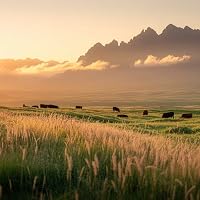
When the lake fell, something rose. The Andalusian reservoir has dropped to record lows, exposing land buried for decades. Four teenagers enter the olive groves. The terrain shifts. Paths loop. Slopes steepen. The grove closes in. By nightfall they have not returned. Something is out there - it doesn't chase. It adjusts. Former Special Forces officer Julian Navarro leads the search. He knows these hills. He knows real fear. Dogs refuse to track. Radios cut to static. Men lose their bearings. Then the storm hits - the ground gives way. Whatever surfaced is tightening its trap. ...And it knows exactly where they are.
A relentless, cinematic eco-thriller where the landscape itself becomes the predator.
Graham Mulvein is a British novelist, screenwriter and former West End theatre professional whose work spans psychological thrillers, supernatural fiction and contemporary drama. His career in entertainment began in UK theatre, where he worked as a stage manager and producer and in London's West End, where he created and produced the world premiere production of Scrooge: The Musical, which he subsequently co-produced in Australia and Japan. His years in theatre provided a foundation for a career in storytelling that would eventually take him from the stage to novels, film and television. His novels include THE HOUSE, a supernatural thriller set in America's Tornado Alley, and PREY (published in Spanish as PRESA by Grupo Planeta), an environmental thriller exploring the darker consequences of humanity's interference with nature. His screenwriting has also received international recognition. THE UNKNOWN won Best Screenplay at the 2024 Critics' Choice Awards, while his television pilot NEWLEY! was named Best TV Pilot at the 2024 Las Vegas International Screenwriting Festival. His latest novel, A CHRISTMAS RECKONING, is a dark, contemporary reimagining of Charles Dickens' A Christmas Carol, transporting the familiar tale of redemption into a world of algorithms, surveillance and social inequality. The novel also marks a return to a story with which Graham has a longstanding theatrical connection. Originally from Scotland, Graham spent much of his life in London before moving to rural Andalucía, Spain, in 2016, where he now lives with his wife and continues to write novels and screenplays.
This is a horror novel, yes. But it's also a novel about love, about sacrifice, about what parents will do, what they'll become, when their children are in danger.
From a craft perspective, PREY is a masterclass in tension management. Mulvein juggles multiple perspectives, the four teenagers in the grove, the parents at home, the search party, the creature itself without ever losing momentum. Each thread advances the story, tightens the noose, deepens the dread. The chapters are short, punchy, and end on moments that make it physically difficult to stop reading.
The novel's structure is elegant in its simplicity. Act One: the teens get lost, the parents begin to worry. Act Two: the search mobilizes, the creature makes its presence known, the first casualty. Act Three: the storm, the siege, the sacrifice. Each act escalates the stakes, deepens the characters, and brings us closer to the inevitable confrontation.
But within that structure, Mulvein creates remarkable variety. The chapters from the creature's perspective, written in present tense with a syntax that feels genuinely non-human, provide necessary breaks from the human drama while also deepening our understanding of what they're facing. The interlude chapters, the creature waiting in the darkness, the search party moving through the grove, the parents waiting at home create a rhythm that keeps the reader off-balance, never quite sure what's coming next.
The prose itself is spare and precise. Mulvein doesn't waste words. He understands that the atmosphere is built through accumulation small wrongnesses that add up. A stone that won't stay marked. A phone that shows the same time for hours. A compass that spins. A voice calling your name from somewhere it shouldn't be. By the time things escalate, we're already so unsettled that every page feels charged.
The dialogue is equally well-crafted. The teens sound like teens, their arguments, their fears, their attempts to be brave. The parents sound like parents, their helplessness, their desperation, their willingness to do anything. Navarro's dialogue, in particular, is a highlight terse, precise, weighted with unspoken history. "This is not terrain," he says at one point. "It is sequence." That's a perfect line, not just because it's dramatic, but because it's true.
The ending is earned. The final confrontation, involving a grenade and a creature that assumes it understands the rules of engagement, is genuinely tense. And the aftermath, the way the survivors process what happened, the way the village moves on, the way the land continues, is handled with restraint and emotional intelligence.
This is a confident, well crafted novel that deserves to be read by anyone interested in how horror works.
It's been a week since I finished PREY, and I still can't start another book.
I've tried. I've picked up three different novels, read the first chapter of each, and put them down again. They all feel shallow. They all feel false. They all feel like they're trying too hard to be something they're not.
PREY has ruined me for other horror novels. It's set a bar so high that everything else feels like a compromise.
What makes it so good? Let me try to articulate it.
First, the atmosphere. Mulvein builds dread through accumulation, small wrongnesses that add up. A stone that won't stay marked. A phone stuck on the same time. A compass that spins. A voice calling your name from somewhere it shouldn't be. By the time things escalate, you're already so unsettled that every page feels charged. This isn't a book that relies on jump scares or gore. It relies on the slow, inexorable tightening of pressure until you feel like you can't breathe.
Second, the creature. It's not a monster. It's a correction. The land itself, responding to decades of drought and human interference. The scenes from its perspective are genuinely alien, prioritizing temperature and pressure over sight, treating distance as unreliable, presenting hunger as "calibration." It's chilling precisely because it's rational. It doesn't hate the teenagers. It doesn't even want them. It just needs to correct an imbalance, and they're in the way.
Third, the characters. Amy, José, Remy, and Miguel feel like real teenagers flawed, scared, trying to be brave. Their group dynamic fractures under pressure in painfully believable ways. José's bravado, Remy's pragmatism, Miguel's fear, Amy's determination, they all feel true. And the supporting cast, the parents, the villagers, Navarro and Luis are equally well-drawn. The moment Amy's father throws the grenade, after Navarro's sacrifice, is earned through pages of careful character work.
Fourth, the ending. Earned. Devastating. Strange. Not everyone survives. The land takes what it takes. But the final image, a new olive shoot pressing upward from the fractured earth, holding a faint mineral sheen in its leaves suggests the story isn't over. It's just waiting.
This is a book that will stay with you. It will make you look at hills differently, at olive groves, at the dry ground after a long summer. It will make you wonder what's waiting beneath the surface, patient and certain, knowing that eventually the water will recede and the land will remember.
I don't know when I'll be ready to read something else. Maybe not for a while. PREY has set a bar that I'm not sure anything else can reach.
Highly recommended. But be prepared for the hangover.
Graham Mulvein understands something fundamental about parental fear: it's not the moment of danger that destroys you. It's the waiting. It's the phone that doesn't ring. It's the clock that keeps ticking. It's the knowledge that your child is out there somewhere, and you can't reach them, and every minute that passes makes the odds worse.
The chapters from Amy's parents' perspective are the emotional core of this novel. Her mother, who pushed for the move to Spain, who promised olive-scented evenings that would feel like freedom, now sitting at a table with plates cooling on the hob, making phone calls that confirm her worst fears one by one. Her father, who built his life on de-escalation and compromise, stepping out into the warm night to check the square, knowing how it might look, the foreign father panicking too early but going anyway because his daughter is missing and nothing else matters.
Then the village mobilizes. Doors open. Lights spill into stairwells. Information rearranges itself names exchanged, fields mentioned, paths suggested. And still, the waiting. The Guardia Civil says to wait. Navarro says to wait. Wait has defined the evening, and it's the most agonizing thing a parent can do.
The search itself is equally devastating. The way hope rises and falls a clue, a sighting, a direction, then nothing. The way some parents go down into the groves while others stay behind, unable to face it. The way everyone handles fear differently, some with anger, some with silence, some with prayer.
And then the ending. The moment Amy's father sees her, covered in mud, jacket torn, cheek split, phosphorescent residue still clinging to her skin and she breaks, screaming "Daddy!" and runs at him so hard she nearly knocks him flat. I cried. Not because it was sad, but because it was true. Because that's what it would be like. Because Mulvein understands that the worst thing isn't losing your child. It's not knowing.
I don't mean that lightly. I mean I finished it and felt different. Changed. Like I'd seen something I couldn't unsee.
The story is simple enough: teenagers, olive grove, drought, something following. But the execution is anything but simple. The author builds dread through accumulation small wrongnesses that add up until the entire world feels unstable. A stone that won't stay marked. A phone stuck on the same time. A compass that spins. A voice calling your name from somewhere it shouldn't be.
By the time the creature reveals itself, you're already so unsettled that you're not sure if you're reading or experiencing.
But what haunted me most wasn't the creature. It was the people. The parents waiting at home, making phone calls that confirm their worst fears. The village mobilizing not because they expect good news but because waiting is unbearable. The two men who've survived war, recognizing that this terrain is different, that the ground itself is making decisions.
The ending is earned and devastating. Not everyone makes it. The land takes what it takes. And the final image a new olive shoot pressing upward from the fractured earth will stay with me for a long time.
This is a book about landscape and memory and the terrible cost of survival. It's about what happens when the natural world stops tolerating us. It's about the ground beneath our feet, which is never as stable as we imagine.
“Prey” by Graham Mulvein isn’t a typical thriller where the threat lurks in the dark. Here, the land itself feels sentient. Set near a drained Andalusian reservoir, the story opens with four teenagers vanishing in the olive groves. What starts as a disappearance quickly becomes deeply unnerving. The setting isn’t just scenery. It’s a shifting, hostile presence that watches, adapts, and closes in.
The book’s strength lies in how it builds dread through atmosphere instead of nonstop action. Looping paths, collapsing ground, failed comms, and the slow realization that nature here breaks its own rules. When former Special Forces officer Julian Navarro joins the search, even his training feels inadequate against something that doesn’t hunt but calculates. The fear creeps in quietly as the landscape tightens around them, detail by detail.
By the time the storm hits, the unease is already under your skin. “Prey” feels cinematic, trapping both characters and readers inside a geography that acts like an antagonist. It’s an eco thriller that asks not just “what’s out there?” but “what if the place itself is watching you?” Tense, immersive, and hard to shake after the last page.
Prey by Graham Mulvein immediately hooked me with its eerie premise: a drought-stricken reservoir reveals long-buried land, and soon after, four teenagers vanish inside the Andalusian olive groves. What makes the story so unsettling is that the threat doesn’t behave like a typical monster. The terrain itself begins changing—paths looping back on themselves, slopes shifting, and familiar landmarks becoming impossible to trust. The result is a constant feeling of unease that builds with every chapter.
One of the strongest aspects of the book is Julian Navarro’s role in the search. As a former Special Forces officer, he enters the rescue mission with experience and confidence, yet even he finds himself confronting something beyond logic. The scenes involving tracking dogs refusing to follow scents, radios dissolving into static, and search teams losing their bearings create a chilling atmosphere. The idea that whatever surfaced from beneath the lake isn’t chasing its victims but strategically adjusting the landscape around them was genuinely creepy and unlike most thrillers I’ve read.
I don't normally read horror novels because many of them focus more on shocking the reader than telling a compelling story. Prey was recommended to me by a friend, and I'm genuinely glad I gave it a chance. What surprised me most was how invested I became in the characters and their situation.
The missing teenagers immediately create a sense of urgency, and the search effort feels believable and emotionally charged. I found myself constantly hoping the rescuers would reach them in time, even as the situation became increasingly impossible. The author does an excellent job of balancing suspense with human emotion.
What makes this book stand out is that the horror grows naturally from the story rather than being inserted for effect. There is an almost suffocating feeling of being watched, trapped, and manipulated by forces beyond human understanding. Even for someone who doesn't read much horror, the novel remained accessible and engaging. It was one of the most entertaining books I've read this year and deserves every bit of its five-star rating.
I don't read horror. Never have. Never wanted to. I picked this up because a friend wouldn't stop talking about it and I wanted to prove them wrong.
I was wrong.
This book is not what I expected. It's not gore. It's not jump scares. It's not monsters jumping out of shadows. It's something far worse: the slow, patient realization that the ground beneath your feet is not on your side.
Four teenagers get lost in an olive grove during a drought. The reservoir is shrinking. The drowned village beneath it is surfacing. And something is following them, something that doesn't rush, doesn't howl, doesn't make mistakes. It just waits. It corrects.
The writing is spare and precise. Every sentence feels deliberate. The atmosphere builds so gradually that you don't realize you're holding your breath until you're already dizzy.
The creature's perspective chapters are unlike anything I've read. They're alien without being incomprehensible. You understand it. You just don't want to.
I finished this book in two days. I haven't stopped thinking about it since. I've already ordered everything else this author has written.
If you're like me and you think horror isn't for you, try this one. It might change your mind.
Prey is one of those thrillers that pulls you in immediately and never really lets go. The setting alone feels incredibly vivid, the dried reservoir and endless olive groves create such an eerie atmosphere that it almost becomes a character itself.
Graham Mulvein does a great job building tension gradually instead of relying on cheap scares, and the sense of disorientation throughout the story genuinely kept me on edge. Julian Navarro was also a strong lead character with enough depth to make the stakes feel real.
The pacing in the second half was especially intense, and the “landscape as predator” concept felt fresh compared to a lot of modern thrillers. If you enjoy cinematic survival thrillers with psychological tension and a unique setting, this is definitely worth reading. Highly recommended.
I've read countless horror novels involving haunted houses, demons, and monsters, so I was excited to find something that felt fresh. Prey takes a unique concept and executes it brilliantly. The idea of a forgotten place emerging from beneath a drought-drained reservoir is fascinating on its own, but the author builds on it with relentless suspense and some genuinely chilling moments.
What stood out to me was the pacing. There isn't a single section that feels wasted. Every chapter adds another layer of tension and mystery. The environmental backdrop gives the story a modern edge while still delivering the kind of primal fear that great horror is known for. If you're looking for a horror novel that feels cinematic, intelligent, and genuinely creepy, I highly recommend giving this one a chance.
The creature in PREY doesn't chase. It doesn't howl. It doesn't bare its teeth in dramatic fashion. It moves through the olive groves like pressure equalizing, like water finding its level, like something that has been doing this for centuries and will continue long after these particular teenagers are gone. It doesn't see in the way we understand seeing distance is unreliable, distance lies. Instead it attends to temperature, pressure, the way sound bends before arrival. It lives in the seams between trees, in the corridors where irrigation once held, in the places where the ground has been disturbed and left to remember.
The novel's greatest strength is how it creates fear without constantly showing the source of that fear. There is a growing sense that something is fundamentally wrong with the land itself, and that feeling becomes more intense with every chapter. The pacing is excellent, steadily increasing the pressure until the story reaches a genuinely gripping climax. I finished the book in a single weekend and found myself thinking about several scenes days later. For readers who appreciate intelligent horror built on suspense, atmosphere, and mystery, this is an easy five stars.
This book doesn't shout. It whispers. It waits. It lets you settle into a false sense of security before it tightens its grip and doesn't let go.
Four teenagers. An olive grove. A drought. Something patient following them that doesn't need to hurry.
The atmosphere is suffocating in the best way. The dread builds so slowly you don't notice you're holding your breath until it's too late. The creature isn't a monster, it's a correction. The land itself, finally responding to what was taken from it.
By the end, I was wrecked. Not from gore. From truth. This is what horror should be.
Prey is a tense, atmospheric thriller that kept me engaged from start to finish. Graham Mulvein creates a vivid setting and a constant sense of unease, with strong pacing and plenty of suspense. The story feels fresh, cinematic, and difficult to put down. Highly recommended for readers who enjoy intelligent, edge-of-your-seat thrillers.
Finally, a horror novel that understands how to create a genuinely original monster. Forget vampires, werewolves, and ghosts, Mulvein has given us something far more terrifying: a creature born from drought, from landscape, from the terrible patience of land that has been waiting for the water to recede so it can finally correct what was never meant to remain.
Four teenagers. An olive grove. A drought. Something patient following them that doesn't need to hurry because it already knows where they are.
The land itself is the monster here not evil, just correcting. The creature's perspective chapters are genuinely alien and chilling. The parents waiting at home destroyed me. The ending is earned and devastating.
This is gothic horror done right. Atmospheric, intelligent, unforgettable.
Read it. But maybe not alone. And maybe not at night.
Prey is a masterclass in eco horror and tension! The atmosphere is absolutely suffocating in the best way possible. When the reservoir drops and four teens vanish into the olive groves, the sense of dread is palpable. The details dogs refusing to track, radios cutting to static, had me on the edge of my seat. Julian Navarro is a fantastic, grounded lead to navigate this nightmare. It's a relentless, cinematic thriller where the landscape itself is the monster. I couldn't put it down!
The scenes from its perspective are the best parts of the novel. They're genuinely alien in the best way, prioritizing vibrations over vision, treating the teenagers not as prey but as imbalance, as variables that need addressing. Hunger, it tells us, is not pain. Hunger is calibration. That's not just good monster design. That's philosophy.
A gripping and atmospheric thriller! I loved how the landscape itself becomes part of the danger. The shifting terrain, mysterious disappearances, and growing sense of isolation kept me hooked. The story feels cinematic, tense, and unpredictable, with plenty of suspense right through to the end. A great read for anyone who enjoys eco-thrillers and survival mysteries.
Prey takes a simple, terrifying premise, getting lost in the wrong place, and cranks it up until the landscape itself feels like it's breathing down your neck. Mulvein really nails that claustrophobic, disoriented feeling as the olive groves twist and loop, and the idea that whatever is out there doesn't just chase you but adjusts to you is genuinely unnerving. It’s a smart twist on the creature feature formula, leaning more into ecological dread and psychological exhaustion than gore. It's the kind of book that makes you side eye empty fields and dried up riverbeds a little more nervously on your next drive out of town.
A gripping thriller with nonstop suspense and a chilling atmosphere. The setting feels incredibly vivid, and the tension keeps building until the very end. A fresh, immersive read that I couldn't put down. Definitely one of my favorite thrillers this year.
The tension builds perfectly as the search unfolds, delivering a cinematic experience filled with mystery, danger, and unforgettable moments. A must-read for fans of intense survival thrillers and edge-of-your-seat suspense.
Every now and then I finish a novel and immediately know it's one I'll remember years from now. Prey gave me that feeling. The premise hooked me, but it was the execution that truly impressed me. The story combines mystery, survival, psychological tension, and supernatural horror in a way that feels seamless.
One of the aspects I admired most was the sense of inevitability that hangs over the narrative. From the moment the teenagers disappear, there is an uncomfortable feeling that the landscape itself has become hostile. The deeper the searchers venture into the exposed terrain, the more unsettling the story becomes. The author creates a constant undercurrent of dread that never fully releases its grip.
I also want to praise the restraint shown throughout the novel. Rather than overwhelming the reader with endless explanations, the story allows uncertainty to become part of the horror. That approach made the frightening moments significantly more effective. By the final chapters, I was completely absorbed and unable to stop turning pages.
Books that successfully blend atmosphere, character, suspense, and originality are rare. Prey achieves all four. It delivered everything I hoped for and more, making it one of the strongest horror releases I've read in a very long time. Five stars without hesitation.
What makes Prey so effective is the atmosphere of constant uncertainty. Graham Mulvein doesn’t rely on cheap twists or exaggerated horror, instead, he creates a quiet, creeping tension that becomes more intense with every page. I found myself completely drawn into the mystery of the reservoir and the strange events surrounding the missing teenagers.
The descriptions of the landscape were incredible. The exposed land, unstable ground, and endless olive groves gave the novel a haunting and isolated feeling that stayed with me the entire time. The setting felt vivid enough that I could picture every scene clearly, which made the suspense even stronger.
I also appreciated how the story blends survival thriller elements with psychological fear. The confusion among the search teams, the failing equipment, and the sense that the environment itself is working against them all felt disturbingly believable. Julian Navarro was a strong central character who added realism and emotional depth to the story. Prey is smart, tense, and completely immersive — easily one of the most atmospheric thrillers I’ve read recently.
Prey felt refreshingly different from the usual thriller formula. Instead of focusing only on action, Graham Mulvein creates a story driven by atmosphere, mystery, and growing paranoia. The deeper the characters move into the exposed landscape, the more unsettling everything becomes, and that slow transformation is what made the book so gripping for me.
I especially enjoyed how the novel plays with disorientation and fear of the unknown. The looping paths, sudden terrain changes, and strange silence made every scene feel unpredictable. There’s a constant sense that the characters are being watched or manipulated by something they can’t fully understand, and it creates an incredible amount of tension without needing excessive violence or shock moments.
The writing is sharp and visual, making it easy to imagine every location and scene. Julian Navarro was also a compelling lead because he feels experienced yet still vulnerable in the face of something beyond explanation. Prey is suspenseful, intelligent, and deeply atmospheric, the kind of thriller that quietly gets under your skin and stays there.
I'm still thinking about this book a week later. The premise is simple: four teenagers enter drought-exposed olive groves above a drained Andalusian reservoir. They don't come back. But the execution is anything but simple. Mulvein has written something that defies easy genre labels part eco-horror, part psychological thriller, part meditation on grief and terrain. The chapters from the creature's perspective are written in spare, almost poetic prose: "Hunger is calibration." "Light is a kind of pressure." These lines have lodged in my brain. The teenagers feel achingly real their exhaustion, their bad decisions, their desperate hope. But the heart of the book is Navarro, the retired special forces officer who leads the search. His tactical understanding of the land becomes a liability when the land stops behaving. His partnership with Luis, written in the sparest strokes, broke me when it ended. The storm sequence is relentless. The final confrontation is earned. And that last image an olive shoot pushing up through the blast crater, its veins faintly glowing is haunting. Five stars. One of the best horror novels I've read this year.
I was sent an ARC copy of Prey in exchange for an honest review, and this turned out to be a genuinely gripping read. The story wastes no time pulling readers into an unsettling mystery filled with tension, danger, and an atmosphere that lingers long after reading.
What stood out to me most was the sense of isolation and uncertainty woven throughout the novel. The setting feels vivid and oppressive, creating a constant feeling that something is waiting just beyond sight. Rather than relying on cheap thrills, the suspense grows steadily and keeps the pages turning.
The search for the missing teenagers is handled with intensity and emotional weight, and the story maintains strong momentum while still giving readers characters they can invest in. There’s a cinematic quality to the writing that makes many scenes easy to picture.
I was sent an ARC copy of Prey, and I found it to be a suspenseful, atmospheric, and highly engaging thriller that delivers on its promise. Definitely a five-star read for anyone who enjoys dark, tension-filled stories.
What I enjoyed most about Prey was how immersive the storytelling felt. Graham Mulvein writes with so much detail and tension that it becomes easy to picture every scene clearly. The setting is unique and refreshing compared to most modern thrillers, and the mystery surrounding the exposed reservoir kept me curious the entire time.
Rather than depending only on action, the book builds suspense through uncertainty and atmosphere. The strange shifts in the landscape, the failed tracking attempts, and the growing panic among the search team created a constant sense of dread that worked really well. I found myself wanting “just one more chapter” over and over again.
Another thing I appreciated was the pacing. The story moves steadily without feeling rushed, allowing the tension to build naturally. Julian Navarro was a compelling character, and his military background added realism to the rescue mission without overpowering the story. Prey is smart, suspenseful, and incredibly well-crafted, a fantastic read for anyone who enjoys intense mystery thrillers.
Prey surprised me with how emotionally intense it became alongside all the suspense. Beneath the mystery and danger, there’s a strong feeling of desperation and survival that makes the story hit harder than a typical thriller. Graham Mulvein does an excellent job making the reader feel the pressure, confusion, and fear the characters experience as everything around them starts to fall apart.
One of the best parts for me was the realism of the search operation. The failed radios, nervous rescue teams, and unpredictable terrain made the situation feel believable and grounded, which only made the supernatural elements more disturbing. The balance between realism and mystery was handled perfectly.
I also loved that the story never became predictable. Every time I thought I understood what was happening, the book introduced another layer of tension or uncertainty. By the end, I was completely invested. Prey is atmospheric, intelligent, and genuinely gripping, the kind of thriller that stays in your head after you finish it.
I picked up Prey expecting a fast thriller, but what I got was a deeply atmospheric and cleverly written story that kept me hooked from beginning to end. Graham Mulvein creates a constant sense of unease without overexplaining everything, which makes the mystery even more effective. The fear comes from what the characters don’t understand, and that tension builds perfectly throughout the novel.
What really stood out to me was the setting. The exposed reservoir and abandoned landscape give the story a haunting, almost ancient feeling, as if something long buried should never have been disturbed. The environment feels hostile and unpredictable, which made every search scene feel dangerous and suspenseful.
I also appreciated how cinematic the writing felt. You can easily imagine this as a movie because every chapter is visual, intense, and packed with atmosphere. Julian Navarro was a strong lead character, bringing calmness and experience into a situation that keeps spiraling out of control. Prey is a smart, chilling thriller that delivers suspense in a fresh and memorable way.