A daring re-imagining of an Austen classic from the unflinching viewpoint of the misunderstood Miss Bates.
Henrietta Bates, the iconic bore of Austen’s Emma, is the opposite of handsome, clever, and rich she is plain, ill-educated, and impoverished. An unmarried woman of quite a different order from that novel’s proudly single heroine, she is an object of scorn and pity, whose survival depends upon the generosity of her neighbors which she barters for with an unrelenting shower of banal and grateful chatter.
But what if the woman we see in Emma were actually deliberately assuming a role, donning a mask, as a means of managing an untenable situation? What if there was a world of difference between her inward and outward voice? What would the Woodhouses’s Highbury look like from her perspective?
Miss Bates by Catherine Cliff imagines answers to these questions as it chronicles Henrietta Bates’s unexpected and, at times, violent life, navigating a world with no ready-made opportunities, where the stakes are of the highest order. In a debut that is by turns comedic, tragic, startling, and altogether brilliant, Miss Bates turns Austen’s poignant and ridiculous side character into a feminist force who understands innately the life she has been dealt and how to slyly play it to her advantage.
This is no marriage plot; it is a spinster plot. Or maybe, the spinster’s plot.
Those familiar with Jane Austen’s Emma might raise their brows at the idea of a garrulous woman like Miss Bates telling the story of Emma. However, I assure you, ladies and gents, debut author, Catherine Cliff writes a Miss Bates who will have you sucked in and needing to know this darker tale through her eyes.
Beginning when ‘Henrie’ Bates is a little girl, Miss Bates: Emma Revisited introduces the Bates family, the village of Highbury, and those who shall eventually be the key players in the story. The Bates family suffers an early tragedy for which some never really recover and its is the beginning of what shapes the young girl who is precocious and thinks differently from others around her. She’s differently-abled and this leaves her at a disadvantage. Later, her financial and social circumstances which we are more familiar with play a role.
Catherine Cliff writes a Miss Bates who is pitiable from the outside, but doesn’t invite one’s pity. She’s actually strong and cunning in her own way. Shocking, at times and a person it does not due to under-estimate (looking at you Miss Emma Woodhouse).
Speaking of Emma, those familiar with Austen’s story will see a much darker Emma and a different version of Mr. Knightley. Frank is an exaggerated version, but not by much. Jane Fairfax is the sweet, mysterious damsel who Henrie will sacrifice greatly to see happy.
The book explains that it is not a romance and it isn’t. This is a dark, character-driven historical fiction that readers will find themselves cheering on an under-dog character with a bit of larceny in her.
I rec'd a print copy from Pegasus Books and Great Reads Book Promo to read in exchange for an honest review.
We need more books like this. The “older single woman” character is always in the shadows of books. Now it’s time for her to take center stage in a big way. All those habits and stereotypical ways of being take on new meaning. This book has everything- humor, creep, plot. Will transform your perspective on both Miss Bates and similar dynamics in the real world. Very much enjoyed and also - perfect length of book that flies by.
Why do so many books these days feel as if they were written in boldface type and italics? I suppose it is at least in part the fault of literary agents and editors, who find such works easier to pitch and market than subtler fare.
In Emma, the heroine reflects at one point that “a very narrow income has a tendency to contract the mind, and sour the temper. Those who barely live, and who live perforce in a very small, and generally very inferior, society, may well be illiberal and cross.” The author of this book, Catherine Cliff, has certainly taken that notion and run with it.
Cliff has taken the quiet, sad little story of Miss Henrietta Bates’s life, which hovers around the margins of Jane Austen’s Emma, and pumped it full of drama. Her Miss Bates (Henrie, as she calls herself), is a welter of passions (mostly rage) hiding behind the pretense of the grateful little chatterbox in Austen’s story. She finds beauty in killing chickens, she is attracted to witches, and she likes to imagine those she dislikes dying hideous deaths (and sometimes they do). Even Miss Bates’s love—for Jane Fairfax, and for a new character—is conducted at Category 5 intensity.
To drive this whirlwind, every character from the original novel has to morph into some kind of monster—most especially Emma Woodhouse herself. Cliff also has to change the storyline of the original, making every event more dire and distorting every personality. It is a common failing of Austenesque fiction to exaggerate the characters, but this book takes that tendency just about as far as it can go. Nobody can be allowed to be happy, nobody can be normal. The shades are dark, darker, and black.
The book is pretty well written, though in a modern style I tend to find jarring, and with certain odd errors (why, oh why, can no contemporary writer master the difference between “lay” and “lie”? and why spell “pus” as if it were a cat’s nickname?). Cliff showed a good understanding of the manners of the age but none at all of the symptoms of consumption, notably the constant hunger cravings of a mid-stage consumptive.
But the main thing I missed was nuance. Perhaps this was intended as black comedy—Dark Jane—but I missed compassion and the relief of lighter moments. I was excited by the prospect of having the poignant Miss Bates placed at the center of a story, but see little need for turning her into Kali the Destroyer.
Thank you to Pegasus Books for providing a complimentary copy. I was under no obligation to leave a positive review, and all opinions are my own.
As a longtime admirer of Jane Austen, I was immediately intrigued by the premise of Miss Bates. Giving one of Emma‘s most overlooked characters her own voice seemed like a fascinating concept, and I was eager to discover what untold story might exist behind Austen’s famously talkative spinster.
Instead, I found a novel that completely reimagines both Miss Bates and the world of Emma.
This is not a traditional Austen retelling. Rather than expanding on the character Jane Austen created, Henrietta Bates becomes a narrator consumed by resentment, envy, violent fantasies, and increasingly disturbing thoughts. Throughout the novel, familiar scenes from Emma are revisited through this perspective, fundamentally changing their meaning.
The story explores poverty, dependence, grief, and social inequality, but it also contains recurring graphic violent ideation, disturbing imagery, and a pervasive sense of bitterness that remains present throughout the novel. Instead of finding moments of hope or emotional relief, I found the darkness continued to build as the story progressed.
The greatest challenge for me was the portrayal of Emma. Austen certainly wrote Emma as flawed, privileged, and capable of causing genuine hurt, but she also gave her humility, repentance, and meaningful personal growth. This novel presents Emma in an entirely different light, portraying her as manipulative, cruel, vain, and an unloving mother. As someone who treasures Austen’s original work, I found this reinterpretation increasingly difficult to reconcile with the character I know from Emma.
I also struggled with the novel’s repeated graphic descriptions of violence and Henrietta’s persistent fantasies of harming others. These thoughts became such a defining part of her character that I found it difficult to connect with or sympathize with her.
Readers looking for a psychologically dark literary novel may have a very different experience than I did. However, if you’re picking up Miss Bates hoping for the wit, compassion, humor, and moral heart that characterize Jane Austen’s Emma, I think it’s important to know that this novel travels in a very different direction.
Let me start out by saying I love new takes on Jane Austen's novels, and I'm usually fairly forgiving.
Unfortunately, MISS BATES didn't work for me. I had no issue with Cliff's interpretation of the character Emma. Here, Emma is inherently mean and bossy from childhood and is a spoiled brat. That's not my take on Emma, but I could live with the premise.
My problems came with Cliff's changes in the plot of the novel EMMA for no apparent reason. Okay, maybe there were reasons that were made clear later in her novel (MISS BATES); I wouldn't know because I stopped at page 170. Here are just a couple of things that made no sense to me: Why did Emma and Isabella have different mothers? Why did Mr. Weston buy Randalls soon after his wife died instead of twenty years later? I spotted a few other similar issues and expected that there would be more to come. I realize these deviations from EMMA (the novel) may be considered small things, but they began to gnaw at me.
I enjoyed Cliff's portrayal of Miss Bates's childhood, and the contrast between Miss Bates's inner and outer lives was really fun. In addition, I had no problem with the writing style or the general premise of the book up to page 170. (I haven't yet read spoilers to see what happens in the rest of the book.)
Lots of people really liked the novel, so if you're curious, give it a go. You might have a better time of it than I did.
Miss Bates gets her time. The “character flaws” are given such a heartbreaking and believable foundation. Cliff ties up all the loose ends left with Emma. I have to say that I enjoyed the answers to many of the questions left open with Jane Austin’s work. From now on, I will listen to both of these novels together.
For anyone not a purely Jane Austen aficionado, a reminder that Miss Bates is the talkative spinster lady who Emma makes fun of at the picnic and is then chastised by Mr. Knightly (before becoming engaged to him).
This retelling of Emma tackles what it was like to be a spinster in the Austen-era, from Miss Bates’ childhood to her much later years. It also is a great look into how people in poverty are not valued by Society, how character traits are formed, and how every human is capable of unspeakable performances, both sly and overt.
That being said, this book is excellent. And even though {SPOILER} Emma is “killed,” in the end, it makes complete sense, makes a reader like me doubt the genius of Austen even more, and offers an enlightening view of charity, domesticity, and femininity.
I’ve read shocking Austen retellings, from a cheating Mrs. Collin’s to a vampire priest, but a life-end to Emma only sounds unimaginable until you’ve read Miss Bates—and that would be, therefore, the reason it’s worthy of your reading attention.
I have always had a soft spot for Miss Bates. In Emma, she is one of those characters who seems almost impossible to forget despite the fact that she is constantly being talked over, talked about, or simply tolerated. She is ridiculous, yes, but there has always been something about her that fascinated me. What happens to the women who exist at the edges of Austen's world? What happens when the money disappears, the marriage never comes, and the family that once protected you gradually becomes another source of vulnerability? Catherine Cliff takes that little question and absolutely runs with it in Miss Bates: Emma Revisited, turning one of Austen's most comic peripheral figures into a woman with a life, a history, secrets, anger, intelligence, and an astonishing capacity for survival.
And I absolutely loved it.
This is not a sweet, cozy retelling of Emma. In fact, calling it an Emma retelling almost feels inadequate because Cliff takes Austen's Highbury and turns it inside out. The broad outlines of the familiar world are still there, but everything feels stranger, darker, and considerably more dangerous. The novel follows Henrietta “Henrie” Bates from childhood through the events we recognize from Emma and beyond, allowing us to understand how she became the woman Austen's readers know: the endlessly chattering, apparently foolish, financially dependent Miss Bates.
Except she isn't foolish at all.
That is probably my favorite thing about this book. Cliff takes the chatter that we have always associated with Miss Bates and gives it another meaning. Her endless talking becomes a kind of camouflage. It is a performance, a survival mechanism, something that allows her to hide the considerably sharper mind underneath. While everyone around her assumes that she is harmless because she is poor, unmarried, socially awkward, and perpetually grateful, Henrie is watching. She notices things. She remembers things. She understands exactly how little power she actually possesses.
And that is where the novel becomes so fascinating.
The Bates family's decline is particularly devastating. Cliff does a wonderful job of showing what genteel poverty actually means for a woman like Henrietta. There is nothing romantic about being an impoverished unmarried woman in this world. Charity is not freedom. Being invited somewhere is not belonging. Gratitude becomes a currency, and dependence can become humiliating very quickly. Henrie's increasingly reduced circumstances make her desperation completely understandable, but Cliff never turns her into a saint. If anything, the novel is much more interested in what happens when a woman has been denied every socially acceptable avenue for agency.
Sometimes that agency becomes very strange indeed.
Henrie is one of those wonderfully bewildering characters who continually surprises me. I loved how morally slippery she becomes. She can be funny, compassionate, observant, calculating, resentful, loving, and frightening, sometimes within the same chapter. There are moments when I wanted to embrace her and moments when I thought, Henrie, what on earth are you doing? But that uncertainty is precisely what made her so compelling. She is not a secret perfect woman waiting for everyone to realize they underestimated her. She is a woman shaped by deprivation, humiliation, grief, and necessity.
And then there is Emma.
Oh, I loved what Cliff does with Emma.
This is a much darker Emma Woodhouse than the one we know from Austen, and I found that delicious. Austen's Emma is spoiled, meddlesome, privileged, and frequently wrong, but there is an underlying warmth to her that makes her journey toward self-awareness so satisfying. Here, Cliff pushes the darker elements of Emma's personality much further. She becomes a more unsettling presence, particularly because we are seeing her through Henrie's eyes. Emma is no longer simply the clever young woman playing with the lives of those around her. She is someone with enormous social and economic power who has very little understanding of what it means not to have that power.
The contrast between these two women is fascinating.
Emma can afford to be careless.
Henrie cannot.
That difference sits underneath practically everything in the novel.
I was also particularly taken with what Cliff does with Jane Fairfax and Frank Churchill. In Austen's novel, they are enormously important to the plot, but they are still somewhat secondary to Emma's story. Here, they become much more central, and I loved seeing them expanded into complicated, consequential figures. Jane in particular gains a fascinating depth, and her relationship to Henrie becomes one of the emotional anchors of the novel. Frank, meanwhile, is given considerably more room to be charming, manipulative, unpredictable, and morally complicated. Watching these characters move from background players to central figures completely changed the shape of the story for me.
Mr. Knightley, too, feels different in this world, as does practically everyone else. Cliff is not simply filling in the blanks of Emma; she is reinterpreting the entire ecosystem of Highbury. The wealthy characters become more difficult to romanticize when viewed from the perspective of someone who depends upon their goodwill.
And that is really what makes this book work so well for me.
It is about perspective.
Austen gave us the privileged view of Highbury. Cliff gives us the view from the margins.
The result is sometimes funny, sometimes grotesque, sometimes heartbreaking, and occasionally downright shocking. There is a darkness here that I wasn't expecting, but I adored it. The strange turns, the secrets, the violence, the shifting loyalties — all of it makes Highbury feel like a place where everyone has something they are hiding. Cliff manages to preserve enough of Austen's wit and social observation while introducing something much more unsettling underneath.
And the ending?
I loved it.
I genuinely loved the ending, particularly because it feels like the logical culmination of everything Cliff has been building around Henrietta's lack of power and her determination to survive. I don't want to spoil it, but it is one of those endings that made me sit back and think about the entire book differently. It is audacious, strange, and completely in keeping with the version of Miss Bates that Cliff has created.
Miss Bates: Emma Revisited is ultimately a book about what happens to women when society decides they are insignificant. It asks what we miss when we laugh at someone instead of listening to them. It asks what a woman might become when the world has given her very few respectable choices.
And I absolutely loved that Catherine Cliff chose Miss Bates to answer those questions.
I have long loved this character, but after reading this, I don't think I will ever be able to see her quite the same way again. Cliff has taken the woman Austen placed at the very edge of the room and brought her directly into the center of the story. She has made her funny and frightening, vulnerable and cunning, ridiculous and deeply human.
There are so many amazing things happening in this novel. It is strange. It is dark. It is bewildering. It is wildly imaginative.
This was awful. I really disliked it. Why didn’t this author choose her own characters and tell her terrible story. The fact that she stole the characters from the beautifully witty Emma by Austen and then changed the characters completely is awful. If you like Emma do not read this because you will be terribly disappointed with what she does to the characters.
Look, I am not an Austen purist by any stretch. But there are limits, and there is a line between “this is an interesting idea” and “this is something I enjoyed reading.” I was super excited to pick this one up. From the promo material, I expected a dark comedy perspective-flip. What I got instead was comic, yes, but *very* dark and shockingly violent.
Don’t get me wrong - it’s certainly well-written from a craft perspective, and Cliff has a razor-sharp pen and wit. But I’m not entirely sure who the audience is for an Austen retelling that effectively asks “what if just about every Emma character is some shade of sociopath?”, vividly outlines its anti-heroine’s violent ideas amidst her social isolation, and swings between darkly comic and just plain brutally dark. I appreciate what the author was trying to do, but this feels less like a reconsideration and more like a totally different story using the Emma characters as shorthand.
This book stands on its own but is a particular treat if you’ve read Emma. Here you see Miss Bates fully humanized and can’t help but root for her with your whole being. Wonderful writing, super gripping, and the epilogue was perfection 🤌
Henrietta Bates, the garrulous and barely tolerated spinster from Jane Austen’s Emma has her story elaborated in this impressive novel. Raised as the unloved daughter of a drunken parson-father and a distracted mother, Henrie (as she calls herself) develops her talkative persona, partly as a defense mechanism, partly as a method of countering the invisibility such marginalized women had forced upon them. Her life has its challenges – poverty, the death of a much-beloved younger brother, the departure of a younger sister to whom she is completely devoted, her being left as the sole caregiver for her increasingly infirm mother, the haughtiness and disregard of local society bigwigs – but she soldiers on. Henrie is fascinated by witches and develops some witchery of her own. And this is where, for this reader, the novel slides a bit off the rails. Miss Bates is well-fleshed out, in terms of her loneliness and how she learns to deal with it. But some of her actions strike one as being totally out of tone with Jane Austen’s character. Emma Woodhouse Knightley is particularly dark – and becomes Henrie’s special nemesis. – In the end, the excellent and the off-putting do not quite gel to make an entirely pleasing result. YMMV, of course.
I have some mixed feelings after reading. Emma is my favourite Jane Austen novel, but I am not as fanatically attached to it as I am to, say, Jane Eyre, where I nitpick ad nauseam. Miss Bates does a good job filling the clothes of somewhat silly and innocent Miss Bates with a woman who has her own identity and history, which form her actions. The parts where she is valiantly struggling against every affliction life gives her and tries and tries to squeeze at least a tiny bit of satisfaction from all those rotten lemons fate has thrown at her I loved, and I felt were done with a very sensitive, moving touch. The part where the greatest loss occurs made me genuinely feel her desperation and I was ready for some better things to come. Unfortunately, certain parts of the book dragged a lot, the character of Emma is not really seen from another perspective, but rather completely assassinated, and the ending felt like something from a cheap thriller, which also turns the main protagonist into someone I could no longer support.
Between this book and Ladies in Waiting: Jane Austen's Unsung Characters, the humble Miss Bates is the birthday!! I've heard that this book imagines that her chatty, agreeable nature was a survival strategy. Could be interesting. 🤔
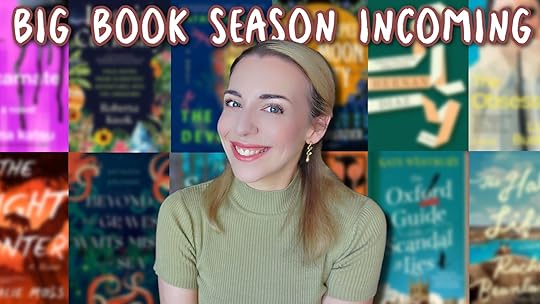
Click here to hear more about this book and my other anticipated releases of the upcoming quarter over on my Booktube channel, abookolive!
A journey through the life and thoughts of a woman who has been ignored by her family and community, teased, sexually assaulted, experienced great loss, and has still given her whole heart to her sister, and her niece, Jane Fairfax.
From a very young age Miss Bates was taught her place in society, and witnessed first hand what happened to women who didn't act grateful enough for the small morsels of charity or kindness that came their way.
It isn't a surprise her thoughts are darker than her spoken words.
I think this book doesn't need to be placed in the world of Jane Austen's "Emma." It stands up on its own. And the only complaint I might have is that it's distracting to encounter Emma after her original story ends.
It’s interesting, for a while, to see things from Henrie’s point of view, but then it gets old, especially the way the other characters are treated once the book continues past the end point of Emma.
Too dark. I do not agree with the author that Miss Bates was such a sociopathic woman. In Emma, we are made to feel sorry for her fall in fortune but not a loss in status or moral character. I’m disappointed.
This entire review has been hidden because of spoilers.
The author gave Miss Bates a very strange personality where she has inner thoughts of overly violent tendencies towards others. I found it quite disturbing.
I would rather keep Miss Bates as a quirky, misunderstood character in my mind, thank you very much.
This was a book written by someone who hated both Emma the book and Emma the character, and who’s unable to understand nuance or subtlety. I finished it because I kept thinking, « okay, this can’t possibly get worse » and then it did :)
It’s quite a shame, really - I think there could be a lot to be said about Emma’s treatment of Miss Bates, and an interesting story to be told - but this was most definitely not it.
What do I even say? According to this telling, Miss Bates is a hate-filled, vindictive murderess. Emma is not only spoiled and selfish; she is evil and cruel and never experiences the character growth of the original novel. The "perfect happiness" of her marriage to Mr. Knightley is a falsehood. Mr. Knightley himself is not the man of kindness and morals we see in the original, either. Frank is an unforgivable womanizer who neglects poor Jane, and the only person who ends the story even a little bit happy is Miss Bates herself, though she hardly deserves it.
The only truly good people in this novel are Mrs. Goddard and young Albert. And though Miss Bates is always kind to Albert, he certainly deserves a better role model than a woman who hates everyone but him.
As to the writing of this story, it is well-written, and the characterization, though unpleasant, is strong. There is nothing wrong with the craft of this story, I only object to the vilification of some of my favorite characters.
Read as far as Chapter 6, when I realized that the hints of violence and mental distress were just going to get darker. Love Emma and Austen's delicately pointed social satire; this one is not for me.
This well written debut tells the story of the inner life of Henrietta Bates, better to known to all Austen's Emma-lovers as the garrulous Miss Bates, with her verbal diarrhoea. Author Catherine Cliff posits that Miss Bates (Henrie as she calls herself internally) allows her mouth to freewheel in order to let her mind range along much darker pathways, which no one would be able to guess from her rambling. And some of her thoughts are dark and violent indeed, but she tries to control herself outwardly, as she fears she might manifest some of her more hateful thoughts directed at those around her, after this seems to have happened once or twice. Her constant talking is not only at odds with her inner thought life, but also a way of filling awkward silences, and at times she knows she should keep quiet, when her constant wittering is irritating to those she most aims to please, yet often feels unable to stop herself, even when she knows she's only making things worse.
The reduction in Mrs and Miss Bates' circumstances is painfully elucidated, and the particular need to always show excessive gratitude when you are living in such penury, and almost entirely dependent on the goodwill of others to just keep body and soul together, yet still attempting to maintain some veneer of respectability and gentility. Henrie knows the family is the subject of the pity of her neighbours - when she is not utterly invisible to their notice, which is often - if not an outright laughing stock, but has to maintain her relentlessly cheerful countenance. The hurt and humiliations she has to endure are achingly well written and discomfiting.
The elements of the story I found harder to reconcile with my reading of the original novel Emma were what an absolute bitch Emma Woodhouse is, although obviously this really drives the plot on for poor Miss Bates and the beleagured Jane Fairfax. "The real evils, indeed, of Emma's situation were the power of having rather too much her own way, and a disposition to think a little too well of herself" is certainly taken to the extreme. Miss Bates herself, having to control her inner almost psychopathic tendencies, I also found hard to assimilate with how I see her from Austen's original, and whilst I can well imagine the heartbreak and fury she must at times be obliged to suppress, again, I felt this was taken to something of an extreme.
However, having said that, as a whole it works within the setting of this novel, it just doesn't necessarily mesh perfectly into the original, but rather stands somewhat outside it, not exactly as a separate entity, but certainly an offshoot - a 'what if' rather than an 'as well as', if that makes sense? The novel does stand alone for anyone who hasn't read Emma, although without that background knowledge of the characters involved you would be missing that extra depth and richness of the contrast between what Austen shows us and what Cliff reveals.
Whilst Cliff's pen may 'dwell on guilt and misery' I was glad when she 'quit such odious subjects' and I was VERY happy with the ending! (Don't worry, I know those are MP quotes, not Emma!)
This spin-off of Emma is quite different from other books based on Jane Austen's original works. Instead of being a fluffy romance about one of the secondary characters, this story is a commentary on the class structure of 1800s England, and how someone in Miss Bates class suffered, powerless to better her situation because females of her class could not seek employment for pay. Doing so would drastically affect her standing in society. The first half of the book goes into Miss Bates' childhood and upbringing. Her father, a vicar, had good standing in society, but when he died, it was revealed he had gambled away all the family's money and had left them in debt. Miss Bates' sister married and went to live in Europe. Her husband later died in battle, and she shortly after died of consumption, leaving their daughter, Jane Fairfax, to be raised by Miss Bates and Miss Bates' mother. In the second half of the book, we see behind the scenes of the action that went on in Jane Austen's Emma. The author of Miss Bates gives a dark spin to several of the characters. Frank Churchill is a player and a cad. Emma is spoiled and self-centered. Only Mrs. Elton and Mr. Woodhouse remain themselves. Mr. Knightly remains a good person, but he is portrayed as developing a beer gut and starting to bald. This book goes beyond Emma's timeline to show what happened after Emma married. Frank Churchill has to be blackmailed by Miss Bates into honouring his secret engagement with Jane. I don't understand what the blackmail consisted of--she wrote a letter to him stating that she knew of their secret engagement. Maybe that's all it took? Anyway, Frank does propose to Jane publicly, but then he leaves town and only comes back once, for one day. Then he never returns again, even when Jane dies of consumption. He marries a rich girl 3 months later. Mrs. Bates dies 2 days after Jane. Miss Bates is finally free of Mrs. Bates' hateful presence; they had never had a good relationship.
The author hints that Emma married Mr. Knightly only to compete with Jane being engaged. Emma gets pregnant. Pregnancy does not suit her and she gets chubby and has elephantine ankles. The baby is born with a cleft lip, which Emma cannot bear to look at. Emma does not take well to motherhood and wants to send the boy away. Miss Bates ends up being the boy's constant companion. In the end, Emma chokes on a chestnut in the presence of Miss Bates. Miss Bates could have tried the Heimlich manoeuvre on her, but instead just lets Emma choke until Emma dies. Mr. Woodhouse finds such comfort in Miss Bates' company that he asks her to marry him. He dies a few months later, having left everything to Miss Bates. Miss Bates is finally left in a position of comfort, and is free to raise the boy with all the love he deserves. Mr. Knightly remains an involved father, but resides at Donwell.
This is a serious story, quite a departure from the lighthearted romance of the original. 4 solid stars out of 5
This entire review has been hidden because of spoilers.
Emma by Jane Austen was published in 1815, and is a romance and comedy of manners set in the fictional village of Highbury. The story centres around Emma Woodhouse, the eponymous heroine of the novel, but the story includes many other characters of note - including plain, impoverished Miss Bates, with a never-ending line in inane chatter.
In this novel, Catherine Cliff reimagines Austen's story from the point of view of the much maligned Miss Henrietta Bates, giving an alternative view of events - as well as providing her with a backstory,.. and a glimpse of her future.
I have to confess that I rarely venture in the pages of an Austen retelling, because I am not a fan of liberties being taken with my beloved Miss A. However, I was drawn to this one because Miss Bates is something of an oddity in the Austen canon. Yes, she is ridiculous, and often an object of Austen's sharp wit, but she is also a person Austen goes to pains to point out is more than that - hence My Knightley's pivotal scolding of Emma after she publicly humiliates her at the Box Hill picnic. I was curious to see what Cliff would make of her...
Cliff begins with Henrie's childhood, in a family scarred by tragedy. Once happy, Henrie adopts a defence mechanism - endless chatter - which hides the dark, intrusive thoughts that have begun to pop into her mind. It is a habit that grows out of all proportion as she ages into a woman who has to suffer more than her fair share of hardship.
Once we get into the part of the novel, that runs in parallel to Austen's original, it is fascinating to fill in the parts of the story in the Bates' household that you can only imagine in Emma. This was my favourite part of the book, as I know Austen's novel so well, and I really enjoyed the way cliff adds layers to Henrie's character with her need to act with humility and gratitude while inwardly seething with hatred - especially for Miss Woodhouse!
It is the ending of the novel that really gives me pause for thought. This is where the story diverges into the realms of dark fairy tale, in keeping with the complementary themes of spinsterhood and witchcraft that run through the story. I really enjoyed what Cliff does with this idea, but found it quite hard to reconcile this direction with my beloved Austen - especially when it comes to the fate of some of the characters. Definitely thought-provoking!
This is an intriguing novel. It is bold, and inventive, and does an excellent job of examining the role women of reduced circumstances were expected to play in Regency society, how they are viewed by others, and the real feelings they must bury deep inside. It really is a novel of spinsterhood, rather than one of marriage, which makes it stand out of the Regency novel crowd. And it is worth reading alone just for the inner voice Cliff imagines for Miss Bates. She is not always easy to like, but the evolution of her character will make you think very differently about the voluble Miss Henrietta Bates in Austen's novel.
What is your favorite flower? One of my favorites is the peony. Mine just finished blooming for the year, or have they? I still see a few buds left out there.
Happy Release Week and #bookbirthday for Miss Bates: Emma Revisited by Catherine Cliff. I just finished this book today and am posting my review today a well.
Henrietta “Henrie” Bates is known from the book Emma by Jane Austen as a very boring elderly and poor spinster. What was her life before this that brought her to a spot in life to be looked down upon by Emma? This book tells the story of her life from her early childhood until after the events of Emma.
My thoughts on this novel: • This novel did a great job of really delving into what life would be like for a woman of limited means during the late 18th century and early 19th century. It was disheartening to see how Henrie was reduced as she grew older as her means kept decreasing. When your father does not save money to leave to his female heirs, they are left in dire straits.
• It really made me think about what life would be like for such women in that time period and thankful for the rights we have today. This is the life that Jane Austen lived and feared. Luckily, she was never reduced as much as Henrie, but it could have happened if things had turned out differently. This is what Mrs. Bennet feared for her daughters in Pride and Prejudice.
• I liked how Henrie was a sharp person who was well aware of everything that was happening around her. She put on a mask of happiness and silly prattle in order to survive in her world. She needed extreme gratitude to help people to remember her as their gifts were often the only food she had.
• Her love for Jane and having to give her up to ensure that she could have a better life was heartbreaking.
• This is a well written literary novel and a good character story.
• This is a dark take on the story of Emma and best for those that really hate the character of Emma. While it was dark and I like Emma, I couldn’t put the book down and wanted to see what would happen next.
• The very last couple of pages were the perfect ending for this book.
Favorite Quote: “But we, we undistinguished and unmarried women – we are like imaginary beings to the rest of the world. We only have substance when we are before them. What is it to forget someone imaginary? - there can be no consequence. While to use it is the difference between living and dying. The humiliation!”
Overall, Miss Bates: Emma Revisited by Catherine Cliff is an intriguing and literary character study of Miss Bates and the plight of a poor single woman trying to make it in the past.
Book Source: Thank-you to @catherinecliffwrites @pegasus_books @greatreadsbookpromofor a review copy of the novel as part of the Great Reads Promo Book Tour.
Jane Austen’s Emma is a story we all know well. But how well do we really know that world and those characters? That is the starting point for Catherine Cliff’s debut, Miss Bates, which reimagines the world from the perspective of the iconic bore, Henrietta Bates. And unlike most books about that era, this isn’t a book about marriage but a book about spinsterhood, where the life of its heroine takes centre stage rather than a wedding.
Emotional, moving, witty and bold, this is a love letter to Jane Austen’s Emma. Catherine’s affection for the story is evident on every page and I finished this book wanting to reread the original. Well written, acutely observed and detailed, Catherine perfectly captures the atmosphere and dialogue of the era, transporting us back to Regency England in evocative detail. I could hear the gossip, see the luxurious gowns at the balls and feel the weight of people’s judgement.
I will confess, it has been a long time since I read Emma and I don’t remember a lot about Henrietta Bates. But I feel like I know her intimately after reading this book. Catherine has rescued her from the sidelines and given Henri a voice that demands to be heard. Plain, uneducated and impoverished, Henrie has spent her life invisible, overlooked and mocked. But from her scathing inner monologues we learn she is a strong, feisty and intelligent feminist who boils with an inner rage and knows how to play the cards she’s been dealt. And that endless chatter that makes her the object of Emma’s ridicule? We learn that this is her armor, a way for her to survive in a world that has no place for her. She isn’t always likeable but my heart broke for all she went through and I admired her resilience and how she learned to play the cards she was dealt. And I had a real soft spot for young Henri; a little girl struggling to make sense of the world who discovers that she can have contrasting inner and outer worlds, which is where a lot of the story’s humour is found. How I wished I could leap into the book and hug that little girl.
In Austen’s books we’ve come to expect a pretty, light and breezy world, but the one Cliff has created is dark, dangerous and achingly human. There is sexism, sexual assault, poverty, death, female rage and crippling societal expectations. Henri’s rage feels so relatable and I was cheering her on in many of the darker moments as she took back some of the autonomy she had been denied. And then there is Henri’s hatred of Emma Woodhouse, the spoiled, self-centred and obnoxious titular character from the original classic. I understood why Henri loathed her and couldn’t have stood being around her myself.
Thanks to Pegasus Books, Catherine Cliff (author), and Edelweiss for the digital review copy of Miss Bates: Emma Revisited. Their generosity did not influence my review.
I love a good retelling. Reimagining fantasy and fairy tales by giving an origin story to the villain is one of my favorite tropes. However, when it comes to historical retellings based in the real world, I want the ugly things said out loud. There is no need for another glossy biography of America's founding fathers unless the text tackles the uncomfortable truths of slavery and colonization. The same standard applies to historical fiction. A retelling of Jane Austen's Emma, my favorite of her novels, is only compelling if the perspective shifts to the outside looking in. The landscape looks vastly different from the margins, but it is ultimately more truthful.
In Miss Bates: Emma Revisited, the familiar world of poofy dresses, tailored suits, and witty country manor strolls is stripped back to expose the poorly hemmed petticoats underneath. The novel centers on Henrie (Miss Bates), the aunt of pretty little Jane Fairfax. While Austen's original text frames her as a talkative bore and the butt of Emma’s mean-spirited jokes, Cliff grants her a backstory and some really great inner dialogue. The comic relief of the original work becomes the character study of a survivor. Henrie is not a brainless chatterbox; she possesses one of the sharpest minds in Highbury, hidden behind a mask that society forced her to wear. She learned a lesson in childhood that she never forgot: every gift from the wealthy and every act of community charity come at the non-negotiable cost of performative gratitude.
The stakes are terrifyingly high. Failing to deliver an appropriate thank-you to the gentry's liking could directly impact the food on her table or the roof over her head. To ensure the wealthy witness her gratitude, Henrie performs it as loudly and as long as possible—transforming her iconic, relentless chatter into a brilliant survival tactic. While those at the bottom of the social ladder are usually forced to perform for the comfort of others, the smartest characters are strategic. Henrie intentionally uses her "harmless bore" persona to mask a burning, simmering rage that she cannot safely express. This is not a breezy romance with a happily-ever-after. It is a decades-long study of a woman previously seen only through the side-eyes of the wealthy. Look at her straight on, and the truth changes entirely. I loved this and will be telling everyone! 4 stars.