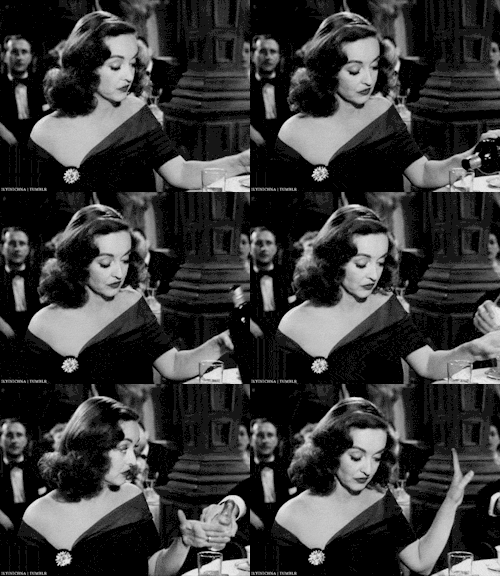
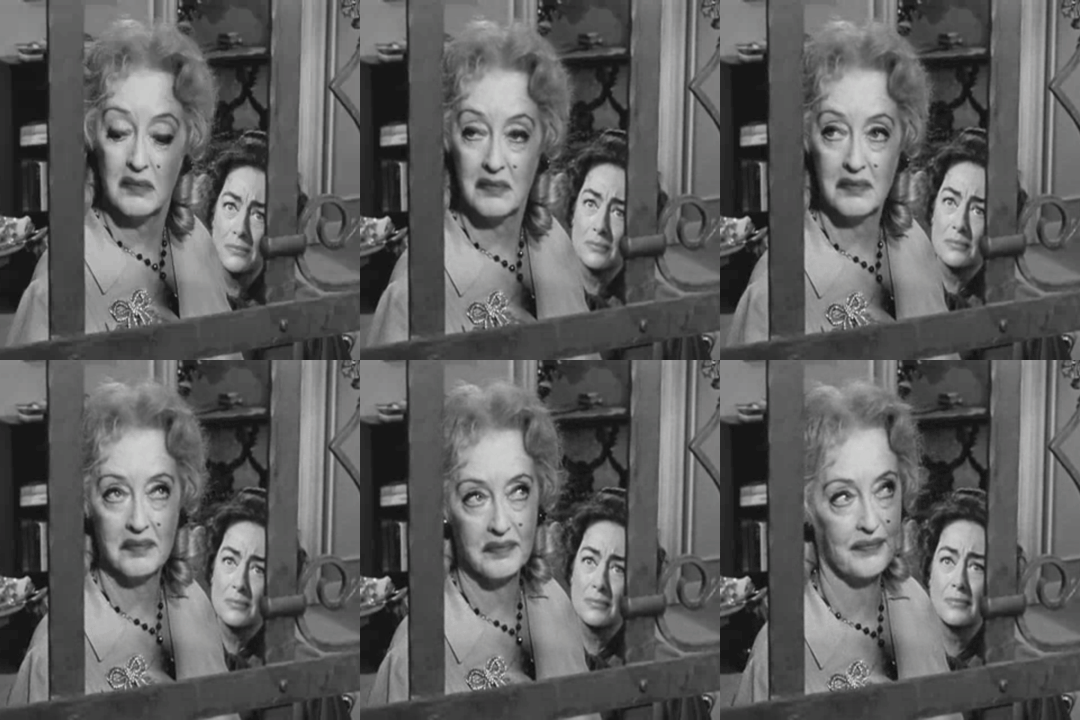
Bette Davis and Joan Crawford were legendary actresses. They've starred in dozens of classic films, from Mildred Pierce to All About Eve to Whatever Happened to Baby Jane? However, in the decades since their death several things have overshadowed their careers: the feud between the two (which they always denied any knowledge of when asked), the behind the scenes havoc they created, the men they slept with and the affairs they had, and the horrible treatment their daughters accused them of.
Bette & Joan: The Divine Feud by Shaun Considine uses quotes from the two stars as well as from friends, family, and rivals in Hollywood to tell us everything you could ever want to know about the legendary feud. From their births to Joan's death (Bette was still alive when the book was first published in 1989), this book covers every aspect of Bette and Joan's lives and careers. Both women survived difficult childhoods. And while Joan grew up extremely poor and allegedly resorted to lascivious pursuits to make her dreams come true, Bette believed she was superior to other movie stars having proved her acting abilities on the stage. The stars had more in common than they would have admitted and that may be the true crux of their feud. Not liking what they saw about themselves in each other, they used that to fuel their hatred of each other.
Of particular fascination is, of course, the behind-the-scenes drama of Whatever Happened to Baby Jane? The drama backstage was the peak of their feud. The film was a smash hit, leading the two stars to team up once more for What Ever Happened to Cousin Charlotte? (released as Hush...Hush Sweet Charlotte). However, Bette drove Joan to the edge of insanity, forcing her to quit after only 11 days of actual filming and weeks of holding filming up.
But the feud only continued to heat up. Long after Joan's death, Bette was still asked about Joan and their feud. And she was not afraid to give her two cents on the subject. Even death has not ended the feud as it soon became the stuff of Hollywood legend.
This book explores their dislike for each other more than anything written before or since. But it is far from perfect. First of all, it's badly in need of an update. Typos and misspellings are infrequent, but annoying. The book was originally published the year Bette died, but prior to that sad event. And while Joan and Bette have countless books devoted to their individual selves (only Marilyn Monroe has more books written about her), certain moments in both stars lives are only briefly mentioned, or omitted.
Towards the end of their careers, Joan and Bette starred in several schlocky horror movies. Only brief mention is made of them, with Joan's last movie, the abysmal Trog, barely being mentioned at all. Joan's brief appearance on The Lucy Show is mentioned, but the drama between her and Lucille Ball isn't very detailed. Omitted completely is Stephen Spielberg's directing of Joan in The Night Gallery episode "Eyes", which could have given perspective on Joan's behavior during the end of her career. Also omitted is any mention of Joan replacing her daughter, Christina, on the soap opera The Secret Storm while Christina recovered from major surgery.
As for Bette, her last film, The Wicked Stepmother, was filled with controversy, due to Bette quitting the film halfway through and passing away a few months later. However, the book was published prior to that debacle and we miss the opportunity to learn more about Bette's last days. One of her better final pictures, The Nanny, merits only a brief mention. More information on what went on behind the scenes would have been appreciated.
This ebook version is converted from the original text, but unfortunately errors found their way in. Having been in print for 27 years, hopefully, one day, the text will be updated with details on Bette's final days and new information learned about both actresses in the decades since the original printing.
In the end, Joan and Bette had more power than most women held back in those days and it's unfortunate that their backstage behavior overshadowed their contributions to the film industry. Between their feud and the books their daughters wrote, the important contributions the two made to classic Hollywood cinema has seemingly been lost in the shuffle. This book does focus more on what the two women were like behind closed doors, but never forgets to mark the classic films they made and how successful they were. Hopefully, it will lead readers to seek out their films, discovering what really made these two women the legends they are. Shaun Considine shows us how the feud became the stuff of Hollywood legend, but never forgets the important contributions made by Bette and Joan to cinema history. And one hopes that in the afterlife, Bette and Joan have buried the hatchet, become friends, and found true happiness, something denied to them in life.