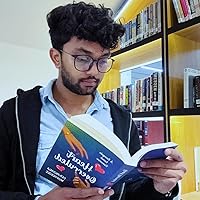
Two students. Two civilizations. One forgotten connection.
Arjun Patil, a history student from Pune, draws Iran for his college exchange program. Nadia Tehrani, studying arts and history in Tehran, draws India. Neither wanted to go. Neither expected what they found.
As Arjun walks the streets of Tehran, Isfahan, and Yazd — and Nadia navigates Mumbai, Chennai, Shillong, and Delhi, — they independently begin to notice something that nobody in their classrooms ever these two civilizations are not strangers. The word for heart is the same word. The method for cooking rice is the same method. The fire lit before the new year — on rooftops in Tehran and in lanes in Pune — is the same fire. The ancient Indian delegation carved in stone at Persepolis has been standing there since 500 BCE, waiting to be recognized.
The Same Fire is a literary novel about discovery — not the discovery of a foreign country, but the discovery that the foreign country was never quite foreign. About what happens when two young people, from nations taught to think of themselves as separate, find the connection that was always underneath.
A story of words that travelled. Food that kept its memory. Architecture that crossed oceans. And two civilizations that forgot they were family — until they remembered.
The Same Fire is far more than a tale of two individuals moving across countries; it is a meditation on memory, identity, history, and the quiet persistence of old connections that continue to surround us.
On the surface, the narrative traces the journeys of Arjun and Nadia between India and Iran. Yet, it quickly evolves into something richer than a travel narrative or cultural exploration. It becomes a thoughtful reflection on identity, the weight of history, and the unseen threads that bind civilisations across time. Arjun carries with him the memories of his grandfather and a deep fascination with history, while Nadia observes the world with a quiet intelligence and sensitivity. Through their perspectives, the story feels intimate rather than distant.
The premise is engaging, and the historical links are presented with careful, well-researched and meaningful detail without ever overwhelming the narrative. The prose is reflective and gently immersive, particularly in moments that revolve around food, language, and inherited memory.
The writing remains calm, perceptive, and accessible throughout. It presents culture and history with ease. The author could have made it into a history research book with anecdotes of civilisation, but choosing fiction with history made it much more interesting and free rather than a methodical book. What stands out most is how India and Iran are portrayed not as distant or unfamiliar lands, but as spaces that carry lingering echoes of one another.
What I really like is how the author presents history. The links between India and Iran are not explained heavily or academically, but shown as gentle, meaningful connections that sometimes feel surprising. It’s clear that the book is well-researched, yet it never makes the story feel slow or burdened. Instead, the history adds depth and makes the narrative richer, helping readers understand the shared culture without feeling overwhelmed. Even the title reflects this idea, suggesting that despite distance and time, something essential remains alive in both civilisations.
The Same Fire is a meaningful and rewarding read. It softly reminds us of the unseen connections that link cultures and histories. It’s best suited for readers who enjoy thoughtful reflection, simple storytelling, and ideas that develop gently. More than anything, it stays with me, leaving the feeling that even when civilisations drift apart, their shared spirit never truly disappears. If you read and loved the works of Hosseini, Lahiri, Aanchal Malhotra and Manav Kaul, Kunwar Shahnawaz Khan’s The Same Fire would be just right up your alley.
Book name: The Same Fire: Two Civilizations That Forgot Each Other Author name: Kunwar Shahnawaz Khan
1. Book Review
i was dying to read this book, and after finishing it, i can honestly say this was such a thoughtful and refreshing read. this is not just a story about two people travelling to different countries. it is about memory, identity, history and the strange way old connections still live around us.
i really liked how arjun and nadia are written. they feel real, young and curious. arjun carries memories of his grandfather and his love for history, while nadia sees the world with quiet intelligence and observation. because of them, the book feels personal instead of distant.
my favourite part was how the author turns small moments into something meaningful. a word in a song, traffic in a new city, tea with a grandmother, an old memory from childhood. lines like “The first surprise is always a word.” and “They are not right. We were never alone.” stayed with me for a long time.
the writing feels calm, smart and easy to follow. it shares culture and history without ever feeling like a lecture. i also loved how india and iran are shown not as strangers, but as places carrying forgotten echoes of each other.
this book is short, but it leaves a deep impact. it makes you think about language, belonging and how much of the past still lives quietly inside the present. for me, this was beautiful, different and memorable.
2. Quotes from book
1. “The first surprise is always a word.”
2. “People say Iran is alone in the world.”
3. “They are not right. We were never alone. You will understand this better after you go.”
Have you ever looked at a map and wondered how two completely different countries can feel like echoes of the same soul? This book completely rewired how I view the cultural geography between India and Iran. I went into this expecting a standard, fast-paced literary novel, but what I stumbled upon was something far more intense, deeply researched, and intellectually satisfying. It is less about plot and more about profound reflection; less action, and more quiet discovery.
The narrative beautifully follows Arjun and Nadia, two exchange students navigating each other's home countries. Though they never actually meet, their parallel journeys are inextricably linked by an invisible, ancient thread. Through food, rituals, language, and poetry, they unravel a shared civilization older than any modern border. Watching Nadia find comfort in Indian dishes her grandmother used to cook, or following Arjun as he stumbles onto familiar linguistic rhythms in Iran, felt incredibly personal and moving.
What I truly admired about the author’s writing is his brilliant restraint. The author masterfully avoids heavy, academic lectures or overly dramatic declarations. Instead, the weight of history is felt subtly through what the characters notice, eat, and remember. From Persian poetry's influence on Hindi literature to shared architectural nuances, the book beautifully highlights how our identities overlap, survive, and evolve over time.
Granted, the pacing is a slow, meditative burn. If you are hunting for high-stakes drama, this might feel a bit distant. But if you have the patience for a character-driven, quietly immersive story that explores identity beyond borders, it will rewards you immensely. It is a calm, hauntingly beautiful read that forces you to reflect on your own roots.
The Same Fire: Two Civilizations That Forgot Each Other is a thoughtful parallel story involving two individuals leading completely different lives yet sharing a unique, vibrant invisible connection that existed over a thousand years. The author has beautifully uncovered cultural and historical differences and similarities between India and Iran through the characters of Arjun and Nadia that have been shared and travelled through food, clothing, architecture, language, and traditions.
What makes the novel outstanding is its ability to mix historical differences with personal reflections. One can find that when Arjun writes, “The question is not only what India received from India. The question is why Persian civilisation was so gravitationally powerful that even those who conquered it adopted it wholesale and carried it everywhere they went”.
The author has packed a lot of punch in this small book, making art and history readable, enjoyable, and also informative at the same time. Overall, it’s a quick, must-read book especially for people inclined towards history.
What I loved most about The Same Fire was how gently it unfolds its ideas. This is not a loud or dramatic exploration of India-Iran connections; instead, the book trusts small moments — food, language, rituals, architecture, ordinary conversations to reveal centuries of shared memory.
Watching Arjun Patil navigate Iran while Nadia Tehrani simultaneously travels through India creates a beautiful mirrored structure where both characters slowly realise that what they were taught to see as “foreign” has actually always existed within their own cultural worlds.
What makes the book especially compelling is that it doesn’t romanticise history blindly. It simply asks readers to reconsider how civilizations influence one another over centuries in ways modern borders often fail to acknowledge.
A thoughtful, intimate, and genuinely fascinating read for anyone interested in history, culture, memory, and literary fiction that quietly teaches you something new.
"The champion of India was still carrying an Iranian name."
"Nobody told him to keep it. He just kept."
"I went to Iran thinking I was going somewhere else."
"I came here with a cup. I am leaving with an ocean." It's a story about ant it connection emotions soul to soul understanding b qchse at the cute we are made of the ame particles. Different might be our histories and thinking and reading the story makes you wonder and linger it sits inside you making a home because some books can do that to you make you so in love with them that you can't help but be where it wants you to be with, with itself.
Beautiful and devastating writing the narrative felt authentic and the flow was at a pace that i like.
You should read books like this I will say once in a lifetime you gotta feel through words how good and bad is it for the people outside our horizon our community and nationality. Experience it and let it shape you and be kind.
The Same Fire is one of those quiet books that slowly settles into your heart without you even realizing it. It’s not dramatic or plot-heavy, but somehow it leaves a deep impact by the end.
The story follows Arjun, an Indian traveling to Iran, and Nadia, an Iranian traveling to India. They never actually meet, yet their journeys mirror each other in such a beautiful way. Through food, language, memories, and everyday moments, the book gently shows how connected Indian and Iranian cultures really are. I loved how naturally the history was woven into the story — never like a lecture, just small details that make you stop and think.
The writing is calm, reflective, and deeply thoughtful. Some lines felt incredibly personal, especially the journal-entry sections. And the central metaphor of the same fire burning in Yazd and Mumbai was honestly beautiful — a reminder that people and cultures are often more connected than we think.
This book won’t be for readers looking for action or fast pacing, but if you enjoy reflective, character-driven stories about identity, belonging, and history, this is such a meaningful read. Quietly powerful and unforgettable.
What stayed with me most about this book is the question it quietly leaves behind: how can two worlds forget each other and still carry the same flame?
From the very first impression, this book feels ambitious in the best way. The image of blue and orange fire rising from the same source captures the heart of the story beautifully. It immediately reflects the central premise: two civilizations that forgot each other, and sets up a narrative that feels both intimate and expansive.
What I genuinely liked is how the idea doesn’t feel like just a historical concept. It feels human.
Beneath the larger scale of civilizations, memory, and distance, there’s an emotional thread about shared origins, lost connections, and the strange ways people remain linked even after time has erased the evidence. That made the story feel thoughtful rather than heavy.
The title itself, The Same Fire, becomes more meaningful as you sit with it. It suggests continuity, different people, different eras, maybe even different worlds but something essential still survives.
For me, this is the kind of book that works because it offers more than plot. It gives you an idea to carry after the last page.
If you enjoy reflective fiction with history, symbolism, and heart, this feels like a rewarding read.
What if the country you think is “foreign”… isn’t so foreign after all? 👀
This story follows Arjun and Nadia, two people sent to places they never wanted to go. India. Iran. Places shaped more by distance and perception than understanding. But once they’re there, something quietly begins to shift.
What stayed with me the most were the journal entries. They feel raw and intimate, like you’re reading thoughts not meant to be shared. There’s a softness to the storytelling that slowly pulls you in.
At its core, it’s a story about connection. Across borders, across histories, across lives that never actually meet. And that idea is what makes it linger.
It does feel a little distant at times, especially since their journeys never fully intersect, but I went in knowing that and accepted it for what it is.
If you enjoy slow, reflective reads about identity, belonging, and the idea of home, this one quietly stays with you long after you finish.
When I picked up 'The Same Fire' I expected a simple literary novel. But it wasn't and What I got was something far more intense and deep; a story about civilizations, memory, and connections we forget exist.
The story follows Arjun and Nadia, two exchange students who never meet. Yet their journeys feel intertwined. Arjun in Iran, Nadia in India, explored years of history and culture but never really apart. There’s this invisible thread that keeps people connected, whether through food, rituals, or culture. Like how Nadia finds dishes in India that her grandmother used to make. Or how Arjun stumbles onto familiar echoes in Iran.
What I loved about Khan’s writing is the restraint. He doesn’t use loud, bold declarations. He lets the story expand quietly through the character's experience. You would feel the weight of history not through lectures, but through what Arjun and Nadia notice, eat, and remember.
So I would recommend this book to someone who loves character driven stories wrapped in culture and history.
I enjoyed reading this. I had no clue about half the India-Iran connections that are mentioned in the book
Iran is not the country we see in news, two lands, separated by borders… yet stitched together by time. this book feels like walking through india and iran at once and finding echoes of the same stories, the same roots, the same soul. it’s not just a journey across countries, but across forgotten connections. Actually a quiet reminder that some histories don’t divide us ut rather binds us. 🔥✨
The Same Fire: Two Civilizations That Forgot Each Other by Kunwar Shahnawaz Khan is not just a book you read — it’s a book you absorb.
At its surface, it follows the journeys of Arjun and Nadia between India and Iran. But very quickly, it becomes something far deeper than travel or cultural exploration. It turns into a reflection on identity, history, and the invisible threads that connect civilizations across time.
What makes this book truly special is its subtlety. It doesn’t try to impress with dramatic twists or loud storytelling. Instead, it builds its impact quietly — through observations, conversations, and moments that feel incredibly real. By the end, you realise that the journey wasn’t just geographical, but deeply internal.
One of the most powerful ideas the book presents is that identity is not fixed — it expands. The line about nationalism not being wrong, but “too narrow,” stays with you long after reading. It challenges the way we see our own country, not by diminishing it, but by placing it in a larger, shared human story.
The metaphor of “the fire” is beautifully executed. A flame burning in Yazd and another in Mumbai — different places, yet the same essence — becomes a reminder that cultures do not break, they travel, survive, and continue through people. It’s simple, yet profoundly moving.
Another strength of the book is its honesty. The author openly shares the process behind the writing, including the role of AI. Instead of taking away from the experience, this transparency adds to it — making it clear that while tools may assist, the vision, thought, and emotional depth belong entirely to the author.
This book also embraces something rare: it doesn’t give you neat conclusions. Instead, it leaves you with meaningful questions. It reminds you that not everything can be translated into words, and that some experiences are meant to be carried, not explained.
By the time you reach the end, you don’t feel like you’ve finished a story. You feel like you’ve understood something — about history, about identity, and perhaps even about yourself.
A deeply thoughtful, beautifully written book that stays with you.
🔥 What if the country you thought was foreign had been part of your story all along?
The Same Fire surprised me in the best possible way. Through the journeys of Arjun in Iran and Nadia in India, the book explores how much of our understanding of other cultures is shaped by assumptions rather than reality. I loved how their experiences unfolded through conversations, food, architecture, language, and everyday moments instead of dramatic twists. Watching both characters slowly let go of stereotypes and discover unexpected similarities felt incredibly rewarding. Their stories mirror each other beautifully, creating a narrative that feels both intimate and expansive.
What stood out most was how effortlessly Kunwar Shahnawaz Khan blends history into the story. Instead of feeling like a history lesson, every discovery felt personal and alive. Whether it was Arjun learning about Persian literature, Nadia exploring Indian traditions, or the fascinating connections between languages, customs, and beliefs, I found myself constantly pausing to appreciate how interconnected civilizations really are. The book highlights how history continues to exist in the words we speak, the food we eat, and the stories we inherit without us even realizing it.
At its heart, this is a thoughtful and deeply human story about curiosity, identity, and connection. The writing is warm, reflective, and filled with respect for both cultures. By the end, I was left thinking not about differences between India and Iran, but about the countless invisible threads that continue to bind them together. If you enjoy character-driven stories that make you learn, reflect, and see the world differently, this is a truly memorable read.
There’s something quietly powerful about a story that doesn’t shout, but stays with you long after you’ve turned the last page. This one feels like that kind of book.
The idea itself pulled me in instantly two people moving in opposite directions, both reluctant, both unaware that they’re stepping into something deeply familiar. What unfolds isn’t just a story about travel or identity, it’s about memory that exists beyond borders. The way the narrative connects India and Iran felt intimate and almost surreal, like discovering a shared past you didn’t know you belonged to.
What I loved most is how gently it reveals these connections. Nothing feels forced. It’s in the food, the language, the small cultural echoes that somehow survived centuries. Those details made everything feel real and grounded, while still carrying this sense of wonder.
Arjun and Nadia don’t even meet, and yet their journeys mirror each other in such a satisfying way. It almost feels like the book is saying that some connections don’t need to be seen to be understood.
The writing has this calm, reflective tone that makes you slow down and really take things in. It’s not trying to impress, it’s just quietly telling you something important.
By the end, it left me thinking about how much history we never question, and how much of it is still alive in ways we overlook.
This one feels less like a novel and more like uncovering something that was always there, just waiting to be noticed.
The Same Fire is one of those rare books that feels both deeply personal and profoundly educational. Through Arjun and Nadia’s parallel journeys, it explores the hidden connections between India and Iran, revealing histories, traditions, and cultural echoes that many of us were never taught. What begins as curiosity slowly becomes something far more moving - a reminder that borders may separate nations, but they cannot erase shared roots.
The book shines in the way it transforms historical discoveries into emotional moments. Food, language, faith, and memory become threads connecting people across centuries. One line that perfectly captures the heart of the story is: “They are not right. We were never alone. You will understand this better after you go.” It speaks to the quiet realization that we are often more connected than we imagine.
Another beautiful moment comes with the line, “The same heart. The same longing. How?” That simple question captures the wonder at the center of this novel.
Thoughtful, eye-opening, and beautifully written, The Same Fire is more than a story - it is an exploration of belonging, identity, and the enduring ties between cultures. A fascinating read for anyone who loves literary fiction rooted in real history.
This is not just a book but a story about how we can find home even away from home. The book shows two different characters with different choices. Iran was the last place Arjun wanted to go to. India wasn't even in Nadia's list. But they found each other in the country. Exploring their own country in the lands each other. While Nadia learned about the diversity of India Arjun learned many things that came to India from Iran. Both had different journey but both brought a piece of the land with each other. The writing style is smooth, descriptive and precise. The book taught me soo many beautiful words of Persian that has wonderful meanings. Words like Adalat. Kanoon. Daftar. Darkhast. Sarkar. And most importantly dil - Del.
It was a very inspiring, emotional journey. The characters carried depth to explore different cultures. I liked how they were patient and curios to learn and know. I also liked how respected the culture. It was a very heart touching moment when Nadia returned home with a third Iran. And Arjun's conversation with his grandmother made me pause and think about how we carry half stories with us and complete while exploring.Loved the story.
it's a really good book. The setup is simple: two students do a six-month exchange program. Arjun goes from India to Iran, and Nadia comes to India from Iran. The college makes them write diaries about everything they experience during the trip. The interesting part is that they never meet. You just read their diaries. When Nadia is leaving, she writes: "I do not know if I am going home or going away from a home I never knew I had." I actually learned a lot of new things about Iran from this book. For example, the exam pressure there is crazy. If boys do not pass their university entrance test, they have to go into the military for two years. It made me realize that student stress is the same everywhere. The best part for me was seeing all the random things we share with them. Like, their food and daily habits are so much like ours. Even the word for "heart" is almost the exact same word in both languages. It is just a really nice, calm book. You should pick it up if you want to read something relaxing.
“Neither of them wanted to. That turned out to be the whole point.”
Some books entertain. Some books educate. The Same Fire manages to do both while asking larger questions about culture, identity, and historical memory.
At its heart, this is a story about connection. Through Arjun and Nadia, Kunwar Shahnawaz Khan explores what happens when two people from different countries begin to discover that their histories may not be as separate as they once believed.
What I loved most was the way the author approaches history. It never feels like a lecture. Instead, history becomes something living and breathing, woven naturally into the characters’ journeys.
The prose is thoughtful and often beautiful. There are moments where a single observation about language or memory carries surprising emotional weight.
If you enjoy books by writers such as Amitav Ghosh, Elif Shafak, or novels that blend history with cultural exploration, this may be worth picking up.
A reflective, intelligent novel about the stories civilizations carry within them.
Reading this felt like walking through the early morning light of an archaeological site—quiet, evocative, and deeply moving. The author has a gift for making history feel personal. I was particularly struck by the relationship between Arjun and his grandfather, Ajoba, whose love for the past serves as the emotional anchor of the story. The prose is "aesthetic" and "cozy," yet it carries a persistent intellectual curiosity that keeps you turning the pages. It’s a beautiful reminder that history isn’t just in textbooks; it’s in our language, our food, and our very DNA.