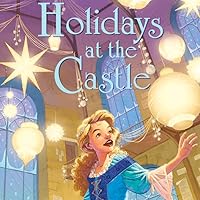
The incomparable Mrs. Piggle-Wiggle loves children good or bad and never scolds but has positive cures for Answer-Backers, Never-Want-to-Go-to-Bedders, and other boys and girls with strange habits.
MacDonald was born Anne Elizabeth Campbell Bard in Boulder, Colorado. Her official birth date is given as March 26, 1908, although federal census returns seem to indicate 1907.
Her family moved to the north slope of Seattle's Capitol Hill neighborhood in 1918, moving to the Laurelhurst neighborhood a year later and finally settling in the Roosevelt neighborhood in 1922, where she graduated from Roosevelt High School in 1924.
MacDonald married Robert Eugene Heskett (1895–1951) at age 20 in July 1927; they lived on a chicken farm in the Olympic Peninsula's Chimacum Valley, near Center and a few miles south of Port Townsend. She left Heskett in 1931 and returned to Seattle, where she worked at a variety of jobs to support their daughters Anne and Joan; after the divorce the ex-spouses had virtually no contact.
She spent nine months at Firland Sanatorium near Seattle in 1937–1938 for treatment of tuberculosis. On April 24, 1942 she married Donald C. MacDonald (1910–1975) and moved to Vashon Island, where she wrote most of her books. The MacDonalds moved to California's Carmel Valley in 1956.
MacDonald rose to fame when her first book, The Egg and I, was published in 1945. It was a bestseller and was translated into 20 languages. Based on her life on the Chimacum Valley chicken farm, the books introduced the characters Ma and Pa Kettle, who also were featured in the movie version of The Egg and I. The characters become so popular a series of nine more films were made featuring them. In the film of The Egg and I, made in 1947, MacDonald was played by Claudette Colbert. Her husband (simply called "Bob" in the book) was called "Bob MacDonald" in the film, as studio executives were keen not to raise the matter of MacDonald's divorce in the public consciousness. He was played by Fred MacMurray. Although the book was a critical and popular success at publication, in the 1970s it was criticized for its stereotypical treatment of Native Americans. It had also been claimed that it "spawned a perception of Washington as a land of eccentric country bumpkins like Ma and Pa Kettle."
MacDonald's defenders point out that in the context of the 1940s such stereotyping was far more acceptable. MacDonald faced two lawsuits: by members of a family who claimed she had based the Kettles on them, and by a man who claimed he was the model for the Indian character Crowbar. One lawsuit was settled out of court, while the second went to trial in February 1951. The plaintiffs did not prevail, although the judge indicated he felt they had shown that some of the claims of defamation had merit.
MacDonald also published three other semi-autobiographical books: Anybody Can Do Anything, recounting her life in the Depression trying to find work; The Plague and I, describing her nine-month stay at the Firlands tuberculosis sanitarium; and Onions in the Stew, about her life on Vashon Island with her second husband and daughters during the war years. She also wrote the Mrs. Piggle-Wiggle series of children's books and another children's book, entitled Nancy and Plum. A posthumous collection of her writings, entitled Who Me?, was later released.[citation needed] MacDonald died in Seattle of uterine cancer on February 7, 1958
At last my 8 year old knows why sometimes I refer to him as Harbin Quadrangle! (The infamous slowpoke of the final chapter!) This book is light on actual Mrs. Piggle-Wiggle appearances, but heavy on the "cures" for some very bad habits, including bullying, gossiping, and being a slowpoke. (If you don't think being a slowpoke is very bad, trying being late everywhere you go because your oldest child is staring at the wall with a shoe in one hand and no socks on while everyone else is already in the car!)
Fun things, and the whisperer/gossiper cure seems to have really stuck with my 4 year old! :)
Reread 2019: We are in love with so many of the names here. My favorite? Pergola Windsproggle. But the kids are very into Harbin Quadrangle. The Semicolon family. Also, the Quadrangle dog is named Mr. Pierce.
This was a huge disappointment after how much we enjoyed Mrs. Piggle-Wiggle. Well, O. wasn't disappointed, but he's five and if it's silly, he likes it. The thing that most bothered me was that in this one, the "cures" were all magic potions, powders, etc., while in the first, they were actual things you could do (i.e. let kids who complain about going to bed stay up as late as they want until they realized that they're too exhausted to do fun things). Instead of the children learning a lesson, there was just a fix administered by the parents.
I didn't enjoy this one as much as the first. I was bothered by the fact that the cures in this one were more 'magical' as opposed to "commonsensical" and that the parents thought nothing of 'medicating' other people's children!!!
Though obviously outdated, filled with sexist roles and clueless, self-absorbed parents, the creativity and whimsy of the "cures" of Mrs. Piggle-Wiggle manages to endure over time. As a 7 - 8 year old child, I adored these books, when I was young. I still find them fun, on some levels, though significantly inaccurate in their portrayal of both children and families. As was so very common in those days, any child's behavior that disturbed adults was deemed a "fault" inherent to the specific child and childhood. The whole concept of child mental health was treated as a joke, in those days, disconnected from the child's role within her/his family, or the result of his/her relationship with one or more parents.
Parental knowledge and behaviors were never questioned back then - everything was always the fault of the child - whether at home or school. Adults were always viewed as perfect, while kids were always entirely responsible for the negative attitudes and coping strategies they had adopted. Thankfully, 70 years after this book was published, our society is more sophisticated, recognizing child depression, anxiety, impulsivity, bullying, self-destructive attention-seeking, and other issues as the far more complex and serious matters that they are, rather than as laughable, superficial matters.
As an adult reading this book, I can see how the author uses Mrs. Piggle-Wiggle as an unofficial child mental health provider whom even the local MDs refer parents to, once they have determined that the identified "problem child" doesn't have a physical disorder. Now, as a professional mental health provider (MSW) and RN, myself, I find these Piggle-Wiggle books disrespectful of both mental health providers, with their specialized work/skills, as well as, disrespectful of the emotions and psychological/developmental needs of children. The message in these books clearly is that the feelings and perspectives of kids are superficial and trivial, thus easily "fixed" with a bit of "magic". Nothing could be further from the truth.
These books can be still be enjoyed by children and adults, even in our more sophisticated 21st century society. However, just like other outdated, classic books from the past (e.g. Tom Sawyer, Huck Finn) which contain rampant sexism, racism, ageism, abilitism, and other stereotypes/bigotry, these books must be discussed and "debriefed" with children who read them. These books would be excellent ways to open up dialogues with youngsters/classes regarding the mental health and social skill challenges that are commonly encountered throughout childhood.
Critical thinking skills can be stimulated by asking children to reflect on the hurtful/negative tags they have been labelled with by adults (or that other children they know have been tagged with), then asking them to consider all the reasons why they believe any child might feel or behave in those ways. Such discussions can encourage empathy, compassion, and a greater willingness to discuss mental health and social challenges that both children and adults encounter throughout life. This would do much to reduce the stigma surrounding mental health challenges, along with dispelling the shame that too often is heaped upon children who come from dysfunctional families.
It’s funny listening to these with my teenagers. They like to point out that some of Mrs. Piggle Wiggle’s remedies are a little sus (came from a dead sailor husband?) and maybe would scar kids or make them depressed? But we had a good chat about modeling ideal behavior in funny ways about common kid problems.
Read this to my kids. The 7 year old enjoyed it, though the attention of the 6 and 4 year olds wandered. Also felt like I had to edit some of the phrases. "Hateful" was used quite regularly in one of the stories. Still, they were fun, and the kids laughed at some point sorting each story.
My eight year old and I read this book for our mother-daughter book group. The other kids usually stayed up to listen as well and they liked the stories and laughed at the right parts, so I could tell they were paying attention. We liked the stories and I think if I call my kids 'slowpokes', now they'll really understand what I mean.
Now that I am a parent, I find the common sense cures more fun in the Mrs. Piggle-Wiggle books. But as a kid, I was all about the magic. This one is FULL of magical cures for slowpokes and whisperers and all sorts of childhood problems. Also, can we just talk about how Betty MacDonald makes up the BEST names for her characters?! Forthright Semicolon? Harbin Quadrangle? Pergola Windsproggle?!! Uh-mazzzinng.
These books were my CHILDHOOD! Absolute favorite! I remember religiously reading and rereading some of the books in this series, and rereading it again as an adult still made me smile. I don’t remember ever reading this one as a kid, and it wasn’t as good as the other ones… for some reason, the stories just didn’t have the same impact as some of the others. But I’m still glad I got to read it, and I look forward to reading the rest!
A read aloud with my two older kids. We actually haven’t read the other piglet wiggle books yet but they really liked this one. Each chapter stands alone as a vignette so it’s not hard to follow and the kids just loved hearing about the behaviors that Mrs Piggle Wiggle was curing. I wish it was as easy as a powder or drops to curing dragging your feet or gossiping! Parenting would be so much easier.
The kids and I love to read these stories. We laugh at the parents cluelessness into the kids' problems. Thank goodness for Mrs. Piggle Wiggle! What would they all do without her? Sometimes I wish I had her cures- I like to tease the kids about that too. Charming read!
We read this one to the kids. It’s charming and often very funny. The best part are the characters’ names. Forthright Semicolon, Cantilever, Pergola Windsproggle.
This was pure nostalgia for me as I read these when I was a kid. My kids enjoyed it and I loved looking into the everyday life in the 1950s of families. The characters’ names cracked me up and I loved each of Mrs. Piggle-Wiggle’s cures. I’d definitely recommend to read with your kids.
I am late to the Piggle Wiggle Party, but I have nothing but PRAISE for this clever, clever read. The use of Language is almost unparalleled; as is the situational comedy and logic. A Masterpiece of the English Language ~
My daughter and I just finished this one, and she enjoyed it just as much as I did when I was a kid. Mrs. Piggle-Wiggle doesn’t actually play that big of a part in these stories, and her cures this time are not clever psychological tricks for outsmarting children, but magical sprays or syrups or candies, that a mom still wishes she had, despite their non-existence. It’s just good, old silly fun!
I'm almost embarrassed to admit that I read this to myself, without my children. What happened was that I had taken a stack of books upstairs from which they could choose. They did not choose this one, and I ended up reading most of it while waiting for my youngest to fall asleep. The inside cover mentions how Mrs. Piggle-Wiggle cures children of their horrible habits, and I guess I was hoping for some real tips and tricks, but Mrs. Piggle-Wiggle's cures really ARE all magic (powder, tonic, pills, candy, spray, liquid, etc.) and therefore wholly unhelpful. The book was a mildly entertaining read, though.
I thought about giving this book 3 stars, but decided on just 2... mainly because of how disappointed I was reading it compared to the first one! The kids in this book are quit a bit naughtier then in the first one, to the point where it wasn't funny and I skipped over a few paragraphs while reading it to my 5 year old because I didn't want to give her any bad ideas! The cures were disappointing to... instead of actual remedies that taught the children lessons it was just a quick pill or something and poof they were all better... definitely not even near the same level of awesome as the first one!!!
My (almost) five year old daughter really likes Mrs. Piggle-Wiggle. She is fairly entertaining with her crazy suggestions and remedies for any number of problems (i.e. being a slow poke, being boastful, etc.). I appreciate the author's creativity with the names of characters, such as Mr. and Mrs. Quadrangle. The book is definitely dated as evidenced by young children being left at home alone, but this doesn't impact the story too much. It is kind of fun to remember how lives of children used to be several decades ago.
These chapters are VERY long and I wish there were more applicable solutions to all these behavior problems. I don't have a Mrs. Piggle-Wiggle to give me a magic potion to fix my kids' behavioral problems. But I think my 8 year old liked it even though it took a long time to get through.
I really liked the book Mrs. Piggle -Wiggle because it was really funny to me due to all the different sicknesses the children were having all the time. That is why I really liked this book.