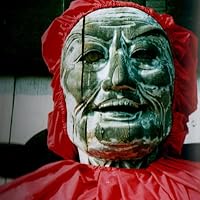
Stunning and visceral in its emotional impact, The Dark Will End The Dark collects 14 stories by veteran author Darrin Doyle. Deftly mixing realism and fabulism, bleakness and hope, sparkling dialogue and unforgettable characters, these literary Midwestern Gothic tales remain in the reader’s mind long after the last page is turned.
"The human body, logic, and language are all rent apart and remade dazzlingly anew in these fourteen stories. With the droll fabulism of Nikolai Gogol and the moral heft of Shirley Jackson, Doyle’s characters face problems both surreal and all-too-real...Fantastical yet close to the bone, these stories are both wounding and wondrous." -- Monica McFawn, author of Bright Shards of Someplace Else, winner of the Flannery O’ Connor Award
"Doyle's stories are lamentations, demented fairy tales, and quests for enlightenment in which the author explores bodily dysfunction and ungainly lust while familial love hums in the background. In the manner of George Saunders, Doyle uses his smart, light language to lift readers above the darkness of shame and humiliation that brings so many of his characters to their knees." -- Bonnie Jo Campbell, author of Once Upon a River and American Salvage, finalist for the National Book Award
"Darrin Doyle’s a mad scientist who has stitched together a hauntingly beautiful collection from tattered body parts and a strange, ragged heart. It is only after you’ve been defibrillated by the stories in The Dark Will End the Dark that you realize you’ve been dozing through the days. Doyle’s got his fingers on the pulse of our brave new American psyche and his writing blazes electric." --Jason Ockert, author of Wasp Box and Neighbors of Nothing
Darrin Doyle is the author of the novella Let Gravity Seize the Dead (Regal House), the novels The Beast in Aisle 34 (Tortoise Books), The Girl Who Ate Kalamazoo (St. Martin’s Press), and Revenge of the Teacher’s Pet: A Love Story (LSU Press), and the short story collections The Big Baby Crime Spree and Other Delusions (Wolfson Press), The Dark Will End the Dark, and Scoundrels Among Us (Tortoise Books). He lives in Mount Pleasant, Michigan and teaches at Central Michigan University.
Read 7/2/15 - 7/5/15 4 Stars - Highly Recommended, some creepy stuff in these here pages Pages: 167 Publisher; Tortoise Books Released March 2015
I get lots of friend requests on Goodreads. Lots. Mostly from weirdo friend-collectors with whom I have nothing in common, self published authors who are just looking to spam their newest releases in TNBBC, foreign dudes with creepy profiles, and underage users who attempt to bully me around by commenting on my status updates when I don't respond. So I'm not bragging when I say that.
But every once in a while, I'll get a request from an author who is genuinely reaching out to say hey in appreciation for what TNBBC stands for. While I'd like to say that I'm so tuned in to the small press community that I know about every cool new title that's releasing every second of every day of every week, well, I mean, c'mon. So it's really cool when an author stands up and introduces themselves to me like Darrin did.
Because I'm a curious person, I took a look at his books and was instantly drawn towards The Dark Will End the Dark. It promotes itself as 14 stunning and visceral stories, deftly mixing realism and fabulism, bleakness and hope, sparkling dialogue and unforgettable characters that will remain in the reader’s mind long after the last page is turned. And bleak and stunning and lingering they were.
This collection of thematically-linked but stylistically unique stories is incredibly sad and tragic and strange. Darrin's obsession with body parts and gender fluidity adds an additional layer of connectivity throughout.
In the body stories, which are sprinkled all throughout the book - with titles like "Head", "Hand", "Face", "Neck", and "Sores" - Darrin plagues his characters with horrific, though seemingly painless, physical conditions. A man's head dies but his body remains functional; A young child's hand becomes infected and ultimately gives birth to a ghost; after staring at himself countless times in the bathroom mirror, a man's face rearranges itself one day....
These stories are particularly grotesque and unsettling because, while they are incredibly unlikely to happen to someone outside of Darrin's imaginary control, their nightmarish imagery haunts you long after.
You should know that the collection kicks off with "Tugboat to Traverse City" , by far my favorite of the bunch. It's a tale in which a captainless tugboat, engulfed in fog, slowly begins to lose its passengers as they jump overboard... all except for one strangely apathetic group of friends who are content to just sit and wait and do nothing.
There's also "The Hiccup King", a cutesy look at a man who's caught a case of the chronic hiccups, and what happens when he comes face to face with the Hiccup King. And "Barney Hester" was pretty cool. In this one, two BFF's go ga-ga over the girl next door until she unhinges her jaw and swallows one of them whole.
Darrin's mind is a dark and dangerous one. His characters never see what's coming and they never seem to catch a break. And as a reader, I'm totally ok with that. If you're a newbie to his work, you'll want to rectify that soon.
Dude can tell a story. And he knows how to author right.
Short stories are strange animals. Some readers are baffled by them because they have no real idea what to expect from them (“That doesn’t tell a story!”), and most writers don’t know how to write them, although not from lack of trying (“It’s only a story. How hard can it be?”). They’re not mini-novels and they’re not long poems. So what are they? I wish I could say, exactly. If we were medieval seafarers hunched over a torn and timeworn parchment map, I’d point to the nether of the nethermost regions and say in my saltiest voice “Here be short stories.” And that is doubly true of the short stories in Darrin Doyle’s latest offering, The Dark Will End the Dark.
In our attempts to pigeonhole authors and their works we make a lot of literary comparisons. This is especially true when said author and his/her work is not easily pigeonholed. The harder it is to categorize, the more comparisons we make. I’m not innately against these comparisons. In fact, I sometimes find them to be useful and even accurate allusions/depictions. So allow me to here make one literary comparison: Doyle writes like George Saunders off his meds. There, done. No more comparisons. OK—one more. If Saunders’ work is dark, then Doyle’s is the light-devouring black-hole heart at the center of Kafka’s alternate universe. You get the idea.
These are some dark, dark stories, peopled by characters from the shadowy, shadowy fringes of our collective Grimm-inspired imagination. Stories that shock and horrify, yet at the same time electrify and mesmerize. Occasionally, they even inspire—not like Oprah inspires, but more like Nick Cave inspires. (OK—another comparison). There is a whole lot of dismemberment in these pages—a lot of loose body parts and body parts on the loose, both. I’m sure some critic somewhere would suggest that this speaks to a fragmented society whose sole unifying factor—it’s humanity—has gone missing somewhere along the way. I’m not going to go so far as to suggest that. There are certainly thematic echoes throughout—existential harmonics, if you will, and I’m sure if you stood back far enough, a clear image would affectively emerge from the darkness.
But here’s the thing: I’m not entirely sure why you’d want to do that—stand back. Doyle’s stories are so up-close compelling, so, well, in-your-face poignant. After finishing the final few pages, I felt like I’d been in hand-to-hand combat and had taken one too many body blows. Yet despite the dark and often violent themes, the writing is crisp and clean—ethereal, at times. The tropes are true and the details crystal clear. And in fact, it is that clarity of detail that I find most admirable about Doyle’s writing. The details chosen by this author come together in such a way that they force sometimes painfully unfamiliar synaptic jumps in the reader’s head and the brain snaps to attention. Painfully unfamiliar cognitive leaps, yes, but also wonderfully tantalizing ones, too. Take, for example, this description from the perspective of Jonathan Turkey, who while thinking these very thoughts, is being forcibly sodomized by the school bully Claude Poopdick.
Not like this, God, Jonathan prays silently, forced to stare at a stretch of black pavement strewn with lemon rinds and Styrofoam boxes resembling screaming mouths stained by barbecue sauce and bleu cheese dressing. The stench of worried chicken bones and ashy beer fills Jonathan’s nose and, in spite of his terror, makes him kind of hungry. Rain begins to fall, first softly, then hard. (Happy Turkey Day, 119)
A handful of well-chosen details that set the mind to reeling, leaving the reader to cognitively fill in and flesh out the surroundings that are left unspoken but not unseen. Here’s another. A woman describing the young doctor whom she will soon enough have an affair with.
The wife returned the young doctor’s gaze without feeling. She wanted him to witness, displayed on her own face, his profound insignificance. He was aware of his good looks, which annoyed her. Early thirties, she guessed, bleached teeth, a forehead tall as a billboard. A hotshot. Always got what he wanted. Graduated med school by twenty-two. Swarthy eyebrows the color of her husband’s shoulder mole. Every click of his pen was an attitude. (Head, 53)
No lists of mundane minutia here, and no grueling extended metaphors—just seemingly unrelated details that, taken together, add up to much more than their sum total, becoming symbols—almost emblems—of a life. In this paragraph, Doyle manages to do what it would take Henry James (an author known for his exhaustive/exhausting detail) thirty or so pages to do.
The Dark Will End the Dark is probably not for everyone. If you don’t like to feel uncomfortable, or if you like your reading materials cozy, then this is not the book for you. If, on the other hand, you are able to let go of the usual social assumptions that most of us don’t bother to question, and if you are able to tone down (but not turn off) your moral compass long enough to make it through 176 pages, then this might just be the best story collection you’ll read this year. And maybe the next, too. It’s certainly the best I’ve read in recent memory.
Darrin Doyle is that rare writer who offers substance and invention, stories of original perspective and language that yield themes of redemption even as his characters are often damned. This book portrays human struggle, helplessness, chaos, despair, anguish in heightened and distorted portraits, yet the lived experience beats strongly, somehow rising above a bleak reality. I’ll be re-reading these stories to learn what makes their genius tick. But I’ll be re-reading these stories for years because they are among the best of what a short story can offer a reader: total immersion into interior spaces that you forgot or didn’t know how to face.
The collection opens with the startingly deft and visionary “Tugboat to Traverse City.” Doyle effortlessly crafts a light tone that quickly becomes ominously weighted with high moral stakes. That theme repeats throughout the book, but each premise is fresh, slyly original from the last. In this story, the physical details of setting, dialogue, and mindsets of the characters are so well chosen and convincing that the absurd events that unfold are entirely believable and terrifying. This story is a hybrid of slacker instincts and noir sensibilities, examining tragedy from a spectrum of bystander reactions. As with the best of Doyle’s work, this story lingers in the mind long after reading, to sift through characters’ actions and motivations, and confront one’s own courage—or lack of it.
There are memorable and carefully drawn characters throughout the book, among them, Owen in “The Hiccup King,” a study of working-class humility and how what we ache to depend upon can become our greatest torment. What is most regular in our lives can become the most disruptive. And the resulting isolation of stretching the truth of a remarkable occurrence in one’s life to become a footnote in history draws others into the preservation of sadness. These themes are big, but never forced. A real delight to read.
Over half the stories focus on one body part. In the story “Head,” the wife says of her husband, “He’d become a collection of parts and impressions: a mouth, an arm, dirty socks, Barbasol. Studying him now, he scarcely resembled the man she’d married. This thing on the bed was a sculptor’s rendition, a mannequin.” The theme across these stories takes root in “Head,” a dark desperation that unsettles domestic routine, those implosions within marriages and families that occur from sacrificing one’s desires and dreams. We still function but are spiritually broken—and the family lives in that irretrievable loss. Yet in “Head,” the family provides redemption by resuscitating with clever necessity. The story imagines a medical condition that cannot possibly be real, yet on the page, is remarkably so. Doyle sketches absurd realities then brings them starkly alive with details and events that ring true for that world. This story is as immersive as anything imagined by Kafka. Many stories in this collection contain this wonderful logic applied to a reality conjured from an alternate perception of our world, not so much dream states, but tautly drawn subdivisions of dreams, of almost-familiar landscapes and occurrences. This story creeps unsuspectingly to its beautiful conclusion. Doyle tells a new kind of love story, evoking “Frankenstein,” yet re-rendering the notion of monster.
“Hand” is a difficult story to parse, coded in childhood perceptions. The story explores the cruelty of being on the precipice between childhood and maturity and having maturity driven in by parental ruthlessness. It’s the cruelty of a precise moment in childhood, a crossing over from innocence to understanding that maturity will soon land heavy. One day, but not yet. There is a backdrop in the story of a domineering parent, relentless school pressures, an overbearing older sibling while the possibility of the fantastical is violently disrupted, the utter squelching of imagination. “Mouth” similarly explores that dread state of childhood where nightmares loom and no adult takes them seriously. Both stories show how disconcerting it is to be a child and know there are expectations to grow and face a colder, more logical world. Many other stories written from children’s points of view center on wonder or discovery—Doyle’s stories show a helplessness of being at the whim of expectations to let go of the ability to see the fantastical in this world.
“Foot” and “Penis” explore sacrificing parts of ourselves when we’re cornered by resentments that brew within families. “Penis” could be read as the adult dynamic between the father and child in “Hand,” the child a grown man in “Penis,” still cowering and immobile in a moment of vulnerability as his father looms, “his face like crabmeat,” except this time, it’s the son poised to inflict harm on himself. There is so much nuanced examination of familial menace, sometimes cloaked as love.
“Face” and “Sores” both use Dali-esque disfigurement to portray fragmented, broken selves, “the man” not recognizing himself in the routine of his advanced life, the other man, Jim, pocked with the anguish of divorce. “The man” is “a disrepaired self, one not ready for the stage of life.” His wife and children become “a chaos of identity like a broken vase . . . their faces puzzles unassembled.” At least this family falls apart together, and “the man” faces his disfigurement in the mirror, unlike Jim in “Sores” who blocks all reflective surfaces, except the one that contains diseased and disfigured fish AND his own disfigured face, a double image of decay and altered spirit. Jim loses himself alone. “He was not a man anymore but a design, a puzzle.” There is a beautiful symmetry between the two stories. Both bear anguish for the loss of self, inside and outside of marriages, a gritty portrayal and commentary on the self whether marriage succeeds or fails.
“Neck” appears between “Face” and “Sores,” one example of how smartly these stories are ordered. “Neck” is a short capture of a bedtime moment, a family nursing the father, a cult leader dying, an admitted sinner and liar. Unlike “the man” and Jim from the other stories, this father knows who he is, asks forgiveness though his wife and children’s fates appear uncertain after his death. The points of view in “Face” and “Sores” center on the men looking at themselves. “Neck” provides a view of the family feeling the loss of their old home and their perilous fate.
The stories throughout the book build upon and inform each other, creating rich themes, illuminating our dark impulses, fates, choices, and childhood traumas.
This entire review has been hidden because of spoilers.
This collection of fabulist fiction (leaning most heavily on the fable-ist side of that sub-genre, I'd say) packs a wallop of weirdness, darkness, and humor. While the weirdness and darkness is certainly relentless, I believe the humor shines the brightest. In this collection you've got headless husbands, cannibalistic girlfriends, hiccup kings, footless moms, and someone actually named Ha-Ha. However, while the title of the story, "Ha-Ha, Shirt," might sound like a belly-buster, it's the darkest, meanest one of the lot--and my favorite. Recommended for anyone interested in what fabulist fiction is (I had to look it up) and anyone looking for a book of dark, weird, but easily digestible and memorable short fiction.
The new cover (not the one featured here, but the one with the glitchy skull) truly represents the subject matter: strange, a bit frightening, and bare to the bone. I just wasn't always sure what that bone was all about. The tales here range from the creepy to the just plain odd. I felt like I was missing the point (the allegory?) half the time. My favourites wer probably "The Hiccup King," "Sores," and the women about the hungry baby. Again, I'm not really sure what the message behind most of the stories was, including these. If you're in the mood for something off kilter, a tale that will shake you up (or wake you up), then this might be the collection for you.
Thank you to Edelweiss+ and Tortoise Books for the advance copy.
Look I know I'm biased but I love Doyle's writing so much. It's funny and deep and sensitive and clever and always written with precise attention to detail. I'm not practiced in reading short stories but his writing makes me feel held as a reader, it flows so naturally and always follows through, never leaves you hanging. I honestly think he might be a genius, but if he ever reads this, then no I don't.
My favorites include; "Foot," "Hand," "Happy Turkey Day," "Ha-Ha, Shirt," and, of course, "Barney Hester."
3.75/5. A mix of brilliance and nonsense. There is definitely talent here, and a few of the stories really knocked my socks off, to the point I want to own a physical copy of this book.
Some others suffered from that's-not-an-ending-itis, some drew forth a "that's just dumb", and yet others *swipes hand over head*. The latter is REALLY hard to do, as I'm quite the fan of unusual fiction, but here we are.
I definitely want to read more from this author, as the good stories were 5+/5 fantastic. They include: Sores, Head, Barney Hester, Neck.
This a collection of short stories by Darrin Doyle who is one of the most unique and interesting horror / gore authors at the moment and these 14 stories are great if you are a fan of the weird and wonderful. His writing is a cross between Black Mirror / A24 / Jordan Peele for its shock factor and the body horror is in there too. Not for the faint hearted or those that don’t love this stuff. I loved the story about the husband and his ‘dead head’ and the monster in the closet. I have given it 5 stars because if you love this genre like I do you’ll appreciate how great this collection is
The Dark Will End The Dark by Darrin Doyle is a horror anthology with a strong satirical tone. The stories are interesting and imaginative, though the language can feel a bit difficult at times. Out of the entire collection, only two stories truly stood out for me and made the book worth reading. Many of the other stories carry hidden meanings and layered symbolism that require deeper interpretation. At times, I found those themes a little too complex to fully grasp, which slightly affected my overall reading experience.
Reads and feels like an anthology horror mini-series, where each episode just taps into a completely random thriller, supernatural, and/or body horror tale. Frankly, they’re not all winners, but the ones that are linger with you after you close the book. Nothing is all out horrific and mind bending, but Doyle describes with such intrigue and even comic sentiment that you never struggle to mentally pit yourself in the scene.
FAVE SHORTS:
+ Head + Barney Hester + Ha-Ha, Shirt + Tugboat to Traverse City
Everyone agrees that the majority of Season Two of Twin Peaks pretty much blows. The best episodes however, were utterly unforgettable. They were taut with an even-steven magnetic pole tension between the most disturbing and the endearingly funny. Darrin Doyle's stories in "The Dark Will End The Dark" flow and crackle with alternating currents of the unsettling and the absurd; the wholly creepy with a silver lining pitch black humor.
Doyle populates his stories with a series of seemingly unremarkable characters and places them in surreal nightmare trials and tribulations. A moving company worker is wakes to discover tiny, target-like sores spreading on his skin; a man is afflicted with hiccups every few seconds and goes on a pilgrimage to meet an elderly man with the same affliction. The two men, at a loss for words, communicate through their mutual hiccup calamity; an adolescent boy is devoured by his middle school crush as she unhinges her jaw and he disappears inside her. It's as if Kafka rewrote the Book of Job.
Author Monica McFawn was accurate in her praise that "Doyle’s characters face problems both surreal and all-too-real...Fantastical yet close to the bone, these stories are both wounding and wondrous".
In the story "Hand" a young boy''s hand becomes impregnated with the fetus of a ghost. The boys father waits in the dark, baseball bat in hand, ready to strike. Doyle's prose is placid and deliberate, rooting the story in a encroaching creepiness, yet some of the passages have a detached, placid beauty.
The characters and their freakish fairy tale conflicts are an unsettling yet joyous canvas for Doyle to display his unique imagination and voice. As Bonnie Jo Campbell says "Doyle uses his smart, light language to lift readers above the darkness of shame and humiliation that brings so many of his characters to their knees"
(Reprinted from the Chicago Center for Literature and Photography [cclapcenter.com]. I am the original author of this essay, as well as the owner of CCLaP; it is not being reprinted illegally.)
So first, let me admit that I have a bit of a bias here; for while I don't know the author personally, I am friends with the owner of the press that published this, and Tortoise and CCLaP have been talking about doing some co-sponsored events together later in the year, so you should take the so-called "objectivity" of this review with a grain of salt. But that said, even without that connection I would still like this book quite a bit, a collection of dark magical-realism pieces that unsurprisingly comes from a former student of such fellow dark magical-realism authors Stuart Dybek, Elizabeth McCracken and Rick Moody. Be forewarned, this is not the fun, life-affirming kind of magical realism so prevalent in, say, Spanish literature; these are instead stories where entire boats of passengers commit mass-suicide for no particular reason, where babies insist on gnawing on the severed limbs of their parents to stay happy, and where a man competes for the title of "longest case of hiccups in history" to disastrous effect, just to list the subjects of the first three pieces. Smartly done and more naturally compelling than most story collections, this comes strongly recommended from a reviewer who was admittedly rooting for this book from the start.
It's been a while since I've torn through a short story collection from beginning to end. But that's exactly what I did with Darrin Doyle's "The Dark Will End the Dark." Simply put, this is an amazing batch of short stories. First off, Doyle has managed to put together a collection that is thematically linked, with a logical structure running throughout. Yet each story feels stylistically unique and vigorous. Most of them have an air of magical realism, though they vary in degrees. Some stories retain a fairly straight forward narrative arc, while others take wild imaginative leaps and flights of fancy. But each offering feels both interesting and important. My two favorites are "Tugboat to Traverse City" which creates and sustains an air of preordained doom in the fog of Lake Michigan. While "Ha-Ha, Shirt" feels like it's creating its own language as it goes -- yet manages to land a powerful emotional uppercut at the end. I'm so thrilled a came across this collection. I highly recommend you get yourself a copy straightaway.
With The Dark Will End The Dark, Darrin Doyle presents fourteen short stories that haunt the fringes of man’s darkest, most disturbing imagination. Blending realism with surrealism and horror with humor, Doyle explores humanity and then brutally disassembles it limb by limb, exposing the nastiest bits of it for all to see. Doyle’s greatest strength lies in his prose. He writes with a clarity and elegance that manages to both enchant and appall me. His imagery is shocking and terrifying, yet intriguing and beautiful at the same time. There’s this eeriness that lingers throughout the entire book. It excites me and compels me to read on. As I was reading, I couldn’t help but compare his style and subject matter to that of the great Ambrose Bierce, especially during stories like “Foot,” in which a mother cuts off her own foot and gives it to her child. Darrin Doyle’s stories are dark and twisted but utterly fantastic and won’t easily be forgotten.
I received a copy from the author in exchange for my honest review.
I read nine (out of 14) stories. I have had this book since June and still haven't been motivated to finish it, so I think now is the time to throw in the towel. I enjoyed the premise of most of the stories. Creativity and imagination are definitely at work here. The prose keeps me from being too interested. It's not my style. That being said, I found the writing best in the bits of dark silly humour. For example, in "Head", a man's head is pronounced 'no longer viable'. His body still functions and his wife is expected to take him home and care for him. While explaining the situation to the wife, an eager doctor says "Think of the head as just another appendage. A glorified arm." (Possibly this is funnier in context…there were a lot of moments like that.) I recommend this collection if you’re looking for something offbeat and original.
A collection of dark and bitter stories that are fearlessly grotesque and bizarre. More often than not, they leave you with more questions than answers, but somehow, that's almost better than knowing all the details. And yet, despite their sometimes toe-curling creepiness, there's a sort of comfort in these stories, a healing in the weird; there's a distant familiarity and humanity to them that stirs some kind of nostalgia (or something like that) deep within. Haunting and addictive, and definitely recommended. (Favorites: "Tugboat to Traverse City," "Foot," "Ha-Ha, Shirt," "Mouth," and "Barney Hester.")
The human body, logic, and language are all rent apart and remade dazzlingly anew in these fourteen stories. With the droll fabulism of Nikolai Gogol and the moral heft of Shirley Jackson, Doyle's characters face problems both surreal and all-too-real...Fantastical yet close to the bone, these stories are both wounding and wondrous.
Beautiful, dark, lovely, sad, and altogether a joy to read. Such a perfect title, in that the creepy, disturbing stories feel cathartic, as if the characters are not just wallowing in the dark, but working through it. The prose is gorgeous, making the reader linger over sentences. I just loved it.