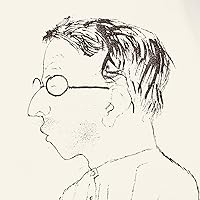
Also known as Brother Antoninus, William Everson was an American poet of the Beat Generation, San Francisco Renaissance and was also a literary critic and small press printer. Everson registered as an anarchist and a pacifist with his draft board, in compliance with the 1940 draft bill. In 1943, he was sent to a Civilian Public Service (CPS) work camp for conscientious objectors in Oregon. In the camp at Waldport, Oregon, with other poets, artists and actors, he founded a fine-arts program, in which the CPS men staged plays and poetry-readings and learned the craft of fine printing. During his time as a conscientious objector, Everson completed The Residual Years, a volume of poems that launched him to national fame. Everson joined the Catholic Church in 1948 and soon became involved with the Catholic Worker Movement in Oakland, California. He took the name "Brother Antoninus" when he joined the Dominican Order in 1951 in Oakland. A colorful literary and counterculture figure, he was subsequently nicknamed the "Beat Friar." He left the Dominicans in 1969 to embrace a growing sexual awakening, and married a woman many years his junior. The 1974 poem Man-Fate explores this transformation. Everson was stricken by Parkinson's Disease in 1972, and its effects on him became a powerful element in his public readings.
A long suspension seizes their nerves. And for a lingering moment They meld again, each in the other, The deep aura of contemplation still clinging about them, The age of action only beginning.
As though loath to leave one love for a better They breathe there a moment. The long dark of their contemplation coils to its term, And the dawn of action leaps in their loins. For the deed is yet to be done, Out of the shape of their shared souls In the savagery of love.