To the generations that came after its end, World War II has a kind of mythical quality about it. It feels and reads like a Hollywood blockbuster, and has in fact been used as the basis for many Hollywood blockbusters. And, like any great myth or movie, it has larger than life heroes AND villains.
As a result of this, the gruesome details of what went on in WWII often get lost in depictions of cartoonish villains and heroic deeds.
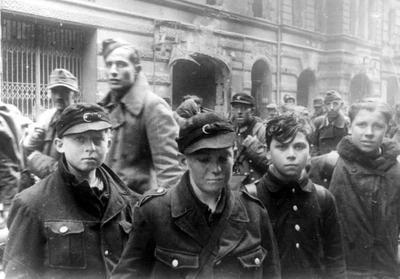
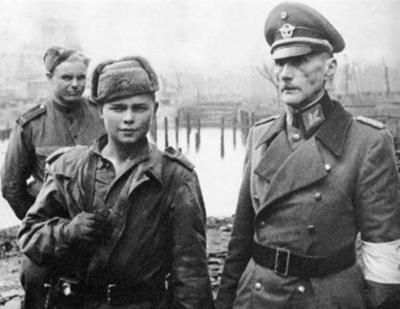
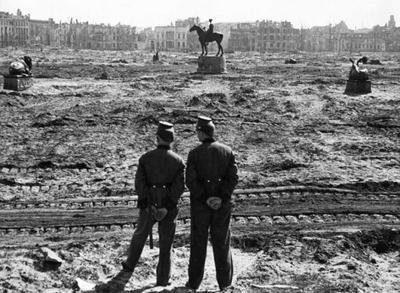
The Battle for Berlin is ripe with all these elements. The villains are there, on both sides, heroes emerge, also on both sides, and the gruesome details are in no short supply. This battle encapsulates everything that war is. The complexity of it, the tragedy of it, and the fact that there really is nothing heroic or good in it.
But like WWII itself, Cornelius Ryan's account of "The Last Battle" is fascinating. Ryan really had amazing access to the people that took part in the battle, on both sides, and he looks at the battle with a microscope. It is the short, personal details that stand out in this telling.
The milkman who continues on his route despite the impending collapse of the city. The zookeeper who keeps the zoo's rare stork in his bathtub in an attempt to keep it safe. The communists who, having eagerly awaited the arrival of the Soviets in the city, are then brutally raped when they finally arrive.
Yes, the rapes. It was interesting to read in the author's acknowledgments that both the U.S. State Department and the British Foreign Office discouraged the author from raising the issue of the Berlin rapes with the Soviets during his interviews with him, fearing that it would be "undiplomatic to raise the question". Then-President John F. Kennedy disagreed with that view, telling the author that the Russians were "horse traders" and that he should "lay it on the table" and be blunt.
Ryan does not shy away from depicting the horrible brutality of the Red Army as it sweeps into Berlin. Many Berliners are relieved when they find that the first waves of the Red Army are professional, even helpful. But the Soviets are apparently well aware of their reputation, as one officer tells a group of women sequestered at a convent to be careful because the men coming up behind them are "pigs" and another man, after having brutally assaulted a woman in an alleyway, raises his hands over his head in helpless admission afterwards, admitting "I'm a pig".
Women hide in overturned bathtubs cast on the street outside, under tables, blankets, and anywhere else in order to try and avoid being raped. Many women are gang raped, left half-dead, and then raped again when another group of soldiers enters the city. It is little surprise then that many of these women attempted suicide to avoid this particularly cruel fate.
I'm currently living in eastern Ukraine and, while reading this book, I asked some of the locals I know about their thoughts on this. Some of the responses I got resembled those the author received to an uncanny degree. The German women, they told me, "deserved their fate" because of crimes their fathers, husbands, sons, and brothers had committed during Hitler's plunge into eastern Europe. Perhaps the worst thing about war is how mercy is so often in short supply on all sides.
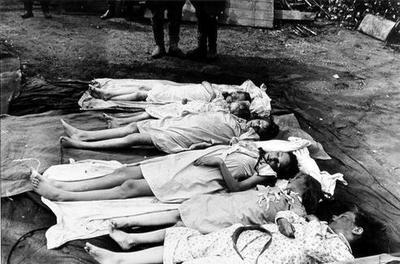
Other notable events depicted by Ryan include Patton's Third Army discovering the remains of uncountable corpses when they liberate a Nazi Concentration Camp. The famously stern Patton is, we are told, reduced to tears and the next day leads the local townspeople, who deny all knowledge of the nearby camp, by gunpoint through it so they can see firsthand the atrocities committed there.
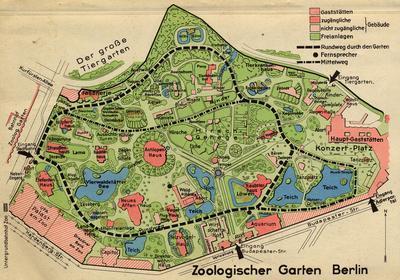
The Berlin Zoo is, as well, a sadly tragic tale. The "dangerous" animals had to be shot and other animals starve to death or are killed by the bombs or shelling. Sometimes one can't help but sympathize with the animals the most. For weren't they the only ones we can point to as having been truly innocent in the whole affair?
But in between moments of seeming unrelenting darkness in "The Last Battle", I found myself laughing. Once at the insight that while Berlin was being shelled and its occupants were busy fleeing for their lives, eleven of the city's seventeen breweries continued making beer because the government had deemed its production "essential". Or again at the darkly comic image of some of the Soviets who, having never seen a lightbulb before, stuffed their pockets full of the bulbs thinking that they contained light. Many Soviets, having a similar lack of knowledge of plumbing, pulled the water faucets from the wall thinking they would have instant access to water whenever they wished.
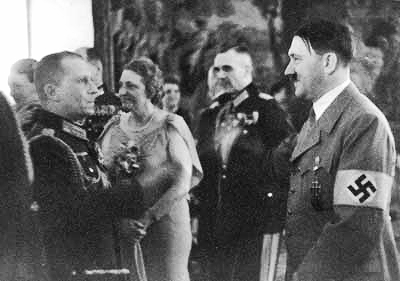
"The Last Battle" reiterates the madness that gripped Hitler, especially in those final months, and left me asking once again - why the hell did not even his own top advisors try to stop a man who clearly had no grip on reality and fostered a growing hatred for his own people in those final mad months?
Ryan has given us essential insight into an event and a war that should never be forgotten. That it is also an essential insight into the nature of man and of the potential we all have for good and evil makes it all the more valuable.