A haunting and brilliantly researched history that interrogates the culture of shame in Ireland and tells the full story, for the first time, of the women confined within the walls of the Magdalene Laundries in the 20th century
Everyone familiar with Ireland’s history has heard of the Magdalene Laundries, places where “fallen” women were sent for reform, but few understand that the Laundries were part of a larger carceral system in Ireland. There were prisons and also asylums, industrial and reformatory schools, Mother and Baby Homes, and County Homes, each of which operated alongside the Magdalene Laundries. All together this system confined more than one percent of the Irish population, a staggering rate that outstrips the current rate of mass incarceration in the United States.
The Magdalene Laundries targeted women, and the actions that could necessitate a woman’s reform were vast: wearing a short skirt, smoking, defiance, or pregnancy out of wedlock. Women were taken off the street, admitted by their families, or sent by the state. Once a woman entered the system it was almost impossible to leave.
Louise Brangan pulls back the curtain on the insecurities of a young nation, showing that Ireland believed that if women could be controlled so could an entire populace. She shares the stories of the girls who were kept there: Eileen, born into a Mother and Baby Home; Carmel, forced to take a new name when she entered the Laundries; and Brigid, so broken by twenty-seven years of confinement that she discovered she was unsuited to life in everyday society after her release. These stories taken directly from the historical record restore the dignity of the women who were sent away and re-contextualize the decades that the Laundries acted as a de facto jail for Irish women.
This has remained one of the darkest and most misunderstood periods of recent history. The Fallen compels readers to not only confront this shameful past but to ask a deeper question: What do we choose to remember?
Shortly after the 2024 screen adaptation of Claire Keegan’s Small Things Like These, actor Cillian Murphy was quoted as saying that Ireland had been in the “Dark Ages” until fairly recently. In The Fallen, author Louise Brangan says Murphy’s strong words got a mixed response but that they weren’t wrong. Readers will heartily agree after reading her book. These “Dark Ages” of Ireland are its many years as a theocratic police state, a frightening set-up that didn’t just suck joy out of citizens’ lives but that held Ireland back from growing economically rich.
Brangan confronts a specific part of the theocratic police state: the Magdalene Laundries, which operated until 1996 (although by then far less robustly than in earlier decades) and were overseen by nuns. Calling the Laundries “residences” is euphemistic. They were prisons in essence, containing girls and women engaged in true slave labor. In their prime, many were scattered throughout Ireland, and they, along with other oppressive facilities, institutionalized a jaw-droppingly high percentage of the population. The Irish government spun the truth of these places positively so that the public didn’t only support them, often monetarily, but also scorned the “fallen” women inside.
Readers learn specifics via the profiles of six women who’d been imprisoned in various Laundries, with some entering as young children and others as adults (ages of those inside ranged from nine to eighty-nine). Contrary to widespread belief (and something Keegan gets wrong in Small Things Like These), the Laundries were not the same as Ireland’s Mother-and-Baby homes. Girls and women did not arrive pregnant. No babies lived there. Instead, these abysmal places were for “the fallen” of the title. So readers can fully appreciate the threat, Brangan describes what “the fallen” label encompasses. She highlights how it was generous to a ludicrous degree: Those who’d borne “illegitimate” children were sent there, but also trapped inside were girls who’d been sexually abused by a family member; or girls and women who’d caused some offense, even as minor as truancy; or, ridiculously, girls and women who merely had the potential to cause offense, based on some observation from somebody somewhere. In short, they were places to dump girls and women, usually for bringing shame upon a family by disrupting either the sexist status quo or the Catholic one.
The women have in common years of exhaustion washing and ironing the public’s textiles all day, every day. The nuns in this book have stone hearts and stunted consciences, at best. The six women, and others who’ve gone on record in other publications, tell of abject living conditions, restricted food, stunningly dehumanizing punishment, horrendous injuries, labor performed in silence, and no friendship or empathy from anyone inside the Laundry’s walls. Some survivors refer to the Laundries as “Ireland’s Auschwitz.” Many who successfully escaped found themselves homeless and poor, especially if they were admitted to a Laundry as a young child and were therefore under-educated.
Laundries, along with Mother-and-Baby homes, asylums, and industrial schools, were part of an institutional oppressive network founded and run by the Catholic church. (A noteworthy curiosity: The network was devoutly religious, but sexism influenced enforcement more than religious edicts did. Only girls and women were censured. Not counting major crimes like murder and theft, boys and men got a slap on the wrist, if that.) A parallel for what happened in Ireland is the phenomenon, in the U.S. and elsewhere, of admitting girls and women to asylums for weak or false reasons. The stories of the six women in The Fallen helpfully open the door to more, though—because understanding how the mass injustice could happen begins with understanding the Irish-Catholic social values of that time.
One of The Fallen’s crucial points is that, unlike how the asylum system worked in the U.S., Ireland’s network thrived for two peculiar reasons. The first was because church and state were united. The Irish were the “best Catholics in the world,” and that was precisely the problem. Priests and nuns were glorified, and although a not-insignificant percentage of the population emigrated, the millions of Irish who didn’t were oddly accepting of church-and-state enmeshment. It wasn’t until the two separated that Ireland transformed—impressively fast—from a poor country to a rich one. The country exists now as a brazen statement that strictly adhering to religiously tinged ideas of right and wrong hinders growth and realization of full potential.
The second reason the oppressive network thrived was because Ireland's culture of secrecy and silence was a powerful gatekeeper. Brangan calls readers’ attention to the poem “Whatever You Say, Say Nothing” by Irishman Seamus Heaney. Silence was crucial to helping maintain a family’s respectability, and it was understood that if a girl or woman vanished, something shameful had happened and that asking about or commenting upon it was taboo. Given this, after the Laundries closed and the profiled women could reenter society, they were diminished people who fastidiously hid the fact that they’d slaved in one.
The Fallen is about the Laundries, but in teaching about these, Brangan is almost blasphemous: She denounces, as she puts it, the “fabulist ideal of Ireland.” An acknowledgement of how excessively Ireland (and Irishness) is romanticized is eons overdue. A fabulist ideal isn’t only strange but it can also feed a problem. It’s healthy, then, that Ireland’s reckoning with its horrors reminds the world that the country is a country like any other, not the “Emerald Isle,” magical land.
The book’s lesson is obvious but something that can’t be over-emphasized: Exaltation of any one person or group bars the checks and balances that help sustain a nation’s full, good health. Church and state should never become one. Many people, especially the Irish diaspora, are caught up in the romance and are blissfully ignorant of the ugliness in this part of Ireland’s history. They need to know it, at least out of respect to victims. Readers should pair The Fallen with Say Nothing: A True Story of Murder and Memory in Northern Ireland for a dimensional understanding of the country that’s grounded in reality.
NOTE: I received this as an Advance Reader Copy from LibraryThing in March 2026.
The Fallen by Louise Brangan offers a fascinating look at an important period in history, and I really appreciated the depth of research and time that went into a book like this.
The historical context was educational and gave me a much better understanding of the events and their significance. However, I found myself wishing there had been more focus on the personal stories of the women involved. While the historical detail was interesting, it became a little flat and I found myself skipping paragraphs. I would have liked a stronger emotional connection to the women at the heart of the story and I didn't get that emotional tug from this book that I was expecting. Having said that it’s an informative and worthwhile read, but I felt it could have been even more impactful with a more personal perspective.
In 1951, when the Laundries were at their height, for every one hundred thousand males, twenty-seven were in prison[...] While for every one hundred thousand females, seventy were in a Laundry. These were not peripheral: They were Ireland's main carceral institution. (loc. 179*)
The Fallen traces the history of Ireland's Magdalene Laundries, the last of which did not close until the mid-1990s. If you haven't heard of the Laundries, the short version is that they were just that—laundries—except run by nuns and staffed by women who had been consigned to the Laundries for infractions real and imagined.
Pregnancy outside marriage, yes, but mostly for being lively girls, abused and abandoned daughters, or because their families were pulled apart for not fitting the mold of what a family should be. (loc. 3247)
Brangan is careful to draw a distinction between the Laundries and the Mother and Baby Homes that also operated; there was certainly overlap between the women and girls who spent time in them and in the Laundries, but fundamentally the Mother and Baby Homes were there to hide women's pregnancies, and the Laundries were there to punish women and girls who had transgressed.
For Brigid, having played fast and loose with school rules, it was a life sentence. Adult men sentenced [for] murder in the twentieth century were rarely expected to serve more than seven years. Somehow, by the 1940s, the mildest transgression of girls and young women caused more outrage than the taking of a life. It was Brigid's mother who finally came to liberate her daughter. By that point, she was thirty-nine years old. (loc. 523)
I've read about the Laundries before, but everything I read adds something new. Brangan is determined to hold the nuns who ran the Laundries accountable in her words, but she's also clear that it's not just the nuns, or the church, who hold responsibility. The Laundries always reflected the mores of the society around them (loc. 2131). Take that and extend it a bit more broadly: the residential schools in Canada (and elsewhere); the troubled teen industry in the US; the way women have always been punished for stepping outside the lines.
I highlighted so many things in The Fallen—there's so much history wrapped up in how the Laundries came to be and how they evolved over time. At first I found the history a little dry, but then it became clear just how important it was to the overall picture. And then of course there are the personal stories, which Brangan pulls largely from existing testimonies, and the broader cultural context, and it's just...a lot of food for thought.
No one explained to Carmel what was happening. Nor did she ask. There were no rewards for curiosity in Catholic Ireland. (loc. 432)
Would recommend to anyone who has heard of the Magdalene Laundries and wants to know more, and also to people generally interested in the odder intersections of religion and women's history. And I'll leave you with this:
Some women at Sunday's Well were made to line up and repeat this after the nuns: "I am nobody, I am nobody, I am nobody." (loc. 1552)
*Quotes are from an ARC and may not be final.
Thanks to the author and publisher for providing a review copy through NetGalley.
Difficult to read in places, this account of the infamous Magdalene Laundries is complete as well as harrowing. Louise Brangan has carefully researched not only the history of these establishments, but also that of Ireland, its genesis and the forces that made such a cerceneal system possible. Beautifully written, she also includes personal histories from some of the women who found themselves, often without having committed any crime or misdemeanor, locked up and made to perform what is essentially slave labor. Should they gain access to the outside world, many are ill equipped to do so since they've had no guidance early in life. This would be classed as fictional if it weren't horribly true.
Dr. Louise Brangan is an Irish academic with the focus of her research being punishment, injustice, culture, and collective memory. This book brings to the forefront the Magdalen(e) Laundries, a shameful collusion between Church and State to control and confine Irish women and girls. From Irish Independence, to the closing of the last Laundry in 1996, to recent popular media (e.g., Small Things Like These by Claire Keegan), a history of the Laundries is expertly provided while highlighting the stories of a selection of survivors. It is not an easy read, but it is an important one. It’s time to break the silence and refuse the proverb to “Say Nothing”.
May we continue to remember Eileen, Carmel, Nora, Catherine, Brigid, Katie, and all survivors of the Magdalen Laundries.
As someone who’s spent quite a lot of time in Ireland, I’ve always been mystified by its glowing reputation abroad and equally baffled at certain quite unpleasant aspects of Irish culture and society. In this book, Brangan commits the cardinal Irish sin and says it out loud: things are in fact not “grand”, Ireland isn’t a magical land untouched by the evils other countries have to contend with, and there used to be a very, very dark side to the Irish national character that lead to 1% of their fellow citizens being institutionalised and effectively incarcerated without ever having committed any crime (to compare it to US mass incarceration today - their rate is 0.5% and at least most of these people will be actual criminals).
Unless you’re interested in Ireland and the topic of the Magdalene laundries, it might be a bit too academic, but I didn’t find it dry at all. She balances anecdotes from survivors with laying out the political and societal foundation that led to thousands of women being forced into what was effectively unlimited detention for the simple crime of somehow having offended society’s notions of good Catholic womanhood. One woman had had children out of wedlock, another girl skipped school sometimes (scandalous!), another girl was shunted off to the laundry because her father was sick of caring for his children. Insert the Parks & Rec ‘Straight to Jail’ meme here. Except it was much worse than jail. At least in jail you can talk to your fellow inmates. At least in jail you don’t have to recite prayers every waking moment, even when you’re being forced to do slave labour in industrial laundries. I won’t lie, this section of the book, where Brangan details the “prisoners’” daily life, was almost too much for me, I can’t imagine the hopelessness these women must’ve felt. She also makes very clear that this system wasn’t hidden at all. People dropped off their laundry there. They were told to shun these girls in the street. They personally sent in their family members when they stepped out of line. So while it’s easy to blame the Catholic Church (can never go wrong on that one tbf), it was actually society as a whole who was at fault and the people alive back then shouldn’t get to pretend otherwise.
I’ll admit that I also wasn’t aware of how much of a theocracy Ireland really was until the 80s. Cillian Murphy called it the Dark Ages and I don’t think he’s wrong. They effectively lived under a type of Sharia law and blamed every societal ill on women, illegitimate children, and anyone else who didn’t fit into their stifling mould. I actually found this part the most shocking in a way because again - not the image Ireland projects today is it. I’m really glad I read it and it’s answered a lot of lingering questions I had about Ireland. For the casual reader, it doesn’t fall under the category of breezy, “fiction-like” nonfiction you might read on holiday, but as someone who usually avoids nonfiction I can say that I found it readable and gripping in its own way (and very, very depressing).
The Fallen sets out to document the history of Ireland’s Magdalene laundries. Importantly, Brogan differentiates between the laundries and, perhaps the more well-known, mother-and-baby homes of the mid- to late-1900s. Like many others, I had thought them one and the same prior to reading The Fallen.
In this case, The Fallen refers to the women sent to the laundries because they’ve fallen from societal grace. However, unlike the mother-and-baby homes, most of them were not sent there pregnant or because they were birthing illegitimate children. Instead, they have bent the rules of society in some way, maybe for something as unavoidable as being birthed to poor parents.
The Fallen starts with a more comprehensive history of Ireland’s landscape and why the laundries came to exist. Frankly, I was bored by this and, while I’ll admit it is important context, Brogan lost me in the first three chapters. The points are valid, but I also think it could have been summarized in a shorter introduction chapter. I picked this book up because of my interest in the women and their stories, which don’t start in earnest until about 25% in.
Overall, this book is well-researched, informative, and a bit dry. If you’re interested in the topic, you’ll likely enjoy it, but if you’re someone looking for nonfiction that reads like a story, you probably won’t. 2.5 stars rounded up.
Thank you to the publisher and NetGalley for an ARC in exchange for an honest review.
I would give this six stars if I could--it's among the best nonfiction I've read this year, and it will go down as one of THE definitive accounts of the Magdalene Laundries. Dr. Louise Brangan is a serious academic, and compelling writer. She makes the case that in 20th Century Ireland--a conservative Catholic theocracy in the decades following the establishment of the Free State-- this was an intentional and systematic form of imprisonment, misogyny, and oppression.
In fact, I see that the Guardian reviewer and I copied down the exact same sentence: “In a regime distinguished by its excessive inhumanity, the Magdalene laundries were its deep end. In 1951, when the laundries were at their height, for every 100,000 males, 27 were in prison … [while] for every 100,000 females, 70 were in a laundry. These were not peripheral: they were Ireland’s main carceral institution.”
This is one of those books that leaves you angry long after you’ve turned the final page.
Recently I heard a young one refer to the Magdalene Laundries as being “from the olden days”. The last Laundry closed in 1996. I was a teenager. That’s how recent this history is.
In The Fallen, Louise Brangan examines the Magdalene Laundries through archival research, official records and, most importantly, the voices of the women who survived them. What emerges is a devastating account of a system built on shame, secrecy and control.
Many of the women sent to the Laundries had committed no crime. They were there because they were born outside marriage, because they became pregnant, because they were considered troublesome, because they had experienced abuse, or simply because somebody decided they had brought shame on a family.
One of the most striking points Brangan makes is that these institutions were officially described as “penitentiaries”. The women were expected to do penance for perceived sins rather than serve punishment for any offence. Yet the reality was incarceration, forced labour, loss of identity and, for many, lifelong trauma.
The heart of this book lies in the testimonies of six women who endured the Laundries. Their stories are extraordinarily powerful. Again and again we see young girls stripped of their names, their autonomy and their identities. Reading their accounts, what comes across most strongly is confusion. Many didn’t fully understand why they had been sent there. They simply found themselves abandoned, trapped and expected to accept it.
There were moments when I had to put the book down. Not because the writing is difficult, but because the cruelty is. Not dramatic cruelty. The everyday cruelty of people deciding that certain women deserved less freedom, less dignity and less compassion than everyone else.
What struck me most was how ordinary so many of these women were. The “fallen” of the title were often simply girls and women who failed to conform to impossible standards imposed by church and society.
Brangan writes with compassion, clarity and meticulous research. This never feels like a dry academic study. It feels human, urgent and necessary. More than anything, it restores voices that were ignored for far too long.
A difficult read at times, but an essential one. Because history doesn’t become less important simply because we’d rather look away from it.
It's crass to rate a book detailing such a history, I have done so based on the book not the subject matter.
A brilliant book. It covers the many faces of the Laundries in Ireland - why they existed, what the did, how they were run, how they were filled, the broader social impact and role in society, the role of the Catholic Church, the role of the state, etc.
Brangan maintains the human identities of all the women included. Each woman has her own story, each with a different course. Each life acknowledged as important and unique.
The book is easy to read. The chapters deal with individual issues. There are extensive footnotes.
An excellent read, doesn't hold back but is never gratuitous.
This is a historical volume by Louise Brangan. It's taken me 11 days to read a book this time. I'm not as speedy as I once was, but I'm picking up the pace. Brangan, the author of this study, is Irish. There is a tremendous emphasis on Irish events and associations.
As I read in this book about a commission in Ireland to investigate the industrial schools and how the government had to redress what happened to the women and girls who'd been sent to the Magdalene Laundries, I was continually shaking my head because it felt totally wrong headed that the Irish state was being held entirely responsible. Brangan did eventually bring this up and chalked it up to the separation of church and state.
So so important to learn about parts of history that were swept under the rug like this. I really commend Louise Brangan for her courage to dive deeply into this subject and clear up the misconceptions.
A remarkably compassionate piece of historical research and writing. A difficult read where the author situates the tragic stories of these women in its historical and cultural context. Well worth reading.
Horrifying and utterly infuriating. I felt so angry long after I finished reading this novel, these poor women have received no proper justice for the life-long abuse they suffered at the hands of the Catholic Church. The fact that Catholicism has never really had to answer for its systemic oppression is utterly mind blowing - centuries of abuse, torture and murder of innocent women and babies totally swept under the carpet. Where is the outrage? Let it be known that the last Magdalene Laundry closed in 1996. Essential reading.
This was such an effective and deeply affecting work of history.
The reader comes away with a thorough historical understanding of how and why the laundries operated, of how and why women were confined and entombed away in these places, but also the cultural dynamics that enforced a strict code of silence, and which meant these women had no one to turn to for help.
Brangan's thinking on the subject is wonderfully insightful, intelligent and empathetic. She keeps an unwavering eye on the emotional and psychological traumas of the laundries that the government reports failed to comprehend: the lifelong wounds of a system intended to reduce these women and girls down to nothing and nobody at all.
If remembrance can indeed be a form of reparation, than Brangan's book succeeds admirably. This is an important book which will stay with me for a long time.
I feel as though it would be wrong to call this a ‘review’. ‘𝐓𝐡𝐞 𝐅𝐚𝐥𝐥𝐞𝐧’ is a raw, hard hitting, eye opening truth about what happened to many woman and girls in 20th century Ireland in The Magdalene Laundries, into the years that followed there ‘closure’.
This book is a stark look at the dystopian views, politics and oppression of the time (and into present day). The unethical environment that these women and girls had to endure was monstrous; stripped of their names, rights and dignity, purely for existing in a place where censorship of the media and politics, by both church and state, meant their narrative was written for them.
𝐋𝐨𝐮𝐢𝐬𝐞 𝐁𝐫𝐚𝐧𝐠𝐚𝐧 has immaculately researched, curated and given voice to a topic that has been in dire need of having the record put straight about what these Laundries really meant for the women & girls that were sent to them. She has helped give them a voice, where even as late to the present day, there are those that choose to look away and deny.
It’s impossible to put into words what Louise has so eloquently published, so all I can do is implore you to pick up a copy of this book yourself.
This book was terrifying. But it was also so thoughtful and thought provoking and well written and left me asking so many questions of myself.
I was familiar with the Magdalene laundries because I read the Magdalene Girls several years ago and then watched Sex in a Cold Climate (it’s on YouTube, highly recommend), but this work is exceptional.
Utterly brilliant - easily one of the best history books I’ve ever read, that I will be looking to buy in print too! Such a powerful story of what the Laundries actually were, the impact on women’s lives and the silence and redress that’s happening. Also a great critique of how archives can hinder humanity by forgetting to centre the people at the heart of records.
Devastating story of a shameful chapter in Irish history. Corrects many misconceptions and frames the problem as impossible to resolve in the end. Cruelty, misogyny, injustice.
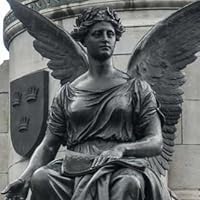
I have long known about the Magdalen[e] Laundries, but recently visiting Ireland they were brought back to mind once again. While there, this book was recommended to me in a local bookstore, after visiting one of the memorial statues. This book, moreover this story, will break your heart. What surprised me most was how the descriptions of the politics of Ireland in the early 1900s echoed more recent moral politics of the US - very disturbing. Another example of listening to history instead of ignoring it, and like the book warns against, remaining silent.
Louise Brangan’s The Fallen is a searing, lucid history that dismantles the myths surrounding Ireland’s Magdalene Laundries and situates them within a broader carceral web—prisons, asylums, industrial and reformatory schools, Mother and Baby Homes. Brangan blends rigorous research with intimate, case-driven storytelling, giving names and textures to lives too often reduced to statistics. The book’s central argument—that control of women underwrote a fragile national project—lands with devastating clarity, as do the stark numbers and the reminders of how recently the last laundry closed.
What distinguishes this account is its moral precision. Brangan resists melodrama and easy absolution, tracing how church, state, and family colluded in everyday ways to make exit nearly impossible. The prose is measured yet thrumming with quiet anger; the testimonies restore dignity without smoothing over trauma. It’s both history and reckoning: a corrective to public memory and a mirror held up to institutional power.
Concise, compassionate, and unsparing, The Fallen is indispensable—an enraging, essential monument to the women Ireland tried to forget, and a warning about what silence permits.
"There were no rewards for curiosity in Catholic Ireland."
This book historically and qualitatively details the theocratic, extra legal mass detention network that were Magdalen(e) laundries. It was deeply disturbing, detailing the context that led to their exception, the extent to which 1950s - 80s+? Irish society hated women, through their eventual dismantling, investigation, and social/political/religious response. It was thoroughly reported and empathetic throughout, a brutal portrait of a deeply controlling, misogynistic, exploitative history imposed upon women whose only crimes were being poor and fitting neatly into false stereotypes around obedience, sex, and the audacity of speaking one's mind.