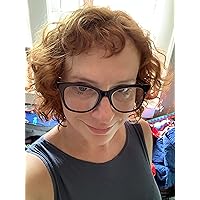
From the journalist and author of Want Me (an NPR Best Book of the Year) comes a "tender, revelatory, and deeply moving" (Amanda Montei, Touched Out) story of family secrets, sisterhood, and the importance of untangling all that we inherit from our mothers.
Tracy Clark-Flory had a sister out there, somewhere. She knew that her mom, Deb, was sent to a home for unwed mothers as a pregnant teenager in the Sixties. After placing her baby for adoption, Deb was committed to a mental institution in her grief. Decades later, she had Tracy, who grew up as an only child longing for her sister. Now, in her thirties and a mother herself, Tracy takes a DNA test in hopes of finding her sister--and she does.
Newly connected with her half-sister Kathy, both daughters start asking questions about the past that their mom, who had died years earlier, could no longer answer. Tracy sets out to make sense of what happened back in 1965. She learns that their mom was pulled into a racist and sexist system designed to turn "bad girls" into proper women and wives. Tracy realizes that her own life has been profoundly shaped by her mom's past, but she also uncovers a bigger story about patriarchal control, mother-daughter dynamics, and the way that shame keeps us divided--both within ourselves and from each other.
Blending powerful memoir with cultural criticism, My Mother's Daughter is a moving, intimate tale of traumatic inheritance and intergenerational healing.
My aunt was sent to one of these homes in 1968 to give birth and then give up her son. This book owned my eyes to what these homes represented. F the patriarchy!
I heard the author interviewed on the Culture Study podcast and was intrigued. Unfortunately, I think just about everything I found interesting was covered in the podcast. I still found the story compelling and the overall racialized history of women being forced to give up their children for adoption both interesting and heart wrenching. The book had the feeling of being padded, like it should have been a long form article instead. I found the tone to be annoyingly overwrought and breathlessly self-indulgent.
was expecting this to be a standard memoir but pleasantly surprised by clark-flory’s historical exploration of the systemic forces that uphold/maintain the white heteronormative nuclear family. at some points read a bit like a sociology textbook, but appreciate the nuanced critiques of sex, desirability, and motherhood.
“a mother is a woman whose sexual being must be invisible.”
I was interested in her story of her mother’s early pregnancy and giving child up for adoption and the author’s search for her sister. Way, way way too much opining about broad issues. I fast-forwarded—-a lot.
This is beautifully written. It’s full of compassion and really goes there with earnest examinations of the complex ways race and class roles are upheld. I’m left with so much hope for the ways we can connect when we come to each other with openness and love. And not in a pie in the sky way. More so what could be possible if we as white folks were truly willing to own our collective ish and stop upholding systems that enforce race and class roles.
At its core, we have a woman who, in the 1960s, was sent to a home for unwed mothers, where she was forced to give up her first daughter for adoption. Tracy Clark-Flory, the author and second daughter, takes us on a personal, emotional journey as she learns more about her mother while searching for, and finding, her older half-sister.
The author explores the issues surrounding sexuality at that time. We look at the differences between the way men and women were perceived by society, as well as the differences between the way white and Black women were treated.
We’re brought into this world with writing that is unflinchingly honest, vulnerable, and unapologetic. Clark-Flory shows us the results of both generational trauma and the trauma society inflicts, but she takes us through to the other side with hope and love.
The author narrated the audiobook, which was like listening to a friend.
*Thanks to Gallery Books for the free hardcover, and to Simon Audio for the free audiobook download!*
I want to explain why I rated this book a 2.75 star read. This was really two different books woven into one. On one hand it was a very engaging story. The author was raised as an only child by her mother and father. But her mother had given birth to two daughters 18 (?) years apart. One she was pressured to place for adoption after spending her pregnancy in a home for unwed mothers, the other (the author) she raised alongside her husband. After the woman’s passing the two daughters connected with each other and built a relationship despite their different life circumstances and experiences. In the course of telling the story we also learn historical facts about how women were treated in regards to unplanned pregnancies during that time, which was interesting, heartbreaking and infuriating all at once. I really enjoyed this personal story of family history, reconnection, and learning from mistakes society made in the past. I would have given this a 4 star. Alternating with the story described above were big chunks of the author’s personal views on women’s healthcare and how our society should view sexual choices that women make. It felt like I was switching back and forth between a story about relationships and connecting and a hard-hitting political opinion piece calling women to rise up and demand the rights they have been denied by society for so long. This aspect of the book really took away from the story for me. I’m not even saying I agree or don’t agree with it. The tirades against society and legislation just didn’t blend well when interwoven with the story being told. I would have given this part a 2 star review. Thus my 2.75 star review. A beautiful, heartbreaking and well written historical account of the repercussions felt for generations when an unmarried teenager was shamed into hiding her pregnancy and pressured to place her child for adoption. Also a political commentary piece by a well-respected author who has written many non-fiction books in the past about the sexual revolution in our society and women’s place in it through the years. Different books that would have been great on their own but did t work for me when combined into one book. I would have read the first one and skipped the second one.
I can't decide if I loved it or feel really uncomfortable with it.
Clark is an amazing writer. She has a great way of distilling emotions through the written word. Frequently I was touched by her vulnerablitity and bravery exposing deeply personal family dynamics.
This is a very feminist book and for that I loved it. I loved that she took no prisoners, was not going to apologize, and scrutinized every bit of her relationship with motherhood. There were bits of her sexual exploration that I did not agree with (Listen, porn is bad for everyone. Bad for women, bad for men, bad for the people participating in its creation, there is no redemption line here. You cannot move me on this.), but it was fascinating to read her perspective on it especially in reference to her motherhood.
I loved her critique of purity culture, something I could read about all day. She had a fascinating analysis on this which breifly touched on race.
She had a powerful ending discussing how racism affects family dynamics and pulls families apart in a way that I was not really even aware of. It was very raw.
The thing that knocked this down was she fequently quoted pop feminist books (the one that comes to mind is The Madwoman in the Attic) that felt out of step with the larger narrative. I can't put my finger on it, but for some reason it bothered me that she was quoting something while relating an internal struggle or emotion. It felt very researched based. Almost cerebral? Maybe it was just the style that I didn't care for.
Just like the cover blurb promised, I cried! In a good way!
What a joyous, layered, glorious account of love and family, connection and forgiveness, and the threads of history and trauma passed on from our parents. Although my own family history is very different from the author's, I somehow related to almost every turn. What sorcery is that!?
Every page made me more and more invested in Tracy's discovery and I felt well so well-taken care of as a reader. Like, she wanted me there, every step, along with her. She never held back in sharing her vulnerability, fear, and hope. I was all-in from the first page and I rooted for her from start to finish. I felt like I was sitting in the room with every single character she wrote about. They were all vibrating off the page! The living and no-longer living!
I was blown away by the depth of this story, which its masterfully layered with relevant historical details, societal context, and the propulsive momentum of the mystery. I'm in awe of how beautifully the book honored both her mother -- and herself. This book is a masterclass in honoring our impulses to make sense of the world, even when everything tells us to stand down and simply accept what we've been told about how it works, and to trust the way "things have always been." The Truth is vital and healing and this makes the case for that in such a profoundly meaningful way. An incredible book!
This is a wallop for my fellow motherless daughters to read, but I seem to always gravitate to this particular type of story. A daughter in search of her mother’s past, how all of her mother’s experiences have influenced her own, and the ability to find a deeper understanding of herself in this exploration.
I appreciated the historical context given to unwed mother homes and the foundational underpinnings of racism.
“ I was a product of the political and cultural realities of my time, as well as the pain of my mother‘s life that I had so desperately wanted to escape. The same was true of my mom and, almost certainly, the mothers who came before her. The belief that I could dodge my mom‘s fate had helped to obscure the ways I was admired in the same essential muck. I had “forgotten“ details about my mom‘s past only for them to resurface all these years later. I wondered if I had blocked out parts of my mom’s story simply because it was too painful and too relatable, too revealing of the constraints I faced in my own life.” Pg 84
This is a story of how a young woman transferred her mother's shame, guilt and sorrow onto herself. It has difficult themes of generational trauma, racism, privilege and patriarchy. It showcases the horrible way unwed women were treated in the 1960s, sent away, forced to give away their babies and then labeled crazy when they couldn't just resume their lives. It ultimately has a beautiful resolution. I did not love the author's writing style and I felt the story was disjointed at times, but I am very glad I read it. I also just read 2 novels by Meagan Church, The Mad Wife, and The Girls We Sent Away, that could be sister books to this memoir. It was enlightening to read fiction and memoir genres about the same subject at the same time. Perhaps this is why the flow of the memoir didn't appeal to me because I was also reading fiction about the same subject and obviously fiction is can be tidied up in a way memoir can not.
A Slow Start: The beginning of the book drags quite a bit. The narrative takes some time to find its footing, occasionally getting bogged down in overly dense setup and repetitive early recollections. Readers looking for an immediate hook might find themselves tempted to put it down in the opening chapters.
Finding Depth in the Middle: Fortunately, persevering past the slow start is well worth it. As the author moves into the middle and final sections of the book, the writing gains incredible momentum and emotional weight.
Powerful Themes: The memoir truly shines when it tackles complex, generational family dynamics. The exploration of how ancestral trauma, women's roles, and sexuality are passed down—and often fractured—across generations is written with striking honesty and insight. It transitions from a simple personal history into a profound, universal look at what it means to heal from a complicated family legacy.
It’s hard to feel oppressed when one is comfortable and privileged. Is it even possible to be all three at the same time? Training starts young for little girls, and little boys, in what to expect of themselves and the world as they grow up, as well as how to treat one another.
“In the late 19th century, women were pushed out of paid factory work, the “family wage“ was introduced, and the ideal of the breadwinning husband took off, as Sylvia Federici explains. The housewife was an invention of capitalism designed to service “the male worker, physically, emotionally and sexually,“ and without being paid a wage.” Pg 114
“These women were seen as damaged, a problem to fix, but the purported solution was so often what made them fall to pieces. My mom wasn’t broken by sex or pregnancy. She was shattered by a shaming institutional response that required her to abandon essential parts of herself, including her baby.“ Pg 117
A journey through generations, genes, traumas and reconciliations—not what I was expecting but I’m so glad I picked this up. The author does a wonderful job of weaving through personal stories and experiences, while gifting the reader with statistical and historical significance for the traumas women have faced over decades of forced adoptions, shame, and patriarchal oppression. The authors way of showing the emotional journey was impactful and I feel grateful for her ability to be so vulnerable and unhesitating in her narrative. It was, at times, a bit stodgy to get through, and then at other times so moving and proactive. While I went in expecting more discourse on mother-daughter dynamics and intergenerational struggles, I wasn’t disappointed, just surprised that the book opened my own interpretations of “mother-daughter dynamics” in a posthumous and spiritually connecting way.
I left feeling wonder and a new opened perspective on “family”, and connection.
Thank you, NetGalley and Gallery Books for allowing me to read the book early. The opinion in this review is my own.
This was a beautiful and thought provoking memoir. It seems poignant even now with the changes in reproductive rights women are currently dealing with. Even though what happened in the 60s is in the past, in some ways it feels like it could be our future.
Two half sisters reunite after the passing of their mother. They’re trying to make a timeline to how things ended up the way they did without their mother being there to answer questions. They find so many things that should never have happened, but with the way the world was at that time, these kinds of events were somewhat commonplace. This book is eye opening and I recommend it to anyone interested in reproductive rights and racial issues that shaped the world we live in today.
One of those rare memoirs that meets pain with extraordinary generosity rather than judgment. Tracy Clark-Flory writes with such honesty, compassion, and emotional precision that even the most difficult moments feel illuminated by a profound belief in the possibility of healing. What stayed with me most was its enormous heart—the way it refuses easy answers to entrenched problems (such as racism, sexism, gender norms) in favor of a deeply human exploration of inheritance, motherhood, trauma, and forgiveness. As someone with mixed-race adoption in my own family, I deeply appreciated the nuance. This is a book about breaking cycles without denying the complexity of the people caught inside them. It’s tender, incisive, and ultimately hopeful, reminding us that healing isn’t about erasing the past but learning to carry it with grace. A beautiful, deeply affecting read.
“My grandmother played by the rules and was punished for it. My mom broke the rules and was punished for it. The real lesson in these maternal parables: there is no way to win in a system rigged for oppression only different ways to lose.”
After reading Want Me 4 years ago this was exactly the follow up I hoped to see. To understand the institution and dynamics of what “Homes For Unwed Mothers” were/are is to understand the final and most sinister puzzle piece of what the so-called Pro Life Movement wants the world to become.
Clark-Flory shares this information in her signature combination of data points and deeply personal accounts that do not shy away from her own vulnerability. My Mother’s Daughter left me feeling sad but hopeful, furious but uplifted, cynical but called in towards a better future.
This book is an absolute, no-question must read, especially for moms, daughters and sisters. The writing is vivid, and the storytelling is brave and full of grace. The author gives us an extremely deft and inspired examination of the love and mysteries between moms and their children. She's very self-aware and has a steady hand as a storyteller, which is essential in a story with this much mystery, grief, joy, and other big emotions. What came to mind after reading this was the phrase "delicate and sacred—and as solid as a rock." The story itself is so, so delicate, almost like lace--but she tells it with so much sureness and not a drop of sentimentality that the end result is as strong as iron. Really, really wonderful. Can't wait to share with other women!
This was a beautiful, intimate, and moving memoir of the journey the author took as she uncovered a mystery in her family history that needed to be revealed. Reading this was transformative. It offers a deep, emotional look at the bonds between mothers and daughters, and between sisters. Years after her mother died, the author, Tracy, takes a DNA test and finds her sister. But it’s so much more than just discovering a long-lost sister. Tracy’s journey to discover what her mother went through as an unwed mother in Chicago is one of emotion and deep complexity. This is a memoir well worth reading. Tracy’s story will stay with you long after the last page. Thanks to NetGalley and the publisher for providing an advance copy. All opinions are my own.
I loved many things about this book - it is a beautiful proof of the lasting impact of sexism and misguided policies and biases around adoption, sex outside of marriage and single motherhood; which certainly gives one pause at the moment, given what is happening to abortion rights in this country. At the time it reads like a memoir, and at times like a political diatribe. I guess that’s why I’m giving it 4 stars rather than 5, as I enjoyed the former way more than the latter; not because I disagree with any of the arguments, but in part because the book’s title does not indicate that the latter is what you’re getting. And if you’re in the mood for a memoir and touching story, there are swaths during the book that don’t really hit that spot.
A storyline about the author finding her half sister who was adopted at birth. The mother, who had passed at the time of the novel, was sent to a home for unwed mothers in the 60s and had a forced adoption. The storyline of finding the sister and the connection is good, however, half of the book is about research based on the history of women's rights and quotes from other research based books. This is fine, but not what I was expecting from the book based on the description and not what I was looking for in a summer read. I ended up flipping through many of those section as they got long in order to get back to the storyline. Some of the historical information was great but the majority of the research base was hard to get through
My Mother's Daughter is a tender, revelatory, and deeply moving look at how family is shaped in the shadows of patriarchal power. Tracy probes her own history with curiosity and openness, expanding the possibilities of both grief and inheritance, even when they are touched by reproductive control. By unearthing her mother's story, Tracy steps into the light and creates something altogether new. Defiant, transformative, and incredibly timely, this book will forever change how you understand motherhood, love, and the power of sisterhood.
This was so, so good. What effects did the practice of sending young, pregnant, unmarried women to homes to birth and give up their babies? Tracy Clark-Flory traces her mom’s experience, and meets her half-sister. I loved how her mother’s story shines a spotlight on the result of these cultural and policy decisions. It’s infuriating and heartbreaking and quite possibly coming soon with the current rollback of women’s rights in the US. But also, it was delightful to read of these two long-lost sisters connecting and suddenly having a huge expansion of their known family. I loved this.
The author writes of her experience seeking to track down and forge a relationship with her older sister, whom her mother was forced to give up as a teenager. I found this a little boring at first, but it definitely picked up once the writing focused on the sisters' relationship, rather than just on the author's life. Closer to three and a half stars. Thanks to #netgalley and #gallerybooks for this arc of #mymothersdaughter in exchange for an honest review. • • #goodreadschallenge2026 #bookreview
What an incredible exploration of the personal and the political through the lens of adoption. This is a triumph of weaving Tracy's mother's history, that becomes her own, into racial, gendered, and class dynamics of the 60s and 70s that led to so many women going to Homes for Unwed Mothers and being disciplined back into "good womanhood." So many women were traumatized. So many daughters have been living with the shadows of it all. This book pulls back the curtain.
A story about loss and finding lost family. It’s difficult to read about the cruelty of forced adoption services in the 1960s. Not all mysteries are solved and Clark really makes her mother carry most of the burden of the story. Her bonding process is described in many details. It’s over the top with her finding and bonding with so many people. It feels slightly unbelievable. Like everyone is a good guy who overcomes the patriarchy in one way or another.
This book is a fascinating look at two families and the institutions that enabled white women to attempt to preserve the purity the patriarchy demanded (the author makes an impactful point that these didn't exist for Black women because they were never seen as pure to begin with). In a world that seems so divided, it was so reassuring to read about good people coming together with such openness and trust.
This book was exquisite written and it’s not an exaggeration to say that I cried throughout reading it almost the entire time. For anyone who has ever found a family secret, been impacted by all of the isms in our culture, or who has a human heart. (Ok - so for like anyone). I’m so grateful that I heard the author interviewed on Savage Love podcast and promptly bought the book. I’m now going to send it to my mother and tell all of my friends that they need to read it, too.