Tenebrae is the ancient Latin word for darkness—the gradual extinguishment of light, one candle flame at a time.
In this memoir told in poems, Dan Flanigan follows that gradual dimming through the last illness and death of his wife. Written in free verse and prose poems, Tenebrae moves across the full arc of a long marriage. These poems refuse the familiar consolations. There is no posturing, no preciousness, no self-pity. A dying woman is rendered as fully human—strong, flawed, dignified, unmistakably herself—and the speaker does not cast himself as hero.
Other poems in the book reflect this same grappling with the fundamental issues of our lives—loss, hope, despair and acceptance, reflecting a compassionate embrace of the human condition.
If you think you don’t like poetry, Tenebrae may change your mind.
These are truly poems for the people—plain but exquisitely crafted and expressed in a language that is both elegant and easy to understand… They reach from the heart to the heart.
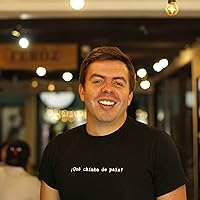
Dan Flanigan is a novelist, playwright, poet, and practicing lawyer. He holds a Ph.D. in History from Rice University and J.D. from the University of Houston. He taught Jurisprudence at the University of Houston and American Legal History at the University of Virginia. His first published book was his Ph.D. dissertation, The Criminal Law of Slavery and Freedom, 1800-1868.
He moved on from academia to serve the civil rights cause as a school desegregation lawyer, followed by a long career as a finance attorney in private law practice. He became a name partner in the Polsinelli law firm in Kansas City, created its Financial Services practice, chaired its Real Estate & Financial Services Department for two decades, and established the firm’s New York City office and served as its managing partner until October 2022. View his legal bio at https://www.polsinelli.com/profession....
Taking a break from the law practice for two years in 1983-1985, he and his wife, Candy, founded Sierra Tucson, a prominent alcohol and drug treatment center located in Tucson, Arizona.
Recently, he has been able to turn his attention to his lifelong ambition—creative writing. In 2019 he released a literary trifecta including "Mink Eyes," the first in the Peter O’Keefe series, "Dewdrops," a collection of shorter fiction, and "Tenebrae: A Memoir of Love and Death."
"Tenebrae" is a bracelet of verse and prose poems dedicated to his wife, Candy, to honor her last illness and death and their 40-plus years together, a work that has been described as “celebratory” and “heartbreaking and exquisite.” It was a Finalist for both the 2022 IAN Book of the Year in Poetry and in the 2022 American Book Fest “Best Book” Award in the Legacy: Autobiography/Memoir category. The audiobook version will be released in 2026.
Dan’s novella, "Dewdrops," was originally written for the stage and enjoyed a successful full-cast staged reading at the Theatre of the Open Eye in New York. Its then well-known and regarded director John Cappellatti described the play as a “powerful” work about “addiction in America—addiction to drugs, alcohol, sex, danger, power, and to finding the Answer,” with characters that are “well drawn, real, and actors love to portray them.” The short story collection comprised of "Dewdrops," "On the Last Frontier" and "Some Cold War Blues" was a Finalist in the 2022 Independent Author Network Book of the Year for Short Story Collection and a 2022 American Book Fest “Best Book” Award Finalist in Fiction-Short Story.
In 2025, Dan published a second edition of "Dewdrops" to include a new story, "Dude." As an Editor’s Pick, Book Life called it “a short story collection that’s as heartbreaking, raw, and real as it is beautiful and tender” and said “Flanigan’s prose is melodic and hypnotizing, jarring and chaotic, exploring the human condition through a series of tense, often melancholic tales that still capture the imagination with their reality, sweetness, and sadness.” Writer's Digest said it more simply, "The writing is truly flawless." "Dewdrops" was a 2025 Global Book Awards Gold Medalist.
"The Big Tilt," the second book in the Peter O’Keefe series, was published in 2020 and has been described as “deft, hard-boiled, but literary prose that’s reminiscent of Raymond Chandler’s best work.” "The Big Tilt" won the 2022 National Indie Excellence Award for Crime Fiction and was a Finalist for the 2022 Independent Author Network’s Book of the Year in Thriller/Suspense. In 2023, "The Big Tilt" was a Legacy Fiction finalist for the prestigious Eric Hoffer Award as well as making the 2023 Eric Hoffer Book Award Grand Prize Short List.
"On Lonesome Roads," published in 2022, is the third book in the series and was a Notable 100 Book in the 2022 Shelf Unbound Best Indie Book Competition and 2023 IPPY Silver Medalist in the Best Mystery/Thriller eBook category. Most notably, "On Lonesome Roads" followed up "The Big Tilt’s" 2022 NIEA Cri
Fifteen candles get lit at the start of the Tenebrae service, and the whole point of it is watching them go out, one at a time, until the church holds nothing and the only thing left to do is walk out. Dan Flanigan built his book on that same countdown, and the real question worth asking about Tenebrae: A Memoir of Love and Death is not whether the individual poems are good, most of them clearly are, but whether the book keeps faith with its own countdown all the way through, or whether it starts adding candles the original service never asked for.
For the first fourteen poems, it keeps faith almost completely. "Sonora" lights the first candle with a hike through the desert that reads as ordinary nature writing until its final turn reveals every animal in it was already an omen. "Quills" lights the second with a single image, two porcupines mistaking their quills for feathers, and never once during the poem's long middle section, the disapproving parents, the birth control pills, the year he left when their daughter was two, does the poem forget which candle it's burning. It comes back to the porcupine at the very end with a fact instead of a flourish, twenty-five thousand quills to one animal, and the whole marriage fits inside that single burning thing because the poet kept returning to it instead of reaching for a second one.
Matthew Lippman's foreword calls this willingness to sit inside the hardest material the thing that let Flanigan find his voice, and one of the collected reader responses describes going in expecting something painful and finding it, in the reader's words, no less painful than expected but also a celebration of a life. Both readings are tracking the same discipline from the outside that the porcupine image is doing from the inside. The book does not soften what it is describing. It also does not let the description sprawl past what one clear image can hold.
Not every candle in this first stretch burns clean. "Certain Proceedings in the Tribunals of a Vanity Called Hope" tries to run two flames off one wick, a courtroom frame, sentence, appeal, writ of certiorari, and a wizard's den, Magi, dark arts, snake oil, for the poem's entire length, and never picks one as the poem's actual source of light. Both frames are strong individually. Run together they compete instead of combining, and the poem would be a cleaner burn with one of them cut.
The form itself keeps shifting too, verse to unbroken prose and back, without ever announcing the change, and this works exactly when the shift is doing the poem's real job. "A Trip to the Underworld" runs as one long argument, a man cross-examining his own unbelief while it is happening to him, and an argument needs the accumulating sentence to keep its own momentum. Break it into stanzas and the thinking stalls. One reader collected in the front matter calls this same poem sardonic in its use of a Greek myth to carry a painful ending, which is another way of saying the prose and the argument are doing the same job at once, which is exactly what good form is supposed to do.
"72nd & Amsterdam" drops into the same kind of prose, but here it's harder to tell if the wax melted on purpose. It might be that the collapse of the line is meant to mirror a man's composure collapsing as he remembers his wife waiting on a street corner, not yet knowing what's coming for her. That's a real idea, if the poem shows its hand. Right now it doesn't quite. One cracked, reassembling sentence early in the piece, something that starts to break the way a line breaks and then pulls itself back together, would tell a reader this was a choice and not an unfinished draft.
"Word and Flesh" is the poem that comes closest to the book's own candle going out. Four words carry what most writers need an entire book to say. Nothing. You were Nothing now. The capital letter earns itself because everything before it has been plain and physical, the bed, the lifting, the letting down, and the poem stops the moment it reaches the abstraction instead of explaining what the abstraction means. One of the collected readers says this book made poetry enjoyable to read aloud again, and it's this kind of restraint, trusting a reader with four words and nothing after them, that a poem has to earn before anyone reads it aloud twice.
After "Word and Flesh," the candles should be out. The book, on its own terms, has reached the dark. But the manuscript keeps going, through "Last Words," "Resurrection Day," "De Profundis," and a persona poem written in the wife's own voice, all of which are strong and none of which the countdown structure quite accounts for anymore. "Resurrection Day" ends on the smallest object in the whole collection, a pair of tennis shoes by the door, and inside them small socks trimmed with a row of pink and green flowers where her ankle used to be. That ending is better than almost anything else in the book, and it happens after the fifteenth candle was supposed to have already gone out.
Then the manuscript widens again, past even that. "Quanta" argues with quantum mechanics on behalf of a grandchild and ends on a single word, "Meow," that answers five stanzas of philosophy better than philosophy could. "Lincoln Blvd." has the sharpest eye for physical detail anywhere in the book, a backpack built from a milk carton, a woman burping a small dog like an infant on a bus bench. "Annie D" holds the single most devastating image in the entire manuscript, a boy told his uncle "vomited out his backbone through his mouth," and gives it about three lines before moving to the next family story. All three poems are as good as anything that came before them. None of them are candles from the original fifteen. They are a second service the book never quite announces it has started.
The widening keeps going past even that. "That Sunday Morning" reaches back to two girls leaving church when the speaker was sixteen, one of whom he later hears became addicted to heroin, and asks whether he could have saved her, or would have drowned instead. "Ecce Homo" watches an old man fail to climb a subway staircase and admits, flatly, to doing nothing about it. "Dido Revisited" imagines a different woman entirely, holding divorce papers in a bathtub, deciding against her own death because of her children. None of these people are the wife. None of this material was promised by a book whose title announces a service built around one specific death. And yet each of these poems is doing something the elegies for her cannot do on their own, insisting that her death was not a private catastrophe but one instance of a condition everyone in the book, the addict, the old man on the stairs, the woman in the bathtub, shares with her. The two "Prodigal" poems close the collection on the speaker's daughter, first as a small child running to greet him and later as an adult he cannot save from her own addiction, and then, in a final short poem, saved after all. That last turn toward good news, brief and almost embarrassed by its own hope, sits strangely against a book that spent its middle section insisting hope is crueler than despair. It may be the point. A book willing to admit its own argument does not hold in every case is more honest than one that doesn't. But the reader has to do that reconciling alone, because the manuscript never signals it's aware of the contradiction.
This is not a reason to cut them. Lippman's foreword makes clear the book is also about family, history, and inheritance, not only about the wife's death, and that wider material earns its place in the manuscript as a whole. But a countdown only works as a countdown if the reader can feel when it ends. Right now the book asks its reader to keep counting candles well past the point where the church should already be dark, and by the time "The Agnostic's Daughter" arrives, a father and a seven-year-old on a rainforest trail arguing gently about God, the reader has lost track of which service they're still inside.
That poem, not incidentally, is the best evidence in the whole manuscript for what this book can do once it stops explaining itself. It runs almost entirely in dialogue, a child asking where trees come from and a father failing, gently and honestly, to answer her, and it ends with nothing resolved, just a hand held the rest of the way back to the car. No candle metaphor, no closing abstraction, just two people walking. If the rest of the manuscript trusted its own material the way that poem does, it would not need fifteen candles to tell the reader when to stop counting. It would just stop, the way a hand, held long enough, eventually lets go on its own.
‘I see you both far from me and near’ – reflections on life and death - and resilience!
Author Dan Flanigan is a novelist, poet, and playwright, and screenwriter. While celebrated for this Peter O’Keefe thriller series of five novels, he has also embraced the art of short stories with DEWDROPS, and poetry with TENEBRAE. Dan practices law and divides his time among Los Angeles, Kansas City and New York City.
Based on the Holy Week Roman Catholic service Tenebrae in which fifteen candles are gradually extinguished, Dan sensitively shares both the life of his wife and the aching tragedy of her death while extending his poetic responses to other subjects such as family that further capture his sense of humanity – and shares his ability to help us all make sense of this life. Dan’s wife was diagnosed with Chronic Lymphocytic Leukemia – ‘In the courtroom of medicine the sentence was death’ – and that finality inspired this fine poet to revisit his celebration of life with his wife and her gradual exit. But electing to diminish the grim aspects of his feelings, he instead touches on many moments that encourage us all to honor life and its vagaries. Tender moments touch every poem of this collection: ‘I loved you and I love you now. At the end that’s all I know. And also this – We are, we become, we are no more.’ Food for the soul from an inspiring poet.
Long after I finished this book, I kept thinking about the silence in it, the emotional silence between people, the things left unsaid, the memories that slowly poison a person over time. What stayed with me most was the difference between redemption and absolution. Cillian wants relief from his past, but the novel suggests that healing is not the same as being forgiven. I connected to that emotionally because there are moments in life where apologizing or regretting something still doesn’t erase its impact. The damage exists whether or not we grow from it.
The imagery of candles being extinguished one by one was beautiful and depressing at the same time. It reminded me of how people slowly lose certainty as they grow older. When we are young, morality seems clear. Later, everything becomes complicated
Tenebrae: A Memoir of Love and Death is an intriguing book by author Flanigan in which he explores, through literature, specifically poetry, one of the most painful moments of his life: the death of his wife. Through literature, this author finds solace in recalling the moments they shared. As we all know, grief is never easy, and often the best way to cope is by remembering that special person.
In this book, I found companionship to help me through one of the hardest times of my life: the loss of a very important person. Every page is written with deep feeling, and it's easy for those of us going through grief to identify with the author. I wholeheartedly recommend it to anyone experiencing a difficult time.
I read this not long after losing a close family member, so a lot of it felt very personal to me. My experience is very different from Dan Flanigan’s, but the emotions behind it still felt familiar. Even when someone else’s story looks completely different from your own, grief still has a way of feeling recognizable.
What affected me most was the feeling of not being alone in certain thoughts and emotions I have been carrying since that loss happened. There were moments that reminded me of how strange grief can be, because life keeps moving while part of you is still trying to process what is missing. More than anything, this felt like reading someone trying to understand love and loss, and that connected with me very deeply.
"Tenebrae: A Memoir of Love and Death" is a quiet and deeply powerful collection that lingers long after you finish it. I think the structure inspired by the Tenebrae ritual gives the book a sense of progression, as if each poem gently moves you further into the emotional landscape of grief. I was surprised by the balance between sorrow and reflection. There’s pain, but also meaning, memory, and a subtle sense of connection that remains. I found the writing thoughtful and restrained, yet deeply affecting. It’s a moving, intimate work for readers who appreciate poetry that is personal and contemplative.
This is a poetry collection written by the author as he mourns the dearth of his wife. The poems are deeply personal and feel extremely raw and real. They are a form of grieving that allows the author to fully explore the depth of his pain following a loved one being ripped away from him.
Some are melancholy, but many are also quite beautiful. They showcase a wide range of feelings, some of them straightforward grief, but others a celebration of someone who brought so much light into the world. It’s touching to see these thoughts and feelings written down as profound mediations of good times spent. They serve as a reminder to cherish those how are closest to us for as long as we can.
I almost didn't pick this one up. Grief poetry feels like something you either need at a specific moment or it doesn't reach you at all. I'm glad I didn't wait for the right moment. The author wrote this collection to honor his wife Candy, her illness, her death, their forty years together. None of that is softened or performed. It's just held, carefully, in language that earns the weight it's asking you to carry. While reading, I kept thinking about how rarely we talk about grief as a kind of love that's still very much alive. This book is entirely about that. Quiet, devastating, and exquisite in the way only truly honest writing can be.
The work is not merely a lament, but a delicately structured act of reconstruction. Through verses that oscillate between faith, doubt, and mortality, the author manages to capture the persistence of love in the face of definitive absence. It is a read for those seeking a profound and human narrative, where intellect and emotion come together to give meaning to what seems to have none. A literary meditation that translates the weight of grief into a sensory and spiritual experience. Inspired by the ritual of darkness, where the lights go out one by one, Dan Flanigan uses poetry to traverse the void, exploring that uncertain space between memory and silence.
Tenebrae: A Memoir of Love and Death by Dan Flanigan is a moving and intimate exploration of loss. Dan writes about the experience of losing a beloved spouse in a touching and grounded manner, making this a healing experience. It’s not a quick read but a book you need to sit with and savour slowly. The poems explore the range of emotions that can be triggered by loss, but also contain a core of hope, gratitude and eternal love. This book is a great choice for anyone who appreciates poetry informed by real-life experience. It may also help others who have experienced losing a life partner. I am giving it five out of five stars.
I’m not normally one to read poetry, but this book has made me rethink that. The love and loss of his wife is written all over the pages. It’s a short read, but it’s impactful. You can tell this outlet for Dan is one of deep and powerful grief. It’s a powerful metaphor with slowly blowing out one candle at a time to truly express the loss of someone that you love so deeply. I can only hope to love as much as he loved his wife. The words on the page have so much more meaning than what you read, and it stays with you as you go through your everyday lives.
I think it's a moving book. It has a really nice mixture of poetry and personal reflexion. I found it to be slow but I believe it's intended to make us readers think. This slow pace is kept throughout the book, so maybe it's not for those who want something faster. It's reflective and made me think even after I finished it. I'd recommend it because of the exploration of feelings included. A very good read.