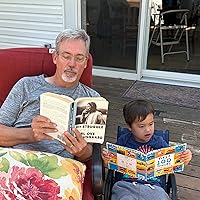
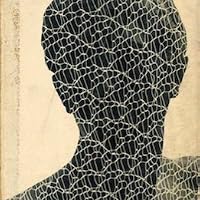
Once upon a time, when I went to a therapist for marital counseling, the doctor asked me, “Where have you visited that you might like to live? “ “Let’s say Las Cruces, or Santa Fe, or Boulder,” I said. “Fine, what would Santa Fe might be like for you? How might you be different there?” “Ah, right,” I said, “I see your point. I would still be the same person, regardless of wherever I live. I could start a new relationship, and would still have my ‘issues’ with whomever I was with.” But I also thought, why not try to reinvent yourself, from time to time?! (I didn’t move to any of those places). The Counterlife, winner of the National Book Critics Circle Award for Fiction (1987), is a pretty postmodern story including several “drafts”about two males—two very different brothers—in mid-life, focused on two things Roth often focuses on, sex and Judaism.
I had never read it but think it is one of his best, a kind of precursor to the American Trilogy in dealing with actual political situations. This one focuses on Israel and Jewish identity. I liked it very much in spite of the fact that the book begins, in part one, with Nathan focusing on his brother Henry’s heart condition, that requires medication making him incapable of achieving erections. Phallo-centrism, was it ever an important literary subject? But if Henry has an operation he can save his heart and his erections! Ach, I think, this may be why almost no women (on Goodreads, anyway) seem to read/review Roth! Who cares about your sex life?! Anyway, we then see this early narrative was written and intended as a eulogy, because Henry has died. Yes, he gave up medication to save his (sex) life, oy. So in a way we can see how Roth attempted to "elevate" the penis to high (comic) literary status! This evolves in some ways into great dark comedy, I think.
Part Two enacts another possibility that assumes Henry has survived the operation and has suddenly, after a lifetime of atheism, with a kind of foxhole confession, committed to Zionism, moving to Israel. When Nathan goes to visit Henry, dialogues about secular and religious Judaism ensue between them, and also between Zuck and other Zionists. The main thrust, such as it is, of this book, is not what people eat or wear, or descriptions of natural settings as a backdrop for the action, but almost entirely of intense talks, dialogue, rants, from a variety of perspectives, usually aggressive, often angry, on whatever subject comes up. It is intellectually challenging to read Roth, it is impressive visceral dialogue, but it is not “pastoral,” or in the least bit relaxing. Exactly, Roth would interject! You want relaxing, go meditate! This second section, while also a serious exploration of Jewish identity, is also often funny. Even when people are annoying, or in part because they are annoying, they can be funny.
Part Three is a manic encounter with Jimmy, a crazy guy who says he has a grenade on the plane in which he and Nathan happen to be flying. The authorities interrogate Nathan as an accomplice, and the fact that the cops never have heard of Nathan anguishes him. 'I'm an emerging, newly famous writer, c'mon!' This is another kind of crazy manic scene, another "counterlife."
Part Four posits Nathan as the brother with the heart condition, and who then promptly dies. What would dentist Henry say at estranged brother Nathan’s funeral?! We see Henry going through Nathan’s notebooks excising entries potentially exposing him to his "foibles" (affairs, always). This is a funny and interesting and insightful turnabout of affairs for Nathan, the arrogant writer, to have his own fiction turned on him!
Part Five focuses on Nathan and his fourth (shiksa) wife, Maria, who resents being written about:
“I began to wonder which was real, the woman in the book or the one I was pretending to be upstairs. Neither of them was particularly ‘me.’ I was not myself just as much Maria in the book was not myself. Perhaps she was. I began not to know which was true and which was not, like a writer who comes to believe that he's imagined what he hasn't. . . The book began living in me all the time, more than my everyday life.”
Roth’s novelist Nathan Zuckerman’s book Karnovsky (like Roth’s own Portnoy’s Complaint) is seen by the Jewish reading public as a mocking, self-hating Jewish diatribe, but here, in the last draft of The Counterlife, with Zuck married to British Maria and her anti-Semitic British family, Zuckerman rails against anti-Semitism! And we get the joke, that he is neither self-hating Jew nor devout. Maybe it is most useful to see here that Roth is fictionally examining subjects like sex and ethnic identity from all angles and attitudes. And he does this through Zuckerman who does this through Karnovsky, and so on.
I think that this book, while not always fun to read—Zuckerman and his endlessly manic/angry argumentative talkers can be a little exhausting—it is still just about on par with his best novels, such as American Pastoral. Not quite. For my money the ones dealing more with politics and history as well as identity are the best, and the American trilogy (and The Plot Against America) deals with several political issues. Yes, the examination of Judaism and Israel here is a political focus, of course, but at its best Counterlife is breathtaking in its examination of—again, after My Life as a Man—the uses of fiction in the construction of a life. In this book he speaks of "the construction of a counterlife that is one's own antimyth. . . a species of fabulous utopianism," thus the book's title. Try to reinvent yourself, through fiction, since the self is always a fiction:
"The treacherous imagination is everyone's maker—we are all the invention of each other, everyone a conjuration conjuring up everyone else. We are all each other's authors."
Here’s a longer passage on the subject of the self as performance:
“I'm talking about recognising that one is acutely a performer, rather than swallowing whole the guise of naturalness and pretending that it isn't a performance but you. . . . All I can tell you with certainty is that I, for one, have no self, and that I am unwilling or unable to perpetrate upon myself the joke of a self. It certainly does strike me as a joke about—my—self. What I have instead is a variety of impersonations I can do, and not only of myself—a troupe of players that I have internalised, a permanent company of actors that I can call upon when a self is required, an ever-evolving stock of pieces and parts that forms my repertoire. But I certainly have no self independent of my imposturing, artistic efforts to have one. Nor would I want one. I am a theater and nothing more than a theater.”
“But it is interesting trying to get a handle on one's own subjectivity—something to think about, to play around with, and what's more fun than that?”
He’s talking here about the close relationship between writing fiction and living life. To an extent, all of us are engaged in living counterlives, since we are changing, sometimes engage in departures from the selves we or others think we are. That’s what this book is about: Inventing your life as you go, and not as somehow tapping into some “essential” and “natural” self. If all this seems too "pomo" or intellectualized for you, I get that, but I liked it a lot.