Jump to ratings and reviews
Rate this book

Conciatore: The Life and Times of 17th Century Glassmaker Antonio Neri

Rate this book
A biography of seventeenth century Florentine alchemist, priest, and glassmaker Antonio Neri. The book details the life and times of the author of the first and most famous book on making glass.

Antonio Neri plied his craft in late Renaissance Florence, Pisa, and Antwerp. He was both a contemporary of Galileo, and a devotee of Paracelsus. Sponsored by a Medici prince, he is best known for writing L’Arte Vetraria.

394 pages, Hardcover

First published December 21, 2014

2 people are currently reading
303 people want to read

About the author

Paul Engle

4 books4 followers

Ratings & Reviews

What do you think?
Rate this book

Friends & Following

Create a free account to discover what your friends think of this book!

Community Reviews

5 stars
8 (88%)
4 stars
0 (0%)
3 stars
1 (11%)
2 stars
0 (0%)
1 star
0 (0%)
Displaying 1 - 5 of 5 reviews
Profile Image for Yuki.
223 reviews56 followers
May 4, 2016
Received this book through Goodreads First Reads Giveaway.

2.5 stars

I received this book, hoping that this was an analysis of Antonio Neri's glass-making formulas and techniques. Didn't get exactly what I want, though Conciatore sure is an interesting book, since we have enough Copernicus and Galileo biographies already.
Without a doubt, glass is a true fruit of the art of fire, as it can so closely resemble all kinds of rocks and minerals, yet it is a compound and made by art.
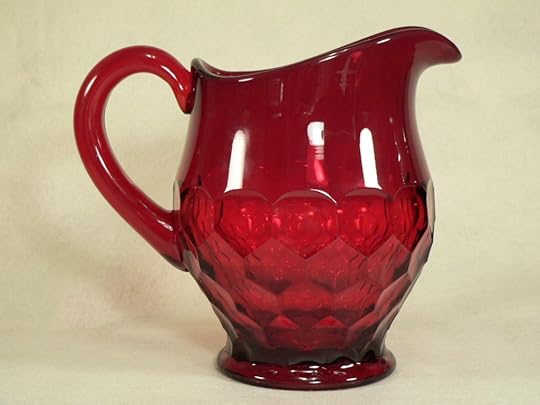
Especially Neri's formula of making gold-ruby glass, it was informative and very detailed:
description
Calcine gold so that it becomes a red powder. This calcination is done repeatedly with aqua regia, pouring it over [the gold] five or six times. Then put this gold powder into a small earthen pan to calcine in the furnace until it becomes a red powder, which will take place after many days. Sprinkle this red powder of gold [gold chloride] over the fused glass. Use fine cristallo, thrown in water many times. This gold powder, given in proportion little by little, will make the transparent ruby red glass; but you must experiment in order to find it.

However, despite its clean editing and proper citing, great typeface, etc. , the whole book seems like Engle trying to shove his 10 years of research on Neri into one 369-page book. Even if this is intentional, that the author wants his reader to experient the life of Antonio Neri to the fullest, it is fair for me to say that there are simply too much unnecessary information and images in this book. For example:
At first, it is tempting to dismiss this lunar influence as the product of a fertile imagination [of the moon's influence on herb's harvest], but let us take a closer look. The ancients looked to the moon to predict crop growth cycles. The Babylonian calendar, as well as many others, measured out time in lunar phases. [...] In his Natural History, Pliny lays Cato's advice on felling trees in accordance with the lunar cycle. - Fig. 1.8

Personally, I thought that that precious one page shouldn't be dedicated only to the lunar phases and tidals, but to the actual glass-making progress. The same problem occurs again and again through out the whole book: Engle would change his subject continuously, and lack information in the subjects he should have been focusing on.

Therefore, even though the rating for this book is quite high (5.00 stars before mine), it is unacceptable for me to say that I like it, though it really has potential and I hope to see growth in the author, in the near future.
2 reviews
May 1, 2015
Disclaimer: I got this book for free from the first-read giveaways.

This usually isn't the sort of book I would read or choose for myself but I was enchanted by it from the first moment I held it in my hands. First by the cover and the title, and later by the contents. It was a beautiful, informative book that opened my eyes to a whole new world of literature, and to many other things. I have never had an interest in glass making, but by the time I finished the introduction I was wondering what it would take, and if I could do it home. But the book is about more than just glass making, so much more.
'Insightful, enchanting and unexpected' pretty much sums it up.
74 reviews4 followers
May 8, 2015
One of the delights of the Goodreads website is being introduced to books that ordinarily one wouldn't be aware of. This was certainly the case with this gem of a book. I would urge people to read this informative account of a true renaissance man. Whether you are a scientist interested in how chemistry as a discipline developed or a student of renaissance history and politics this is a fascinating book and all credit must go to Paul for the depth of his research.
Profile Image for Jessica Powell.
245 reviews13 followers
May 4, 2015
Really enjoyed this - for the newcomer (like myself) it serves as a great introduction into the history of glass making, and then follows the life and work of one of the craft's key figures, Antonio Neri. Neri is placed into context, building up a picture of contemporary Florence, all superbly referenced. Highly recommended!
Profile Image for John Naylor.
929 reviews22 followers
April 5, 2016
I received this book for free via Goodreads First Reads.

I have had this book for a few months but I have not known what to make of it so it has only just been finished.

I think I expected a biography of Neri but it is not just one of them. It delves into the politics, the standard of living and the people in the time he lived in too. It deals with his contemporaries and who he influenced as well as those who influenced him.

I was surprised by the level of research in the book (as a side note, Neri's Wikipedia page is only one short paragraph) and it kept my interest throughout.

I would recommend it to history students and readers looking for a change as well as those who work with glass for a living.
Displaying 1 - 5 of 5 reviews