

What do you think?

Such Stuff: 'Propulsive, lyrical, generous'
Not yet published
Expected 8 Apr 27A hypnotic work of fiction exploring an actor’s unraveling psyche in the moments before she takes the stage.
In a theater in London, an hour before the curtain rises, an actor must perform the delicate act of slipping out of her own identity and into another. As she prepares to transform into Miranda, the daughter of Prospero in The Tempest, she struggles to escape her real-life role as a grieving daughter.
Today, on the anniversary of her father’s death, which is also her birthday, the past collides with the present as she thinks back over her life with her father, which has shaped her sense of self and brought her to this moment. While the passions and dramas of her fellow actors play out backstage, she must cast off her memories of the day—where she’s been, what she’s done—to step out of the wreck of herself and become the daughter to another charismatic father.
Gripping and impossible to put down, Such Stuff is a literary feat that manages, in its briefness, to carry an emotional force that lingers long after the final line. It is an utterly original debut by a mesmerizing new voice.
In a theater in London, an hour before the curtain rises, an actor must perform the delicate act of slipping out of her own identity and into another. As she prepares to transform into Miranda, the daughter of Prospero in The Tempest, she struggles to escape her real-life role as a grieving daughter.
Today, on the anniversary of her father’s death, which is also her birthday, the past collides with the present as she thinks back over her life with her father, which has shaped her sense of self and brought her to this moment. While the passions and dramas of her fellow actors play out backstage, she must cast off her memories of the day—where she’s been, what she’s done—to step out of the wreck of herself and become the daughter to another charismatic father.
Gripping and impossible to put down, Such Stuff is a literary feat that manages, in its briefness, to carry an emotional force that lingers long after the final line. It is an utterly original debut by a mesmerizing new voice.
- GenresFiction
Kindle Edition
Expected publication April 8, 2027
About the author
Hannah Morrish
5 books9 followersHannah Morrish is an actor and writer.
As an actor Morrish has performed in theatres including the National Theatre, RSC, Old Vic, Almeida, Schaubühne, Barbican and in the West End. She trained at Drama Centre, London, and has been twice nominated for an Ian Charleson award for her work on stage.
Such Stuff is her debut novel.
She lives in London, England.
As an actor Morrish has performed in theatres including the National Theatre, RSC, Old Vic, Almeida, Schaubühne, Barbican and in the West End. She trained at Drama Centre, London, and has been twice nominated for an Ian Charleson award for her work on stage.
Such Stuff is her debut novel.
She lives in London, England.
Ratings & Reviews
Friends & Following
Create a free account to discover what your friends think of this book!
Community Reviews
Displaying 1 - 26 of 26 reviews

Review of advance copy received from NetGalley
Maybe it’s just me, but book felt like a very long sentence. I tried to get into it but for the most part I wasn’t even sure what was going on honestly. I mean, I did know what was going on. But I was still so far from caring.
I will say at times, the writing hit me like a truck. Some lines left you like woah, now that was good. There really isn’t much of a plot, so I wouldn’t go into it expecting this masterfully crafted story. It’s very simple, it’s staying in the mind of our main character as she mentally prepares to transform into the character of Miranda from The Tempest.
There is something that reminds you of the original play, but it’s not at all a retelling. I don’t know if I was expecting something like this, I thought there would be more references to it, but this book was exactly as it sounds: an actor preparing to take on a role. It came as a disappointment to me that it was just that, because I love the original play, it’s truly one of my favorites. But I quickly got over that. And I mean quickly, this book is short.
The writing was both the best and worst part of the book. It’s not for everybody, in fact, I’m not even sure it was for me. It was very dense, hardly any punctuation. But anything that’s related to The Tempest, even as loosely as this, I will eat up anyway. I wish the book had been longer though, maybe with some more time to get used to the writing style I would’ve enjoyed myself more.
I would recommend this, but go into it expecting something that’s not all that easy to grasp. I was a bit confused, despite mostly knowing what was going on. I think this didn’t quite stick the landing, but I can still recognize its potential. It’s a 3.25/5⭐️
Thank you to NetGalley for providing an ARC in exchange for an honest review.
I will say at times, the writing hit me like a truck. Some lines left you like woah, now that was good. There really isn’t much of a plot, so I wouldn’t go into it expecting this masterfully crafted story. It’s very simple, it’s staying in the mind of our main character as she mentally prepares to transform into the character of Miranda from The Tempest.
There is something that reminds you of the original play, but it’s not at all a retelling. I don’t know if I was expecting something like this, I thought there would be more references to it, but this book was exactly as it sounds: an actor preparing to take on a role. It came as a disappointment to me that it was just that, because I love the original play, it’s truly one of my favorites. But I quickly got over that. And I mean quickly, this book is short.
The writing was both the best and worst part of the book. It’s not for everybody, in fact, I’m not even sure it was for me. It was very dense, hardly any punctuation. But anything that’s related to The Tempest, even as loosely as this, I will eat up anyway. I wish the book had been longer though, maybe with some more time to get used to the writing style I would’ve enjoyed myself more.
I would recommend this, but go into it expecting something that’s not all that easy to grasp. I was a bit confused, despite mostly knowing what was going on. I think this didn’t quite stick the landing, but I can still recognize its potential. It’s a 3.25/5⭐️
Thank you to NetGalley for providing an ARC in exchange for an honest review.

July 22, 2026
Advanced copy received from NetGalley for review.
I was intrigued by the initial feedback that was offered in the description and advanced praise. Anything that explores art and the human consciousness is typically up my alley.
What I liked was the main idea of following the mind/thoughts of someone that’s feeling like they have to put on a mask through life. I think we can all relate to that in one way or another. This story navigates grief and loss through the eyes of a performer. She is going through the hardest times in her life while working hard to pretend to be ok, not to just the audience of your life but also to the audience while on stage. It seemed like it came natural to her. I could feel her moving on autopilot, while simultaneously battling intrusive thoughts that have become embedded in her over the past year.
Now what I did not like. Immediately the run on sentences are plentiful and consistent. I felt like I was in the brain of someone with severe ADHD. I know this because this is exactly what my brain sounds like lol! But because it is not my brain, I was lost by the end of almost every sentence because I forgot what the starting idea was. I had to keep looking back and sometimes just gave up. I get the reminiscing, and to some people this may be a way of character building, but it was too much for me to keep up with. I’m talking like 1/2 a page+ would be one sentence. Maybe this was written like this and would be broken apart with further editing, you’ll have to let me know once published.
I want to add- I have zero experience in theatre. Maybe that could have helped? So while overall I love the premise here; I had a hard time getting lost in exploration with the author and kept forgetting the point. I think this has so much potential but the writing style was just not for me.
I was intrigued by the initial feedback that was offered in the description and advanced praise. Anything that explores art and the human consciousness is typically up my alley.
What I liked was the main idea of following the mind/thoughts of someone that’s feeling like they have to put on a mask through life. I think we can all relate to that in one way or another. This story navigates grief and loss through the eyes of a performer. She is going through the hardest times in her life while working hard to pretend to be ok, not to just the audience of your life but also to the audience while on stage. It seemed like it came natural to her. I could feel her moving on autopilot, while simultaneously battling intrusive thoughts that have become embedded in her over the past year.
Now what I did not like. Immediately the run on sentences are plentiful and consistent. I felt like I was in the brain of someone with severe ADHD. I know this because this is exactly what my brain sounds like lol! But because it is not my brain, I was lost by the end of almost every sentence because I forgot what the starting idea was. I had to keep looking back and sometimes just gave up. I get the reminiscing, and to some people this may be a way of character building, but it was too much for me to keep up with. I’m talking like 1/2 a page+ would be one sentence. Maybe this was written like this and would be broken apart with further editing, you’ll have to let me know once published.
I want to add- I have zero experience in theatre. Maybe that could have helped? So while overall I love the premise here; I had a hard time getting lost in exploration with the author and kept forgetting the point. I think this has so much potential but the writing style was just not for me.
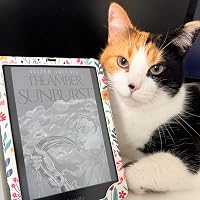
October 1, 2026
4⭐/5 - Thank you to NetGalley, Spiegel & Grau, and the author, for the ARC!
When I started this book, I immediately felt a little disoriented by the writing style. Stream-of-consciousness books throw me off, and sometimes can be a little difficult to get into, but it only took a few pages for me to realize how special Such Stuff is. It's this fever dream of snapshots: memories of the past with her father and her ex, mixed with the current moments in her dressing room, all from the unnamed protagonist's life. She is thinking about her late father, thinking about the role in the play she needs to be on stage for in an hour, and thinking about her life as a whole. Her place in the world, while feeling drowned by her sorrow.
I wrote down so many quotes as I read, ones that spoke to me about grief itself, but also about acting as an art form. I am a theater lover who tries to see performances every few months, and I sometimes dwell on what it must be like behind the scenes, the lives lived behind the curtain. We get a glimpse of that here, and it left me desperate to know more. To put myself into the shoes of a stage actor, and wonder at our main character and how she must set aside herself to become someone new.
I feel like I can't even begin to explain how beautifully written this story is. You feel like the ultimate voyeur as you read, and there were phrases I lingered on. When thinking of her grief, she talks about a "relentless tightness in my chest." When she refers to the need to slough off herself, to become the character she's about to play, "the me-ness of me can begin to disconnect." These moments about grief caught me in the throat as someone who has lost a person I love. Being able to relate so deeply made me cry at multiple points in the story.
There were moments when she also discussed the power of the audience. How the cacophony of sound, as the audience settles in to wait for the play, can feel oppressive. It made me think of myself, sitting in that theater chair, waiting for the show to start.
The quieter things I deeply appreciated as well were the trans representation and the queer representation, which were not a focal point but still felt like a natural part of the story.
This book is perfect for folks who love the theater and stage acting and want a glimpse behind the curtain, but also for anyone who has experienced deep and consuming grief after losing someone they love and wants the catharsis of feeling those deep emotions alongside the protagonist. There is a heaviness here, but also a kernel of hopefulness by the end that the story needed to feel wrapped up. This short story felt anything but short and truly felt bigger than it was.
When I started this book, I immediately felt a little disoriented by the writing style. Stream-of-consciousness books throw me off, and sometimes can be a little difficult to get into, but it only took a few pages for me to realize how special Such Stuff is. It's this fever dream of snapshots: memories of the past with her father and her ex, mixed with the current moments in her dressing room, all from the unnamed protagonist's life. She is thinking about her late father, thinking about the role in the play she needs to be on stage for in an hour, and thinking about her life as a whole. Her place in the world, while feeling drowned by her sorrow.
I wrote down so many quotes as I read, ones that spoke to me about grief itself, but also about acting as an art form. I am a theater lover who tries to see performances every few months, and I sometimes dwell on what it must be like behind the scenes, the lives lived behind the curtain. We get a glimpse of that here, and it left me desperate to know more. To put myself into the shoes of a stage actor, and wonder at our main character and how she must set aside herself to become someone new.
I feel like I can't even begin to explain how beautifully written this story is. You feel like the ultimate voyeur as you read, and there were phrases I lingered on. When thinking of her grief, she talks about a "relentless tightness in my chest." When she refers to the need to slough off herself, to become the character she's about to play, "the me-ness of me can begin to disconnect." These moments about grief caught me in the throat as someone who has lost a person I love. Being able to relate so deeply made me cry at multiple points in the story.
There were moments when she also discussed the power of the audience. How the cacophony of sound, as the audience settles in to wait for the play, can feel oppressive. It made me think of myself, sitting in that theater chair, waiting for the show to start.
The quieter things I deeply appreciated as well were the trans representation and the queer representation, which were not a focal point but still felt like a natural part of the story.
This book is perfect for folks who love the theater and stage acting and want a glimpse behind the curtain, but also for anyone who has experienced deep and consuming grief after losing someone they love and wants the catharsis of feeling those deep emotions alongside the protagonist. There is a heaviness here, but also a kernel of hopefulness by the end that the story needed to feel wrapped up. This short story felt anything but short and truly felt bigger than it was.
Review of advance copy received from NetGalley
Thank you very much to the author, publisher, and to NetGalley for providing this ARC in exchange for an honest review.
Such Stuff explores an actor’s interrogation of her selfhood and memories as she prepares to perform the role of Miranda in The Tempest. As the performance coincides with both her birthday and the anniversary of her father’s death, the protagonist is torn between past and present.
Writing is a craft—this is an oft-forgotten fact. Like all art, it is a bold, daring endeavour at transporting its audience from one world into another. Author Hannah Morrish takes this a step further and deposits the reader directly into the protagonist’s psyche. The meandering stream of consciousness is like a tide drawing the reader in and drowning them in the thoughts plaguing the protagonist.
I’m reminded of Wittgenstein’s famous analogy: “If a lion could speak, we could not understand him.” Complete empathy to the degree of full comprehension of another individual’s conscious, lived experience is impossible. However, Morrish comes dangerously close. At some point while reading, I felt my thoughts morphing into those of the protagonist, melding and congealing until I wasn’t sure I was reading at all. It is a profoundly enchanting sensation, and by the end of the book, I couldn’t help but instinctively recite Prospero’s final monologue to myself, as though I were in the room with them.
Such Stuff is a poignant reminder that not all reading should be easy. Often, as readers, we forget that the fundamental purpose of art is to elicit emotion, and that these emotions need not be comfortable ones. In exploring grief, friendship, love, selfhood, and artistry, Morrish provides a master class in deliberate storytelling through language, structure, and even syntax. This is a stunning debut, one that will remain with me for a very, very long time.
Such Stuff explores an actor’s interrogation of her selfhood and memories as she prepares to perform the role of Miranda in The Tempest. As the performance coincides with both her birthday and the anniversary of her father’s death, the protagonist is torn between past and present.
Writing is a craft—this is an oft-forgotten fact. Like all art, it is a bold, daring endeavour at transporting its audience from one world into another. Author Hannah Morrish takes this a step further and deposits the reader directly into the protagonist’s psyche. The meandering stream of consciousness is like a tide drawing the reader in and drowning them in the thoughts plaguing the protagonist.
I’m reminded of Wittgenstein’s famous analogy: “If a lion could speak, we could not understand him.” Complete empathy to the degree of full comprehension of another individual’s conscious, lived experience is impossible. However, Morrish comes dangerously close. At some point while reading, I felt my thoughts morphing into those of the protagonist, melding and congealing until I wasn’t sure I was reading at all. It is a profoundly enchanting sensation, and by the end of the book, I couldn’t help but instinctively recite Prospero’s final monologue to myself, as though I were in the room with them.
Such Stuff is a poignant reminder that not all reading should be easy. Often, as readers, we forget that the fundamental purpose of art is to elicit emotion, and that these emotions need not be comfortable ones. In exploring grief, friendship, love, selfhood, and artistry, Morrish provides a master class in deliberate storytelling through language, structure, and even syntax. This is a stunning debut, one that will remain with me for a very, very long time.
Review of advance copy
*ARC received through anodos.pub*
When I initially started this book, I thought it would be perfect for anyone who’s ever cried in a dressing room. It is that—but it’s also a beautiful, haunting, and distressing interrogation of grief, art, and the self, and how each is a vessel (who had, no doubt, some noble creature in her) for the other.
I picked up this book for the intertextuality, and it really delivered. I adore how it drew from Tempest themes, both the more obvious ones, like loss or the relationship between father and daughter, and the more interpretive ones, like the bond between performance and confinement (on stage and off). The book is interspersed with quotations that are kind of like an English Lit college syllabus scavenger hunt. That worked for me too, especially as the story went on and we learned more about why they were there. I especially appreciate the “conversation” those quotations brought up with Virginia Woolf. Such Stuff is quite Dallowayan in its structure, and that connection became more intense and meaningful as the book progressed.
For a book where not much happens, the build is surprisingly engaging. It’s short, but you’ll want to take your time with it. I don’t think there’s a single comma in the whole book, which I thought would really bother me, but I think it actually had the effect of keeping you very close to the narrator’s head and turning time and space liquid in the same way they are for her.
This is a fascinating, introspective read for those who love the stage and classic literature, or maybe those who are just a bit too emotionally invested in the Tempest. More than that, it’s suited for readers looking to go deep into a character’s head and then take a look inside their own.
When I initially started this book, I thought it would be perfect for anyone who’s ever cried in a dressing room. It is that—but it’s also a beautiful, haunting, and distressing interrogation of grief, art, and the self, and how each is a vessel (who had, no doubt, some noble creature in her) for the other.
I picked up this book for the intertextuality, and it really delivered. I adore how it drew from Tempest themes, both the more obvious ones, like loss or the relationship between father and daughter, and the more interpretive ones, like the bond between performance and confinement (on stage and off). The book is interspersed with quotations that are kind of like an English Lit college syllabus scavenger hunt. That worked for me too, especially as the story went on and we learned more about why they were there. I especially appreciate the “conversation” those quotations brought up with Virginia Woolf. Such Stuff is quite Dallowayan in its structure, and that connection became more intense and meaningful as the book progressed.
For a book where not much happens, the build is surprisingly engaging. It’s short, but you’ll want to take your time with it. I don’t think there’s a single comma in the whole book, which I thought would really bother me, but I think it actually had the effect of keeping you very close to the narrator’s head and turning time and space liquid in the same way they are for her.
This is a fascinating, introspective read for those who love the stage and classic literature, or maybe those who are just a bit too emotionally invested in the Tempest. More than that, it’s suited for readers looking to go deep into a character’s head and then take a look inside their own.
Review of advance copy received from NetGalley
A huge thank you to NetGalley for this digital ARC in exchange for an honest review.
[title]: such stuff
[author]: hannah morrish
[rating]: ✩✩✩✩✩
------------------- ⋆。˚ ☁︎ ˚。⋆。˚☾˚。⋆ --------------------
once a thespian and a current lover of all things shakespeare, this was a must read for me.
this novella is a brief glimpse into the tense, unraveling psyche of a fragile actor just moments before she takes the stage as miranda in the tempest, where the ticking countdown to the performance collides with both her birthday and the agonizing anniversary of her father's death. on the surface, this reads as as a deeply haunting, totally suffocating experience that brilliantly blurs the lines between theatrical performance and raw human trauma. stage adrenaline. frayed memories. transformative art. the past collides with the present, and the narrator confronts the constant heavy grief of her father’s death seeping across the boundaries of the stage. morrish’s breathtaking, hypnotic stream-of-consciousness prose functions like a pulsing, exposed nerve as the narrator desperately tries to cast off the wreckage of her own identity to become another’s daughter. it is a high-intensity exploration of art as both a sanctuary and an undoing, and this story will linger with you long after the final curtain falls.
[title]: such stuff
[author]: hannah morrish
[rating]: ✩✩✩✩✩
------------------- ⋆。˚ ☁︎ ˚。⋆。˚☾˚。⋆ --------------------
once a thespian and a current lover of all things shakespeare, this was a must read for me.
this novella is a brief glimpse into the tense, unraveling psyche of a fragile actor just moments before she takes the stage as miranda in the tempest, where the ticking countdown to the performance collides with both her birthday and the agonizing anniversary of her father's death. on the surface, this reads as as a deeply haunting, totally suffocating experience that brilliantly blurs the lines between theatrical performance and raw human trauma. stage adrenaline. frayed memories. transformative art. the past collides with the present, and the narrator confronts the constant heavy grief of her father’s death seeping across the boundaries of the stage. morrish’s breathtaking, hypnotic stream-of-consciousness prose functions like a pulsing, exposed nerve as the narrator desperately tries to cast off the wreckage of her own identity to become another’s daughter. it is a high-intensity exploration of art as both a sanctuary and an undoing, and this story will linger with you long after the final curtain falls.

Review of advance copy received from NetGalley
Very much so a 'nothing happens' novel, told in very long run-on sentences, some paragraphs go on for multiple pages. Completely about the interior life and struggles of the unnamed main character. An interesting quick read on grief and the masks one wears, but it doesn't tread any new ground.
An actress is preparing for a stage performance. It is her birthday, and also the one-year anniversary of the death of her father, a central influential figure in her life. She is a grieving daughter preparing to play Miranda, the daughter of Prospero in The Tempest. Her grief manifests in odd ways, an unlikely hug with the actor playing Prospero, a strong connection to her father's handkerchief, a belief he is here in person to watch her perform today. As her cast members surprise her with a cake and discuss the potential move of the play to NYC, she ruminates on memories with her father. She feels the disconnect that must be clear around her and attempts to put on a show of her own, that she is fine and happy. As the time for curtains approaches, she must determine if she can become Miranda tonight, or if her own baggage will weigh her soul in her body.
Thank you to NetGalley for an eARC of this novel.
An actress is preparing for a stage performance. It is her birthday, and also the one-year anniversary of the death of her father, a central influential figure in her life. She is a grieving daughter preparing to play Miranda, the daughter of Prospero in The Tempest. Her grief manifests in odd ways, an unlikely hug with the actor playing Prospero, a strong connection to her father's handkerchief, a belief he is here in person to watch her perform today. As her cast members surprise her with a cake and discuss the potential move of the play to NYC, she ruminates on memories with her father. She feels the disconnect that must be clear around her and attempts to put on a show of her own, that she is fine and happy. As the time for curtains approaches, she must determine if she can become Miranda tonight, or if her own baggage will weigh her soul in her body.
Thank you to NetGalley for an eARC of this novel.

September 7, 2026
thank you to NetGalley, the publisher Spiegel & Grau, and the author for this ARC!!
Such Stuff is an amalgamation of an actors personal and professional life into one crescendo. we meet our main character prior to curtain call for her role in The Tempest. throughout the book, which is told in almost one continuous thought spiral, we unearth her livelihood. we learn of what she did that day, her childhood, her relationship with her now deceased father, and much more.
anyone who’s been an actor (or a great faker) can relate to the slipping out of yourself and into your character, but the way this was told was so relatable! we see our main character go through an almost psychotic break, interpolated with the dizzying effect of pre-show rituals along with small acknowledgements of her grief.
the cadence of our main characters narration suits the story so well. her recollection and continuous switching from thought to thought, giving some explanation, truly embodies my inner mind sometimes. this was a fun read for me in the way the sentence structure is presented. although I am not familiar with The Tempest, I learned a lot throughout and did not feel that I missed out on any of the story.
Such Stuff is an amalgamation of an actors personal and professional life into one crescendo. we meet our main character prior to curtain call for her role in The Tempest. throughout the book, which is told in almost one continuous thought spiral, we unearth her livelihood. we learn of what she did that day, her childhood, her relationship with her now deceased father, and much more.
anyone who’s been an actor (or a great faker) can relate to the slipping out of yourself and into your character, but the way this was told was so relatable! we see our main character go through an almost psychotic break, interpolated with the dizzying effect of pre-show rituals along with small acknowledgements of her grief.
the cadence of our main characters narration suits the story so well. her recollection and continuous switching from thought to thought, giving some explanation, truly embodies my inner mind sometimes. this was a fun read for me in the way the sentence structure is presented. although I am not familiar with The Tempest, I learned a lot throughout and did not feel that I missed out on any of the story.
August 22, 2026
Thank you NetGalley and Spiegel & Grau for an ARC of this book!
"Such Stuff" by Hannah Morrish follows the internal struggles of an actor preparing to take the stage in a production of "The Tempest". As she gets into character, the actress contemplates the feelings of grief and loss associated with the death of her father, and the general milieu of time past, as the day which the book takes place is also her birthday.
This novel felt like just another introspective tale of a woman coping with the trials and tribulations of life. "Such Stuff" does slightly break the conventions of the "introspective-woman type novel" through it's narrative structure. The book is essentially a countdown to stage time, leading to narrative divisions occurring with the call times. What further differentiates this novel is this process of discovering and becoming a character. I believe people with backstage and onstage theatre experience will be the ones to really appreciate the conventions of this novel.
Ultimately, I thought this book was just okay. Its themes and messaging felt repetitive and conventional within the corpus of this "type novel".
"Such Stuff" by Hannah Morrish follows the internal struggles of an actor preparing to take the stage in a production of "The Tempest". As she gets into character, the actress contemplates the feelings of grief and loss associated with the death of her father, and the general milieu of time past, as the day which the book takes place is also her birthday.
This novel felt like just another introspective tale of a woman coping with the trials and tribulations of life. "Such Stuff" does slightly break the conventions of the "introspective-woman type novel" through it's narrative structure. The book is essentially a countdown to stage time, leading to narrative divisions occurring with the call times. What further differentiates this novel is this process of discovering and becoming a character. I believe people with backstage and onstage theatre experience will be the ones to really appreciate the conventions of this novel.
Ultimately, I thought this book was just okay. Its themes and messaging felt repetitive and conventional within the corpus of this "type novel".

Review of advance copy received from Netgalley
Hannah Morrish is a stage actor, so it is no surprise that her debut novel Such Stuff takes us behind the curtain, to the backrooms of a theatre. It is an hour before the curtain rises, and our narrator must shed her skin to become a character on the stage. It is also her birthday and the anniversary of her fathers death. Through it's brief but intense pages, Morrish peels back the layers of her protagonist to lay bare on the page this woman's soul.
Such Stuff is an exquisite and tender novel, full of honest beauty. Its liquid sentences transported me to her world, and gripped me from it's opening lines on. This is a superb debut which I devoured in one sitting but by it's a end had wished I had taken my time to savour it's grace. I will definitely re-read this one again. If you love a story which gets to the heart of what it is to be human, Such Stuff is for you.
Thank you to Netgalley and the publishers for the ARC.
Such Stuff is an exquisite and tender novel, full of honest beauty. Its liquid sentences transported me to her world, and gripped me from it's opening lines on. This is a superb debut which I devoured in one sitting but by it's a end had wished I had taken my time to savour it's grace. I will definitely re-read this one again. If you love a story which gets to the heart of what it is to be human, Such Stuff is for you.
Thank you to Netgalley and the publishers for the ARC.

Review of advance copy received from NetGalley
Thank you to the publisher and NetGalley for providing me with an advance review copy.
Unfortunately, I was unable to finish this title. While I appreciated the literary ambition and the immersive stream-of-consciousness approach, I found the prose style extremely difficult to engage with as a reader. The lengthy, densely constructed sentences and frequent tangential observations made it challenging for me to maintain focus on the narrative itself. Rather than becoming immersed in the story, I often found myself rereading passages in an effort to follow the flow of thought.
I can see this appealing to readers who enjoy highly introspective literary fiction and experimental narrative styles. However, for me, the writing often overshadowed the story, making it difficult to connect with the characters or maintain momentum. After several chapters, I felt I was spending more energy parsing the prose than engaging with the narrative, and ultimately chose not to continue.
Unfortunately, I was unable to finish this title. While I appreciated the literary ambition and the immersive stream-of-consciousness approach, I found the prose style extremely difficult to engage with as a reader. The lengthy, densely constructed sentences and frequent tangential observations made it challenging for me to maintain focus on the narrative itself. Rather than becoming immersed in the story, I often found myself rereading passages in an effort to follow the flow of thought.
I can see this appealing to readers who enjoy highly introspective literary fiction and experimental narrative styles. However, for me, the writing often overshadowed the story, making it difficult to connect with the characters or maintain momentum. After several chapters, I felt I was spending more energy parsing the prose than engaging with the narrative, and ultimately chose not to continue.

Review of advance copy received from NetGalley
There's not a single comma in this whole book. Not one.
Such Stuff is a stream-of-consciousness novella about theater and London and grief. Except I don't know much about theater, or London, and it was hard to learn about those things or focus on any other plot points when there are sentences that take up entire pages. I understand what this was trying to do - I think, at least - but it just made the book dense and confusing. It's not that it was written in a way that didn't need commas, it simply omitted them. Even in my inner dialogue I have pauses in my thoughts. I couldn't possibly think a sentence as long as some of these were.
I really hate leaving a negative review on a book because it doesn't mean other people won't enjoy this. But the writing style was nearly impossible for me to follow, and the narrative was just as difficult. 1.5 rounded up.
Thank you to NetGalley and the publisher for an ARC.
Such Stuff is a stream-of-consciousness novella about theater and London and grief. Except I don't know much about theater, or London, and it was hard to learn about those things or focus on any other plot points when there are sentences that take up entire pages. I understand what this was trying to do - I think, at least - but it just made the book dense and confusing. It's not that it was written in a way that didn't need commas, it simply omitted them. Even in my inner dialogue I have pauses in my thoughts. I couldn't possibly think a sentence as long as some of these were.
I really hate leaving a negative review on a book because it doesn't mean other people won't enjoy this. But the writing style was nearly impossible for me to follow, and the narrative was just as difficult. 1.5 rounded up.
Thank you to NetGalley and the publisher for an ARC.

Review of advance copy received from NetGalley
This is a short novella that brings to life a kind of stream-of-consciousness inner monologue of a stage actor in the moments before and during a performance. It is highly referential - if you know London and theatre and a lot of higher culture references, you will get all of them and it will enrich your reading experience. I have that knowledge, but I think this would be a real slog for someone without a good literary and theatre background and/or London life experiences. I did not love this work, but it's mostly because of the style of writing. However, I appreciate the way the actor/author brings the experience of living your self and your part simultaneously to life. Moreover, there are larger life and death themes that come through clearly and enhance this story. Without those, it would seem a lot more self indulgent, I think. Thank you to NetGalley for the ARC.

Review of advance copy received from NetGalley
This book was not my cup of tea.
I get that it was supposed to be a stream of consciousness while the main character, a stage actress, gets into character for a performance on an emotionally difficult day for her. The lack of punctuation made this a lot harder to read and absorb. I will never understand books that eschew commas and quotation marks as a stylistic choice. Does this person not have pauses in thought? A comma or two would have gone a long way instead of paragraph-long sentences.
Maybe the concept was lost on me, but this book did not live up to the blurb for me.
Nonetheless, thank you to Netgalley and the author. This wasn't something I would have picked up off the shelf and read if I had been able to see inside the book.
I get that it was supposed to be a stream of consciousness while the main character, a stage actress, gets into character for a performance on an emotionally difficult day for her. The lack of punctuation made this a lot harder to read and absorb. I will never understand books that eschew commas and quotation marks as a stylistic choice. Does this person not have pauses in thought? A comma or two would have gone a long way instead of paragraph-long sentences.
Maybe the concept was lost on me, but this book did not live up to the blurb for me.
Nonetheless, thank you to Netgalley and the author. This wasn't something I would have picked up off the shelf and read if I had been able to see inside the book.

Review of advance copy received from Goodreads Giveaways
This is a heart wrenching first person account of the hour before an actress grieving her father goes on stage. The stream of consciousness style took me a couple dozen pages to get into, but after that I flew through the rest of the book. I am not a theater person, but I did relate to the metaphor for feeling not like yourself, or not at home in your skin, etc. I found the depictions of that universal experience, grief, very relatable, sometimes painfully so. The relationships with the other actors and stagehands were a highlight as well. For these reasons I can see how this would be a good book club pick - short, evocative of strong emotions, plus people will likely have strong opinions on the writing style.
I received this book as a giveaway.
I received this book as a giveaway.

Review of advance copy received from NetGalley
Thank you to NetGalley and Spiegel & Grau for the advanced reader copy! All thoughts are my own:
Such Stuff follows the thoughts of a grieving actor as she prepares for her role as Miranda in The Tempest.
So, I liked the writing style in one aspect; it felt poetic and moving at times, however, it lacked much of a plot for me. I do understand that that’s somewhat the idea of the book, to follow along through the character’s thoughts rather than lay out any real happenings and twists and turns, but it just felt like a drag.
I just never really felt connected to anyone or anything in this story, but I did enjoy the experimental writing style.
Such Stuff follows the thoughts of a grieving actor as she prepares for her role as Miranda in The Tempest.
So, I liked the writing style in one aspect; it felt poetic and moving at times, however, it lacked much of a plot for me. I do understand that that’s somewhat the idea of the book, to follow along through the character’s thoughts rather than lay out any real happenings and twists and turns, but it just felt like a drag.
I just never really felt connected to anyone or anything in this story, but I did enjoy the experimental writing style.

Review of advance copy received from Publisher
It took me three attempts to fully enter the theatrical world of Hannah Morrish's Such Stuff, but once I settled into the stream-of-conscious rhythm of the novella, I read it in one sitting, utterly spellbound. As the young actress at the center of the book prepares to step onto the stage as Miranda in a production of The Tempest, she contends with an internal tempest of her own: the loss of her father. The novella brilliantly orbits the metamorphic process of grief, and what it means undergo a radical transformation—on the stage, in life. For a book so slim, Such Stuff contains a multitude of revelations. I loved it.

September 27, 2026
Received an ARC from a Goodreads giveaway.
I don’t have much to say other than that this was beautiful. I’ve genuinely never read anything quite like it. While it was sometimes difficult to follow, I think that was ultimately the point. Someone in this state of mind isn’t going to think cohesively, and I thought the writing did an incredible job of capturing that.
The prose was exquisite and absolutely beautiful. My only complaint is that I wish this had been longer and spanned a timeline beyond just one evening. I found myself wanting more by the end!
I’m settling on a 4.25 ⭐️⭐️⭐️⭐️✨ rating and definitely hope to read more from this author in the future.
I don’t have much to say other than that this was beautiful. I’ve genuinely never read anything quite like it. While it was sometimes difficult to follow, I think that was ultimately the point. Someone in this state of mind isn’t going to think cohesively, and I thought the writing did an incredible job of capturing that.
The prose was exquisite and absolutely beautiful. My only complaint is that I wish this had been longer and spanned a timeline beyond just one evening. I found myself wanting more by the end!
I’m settling on a 4.25 ⭐️⭐️⭐️⭐️✨ rating and definitely hope to read more from this author in the future.
Review of advance copy received from NetGalley
Thanks to Netgalley and Spiegel & Grau for the ebook. The action of the book takes place backstage as a company in London gets ready for a performance of The Tempest, but it travels across time as one actress gets ready to play Miranda. It’s also her birthday and the anniversary of the death of her father, an accomplished actor in his own right. It’s a fascinating story of a woman trying to be in the moment, in the play, in the backstage intrigues, but also trying to figure out why she is here in a much larger sense of the word.

August 3, 2026
I received an ARC of this from NetGalley.
I loved the writing style of this. The long sentences and lack of punctuation really made this feel more immersive. It’s similar in writing style to Angel Down, but not entirely the same (this book does have more than one sentence.)
I felt like I was really going through it with our main character. The moments came alive off the page. I was experiencing her emotions, her heartbreak and more. I lost my dad to cancer, too and really empathized with her.
I loved this a lot.
I loved the writing style of this. The long sentences and lack of punctuation really made this feel more immersive. It’s similar in writing style to Angel Down, but not entirely the same (this book does have more than one sentence.)
I felt like I was really going through it with our main character. The moments came alive off the page. I was experiencing her emotions, her heartbreak and more. I lost my dad to cancer, too and really empathized with her.
I loved this a lot.

Review of advance copy received from NetGalley
I received an advance reader copy from NetGalley. Thank you to both NetGalley and the publisher.
I loved this book and the way it was written. It’s a stream of consciousness that makes you feel inside the main character’s head rather than observing her story. Tender, emotional thoughts don’t need to be neatly packaged. The writing style was not just appreciated but totally relatable.
This explored grief and love, and the ways those two emotions can both rival each other and exist in sync in different relationships.
Fantastic debut!
I loved this book and the way it was written. It’s a stream of consciousness that makes you feel inside the main character’s head rather than observing her story. Tender, emotional thoughts don’t need to be neatly packaged. The writing style was not just appreciated but totally relatable.
This explored grief and love, and the ways those two emotions can both rival each other and exist in sync in different relationships.
Fantastic debut!

Review of advance copy received from NetGalley
Be aware there is no punctuation. This novel looks at the psychology of mad artists. It was fine, but it wasn’t inventive or particularly noteworthy entry in to the canon.
Thanks to NetGalley and the publisher for the ARC.
Thanks to NetGalley and the publisher for the ARC.
Review of advance copy received from NetGalley
Thanks to Net Galley and the editor for the chance to read and review this book.
I loved the sense of urgency and wandering and incoherence and pointedness. The story of an actor dealing with death and grief and self-worth and life. I loved it.
I loved the sense of urgency and wandering and incoherence and pointedness. The story of an actor dealing with death and grief and self-worth and life. I loved it.

Review of advance copy
🤍

Want to Read
June 14, 2026back on the arc grind

Review of advance copy received from Edelweiss+
thank you to edelweiss for the arc — my heart has been torn open and hannah morrish knows what's inside.
Displaying 1 - 26 of 26 reviews