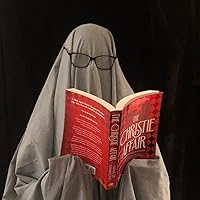
Eight years after Cromwell's army burned Killenea Castle to the ground, Mithim McMurrough – daughter of a Gaelic lord, healer and last keeper of her family's secrets – is living alone and in hiding in the depths of a Wexford forest. The soldiers are moving closer. And the past is closing in faster still.
Fierce, lyrical and steeped in Irish mythology, the Celtic tree calendar and the forgotten wisdom of the Gaelic healing women, Mithim gives voice to a noblewoman who refused to disappear quietly into the wreckage of conquest – who carried her people's knowledge into the dark, and who will risk everything to find out who survived.
Meet the bould Mithim – the Irish woman history forgot.
Mithim by Carina McNally published May 15th with Mercier Press and is described as ‘an entrancing historical debut novel set in 17th century Ireland‘.
Step back in time to a land in flux, to a time when Irish mythology was being slowly diluted, replaced with new ideas and practices. For Mithim McMorrough this was a time to fear. The daughter of a displaced Gaelic family, burned out of their home at Killenea Castle in Wexford, Mithim has made her home hidden in the depths of the forest guided by the pre-Christian goddess, An Cailleach. Mithim is a renowned healer but, in this new world, her methods are considered as witchcraft by some. Her ability to nurture nature, and all that it holds, grounds her and provides her with stability but Mithim knows her time in the forest is coming to a close and she needs to move on.
When word reaches her that her brother Eoin may still be alive she takes off on a quest to find him. Her treacherous journey puts her life at risk as she crosses the country, travelling to Cork, accompanying Deirdre, a woman who seems quite irrational in her behaviour and seems to have an ulterior motive with every move she makes.
The year is 1657 and Ireland is struggling to protect her people. With Cromwell, and the English, enforcing new laws, lands were confiscated and the native speakers were brutally treated. The practicing of the Catholic faith was restricted, with many religious orders escaping into exile or murdered. The Wild Geese left the country in their droves, forced into new lives in hotter climes, never to see the green fields of their homeland again. Many of the Gaelic lords took the high seas as pirates, with Roaringwater Bay and Crookhaven in West Cork becoming a shelter for them when on land. What was really interesting for me was the history of some of the place names that Carina McNally highlights along the way. I have been to Crookhaven numerous times but, embarrassingly, never disassembled the name as it being a safe haven for crooks!
Mithim McMurrough is a feisty individual with a determination to protect her ways and her culture. Protecting her livelihood puts her in grave danger but she is resilient and courageous. In times of worry, she looks to An Cailleach and nature to ground her and to provide her with the signs she needs to keep marching forward in her quest.
Mithim is a fictional tale set against a factual backdrop with plenty historical references that will send any reader down a rabbit hole. Once I immersed myself in Mithim’s story and adapted to the dialect, I was rooting for her very survival and that of her remaining kin.
Mithim is a fascinating story, with the amount of research carried out by Carina McNally evident on every page. An atmospheric read, Mithim explores a time in Ireland’s turbulent history when great changes were forced upon a population as their land was ravaged and their culture suppressed. An engaging debut, Mithim is an educational and evocative tale, perfect for readers of historical fiction who like to delve deeper into the mindset of a people and their heritage.
I did not have to atone for not being a good daughter, sister, girlfriend. The realisation is a freedom for me.
There are losses that alter a life so completely that it becomes difficult to imagine who we might have been without them. For Mithim McMurrough, the destruction of her family’s home and the disappearance of those she loves have left her with little beyond her knowledge of healing and the forest in which she has taken refuge. In ‘Mithim’, Carina McNally follows a woman who has survived the violence of seventeenth-century Ireland, but has yet to discover how to live beyond it.
The novel opens in 1649 with an attack on Killenea Castle. Mithim wakes to the screams of her father’s hawks and finds her home engulfed in violence. It is a brutal beginning, particularly because the castle has represented security throughout her childhood. I found the image of the hawks escaping their burning tethers especially striking. Their freedom comes at the very moment Mithim loses the life she has known, and birds continue to accompany her thoughts throughout the novel.
Years later, Mithim lives alone in the Wexford forest, treating those who seek her out with remedies drawn from the plants around her. Her knowledge allows her to survive, but her cabin also shelters her from questions she cannot bear to answer. She does not know what became of her brother, Eoin, or Neachtain, the man she loved. There is something particularly painful about that uncertainty. She mourns their absence, but without knowing their fate, she cannot entirely surrender the hope that they might return.
Mithim is proud, resourceful and sometimes extraordinarily difficult. She cares about the suffering of her patients, yet can react sharply when they touch upon her own wounds. She resents the assumptions made about her while making quite a few assumptions of her own. I found her most interesting when those contradictions became apparent. Her former position matters to her more than she sometimes admits, and her indignation at being treated as a servant can sit rather uncomfortably beside her opinion of other servants.
Her memories of her father, Fiach, are equally complicated. He represents the family and home she has lost, but he also restricted the future she wanted for herself. He opposed her relationship with Neachtain and expected marriage and motherhood to take precedence over further training as a healer. Mithim remembers rare moments of kindness alongside his anger and restrictions, and I appreciated that longing for her former home does not mean she remembers an entirely happy childhood.
The natural world is the strongest aspect of this novel. McNally writes with close attention to woodland, shore and changing seasons, and Mithim’s understanding of plants shapes almost every part of her life. A tree can offer protection, a flower recall someone she loved, and an ordinary household object carry the memory of hands that once held it. I particularly enjoyed the contrast between the forest and the towns, where noise, waste and crowded streets make Mithim feel painfully exposed.
Irish folklore and older spiritual beliefs are central to her understanding of these surroundings. Her devotion to the Cailleach Bere connects her with her mother’s people, while her healing knowledge gives her a means of preserving something that war has failed to take away. The seasonal chapter headings reinforce that connection. I did occasionally find the detailed plant lore interrupted the action, but it also made clear how thoroughly Mithim’s work and beliefs belong to the same life.
Leaving the forest brings her into relationships that are considerably harder to understand than the plants she knows so well. Diarmuid offers assistance, but his interest in her is not easy to read. His wife, Deirdre, is an unsettling presence whose apparent vulnerability does little to diminish her capacity for cruelty. Mithim’s efforts to decide whom she can trust provide much of the tension, particularly when accepting protection means surrendering some of her independence.
Among the supporting characters, I particularly liked Beibhinn. She understands the world Mithim has lost, but she also has children to feed and cannot afford to live entirely within its memory. Their friendship includes affection, irritation and differences that neither can simply wish away. Beibhinn’s insistence that they must pass their knowledge to another generation gives Mithim something important to consider beyond finding the people she misses.
I did have reservations about the repetition. Conversations frequently return to lost land, religious oppression, the wisdom of nature and Mithim’s distrust of others. These concerns are essential to the story, but their repeated discussion sometimes slows its progress. Several revelations also arrive through lengthy explanations, and I would have welcomed more room to absorb them. Nevertheless, I remained interested in how Mithim would respond, even when her impulsiveness made me wish she would pause before speaking.
McNally makes clear in the historical note that the rogue army’s advance south in the opening is fictional. The novel places its imagined characters within the devastation of conquest and dispossession, making those upheavals personal through the loss of homes, livelihoods and family connections. For Mithim, survival means deciding what she can carry forward when returning to her former life is impossible.
‘Mithim’ is an atmospheric and often painful story of displacement, betrayal and the search for belonging. What stayed with me most was Mithim’s growing recognition that her future needs more than answers about the past. Her knowledge has kept her alive; deciding what to do with it may finally give her a reason to look ahead.
Review by Mary Anne Yarde The Coffee Pot Book Club
I fear this book may be too Irish for me to enjoy with my current knowledge. Perhaps when I've beefed up my Irish cultural and language skills I'll circle back and give this one another go.
A few notes: a map and timeline would be mighty handy. The glossary is lovely, but if you're not including all the words and phrases used throughout the book, then it's not entirely helpful.
Wow, I loved every second of this one! I am a history nerd so historical fiction is the genre I usually lean towards and this one is right up my street especially with it being an Irish historical fiction novel. This book has such a unique premise in that it looks at the story of Mithim an Irish woman during 1657, a time of political and cultural turmoil in Ireland. A time period that often just looks at the effects on the men and leaves out women. I was so captivated from start to finish with this book and it will definitely stay with me!
The book begins in Wexford in 1657, eight years after Cromwells army burned Killenea Castle, a stakehold of the McMurrough clan, a Gaelic family. Mithim our main character is the daughter of this castle's Gaelic lord, and she must run away to the forest in order to survive. She lives alone in the depths of the forest surrounded by nature which helps her heal local people through natural remedies. The story gives voice to the often forgotten women like Mithim especially the Celtic healing women who were being punished in favour of the new ways and banishment of the pagan ways. Mithim is such a story willed determined woman and we see her journey from the forest in the quest to find out who else from her family survived and how has Ireland been affected.
So many parts I found myself taking notes from the mythology elements of gods and goddesses, feast days to chapter titles of nature in Irish/English with a little information. I loved these elements of the story. To give an example of my favourite one "lus mor/foxglove the small dark spots inside the bell shaped flowers are believed to be the marks left by the faeries fingers. Legend suggests that they wore the flowers as gloves or hers or used them to hide, enabling them to move around unseen." The book shows the importance of our connection to nature and the land, the healing qualities and peace it can bring us. You can clearly see the detailed research the author did for writing this book with all the elements of historical facts adding a fantastic extra layer to the book. The book is so atmospheric, you are transported to the forest and then onto Wexford and Cork. Overall, I loved this one!
As someone with an appreciation for the often overlooked 17th century in historical fiction (the 16th century tends to top the charts due to Tudor fascination), it is good to know more authors are taking the plunge in unique ways. The author of this particular work has employed a certain fantastical tone that bleeds through the earthy setting of Ireland in the aftermath of the Cronwellian conquest, and is innovative in her overlay of Celtic mythic imagery and herbalist traditions with the day-to-day lives of the characters struggling to adjust to the social changes affecting their world. Adnittedly, there were quite a few moments when the emphasis on paganism kept alive by segments of the population felt like a very English Protestant perspective on what the Irish populace was like at the time. Interestingly, simultaneous to reading this, I was researching the piously Protestant Queen Mary II, and while issues of ecclesiastical allegience to Rome were certainly pronounced, some of her reactions to "the Irish Problem" were built upon the supposition that there were a bunch of these Irish Papists dabbling in pagan worship to ancient heathen spirits in caves and the like, taking mind-altering substances and having festivals of fornication. It's almost as if a time traveler presented her with this book...and thus the GloRev Penal Laws were born, and she started handing out shovels to fill up those caves asap before any more sus stuff could go down lol. Another funny happenstance was that part of the way through the book, I was also reading the life of an English Puritan mystic from roughly the same period, John Janeway, so the wild whiplash ride was fun in its way. I'm an Italian-American Papist myself (truly Romish, one might say), so when it comes to the bad Catholics acting pagans, and the good Protestants hating on Catholics, I'm just like "Have some pasta and chill, y'all, with sauce made with holy water!" In all truth, one of the single most common convos I've have with orange people from Ulster has been...pasta. Anyway....in conclusion, congratulations to the author for her publication, and using her imagination in many creative ways to mesh history and myth together in a manner which quite a few Celtophiles will find addictive and has certainly proved memorable for this reader.
I really enjoyed the atmosphere of Mithim. It's steeped in Irish history, mythology, folklore, and folk medicine, and the vivid natural setting was my favourite part of the book. I also appreciated how it touched on aspects of Irish history, such as the Irish slave trade and the religious tensions of the time, which added an interesting layer to the story.
Unfortunately, I wasn't as invested in the plot itself. While there were some intriguing moments, I found the storyline a little slow and struggled to stay engaged throughout.
Overall, if you enjoy books rich in Irish mythology, history, and a strong sense of place, this is worth picking up. I just wish the story had captivated me as much as the setting did.
Thank you to the author/publisher for the ARC in exchange for an honest review.
One thing that stood out to me since the beginning of this book is the storytelling. I really enjoyed reading Mithim’s internal monologue, a valuable layer of the story. This way the reader gets to know her and her values, a very important aspect to Mithim’s character development and the story unfolding. The book is filled with Celtic references and Irish phrases which add beautifully to the storyline, making it authentic and realistic to how Mithim expressed herself in 1649. Although the words and phrases require clarification, the author was one step ahead and provided a glossary of terms for better understanding. This is located at the very beginning of the book which made it very easy to go back to every time a translation was required, as opposed to the end of the book where the reader could accidentally see the closing chapter and spoil the ending. Despite the challenges that Mithim has to overcome, I get a sense of hope from her, she is very resilient and stops at nothing once she has something in mind. Overall, I really enjoyed escaping in this story, follow Mithim’s steps on her unexpected adventures and ultimately see where her journey takes her.