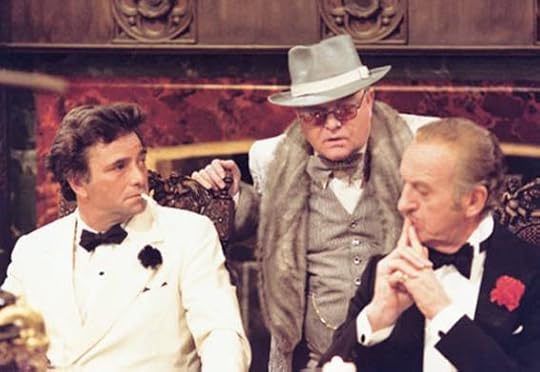
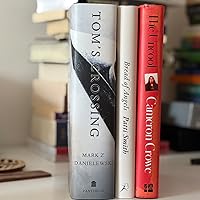
A book of extraordinary grace, incisiveness and honesty which further bolsters my impression that Capote remains one of the most important, original and underestimated writers of his era. Fuck his artificial image as a catty, trivial, morbid starfucker, and study the work: dark, devastating, morally decent work shot through with his actual character, the shadows of an encroaching darkness creeping across the sun-dappled idyll of his New Orleans childhood. Even fans tend to lean on a popular narrative – pushed in last decade’s cinematic biopics – that sees him in terminal decline after the trial of In Cold Blood, but while it’s true that he degenerated into substance abuse (an affliction dealt with in breathtaking fashion in the last of these 14 pieces), and that with it his work-rate slowed, this book may well be his creative zenith.
In Bob Dylan’s Chronicles, he explains (entirely preposterously) that in the late ‘80s he found a new way to sing: a mathematical formula that has enabled his voice to endure his Never Ending Tour (please post your punchlines below). Here, Capote does much the same, denigrating his entire back catalogue as he seeks to articulate exactly why, and how, he’s developed the new style premiered in this book. Unlike Dylan, who is talking through his silly cowboy hat, Capote is sincere. His style here is so clean, precise and economical, yet to formally inventive, that it takes the breath away. Every decision he makes, from delayed gratification, to leading with dialogue, to drifting into remembrance and reminiscence, seems right, and his evocation of emotion, of nature, and of character is remarkably specific and so uniquely powerful.
There are six short stories and seven conversational portraits, alongside a non-fiction (?) centrepiece about a serial killer, and each is remarkable in one way or another. Perhaps my favourite piece is Dazzle, a multi-layered story with a time-shifting perspective that’s about love, fear and guilt, as Capote relives the story of his paternal grandfather, a fortune teller and two terrible secrets: one comic, the other tragic. It is flecked with wonder, touched by horror, and redolent with an unstudied compassion for his younger self, before a climactic sucker-punch that knocked me sideways. But it’s just one masterpiece among many. The other short stories are rich in irony, but unwaveringly sincere, as they deal with self-loathing, denial and the secrets (or unspoken truths) that dominate the book, while his egalitarian ‘portraits’ take in a weed-smoking cleaner, Marilyn Monroe, pastoral novelist Willa Cather and amoral Manson acolyte Bobby Beausoleil: though you could class the first of those as ‘hilarious’ and the last as ‘chilling’, that’s to reduce them from the multi-faceted, playful, probing, touching, humane and sad works that they are. The only piece that doesn't quite work for me, at least not unequivocally, is Handcarved Coffins, the lengthy true crime chapter at the book's centre. It has passages of great insight – on sexuality, obsession, delusion – but at times its language is oddly forced, and ultimately I'm not sure exactly what the point is that Capote is constantly circling and yet never quite landing upon.
It makes sense, perhaps, that when the book does malfunction, it's in both style and content, for it's the balancing of form, viewpoint and revelation, both overt and within the reader, that is the book's great strength. Music for Chameleons is beautifully-written, but even Capote’s admirers often stop right there, and it’s much more than that. His swaggering, elegant, stylistic brilliance – even as a supposed has-been, with a pickled liver and a nose stuffed with coke – is really a way of packing as much wit, pathos and meaning into each line as possible. His style is not an end in itself, it's the way he carries truth to the reader.