⭐ “The closest thing to Tom Clancy I’ve read in years.” ⭐ “Chillingly realistic—and impossible to put down.” ⭐ “A nonstop, adrenaline-fueled ride from start to finish.”
The first missiles fall without warning.
Within hours, the world is at war.
Across the Pacific, American and allied forces are shattered—airbases reduced to ash, fleets scattered, defenses overwhelmed. What was once unthinkable becomes reality as the balance of power collapses in a single, devastating blow.
Now, the fight to survive begins.
Deep beneath the earth, inside hardened command centers, leaders race to contain a conflict already spiraling beyond control. On the front lines, soldiers fight and die for ground measured in miles—knowing each step forward may only delay the inevitable.
But survival is only the beginning.
Because as the first battles rage, a far more dangerous truth
This war was never meant to stay contained.
And the next phase won’t just decide nations—
It could consume the entire world.
Because in a war like this…
There are no safe distances.
No neutral ground.
No second chances.
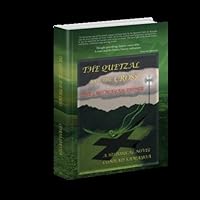
Pacific Storm is a gripping, high-stakes military thriller perfect for fans of Tom Clancy, Larry Bond, and Dale Brown—delivering relentless action, razor-sharp realism, and a chilling vision of modern global warfare.
John Webber doesn’t just raise the stakes in this third instalment—he detonates them.
After tearing through the first two novels, I came in expecting escalation. What I got was something far more unsettling: a chillingly plausible blueprint for geopolitical collapse. Webber leans hard into the fractures already visible on the global stage and asks a brutal question—what happens when those cracks finally give way?
This time, the simmering tension between China and the United States erupts with surgical precision. The opening strikes are swift, calculated, and terrifyingly effective, underscoring a sobering reality that wars are no longer won by bluster, but by patience, planning, and the willingness to act without warning. The result is a narrative that feels less like fiction and more like a dispatch from a near-future we’re not prepared to face.
What makes this novel hit harder than its predecessors is its scope. This isn’t just a battlefield story—it’s a systemic unraveling. Alliances falter, assumptions collapse, and long-standing power structures are exposed as brittle. The inclusion of North Korea adds another volatile layer, dragging old conflicts into a modern theatre where the rules have changed and no one seems to have the updated playbook.
Webber’s strength lies in his ability to orchestrate chaos without losing control. The multiple perspectives—military, political, and civilian—create a mosaic of confusion that mirrors the fog of war itself. The reader does not get a clear picture, they have to fight for it, piecing together truth from propaganda, strategy from desperation. It’s immersive in the most unsettling way.
The characters serve as both anchors and amplifiers. There are many, but that’s the point—this is not a story about individuals shaping history, but about systems grinding people down as history reshapes itself. Webber wisely avoids overindulgent backstories, keeping the focus on decisions, consequences, and the ideological undercurrents driving them. You don’t need to know everything about these people—you just need to understand what they represent.
And that’s where this novel lands its most effective blows. Beneath the missiles and maneuvers is a stark commentary on shifting global power. Webber isn’t interested in easy patriotism or clear-cut villains. Instead, he presents a world where dominance is contested not just through force, but through ideology, endurance, and long-game strategy. It’s uncomfortable, provocative, and exactly what a political thriller should be.
The pacing is relentless, the tension unyielding, and the surprises land with precision. Every chapter feels like a step deeper into a conflict that no one fully understands until it’s too late.
This isn’t just another entry in a series—it’s a warning shot.
Kudos, Mr. Webber, for an addictive third instalment.
It seems as if the author realized toward the end of book 2 that he had nothing more to say, and re-invented his story. On book 1 (excellent book, by the way), the big bosses in China reacted to internal dissent and attacked Taiwan after creating chaos in Mexico and Iran. So far, so good. In book 2 the author runs out of story and describes the invasion of Taiwan on mind-numbing, excruciating detail for what feels like thousands of pages. Book 3 suddenly revises the story to reveal an age-old plot, and then continues with more excruciating detail. Avoid books 2 and 3 at all costs.
I rapidly read page after page, and the author keeps stretching the story… the story which is becoming so thin that I found it difficult to continue time and again. I had hoped I would reach THE END in #3 but abruptly encountered “To Be Continued.” I had wanted to see just how the USA would prevail — but no more, forget #4. ALSO, there are so many grammatical ERRORS that I had to wonder if the author had bothered to have an editor proof-read his books! That abuse of the English language made me a little ANGRY! Get to work again, Mr. Webber.
From the secound American-Mexican war to the bush fires of the Middle East. The ember of WW3 have kicked off in book 3 ironically now we see heroes and villains die has unnamed soldiers fighting a war that might very will consume the world.
Lay I fill the South American theater could’ve been dragged out more do the pacific and Korea theater were very on point do I fell there was slacking of submarine warfare and space based weapons in the fight so far has it’s finally happened.
Plot and character development are very well constructed. Knowledge of military organization and tactics are also superior to most. Needs a good proofreader........mispellings; fractured sentence structures and word placement within sentences and missing words detract from reading enjoyment. I will, however, read future segments as they are available. Recommend if you are not easily distracted by the above progressed oversights.
This book was fantastic. The best of the series so far, and the first two were also spectacular in terms of plausible and detailed tactics and strategy. The close character development of several various ranks of characters, from both sides, and in each of the various theaters allows for a gripping, feels like you are there, firat person understanding of the story. Fingers crossed that there will be a continuation of this series
Good read on strategy and political realities of modern warfare.
Good read on strategy and political realities of modern warfare. Not as strong on realism on the tactical warfare level. No real attempt to develop individual characters. Author and editor should run transcript through a spell and grammar check prior to publication. It free and fast.
I would have given this book higher marks except for the many errors in it. Mostly wording. Some obvious. Some particularily technical. IR doesn't work like thermals and is not backup to thermals.
I enjoyed the book well written. Made you sit on the edge of your seat. Also makes you wonder if this ever happened what would it look like. I would recommend this book.
What a tragedy war is. Great read, with moves and counter moves. The description of materiel, battles, human suffering is greatly exposed. Conrad Samayoa
Plowed through books one and two. Had to wait for the third installment (this one) and am impatiently waiting for the next one. The books maintain multiple action and character arcs at the same time and very well. Trying (and failing) to be patient for the next installment. Or as Ronald Reagan once said "a really good read"