Skulduggery, power struggles and politics, The Private Lives of the Saints offers an original and fascinating re-examination of life in Anglo-Saxon England. Taking them from their heavenly status to the human level, Oxford art historian and BBC presenter Dr Janina Ramirez explores the real lives of over a dozen seminal saints.
This landmark book provides a unique and captivating lens through which to explore the rich history of the Dark Ages.
Janina Sara María Ramírez (née Maleczek; 7 July 1980), sometimes credited as Nina Ramírez, is a British art and cultural historian and TV presenter, based in Woodstock, Oxfordshire. She specialises in interpreting symbols and examining works of art, within their own historical context.
Ramírez went to school in Slough. She gained a degree in English literature, specialising in Old and Middle English, from St Anne's College, Oxford, before completing her postgraduate studies at the Centre for Medieval Studies, University of York. She completed an art/literature PhD on the symbolism of birds, which led to a lectureship in York's Art History Department, followed by lecturing posts at the University of Winchester, University of Warwick, and University of Oxford.
Ramírez is currently the course director on the Certificate in History of Art at Oxford University's Department for Continuing Education.
An enticing and cosy little book, but not altogether convincing. It is a saintly version of In search of the dark ages, Songs of Praise on the road through history, tenish saints as spotlights to illuminate, if you can pardon the pun, the way through the dark ages. It is, perhaps predictably for a British book, an insular work visiting Skellig Michael, Iona, Lindesfarne, but not Craggy Island, and overall oddly limited to the Atlantic islands of Britain and Ireland as a recipient area with the rest of the world as a mobile zone migrating people, ideas, and material goods into the static British zone.
The ten headline saints considered are Alban, Brigid, Patrick, Gregory, Columba, Cuthbert, Hilda, Wilfred, Bede, and Alfred, king of Wessex. The sharp eyed may have spotted that two of those, Bede and Alfred have never been considered saints, and Alban is pre-Anglo-Saxon while three others were outside the Anglo-Saxon zone which makes a saint shaped hole in the sub-title. As for the private lives of the saints, those are mostly unknowable though mostly they appear a fierce and determined bunch austere and powerful by turns, what Ramirez is doing, explicitly is creating 'narratives'. Saints lives by their nature are always narratives in any case, they conform mostly to accepted patterns of holy behaviour and illustrate the nature of the sanctified person's relationship to divine power, Ramierz's narratives then are counter narratives aiming to put the saint in their context, though since in some cases we know about these people only through hagiography or writings like those of Bede which are also presenting a distinctive narrative, the results could be gloriously circular. Ramierz avoids getting caught in such vicious circles of recursive saintliness by not getting too close and pointing out to some extent the meta-narrative of the function of the saint.
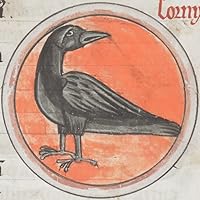
One of those narratives is about conversion and adaptation for example Ramirez mentions that one of the miracles that saint Brigid performed was to carry out an abortion on one of her hand maidens, but don't worry, theologically the consequences are limited because Brigid was most probably a repurposed pre-Christian goddess, and her pagan cult seems to have been fairly painlessly converted in to a Christian one with a continuity of the same cult practises, devotion to a trinity, maintenance of a sacred fire, (largely) celibate hand maidens, holy sites and so on. Another version of this repurposing was Cuthbert rebuking a pair of ravens for trashing a thatched roof, the chastened birds apologised by bringing a gift of lard to the saint, but the point was that ravens were holy to Woden, rebuking his birds and their submission to him showed the power of the holy man over the powers of the old faith.
Another narrative is the Holy person fleeing from the world and secular concerns to increasingly remote locations, but that this retreat is also a charge into spiritual action, isolated islands in habited by rich populations of birds are the places were devils dwell and the saint can face them down and demonstrate their power, power which can then be used as Columba did to tell loch dwelling monsters not to bite Picts or Scots any more (this taken sometimes as the first mention of a Loch Ness Monster).
Bede of course is a meta narrative in himself and I imagine there are books to devoted to what he wanted to say and how he expressed himself, indeed it is impossible to see a broad slice of Early English history without Bede's spectacles on and the best one can hope to do is accept that from the title onwards in Ecclesiastical History of the English Bede is creating the narrative that he wanted to be told about English history as effectively as the editor of a tabloid newspaper.
With King Alfred there is a dramatic change and the growth of the sanctity of the west Saxon royal house and the development of sainthood as a career move, an outstanding example the below mentioned Edith, illegitimate daughter of King Edgar, at that point of time the Papacy hadn't won control over the process of canonisation, instead local cults developed or were fostered by those who had secular or ecclesiastical power. This began with the development of the cult of King Edmund (king of East Anglia, accidental founder of the town of Bury St.Edmunds) whose only possible holy act was doing a passable, but fatal, impersonation of Saint Sebastian.
Ramirez really sinks her teeth into the discussion of the artistic remains of the period, most powerfully I felt over carved stone crosses. She picks up on details like changing scripts - from runes to Latin, and complex visual scenes and subtle allusions, some unintentionally funny - vines to show that Christ is the true vine - the false vine was Greek God Dionysius - a God probably about as much known round and about eighth century Northumbria as grape vines and their fresh fruits. The problem with her argument I felt was precisely that, stone crosses are public art, the more subtle and complex the visual presentation the less explicable and understandable it is for ye olde Churl and his Kvinna who presumably were the intended audience, it seemed from what she said that one would need to be at least as learned and educated as the good Doctor Janina Ramirez herself to understand and interpret such carved crosses, this strikes me as slightly problematic, although an interesting puzzle. But this tendency was not unique to stone crosses it is also true of the Franks casket which combines Christian and pagan scenes using Latin and runes. Then again maybe in ye olde Mead Hall the monks and stone carvers did sit around discussing God and symbolism and it is narrow minded of to imagine that only through book-learning and seminars that one can get to grips with such things.
Ramirez acknowledges that she draws strongly on Robert Bartlett's Why can the Dead do such great things? which I haven't read, but that points to another meta-narrative; the role of the holy person in a society and their power particularly in the Christian tradition to remain powerful even after death. A humorous example of this is King Oswald of Northumbria, who was martyred and then chopped into pieces in battle against the pagan king Penda of Mercia in 642 AD. After death however it turned out that Saint Oswald had a huge number of heads, one was buried with Saint Cuthbert, but he apparently also has other heads in the Netherlands, in Germany, Luxembourg and Switzerland (perhaps he was defeated in battle because he couldn't make up his mind - a complex process with so many heads) I imagine him standing like the Hydra before Penda, an example of two heads being better than one not always being true. If one was the Abbot or Abbess whose unworthy church hosted such a noble saint the multiplicity of heads itself was a proof of sanctity, the saint using his power out of love for the faithful to replicate himself to be more widely available to help out Christians wheresoever they may be.
The whole business of narratives is interesting, partly one sees a link with Ramirez's work on television, the narrative as a storytelling device to entrap the viewer. Partly also perhaps a certain pessimism or realism the past can not be known objectively, there is no truth only interpretation, all we can study are the stories we have told.
Dr Janina Ramirez, now quite well acknowledged as a Television historian and broadcaster over the past decade or so, crafts a history of the most well known Anglo-Saxon and Celtic Christian Saints, starting from the fourth century right up until the eleventh century AD, in a period commonly known as the 'Dark Ages', due to a lack of written records of this time, a confusing era of British history with very limited sources (apart from the venerable Bede, and without him we would have less sources to go on). Starting with Saint Alban and his martyrdom (being an early Christian at a time when Rome was still reveling in its Pagan debauchery), the history covers the main pivotal religious events and saintly characters over the next 600 years or so, or until the Norman Conquest of 1066 starts to suppress the cults that had grown up with these Saints, in England at the very least. Dr Ramirez analyses ten main characters during this period who became prominent religious figures in these Isles; Alban sacrificing himself for his Christian beliefs in place of another condemned person; Brigid from Ireland, who apparently was a Pagan figure before Celtic Christianity claimed her; Patrick, captured as a slave and sent to Ireland but became incredibly pious and a national saint in Ireland after a epiphany he is said to have experienced; Pope Gregory the Great - for sending Augustine and 12 followers to Britain on a mission to convert the Anglo-Saxons away from their entrenched Pagan beliefs - it worked gradually; Saint Columba from the isle of Iona off the Scottish coast - another Celtic Christian; Cuthbert - of Lindisfarne fame (split between Celtic and Roman Christianity - an interesting character); Hilda of Whitby Abbey and the Synod of Whitby fame (there were more Women involved in religious matters with authority during this time than ever since); Saint Wilfred; Bede the chronologist (not canonised, but ended up becoming the venerable Bede), whose book, The Ecclesiastical History of the English People, is a primary source; King Alfred - the first Royal Saint and finally brief sections on his sons and really ends with Edward the Confessor prior to the Norman conquest.
The book, whilst covering the characters mentioned and what made them saints, also paints around them and fleshes out with what was happening socially during this period. Pope Gregory the Great sent Augustine and a group of followers to Britain in 597AD, and Canterbury is the main place where Roman Christianity was adopted, this after near 200 years since the Romans left these isles to defend themselves from barbarians, and the Angles, Saxons and Jutes settled here with their Pagan beliefs. So whilst Celtic Christianity was already a 'thing' in Ireland, Wales and parts of Scotland, it was fundamentally Augustine with the backing from Rome who converted the majority of the tribes into some kind of unified belief structure, away from their 'barbaric', tribal ways. It worked, slowly at first, and the main focus of Dr Ramirezs' study concerns what was happening in Northumbria where several of the saints lived and worked. Lindisfarne Monastery and Whitby Abbey play no small role in the spreading of Roman Christianity, at least until 793 AD when the Vikings started to raid and eventually settle in the North, until King Alfred (the first Royal Saint) introduced the Danelaw and military victories for a brief period of time, until King Cnut and eventually the Normans started to rescind and suppress the cults spread around the Anglo-Saxon Saints.
It is a good history; the author also briefly covers less well known characters, maybe as a way to fill out some chapters, because as I said, the sources of this period are very very few; we have Bede as I mentioned, some surviving, flowery manuscripts (and religious art is a big thing of these times, all hand painted and written on vellum, it is amazing some of the works still survive today, considering the Viking incursions and the Norman suppression/eradication of Anglo-Saxon stone churches), a lot of archeological conjecture/discoveries and so on. Nationality also is covered - we are a nation of immigrants which ever country you say your 'proud' to be from. Modern day nationalism is such a fake concept that many politicians fail to recognise or wish to understand. I digress. Great history from a great historian. 4 stars.
Sadly, the choice by the author to ignore the Eastern Christians and therefore to retrospectively apply a medieval/modern idea of a ‘Pope’ and Catholic Church to pre-schism Europe is fundamentally undermining to the rest of the book.
For example, when describing how Christianity flowed along the secular, bureaucratic arms of the Roman Empire, the author says ‘just as the Emperor had to maintain control over his subjects from Hadrian’s Wall to Syria, so the Pope had to maintain orthodoxy and order between cities the length and breadth of Europe and beyond.’ This is terrible history! First of all, the emperor very much retained the right and power to determine and enforce orthodoxy. That was kind of the point of the council of Nicaea babe.
On top of that, early Roman Christianity was meant to be a case of shared primacy of the 5 patriarchs. Although the ‘pontiff’ based in Rome often claimed supremacy, it was as a first among equals and was certainly not widely accepted. For long stretches of time after the fall of the western empire, the new settlers (Goths, Vandals etc) were very comfortable ignoring the Roman patriarch, given they mostly adhered to the Arian heresy and so chose not to involve themselves in Catholic councils.
Following Justinian’s re-conquest of much of Italy, too, the patriarch of Rome was very much under the protection and behest of the emperor in Constantinople. It was only later, when the Byzantines lost control of their Italian holdings and the Eastern patriarchs were suddenly stripped of power after the Islamic expansion, that the Pope was able to lever his spiritual power into some tangible independent power by eventually throwing himself behind Charlemagne.
Even when the author acknowledges the very different state of Rome and her patriarch during the given time frame, such as when calling Gregory the Great ‘head of a beleaguered, small church in a rotten and run down city, with little in the way of wealth and power’, the crucial elements are still overlooked. Gregory wasn’t just a poor Pope, he was very much the poorest of 5 patriarchs (Pope not an official title yet, and wouldn’t be for some time) and required Byzantine Imperial approval in order to be consecrated. He was a bit player in the grand scheme of Christianity at the time, having spent time in Constantinople as part of a Roman embassy where he managed to piss off the other Patriarchs.
The context of his attempts to convert Britain and purge the Arian heresy to bring as much of the old western empire under nominal Roman leadership is completely missing in the author’s treatment. His actions are said to be about creating a Holy Roman Empire ‘against the ever-burgeoning power of the Eastern Church’. This is so… wrong. At this point, the East is the ONLY church, and Gregory exists at the behest of the head honcho of that church - the Byzantine Emperor. Gregory was like a district manager in a huge international corporation.
That quote really sums up the author’s struggle to sensibly represent the situation. It presents the case as though the papacy existed and was fighting to hold off Eastern Orthodoxy. Gregory’s actions are painted in this light, as though gathering allies. The reality is he fought with every scrap to get on anywhere near the same level the Eastern patriarchs were already on. He couldn’t get as far as allies, it was about establishing a power base in the first place. It’s so hard to take any analysis of Christianity or the early formations of such in converted lands seriously when the bare facts and realities are so overlooked.
Ultimately, the application of a post-HRE papal sense of power and primacy to the actual Empire/late antique era is incongruous at best. I get why a narrowly focused set of case studies could be seen not to have the scope to discuss the creation of the medieval papacy, but if that’s the case just don’t bring it up! Better to leave a gap than be wrong.
There are couple of other smaller issues; the author gets their dates messed up and positions Gregory as a champion of imagery ‘at a time when iconoclasm was sweeping away depictions of God, Christ, Mary and the saints in the Eastern Church’. No! You’re more than a hundred years early there. Another minor irritation is the repeated use of the word race when the author means ethnicity or ethnic group.
A fascinating book about several saints from Anglo-Saxon times. I've tagged it as 'religion' but it wears its religion very lightly.
Really, it's a romp through several hundred years of Anglo-Saxon cultural history using the lives of these saints as a device.
Clever approach, because, apart from a very few kings, it's these saints that are the most well known people of that era. And, in a sense, it's all about St Bede (or the Venerable Bede).
I'm an atheist and didn't find the religious element jarred at all - well, it did, because I can't help thinking, about hermits, anchorites, and enclosed monks and nuns, what a waste of a life, and the author at one point hints that nowadays we would question their mental stability.
Until very recently I have known very little at all about Anglo-Saxons. A Ladybird book about King Alfred, and a rather fleeting mention in Primary School history as the 'gap' between Romans and Normans. but I've read a couple of relevant books recently and seen a TV programme or two, and the so-called Dark Ages are emerging into the light for me.
I read it chapter by chapter, interspersed by various fiction, but if I had sat down and read it how I read fiction I'm sure it would have been finished in three evenings.
I suppose it counts as 'popular' history. Janina Ramirez appears often on our TV screens and that helps give a high profile to her books.
I don't really know where I sit on the intellectual ladder of history 'student'. I have abandoned or suffered academic history books because of their dire prose or their ponderous style. And I've despaired at so-called history books written by posh ladies who read English at Oxbridge and lack the analytical skills to create proper context.
So I guess this is about my level, especially for a period about which I know so little. Probably, if you already have a broad knowledge of Anglo-Saxon times, it will be a bit broadbrush.
On the other hand, I like history a lot more now that it has moved away from lists of battles and dates. This isn't exactly social history or sociology, and doesn't really examine the lives of the ordinary people, but it really does give a feel of that society.
It has to be said that Dr Janina Ramirez’s books has a slightly misleading title… but it is fascinating and informative read nonetheless. This book primarily focuses on ten saints spanning between the fourth and tenth centuries and placing them within the context of their environments. Focusing on events that influenced them or that they I turn influenced. It also highlights what a diverse and complex history the British Isles has. As she states in the last chapter: “there is no history of the English, Welsh or Scots, but rather a merging web where different races intermarry, coexist an integrate…our notion of identity are firmly imprinted with concepts of countries, geographical boundaries and religious affiliations, yet the early medieval period can be instructive in terms of eroding the importance of these distinctions.” Highly recommended as it is very accessible look at the Anglo-Saxon world and the people who helped shape it.
An interesting book in places, but vague in others. It would have been helpful to clarify that the author was using 'saint' to refer to those venerated as such by their contemporaries and immediate successors, rather than the (officially canonised) saints we recognise today, at the start of the book rather than the end - starting the chapter on Bede by explaining that he is not generally viewed as a saint gives the appearance that the author has forgotten the topic on which they're writing. There is also a disturbing authorial and editorial oversight in that the book states Paul/Saul of Tarsus was a Roman soldier who converted to Christianity - that such an easily verifiable fact is wrong (he was a Jewish tentmaker who had Roman citizenship) does beg questions about the veracity of the text.
The passion is Ramirez's prose is so refreshing. This is a highly readable and engaging book about the evolution of the Anglo-Saxon saints and their importance to religious and national identities. Bringing the saints back down to earth to look at their very real lives is a novel idea and one that Ramirez carries out with boundless enthusiasm.
This was too much of an overview. I wanted more! But as an intro the period and an introduction to how saints/sainthood was used and perceived, it was wonderful.
This is what you might get if you asked an earnest undergraduate to write on a topic that they didn't know very much about and told them they had to hit a minimum word count.
Also it's Oswiu not Oswui.
As with Femina, I want to mention that although overall weak, it's noticeably far weaker in the earlier eras. I don't think this is entirely Ramirez's fault, I think this is also what you get when a publisher doesn't care enough about the "Dark Ages" to notice that fully the first third of the book says literally nothing useful. And that makes me mad. 😡
This is an interesting way of tackling Anglo-Saxon history. Ramirez puts the saints in the cultural and religious context of their time to show the development of Christianity and its influence on politics, the arts and everything else. Very little is known about some of these characters but it doesn't really matter. My one criticism is that the book feels rather padded out in places.
It is my innate liking of Anglo-Saxon Britain which makes me rate this at 3.5/5 rather than any particular strength of the book. Indeed, I think that while it is an illuminating look into many people who otherwise do not get a deserved mention in more secular histories, the look into every individual here is quite shallow and generally based on a well-known story or feature. Rarely do we encounter even a conjecture of what their "private" life was like, and even where the author's mention of "interesting results" is common, these results are communicated down to the reader in a very poor manner.
At the same time, the author also draws attention to a lot of topics I have never thought about before and for this, this work is really enjoyable. This connective style is very good for the reader, for whom the 16th century is aligned with the 8th and the various regions of England with their continental equivalents. This comprehensive overview allows for a good general overview of what was going on, even if the details remain in the shade.
Overall, I would recommend this, even though it could have been called something else. The treatise here also ponders the meaning of sanctity and that is, always, a topic worth dwelling upon.
Though not quite as inspiring as "Femina" it's still 5/5 for me. Janina Ramirez just has a way of drawing the reader into the past and making it come alive. Would highly recommend to any history nerds out there.
Edit: Reading some of the worse reviews, I think a lot of people misunderstand how Ramirez positions this book. If you simply want an overview of all the available facts about a certain saint, 1. you can piece that together yourself and 2. you will be sorely disappointed by the lack of evidence.
The point of the book is to perceive these saints as living, breathing people who influenced the world around them and acted within the context of their time. Ramirez strips away the spiritual and formulaic hagiography, to use Anglo-Saxon saints as a lense through which we can bring the world of early medieval England into focus.
It's not meant as a comprehensive study on the period, but rather an interesting new approach to better understand the time and its people. And in that sense, Ramirez did a great job.
A really good book about the Anglo-Saxon period, as told via the frame of the rock stars of their day, the saints. I really enjoyed Ramírez's take on the evidence, and was particularly interested to learn how Bede consigned the raven, as a key supporting figure in Anglo-Saxon pagan folklore, to the dustbin of mythological history with simple flick of his editorial quill when reviewing the bible story of Noah in a translated manuscript.
If I have any criticism of the book, it's one that I realise is specifically particular to me - in terms of the story of St Cuthbert, I actually think his long afterlife as a specifically referenced player in the affairs of his community (i.e. if you dealt with the community of Cuthbert in Lindisfarne and later Durham after Cuthbert's death, contemporary sources saw the bishop they were talking to as a stand-in for Cuthbert himself) is fascinating and could have been explored to some extent in the book. But then the world doesn't revolve around me, and maybe I should write my own bloody book?! ;-)
Overall, I recommend this book if you've any interest in history, religion, or just the Anglo-Saxons in general.
A bit of a 3.5 stars book, but I'm tipping it over into 4 stars because it is well-written and engaging.
A chronological look at saints (and almost saints) whose lives were important to Anglo-Saxons or who were Anglo-Saxons. The result is consistently interesting but a somewhat unfocused book where some chapters are detailed examinations of the saint's life (Patrick, Alfred), some chapters are more about the way the saint's story has been used (Brigid, Cuthbert), and some are only slightly about the saint's life and are more diversions into examining artefacts from their lifetimes (Bede).
When it hits its groove, it's really great, and overall it manages to build a picture of the religious ructions and social upheavals which the Anglo-Saxons found themselves in. As an explanation of the cultural landscape of their world it was a very good introduction and I will be looking for more on this in the future.
Very enjoyable, but presented strangely. Although explicitly described as nine chapters, each dedicated to a different saint, in order to cover a few thoroughly rather many poorly, each chapter then contains multiple saints. Saint Patrick loses control of his own chapter almost immediately, handing it over to Saint George, followed by various sub-chapters following on tangents from there. I enjoyed the breadth covered, but was expecting depth.
This entire review has been hidden because of spoilers.
Confusing and repetitive structure. Barely four pages on Edward Confessor, England’s principle royal saint. Truly summarised by the repeating of the same quote from Archbishop Wulfstan the page after it had already been cited.
It took me longer than I expected to read this because it is very badly written, in the customary humanities style of today, i.e., too much verbiage, ‘in terms of,’ ‘in the context of,’ poorly constructed sentences, and several clichés on every page. The bad writing is not only a distraction from the content; it often obscures it. Sometimes she expresses herself so poorly that I don’t know what the hell she is trying to say; other times she will enunciate the same thought (often a banality) up to three different ways on the same page. It reminds me of Ernie Wise’s badly written plays (on the Morecambe and Wise Show). It is like some fraud pretending to be a scholar; yet she is a lecturer at Oxford University! It strikes me that she has a similar sort of mind to that of Karl Marx: she is not a poet, but she thinks poetically rather than logically. She reminds me of some contemporary feminists, too, whose contributions to ‘theory’ are more like bad poetry. The book was by turns interesting and boring. I am not sure how much of the boredom was due to the style of writing rather than to the subject-matter. After all, if it takes so many words to say so little, one is bound to start dropping off. The book would be much better if it was a quarter of the length. It is a shame because someone who can write well, who can get clear about things and then explain them clearly, could have made this a very interesting book. As it is, I am disappointed that I paid more than £11 for the damned thing!
A good book in principle, about an interesting subject, but unfortunately it was very shallow on detail. I understand that for a lot of people there's not a lot of detail available, but it still felt very much like I was just getting my teeth into the story of one person when the next was introduced. The overall effect was rather unsatisfying.
In particular, there were several occasions when a section purported to be about a particular saint, but the majority of it was about other historical figures who were in a similar category for that saint. It felt like the subject matter would have been more accurately represented by either shorter chapters or the chapters being named after categories rather than saints.
Also, I was somewhat uncomfortable about the statement that the early Christians were a lot like ISIS. I know Ramirez meant in terms of the intensity of their faith, but... what?
From Alban, beheaded by his fellow Romans, to Edward the Confessor, whose death brought Anglo-Saxon England crashing to an end, this is the story of those people of Anglo-Saxon England who walked the line between earth and heaven. How the saints described were real people, like you or I, who confronted real dilemmas, and had real impact on the lives of others. It is through them that the story of early medieval Britain can be told from a fresh perspective.
The Private Lives of the Saints – Power, passion and politics in Anglo-Saxon England, Janina Ramirez, 2016, 296 pages
A few years ago I read every reputable book on Anglo-Saxon England that I could lay my hands on for under £60 – plus a few rum ones, too. As a result, I ran out of books to buy; so it was a real pleasure to find a couple in Waterstones the other week.
The chapters of this book take in:
Alban Brigid Patrick Gregory Columba Cuthbert Hilda Wilfrid Bede Later West Saxon royal saints
As can be readily seen not all of these are particularly Anglo-Saxon.
Saints' lives aren't easy source material for the non-specialist to work with and require very careful handling. For a start, most authors can't read them in the original language, whether it be Latin, OE, ON, etc, so are reliant on other people's translations of what can often be ambiguously constructed texts. Also few are au fait enough with the bible or the patristics to spot a reference or an exemplar being followed or even an earlier saints life or classical text. Further to this, not many would be authors on this topic are aware of the influences or ties of loyalty that the authors of various texts had and so wouldn't be able to deduce that a favourable reference was due to a link between their religious house and a superior one or that one of the people they discussed was a relative of a benefactor.
With this in mind, I opened the book.
I began with the chapter on St Cuthbert as I wasn't too interested in the earlier saints and within ten pages I gave it up. There was simply too much that was either incorrect, obvious supposition or just extremely doubtful and I had no confidence in anything that I would come across in here that I couldn't verify elsewhere.
A non-exhaustive list of things that made my eyes widen in ten pages.
Labelling Elmet and Goddodin as fiefdoms Using the label Bretwalda without nuance Claims that the term hide came from leather hides produced by land, when it comes from hiwisc and hiwscipe, which mean family (a married couple, plus dependant labourers and slaves, etc,) Has it that Oswiu (not Ecgfrith) was killed at Nechtansmere Christian priests seen as the equivalent of Druidic seers – how does she know this? We know next to nothing about druids.
In fairness, the rest of this book might be dynamite, but I have no confidence in it and even though we tend to more or less live forever in my family, life is still too short to read this.
I've been down a bit of a saint rabbit hole this year, reading daily lives of saints, very short introductions, and other connected bits of hagiophinalia. Janina Ramírez's The Private Lives of the Saints appealed to me through indulging both my hagiophilia and my fascination with Medieval Britain, detailing the life and times of a number of British, Irish, and associated saints from the fifth to the eleventh centuries CE. That it took me three months to read perhaps indicates that the appeal didn't last through the whole book, and I have to say that I struggled at times to get a hold on Ramírez's overall point. But there was a lot of fascinating information in here that I enjoyed and absorbed.
I'm musing over whether to go into some detail about my likes and dislikes, but I think right now I am too focused on the latter, so I will indulge myself in only one. In her chapter on St. Columba, Ramírez states that he met with the Loch Ness monster. Even though I am not a specialist on this period, I know that Columba did not meet the Loch Ness monster, but rather a separate monster in the River Ness (thanks, Storyland: A New Mythology of Britain!). This kind of detail is frustrating, because it lets me know that I can't trust any of the fact(oid)s in the book without checking their details.
But I did enjoy so much of Ramírez's accounts of the lives of especially the earlier saints, Brigid and Patrick and Hilda and more. Towards the end, it felt like she was trying to cram it bit too much in, more than perhaps was planned or accounted for, especially in the final chapter proper on Alfred and other 'saint kings'. But that just shows a rich a vein there is to explore in the lives of the British (and Irish, and Gregory the Great for some reason) saints of the second half of the first millennium CE.
I bought this in the gift shop at Whitby Abbey, so as a tourist and pilgrim, it did do what I was wanting it to. Insofar that it gave me further insights into a subject that was teased at the different stalls and plaques at the Abbey.
I've always found the 'dark ages', well, rather dark. By which I mean, I have a good working grasp on my history around the Roman period, then there is a big blip of 'huh?' and then around the Renaissance things pick up again.
It was helpful to travel through Anglo-Saxon Britain with a thread, as Ramirez explores the wider mechanisations of the period in Britain from the vantage point of "Saints". I use the term in inverted commas, as she can be a bit non-canonical in her choice of saints, as such as Bede. But nonetheless, it's a good primer.
Something that makes the book quite palatable, but also a lot less academic, is Ramirez's propensity to be quite selective about where she linger and pauses, and where she makes pretty substantial leaps in the story. Also, within that story, she certainly is not coy at presenting the reader with her reading of the colourful characters she explores.
At a tough nut crack to crack for any historian - the elusive life of saints, whose records are informed by the nebulous cloud of myth and legend. Ramirez tries to navigate that hazy space by offering up a clearer idea of who these people might be, but rather than admit to a lot of it being estimates of who these individuals were, she enforces her own interpretation. I feel a bit petty for complaining about that, as that is the remit of many a historian, but it just made the reading experience a little jarring.
Anyway, I feel educated, and am keen to read more on the subject. While I imagine I can find a book that has a bit more weight behind it, it certainly worked for me as a good primer.
For me, this book proved to be something of a mixed bag. For a start, its sub-title - Power, Passion and Politics in Anglo-Saxon England - gives a much more accurate description of what the book is actually about. I know that the author is passionate about her subject; I have enjoyed her work on TV. But it is that very passion that hangs rather awkwardly over this book. What it is, is a rather good assessment of the development of the church in England (with nods to the rest of the British Isles where necessary) and an investigation of the wider society around it. Using the life and times of a dozen saints as the bones of this analysis, she shows how these important figures both guided and were influenced by their times. What it isn't, is anything about the private lives of the saints. At this distance, we know virtually nothing about the real figures behind these saints. Most were used by their adherents and supporters for political or religious purposes within a few years of their death. Hagiography abounded, and what little information we do have is highly suspect. It is an enjoyable read, with much of interest about a little understood (and much misunderstood) period. But it is made somewhat hard-going by an illogical structure and some repetition. It would have really benefitted from the employment of a good editor to sort this out (as well as a proof-reader).
I approached this book with some misgivings: the superfluous use of an academic title too often purports to give spurious authority to a book's questionable contents. As an academic art historian and broadcaster, the author has produced an avowedly popular history of the lives of selected Anglo-Saxon saints as examined through the lens of the art, texts and context of the period. While her avoidance of academic jargon and literary theory is commendable, her resort to unsubstantiated speculation, suggestion, supposition and projection in the pursuit of 'relatability' is not. In her defence, the author advocates caution in reading medieval hagiography: 'While we may pillage them for historical individuals, they were were literary creations, and the characters within could reveal varying degrees of fact and fiction' (82). When citing Alcuin's nightmare of being accused of preferring Vergil to the Psalms (250), Ramirez infers his 'complicated relationship with classical learning'. She fails to observe, however, that this is itself a literary trope derived from Jerome's dream of charged with a closet love of Cicero. Ramirez's offence in this lively but often unreliable study is her failure to heed her own counsel, offering in place of substantiation an imaginative reconstruction of the self-evidently inaccessible private lives of the saints under discussion.
Dr Ramirez has compiled a great collection of mostly forgotten British early medieval saints, such as Alban, Brigid, Columba, Cuthbert, Hilda and Wilfrid. She covers the often scant details of the history, which was still enjoyable. However she then proceeded to draw parallels between these medieval characters to current day extremists and terrorists. Likening St Alban's stubbornness to jihad or the lure of the Catholic faith in the early Middle Ages something like ISIS' influence today, I'm not kidding. Which was just inappropriate and lazy. It was bordering on click-bait for readers. Dr Ramirez lost me completely when she misunderstood the difference between the Orthodox church (big O, for example Greek Orthodox) and the orthodox church, (little o, for example the orthodox catholic faith prior to the great schism, 11th century). I flicked through it. Enjoyed most of it, but was disappointed with the almost journalistic approach.
The title is misleading. Janina tells us we know almost nothing about the private life of the saints. And at least half of the book deals with people who are not Anglo-Saxon being either Roman (Alban and Gregory) or Celtic and some are not saints (e.g. Bede)
It is necessary to understand that Janina writes like a BBC journalist and a BBC journalist does not believe in miracles and does not understand the Christian religious experience. So we get Alban being described in terms of Jihad and where Cuthbert prophesies the movement of his bones after his death this is described as 'eerie'.
Most of the written material for this work is taken either directly or indirectly from the writings of the Venerable Bede and I suggest that you read "Ecclesiastical History of the English People" first (my copy is a Penguin Classic). If you have read Bede, Janina's book contains some interesting pages on artifacts from this period including a number of pictures.
Dr. Ramirez quotes Balzac at the end of this highly enlightening work, who states that "What a splendid book one could put together by narrating the life and adventure of a word." This book does a wonderful job of beginning a study of the word "saint," I was lucky enough to hear Dr. Ramirez lecture last summer at Oxford(when the world was slightly more normal) where I continued taking graduate courses in Literature and her lecture inspired me to consider combining literature, archeology, and history in the pursuit of Anglo-Saxon studies. Anyway, this book is worth reading and is rather engaging and very accessible. I highly recommend it to anyone interested in the fascinating history of England, its leaders, peoples, saints, and monks; as well as its religious past from the 4th century to the 11th.
highlight was in the opening when they said that Princess Diana is a modern day saint pretty muddled after that, chapters supposedly about one saint often contain more information about other figures to the point that i don’t think i really learned anything at all i thought about opening the wikipedia articles about these saints to actually get straight facts, rather than a confusingly vague explanation of the papacy in Anglo-Saxon england. a lot of things were brought up seemingly without relation, and i understand explaining the context in which the saint existed, but not to the extent of writing completely around the saint. i don’t feel like i understand them any better at all. it’s not really “the private lives of saints” more than “this guy was a saint… here’s a bit about his friend instead”