

What do you think?

The Shadow of the Object
'One of our boldest writers' Deborah Levy
A magnificent work of shadow-play and a meditation on desire, metamorphosis and mortality.
Flora is visiting home in Mexico when the family dog leaps up and bites her hand. She winds up in hospital where she undergoes several surgeries under anaesthesia and meets Wilhelmina, an elderly German woman with pneumonia, who collects pre-cinema toys and instruments. The two of them embark on a series of dream-like conversations in the hospital corridors. Wilhelmina puts on a magic lantern show for Flora, leaving her spellbound.
When things take an unexpected turn, Flora finds herself entrusted with an important mission. She returns to London, where she resumes her job polishing silver at a jewellery shop, and strikes up a strange friendship with Wilhelmina’s son, Max. As Flora dips in and out of her imagination, she is increasingly aware it’s not only the magic lantern that projects, and her perception of reality is subtly altered.
‘One of the most brilliant novelists working in English today’ Garth Greenwell
‘The politics of her prose is existential rather than anecdotal, as it was with Kafka’s’ Zadie Smith
‘A subtle and courageous writer’ Ali Smith
‘Chloe Aridjis is crafting a poetics of the strange’ TLS
A magnificent work of shadow-play and a meditation on desire, metamorphosis and mortality.
Flora is visiting home in Mexico when the family dog leaps up and bites her hand. She winds up in hospital where she undergoes several surgeries under anaesthesia and meets Wilhelmina, an elderly German woman with pneumonia, who collects pre-cinema toys and instruments. The two of them embark on a series of dream-like conversations in the hospital corridors. Wilhelmina puts on a magic lantern show for Flora, leaving her spellbound.
When things take an unexpected turn, Flora finds herself entrusted with an important mission. She returns to London, where she resumes her job polishing silver at a jewellery shop, and strikes up a strange friendship with Wilhelmina’s son, Max. As Flora dips in and out of her imagination, she is increasingly aware it’s not only the magic lantern that projects, and her perception of reality is subtly altered.
‘One of the most brilliant novelists working in English today’ Garth Greenwell
‘The politics of her prose is existential rather than anecdotal, as it was with Kafka’s’ Zadie Smith
‘A subtle and courageous writer’ Ali Smith
‘Chloe Aridjis is crafting a poetics of the strange’ TLS
192 pages, Hardcover
First published April 16, 2026
About the author
Chloe Aridjis
25 books194 followersChloe Aridjis was born in New York and grew up in the Netherlands and Mexico City. After receiving a BA from Harvard, she went on to receive a PhD from Oxford University. A collection of essays on Magic and Poetry in Nineteenth-century France was released in 2005. Her first novel, Book of Clouds, followed in 2009, winning the Prix du Premier Roman Etranger in France.
Ratings & Reviews
Friends & Following
Create a free account to discover what your friends think of this book!
Community Reviews
Displaying 1 - 30 of 372 reviews

July 1, 2026
Longlisted for the 2026 Booker Prize
Every so often, she would say that the value of her collection was that it held the grammar of everything that is possible. When she parted with it, she parted with that sense of possibility.
Chloe Aridjis's The Shadow of the Object opens with our narrator, Flora, in her early 40s and living in North London but visiting her parents in Mexico City (or rather her mother and her step-father - her father, who emigrated from northern England to Mexico in his 20s, having one day walked away from the family) when the elderly family dog unexpectedly, and quite severely, bites her hand.
The fewer the props the greater the magic, a famous magician once said, although in my case it wasn’t the flourish of a wand but the wave of my own hand. My own hand made certain things vanish and conjured others into existence. Yes, its mere movement brought about more change, more transformation, than any magic trick. On night three of my visit home, after watching a film with my parents in their bedroom, I’d risen from my chair and waved goodnight. The mistake, we later concluded, had been to wave. All the dog saw, we concluded, had been a disembodied hand.
Hospitalised for a series of operations, she meets Wilhelmina, an elderly German woman, who also transpires to be on a visit from North London, but hospitalised with a recurrence of pneumonia. The wheelchair bound Wilhelmina initially approaches Flora to ask her if she can use her Spanish-language skills to persuade the nursing staff that Wilhelmina should be allowed to continue smoking, a task in which Flora unsurprisingly fails, but the two strike up a friendship, and Wilhelmina turns out to be a collector.
One of the greatest collections in the world, she said, of pre-cinema toys and instruments. You know, optical illusions and things like that. Someone once said that the German psyche has a tendency to endow the inanimate with a soul, and in my home that thought was illustrated one hundred times over. Just imagine: shelves and shelves of magic lanterns and peep boxes, long mirrors that returned sideshow reflections, zoetropes and phenakistoscopes, shadow puppets in every corner.
And Wilhelmina's last act of friendship before suddenly and unexpectedly succumbing to her condition is to give Flora a show, using a zoetrop and set of magic lantern slides she had purchased in the country, a respite from the renunciation the sterile hospital environment imposes:
Here in the hospital each one of us was torn from the material things that defined us in life. Our props scarcely varied from room to room. All the ornaments that had ever passed through my hands or Wilhelmina’s ceased to matter; without design, we had all become a bit more holy through this imposed renunciation of riches.
Back in London we see Flora at her work: as a silver polisher in the downstairs workshop of a jewellery shop, polishing is not an art to be taken lightly. We add shadow or lustre to an object, remove some of its history or stealthily add a make-believe one, a shop which both makes/sells and repairs rings, skull ones a particularly speciality, (inspired by the real-life (The Great Frog), accompanied by suitable music:
The shop upstairs, however, is governed by music, from the moment we open until the moment we roll down the shutters, and the only genre we all agree on is heavy metal, the tempo and temper best matched to our skull rings. Whenever we crave a bit more verve down below we wire our speakers to the shop stereo and nurture a spiritual connection to the industrial towns in the north of England where, Paul likes to remind us, many heavy metal bands originated, inspired by all the loud clanging and machinery. One afternoon as ‘The Unforgiven’ was starting to play, our shop was visited by a handsome stranger. I’d never known what this Metallica song was about yet felt certain this man had stepped out of it.
Before leaving Mexico she had received an unusual request from Wilhelmina's son Max - to bring back in her luggage both his mother's ashes but also her magic lantern, and when she returns them, Max and Flora begin a relationship, although Flora seems as attracted to the residual of Wilhelmina's (actually now rather diminished) collection:
The door opened onto a chilly space unwarmed by any human body in a while, yet when I turned on the light it seemed so busy with little figures I had the sensation I was intruding on a miniature kingdom that’d been going about its daily life. The surfaces teemed with objects, each telling a story I’d never know: a mermaid with crown and guitar, a blue marble obelisk, a plaster owl on a stand, an antique hourglass in an ornate wooden frame, a panel painted with Indian deities, a taxidermied duck’s head on a pedestal, a wooden model of a staircase, a row of miniature metal boots with painted heels, a beaded tiger, two wooden matchboxes with scarab designs, a toy paper circus, the papier mâché head of a man in a fez, a tiny porcelain typewriter, a dragon candlestick.
This is, as this quote suggests, a novel infused with a rich collection of objects, with prose descriptions that lead the reader to seek out the visual confirmation. Leonara Carrington's The Hearing Trumpet is an obvious reference, as well as WG Sebald's work (albeit without the photos) the ekphrastic writing of Rachel Cusk and the slighly surreal world conjured by Deborah Levy.
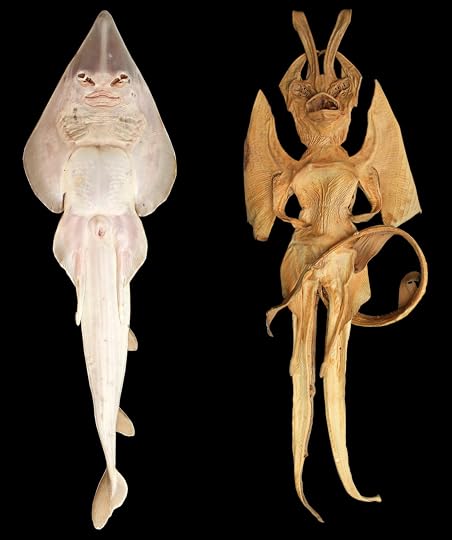
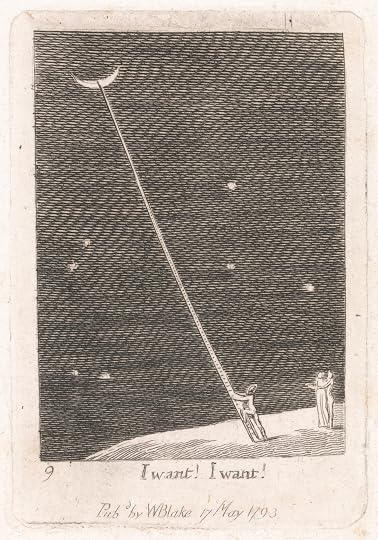
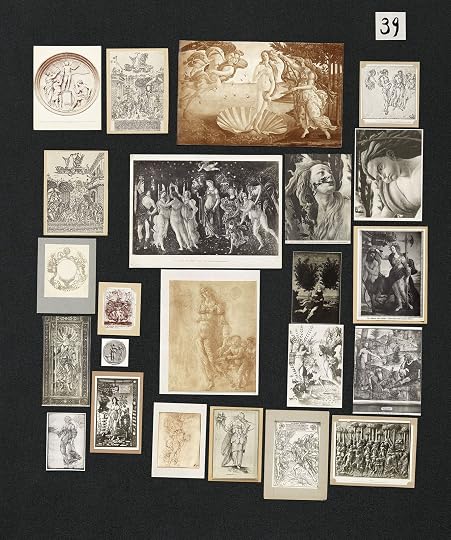
Particular favourite verbal images for me included the devilish skeleton of a pez diablo (which Wilhelmina purchased in Mexico and Max declines to accept); Falk magic lanterns; Wilhelmina's red packets of strong Roth-Händle cigarettes; a print of William Blake’s I Want! I Want!; and Aby Warburg's Bilderatlas Mnemosyne.


A haunting, intriguing and beautifully crafted take on mortality, interpersonal and interspecies relationships, objectivity and subjectivity, and a strong Booker Prize contender.
Media reviews (all very positive)
https://www.ft.com/content/664dc809-a...
https://www.the-tls.com/literature/fi...
https://www.theguardian.com/books/202...
https://literaryreview.co.uk/just-pro...
https://www.spectator.com.au/2026/04/...
The judges' commendation
‘Chloe Aridjis’s mysterious and free-wheeling novel begins with an unsettling image: a seemingly disembodied hand, waving in mid-air, which is swiftly bitten by a confused Alsatian. The subsequent story, which follows the jewellery polisher Flora as she recovers from the attack in Mexico City before returning home to London, is similarly rich in strange imagery that slips us between the real world and dream-states. There’s darkened figure in a hospital corridor; figures flickering on a wall; a vignette from the point of view of a mouse. We were charmed by the novel’s meditation on friendship and grief, and its suggestion that the most meaningful truths can be found in the shadows.’
Every so often, she would say that the value of her collection was that it held the grammar of everything that is possible. When she parted with it, she parted with that sense of possibility.
Chloe Aridjis's The Shadow of the Object opens with our narrator, Flora, in her early 40s and living in North London but visiting her parents in Mexico City (or rather her mother and her step-father - her father, who emigrated from northern England to Mexico in his 20s, having one day walked away from the family) when the elderly family dog unexpectedly, and quite severely, bites her hand.
The fewer the props the greater the magic, a famous magician once said, although in my case it wasn’t the flourish of a wand but the wave of my own hand. My own hand made certain things vanish and conjured others into existence. Yes, its mere movement brought about more change, more transformation, than any magic trick. On night three of my visit home, after watching a film with my parents in their bedroom, I’d risen from my chair and waved goodnight. The mistake, we later concluded, had been to wave. All the dog saw, we concluded, had been a disembodied hand.
Hospitalised for a series of operations, she meets Wilhelmina, an elderly German woman, who also transpires to be on a visit from North London, but hospitalised with a recurrence of pneumonia. The wheelchair bound Wilhelmina initially approaches Flora to ask her if she can use her Spanish-language skills to persuade the nursing staff that Wilhelmina should be allowed to continue smoking, a task in which Flora unsurprisingly fails, but the two strike up a friendship, and Wilhelmina turns out to be a collector.
One of the greatest collections in the world, she said, of pre-cinema toys and instruments. You know, optical illusions and things like that. Someone once said that the German psyche has a tendency to endow the inanimate with a soul, and in my home that thought was illustrated one hundred times over. Just imagine: shelves and shelves of magic lanterns and peep boxes, long mirrors that returned sideshow reflections, zoetropes and phenakistoscopes, shadow puppets in every corner.
And Wilhelmina's last act of friendship before suddenly and unexpectedly succumbing to her condition is to give Flora a show, using a zoetrop and set of magic lantern slides she had purchased in the country, a respite from the renunciation the sterile hospital environment imposes:
Here in the hospital each one of us was torn from the material things that defined us in life. Our props scarcely varied from room to room. All the ornaments that had ever passed through my hands or Wilhelmina’s ceased to matter; without design, we had all become a bit more holy through this imposed renunciation of riches.
Back in London we see Flora at her work: as a silver polisher in the downstairs workshop of a jewellery shop, polishing is not an art to be taken lightly. We add shadow or lustre to an object, remove some of its history or stealthily add a make-believe one, a shop which both makes/sells and repairs rings, skull ones a particularly speciality, (inspired by the real-life (The Great Frog), accompanied by suitable music:
The shop upstairs, however, is governed by music, from the moment we open until the moment we roll down the shutters, and the only genre we all agree on is heavy metal, the tempo and temper best matched to our skull rings. Whenever we crave a bit more verve down below we wire our speakers to the shop stereo and nurture a spiritual connection to the industrial towns in the north of England where, Paul likes to remind us, many heavy metal bands originated, inspired by all the loud clanging and machinery. One afternoon as ‘The Unforgiven’ was starting to play, our shop was visited by a handsome stranger. I’d never known what this Metallica song was about yet felt certain this man had stepped out of it.
Before leaving Mexico she had received an unusual request from Wilhelmina's son Max - to bring back in her luggage both his mother's ashes but also her magic lantern, and when she returns them, Max and Flora begin a relationship, although Flora seems as attracted to the residual of Wilhelmina's (actually now rather diminished) collection:
The door opened onto a chilly space unwarmed by any human body in a while, yet when I turned on the light it seemed so busy with little figures I had the sensation I was intruding on a miniature kingdom that’d been going about its daily life. The surfaces teemed with objects, each telling a story I’d never know: a mermaid with crown and guitar, a blue marble obelisk, a plaster owl on a stand, an antique hourglass in an ornate wooden frame, a panel painted with Indian deities, a taxidermied duck’s head on a pedestal, a wooden model of a staircase, a row of miniature metal boots with painted heels, a beaded tiger, two wooden matchboxes with scarab designs, a toy paper circus, the papier mâché head of a man in a fez, a tiny porcelain typewriter, a dragon candlestick.
This is, as this quote suggests, a novel infused with a rich collection of objects, with prose descriptions that lead the reader to seek out the visual confirmation. Leonara Carrington's The Hearing Trumpet is an obvious reference, as well as WG Sebald's work (albeit without the photos) the ekphrastic writing of Rachel Cusk and the slighly surreal world conjured by Deborah Levy.
Particular favourite verbal images for me included the devilish skeleton of a pez diablo (which Wilhelmina purchased in Mexico and Max declines to accept); Falk magic lanterns; Wilhelmina's red packets of strong Roth-Händle cigarettes; a print of William Blake’s I Want! I Want!; and Aby Warburg's Bilderatlas Mnemosyne.
A haunting, intriguing and beautifully crafted take on mortality, interpersonal and interspecies relationships, objectivity and subjectivity, and a strong Booker Prize contender.
Media reviews (all very positive)
https://www.ft.com/content/664dc809-a...
https://www.the-tls.com/literature/fi...
https://www.theguardian.com/books/202...
https://literaryreview.co.uk/just-pro...
https://www.spectator.com.au/2026/04/...
The judges' commendation
‘Chloe Aridjis’s mysterious and free-wheeling novel begins with an unsettling image: a seemingly disembodied hand, waving in mid-air, which is swiftly bitten by a confused Alsatian. The subsequent story, which follows the jewellery polisher Flora as she recovers from the attack in Mexico City before returning home to London, is similarly rich in strange imagery that slips us between the real world and dream-states. There’s darkened figure in a hospital corridor; figures flickering on a wall; a vignette from the point of view of a mouse. We were charmed by the novel’s meditation on friendship and grief, and its suggestion that the most meaningful truths can be found in the shadows.’

July 29, 2026
Longlisted for the Booker Prize 2026
Pfff, so this novel is all about pondering the significance of objects - but W.G. Sebald this is not: The great master employs architecture, images, and objects to evoke a sense of time and to reflect how time has shaped the characters he depicts, but in Aridjis' work, they largely remain things, and hence mundane from a storytelling perspective. Our main character Flora hails from London and visits her mother and step-father in Mexico City, where she is bitten by the family's elderly Alsatian who, due to his cataracts, mistakes her hand as a disembodied shadowy object. The injury is rather severe, so she gets hospitalized and experiences her hand as disembodied herself (metaphor! metaphor!) - and she meets Wilhelmina, an elderly German woman who, before passing from pneumonia, gives a show using her zoetrope / magic lantern devices. Flora then takes Wilhelmina's worldly remains, including her ashes, back to London, where the late artist's son Max lives (the objects are a shadow of his mother, capiche?).
Granted, I have a certain hatred for all things magic lantern-related, because I had to learn ALL about early cinema in college, and it was bo-ring (the plight of a media major). Additionally, the book does have a heavily descriptive and contemplative approach, but it's not heavy on plot or experimentation, which means: It's not to my taste. I listened to the audio book, and I fell asleep five times and had to go back and back and back (no exaggeration). Bottom line is: I'm not sure why I was told all this. There are parts that work in the sense that they make readers think, but it's not deep or complex or challenging enough, especially when you start with a disembodied hand and pull out the laterna magica.
And have I mentioned that Flora is some kind of professional silver polisher (metaphor! metaphor!)? *sigh* I have forgotten everything about Aridjis' Sea Monsters, and I'm afraid I will not remember much of this effort either.
Pfff, so this novel is all about pondering the significance of objects - but W.G. Sebald this is not: The great master employs architecture, images, and objects to evoke a sense of time and to reflect how time has shaped the characters he depicts, but in Aridjis' work, they largely remain things, and hence mundane from a storytelling perspective. Our main character Flora hails from London and visits her mother and step-father in Mexico City, where she is bitten by the family's elderly Alsatian who, due to his cataracts, mistakes her hand as a disembodied shadowy object. The injury is rather severe, so she gets hospitalized and experiences her hand as disembodied herself (metaphor! metaphor!) - and she meets Wilhelmina, an elderly German woman who, before passing from pneumonia, gives a show using her zoetrope / magic lantern devices. Flora then takes Wilhelmina's worldly remains, including her ashes, back to London, where the late artist's son Max lives (the objects are a shadow of his mother, capiche?).
Granted, I have a certain hatred for all things magic lantern-related, because I had to learn ALL about early cinema in college, and it was bo-ring (the plight of a media major). Additionally, the book does have a heavily descriptive and contemplative approach, but it's not heavy on plot or experimentation, which means: It's not to my taste. I listened to the audio book, and I fell asleep five times and had to go back and back and back (no exaggeration). Bottom line is: I'm not sure why I was told all this. There are parts that work in the sense that they make readers think, but it's not deep or complex or challenging enough, especially when you start with a disembodied hand and pull out the laterna magica.
And have I mentioned that Flora is some kind of professional silver polisher (metaphor! metaphor!)? *sigh* I have forgotten everything about Aridjis' Sea Monsters, and I'm afraid I will not remember much of this effort either.

July 30, 2026
At its best moments, this novel creates space for contemplation. I did find myself wistful when Wilhelmina, her magic lantern(s), personal history, and creative yearnings were front and center. It wasn't uncommon to find myself pondering some big themes like disease, death, the need for connection to other beings, the act of producing remarkable Art from simple components, and the idea of leaving a legacy. As things became more and more focused on Flora (and Max), silver polishing, fear of intimacy, and finding one's own way in the world, it all felt less special.
3.5 stars
3.5 stars
Read
September 9, 2026It so happens that I spend my summer weekends in various Sussex coast towns like Hastings or Eastbourne. There are quite of few of little curiosity shops still left there. You come in and face with a lot of the objects (old toys, postcards, some metal contraptions of unknown nature, old furniture); some of them are dusty; some of them you have no idea how to use. But the whole environment is quite intriguing and the owner would often look like a person visiting from other time. Reading this novel these images came to mind. Respectively, i was not surprised when such a shop albeit located in Holland has been eventually mentioned in the book. But the whole novel ended up imprinted in my imagination as a whimsical, slightly random collection of unusual objects, idiosyncratic animals and people - a wondrous quirky curiosity shop.
On her visit home in Mexico, Flora, our narrator, is badly bitten by the aged Alsatian, a family dog. She ends up in the hospital and meets another patient, the old charismatic and eccentric woman Wilhelmina who is also visiting from London. They tell each other their stories and become friends. But Wilhelmina sadly dies and Flora returns to London where she is bounded by the plot to meet Wilhelmina’s son. Wilhelmina used to collect old objects and artefacts. Her special passion were magic lanterns. She used to make performances with them projecting images on walls.
Dealing with artefacts, Wilhelmina got to intimately understand humans through them. She has learned that ‘we have but a finite number’ of emotions. Moreover, she told Flora that ‘watching my instruments in motion and the gestures they captured I saw how the same gestures are repeated over the centuries in one vast theatre of the soul.’. But even she occasionally would see ‘every instrument as a cage with an illusion trapped inside.’. And an illusion is not always a good thing.
One can make a slightly sinister parallel that the biting dog was dealing with a scary illusion. The illusion that in this case was not ‘trapped inside the instrument’ but concocted by the familiar human hand doing the one of this ‘limited’ set of gestures. In his old age, a friendly human gesture was transformed into a sinister shadow of a monster on the wall. This has spooked him into the unprovoked violence.
Before dying, Wilhelmina makes the last performance in the hospital. Understandably this mixture of new dramatic experiences alters Flora’s view on her own quiet life but in a very subtle and subconscious way. She does not seem to realise herself what changed. And the rest of the novel is dealing with the aftermath of this episode including her storming involvement (not to call it ‘intrusion’) into the existence of Wilhelmina’s much less charismatic son, Max.
In transition from Mexico and to London, the narrative is somewhat losing momentum or perhaps it takes more leisurely pace. Also i was not convinced with the love story that seemed to be shoehorned in the novel. I was not sure what the author’s intention was with throwing this romantic thread into her mix. On multiple occasions, she portrayed Max as lacking both in looks and in character. Still as the Bard said, ’Love looks not with the eyes, but with the mind’ and Flora’s mind (if not Max’s) seems to be pretty determined. Perhaps this subplot has intended to add to more general humanistic message about love of all the species and even objects. It has not served any purpose for me but it has not done any harm either. It was just a little puzzling.
Or perhaps, the romance was supposed to add more uplifting message to the sad stuff of life that happened in the first half. But fortunately even with such a dramatic premises of hospital, trauma and death the novel is far from being solemn. It deals with the serious subjects with a light touch; it leaves the reader enough space while the characters are occasionally helped with certain pills and whiskeys. The novel and its narrator both do not take themselves too seriously. It has reminded me of a genre called ‘ironic detective’ often practiced by some Polish female writers (also some Latin Americans as well). In these novels, a slightly eccentric female protagonist narrates some very dramatic story she is participating in with a big dollop of self-deprecation and irony Drive Your Plow Over the Bones of the Dead is the one of good examples of this. Normally the protagonist would investigate some kind of a mystery. There is no mystery here, but there is plenty of irony, even occasional comedy. Flora is eccentric enough; she is very curious and notices a lot of little details around her. This makes for a pleasurable, a bit patchy narrative.
This is also the one of those novels filled with factoids. I know that this is supposed to have sparked countless associations in my mind - everything is connected to everything at the end. In fact Flora said this much ‘I sensed a hidden pact between everything, a density forced open for an instant.’. I personally would prefer fewer of them and maybe a little more explored. For example, there is an episode in Warburg centre in London that seems to be there just because the author was writing another piece about the place. Aby Warburg’s story is very interesting story and i wish she would find the way of integrating it more into her narrative. I’ve got a feeling that the character of Wilhelmina is partly inspired by Aby himself. I wish she would play with this quite a bit more, especially as < her piece about his Mnemosyne Atlas in so interesting. He has had such a fascinating turbulent life it seems. However, the author has chosen a different way. As a result, i would remember her depiction of Warburg institute mainly through a written monologue of Isidore, the mouse residing there and later adopted by Max.
Some of those little snippets of information do reward the reader who likes to play ‘easter egg’ game of finding a fact or a hint of on a fact he knows about. Wilhelmina is itself the name that might be associated with the turbulent Wilhelmine period in Germany. Or, for example, ’He had sad eyes behind round glasses and wavy straw-coloured hair, and reminded her of the Dutch lens- and clock-makers of the seventeenth century.’. This reader happily shouts “Spinoza’! Or Max pointing that if Flora marries him, she would become Flora Blau. That translates into English as a ‘blue flower’ and this reader again happily shouts again ‘Novallis’! But this game is little basic when it does not lead to deeper connections. On another hand, fortunately the novel stays away on the right side of so called Wiki novel. The motives of Holland and London’s topography with some of its lesser known cultural places seem to be bit more meaningful in the context.
What i really enjoyed is her insight into quite an unusual vocation. It is rarely you find in a novel with such an inspiring description of some rare occupation. Flora is a silver polisher in a jewellery workshop. The author has managed to do wonders describing Flora’s work: ‘polishing is not an art to be taken lightly. We add shadow or lustre to an object, remove some of its history or stealthily add a make-believe one.’
In these little sections the book truly shines (the pun intended):
This passage would be a brilliant illustration of Merleu-Ponty’s powerful theory in respect of the crucial role a human body plays in thinking -or practically any creative process- while interacting with the objects in its environment.
Apart from the factoids, the author experiments with other tools as well: long lists, descriptions of the visuals (like slides) or architecture or the aforementioned monologue of a mouse. Some of them are successful, some - maybe less so. I loved especially what she was doing with the chorus of anonymous voices at Wilhelmina’s wake. She does not describe the people who talk or indicates their presence in any other way. So those disembodied voices create a very dramatic and poignant effect as if they are coming from the one of her old toys. Also they manage to create a unique portrait of her from the fragments.
Animals are integral part of the story. There is the biting tragic dog, Diego, there is a number of cats, one of them is literally used as a bra in an emergency, another one is a historic museum cat. And there is that mouse with seemingly rich interiority. Its monologue has left me mildly bemused as i was not sure what it was doing in this narrative as whole. If I would give a voice to an animal in this book, i would prefer tragic Diego talking. But maybe that is why i am not the author. All of them are described with huge compassion. ’Friends came and went. I preferred animals to most fellow beings and often wished I’d been born another species.’ says Flora. That puts Max into an ambiguous position and opens yet another way how to interpret the romance in the book. I was about to start the next sentence with ‘jokes aside’, but actually many of the interactions between Flora and the animals in this book are quite comical. The author sense of humour is another strong point of this novel and it never fails her.
To conclude, if you do not mind a visit into a curiosity shop, this is inviting if occasionally biting one, but the one with a big generous soul.
PS
This novel is longlised for Booker 26 prize. I could not help but notice this year judges some quirky literary preferences that I personally do not mind at all. For example, both this novel and "The Vivisectors" contain a monologue from the perspective of non-human. Here it is a mouse, and there it is a poem -not very good as far as I am concerned- by a piece of mold.
On her visit home in Mexico, Flora, our narrator, is badly bitten by the aged Alsatian, a family dog. She ends up in the hospital and meets another patient, the old charismatic and eccentric woman Wilhelmina who is also visiting from London. They tell each other their stories and become friends. But Wilhelmina sadly dies and Flora returns to London where she is bounded by the plot to meet Wilhelmina’s son. Wilhelmina used to collect old objects and artefacts. Her special passion were magic lanterns. She used to make performances with them projecting images on walls.
Dealing with artefacts, Wilhelmina got to intimately understand humans through them. She has learned that ‘we have but a finite number’ of emotions. Moreover, she told Flora that ‘watching my instruments in motion and the gestures they captured I saw how the same gestures are repeated over the centuries in one vast theatre of the soul.’. But even she occasionally would see ‘every instrument as a cage with an illusion trapped inside.’. And an illusion is not always a good thing.
One can make a slightly sinister parallel that the biting dog was dealing with a scary illusion. The illusion that in this case was not ‘trapped inside the instrument’ but concocted by the familiar human hand doing the one of this ‘limited’ set of gestures. In his old age, a friendly human gesture was transformed into a sinister shadow of a monster on the wall. This has spooked him into the unprovoked violence.
Before dying, Wilhelmina makes the last performance in the hospital. Understandably this mixture of new dramatic experiences alters Flora’s view on her own quiet life but in a very subtle and subconscious way. She does not seem to realise herself what changed. And the rest of the novel is dealing with the aftermath of this episode including her storming involvement (not to call it ‘intrusion’) into the existence of Wilhelmina’s much less charismatic son, Max.
In transition from Mexico and to London, the narrative is somewhat losing momentum or perhaps it takes more leisurely pace. Also i was not convinced with the love story that seemed to be shoehorned in the novel. I was not sure what the author’s intention was with throwing this romantic thread into her mix. On multiple occasions, she portrayed Max as lacking both in looks and in character. Still as the Bard said, ’Love looks not with the eyes, but with the mind’ and Flora’s mind (if not Max’s) seems to be pretty determined. Perhaps this subplot has intended to add to more general humanistic message about love of all the species and even objects. It has not served any purpose for me but it has not done any harm either. It was just a little puzzling.
Or perhaps, the romance was supposed to add more uplifting message to the sad stuff of life that happened in the first half. But fortunately even with such a dramatic premises of hospital, trauma and death the novel is far from being solemn. It deals with the serious subjects with a light touch; it leaves the reader enough space while the characters are occasionally helped with certain pills and whiskeys. The novel and its narrator both do not take themselves too seriously. It has reminded me of a genre called ‘ironic detective’ often practiced by some Polish female writers (also some Latin Americans as well). In these novels, a slightly eccentric female protagonist narrates some very dramatic story she is participating in with a big dollop of self-deprecation and irony Drive Your Plow Over the Bones of the Dead is the one of good examples of this. Normally the protagonist would investigate some kind of a mystery. There is no mystery here, but there is plenty of irony, even occasional comedy. Flora is eccentric enough; she is very curious and notices a lot of little details around her. This makes for a pleasurable, a bit patchy narrative.
This is also the one of those novels filled with factoids. I know that this is supposed to have sparked countless associations in my mind - everything is connected to everything at the end. In fact Flora said this much ‘I sensed a hidden pact between everything, a density forced open for an instant.’. I personally would prefer fewer of them and maybe a little more explored. For example, there is an episode in Warburg centre in London that seems to be there just because the author was writing another piece about the place. Aby Warburg’s story is very interesting story and i wish she would find the way of integrating it more into her narrative. I’ve got a feeling that the character of Wilhelmina is partly inspired by Aby himself. I wish she would play with this quite a bit more, especially as < her piece about his Mnemosyne Atlas in so interesting. He has had such a fascinating turbulent life it seems. However, the author has chosen a different way. As a result, i would remember her depiction of Warburg institute mainly through a written monologue of Isidore, the mouse residing there and later adopted by Max.
Some of those little snippets of information do reward the reader who likes to play ‘easter egg’ game of finding a fact or a hint of on a fact he knows about. Wilhelmina is itself the name that might be associated with the turbulent Wilhelmine period in Germany. Or, for example, ’He had sad eyes behind round glasses and wavy straw-coloured hair, and reminded her of the Dutch lens- and clock-makers of the seventeenth century.’. This reader happily shouts “Spinoza’! Or Max pointing that if Flora marries him, she would become Flora Blau. That translates into English as a ‘blue flower’ and this reader again happily shouts again ‘Novallis’! But this game is little basic when it does not lead to deeper connections. On another hand, fortunately the novel stays away on the right side of so called Wiki novel. The motives of Holland and London’s topography with some of its lesser known cultural places seem to be bit more meaningful in the context.
What i really enjoyed is her insight into quite an unusual vocation. It is rarely you find in a novel with such an inspiring description of some rare occupation. Flora is a silver polisher in a jewellery workshop. The author has managed to do wonders describing Flora’s work: ‘polishing is not an art to be taken lightly. We add shadow or lustre to an object, remove some of its history or stealthily add a make-believe one.’
In these little sections the book truly shines (the pun intended):
Spanish to ‘dar vueltas’ to a situation means to turn it over in your mind. The same thing occurs when I turn the silver in my hand. I am holding a thought, seeking the best angle from which to approach it, just long enough to give it the right amount of shine. That’s when I do my best thinking, while polishing the silver, especially when hardly anyone is talking and the air is filled with hammering, sanding and soldering, sounds that ease the passage between thoughts.
This passage would be a brilliant illustration of Merleu-Ponty’s powerful theory in respect of the crucial role a human body plays in thinking -or practically any creative process- while interacting with the objects in its environment.
Apart from the factoids, the author experiments with other tools as well: long lists, descriptions of the visuals (like slides) or architecture or the aforementioned monologue of a mouse. Some of them are successful, some - maybe less so. I loved especially what she was doing with the chorus of anonymous voices at Wilhelmina’s wake. She does not describe the people who talk or indicates their presence in any other way. So those disembodied voices create a very dramatic and poignant effect as if they are coming from the one of her old toys. Also they manage to create a unique portrait of her from the fragments.
Animals are integral part of the story. There is the biting tragic dog, Diego, there is a number of cats, one of them is literally used as a bra in an emergency, another one is a historic museum cat. And there is that mouse with seemingly rich interiority. Its monologue has left me mildly bemused as i was not sure what it was doing in this narrative as whole. If I would give a voice to an animal in this book, i would prefer tragic Diego talking. But maybe that is why i am not the author. All of them are described with huge compassion. ’Friends came and went. I preferred animals to most fellow beings and often wished I’d been born another species.’ says Flora. That puts Max into an ambiguous position and opens yet another way how to interpret the romance in the book. I was about to start the next sentence with ‘jokes aside’, but actually many of the interactions between Flora and the animals in this book are quite comical. The author sense of humour is another strong point of this novel and it never fails her.
To conclude, if you do not mind a visit into a curiosity shop, this is inviting if occasionally biting one, but the one with a big generous soul.
PS
This novel is longlised for Booker 26 prize. I could not help but notice this year judges some quirky literary preferences that I personally do not mind at all. For example, both this novel and "The Vivisectors" contain a monologue from the perspective of non-human. Here it is a mouse, and there it is a poem -not very good as far as I am concerned- by a piece of mold.

August 1, 2026
And then in an instant the first image burst forth in the darkness, its black background suggestive of a funerary announcement, and yet this image quivered with life as it was cast across the room, from tabletop to wall, tin box to smooth plaster, seventeenth-century technology erupting into twenty-first-century space as an old vision bypassed the eras. At first it didn't matter which image it was that emerged from the lantern, most modern gadgetry vexed us to the point of despair, and it was captivating and entertaining and even transgressive to hand ourselves over to something less complicated and possibly more innocent in intention, and we sat back to watch pictures travel from source to site, few of us aware of the intricacies of illusion.
Longlisted for the 2026 Booker Prize
And one of only two novels I had not read at the time of the longlist publication – but very much not one that surprised me. It was one of only 4 of the top 54 most predicted books I had not read – and the only one that appealed not least as its top Goodreads review wass by my identical twin brother. In fact, at sone stage just ahead of the longlist I had it in a Waterstones basket before deciding I had run out of time to read it.
The author is a Mexican American (daughter of a famous Mexican author and one time Pen International President, and of an American activist and translator) now based in the UK and has previously won the Pen Faulkner Award for Fiction in 2020 for her previous (and third) novel “Sea Monsters”.
This novel draws heavily on her own academic research (Havard/Oxford) and particularly her 2002 essay collection “Magic and the Literary Fantastique in Nineteenth-Century France”, 2005 published Spanish language version of her thesis (on the interface between high and popular art in nineteenth-century France with a special focus on the relationship between poetry, magic shows and literature of the fantastic) “ La magia y lo fantástico literario en la Francia del siglo XIX”, a 2006 Princeton Seminar she gave on magic lanterns and even her own membership of the Magic Lantern Society.
Its title is taken from Freud’s essay on “Mourning and Melancholia” where a person is so haunted by the loss of a loved one that it overtakes their own identity “thus the shadow of the object fell upon the ego” and this brings out the main emotional (rather than art) focus of the novel – on the nature of loss and grieving and how we are unconsciously shaped by loss.
The novel opens with a scene which for me portended a very different novel to the intellectual and cultural one that it became – the narrator Flora, a silver polisher based in London, visits her family home in Mexico (English father, Mexican mother) and is badly bitten by the family’s confused with age Alsatian (a small link to “Switzy” here - the first of several, as well as to Dilara’s father in “Renovation” and Marnie in “The End of Everything”), necessitating a lengthy hospital stay.
There she meets an elderly pneumonia-suffering but incorrigible (wheelchair bound - like Agathe’s mother in “The Vivisectors”) German lady Wilhelmina and starts a tentative friendship which ends with the latter’s death on the day she was meant to be released. Before then though she finds out about Wilhelmina’s life as one of the world’s leading collectors of “pre-cinema toys and instruments” such as shadow puppets (which function more as link to the title), zoetropes/phenakistoscopes and her (as well as it seems the author’s favourite) the magic lantern.
Returning to London via Spain she is asked by Wilhelma’s rather withdrawn son Max if she can bring with her both his mother’s ashes (this death-involved journey to Europe with a stop over reminding me of David’s end of life flight in “Switzy”) and her magic lantern.
For me the book takes off in London with a variety of different strands: we see Flora at her underground heavy-metal soundtracked (reminiscent of the grunge that soundtracks Part 3 of “The Disappearers”) silver polishing job (her jewellers specialising in skull rings – the theme of death ever present including back in Mexico in the dried skeletal and rather haunting Pez Diabolo); Flora and Max start a relationship; Flora puts on a magic lantern show for a small group of characters; Flora visits the Warburg Institute (which the author has written about in the LRB); a visit to the Ragged School; a closing boat trip to Gravesend to scatter ashes.
As an aside the Warburg Institute visit was for me very reminiscent of the Wallace collection visit in “Switzy” and the failure to visit another lesser known London museum - the Churchill War Rooms - in “The Palm House”). It also has what for me was not the novel’s finest moment – an entire section narrated from the viewpoint of a mouse (reminding me of Elliott the talking dog in “Black Bag” and the dog transformation that ends “Helen of Nowhere”).
The boat trip to a Kent riverside town, with human ashes in hand, reminded of the Kent coastal journey in “The End of Everything”; and there is a curated exhibit at the Ragged School which is very reminiscent of the job of the curator in fellow longlistee “May We Feed The King”.
What I think really distinguishes the novel is its narrative technique and the way in draws on the approach of a magic lantern – less a continuous cinematic story than a pre-cinema series of tableaux where one element dissolve into the next, and sharing something of the slightly fantastical elements that characterised those shows.
Recommended – and an excellent addition to the longlist, but one which requires an openness to a different form of narration.
Magic. Lantern. Whenever I look back and ask myself how my life intersected with this seemingly archaic device, how an instrument I knew nothing about appeared one day to flaunt its bygone power, I'm still surprised by the circuitous trajectory, particularly of an object so steady in aim. And what if a person can be like that lantern, casting images, illuminating corners, still very present long after they’ve gone?

August 2, 2026
2.5
𝘞𝘦 𝘴𝘩𝘰𝘶𝘭𝘥 𝘦𝘢𝘤𝘩 𝘩𝘢𝘷𝘦 𝘰𝘶𝘳 𝘰𝘸𝘯 𝘴𝘸𝘦𝘳𝘷𝘦 𝘪𝘯 𝘭𝘪𝘧𝘦, 𝘵𝘩𝘢𝘵 𝘮𝘰𝘮𝘦𝘯𝘵 𝘸𝘩𝘦𝘯 𝘸𝘦 𝘥𝘦𝘧𝘺 𝘰𝘶𝘳 𝘯𝘢𝘵𝘶𝘳𝘦 𝘢𝘯𝘥 𝘥𝘦𝘷𝘪𝘢𝘵𝘦 𝘧𝘳𝘰𝘮 𝘵𝘩𝘦 𝘱𝘢𝘵𝘩 𝘸𝘦 𝘧𝘪𝘯𝘥 𝘰𝘶𝘳𝘴𝘦𝘭𝘷𝘦𝘴 𝘰𝘯, 𝘢 𝘤𝘭𝘦𝘢𝘷𝘢𝘨𝘦 𝘣𝘦𝘵𝘸𝘦𝘦𝘯 𝘣𝘦𝘧𝘰𝘳𝘦 𝘢𝘯𝘥 𝘢𝘧𝘵𝘦𝘳. 𝘌𝘷𝘦𝘳𝘺𝘵𝘩𝘪𝘯𝘨 𝘤𝘰𝘮𝘦𝘴 𝘪𝘯𝘵𝘰 𝘣𝘦𝘪𝘯𝘨 𝘢𝘴 𝘢 𝘳𝘦𝘴𝘶𝘭𝘵 𝘰𝘧 𝘵𝘩𝘦 𝘴𝘸𝘦𝘳𝘷𝘦. 𝘕𝘰𝘵𝘩𝘪𝘯𝘨 𝘯𝘦𝘸 𝘦𝘮𝘦𝘳𝘨𝘦𝘴 𝘧𝘳𝘰𝘮 𝘬𝘦𝘦𝘱𝘪𝘯𝘨 𝘵𝘰 𝘢 𝘴𝘵𝘳𝘢𝘪𝘨𝘩𝘵 𝘭𝘪𝘯𝘦...
My first foray into the 2026 Booker Longlist (aside from John of John). I have resisted doing too much advanced research on what lies ahead with this list as I want to encounter each title on its own merits ...
The Shadow of the Object elicited a rather indifferent response from me. I can objectively see that, for certain readers (fans of Debra Levy, for example), this dreamlike and essentially plotless endeavour is entitled to a better review.
The Guardian one says it all really :
"This is a fabulist’s novel, but one in which any gothic excess is tempered by a profound humanity. Nothing so workaday as a plot could be imputed to this glowing, mythopoeic book. But I can only concur with Aridjis’s many admirers that she is one of the boldest writers at work in English today"
I don’t think I do concur, but I did enjoy the Magical Lanterns and was bemused by the mouse. Maybe I was supposed to contemplate the metaphors of light and shadow, projection and illumination ... however, my key takeaways: be careful where you stick your hands, and a boat trip to Gravesend does not sound delightful.
𝘞𝘦 𝘴𝘩𝘰𝘶𝘭𝘥 𝘦𝘢𝘤𝘩 𝘩𝘢𝘷𝘦 𝘰𝘶𝘳 𝘰𝘸𝘯 𝘴𝘸𝘦𝘳𝘷𝘦 𝘪𝘯 𝘭𝘪𝘧𝘦, 𝘵𝘩𝘢𝘵 𝘮𝘰𝘮𝘦𝘯𝘵 𝘸𝘩𝘦𝘯 𝘸𝘦 𝘥𝘦𝘧𝘺 𝘰𝘶𝘳 𝘯𝘢𝘵𝘶𝘳𝘦 𝘢𝘯𝘥 𝘥𝘦𝘷𝘪𝘢𝘵𝘦 𝘧𝘳𝘰𝘮 𝘵𝘩𝘦 𝘱𝘢𝘵𝘩 𝘸𝘦 𝘧𝘪𝘯𝘥 𝘰𝘶𝘳𝘴𝘦𝘭𝘷𝘦𝘴 𝘰𝘯, 𝘢 𝘤𝘭𝘦𝘢𝘷𝘢𝘨𝘦 𝘣𝘦𝘵𝘸𝘦𝘦𝘯 𝘣𝘦𝘧𝘰𝘳𝘦 𝘢𝘯𝘥 𝘢𝘧𝘵𝘦𝘳. 𝘌𝘷𝘦𝘳𝘺𝘵𝘩𝘪𝘯𝘨 𝘤𝘰𝘮𝘦𝘴 𝘪𝘯𝘵𝘰 𝘣𝘦𝘪𝘯𝘨 𝘢𝘴 𝘢 𝘳𝘦𝘴𝘶𝘭𝘵 𝘰𝘧 𝘵𝘩𝘦 𝘴𝘸𝘦𝘳𝘷𝘦. 𝘕𝘰𝘵𝘩𝘪𝘯𝘨 𝘯𝘦𝘸 𝘦𝘮𝘦𝘳𝘨𝘦𝘴 𝘧𝘳𝘰𝘮 𝘬𝘦𝘦𝘱𝘪𝘯𝘨 𝘵𝘰 𝘢 𝘴𝘵𝘳𝘢𝘪𝘨𝘩𝘵 𝘭𝘪𝘯𝘦...
My first foray into the 2026 Booker Longlist (aside from John of John). I have resisted doing too much advanced research on what lies ahead with this list as I want to encounter each title on its own merits ...
The Shadow of the Object elicited a rather indifferent response from me. I can objectively see that, for certain readers (fans of Debra Levy, for example), this dreamlike and essentially plotless endeavour is entitled to a better review.
The Guardian one says it all really :
"This is a fabulist’s novel, but one in which any gothic excess is tempered by a profound humanity. Nothing so workaday as a plot could be imputed to this glowing, mythopoeic book. But I can only concur with Aridjis’s many admirers that she is one of the boldest writers at work in English today"
I don’t think I do concur, but I did enjoy the Magical Lanterns and was bemused by the mouse. Maybe I was supposed to contemplate the metaphors of light and shadow, projection and illumination ... however, my key takeaways: be careful where you stick your hands, and a boat trip to Gravesend does not sound delightful.

August 7, 2026
Booker Longlist Read #3
My third read from the Booker longlist. I actually read the first two before the list was announced, and I do think knowing a book is on the longlist automatically raises my expectations.
It probably didn't help that I'd just finished Land by Maggie O'Farrell and was suffering from a serious book hangover—I completely fell in love with it.
The Shadow of the Object started really well, and I especially enjoyed the hospital section. After that, though, it felt as if the story simply fizzled out. The writing is undeniably beautiful, and I've often said that beautiful writing matters more to me than plot. But even the most elegant prose has to make me feel something, and unfortunately the only emotion this book left me with was relief when I reached the final page.
The Story: A woman recovering from a life-changing injury forms an unexpected friendship with an elderly collector whose fascination with early optical devices opens the door to questions about memory, perception, and mortality.
My third read from the Booker longlist. I actually read the first two before the list was announced, and I do think knowing a book is on the longlist automatically raises my expectations.
It probably didn't help that I'd just finished Land by Maggie O'Farrell and was suffering from a serious book hangover—I completely fell in love with it.
The Shadow of the Object started really well, and I especially enjoyed the hospital section. After that, though, it felt as if the story simply fizzled out. The writing is undeniably beautiful, and I've often said that beautiful writing matters more to me than plot. But even the most elegant prose has to make me feel something, and unfortunately the only emotion this book left me with was relief when I reached the final page.
The Story: A woman recovering from a life-changing injury forms an unexpected friendship with an elderly collector whose fascination with early optical devices opens the door to questions about memory, perception, and mortality.

August 1, 2026
Booker Longlist #2
2.5, rounded up.
It wasn't till I finished this and looked back at the author's page that I realized I had read her previous tome, Sea Monsters, and the fact that I have no memory of it whatsoever speaks volumes. I suspect this will meet with the same fate down the road, and had I realized it was by the same author I wouldn't have bothered - except for its Booker nomination (completist that I am).
It's NOT unreadable, and sections of it were intriguing and interesting, and the prose was quite good - but it took me an inordinate amount of time to really get into the story and even then, I found myself pondering just what the point of any of it was.
As it went along and morphed from the focus on Flora and Wilhemina to the 'romance' between Flora and Max, I lost interest. I'd be surprised if it made the shortlist, and shocked if it won - but since it's short and I could get through it in a day, it wasn't a total time suck.
2.5, rounded up.
It wasn't till I finished this and looked back at the author's page that I realized I had read her previous tome, Sea Monsters, and the fact that I have no memory of it whatsoever speaks volumes. I suspect this will meet with the same fate down the road, and had I realized it was by the same author I wouldn't have bothered - except for its Booker nomination (completist that I am).
It's NOT unreadable, and sections of it were intriguing and interesting, and the prose was quite good - but it took me an inordinate amount of time to really get into the story and even then, I found myself pondering just what the point of any of it was.
As it went along and morphed from the focus on Flora and Wilhemina to the 'romance' between Flora and Max, I lost interest. I'd be surprised if it made the shortlist, and shocked if it won - but since it's short and I could get through it in a day, it wasn't a total time suck.

August 31, 2026
Longlisted for the 2026 Booker
This is a book that started of interesting, featuring a dog attack and a hospital meeting with a colourful lady, but kind of fizzles out in my view. Maybe the narrative of a magic lantern is just taken too far in a sense
A daughter in her early forties called Flora travels from London to Mexico City and ends up in hospital due to a bite of her family’s German shepherd called Diogenes. He mistook her hand for something else and this theme of seeing fragments as the whole and being wrong carries through the entire book. In hospital Flora meets Wilhelmina, a German widow with pneumonia who also lives in London. She is quite colourful and collected a major collection of magic lanterns. These items of projection, that cast shadows, seem the inspiration of much of what happens further in the story. The romance is very lightly sketched in my view and this seems to fit in with the thought that objects outlive humans. Yet objects don't preserve people perfectly and one could argue even memory is a kind of projection as well. Part of this book is also being narrated by a mouse, but overall it left me rather cold and I have no quotes or sentences that particularly spoke to me, which is rare even for a short novel.
This is a book that started of interesting, featuring a dog attack and a hospital meeting with a colourful lady, but kind of fizzles out in my view. Maybe the narrative of a magic lantern is just taken too far in a sense
A daughter in her early forties called Flora travels from London to Mexico City and ends up in hospital due to a bite of her family’s German shepherd called Diogenes. He mistook her hand for something else and this theme of seeing fragments as the whole and being wrong carries through the entire book. In hospital Flora meets Wilhelmina, a German widow with pneumonia who also lives in London. She is quite colourful and collected a major collection of magic lanterns. These items of projection, that cast shadows, seem the inspiration of much of what happens further in the story. The romance is very lightly sketched in my view and this seems to fit in with the thought that objects outlive humans. Yet objects don't preserve people perfectly and one could argue even memory is a kind of projection as well. Part of this book is also being narrated by a mouse, but overall it left me rather cold and I have no quotes or sentences that particularly spoke to me, which is rare even for a short novel.

August 17, 2026
Longlisted for the Booker Prize 2026
An erudite and rather charming book, which fully deserves its place on the Booker longlist and could go further. The foreground plot is a bit slight, but the subject matter, particularly the magic lanterns, is often fascinating. Recommended.
An erudite and rather charming book, which fully deserves its place on the Booker longlist and could go further. The foreground plot is a bit slight, but the subject matter, particularly the magic lanterns, is often fascinating. Recommended.

August 23, 2026
This book feels like the author was going to write a non-fiction book about unique old toys. She did all the research and then no one was interested in publishing it. So she wrote a novel.
A very overly descriptive novel.
The author is very talented at descriptive writing, but I didn’t care one whit about her characters. Max was completely flat. The protagonist was annoying at best.
The plot was minimal and boring. Minimal doesn’t bother me at all if the characters are well drawn, but here there was nothing to love except description for description's sake.
The most dramatic moment involves a pet mouse and after teeing up the first hint of actual conflict . . .well you can read it and draw your own conclusion.
I so rarely fail to see the positives in a book, but I haven’t felt like this in forever. I will be shocked if this is shortlisted for the Booker. I liked Helen of Nowhere better.
p.s. I have aphantasia, so description may be less meaningful to me than to other readers (caveat for those using this review for decision making).
A very overly descriptive novel.
The author is very talented at descriptive writing, but I didn’t care one whit about her characters. Max was completely flat. The protagonist was annoying at best.
The plot was minimal and boring. Minimal doesn’t bother me at all if the characters are well drawn, but here there was nothing to love except description for description's sake.
The most dramatic moment involves a pet mouse and after teeing up the first hint of actual conflict . . .well you can read it and draw your own conclusion.
I so rarely fail to see the positives in a book, but I haven’t felt like this in forever. I will be shocked if this is shortlisted for the Booker. I liked Helen of Nowhere better.
p.s. I have aphantasia, so description may be less meaningful to me than to other readers (caveat for those using this review for decision making).
August 8, 2026
I really enjoyed the writing style of this book, the voice a pleasure to read. I read an interview with Jarvis Cocker where he said the voice matters more than the plot (me too Jarvis, me too).
Don’t listen to the disparagers, there’s definitely a plot here- yes a slow creeping and minimal one, but a plot nonetheless. The writing is beautiful and it just pulls you along as you go. No, there’s no smack bang pow action. Luckily, I really don’t really want that in a book. It is worthy of the Booker longlist for all it gives you to think about. It’s full of metaphors, memories, loss, and a lot of light as well as dark. Memory is a theme I’m seeing throughout the books I’ve read on the longlist so far.
“I too did not believe in an afterlife. Nor in any kind of magic. And yet every so often, a door would open or close on its own.”
What a different feeling in the writing between the hospital in Mexico and in London. An excellent writer I look forward to reading more of.
And the mouse, the sadness and beauty of his part.
And Mike, the British Museum cat, who lived there for 20 years.
These two little stories within the book brought me up to a 5 star rating. So much beauty in these writings.
“Aqui se acaba” it ends here.
Don’t listen to the disparagers, there’s definitely a plot here- yes a slow creeping and minimal one, but a plot nonetheless. The writing is beautiful and it just pulls you along as you go. No, there’s no smack bang pow action. Luckily, I really don’t really want that in a book. It is worthy of the Booker longlist for all it gives you to think about. It’s full of metaphors, memories, loss, and a lot of light as well as dark. Memory is a theme I’m seeing throughout the books I’ve read on the longlist so far.
“I too did not believe in an afterlife. Nor in any kind of magic. And yet every so often, a door would open or close on its own.”
What a different feeling in the writing between the hospital in Mexico and in London. An excellent writer I look forward to reading more of.
And the mouse, the sadness and beauty of his part.
And Mike, the British Museum cat, who lived there for 20 years.
These two little stories within the book brought me up to a 5 star rating. So much beauty in these writings.
“Aqui se acaba” it ends here.
August 3, 2026
The main character lays on a woman's waterbed and muses over how terrible it is to own a waterbed if your son sank in some sand one time. That's the vibe.
I'm not really sure what to say about this story (an issue I also had with another Booker nominee, May We Feed The King). A woman gets bitten by a dog, meets an older patient, goes home, and inserts herself into the life of the other patients son.
And somehow, that is the plot of the whole book. There's no further depth here. There's some attempt to write flowery, poetic lines. There were far too many moments where I knew the author was thinking how hard she ate with some of the lines, but all I felt was cringe.
I'm not really sure what to say about this story (an issue I also had with another Booker nominee, May We Feed The King). A woman gets bitten by a dog, meets an older patient, goes home, and inserts herself into the life of the other patients son.
And somehow, that is the plot of the whole book. There's no further depth here. There's some attempt to write flowery, poetic lines. There were far too many moments where I knew the author was thinking how hard she ate with some of the lines, but all I felt was cringe.

September 22, 2026
We tend to think of objects as things we own. In “The Shadow of the Object”, Chloe Aridjis will try to persuade you about the possibility, that in a mysterious way, not only they own us but they define as well a big part of who we are. The story is set in Mexico City and follows Flora, a woman in her forties living in London and working as a silver polisher. While visiting her family, their dog bites her hand and Flora requires hospital admission. During her hospitalisation, she will meet Wilhelmina Blau, a mysterious and eccentric woman from Germany, that lives as well in London and collects magic lanterns and pre-cinema optical devices. Their conversations become the centre of the novel. Following an unexpected turn of events, Flora will travel back to London on an important mission and she will meet Flora’s son Max, with whom she is going to develop an unusual and tentative relationship. The writing is impeccable and with her language, the author makes the ordinary seem fascinating and magical. I was truly impressed, especially by the first half of the book, but unfortunately, it lost me in the second half, as I kept on feeling that the story was disappearing. Aridjis wrote a book that you will remember for its atmosphere, not for what literally happened in the story. There is no conventional mystery waiting to be solved or a dramatic climax toward which everything is building. Instead the books asks you to pay attention to the strange things that happen in the margins of ordinary life. Don’t read it if you like plot driven books; definitely worth reading if you like strange stories and are into creating the connections yourself.
This is a book about reality and fantasy, perception and illusion. The version of reality we experience and our everyday life falling short on expectations. Tangible and intangible things. About magic lanterns, thaumatotropes and shadow puppets. Absences made visible and imagination. A story about mortality and the “shadows” of the dead. Memories and the images of people lost inside the living. Time and the strange experience of being alive. About places that suspend time and the final days in someone’s life. Memorials and the need to create after losing someone. It is also a book about objects and the lives we attach to them. Things outliving their owners and small forgotten objects. How an object generates memory. Their story and the stories they carry with them. A story about loneliness and unexpected connection. Temporary friends that leave their stigma. The fact that some of the most important relationships in our life may be the ones that they were never supposed to happen. Mostly though, this is a book about looking and then looking again, and wondering what exactly you are seeing. What we can become and the process of transformation. What it feels like to occupy a tiny amount of time while knowing that everything around us disappears. About the mysterious space between things; the shadow and the object, the living and the dead, reality and imagination; between what happened and what we think has happened.
This is a 3.5/5 for me!
Why should you read “The Shadow of the Object”?
Because you will realise that the objects you possess might carry a great history.
Because you will think of the people with whom you crossed paths under unusual circumstances.
Because you will wonder how much of the air that passes through your nostrils has been breathed by dinosaurs (don’t ask why).
Because you will acknowledge that some things in life, that are apparently insignificant, may contain more meaning than the things we consider important.
Favourite quotes:
“After all, hospital stays offer a rare occasion to check out-during the rest of life you are checked in and accountable, but as a patient you are absolved of most responsibility, nothing expected of you except to mend”.
This is a book about reality and fantasy, perception and illusion. The version of reality we experience and our everyday life falling short on expectations. Tangible and intangible things. About magic lanterns, thaumatotropes and shadow puppets. Absences made visible and imagination. A story about mortality and the “shadows” of the dead. Memories and the images of people lost inside the living. Time and the strange experience of being alive. About places that suspend time and the final days in someone’s life. Memorials and the need to create after losing someone. It is also a book about objects and the lives we attach to them. Things outliving their owners and small forgotten objects. How an object generates memory. Their story and the stories they carry with them. A story about loneliness and unexpected connection. Temporary friends that leave their stigma. The fact that some of the most important relationships in our life may be the ones that they were never supposed to happen. Mostly though, this is a book about looking and then looking again, and wondering what exactly you are seeing. What we can become and the process of transformation. What it feels like to occupy a tiny amount of time while knowing that everything around us disappears. About the mysterious space between things; the shadow and the object, the living and the dead, reality and imagination; between what happened and what we think has happened.
This is a 3.5/5 for me!
Why should you read “The Shadow of the Object”?
Because you will realise that the objects you possess might carry a great history.
Because you will think of the people with whom you crossed paths under unusual circumstances.
Because you will wonder how much of the air that passes through your nostrils has been breathed by dinosaurs (don’t ask why).
Because you will acknowledge that some things in life, that are apparently insignificant, may contain more meaning than the things we consider important.
Favourite quotes:
“After all, hospital stays offer a rare occasion to check out-during the rest of life you are checked in and accountable, but as a patient you are absolved of most responsibility, nothing expected of you except to mend”.

August 28, 2026
Quite the haunting piece of literature. I kept thinking that this would make a great art house film. With the right director and vision, it could turn out to be something visually striking and psychologically penetrating.
There was just something just so gothic and ominous about the vibe of this thing, without being overtly so. It’s immediate. Right from the start when our narrator gets bit on the hand by her trusted pet. Continues with the magic lantern show, the dream-like hospital conversations, the unconventional budding connection with a deceased friend’s son.
This was a fascinating explanation of loss, death, and mortality. With a tone that is both surreal and cerebral. It’s only after I finished this book that I realized that I own another one of the author’s books, SEA MONSTERS. I’ll definitely need to be to it because this novel made for an atmospheric thrill ride.
Really enjoyed the strangeness. Are we sensing a pattern with this year’s Booker longlist?
There was just something just so gothic and ominous about the vibe of this thing, without being overtly so. It’s immediate. Right from the start when our narrator gets bit on the hand by her trusted pet. Continues with the magic lantern show, the dream-like hospital conversations, the unconventional budding connection with a deceased friend’s son.
This was a fascinating explanation of loss, death, and mortality. With a tone that is both surreal and cerebral. It’s only after I finished this book that I realized that I own another one of the author’s books, SEA MONSTERS. I’ll definitely need to be to it because this novel made for an atmospheric thrill ride.
Really enjoyed the strangeness. Are we sensing a pattern with this year’s Booker longlist?

August 10, 2026
Flora meets Wilhelmina while hospitalized in Mexico City, after the family's aging dog nearly destroyed her hand, having seemingly mistaken it for a disembodied object. Wilhelmina is a collector of old toys and curiosities, including magic lanterns, zoetropes, peep boxes, and other pre-cinema optical inventions. They strike up a friendship and discover that, though both are on vacation in Mexico, they live near each other in London.
The novel is structured in two parts. The first is set in Mexico, and the second takes place in London, where Flora is drawn to Wilhelmina's son, Max. The two halves are uneven for me. The Mexico section has a strangeness and sensory richness that pulled me in. The London section, built around Flora's growing obsession with Max, felt cooler and more elusive. What does Flora see in Max, who is bland to the point of blankness?
Aridjis writes in atmospheric, lyrical prose. The magic-lantern images projected on the wall are easy to picture; I felt almost as if I were in the room watching them appear. She is especially adept at highlighting minor details, shifting a scene from the macro to the micro level, as when she describes the collected objects in Wilhelmina's room: "The surfaces teemed with objects, each telling a story I'd never know: a mermaid with crown and guitar."
I had no trouble immersing myself in the narrative, though it left me unsettled. I never quite understood Flora's fixation on Wilhelmina and Max, but I came to feel this inscrutability was the author’s point. I think Flora is projecting her desires onto them, and that the pull is the kind that operates beneath her conscious understanding. This is the kind of reflective novel I enjoy. It invites readers to ponder what it all means.
In business circles I have often heard that "perception is reality." This book complicates that view. It looks at reality from odd angles, through the spaces between objects, their shadows, the way light shapes what we see, and the tricks the mind plays. Every act of seeing turns out to be an act of interpretation. It is an elegant meditation on memory, mortality, and the way we see the world. I found it both beautiful and subtly disturbing. It deserves its place on the Booker Longlist.
The novel is structured in two parts. The first is set in Mexico, and the second takes place in London, where Flora is drawn to Wilhelmina's son, Max. The two halves are uneven for me. The Mexico section has a strangeness and sensory richness that pulled me in. The London section, built around Flora's growing obsession with Max, felt cooler and more elusive. What does Flora see in Max, who is bland to the point of blankness?
Aridjis writes in atmospheric, lyrical prose. The magic-lantern images projected on the wall are easy to picture; I felt almost as if I were in the room watching them appear. She is especially adept at highlighting minor details, shifting a scene from the macro to the micro level, as when she describes the collected objects in Wilhelmina's room: "The surfaces teemed with objects, each telling a story I'd never know: a mermaid with crown and guitar."
I had no trouble immersing myself in the narrative, though it left me unsettled. I never quite understood Flora's fixation on Wilhelmina and Max, but I came to feel this inscrutability was the author’s point. I think Flora is projecting her desires onto them, and that the pull is the kind that operates beneath her conscious understanding. This is the kind of reflective novel I enjoy. It invites readers to ponder what it all means.
In business circles I have often heard that "perception is reality." This book complicates that view. It looks at reality from odd angles, through the spaces between objects, their shadows, the way light shapes what we see, and the tricks the mind plays. Every act of seeing turns out to be an act of interpretation. It is an elegant meditation on memory, mortality, and the way we see the world. I found it both beautiful and subtly disturbing. It deserves its place on the Booker Longlist.

July 17, 2026
The best bit was the mouse POV chapter

July 29, 2026
3.75 stars
Some novels ask us to suspend our disbelief. The Shadow of the Object asks something far more difficult: that we reconsider the way we perceive reality itself. Rather than relying on the surreal or the fantastical to evoke wonder, Aridjis grounds her novel firmly within the tangible world, revealing how the ordinary already contains enough mystery to unsettle us. The result is a story that feels quietly uncanny because it encourages us to look at reality differently.
What gripped me most was the novel's preoccupation with perspective. Throughout the narrative, Aridjis returns to magic lanterns, peep boxes, and other early optical inventions. They are more than recurring motifs or historical curiosities; they become the intellectual framework through which the novel interrogates memory itself. Every act of looking becomes an act of interpretation. Every recollection is shaped by the device, literal or metaphorical, through which it is viewed. In doing so, The Shadow of the Object rejects the notion of an objective past, suggesting instead that memory is constantly reconstructed, refracted, and transformed by the observer.
This extends beyond memory into the novel's treatment of relationships. Whether between humans, animals, or even the inanimate objects that quietly populate its pages, Aridjis refuses to privilege one perspective over another. The boundaries separating subject from object begin to dissolve, inviting us to consider how meaning is produced through connection rather than hierarchy. Mortality, too, becomes less an ending than another shift in perspective, another lens through which existence is understood.
What makes these ideas resonate is the restraint with which they are written. Aridjis never overwhelms us with abstraction or philosophical exposition. Instead, her prose lingers on seemingly insignificant details, a familiar street, an overlooked object, a fleeting encounter, allowing them to accumulate emotional and symbolic weight. There is a quiet confidence to her writing, one that trusts the reader to discover significance rather than insisting upon it.
That same restraint, however, occasionally affects the novel's momentum. Readers expecting a plot-driven narrative may find themselves challenged by its contemplative rhythm, and there were moments where I wished the pacing carried a little more urgency. Yet even then, I never found myself disengaged. The pleasure of this novel lies less in asking « what happens next » than in asking « what does this mean? » It rewards attention more than anticipation.
What ultimately stayed with me wasn't a particular scene or revelation, but the way the novel subtly reshaped my own way of looking. In an era where we often treat perception as synonymous with truth, The Shadow of the Object quietly argues the opposite: that every act of seeing is also an act of interpretation. It is an elegant meditation on memory, mortality, and the fragile relationship between subject and object, one that finds the marvellous not beyond reality, but woven into its very fabric.
Booker Prize 2026 longlist
Some novels ask us to suspend our disbelief. The Shadow of the Object asks something far more difficult: that we reconsider the way we perceive reality itself. Rather than relying on the surreal or the fantastical to evoke wonder, Aridjis grounds her novel firmly within the tangible world, revealing how the ordinary already contains enough mystery to unsettle us. The result is a story that feels quietly uncanny because it encourages us to look at reality differently.
What gripped me most was the novel's preoccupation with perspective. Throughout the narrative, Aridjis returns to magic lanterns, peep boxes, and other early optical inventions. They are more than recurring motifs or historical curiosities; they become the intellectual framework through which the novel interrogates memory itself. Every act of looking becomes an act of interpretation. Every recollection is shaped by the device, literal or metaphorical, through which it is viewed. In doing so, The Shadow of the Object rejects the notion of an objective past, suggesting instead that memory is constantly reconstructed, refracted, and transformed by the observer.
This extends beyond memory into the novel's treatment of relationships. Whether between humans, animals, or even the inanimate objects that quietly populate its pages, Aridjis refuses to privilege one perspective over another. The boundaries separating subject from object begin to dissolve, inviting us to consider how meaning is produced through connection rather than hierarchy. Mortality, too, becomes less an ending than another shift in perspective, another lens through which existence is understood.
What makes these ideas resonate is the restraint with which they are written. Aridjis never overwhelms us with abstraction or philosophical exposition. Instead, her prose lingers on seemingly insignificant details, a familiar street, an overlooked object, a fleeting encounter, allowing them to accumulate emotional and symbolic weight. There is a quiet confidence to her writing, one that trusts the reader to discover significance rather than insisting upon it.
That same restraint, however, occasionally affects the novel's momentum. Readers expecting a plot-driven narrative may find themselves challenged by its contemplative rhythm, and there were moments where I wished the pacing carried a little more urgency. Yet even then, I never found myself disengaged. The pleasure of this novel lies less in asking « what happens next » than in asking « what does this mean? » It rewards attention more than anticipation.
What ultimately stayed with me wasn't a particular scene or revelation, but the way the novel subtly reshaped my own way of looking. In an era where we often treat perception as synonymous with truth, The Shadow of the Object quietly argues the opposite: that every act of seeing is also an act of interpretation. It is an elegant meditation on memory, mortality, and the fragile relationship between subject and object, one that finds the marvellous not beyond reality, but woven into its very fabric.
Booker Prize 2026 longlist

August 6, 2026
It started strong, and I really enjoyed the first half of the novel; but then it lost itself in inventory and tangents—the objects’ provenance, histories, classifications—, which made the uncanny atmosphere dissipate and Wilhelmina’s son, Max, and Flora’s relationship feel oddly weightless.

September 10, 2026
Longlisted for the Booker Prize 2026
Flora is a Mexican woman living in London whose life is suddenly disrupted while visiting her home in Mexico, when she is attacked by Diogenes, a family dog she had been fond of when she was younger. The attack leaves both her hands broken and puts her in hospital. There, she meets Wilhelmina, a German woman in her seventies who had travelled to Mexico for a conference before being hospitalised with pneumonia. Wilhelmina is a collector of pre cinema toys and artefacts, especially the magic lantern, an early form of image projector that used painted or photographic images on glass plates. She is also desperate for a cigarette, although Flora cannot really help her with that. Instead, Flora listens to Wilhelmina talk about her life.
I found their friendship to be the most enjoyable part of the novel. There is something interesting about two people who would probably never have become close under normal circumstances suddenly sharing such an intimate space. They eventually discover that they actually live within walking distance of each other in London, but it is only through this strange period of being in hospital that they really get to know one another. Wilhelmina eventually dies in hospital, and Flora brings her ashes and remaining belongings back to London. She later develops a somewhat romantic relationship with Wilhelmina's son, Max, and even wonders whether Wilhelmina somehow brought the two of them together.
The novel is quite artsy, and I think there is plenty to unpack around objects, memory, images, and the magic lantern. Still, I found myself less interested in trying to decode all of that than in watching Flora and Wilhelmina become friends. Their relationship reminded me of how friendships formed while travelling, staying in hospitals, or simply passing through some temporary space can sometimes become surprisingly deep. Perhaps there is something about knowing that the situation is temporary. You meet someone without the expectations and routines that usually shape our relationships, and somehow people can open up much more easily. At the same time, I wonder whether such friendships would be as easy to sustain once ordinary life begins again.
Maybe that is also why Wilhelmina's presence stays with Flora even after she is gone. Their friendship exists almost outside normal time, created by an accident, a hospital stay, and a chance meeting. The novel surrounds this simple human connection with art, objects, memories, and strange coincidences, but for me, the friendship at its centre was the part that felt most real.
Flora is a Mexican woman living in London whose life is suddenly disrupted while visiting her home in Mexico, when she is attacked by Diogenes, a family dog she had been fond of when she was younger. The attack leaves both her hands broken and puts her in hospital. There, she meets Wilhelmina, a German woman in her seventies who had travelled to Mexico for a conference before being hospitalised with pneumonia. Wilhelmina is a collector of pre cinema toys and artefacts, especially the magic lantern, an early form of image projector that used painted or photographic images on glass plates. She is also desperate for a cigarette, although Flora cannot really help her with that. Instead, Flora listens to Wilhelmina talk about her life.
I found their friendship to be the most enjoyable part of the novel. There is something interesting about two people who would probably never have become close under normal circumstances suddenly sharing such an intimate space. They eventually discover that they actually live within walking distance of each other in London, but it is only through this strange period of being in hospital that they really get to know one another. Wilhelmina eventually dies in hospital, and Flora brings her ashes and remaining belongings back to London. She later develops a somewhat romantic relationship with Wilhelmina's son, Max, and even wonders whether Wilhelmina somehow brought the two of them together.
The novel is quite artsy, and I think there is plenty to unpack around objects, memory, images, and the magic lantern. Still, I found myself less interested in trying to decode all of that than in watching Flora and Wilhelmina become friends. Their relationship reminded me of how friendships formed while travelling, staying in hospitals, or simply passing through some temporary space can sometimes become surprisingly deep. Perhaps there is something about knowing that the situation is temporary. You meet someone without the expectations and routines that usually shape our relationships, and somehow people can open up much more easily. At the same time, I wonder whether such friendships would be as easy to sustain once ordinary life begins again.
Maybe that is also why Wilhelmina's presence stays with Flora even after she is gone. Their friendship exists almost outside normal time, created by an accident, a hospital stay, and a chance meeting. The novel surrounds this simple human connection with art, objects, memories, and strange coincidences, but for me, the friendship at its centre was the part that felt most real.

August 20, 2026
This novel is a must if you enjoy visiting antique shops and markets. Do you like “Victoriana”, puppet shows, circuses, poltergeist, the supernatural, hexes and hoaxes? If so this is the book for you. In its evocation of a time predating films, television, telephony, it’s the antithesis of the instant gratification world of the c. 21st.
Can you imagine a central character narrator whose skill and job is as a polisher of things; primarily silver in a jewellery shop, and she loves doing this. Our narrator is a true character out of Dickens’s world.
Do you know the difference between your zoetrope, thaumatrope, and phenakistoscope?!
The canal at Canonbury (New River Walk) is more familiar to me. A world of barges, wind chimes, incense and mystery.
As expected (?) the characters who populate this anachronistic world (set in London in the 1970s (I think)), are themselves weirdly fascinating. Mother and son, Wilhelmina and Max Blau seem to have bypassed basic social skills. The circumstance of death provides ample opportunity for macabre rituals from the so-called memorial at a school, to the choice of Gravesend to scatter ashes.
Peripheral figures make brief appearances, but its almost as though they are imposing on the gothic heart of the book. Why are the narrator’s landlord and landlady in the book? What do Paul and Kate (from work) represent? And why does Chilean, Pato, make an appearance. I’m none the wiser.
The book also feature three animals, separately. A dog (Diogenes); a mouse (Isidore) and a cat (Mike- what a strange name!!!). What stories they could tell…
Chloe Aridjis conveyed this strange other world very successfully, I thought. That’s different to saying I thought the book would make its way to my top ten any time soon.
As a legacy I will be sure to visit the Swedenborg shop in Bloomsbury Way which according to the narrator boasts an operational Magic Lantern in the window.
Can you imagine a central character narrator whose skill and job is as a polisher of things; primarily silver in a jewellery shop, and she loves doing this. Our narrator is a true character out of Dickens’s world.
Do you know the difference between your zoetrope, thaumatrope, and phenakistoscope?!
The canal at Canonbury (New River Walk) is more familiar to me. A world of barges, wind chimes, incense and mystery.
As expected (?) the characters who populate this anachronistic world (set in London in the 1970s (I think)), are themselves weirdly fascinating. Mother and son, Wilhelmina and Max Blau seem to have bypassed basic social skills. The circumstance of death provides ample opportunity for macabre rituals from the so-called memorial at a school, to the choice of Gravesend to scatter ashes.
Peripheral figures make brief appearances, but its almost as though they are imposing on the gothic heart of the book. Why are the narrator’s landlord and landlady in the book? What do Paul and Kate (from work) represent? And why does Chilean, Pato, make an appearance. I’m none the wiser.
The book also feature three animals, separately. A dog (Diogenes); a mouse (Isidore) and a cat (Mike- what a strange name!!!). What stories they could tell…
Chloe Aridjis conveyed this strange other world very successfully, I thought. That’s different to saying I thought the book would make its way to my top ten any time soon.
As a legacy I will be sure to visit the Swedenborg shop in Bloomsbury Way which according to the narrator boasts an operational Magic Lantern in the window.

August 16, 2026
3.5 *
I liked the writing in this book very much. It was also the kind of weird I like, especially at the beginning when Flora unexpectedly meets a fellow patient, Wilhelmina, at the hospital where she is undergoing treatment for a serious injury inflicted on her by the family dog.
Their encounters and the way they began talking to each other was very interesting, as was the introduction of magic lanterns into the conversation. I was fascinated by the description of the images this lantern could produce on a blank wall and the stories that could be created around them. My son had a torch version of the same thing and I recalled how much fun it was to project and imagine.
Somewhere along the way, this story shifted gears and became a sort of romance with the focus being on Max and Flora and I would have liked if the whimsy was concentrated on more instead of this! I appreciated the shadow play and the beauty of the show Max put up with the lantern but somehow it didn't all tie up into any sort of narrative.
Maybe it was meant to be abstract and a kind of slice of life story and the magic lantern was just an enabler but I actually enjoyed that most and wanted more of it. This book was very nice to read overall nevertheless.
I liked the writing in this book very much. It was also the kind of weird I like, especially at the beginning when Flora unexpectedly meets a fellow patient, Wilhelmina, at the hospital where she is undergoing treatment for a serious injury inflicted on her by the family dog.
Their encounters and the way they began talking to each other was very interesting, as was the introduction of magic lanterns into the conversation. I was fascinated by the description of the images this lantern could produce on a blank wall and the stories that could be created around them. My son had a torch version of the same thing and I recalled how much fun it was to project and imagine.
Somewhere along the way, this story shifted gears and became a sort of romance with the focus being on Max and Flora and I would have liked if the whimsy was concentrated on more instead of this! I appreciated the shadow play and the beauty of the show Max put up with the lantern but somehow it didn't all tie up into any sort of narrative.
Maybe it was meant to be abstract and a kind of slice of life story and the magic lantern was just an enabler but I actually enjoyed that most and wanted more of it. This book was very nice to read overall nevertheless.

April 29, 2026
Beautifully written, intriguing novel about friendship and mortality that almost reads like a dream. Aridjis is able to elevate the everyday to something extraordinary and her play with light and shadow is absolutely wonderful. Recommended for readers of Deborah Levy and Aysegül Savas!

July 31, 2026
The show begins with the family dog - aging, eyes clouded by cataracts, the mystery of nighttime having descended - biting the hand of Flora, visiting her parents back home in Mexico City from her current home in London. They figure he saw only a disembodied hand moving near the people he protects, an illusion hiding the actual reality. This introduces the novel’s focus on stuff of the embodied world - places, objects, body parts, people - as functionally illusory, hiding… what, exactly? Well, something, at least.
In the hospital Flora meets Wilhelmina, an elderly pneumonia sufferer also visiting Mexico from London who at one time held a massive collection of pre-cinema toys and illusions, and still owns a Magic Lantern with slides, an old instrument that projects images onto a wall. They develop a friendship, Wilhelmina beginning to destabilize Flora’s sense of physical reality a bit (“Wilhelmina half smiled a farewell before being steered away. Back in my room it was impossible not to look upon the objects around me in a changed light: the looming television, the telephone, the miniature cactus on the night table…”). An encounter with a couple of clowns entertaining hospitalized patients, a well chosen authorial device (clowns, those great illusion-deploying destabilizers of reality…), particularly manages to do so:
Flora awakens one day to learn that Wilhelmina has passed away. She agrees to bring Wilhelmina's stuff, metaphorically (her Magic Lantern) and literally (her ashes), to Wilhelmina’s son Max in London. The plot, not exactly pulsating, slows even more in London as Flora and Max start a relationship and the text develops further its focus on physical objects, illusions, and reality.
Notable examples, to me: Max recalls nearly dying on the beach as a child before being rescued, and later seeing a Magic Lantern in his bedroom:
Max tells Flora about visiting an old toy seller in The Hague with his mother:
These hint at the struggle of these characters to identify what is behind the illusions of the material world we live in, even as they can kind of see that, yes, this physical world - it’s quite illusory isn’t it.
An interesting longlist choice for the Booker Prize!
In the hospital Flora meets Wilhelmina, an elderly pneumonia sufferer also visiting Mexico from London who at one time held a massive collection of pre-cinema toys and illusions, and still owns a Magic Lantern with slides, an old instrument that projects images onto a wall. They develop a friendship, Wilhelmina beginning to destabilize Flora’s sense of physical reality a bit (“Wilhelmina half smiled a farewell before being steered away. Back in my room it was impossible not to look upon the objects around me in a changed light: the looming television, the telephone, the miniature cactus on the night table…”). An encounter with a couple of clowns entertaining hospitalized patients, a well chosen authorial device (clowns, those great illusion-deploying destabilizers of reality…), particularly manages to do so:
I began to feel I was witnessing all the structure and order that held the place together come undone, corridors unzipped, walls torn apart at the seams. The clowns made everything elastic, so elastic, the architecture expanding and contracting on the spot. I felt grateful for this moment of liberation. And then a little annoyed.
Flora awakens one day to learn that Wilhelmina has passed away. She agrees to bring Wilhelmina's stuff, metaphorically (her Magic Lantern) and literally (her ashes), to Wilhelmina’s son Max in London. The plot, not exactly pulsating, slows even more in London as Flora and Max start a relationship and the text develops further its focus on physical objects, illusions, and reality.
Notable examples, to me: Max recalls nearly dying on the beach as a child before being rescued, and later seeing a Magic Lantern in his bedroom:
That night, once his parents had gone to bed, he peered into the lantern sitting on the kitchen table. Inside was nothing more than four tin walls and an oval bulb. Where was the inner life? There must be something his eyes failed to take in.
Max tells Flora about visiting an old toy seller in The Hague with his mother:
And in that tiny room, surrounded by cloth puppets and mannequins, his diminishing faith became palpable. The solitude of the old toymaker. Widowed and bereft, this old man spoke to them of how every night he would wander the icy, inanimate streets of The Hague and upon returning home from his walks he would look at the toys and tell himself that these objects were nothing more than a coloured material dream. And in the inertia of objects the old toymaker confronted his own solitude, which bit more deeply than ever.
These hint at the struggle of these characters to identify what is behind the illusions of the material world we live in, even as they can kind of see that, yes, this physical world - it’s quite illusory isn’t it.
An interesting longlist choice for the Booker Prize!

August 8, 2026
There are these kinds of novels that take the seemingly mundane world of objects and make it strange again (i.e. W.G. Sebald, Leonora Carrington's The Hearing Trumpet). I have always been fascinated by books that can look at an inanimate thing and, through it, say something about being human: how objects accumulate stories, how they populate our lives, and how they come to hold meaning far beyond themselves (a rose is a rose is a rose...?). The Shadow of the Object is one such novel.
Almost encyclopaedic in its structure and with very little plot in the conventional sense, it nevertheless becomes a strange and beautiful meditation on obsession, friendship, chance and fate. Its real subject seems to be the mysterious chain of significance by which certain people and certain encounters enter our lives and alter their course: A dog bites your hand. You undergo several surgeries. In a hospital on the other side of the ocean from where you usually live, you meet a wacky old woman who collects pre-cinema objects and gives you a magic lantern. Somehow, from these absurdly particular events, an entire life begins to rearrange itself.
Aridjis seems to be interested in that strange territory where the mundane becomes uncanny, where objects seem to contain the shadows of the lives that have passed through them, and where coincidence begins to look suspiciously like fate. The result is a novel that feels less like a story being told than a series of objects, encounters and images being held up to the light, each one briefly illuminating something about what it means to be human.
Longlisted for the Booker Prize 2026
Almost encyclopaedic in its structure and with very little plot in the conventional sense, it nevertheless becomes a strange and beautiful meditation on obsession, friendship, chance and fate. Its real subject seems to be the mysterious chain of significance by which certain people and certain encounters enter our lives and alter their course: A dog bites your hand. You undergo several surgeries. In a hospital on the other side of the ocean from where you usually live, you meet a wacky old woman who collects pre-cinema objects and gives you a magic lantern. Somehow, from these absurdly particular events, an entire life begins to rearrange itself.
Aridjis seems to be interested in that strange territory where the mundane becomes uncanny, where objects seem to contain the shadows of the lives that have passed through them, and where coincidence begins to look suspiciously like fate. The result is a novel that feels less like a story being told than a series of objects, encounters and images being held up to the light, each one briefly illuminating something about what it means to be human.
Longlisted for the Booker Prize 2026

September 2, 2026
Booker Novel 5/13
Chloe Aridjis’ The Shadow of the Object starts and ends with an animal biting the narrator, Flora’s, hand and both have different consequences. I’m
mentioning this just as a taster of what this novel entails.
When Flora, a Mexican living in London is bitten on the hand by their aging dog Diogenes (yup the founder of cynicism and ascetic living) while visiting her parents in her homeland, she is hospitalized.
Over there she meets Wilhelmina, who is supposed to be in Mexico City for a conference but suffers from a bout of pneumonia.
Things get worse and the Flora had a job to complete which changes her destiny.
The first part of the book consists of dialogues in which both characters start to examine themselves and realizing who they are and what shapes their personalities.
The second part, which is Flora’s mission adds another character and book morphs into a meditation of morality, not grief, and the objects which can be part of our life story and how it gains a different significance when our earthly time is over.
Chloe Aridjis is a writer who focuses on the importance of the minutiae of life and it it these small details which are the most important. Wilhelmina collects pre cinema artifacts such as magic lanterns and zoetropes. Flora polishes jewelry for a living, there are descriptions of customers, habits, glassware in a pizzeria but it’s all integral to the bigger picture.
Another reflective, layered and quietly intelligent entry in this years Longlist. Highly recommended.
Chloe Aridjis’ The Shadow of the Object starts and ends with an animal biting the narrator, Flora’s, hand and both have different consequences. I’m
mentioning this just as a taster of what this novel entails.
When Flora, a Mexican living in London is bitten on the hand by their aging dog Diogenes (yup the founder of cynicism and ascetic living) while visiting her parents in her homeland, she is hospitalized.
Over there she meets Wilhelmina, who is supposed to be in Mexico City for a conference but suffers from a bout of pneumonia.
Things get worse and the Flora had a job to complete which changes her destiny.
The first part of the book consists of dialogues in which both characters start to examine themselves and realizing who they are and what shapes their personalities.
The second part, which is Flora’s mission adds another character and book morphs into a meditation of morality, not grief, and the objects which can be part of our life story and how it gains a different significance when our earthly time is over.
Chloe Aridjis is a writer who focuses on the importance of the minutiae of life and it it these small details which are the most important. Wilhelmina collects pre cinema artifacts such as magic lanterns and zoetropes. Flora polishes jewelry for a living, there are descriptions of customers, habits, glassware in a pizzeria but it’s all integral to the bigger picture.
Another reflective, layered and quietly intelligent entry in this years Longlist. Highly recommended.

Read
August 6, 2026I feel betrayed by this novel. What began rather strongly - I expected a take on The Magic Mountain, with its two women convalescing in a hospital - ultimately folded into a romance. Of all the directions it could have taken while playing with the shadows and light of the magic lantern as its structuring metaphor, it rolled straight downhill into a love story. I did not enjoy watching the narrative wheels come off in the final third. Whatever conceptual heft the novel had been constructing throughout with all the paratexts was ultimately undermined by what felt like the easiest ending of them all.

August 9, 2026
BPL
(The book which was picked for me in the Booker quiz)
My favourite of the longlist so far and I thought a very satisfying and immersive read which worked effortlessly to combine really magical and evocative prose with a weaving and complete snapshot (or moving lantern show) of a short phase of the protagonist’s life. It felt dreamlike in its style and also elements of the subject but the characters were strong and believable and well drawn, with strong and relatable details in their backstories. Even the animals came alive strongly on the page. I found it a very satisfying read.
The booker tagline was “A magnificent work of shadow-play and a meditation on desire, metamorphosis and mortality” and I’d concur
(The book which was picked for me in the Booker quiz)
My favourite of the longlist so far and I thought a very satisfying and immersive read which worked effortlessly to combine really magical and evocative prose with a weaving and complete snapshot (or moving lantern show) of a short phase of the protagonist’s life. It felt dreamlike in its style and also elements of the subject but the characters were strong and believable and well drawn, with strong and relatable details in their backstories. Even the animals came alive strongly on the page. I found it a very satisfying read.
The booker tagline was “A magnificent work of shadow-play and a meditation on desire, metamorphosis and mortality” and I’d concur

Read
August 29, 2026this is my ninth booker longlist read and i'm just ... not impressed with any of them. the only ones i've loved are the things we never say and black bag

September 12, 2026
How Flora fell in love with Wilhemina and then what happened.......................
I can't help but feel sad both for Diogenes and Isodore.
I was onboard for the first bit, then continued with the middle to see where we were going and then the end petered along except for Isodore, which I can't understand why, why is that bit there?
I've read that this book is a perspective on objects, the shadows they cast and how we see both the object and the shadows. Well as to my seeing all this that's rather a big ask. Are we the characters who are the objects and the shadows are the objects we collect as we go along??????? Hmm the book has not lead me to this place of seeing.
On the Booker 2026 longlist
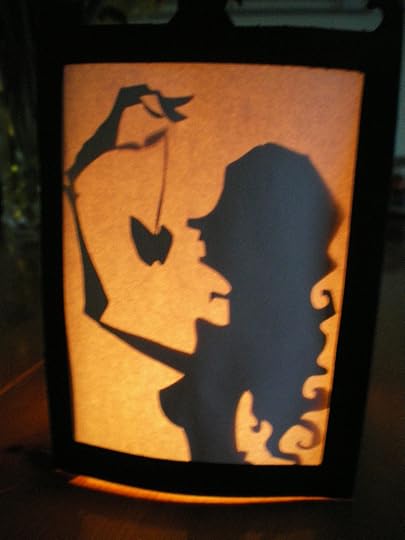
I can't help but feel sad both for Diogenes and Isodore.
I was onboard for the first bit, then continued with the middle to see where we were going and then the end petered along except for Isodore, which I can't understand why, why is that bit there?
I've read that this book is a perspective on objects, the shadows they cast and how we see both the object and the shadows. Well as to my seeing all this that's rather a big ask. Are we the characters who are the objects and the shadows are the objects we collect as we go along??????? Hmm the book has not lead me to this place of seeing.
On the Booker 2026 longlist
Displaying 1 - 30 of 372 reviews