De twaalfjarige Johanna is met haar vriendinnetje naar het circus. Het valt tegen, ze hadden er meer van verwacht. Dan horen ze het gebrom van vijandige vliegtuigen die over komen. Wat niemand verwacht gebeurt die nacht: Dresden wordt gebombardeerd. De grote kunststad wordt in één nacht totaal vernietigd. En door die brandende stad zoekt Johanna de weg terug naar huis. De rivier over, door het station en het stadspark. Maar thuis treft ze een verdwaasde moeder. Johanna heeft maar één keus: weg uit deze stad.
Aangrijpend boek over de waanzin van de oorlog. Het verhaal gaat over de 12-jarige Johanna die de hel van Dresden doormaakt, vervolgens op de vlucht gaat, de zorg opneemt voor haar getraumatiseerde moeder, probeert toch nog iets moois over het leven te ontdekken, maar moet ondervinden hoe ze gehaat wordt als Duitse... Een aanrader.
When I first posted this review the blurb above was in Dutch [not German, thank you LiLi!]. Now it's in French! So I’ll insert a brief blurb below in English from Google Books:
A twelve-year-old girl attending a circus is caught in the bombing of Dresden and returns home to find her sister killed and her mother mad with grief, and must assume adult responsibility for her own and her mother's safety.
The book, translated from the French, has a good rating on GR (4.1) and it won the Grand prix du roman de l'Académie française when published in 1979.
It’s story of a traumatic wartime events, so it’s fair to call this book unsettling and even disconcerting.
SOME MINOR SPOILERS FOLLOW ALTHOUGH I HAVE USED SPOILER BRACKETS FOR MAJOR ONES
The girl’s situation is aggravated by the death of her older sister in the bombing, her mother’s favorite. The mother is lost without the older daughter and her traumatized condition is such that she hardly seems to realize that her younger daughter is still with her. Of course this is devastating to the young girl.
During the events of the bombing the girl had met the master of a children’s choir. The children, around her age, had been sleeping out in the park for fear of staying in buildings during the bombing. It was a wise move because the building they would have slept in, the bomb shelter that was the basement of the railroad station, was hit. The young girl viewed the thousands of burned and crushed bodies when the roof fell in and the building burned from incendiaries dropped in the attack.
There’s not really a lot of gore in the story because you don’t need many more details when you hear of events like that. With her house half destroyed the girl leads her mother on a long walk to the suburban house of the choir master who takes them in. While there she experiences her first puppy love with an injured young boy from the choir. He is Jewish but his religion is not developed as a theme in the story.
The girl often acts like a brat. I guess we can excuse her because of the events she has been through and her need to do anything she can to take care of her mother who cannot speak or function. At times the young girl even feeds her mother with a spoon. The girl becomes openly hostile to the choirmaster because he seems to share a secret with her mother.
This is wartime and her mother is not spared a further dramatic trauma in what they thought was a safe hiding place. The choirmaster and the girl decide that her mother needs institutional care. The closest place is Prague.
The book has good, but not brilliant writing. I’ll insert an example here because it’s about Prague: “This was the first time Johanna had been in a city since her flight from Dresden. It was hard for her to believe that the massive buildings around the square were real; they seemed as if they were only part of a movie set hiding the real city, a city of corpses and ruins. She struggled to keep up with [her mother and her father’s friend], fighting back tears. Suddenly a streetcar clattered past, startling her. In her memory, the street cars in Dresden made no sound. There’s silently glided back-and-forth across a ghost city. But this was Prague. The city existed, intact.”
The girl stays with her deceased father’s friend, a 70-year-old man who is a fellow archaeologist. Here the story becomes unsettling.
While they are in Prague the background events of the war take a turn. Everyone recognizes that Germany is on the edge of defeat and Soviet and Allied forces are gathering almost within earshot. Prague residents openly turn against not only the occupying Germans, but even those Czech citizens of German ancestry who had lived in their country for generations. The girl and her mother of course are German.
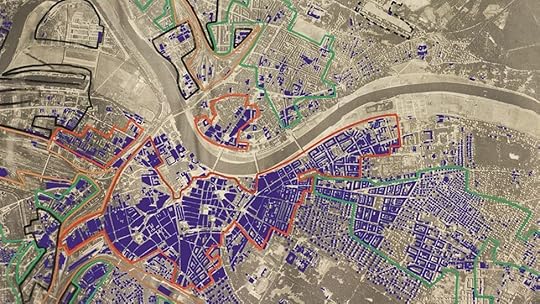
On the above map from bbc.com, blue areas were destroyed; areas in green had been residential
A quote I liked: “You mustn’t think that people always have to be unhappy in troubled times.” Yes but
Like the atomic bombings of Japan, the Allied bombing of Dresden that killed 25,000 people has been the subject of debate – was it necessary? The Dresden bombing has been featured in several other novels: Kurt Vonnegut's Slaughterhouse-Five, Jonathan Safran Foer's Extremely Loud and Incredibly Close, and Czech author Bohumil Hrabal’s Closely Observed Trains.
[image error]
The author (1936-2023) has written about ten novels but this one seems to be the only one translated into English.
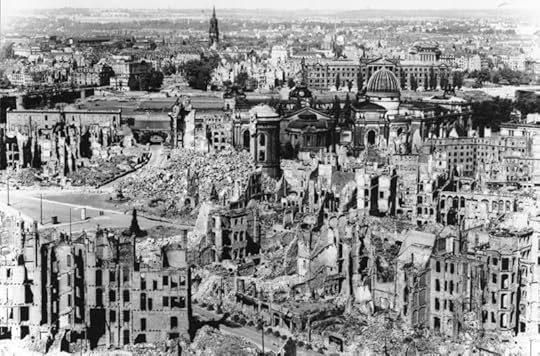
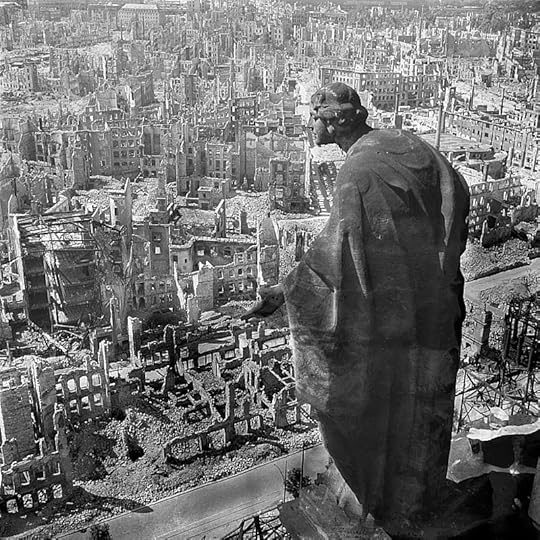
The top two photos of the devastation in Dresden are from wikipedia Map is from bbc.com The author from leparisien.fr