Alles ist Kunst. Alles ist Politik. Zensur ist eine globale Kraft, die sowohl von kommerziellen Interessen als auch politischen Agenden angetrieben wird. Ai Weiwei – Künstler, Aktivist und eine der einflussreichsten kulturellen Persönlichkeiten der Welt – ruft zu freier Meinungsäußerung auf in einem Zeitalter, das von Big Data, Massenüberwachung und neuen Kontrolltechnologien geprägt ist. Klar wird: Zensur gibt es nicht nur in China, sondern auch in sogenannten liberalen Demokratien.
Ai Weiwei (Chinese: 艾未未; pinyin: Ài Wèiwèi, English pronunciation; born 28 August 1957) is a Chinese contemporary artist, documentarian, and activist. Ai grew up in the far northwest of China, where he lived under harsh conditions due to his father's exile.
A slim but impactful essay on the tools and purpose of government censorship from an artist who has faced some of the most extreme versions of it. The conversations around censorship in the US I have seen recently mostly focus on banning books from school and public libraries, cutting library and school funding, and the increasing censorship of online platforms. Ai Weiwei expands this to talk about censorship of activism (such as Columbia University's actions against students raising awareness about genocide in Gaza), surveillance (from physical stalking by police, hidden devices planted in homes, and online surveillance, all of which he has experienced) and government pressure on international institutions to censor culture and art. Ai Weiwei was detained and questioned for 81 days by Chinese police, and even after leaving the country started to see his gallery shows and films pulled out of festivals, museums, and exhibitions when Chinese embassies pressured institutions to remove them. He also discusses AI and the rise of fake information, as the void left by censored information is generally filled with lies and propaganda. Ai is extremely clear-eyed about the purpose of censorship, which is to create a more ignorant, fearful, and passive population which is easier for authoritarian governments to control.
Es un ensayo breve, pero de gran alcance. Más que un análisis académico de la censura, construye una defensa de la libertad de expresión desde la experiencia de quien ha vivido la vigilancia, la persecución y el intento sistemático de ser silenciado.
Su tesis central es incómoda: la censura no pertenece únicamente a los regímenes autoritarios. También opera en las democracias, en las instituciones culturales, en los medios y en las plataformas digitales mediante mecanismos más sutiles, como la presión social, la exclusión o la autocensura. El verdadero peligro, sostiene, aparece cuando el miedo deja de prohibir palabras y comienza a moldear la imaginación, la memoria y, con ello, la vida democrática.
Uno de los mayores aciertos del libro es conectar una experiencia profundamente personal con preguntas universales sobre el poder, el arte y la libertad. Ai escribe con claridad y convicción, mostrando cómo las nuevas tecnologías han ampliado la capacidad de vigilancia y control sobre la vida cotidiana, al tiempo que nos hacen creer que seguimos siendo plenamente libres.
No es, sin embargo, un libro neutral. Es una intervención política y ética. En ocasiones, sus argumentos resultan categóricos y tienden a equiparar formas de censura que responden a contextos distintos. Quien busque un estudio histórico o jurídico detallado probablemente eche de menos mayores matices.
Ai Weiwei no ofrece respuestas definitivas, pero recuerda algo esencial: toda censura, antes que prohibir palabras, termina por reducir el mundo que una sociedad es capaz de imaginar. Y cuando eso ocurre, también se erosionan la memoria colectiva y la vida democrática.
Mis principales críticas son 3. Primero, presenta la libertad de expresión como un derecho casi absoluto, sin considerar límites como la incitación al odio o la propaganda de guerra. Segundo, privilegia una visión individualista de este derecho y deja en segundo plano las luchas colectivas. Por último, no desafía conceptos actuales como los algoritmos, la desinformación y la cultura de la cancelación.
This book was not what I wanted it to be, and nowhere close to it. For an artist and thinker who is so bold in combatting the authoritarian CCP regime, Ai’s 87-page essay feels insincere. Not because his commitment to fighting censorship actually is (I do not believe so), but because this book does nothing more than tickle the surface. Its insistence of critical thinking and individuality being the heart of what is targeted, distorted, and ultimately destroyed by censorship, surveillance, and AI evokes nothing more than the big letter slogan banners it critiques. I don’t think it’s overly harsh to say that this book does the very thing it warns that censorship results in — a lack of engagement in individuality, critical thinking, profound questioning of institutions of power. It does not engage in the vigilance that it undeniably demands its readers exercise.
Other than this fundamental lack, the read was overwhelmingly uninspiring. Ai was repeating the same empty statements over and over again, without giving them the substance that would inevitably help his cause. In other words, nothing is advanced this essay — no provocation of thought on the unparalleled significance of the topics he discusses, no explication of the processes and cases of censorship. Indeed, the failure to be specific (!!!!!!!) renders it powerless. It almost feels as if Ai is resigned to the forces he attributes as evil and corrupting. The failure to include specific instances of state pedagogical and discursive violence only further suppresses victims of censorship once again. If we who condemn censorship are also unable to name, point a finger at, and spotlight the people and issues we seek justice for, do we not just become participants in erasure of individual thought?
I guess the adage stands: don’t meet your heroes. Or in my case, don’t read their essays.
Maybe because I read this with a new lens influenced by the author’s recent changes to his thinking, but I didn’t love this. It made some good points about censorship and oppression but it was nothing groundbreaking. It also read more like an academic text. Given it was partnered with his speaking tour, it just felt like an accompaniment to that (I would have said money grab but it came with the tickets). A shame because I really enjoyed his other writing and there were more brilliant and interesting points in those.
Good book to start with if you want to learn more about censorship, a lot of examples but not really in depth. I wish this book talked a bit more about how these themes show in his own art and/or life
This small format, 87 page book is a quick read but the author's voice of weary experience with draconian surveillance, censorship, and punishment is ever more relevant to those of us in the West. Here are a few of his trenchant observations.
"... censorship fosters popular conformity and functions as a dominant and controlling field of mainstream consciousness. It is so powerful that it dictates movements, behaviors, and actions --- shapes the very spheres in which thought and expression can occur. Such spheres, particularly in today's mainstream media, are often catastrophic. We see the pervasive distortion of truth, driven by the need to safeguard the profits of major corporations and capital, which those in power reject the most basic facts. The data on climate change, for example, has been consistently suppressed by governments and profit-driven interest groups."
"We live in a state of heightened uncertainty, increasingly skeptical of the information that surrounds us. Our judgment, our ability to discern fact from fiction, is under relentless pressure-- a pressure that numbs the soul."
"[AI] represents a profound existential crisis for humanity... Its spread and influence, fueled by corporate greed and unchecked capital, are virtually unstoppable. This marks a decisive turning point in human history, an event with consequences as profound as any mythological tale."
Despite taking up the easiest thesis on the books (free speech over censorship), this book is mostly just a bunch of abstract jargon with little concrete or specific. You know, the type of book where a phrase like "the interconnectedness of society" might appear and where at least one list-of-three like "morality, ethics, and human virtue" appears every two pages to pad the word count.
The author's criticism of several American university presidents resigning over political pressure was unexpected, since it was precisely their intense censorship policies that forced them out.
There are many excellent books written on censorship and free speech. Such books tend to cover many specific times and places and go into the development of the legal theories and philosophies that have evolved to show the importance of free speech and the folly of censorship. Ai Weiwie's book is not among these.
That said, though the book is very shallow, it was nice to see that it at least shared the same philosophical foundations as all free speech philosophy does - the inherent value of the individual, the emptiness of a censored world, and the necessary replacement of truth by falsehood by the censors.
I got this book because my parents are huge Ai Weiwei fans and our first readings for Ed Studies are on free speech. Censorship is such a timely subject but this essay was underwhelming. Didn’t learn too much and felt generally surface level. Where it does succeed is the connecting of his personal experience under the Chinese authoritarian regime. Not enough of it though. I disagree with his views on artificial intelligence, seem reflective of the older generations. Interestingly, I can see the influence of Rousseau, society instantly indoctrinates. Also, power = control narrative. It’s interesting how censorship can transcend modern borders. Power.
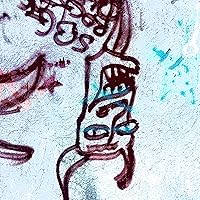
Reads almost like a long introduction to a much better, more thorough examination of censorship. While I loved the stills and pics interspersed throughout reflecting aspects of his own experiences with censorship and harassment by the Chinese government, I was disappointed at the paucity of detail Ai shared about those experiences. More of that missing content would’ve made for a much more compelling read. Still, Ai’s thoughts on topics like AI as a tool for censorship, and how censorship is vital to authoritarian governments, are worth reading.
Quite enjoyed Weiwei's thoughts on Censorship. The sections that stood out my me were his thoughts on Censorship and AI and Surveillance. Out of the book, these were the two that gave me the most to think about afterwards. I also enjoyed the imagery which was provocative and led me to watching the video Dumbass he did. I think this is a good book as a starting point to led to other ideas and too give the reader questions to ask themselves.
“An interesting incident occurred when people tested the new AI tool by asking about me. The AI’s response was blunt: ‘Let’s talk about something else.’”
This essay was precisely to the point & illustrates very clearly Ai Weiwei’s lifelong stance on society. Very insightful for an artist [saying this with no arrogance whatsoever omg] and put words on thoughts & frustrations I had for a moment now.
Always found Ai Weiwei to be an interesting character so grabbed this on a whim when I saw it in a book store. Went into it knowing nothing. Unfortunately it’s a dud. Reads like a high school term paper. Very surface level analysis, poorly reasoned, and ironically affected by the same sort of implicit censorship he’s criticizing.
This did not entirely live up to my expectations despite raising some interesting questions. The short form left it skimming over some topics more than I would have wanted. still it is a personal and interesting view of censorship.
There's a reason Ai Weiwei is best known for his visual mediums, but this essay was thought-provoking and well-structured. I found some parts a bit repetitive, but that can be essays for you, sometimes, can't it.
I appreciated the perspective and the quick read. The writer was clear without judgement, even somewhat clinical. Censorship is the disease and this is how it hurts the individual, society and humanity.
Ai Weiwei is a great study in “artist most likely to leverage and benefit from censorship overreach” and wonder if he had just simply been left alone would he be this international force?
Regardless, I enjoyed this as much as it was possible.
This short, illustrated essay (you can read it in an hour) is Ai Wei Wei’s anguished cry about how artistic freedom suffers at the hands of censorship. When artistic freedom suffers, he believes individual liberties wither as well. Read more at bookmanreader.blogspot.com
It`s not an objective book about censorship and its history, more like Ai Weiwei`s artistic thoughts and impressions about it including surveillance and the rise of AI.
This review from Anny Bi sums up my thoughts: "this book does the very thing it warns that censorship results in; a lack of engagement in individuality [and] critical thinking..."
Quick read for study break - I feel like what he says is not new, but I guess this essay is valuable cuz it comes from someone who actually was surveiled so much. coffee table book
Author cum activist has beautifully described "Censorship" and it's impacts on individuals and society. How it works and why it is employed. Simply a must read.